
 Maryland

I was reading old issues of WoodenBoat magazine and came across an article about a Pocomoke log canoe built by Sam Webster at the Dickerson Boatyard in Trappe, Maryland, in 1974. (Randall Peffer, Cut and Look: Building a Chesapeake Bay Log Canoe, WB 006, Sept-Oct 1975, pp. 26-32.)
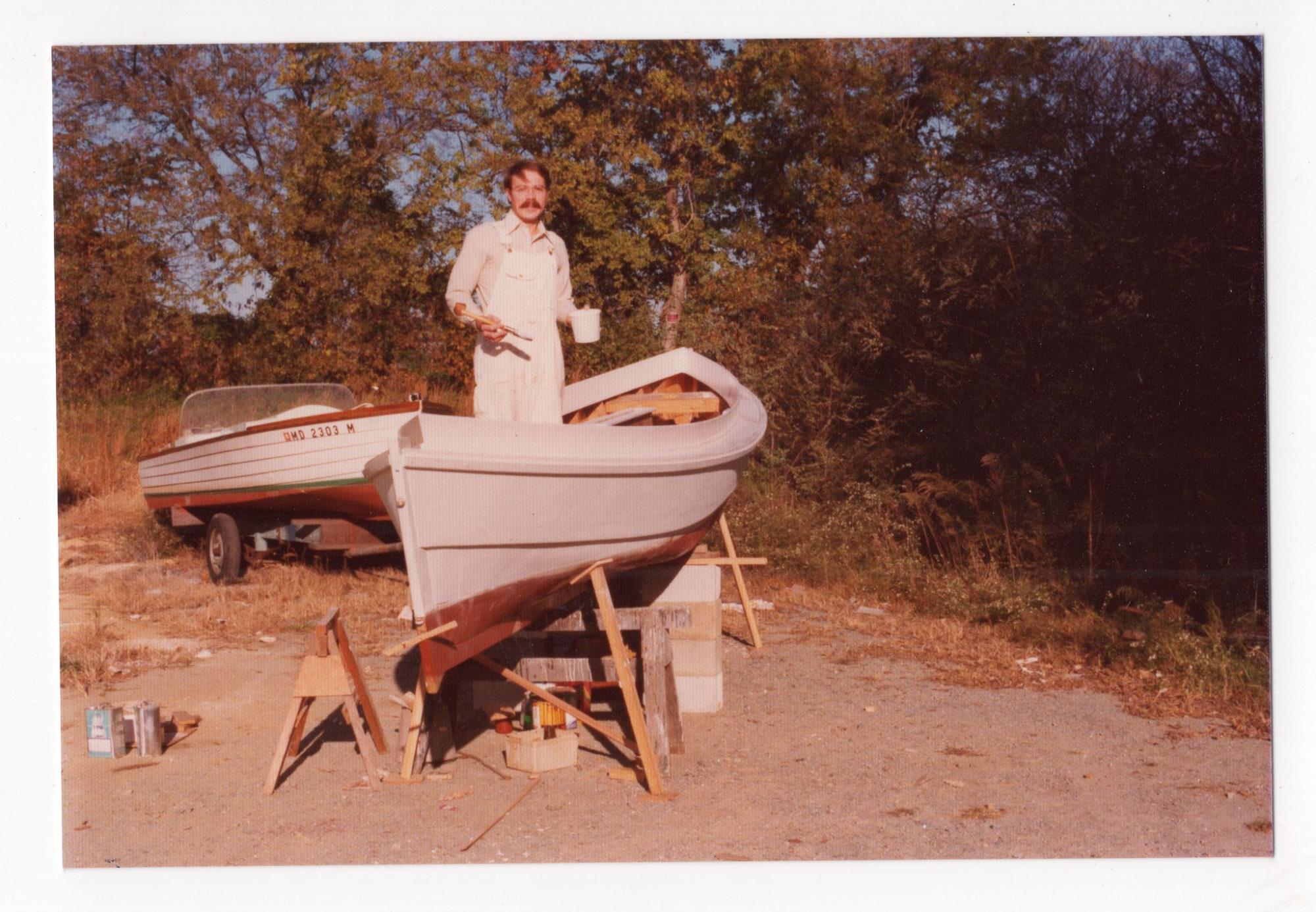
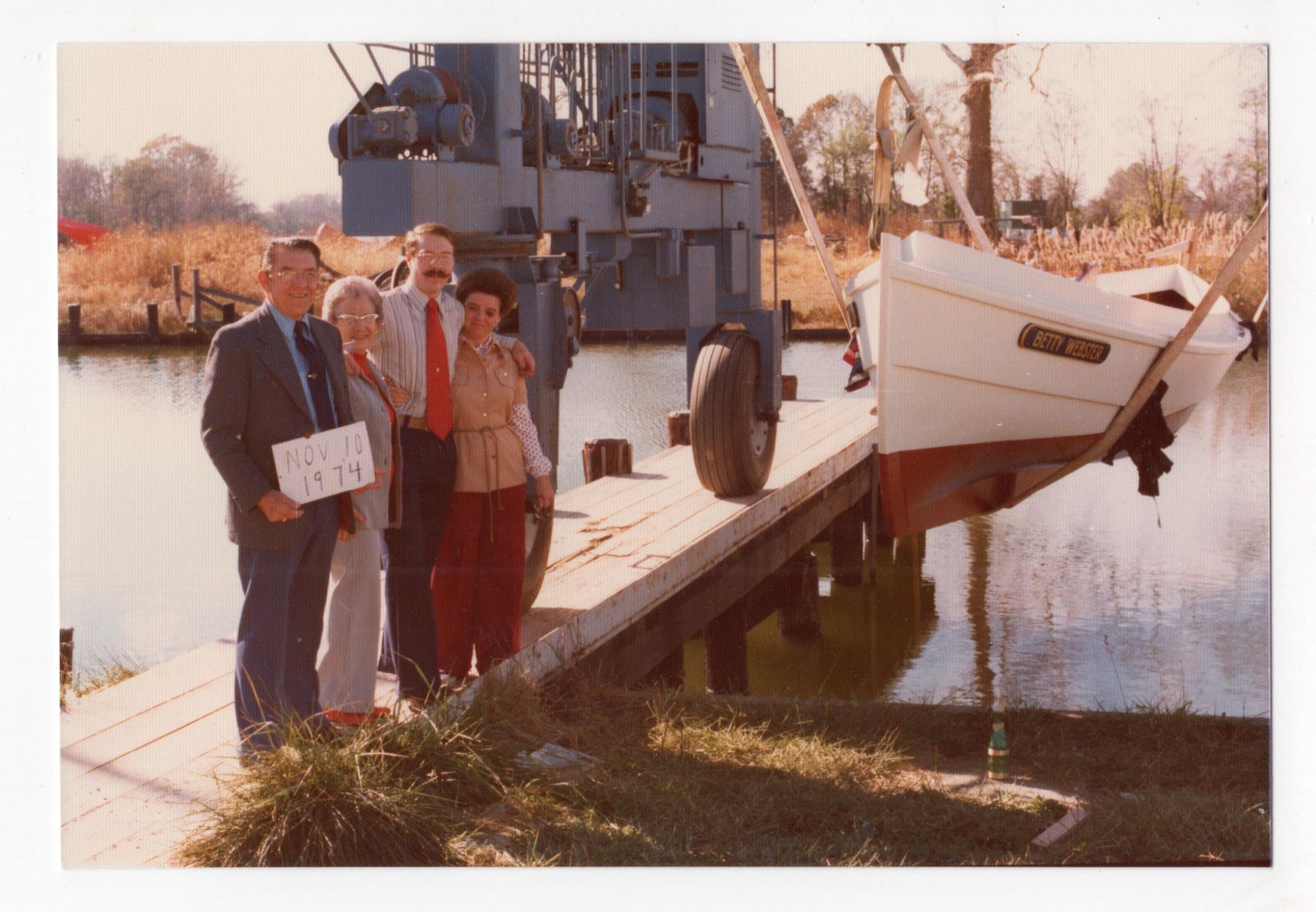
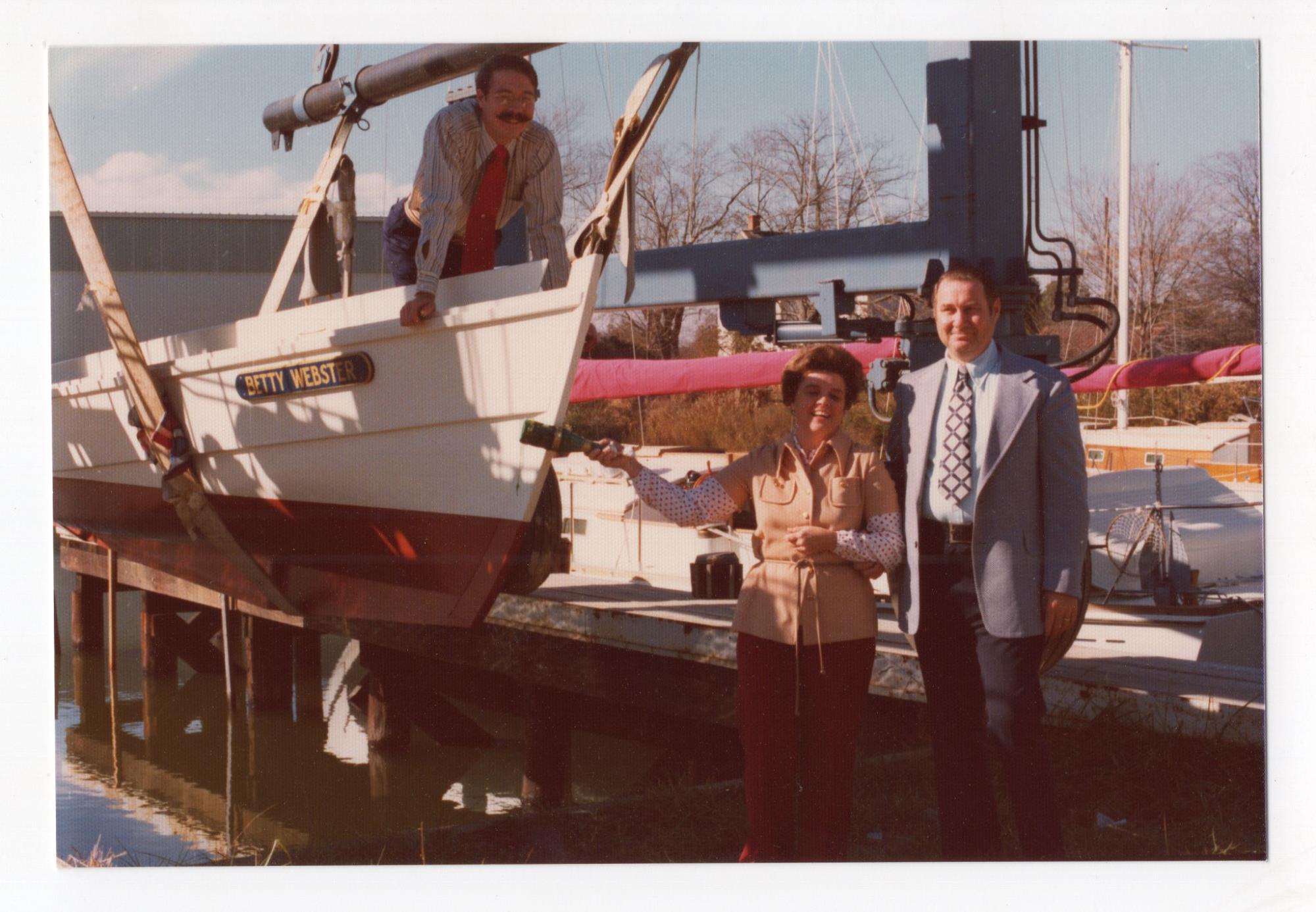
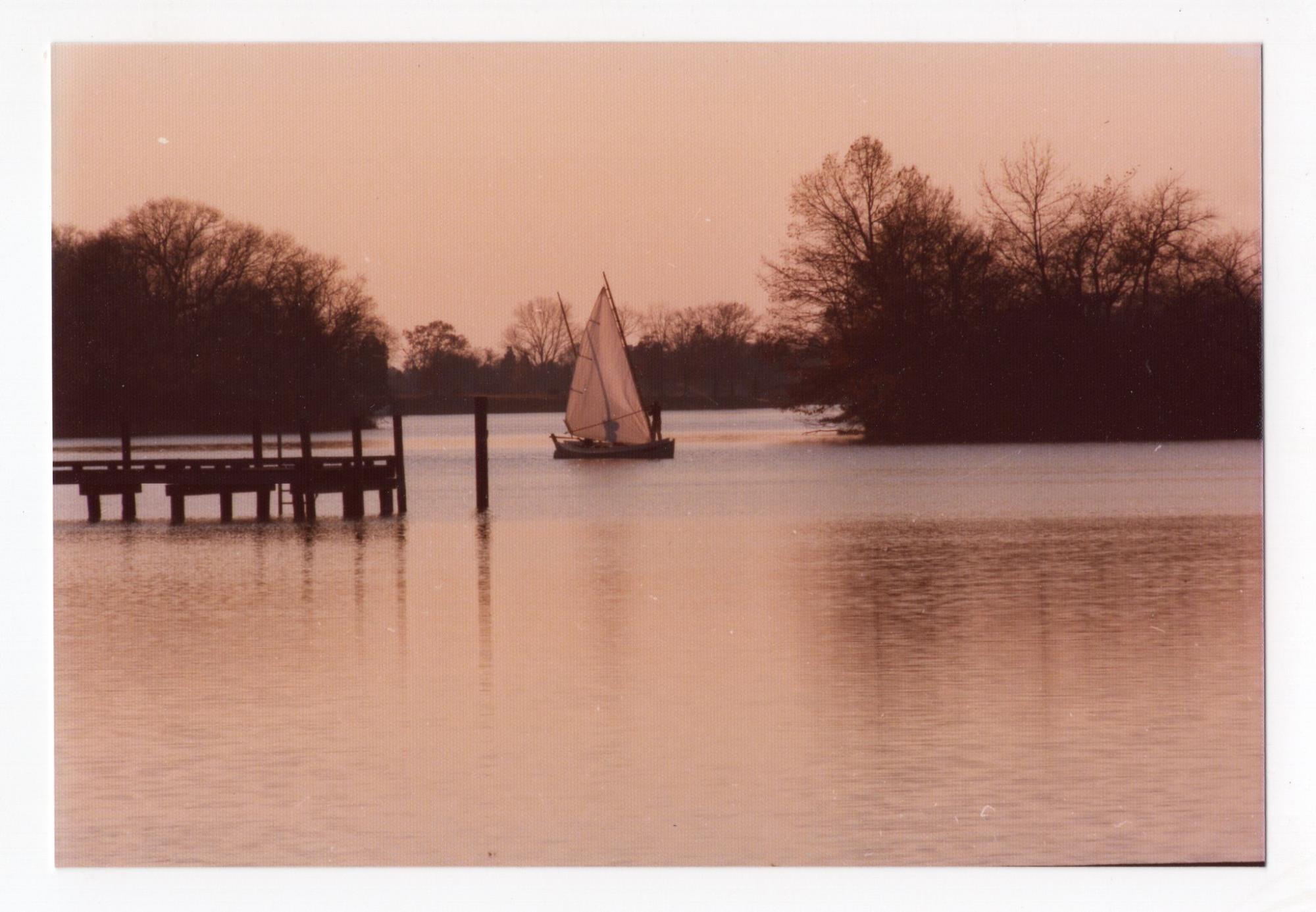
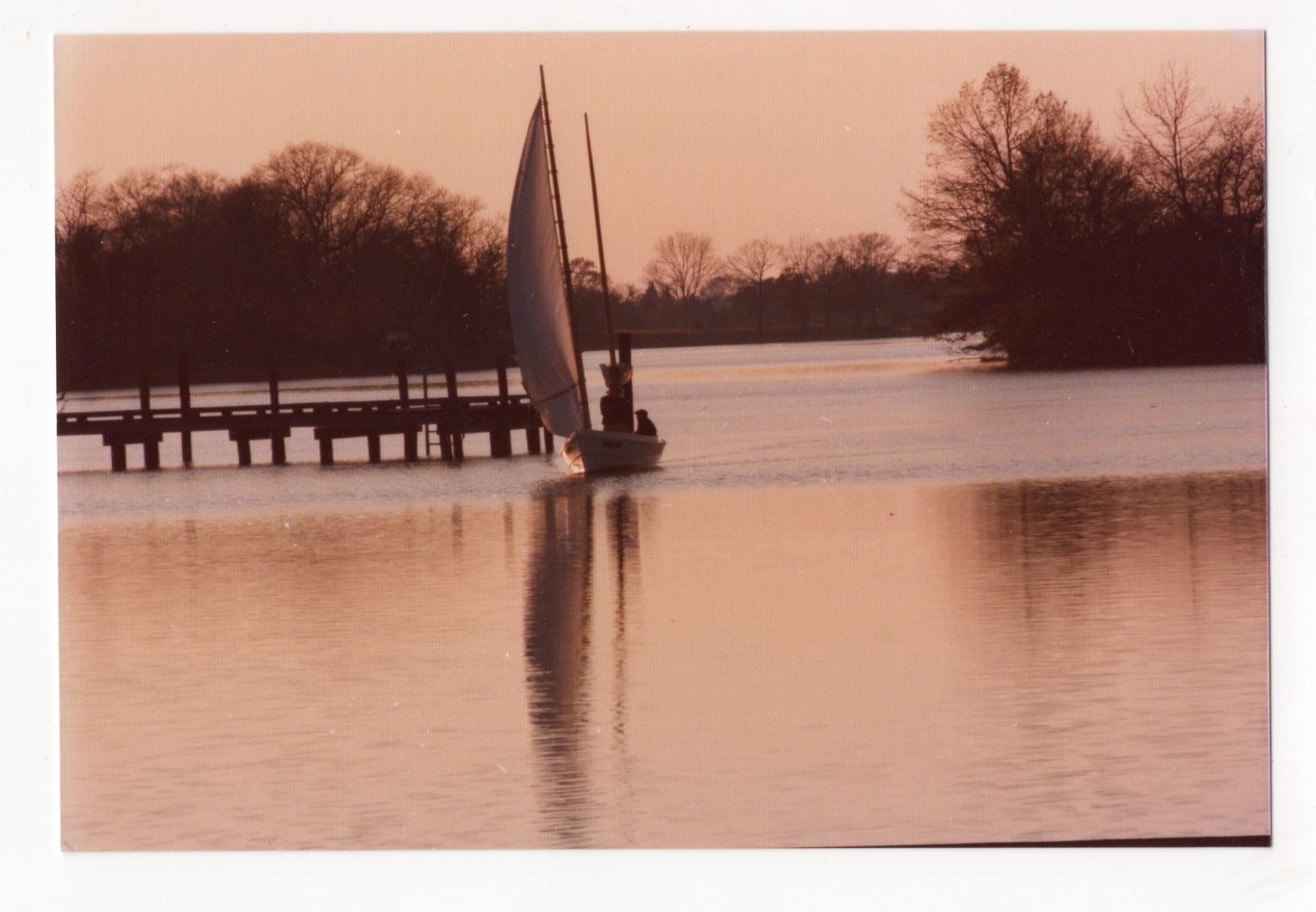
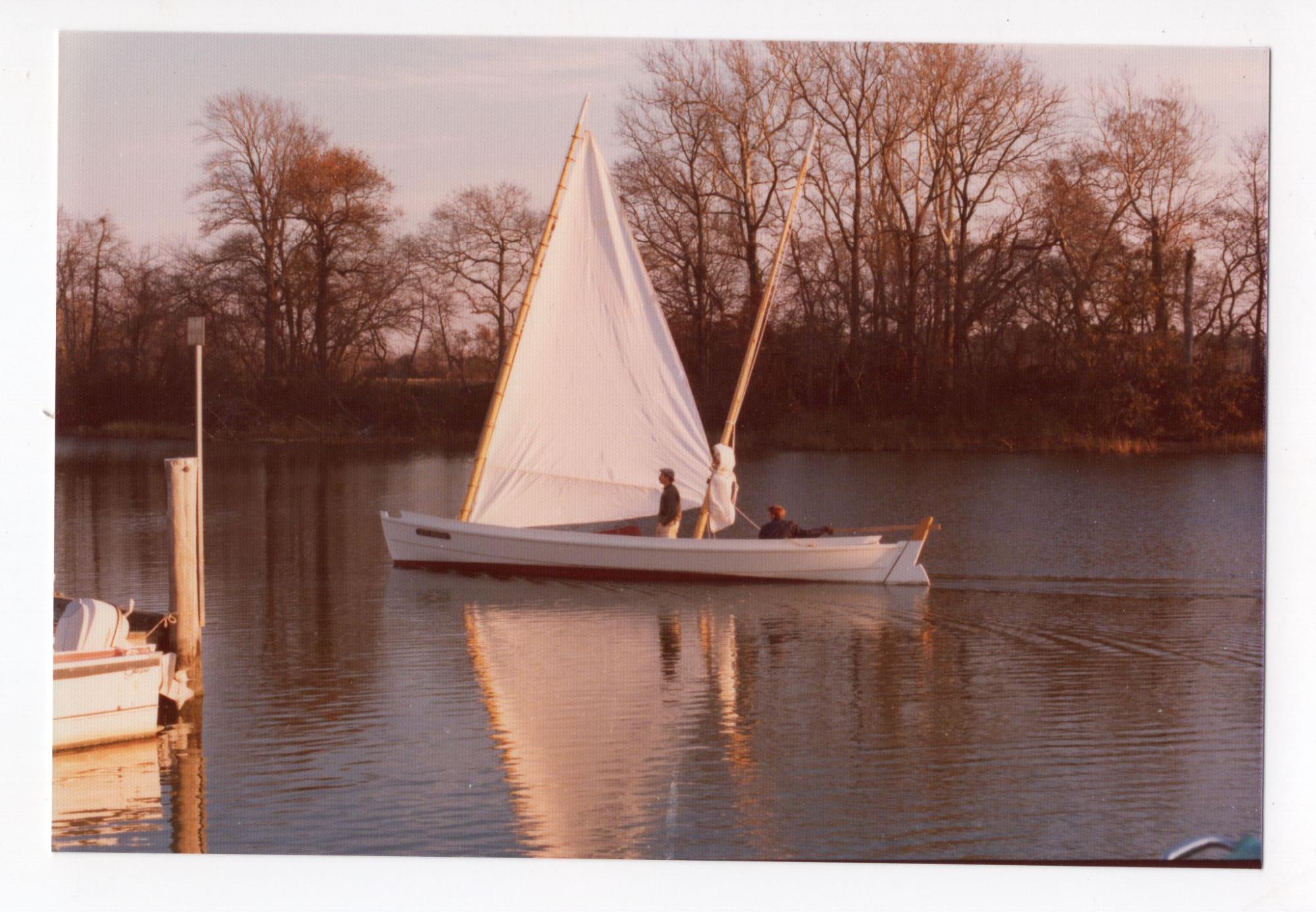
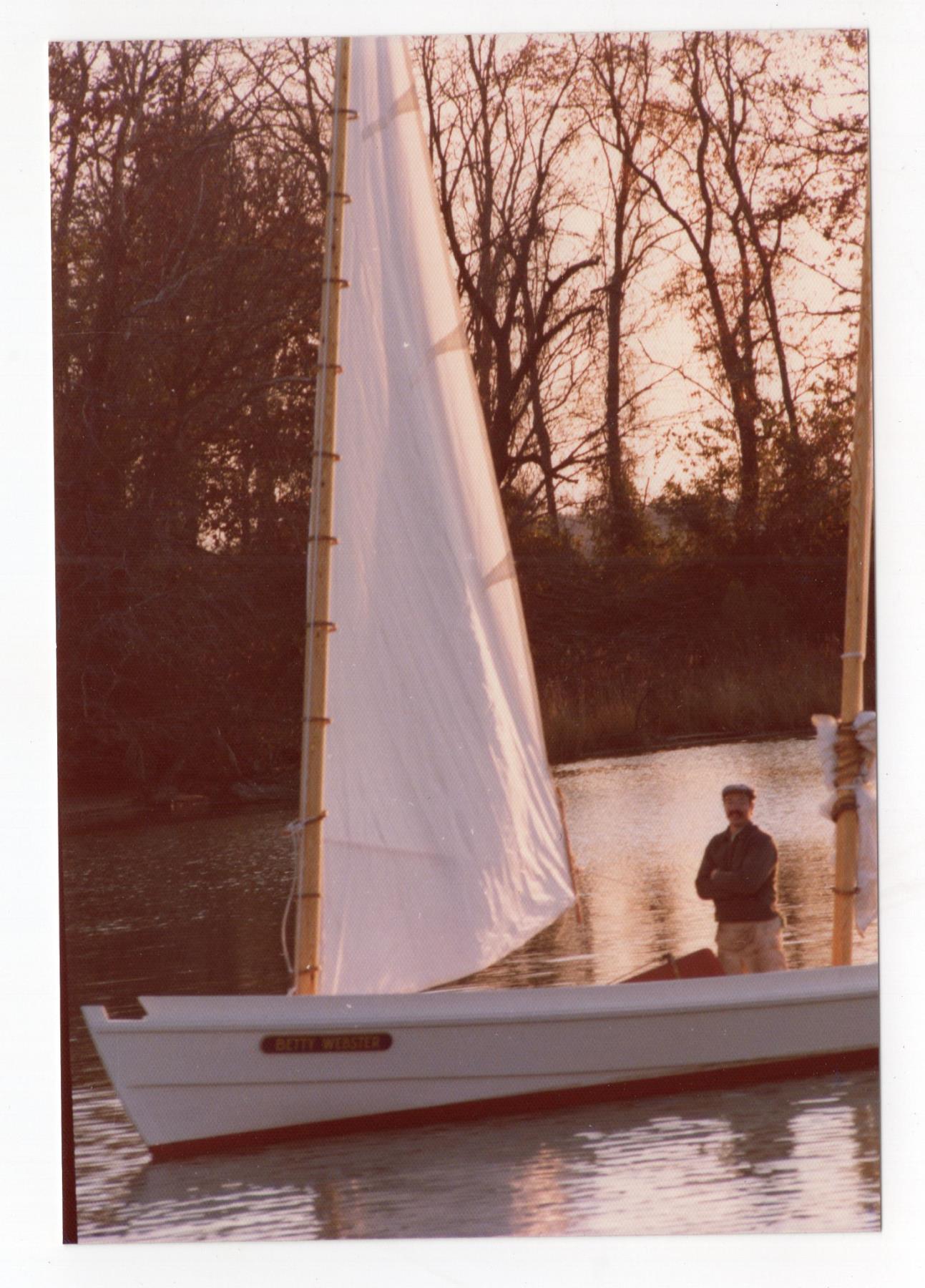
I looked for Sam Webster in the online catalog of the Chesapeake Bay Maritime Museum (CBMM) and found a collection of photos by Sam that document his building of the log canoe Betty Webster.
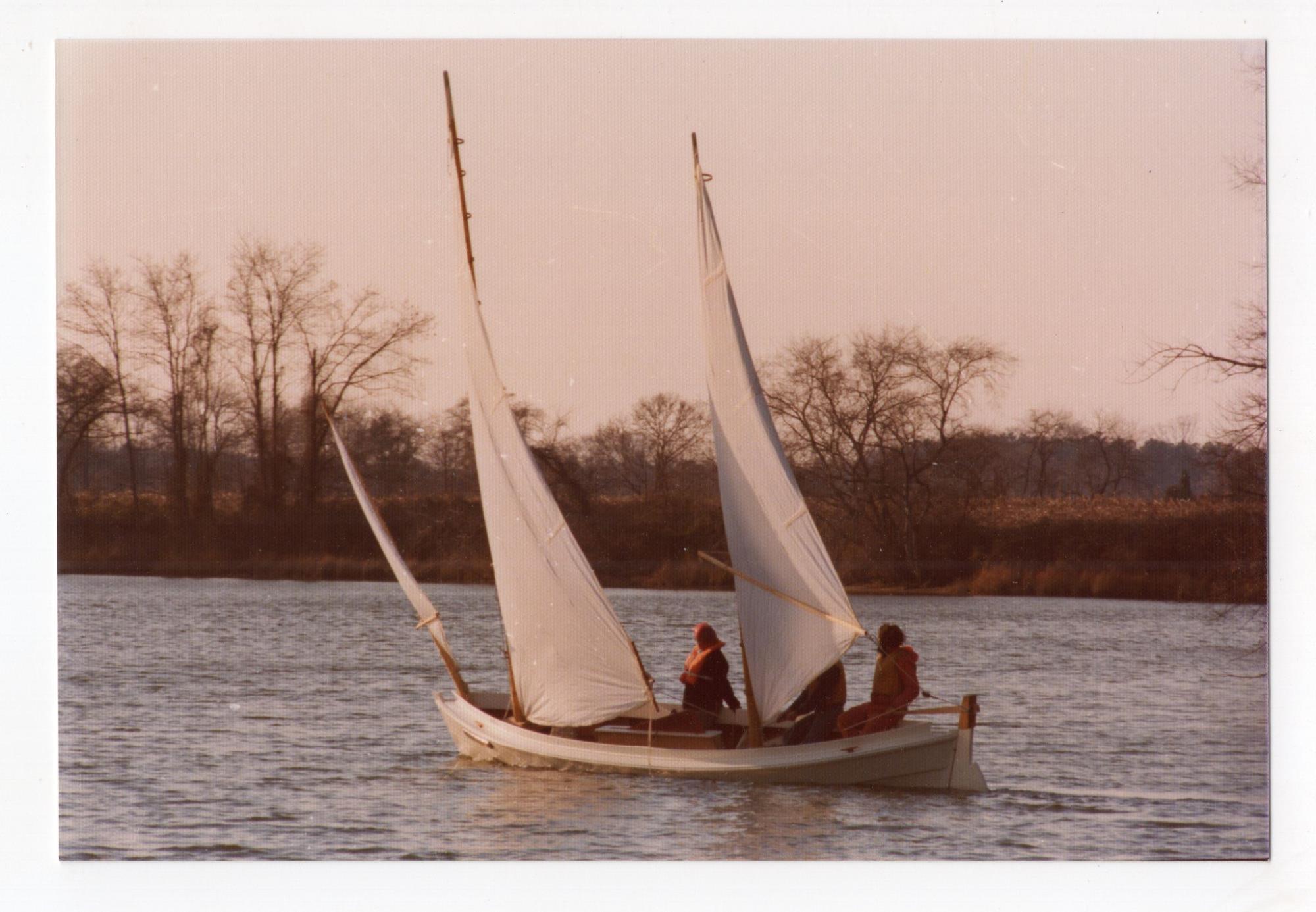
This note appears on the CBMM archive folder: "33 color photographs, showing construction of Pocomoke log canoe 'BETTY WEBSTER' launched Nov. 10, 1974. Built at Sam's boat yard, Trappe, MD. First log canoe to be completed since 1944. Rigged in tradition Pocomoke style with stickup mast in place of jib."
The WoodenBoat article makes clear that “Sam’s boat yard” in the CBMM citation was actually Dickerson’s in Trappe, where Sam was employed at the time. The full article is reprinted below.
Sam Webster, the Last Log Canoe Builder
The CBMM archival materials provide no details about Sam Webster the boatbuilder, nor about the fate the log canoe Betty Webster. But the CBMM photos offer some leads. One photo shows the truck that carried Sam’s log canoe from the family farm to Dickerson’s. The sign on the truck door says, “S. L. Webster and Sons, Inc. Bulk Equipment, Federalsburg, MD”.
S. L. Webster & Sons, LLC was an agricultural and milling machinery business. “Bulk equipment” meant machinery used for farm and harvest and milling operations. Sam Webster’s forebears owned grist mills in Caroline County in the early 1800s and supplied machinery to mills and farms into the 20th century, including to the historically significant Linchester Mill near Preston. [Source]
If you know more about Sam Webster or the fate of the log canoe Betty Webster, email me: Don@sailingworkboats.es .
The CBMM Photos
Thanks to CBMM archivist Sophie Malloy for digitizing these photos which Sam Webster took of the log canoe building process, which are now in the CBMM collection. The digitized photos have no captions. The captions which appear below are from the WoodenBoat article, along with my own, which are brackets.
Click the photos to see larger images.
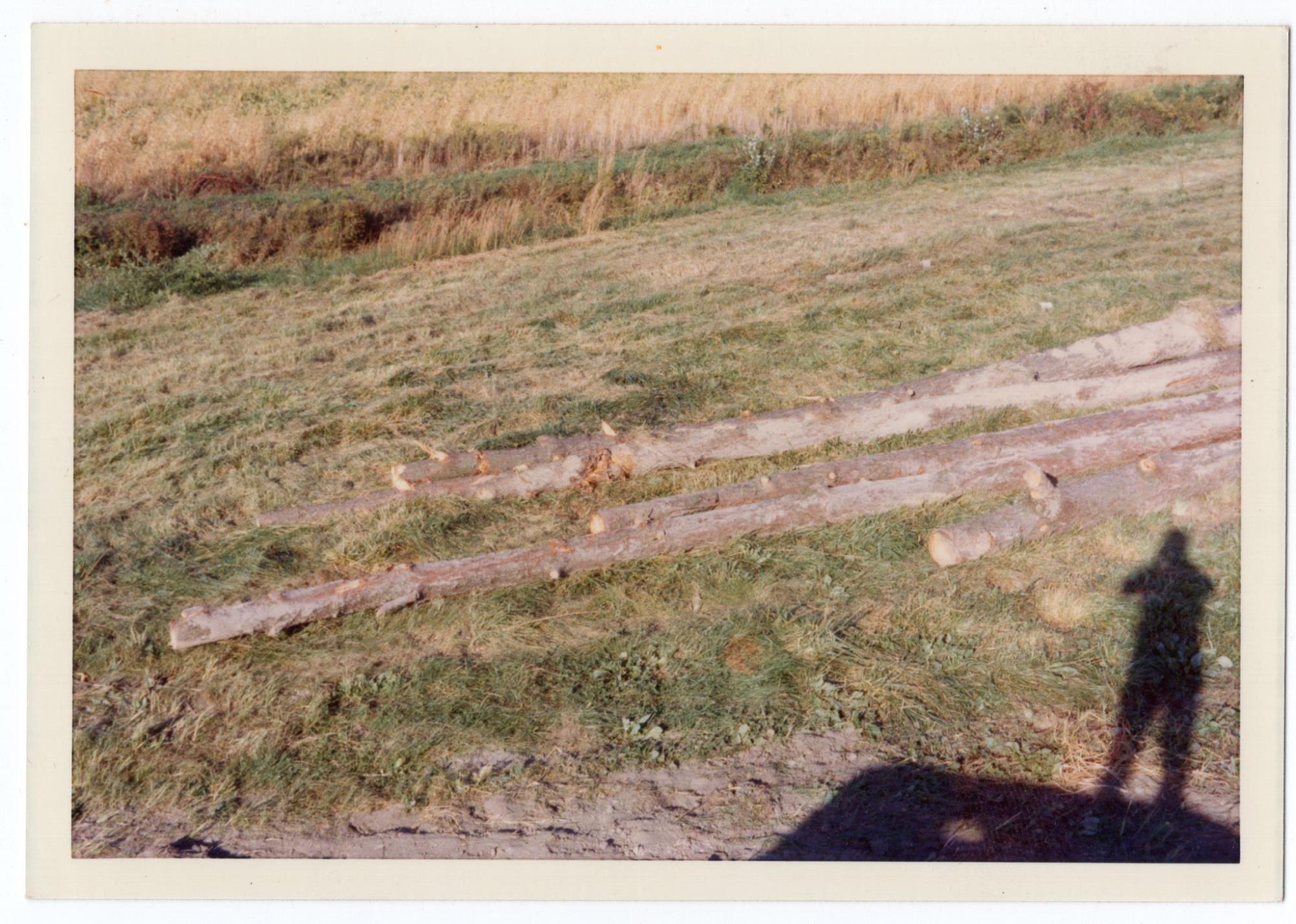
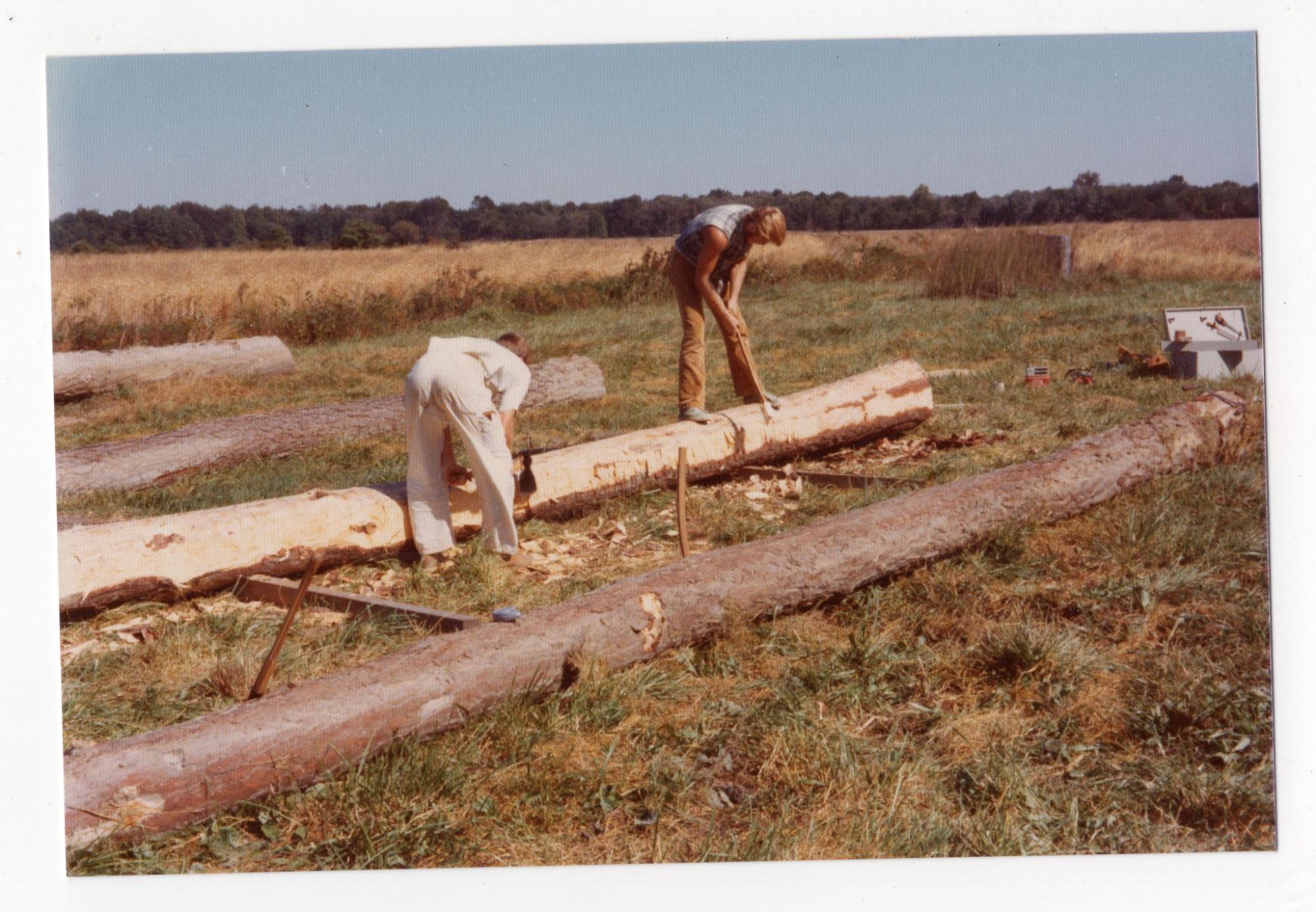
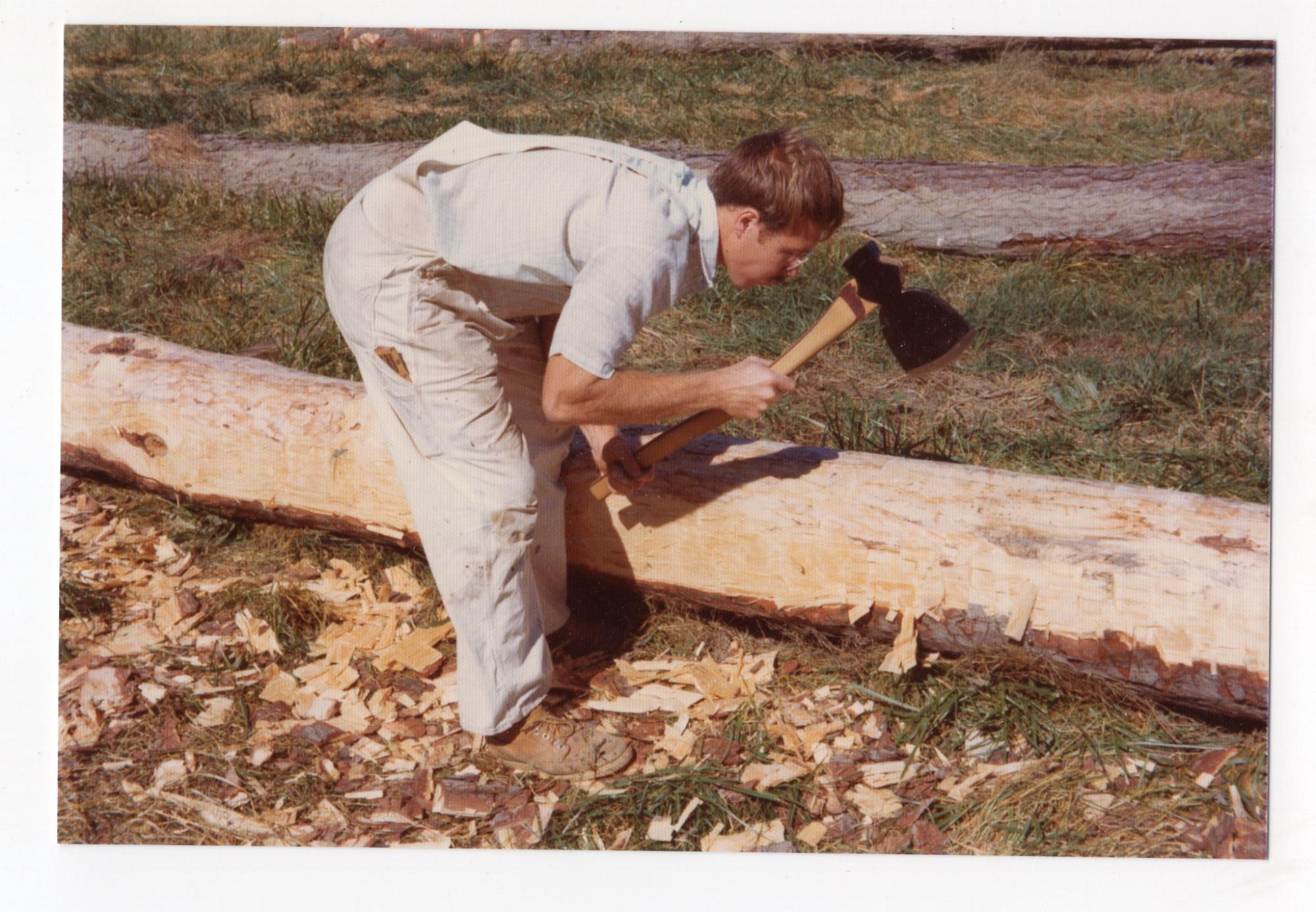
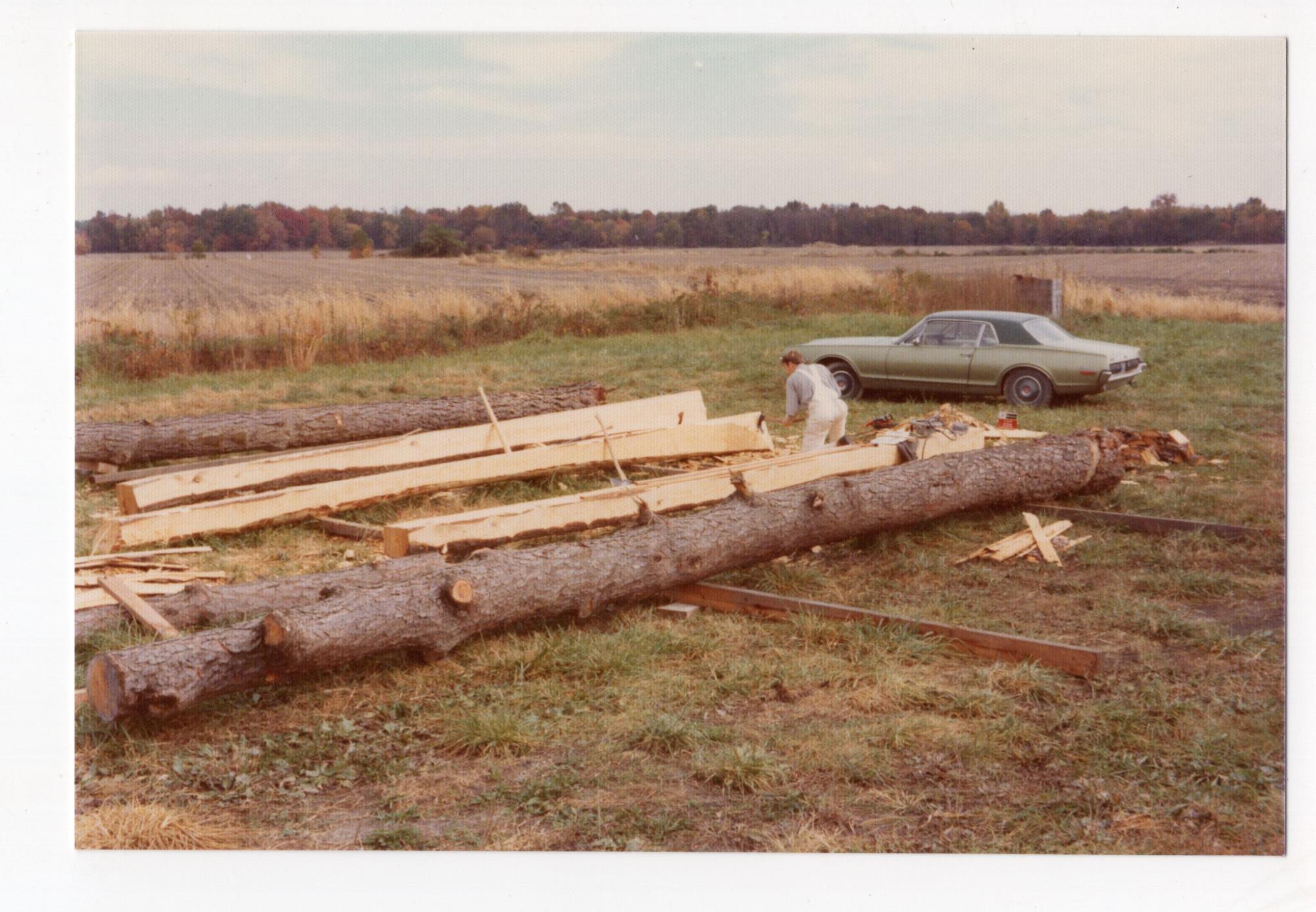
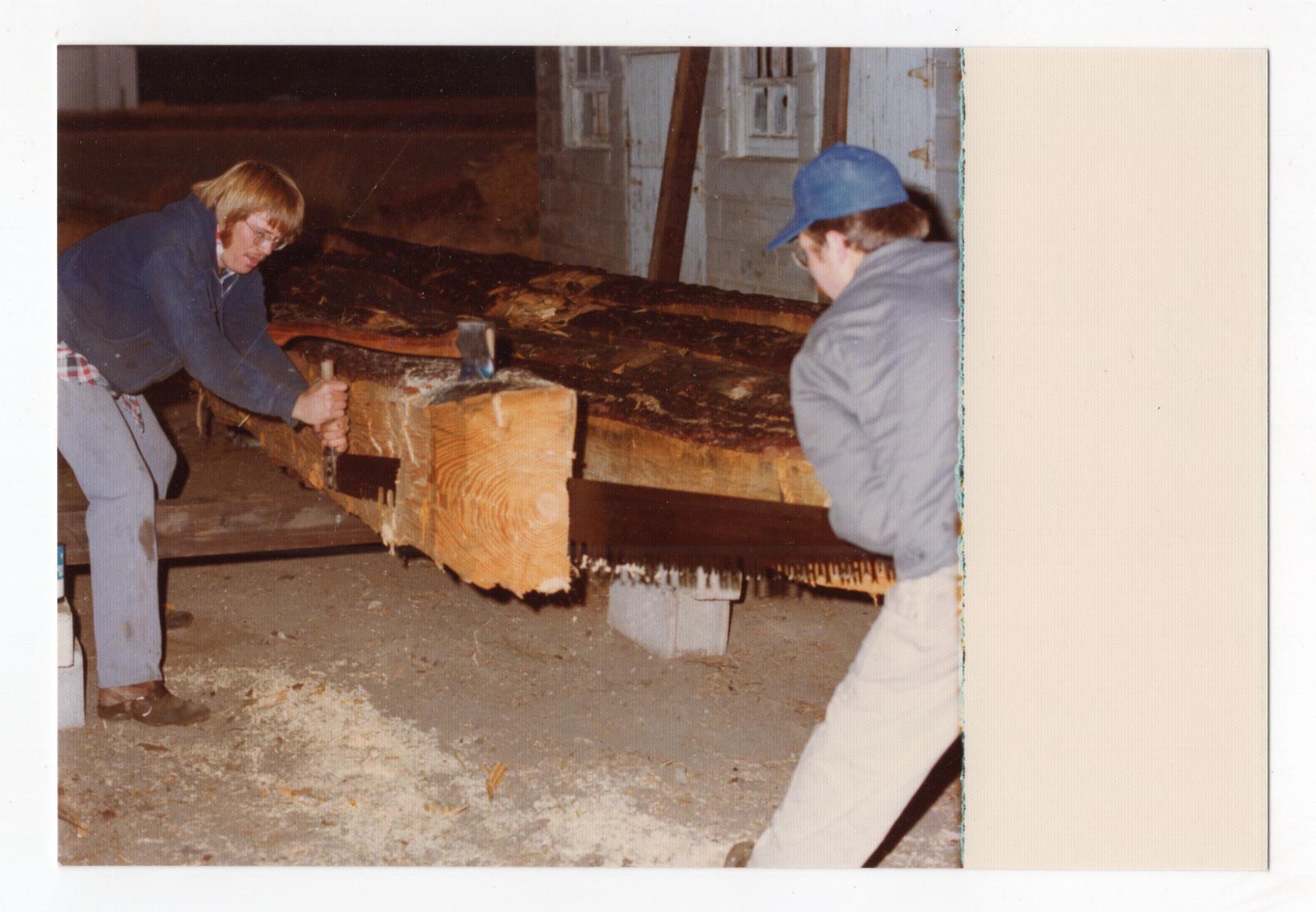
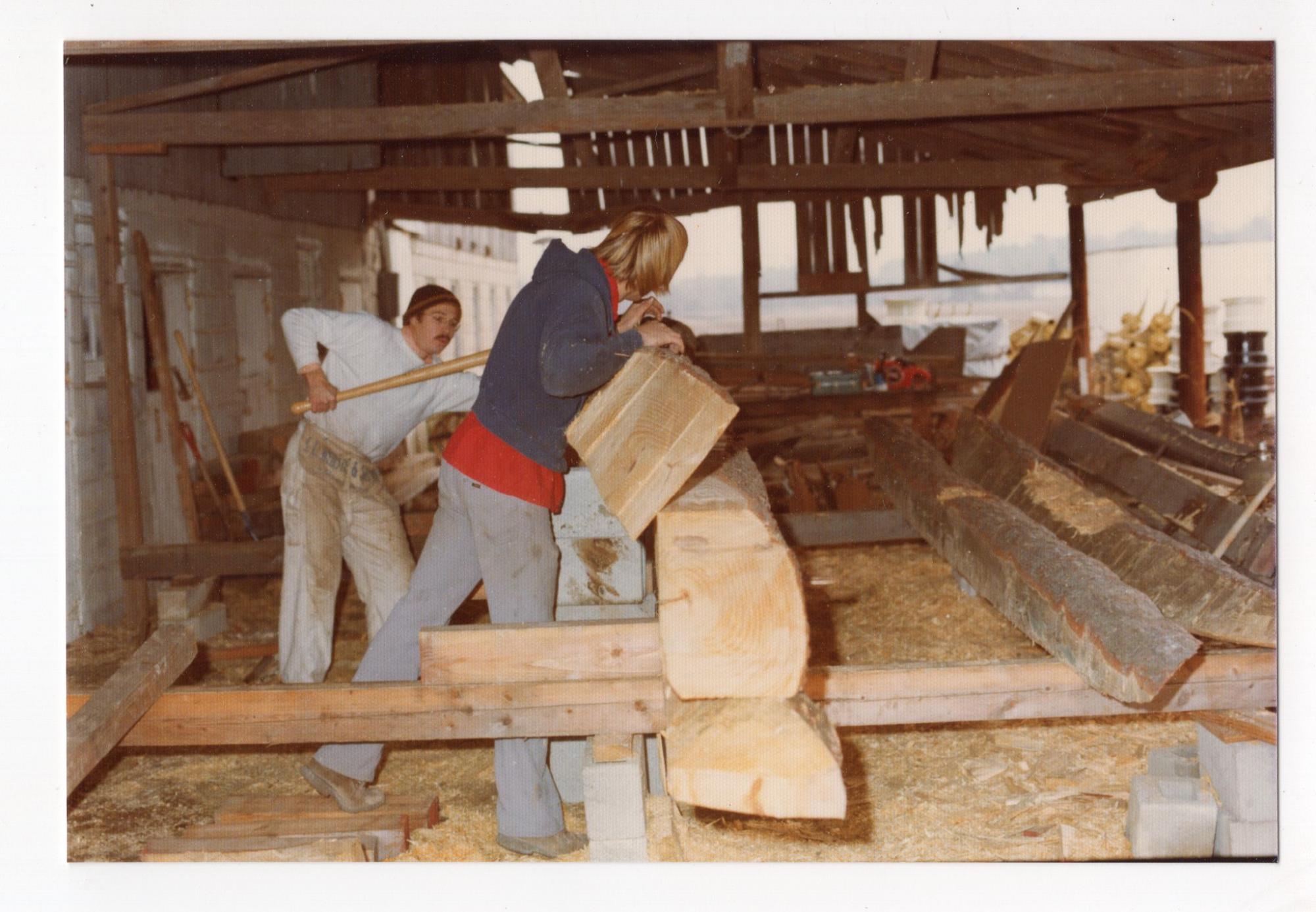
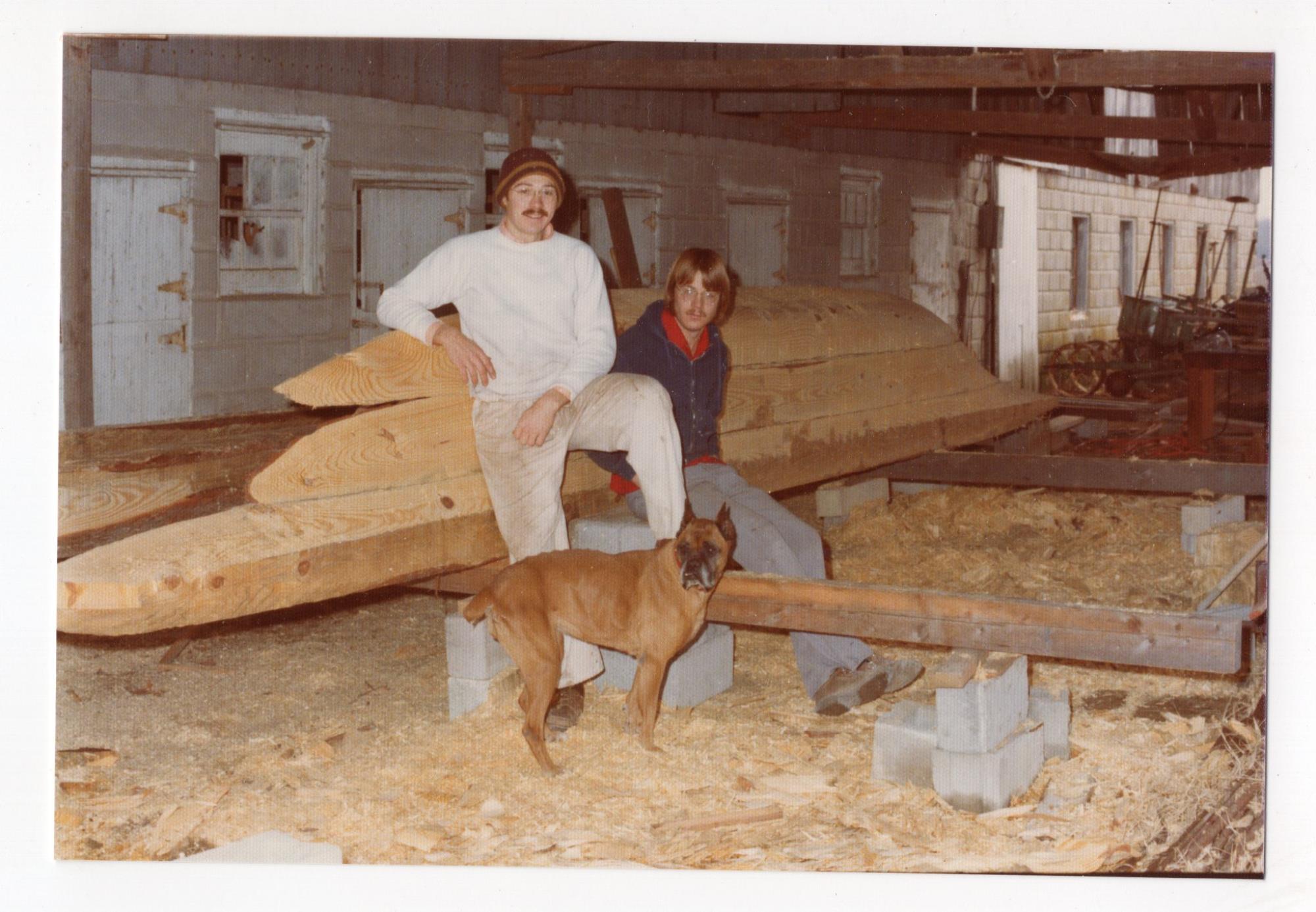
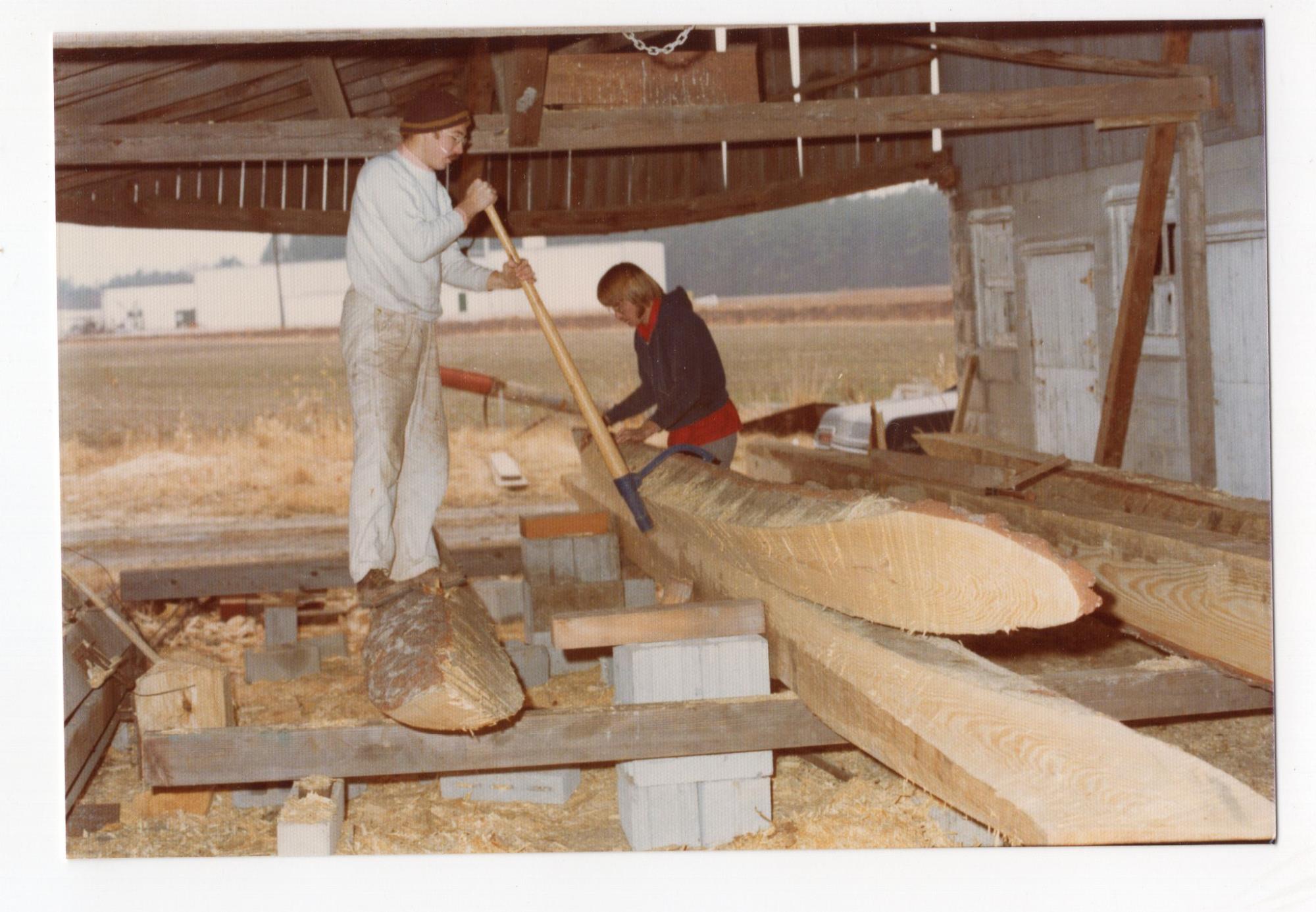
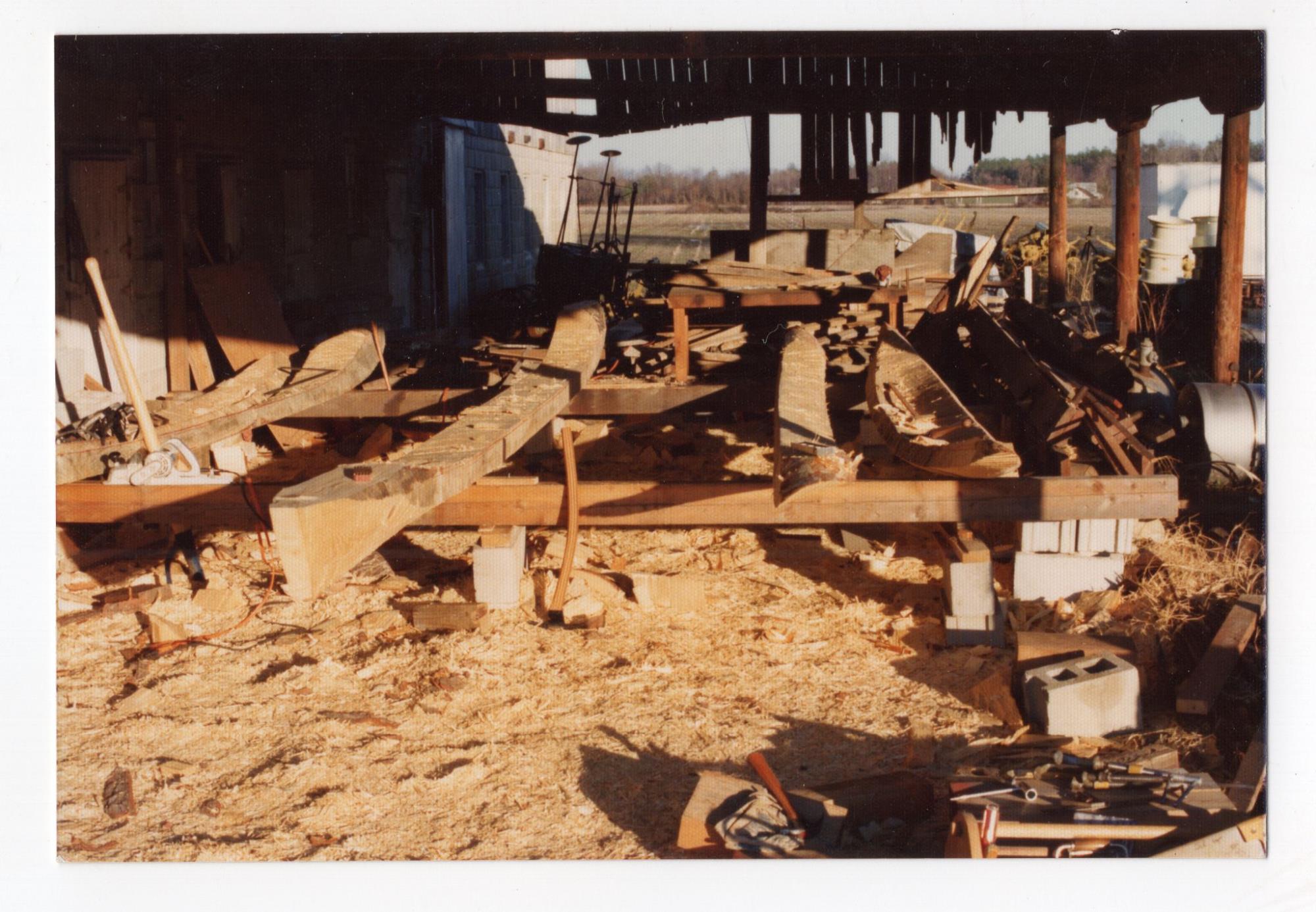
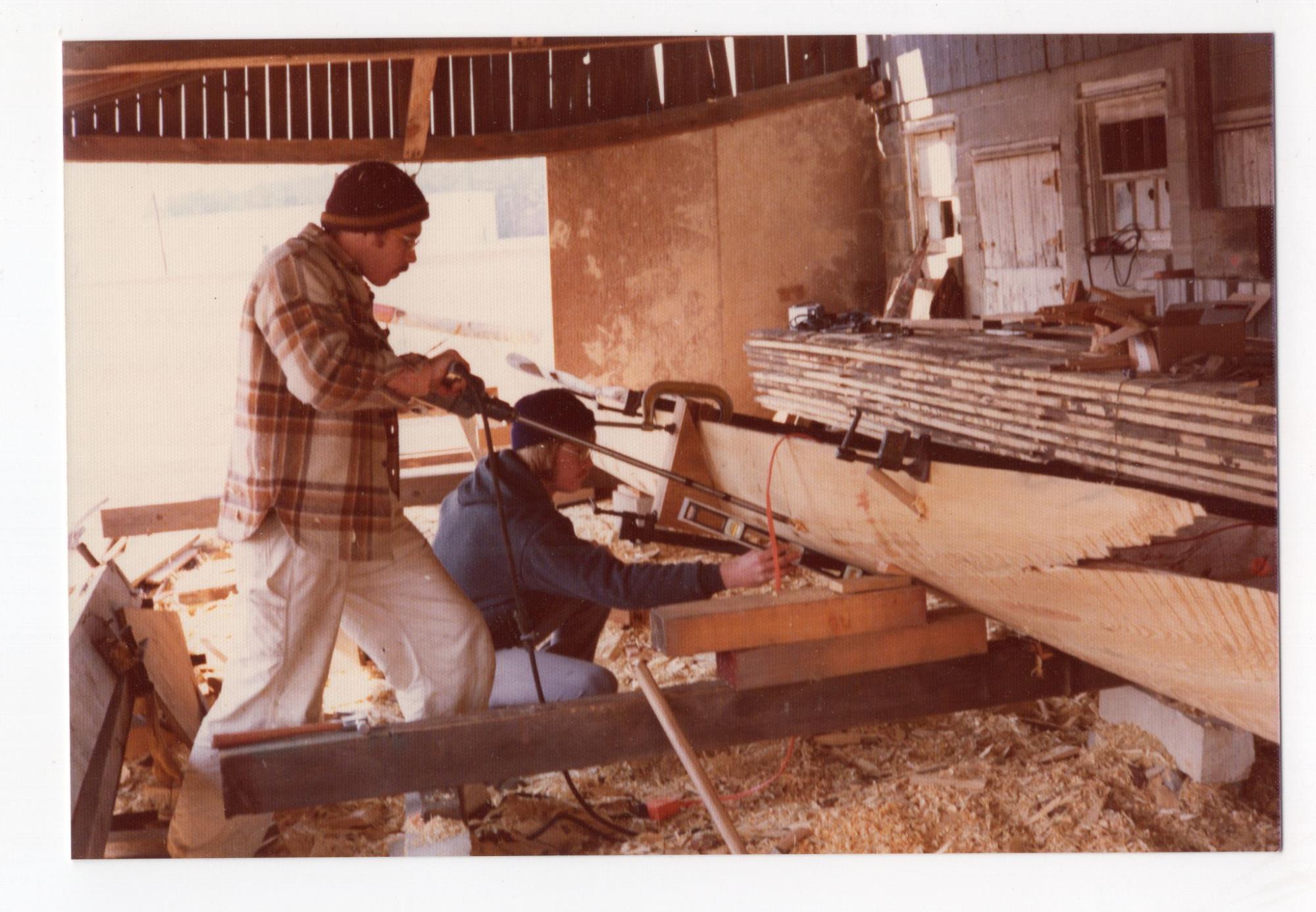
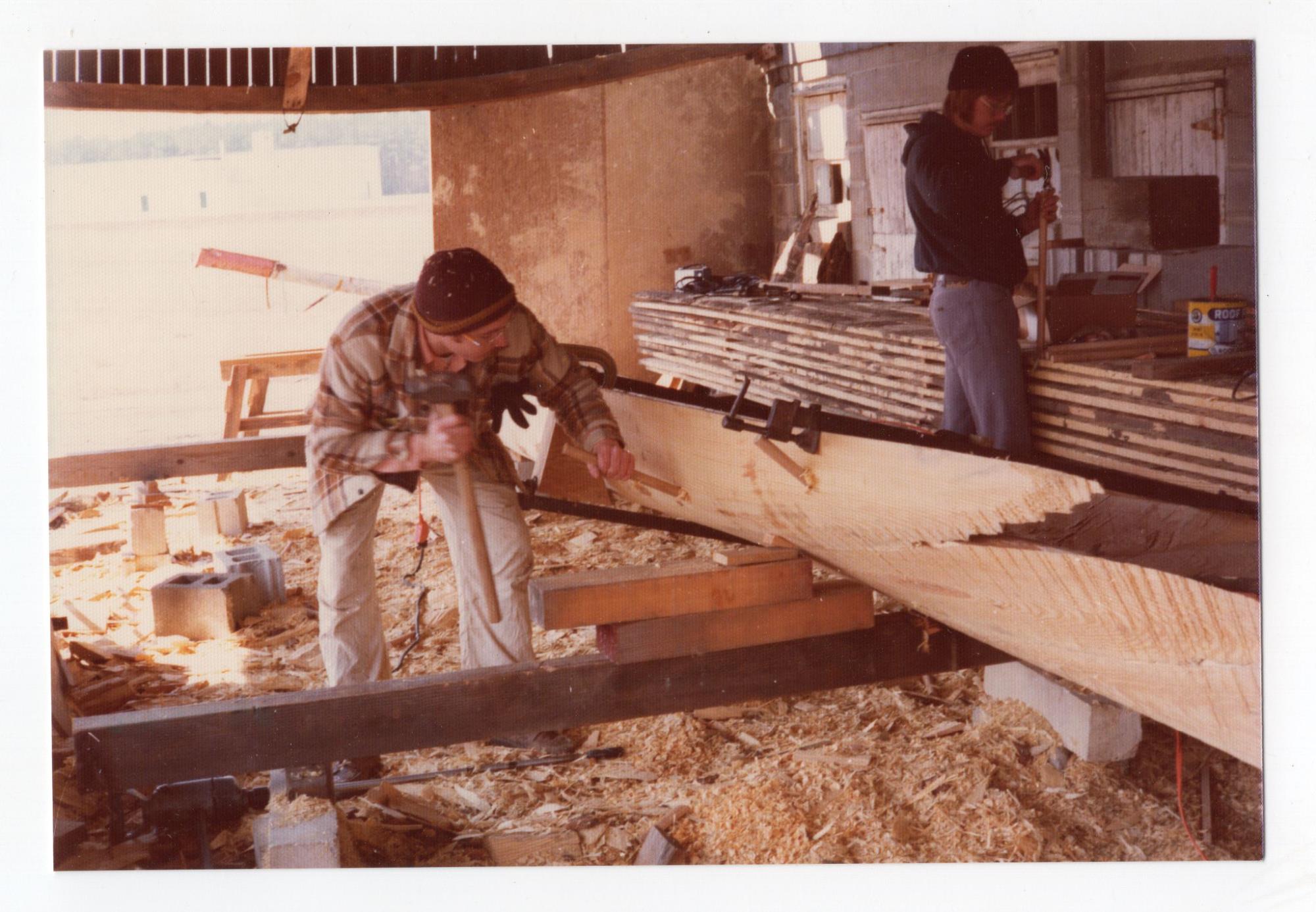
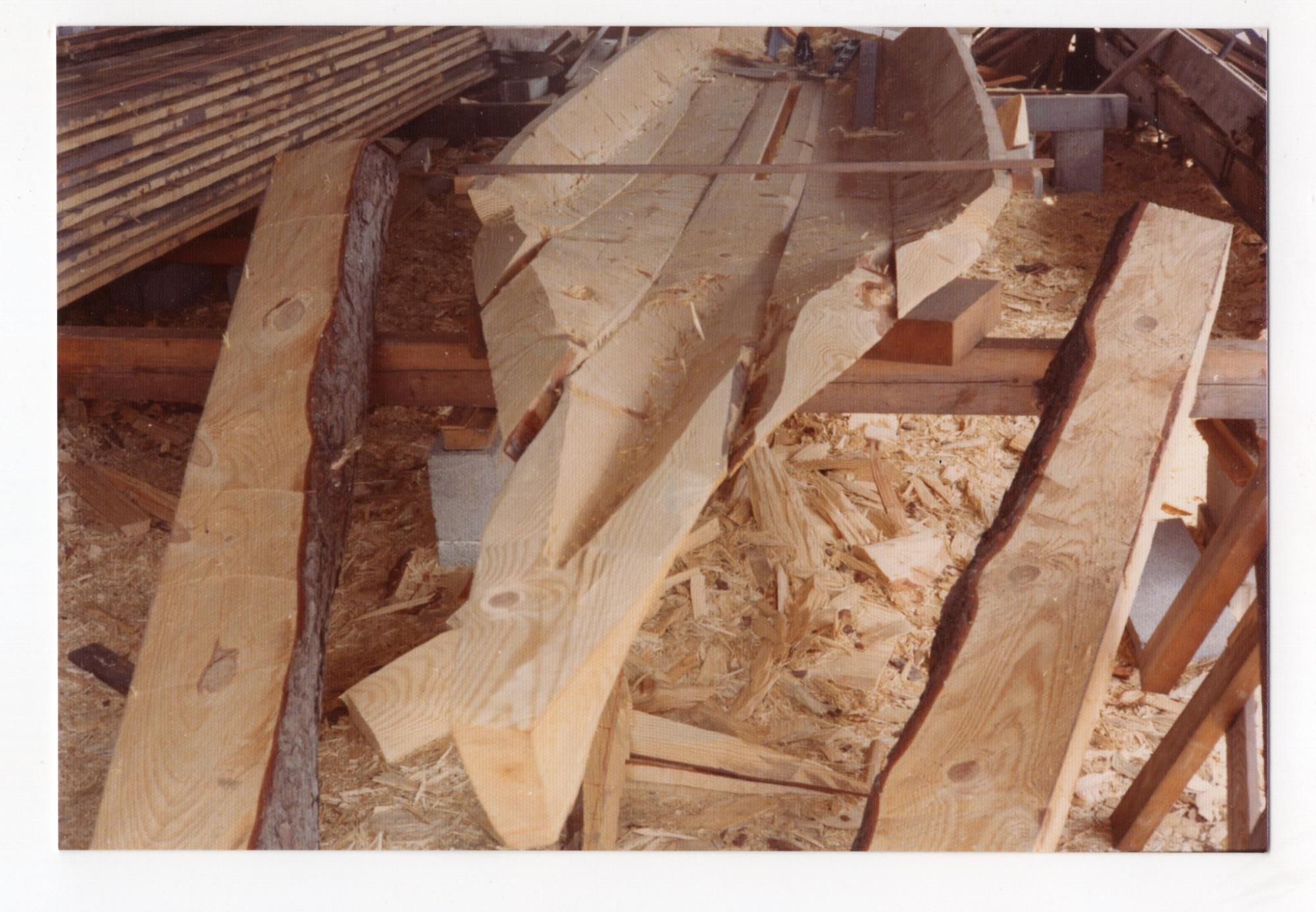
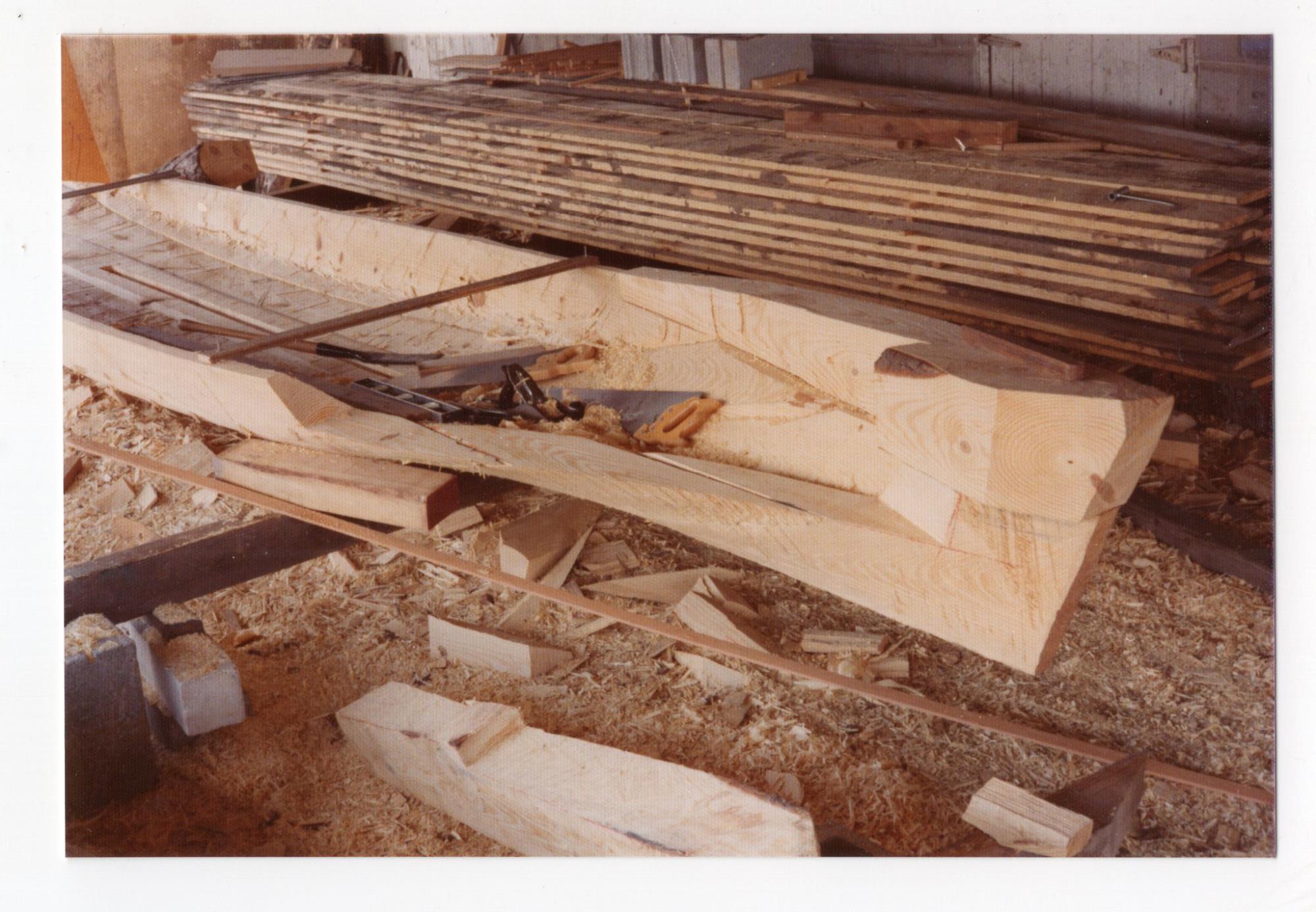
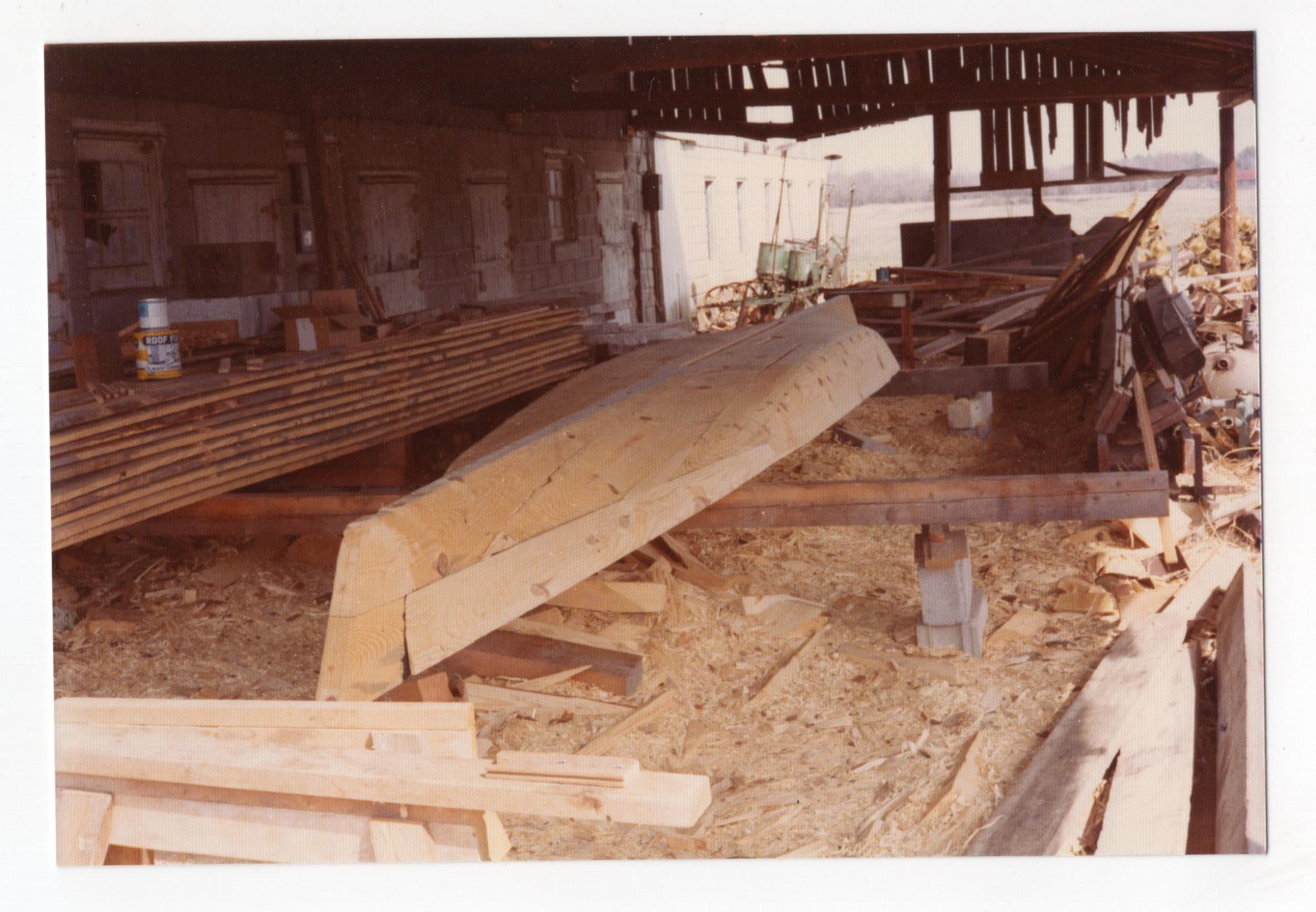
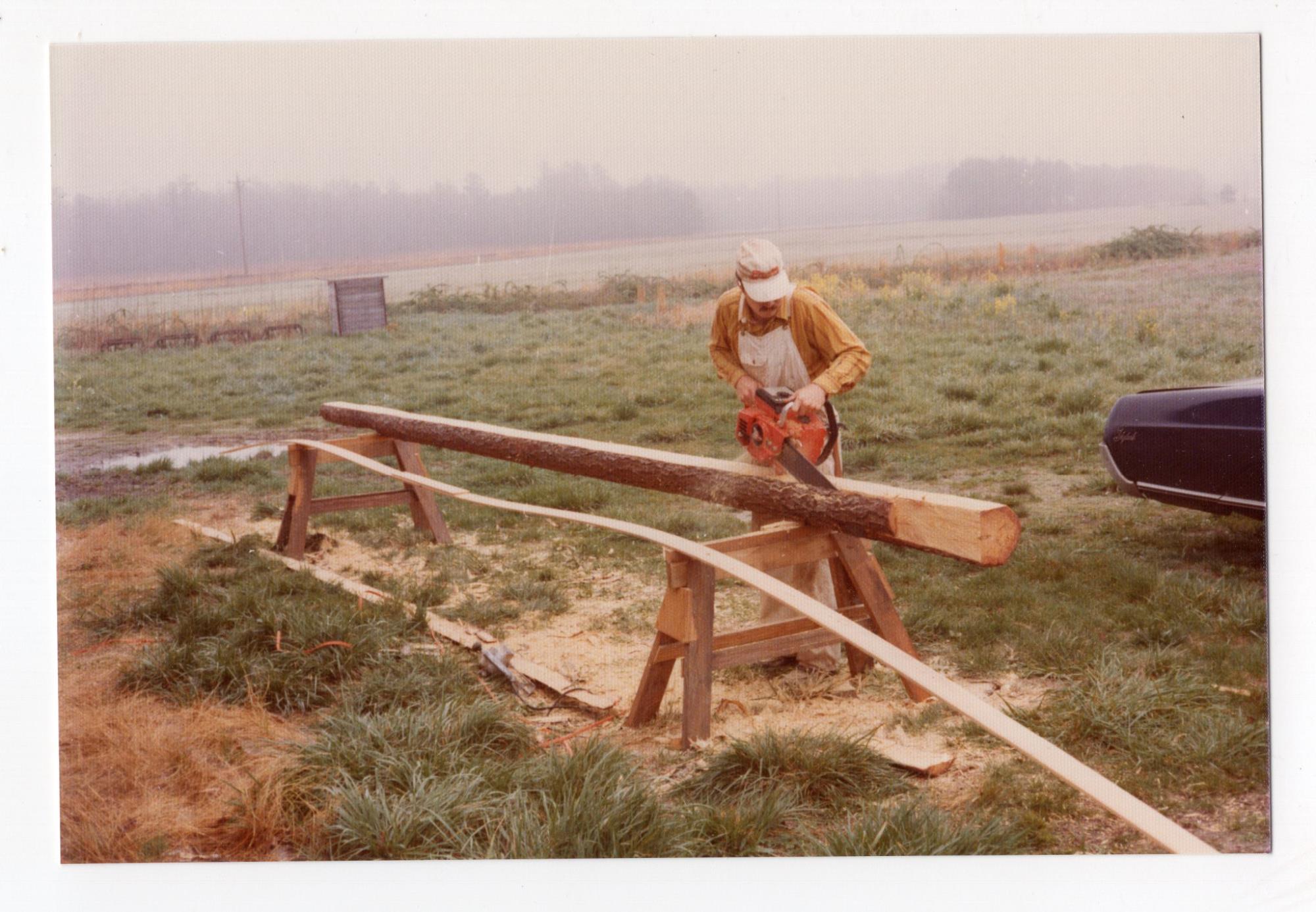
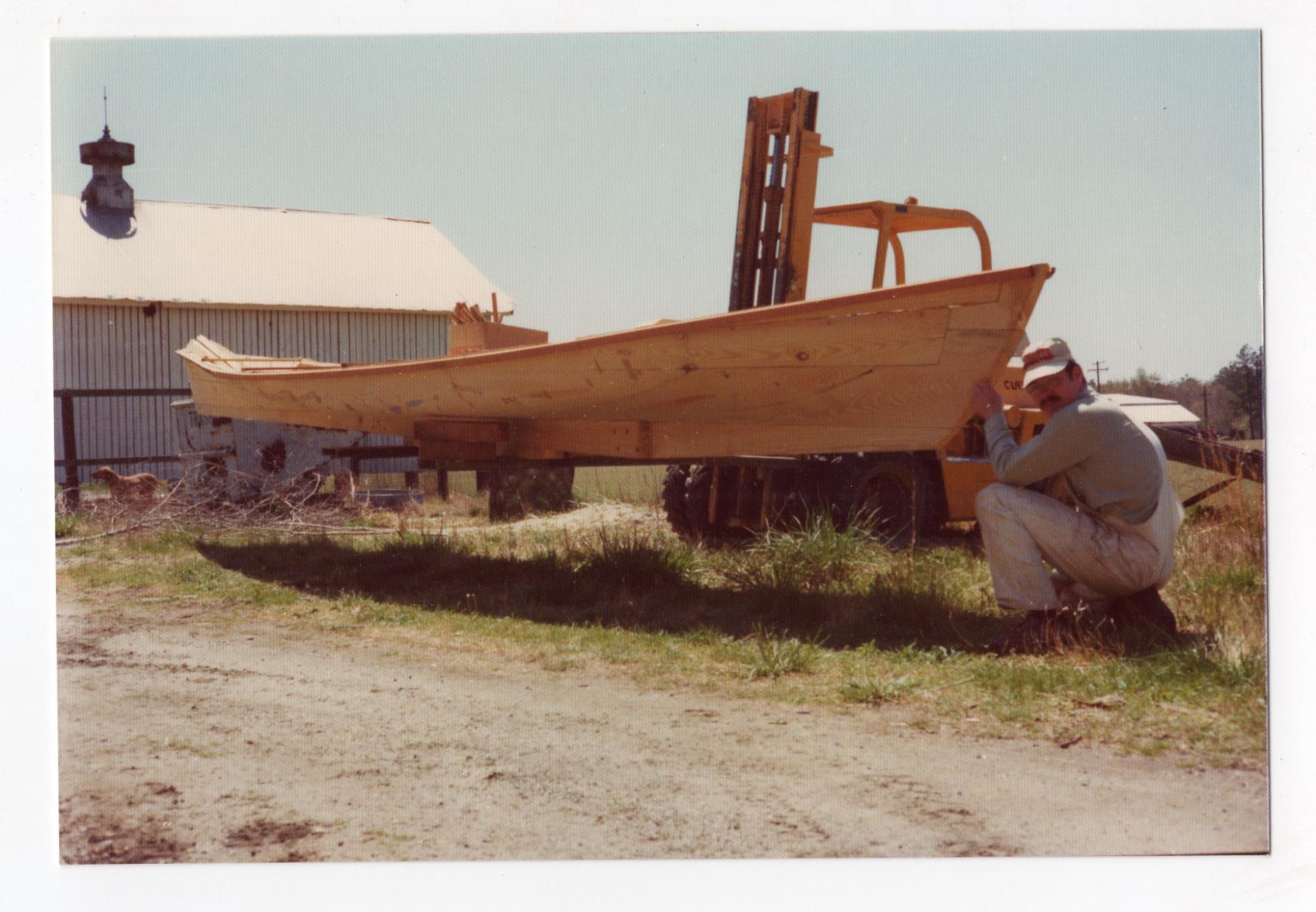
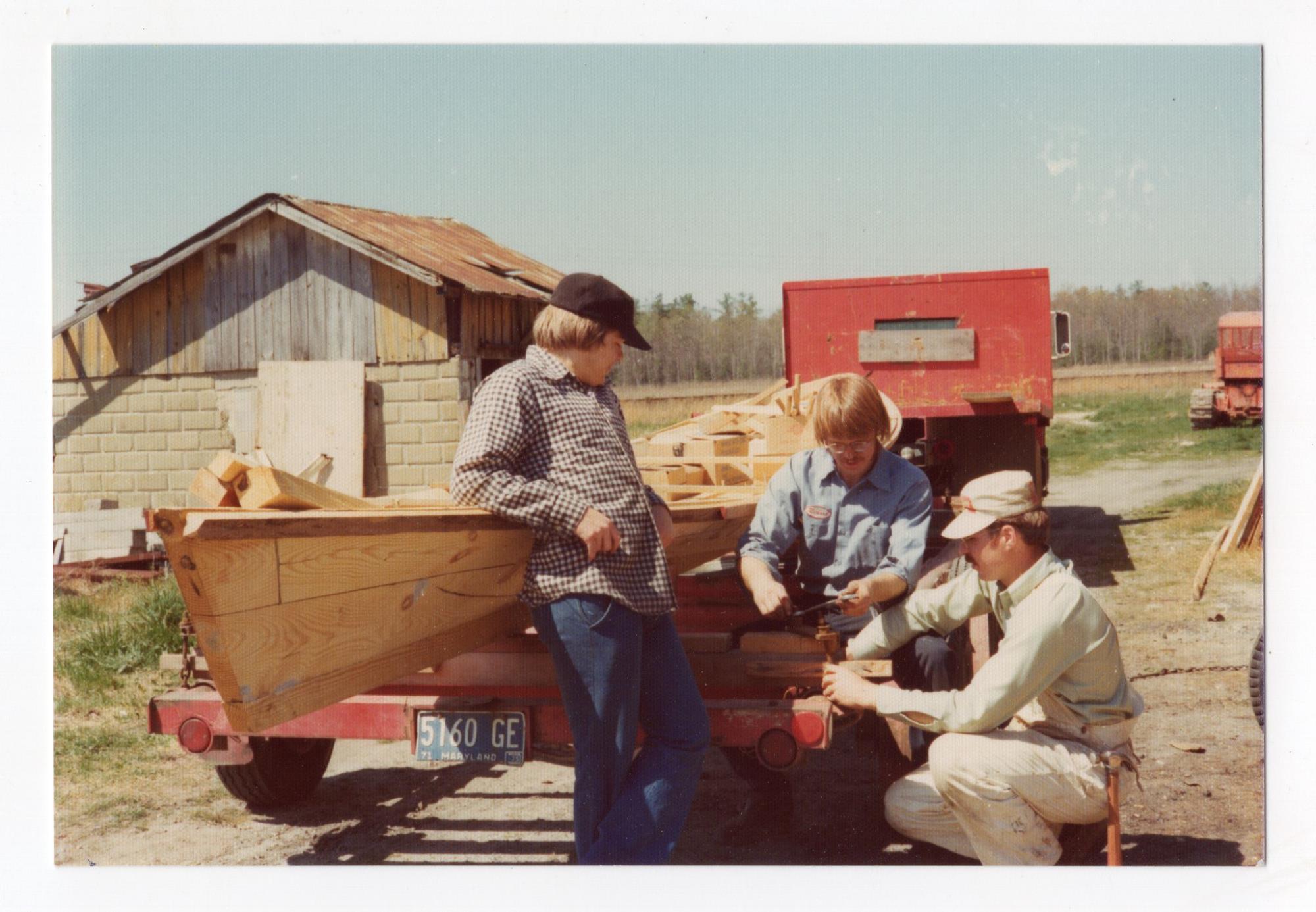
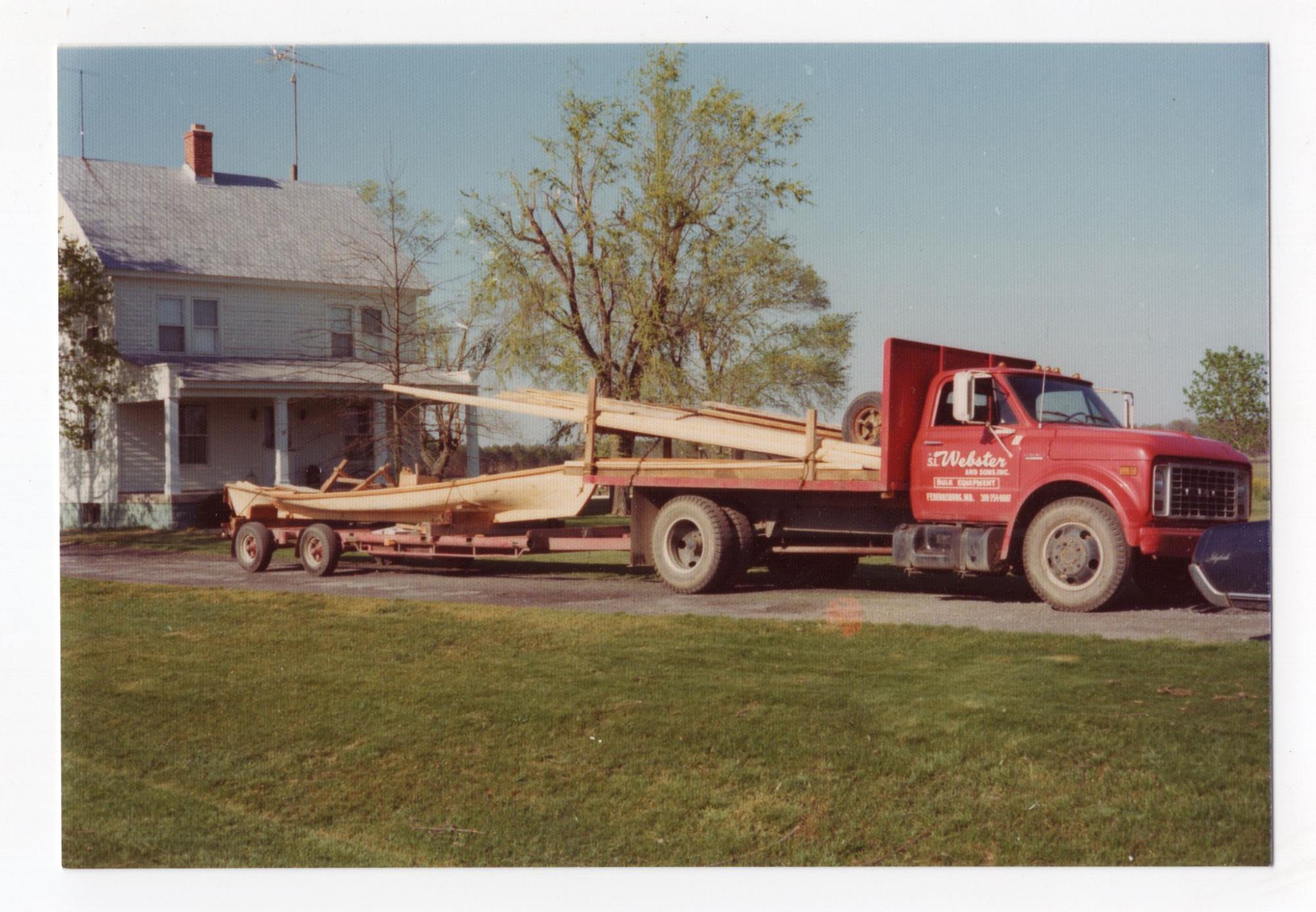
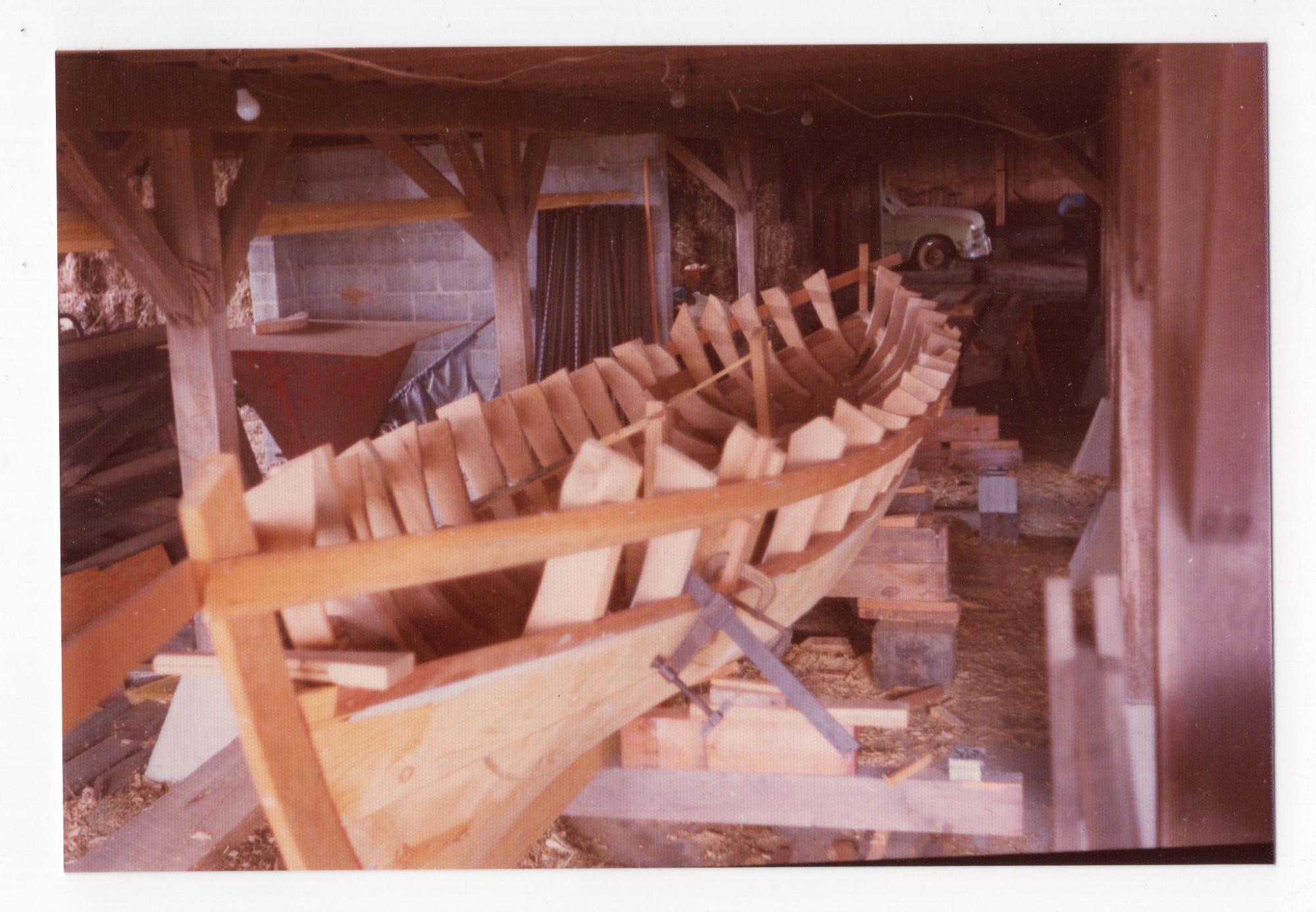
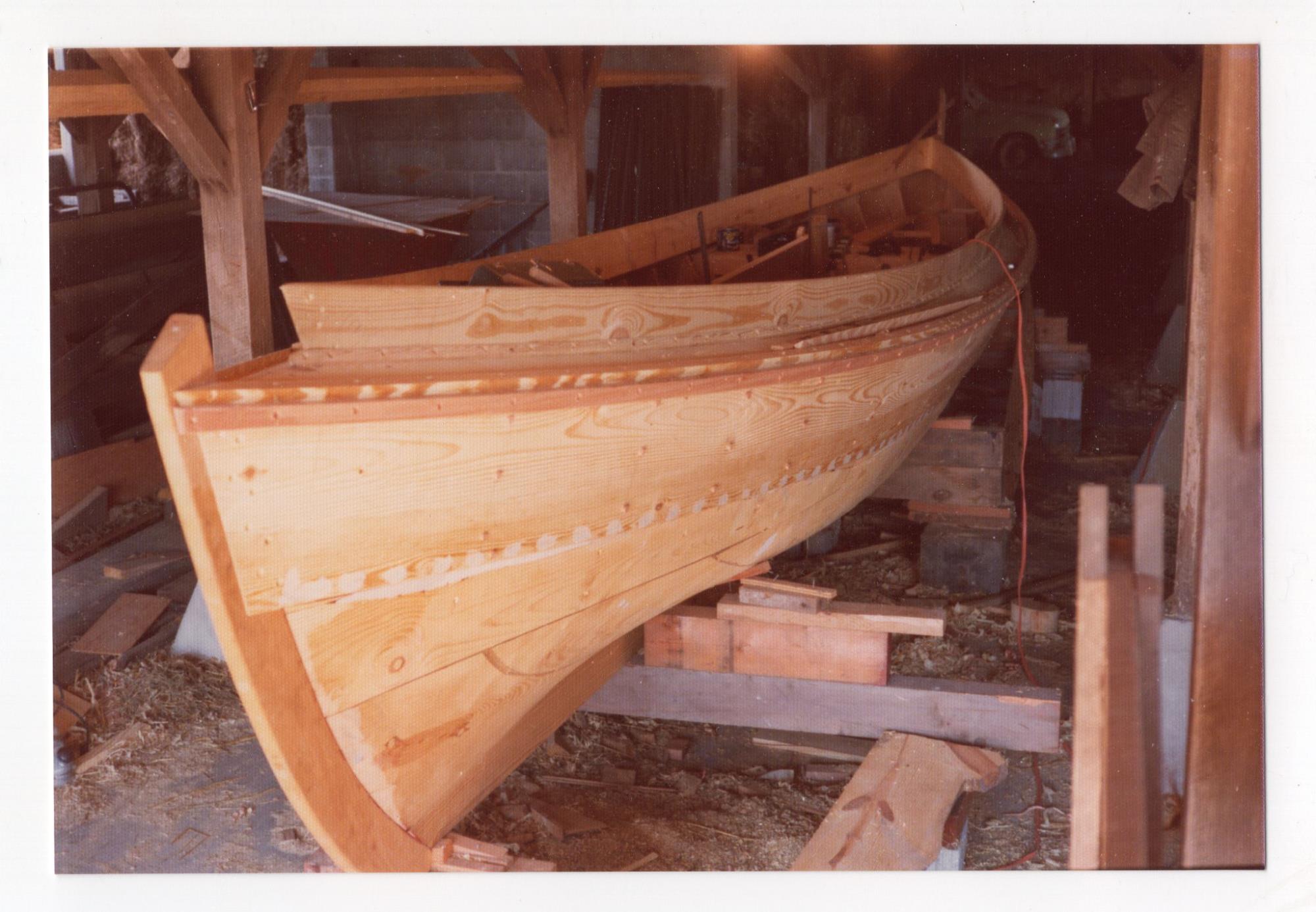
[Sam’s nail apron probably says “D. M. Webster and Son Hardware”. This business was in Secretary, MD.]
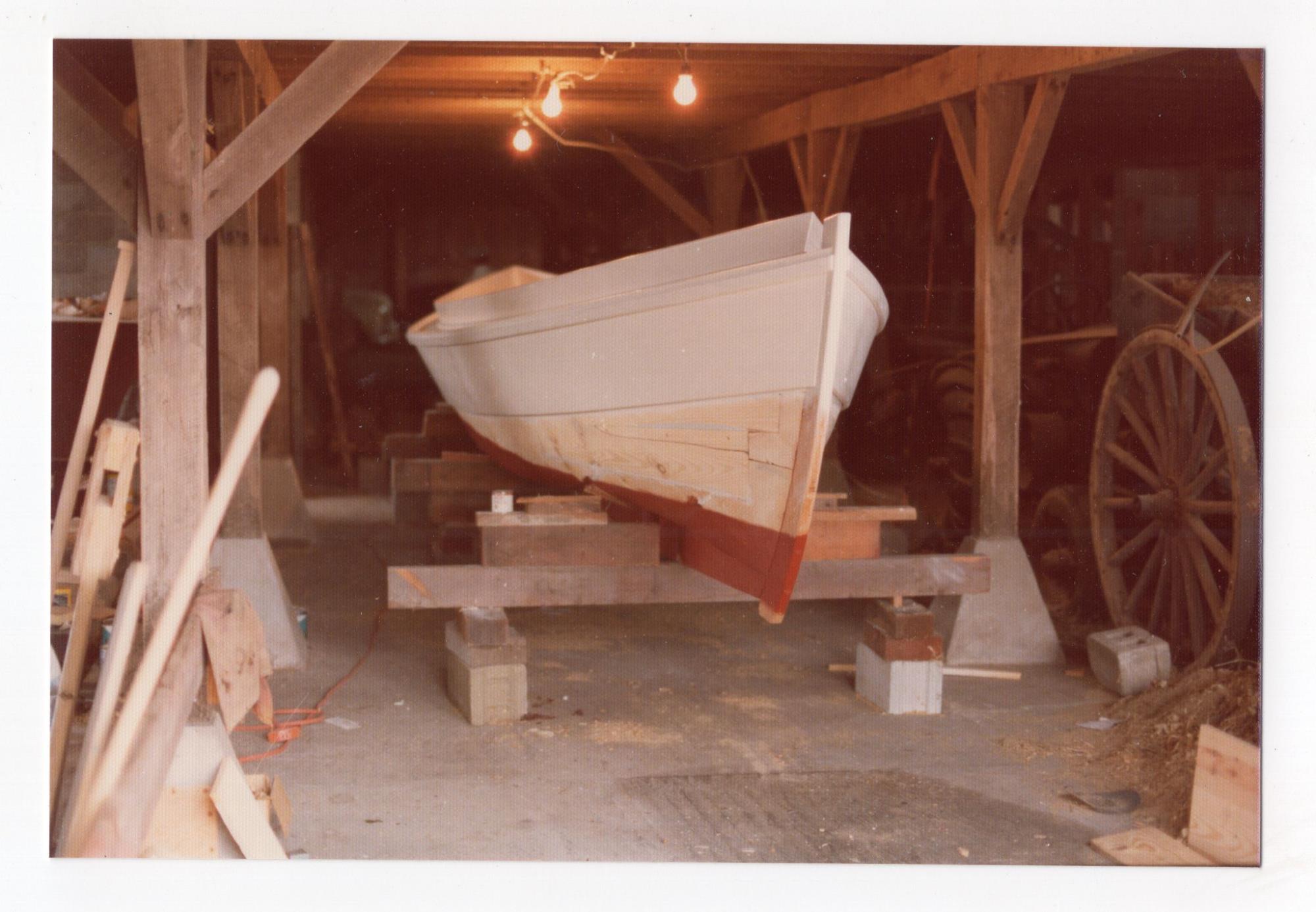
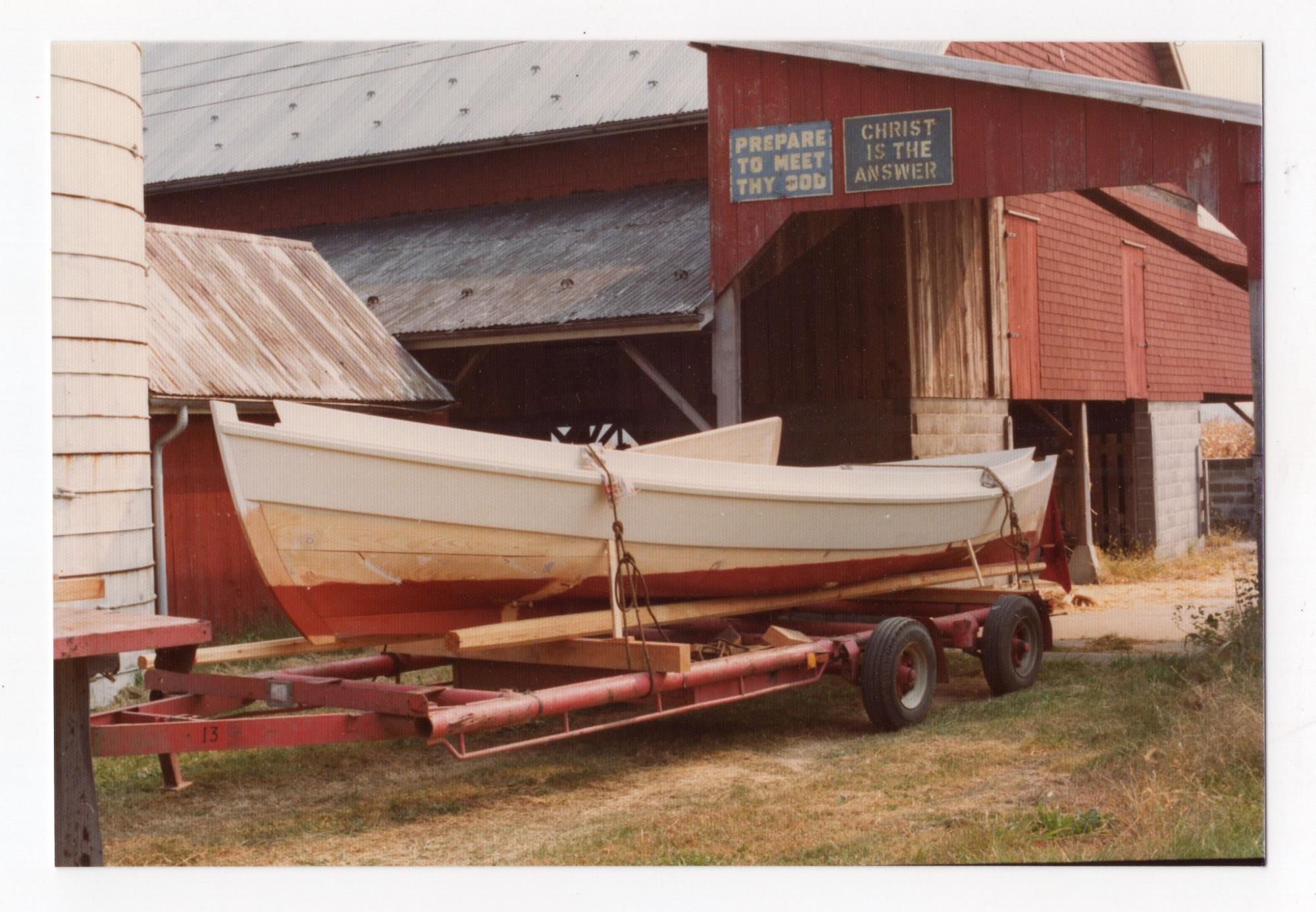
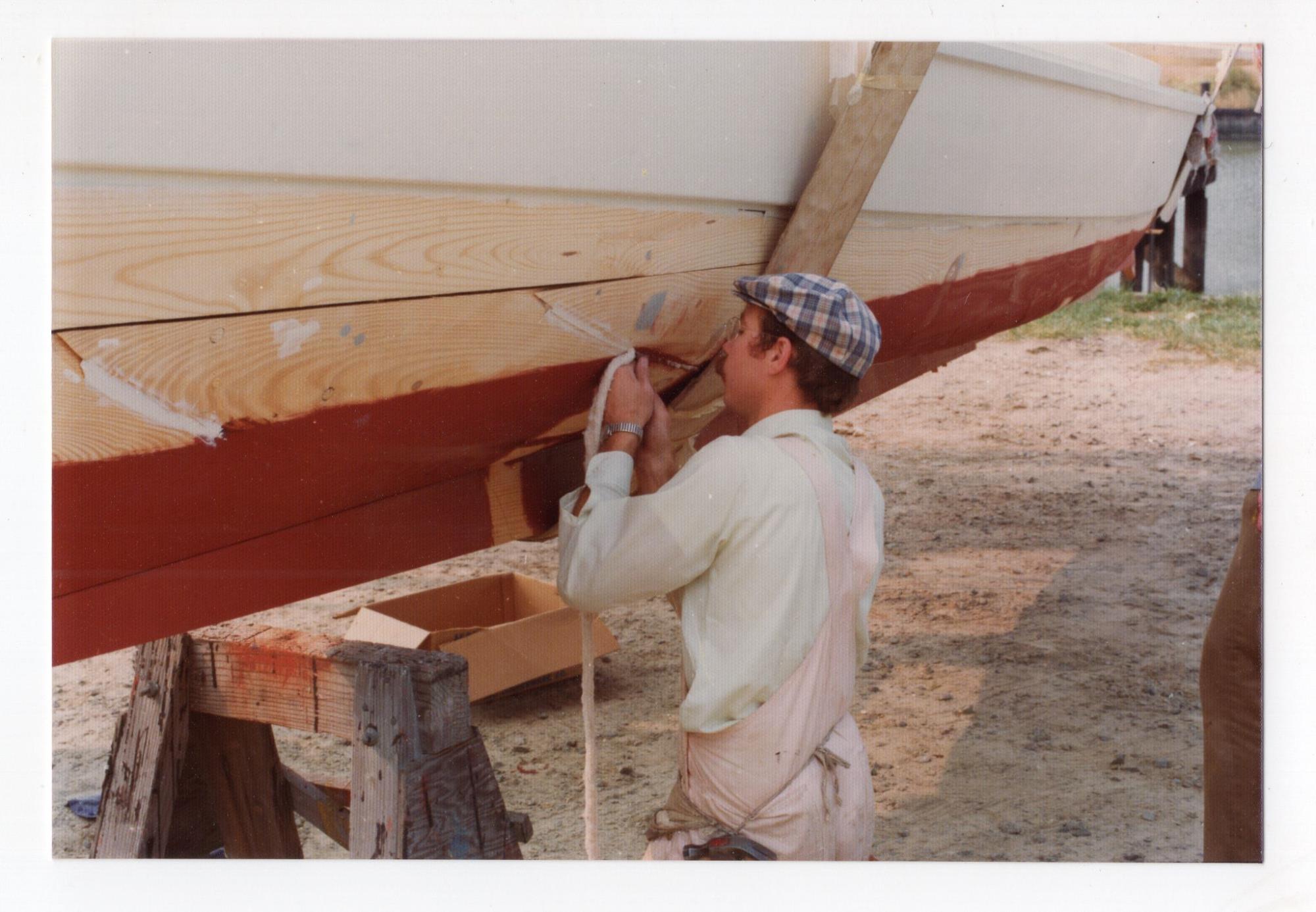
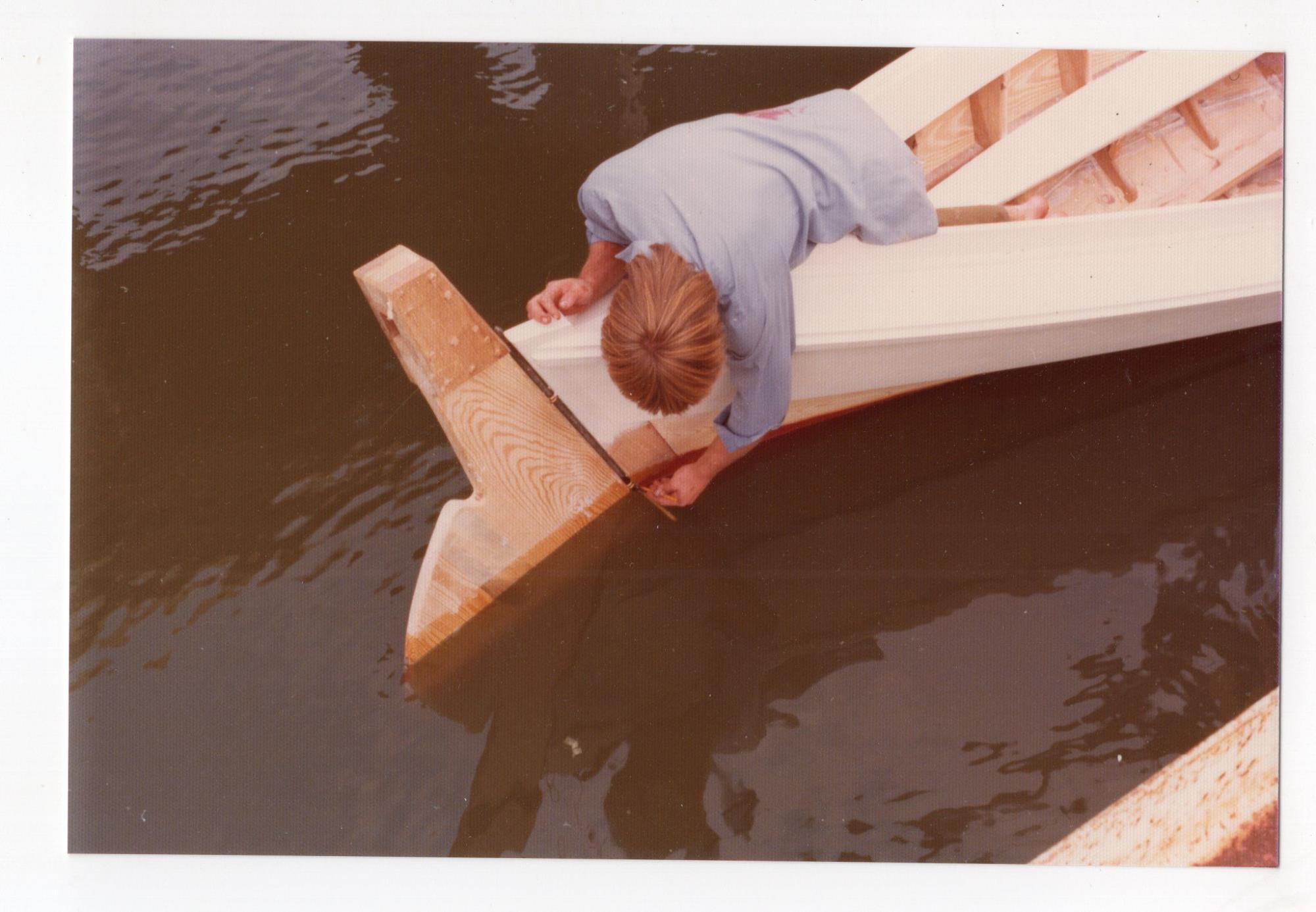
The WoodenBoat Article
The article about Sam Webster and his log canoe appeared in WB #006. It’s reprinted here with permission pending.
The WB article included eight of the thirty-three photos that are in the CBMM collection.
Cut and Look - Building a Chesapeake Bay Sailing Log Canoe
By Randall Peffer
“Probably ten men are now living who are capable of turning out a successful sailing log canoe.”
- M. V. Brewington, Chesapeake Bay Log Canoes, 1937
Challenge. A romantic would call it destiny. It has controlled Sam Webster's life for the past two years. He has set about proving that a boat carpenter with ordinary woodworking skills can recover the vanishing art of building one of America's most graceful and unorthodox sailing craft.
The roots of the challenge stretch deep. Place has something to do with it. The Eastern Shore of the Chesapeake is where Sam Webster has grown up; it is the place where the sailing log canoe germinated, flowered, and settled into dormancy.
Log canoes are truly American. They began as dugouts, built and used by the Indians to travel the net-work of creeks surrounding the Chesapeake Bay. To the early settlers of Virginia and Maryland the dugouts looked like efficient, simple transportation. Double-ended shallow-draft dugouts could be built without need of scarce tools, boat nails, bent frames, plans, etc. All you needed was a tree and an ax.
The settlers couldn't leave well enough alone. Had to have something bigger and better to get around in than the Indians next door. Legend has it that a man named Aaron who lived in the Poquoson area of Virginia in the late 17th century built the first two-log canoes by trunnel fastening two half-hull logs. Shortly after the two-log canoe made the scene, Aaron did it again-this time with three logs. Of course, the white men didn't much like paddling their bigger canoes, so they set about rigging sails and centerboards. By the middle of the 19th century, they had tried everything and finally settled on the leg o' mutton rig.
Following the Civil War, three areas became prominent in producing three very different styles of sailing log canoes. In the Poquoson area, builders designed their canoes with a clipper bow and single raked mast. Boat shops in the Tilghman Island area of the northern Bay constructed their canoes with clipper bows and bugeye rigs. The Pocomoke area of the central Bay built its canoes with bugeye rigs and strange headsails called "jiggers" that fly from sprits stepped forward of 75- degree angles from the bows. Although the Poquoson, Tilghman, and Pocomoke canoes bear significant differences in design, all three types evolved into boats for oyster tonging (the masts are unstayed for easy shipping on the oyster beds) with mostly five-log hulls, (a keel log, two garboard logs, and two wing logs) that are 25-35' long.
Log canoes oystered under sail into the early part of the 20th century, when most of them were either converted to gasoline power (you can still spot a few watermen on the Bay tonging from converted canoes) or slicked up to join the Easton area racing canoe fleet. The last new sailing log canoe went into the water shortly after World War II, and like most of her sisters she remained true to the double-end, narrow beam (6-8'). shallow draft, and "chunk" hull design of her Indian ancestors.
Sam Webster was still in diapers when the last canoe was launched, but all his life in Trappe, Md., he has been surrounded by relics of the log canoe fleet and their lore—things that make a young Sunfish sailor on the Bay dreamy and itchy to build a boat. There is also something in Sam's blood: his ancestors are named Aaron. Log canoes have plagued Sam Webster like organ music in an old pirate film.
You can see how a young sailor's dreams and itchiness have worked on Sam's life. Four years ago he was helping his father manufacture farm equipment, and Sam found himself dreaming about boatbuilding: "So one day I said to myself, 'Listen, dummy, if you want to build a boat, you better learn how to do it.' I went over to Dickerson's (home of the Dickerson cruising ketch) and said, 'My name's Sam Webster, and I want to learn how to build boats.' " Dickerson's started Sam as an apprentice, and he learned the craft of building wood yachts. On weekends he and another carpenter built workboats for watermen.
Sam Webster was all set to become a happy man, when one day his grandfather came across an old Pocomoke canoe that an estate was trying to give away. Just then Sam was reading Brewington's book about log canoes and came across the author's thirty-year-old assertion that log canoe building was a dying art. Webster felt his calling: "I gotta have one of them!"
Her name was "Miss Linkwood"; she was a 28', five-log Pocomoke canoe built in 1897 and converted to power fifty years ago. It took Sam Webster six weeks of free-time ripping and banging at "Miss Linkwood" to discover that there wasn't enough good left in the old hull to build upon. But the bait was in Sam's mouth and he had to run with it. He took the lines off the old canoe and went looking for logs. Destiny again?
The logs that would have cost him several hundred dollars apiece materialized for free on some land Sam's father was clearing with a bulldozer- five straight yellow pines. Sam read Brewington's description of how old builders squared their logs with abroad ax. He started on the keel log with his ax, but the romance of doing it the "old way" soon made room for a chain saw. All five logs squared out to ten inches.
Oh dear. The logs were significantly more narrow than the logs in "Miss Linkwood." The new boat could never equal the old boat's beam. Sam began to learn the peculiar skill of a log canoe builder: plan, cut, look, modify. "Rack o'eye."
The struggle was on, and the next step was to cut the deadrise and round out the bilges. Sam did this
in the traditional way, piling the starboard garboard and wing logs on the keel and hacking away with chain saw and ax. Then he did the port side the same way. By taking measurements at stations along the old hull, Webster had a fair idea of the proportions he should try to approximate. This method doesn't guarantee a perfectly symmetrical hull, but it has worked on some of the best racing log canoes. Cut and look until things seem right.
With the deadrise cut, the builder began to rough hollow his logs. To make sure he hollowed his logs to the desired thickness, he drilled holes in the logs at stations and drove mahogany dowels, called "gauge pins," into the holes. The dowels are cut as long as the desired thickness of the hull at the point where they are driven. Sam hollowed down to the gauge pins with adze, chain saw, skillsaw, and electraplane. Cut and look.
Because of the lack of iron available to many of the early canoe builders, many log canoes were trunnel fastened. Sam Webster followed this tradition, driving 16" trunnels at one-foot intervals along the seams. The fastenings for an inboard seam were staggered 6" from those of an outboard seam.
As the hull logs squeezed into place with furniture clamps, and the centerboard well was cut, Sam Webster began to taste success. He had what almost looked like a boat hull except the ends of the logs were feathered. He followed Brewington's advice and squared the ends of the logs and drift bolted filler pieces (made from the largest chunks left over from the original cutting of the main logs) into place to fill out the hull to stem and stern. When Sam had his fillers in place (because of their large-size filler chunks often overlap the centerline at the stem and stern of Pocomokes) and made fair with the rest of the hull with a chain saw and electraplane, the hull had an even sheer line all around. The hull work was over.
Webster fleshed out the freeboard on his canoe hull by lapstrake fastening a 16" pine plank, called a "rising plank," to white oak frames spaced along the wing logs. Since the tops of the frames are 4" thick, the 4" washboards fastened to the tops of the rising plank frames without any further framing. One log canoe hull complete - 28' x5½' x 18" (board up); all cut and looked at.
The final hull work consisted of fastening two 3½" x 14" white oak mast thwarts (or "seats") into place at the fore and main mast stations and nailing the yellow pine centerboard trunk over the well. Sam sanded his hull fair, caulked it traditionally, and treated the inside with Cuprinol. He had $100 invested in lumber (the oak and rising planks) and 900 hours of solo time.
Maybe destiny had something to do with the spars. A friend offered Sam the choice of a private stand of loblolly pine for sticks on the new canoe. Saved money again, and soon Sam had trimmed his foremast to 26' ("a foot or two shorter than the hull." - Webster was a canoe builder now and learning to trust his intuition) and the mainmast to 25'. He spent a day on each mast: squaring with a chain saw, eight-siding with a skill saw, and rounding out with the electraplane.
The rest was duck soup—centerboard, rudder, hardware, etc. The new log canoe builder drew up a traditional leg o' mutton sail plan (he felt the plans in his blood) and had Albert Brown Sailmakers, whose loft has served workboats since the 19th century, cut dacron jigger, foresail, and mainsail to a total of 280 sq. ft. The hull was dropped into a nearby tidal creek to "see how she'd ride in the water." Two men of equal weight were placed, one in the bow, one in the stern, and the new Pocomoke's waterline was marked off. She absorbed her traditional workboat white hull paint swiftly, soaked in a travel lift's sling for a few days, and tightened up dry. In November 1974, after fifteen months of part-time laboring, Sam christened his new Pocomoke after his mother (a waterman 's tradition) and his canoe became official floating evidence that the art of log canoe building is not lost: she is the first new sailing log canoe to part Bay water in more than twenty-five years.
How does she sail? The Dickerson cruising ketch has been a good trial horse. Sam Webster tells how he was sailing his canoe in company with friends on a Dickerson ketch. The Dickerson was as close to the wind as she could sail; Webster's Pocomoke swung 15 degrees closer to the breeze and still kept in stride with the ketch. Of course the canoe is tender, but unlike the racing Tilghman canoes which require large crews for ballast, the new Pocomoke can be easily sailed by two. She has trudged across the Choptank River under jigger (which acts to balance a stiff weather helm) and foresail in a 35 kt. breeze. No question she'd get an oysterman's catch (or a day-sailing family) home.
Success. Sam Webster has met his challenge — the sailing log canoe. A different kind of boat. Sam knows.
More about CBMM Collections
Items that are not exhibited around the CBMM campus are kept in the Norman & Ellen Plummer Center for Museum Collections. This is a climate-controlled facility that was expanded and modernized in 2023.
You can search all the collections online here. Look for the links at lower left to search these collections separately:
Objects, Photographs, Manuscripts, Ships Plans
Regional Oral History Database
Books and Periodicals
See my CBMM Collections Search Tips.
The collections and library are accessible only by appointment. Email collections@cbmm.org or visit the Library and Research page.
More about Small Boats
I also write:
About volunteer work in small boat conservation at the Chesapeake Bay Maritime Museum: Small Boat Shed Volunteers
For the Shallow Water Sailors (Chesapeake Bay) chapter of the Dinghy Cruising Association: Shallow Water Sailors
For the Chesapeake Eastern Shore Chapter of the Traditional Small Craft Association (TSCA): TSCA ES