
 Maryland
Sarah May ex-Teddy
Crab Scrape Bateau Model by Edward R. Thieler
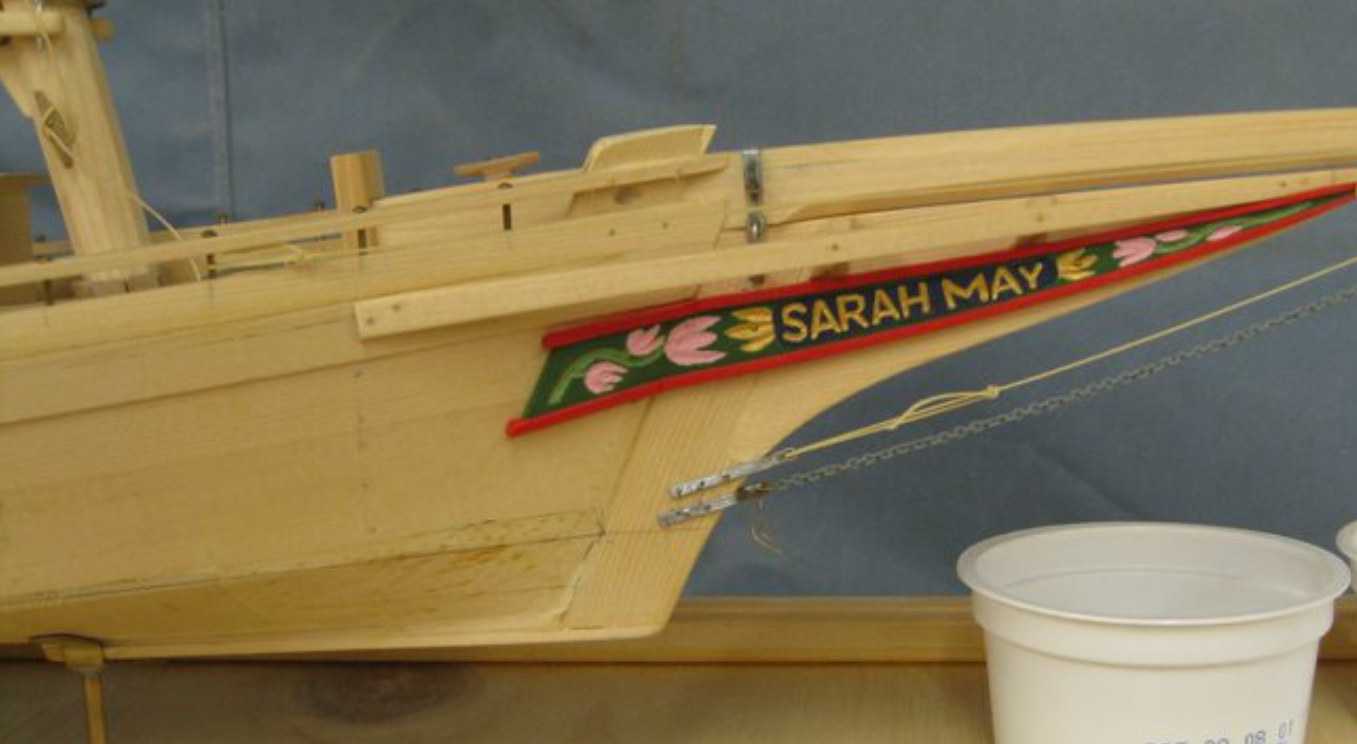
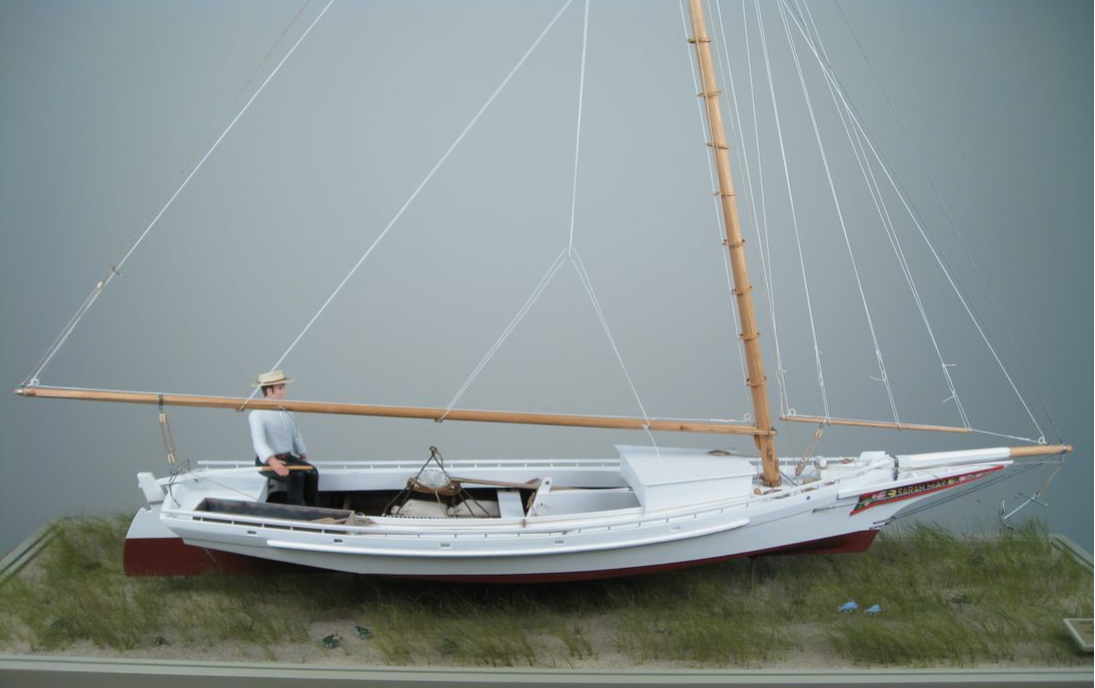
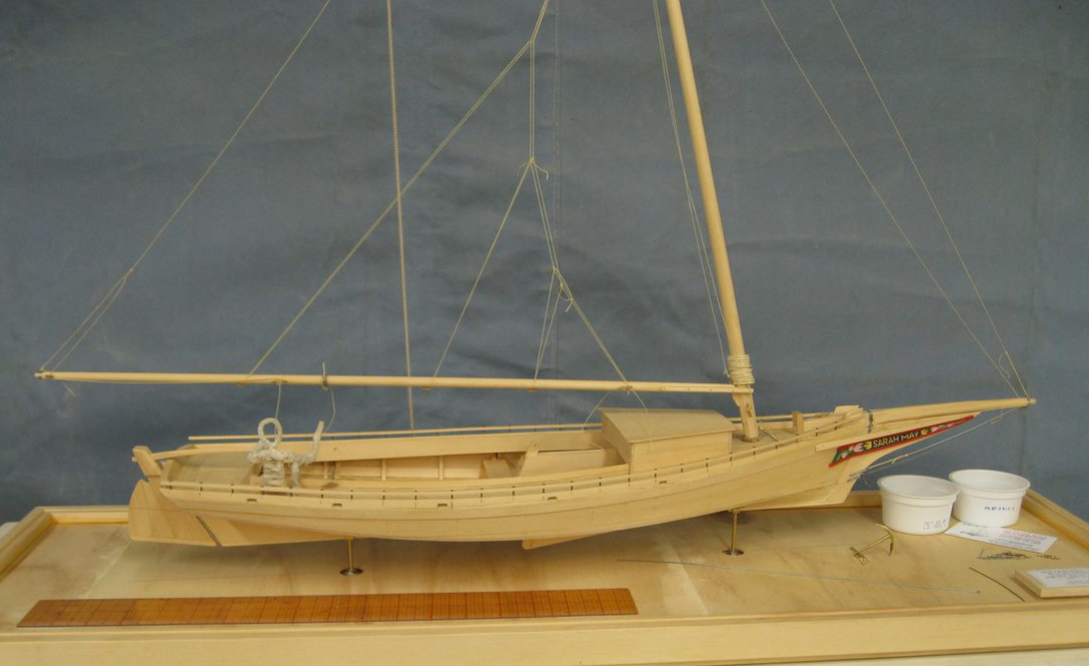
Crab Scrape Bateau Sarah May (originally Teddy)
1:12 Scale Model by Edward R. Thieler
CBMM Catalog No.: 2022.0004.0002
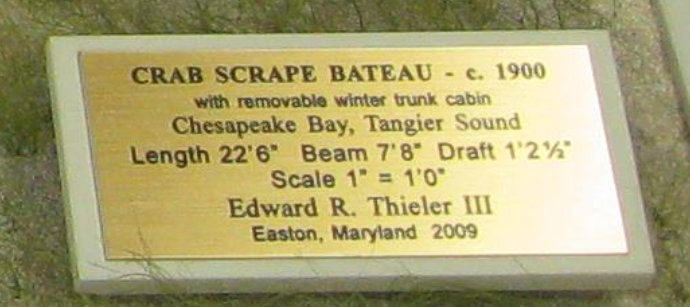
Crab Scrape Bateau - ca. 1900
Chesapeake Bay, Tangier Island
Length - 22’ 6” | Beam - 7' 8" | Draft – 1’ 2 1/2”
Scale 1” = 1’ 0”
Edward R. Thieler III
Easton, Maryland 2009
Crabbing bateaux evolved from the smaller crab skiffs (16-18 foot) that were used for dip netting crabs. The larger bateaux were designed to carry heavy scrapes for raking crabs from grass beds in shallow waters. Earlier crabbing bateaux were 22-26 feet in length, later ones were 26-29 feet. They were also used to trotline for crabs in summer, for oyster tonging in winter, and for transportation between the islands and small isolated communities. They were designed with very low freeboard and wide side decks (“washboards”) to make it easier to haul and lift the scrapes back onboard and to cull the catch.
Hundreds of crabbing bateaux worked the crab and oyster beds before WWII and were the most common sailing workboat (along with log canoes) between Tilghman and Tangier Islands. Howard Chapelle photographed bateaux at Deal Island in the 1930s and returned in 1940-41 to take the lines off four boats – Teddy, Caroline, Rosa Lee, and an unnamed Jenkins Creeker. These appear as Figures 9-12 in Chesapeake Bay Crabbing Skiffs. Chapelle photographed and took the lines off one more in 1951 - the abandoned hulk Jess Willard that was pulled ashore in Cambridge Creek. By that time, the sailing crabbing bateaux were virtually extinct. Their designs were modified to carry the gasoline engines that became widely available in the 1940s. Their influence is seen today in the power crab scrapes still found in Tangier Sound and the lower Bay.
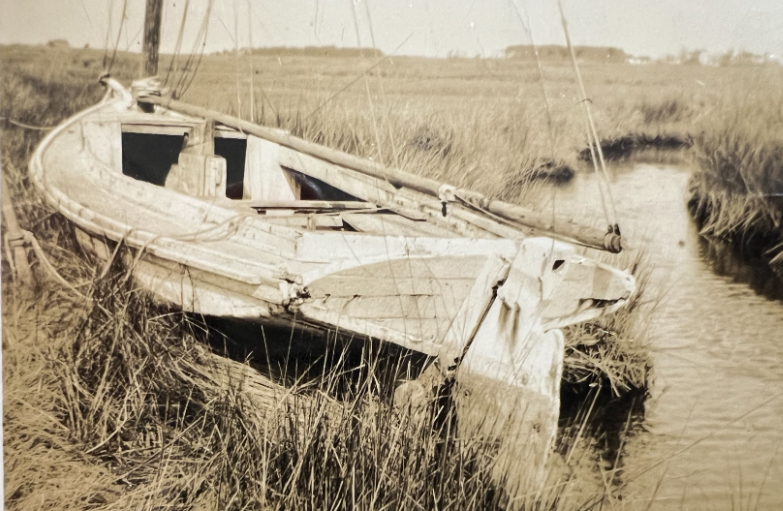
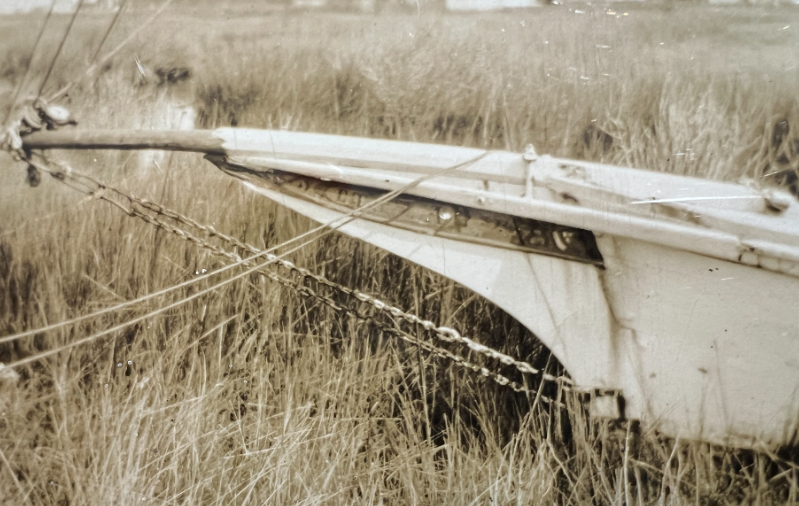
The models of crabbing skiff, bateaux, and other Chesapeake Bay workboats in Edward R. Thieler III Collection at the Chesapeake Bay Maritime Museum (CBMM) are historically accurate and are a valuable resource for the traditional builder and historian. Thieler based his Sarah May model on Chapelle's Teddy and Jess Willard plans and specifications. I introduced Sarah May along with other crabbing bateaux here. Now I'm pleased to offer a detailed presentation of Ed's design, construction, and documentation of Sarah May.
Ed edited the text and selected the photos and plans for this article, for which I'm grateful.
Model Description
Large format images of model construction are here.
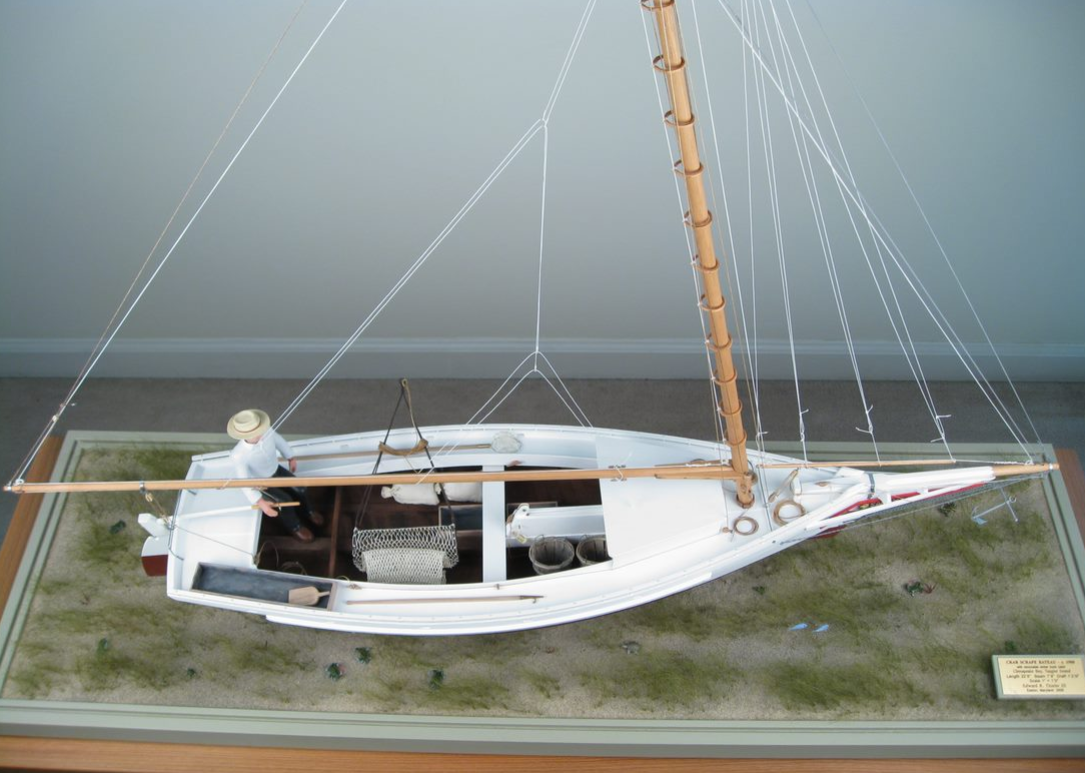
On port washboard – crab dip-net.
Under that are two sandbags, each about 40-50pounds, used to balance the boat against the wind.
An empty box and two bushel-baskets are ready to receive caught crabs.
On the starboard washboard is a “dump box” – the scrape net contents are “dumped” into this box for culling, sorting out the keeper crabs, and returning the rest overboard. In the dump box is a carved bailing scoop, and forward of that is a boat hook. (The hook is carved from a bronze boat screw, over 100 yrs old.)
The scrape occupies the rest of boat.
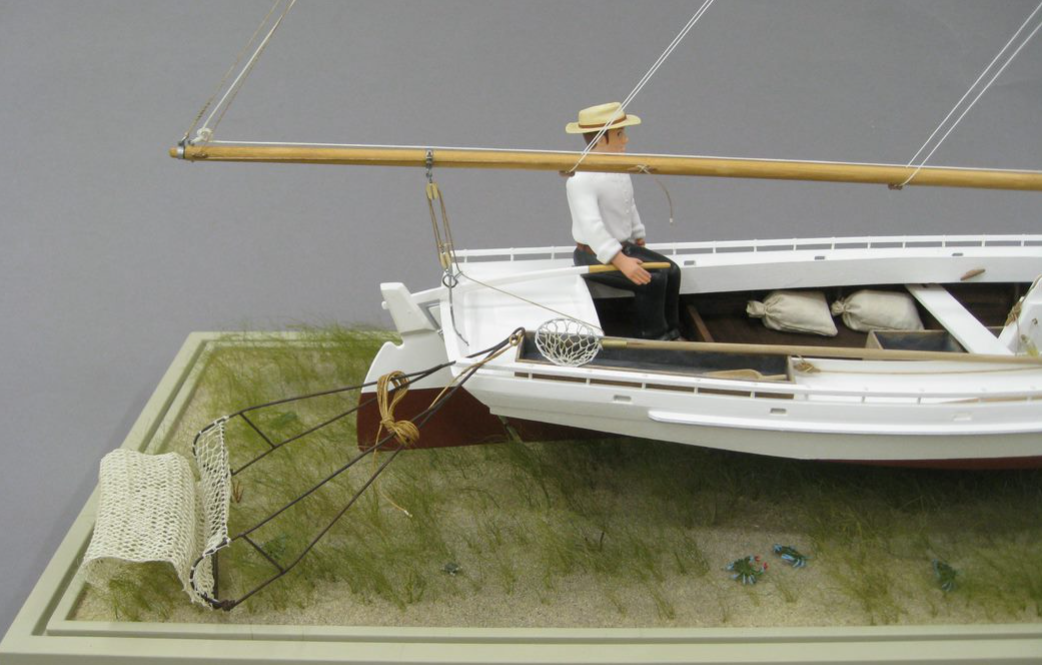
Showing the scape entering the water and underwater grass beds, (Fly-tying Yak-hair) and crabs.
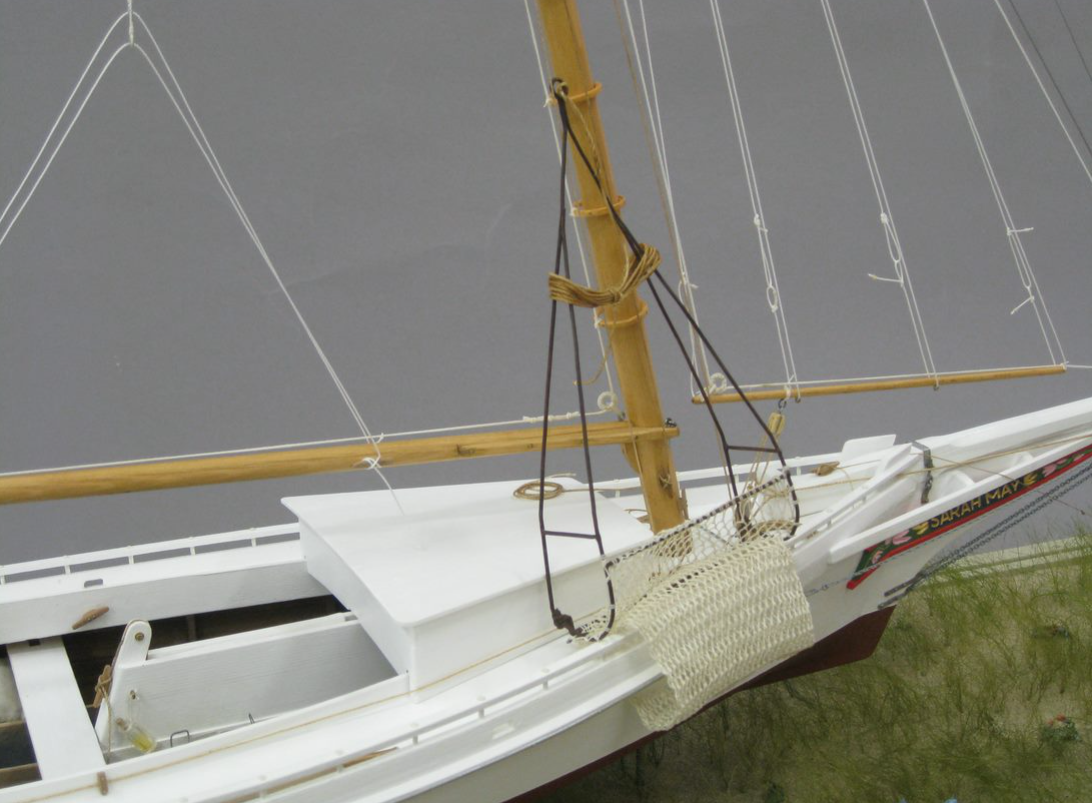
Overall view of the scrape framework and net-bag.
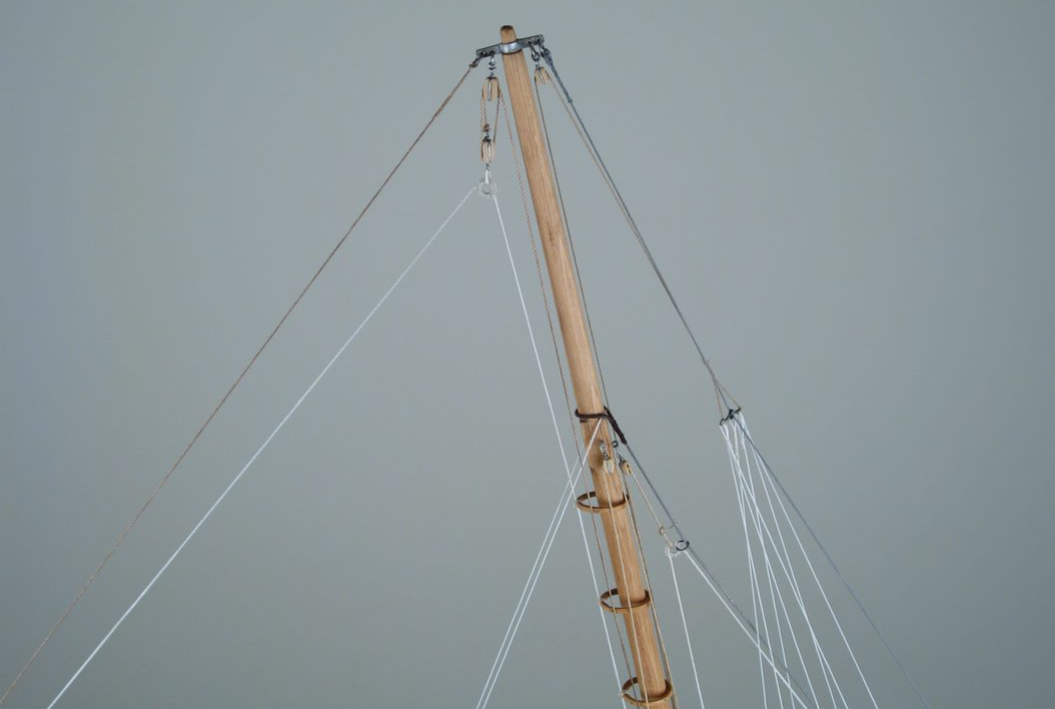
Mast head and hounds fittings.
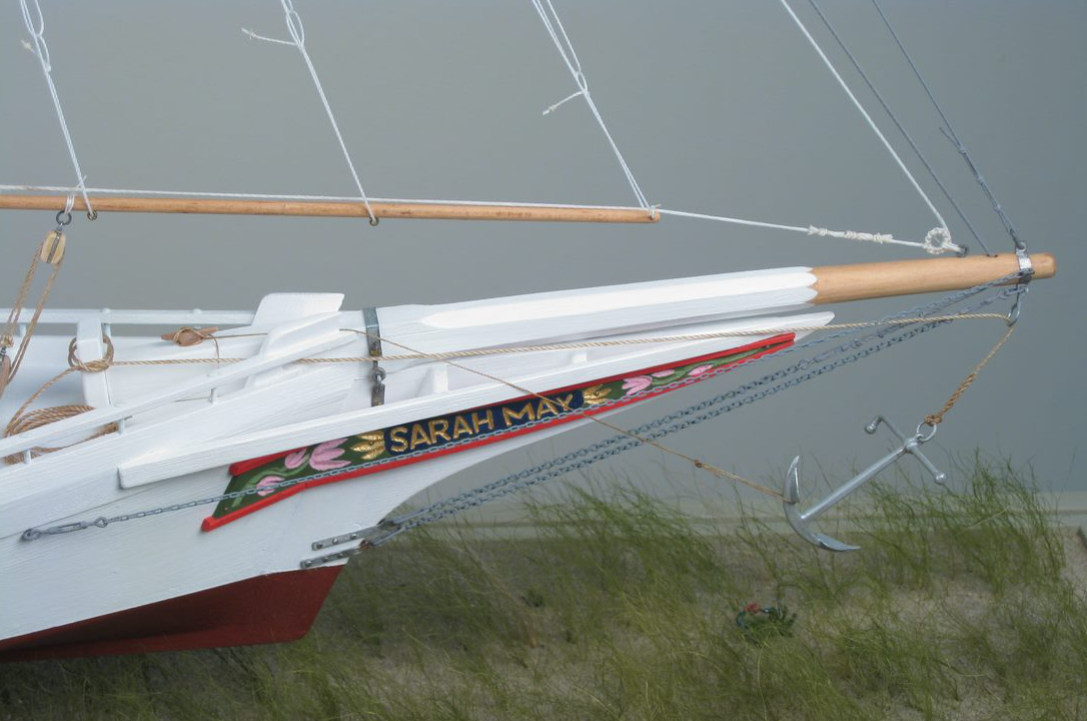
Sarah May tailboards with Mayflower decorations.
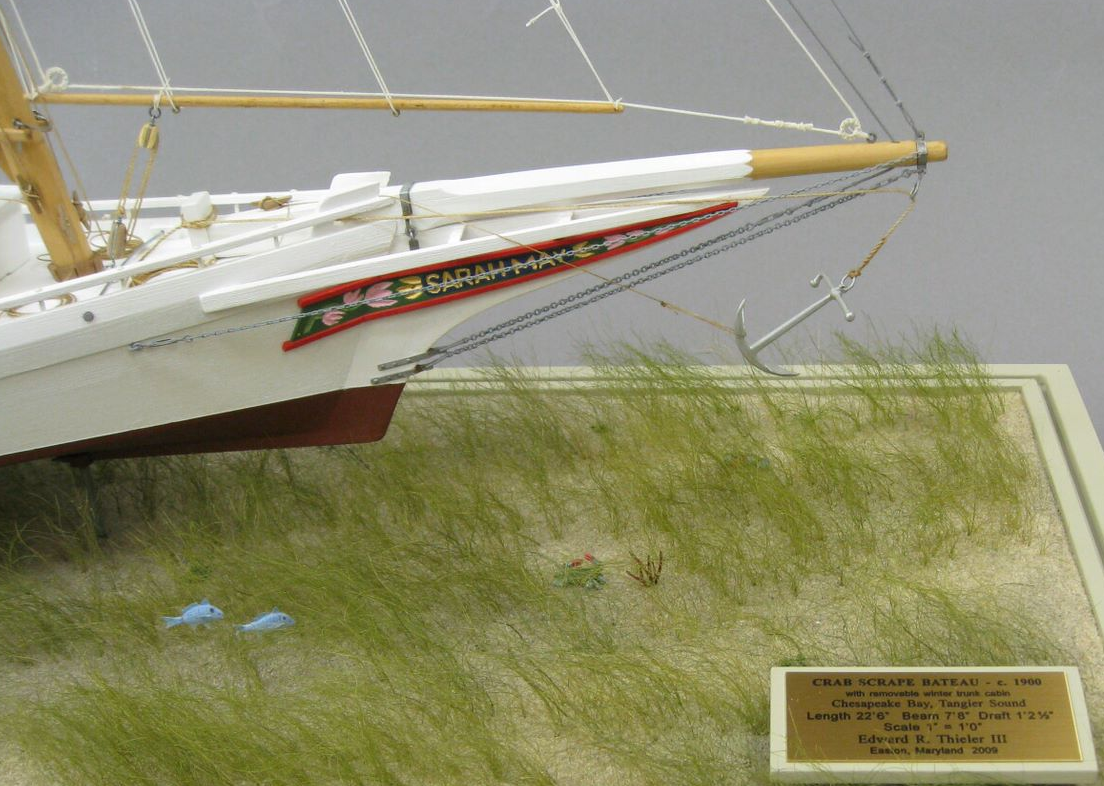
Grasses, fish, crabs, and red-beard sponge, represent the environment in which these scrape-boats and their waterman captains operate.
Model Construction
Large format images of model construction are here.
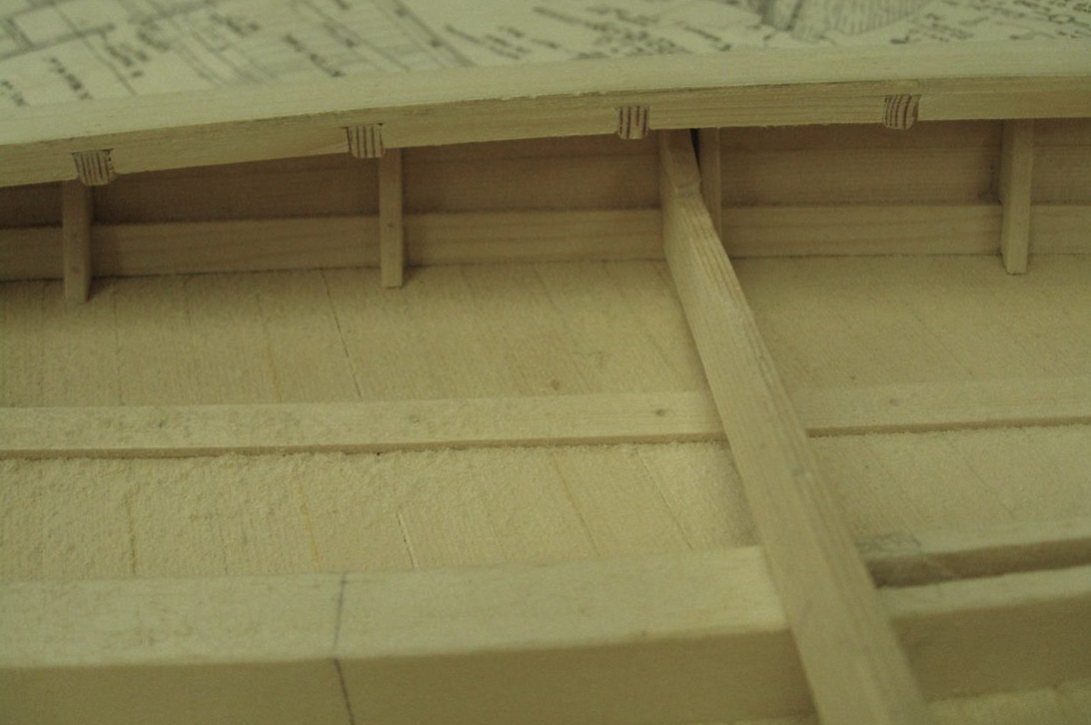
Note the vertical grain in the half-beams and strong backs.
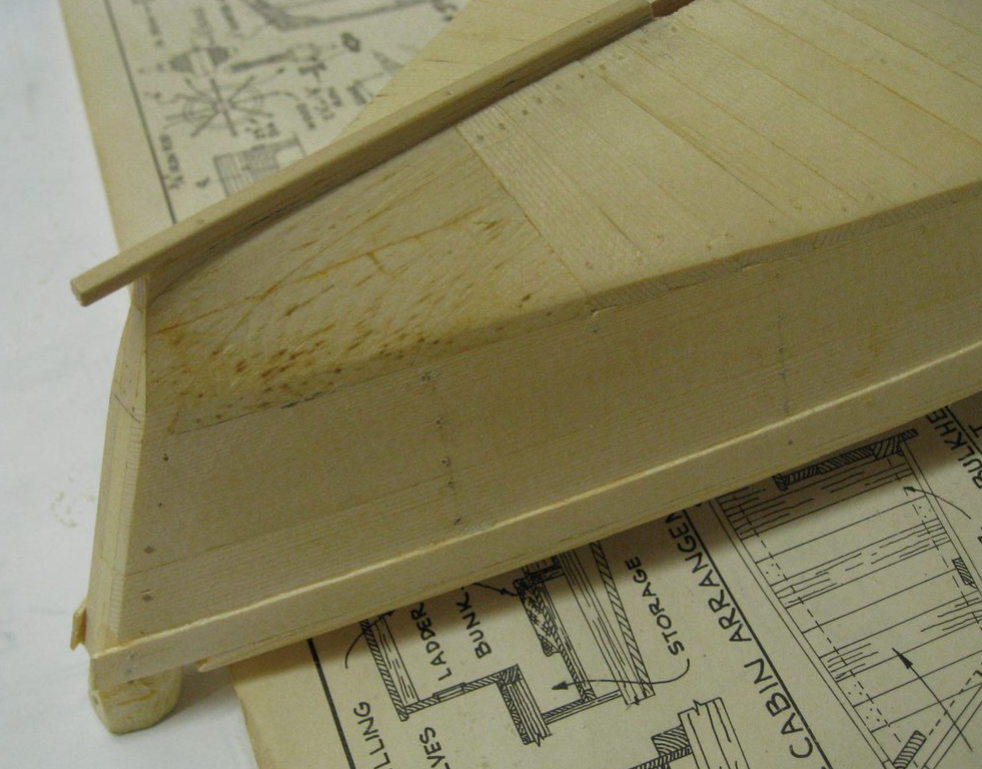
Bow detail with chunks – before outer stem and longhead added.
I dry-fit almost everything in most models, then took them apart and added the paint.
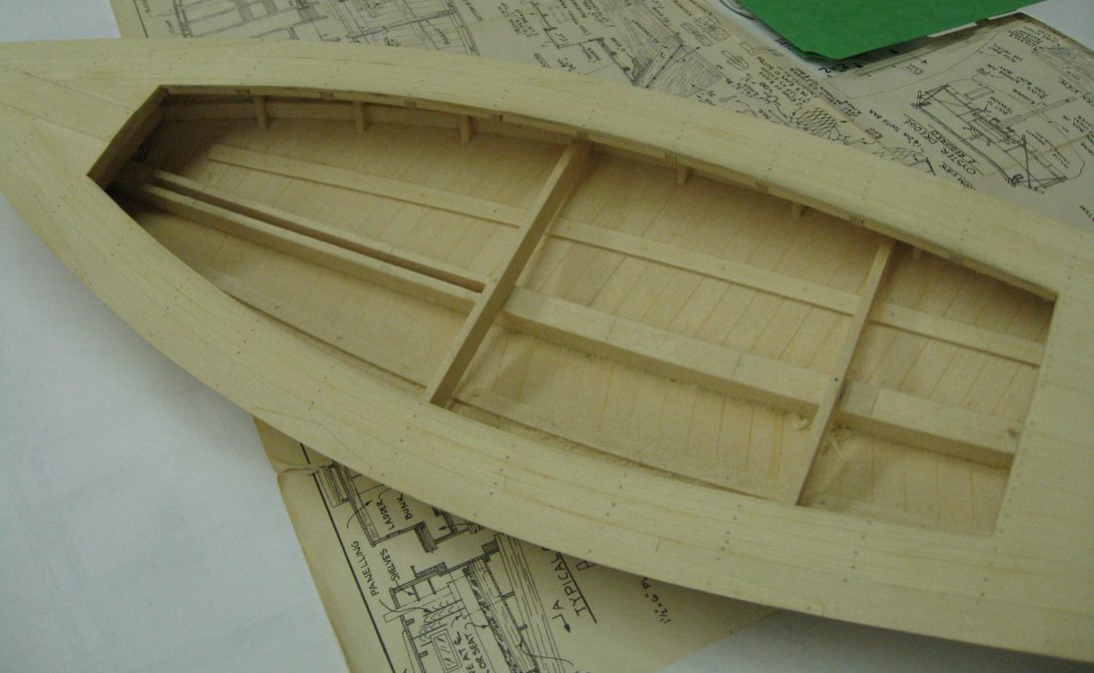
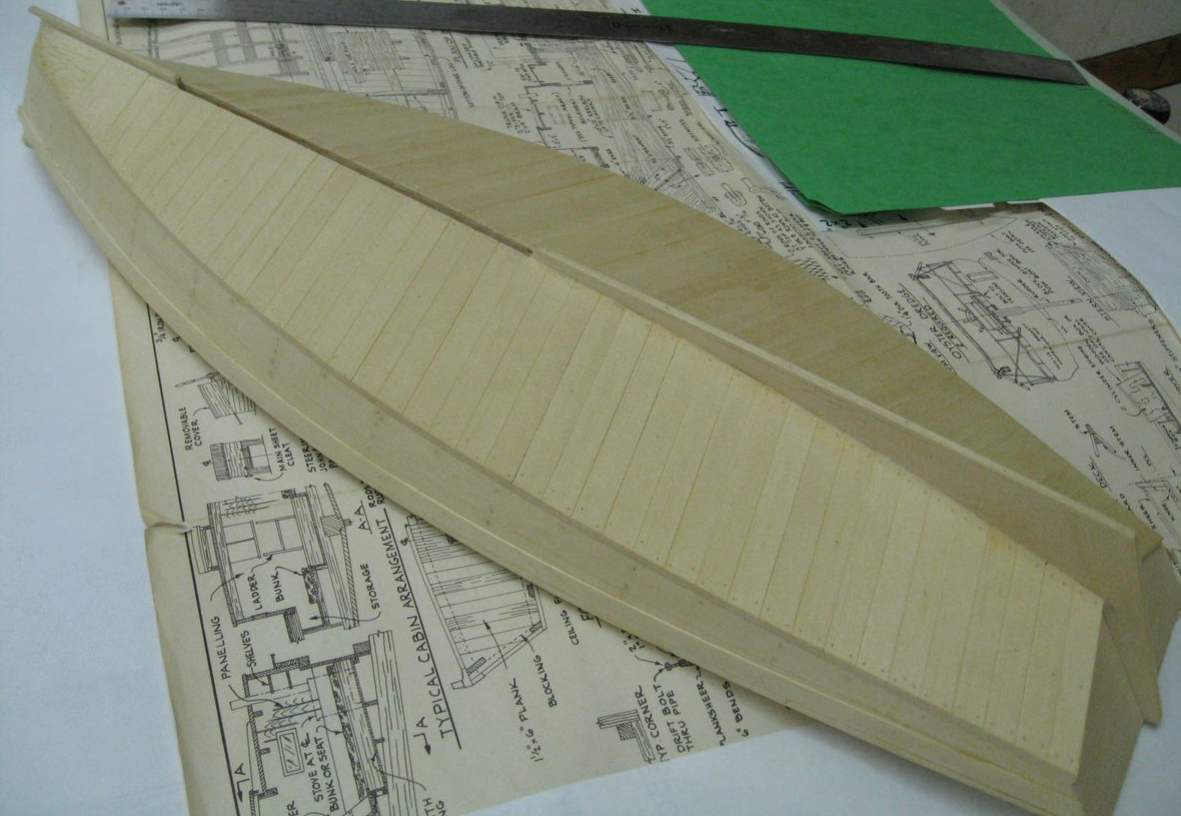
Lots of treenails.
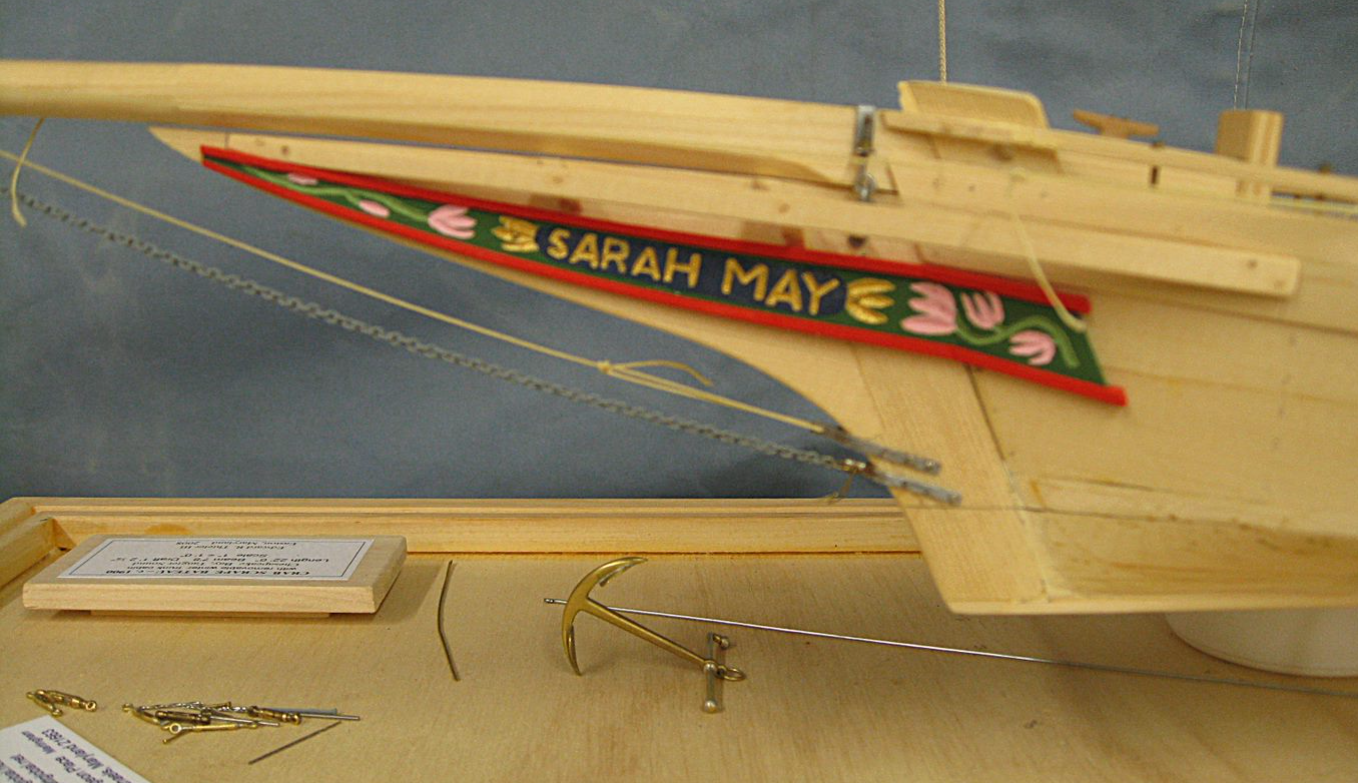
The anchor is sawn out of sheet brass.
The non-functional turnbuckles are brass tube and wire, soldered and filed to look like the “open” type of turnbuckle. They were later painted with Liquitex paints.
Temporary braided squidding-line rigging was replaced by laid line, stained with Minwax stains.
Building the Half Hull
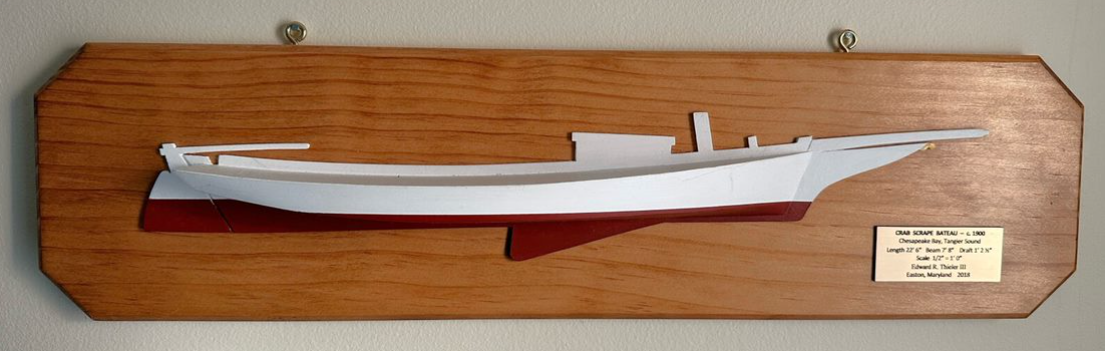
I lofted the half-hull in August 2018.
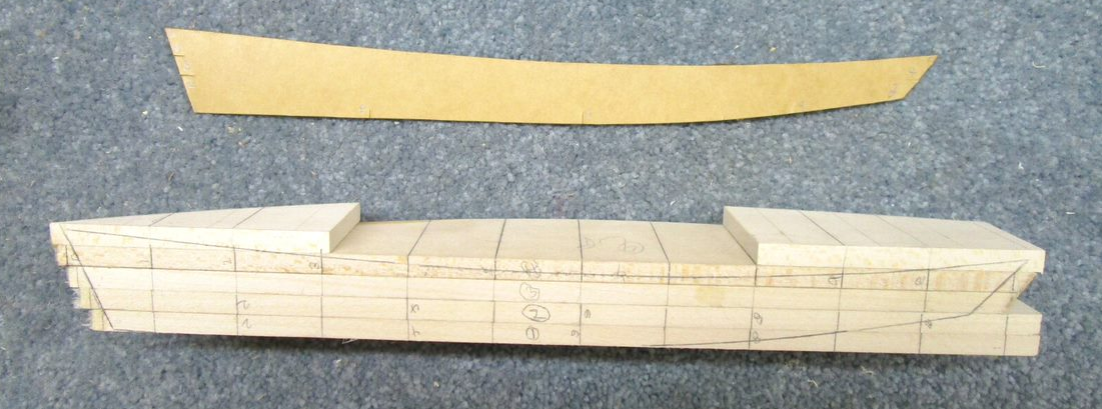
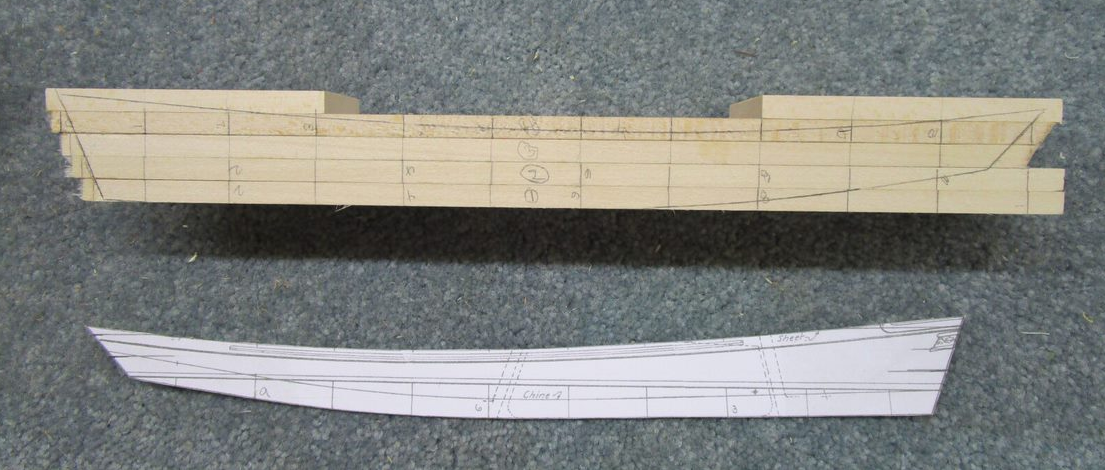
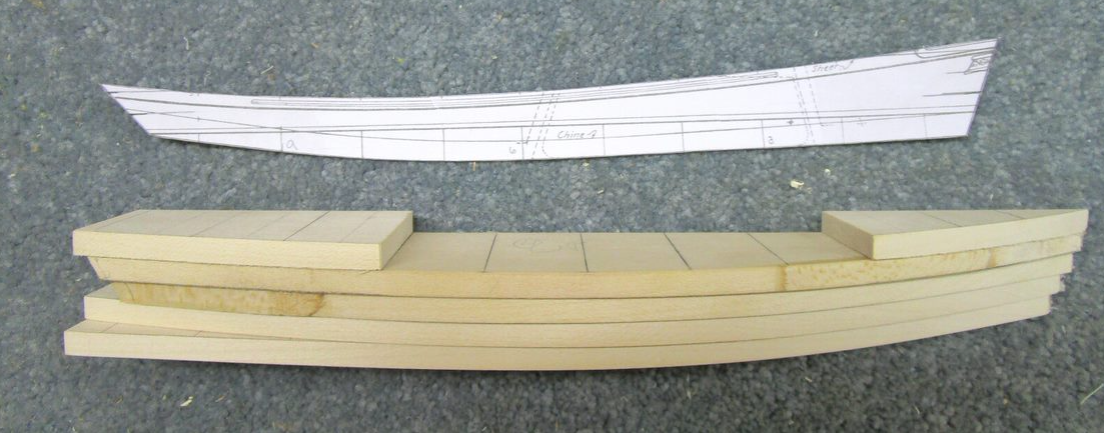
First, I held the lifts together with 5/16" dowels and stick glue to shape them. Then I separated and traced the lifts after shaping, in case anyone wishes to make another model. (The tracings are probably in a big sketch tablet in the Thieler Collection of the CBMM archives.)
Next, I permanently glued the 1/4" basswood with Titebond II glue.
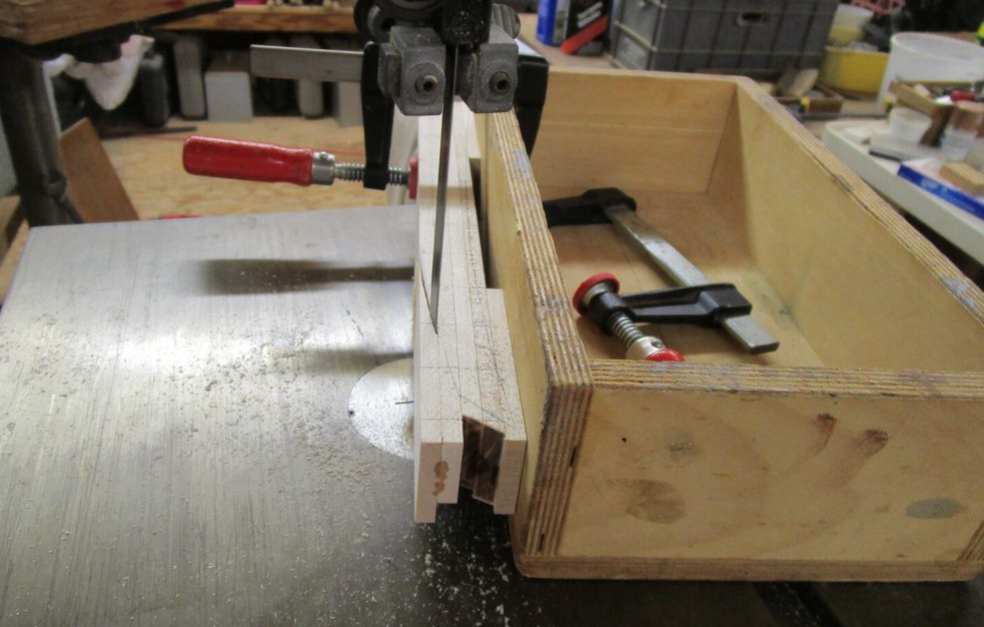
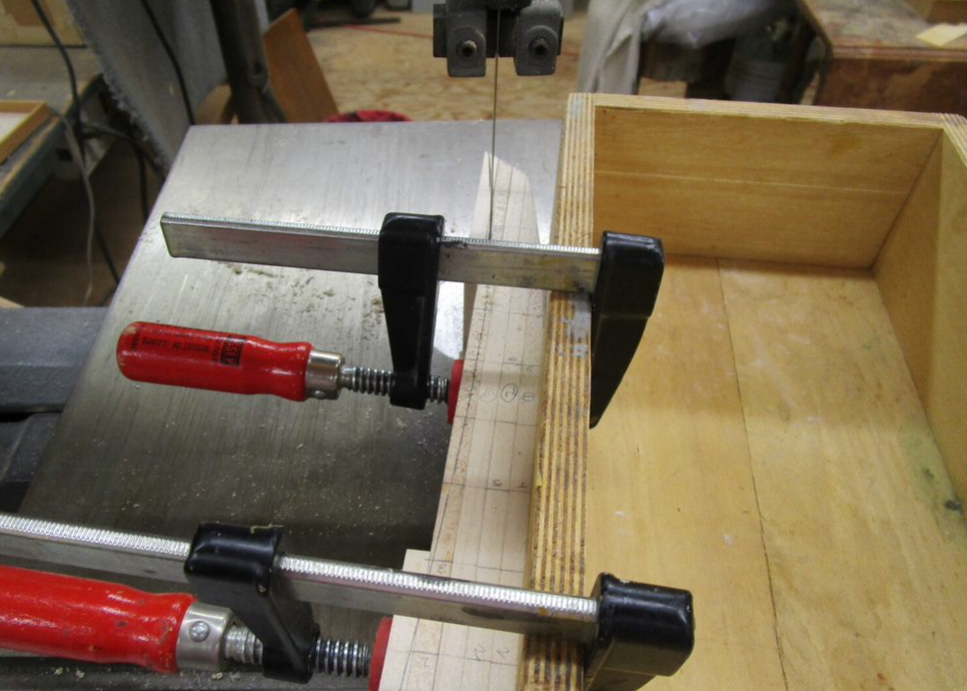
The photos also show how I used a box to bandsaw the profiles.
[Large format images of the half-hull construction process are here. ]
Plans and Lofting
[Large format images of plans and lofting are here.]
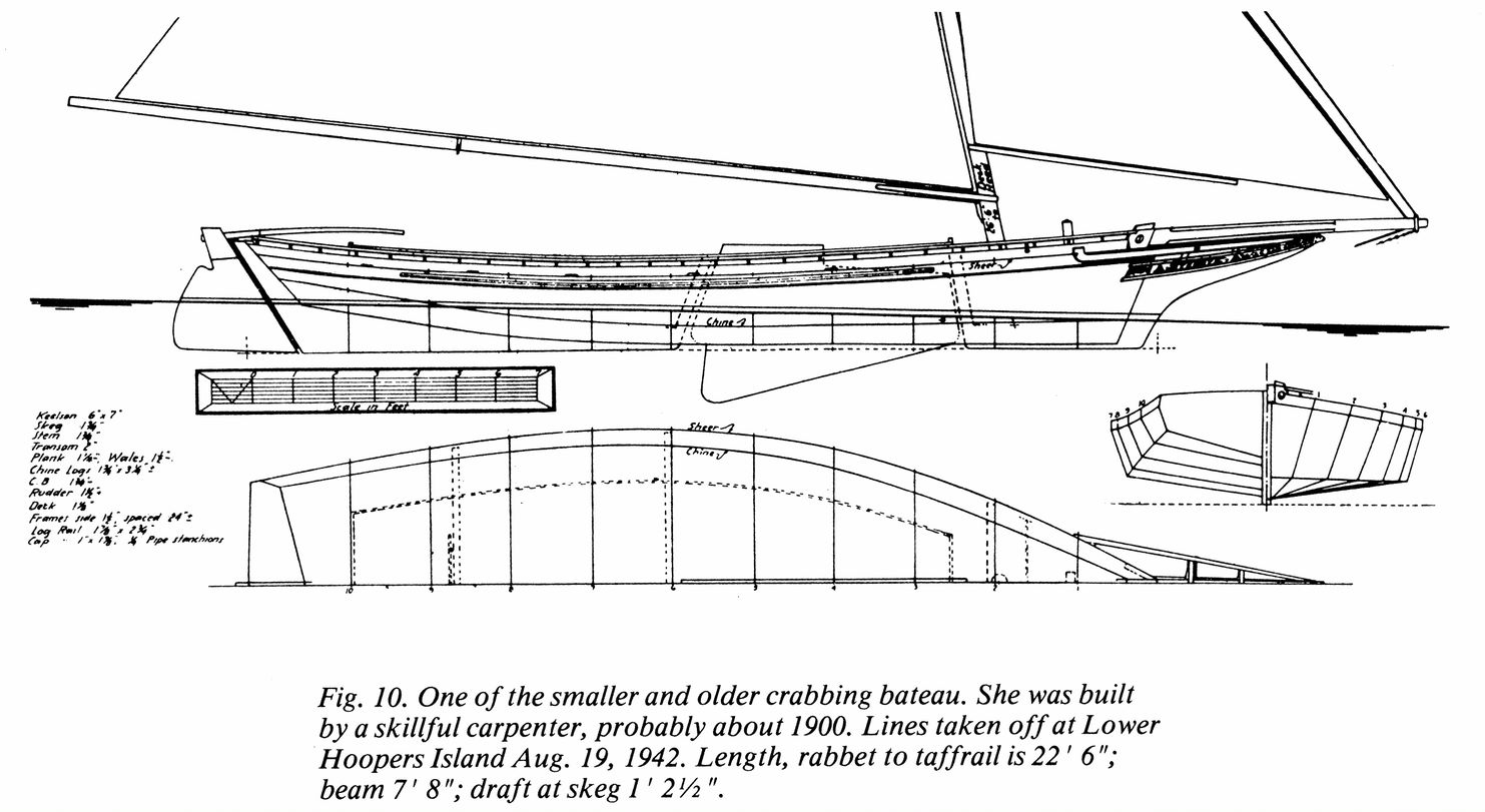
Teddy plans from Chapelle, Chesapeake Bay Crabbing Skiffs.
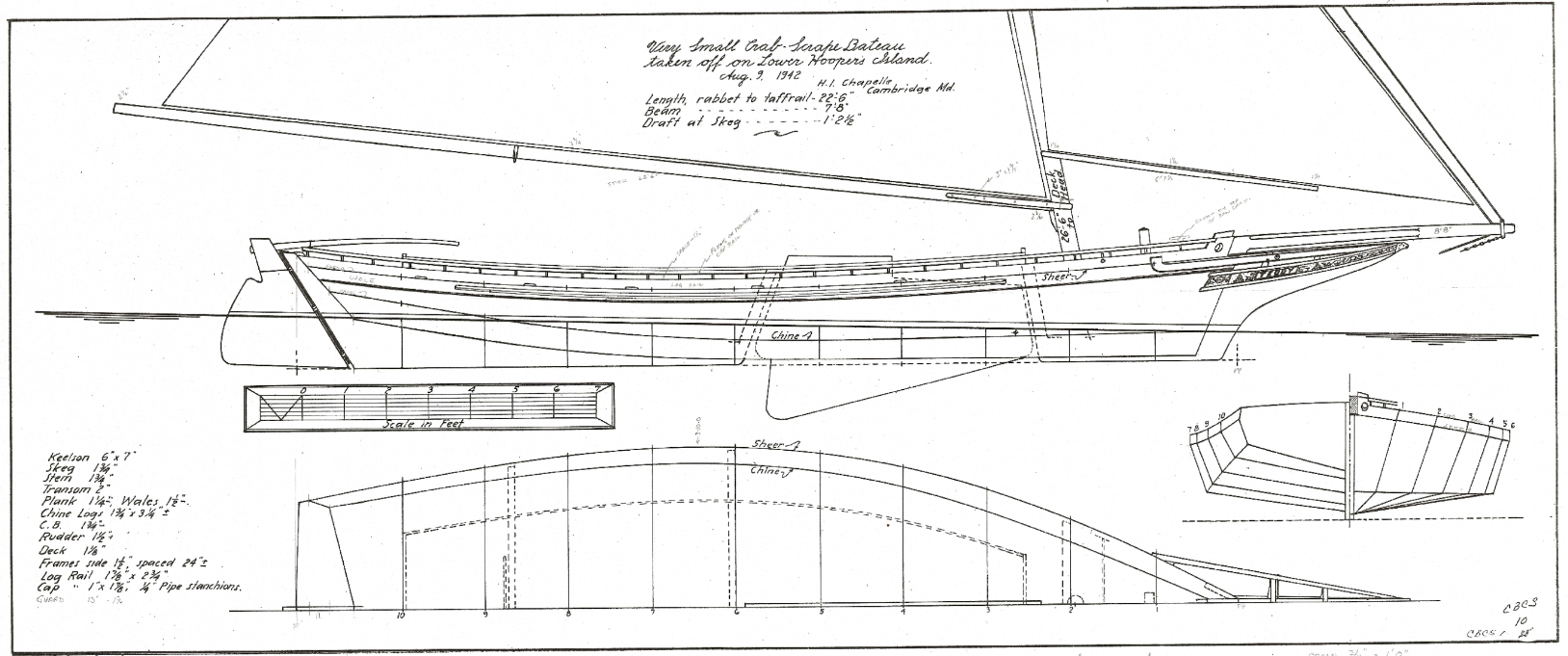
Teddy plans by Chapelle from The Workboats of Smith Island.
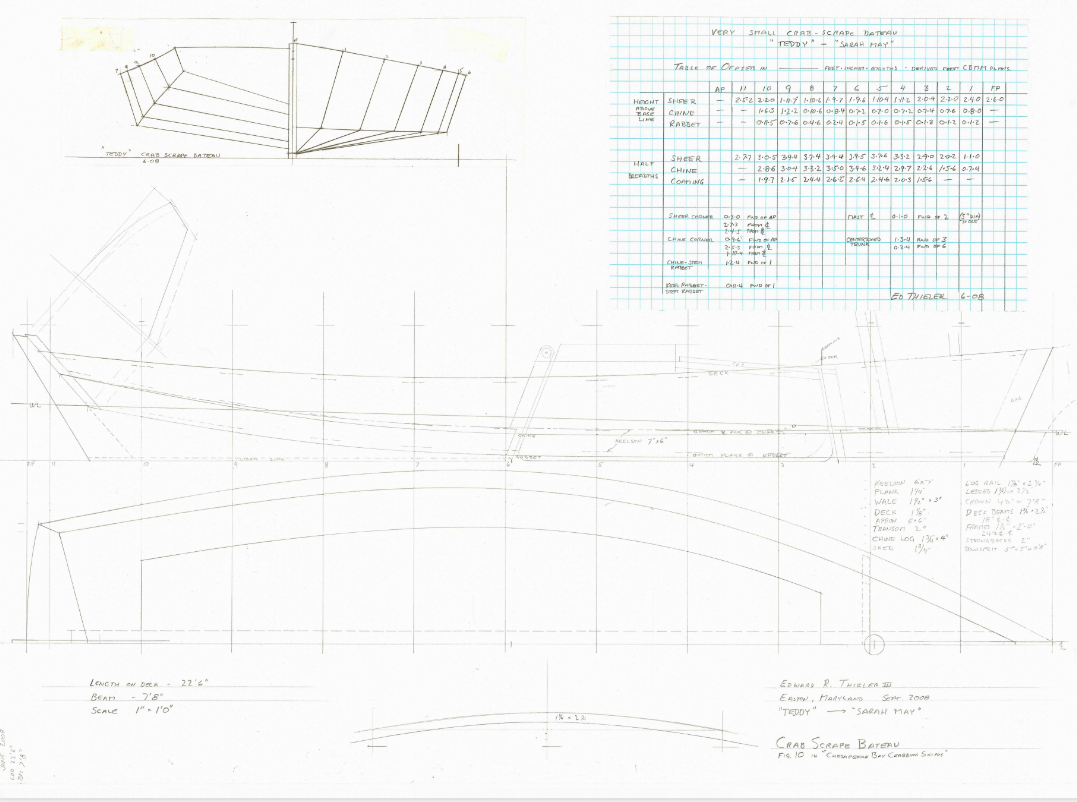
Sarah May sections, drafting and offsets table by Ed Thieler.
References
Chapelle, Howard I. Chesapeake Bay Crabbing Skiffs. Originally published in Yachting, June and October, 1943. Republished as a monograph by the Chesapeake Bay Maritime Museum, St. Michaels, Maryland. 1979.
Johnson, Paula J. The Workboats of Smith Island. Baltimore and London: The Johns Hopkins University Press. 1997.
More in this Website About the Crab Scrape Bateau
Crab Scraping Under Sail – A Scrapbook of Watermens’ Photos and Interviews
If it looks like a “mini Skipjack”, that’s a Crabbing Bateau
“Blue Crab” – Crabbing Bateau Cruiser Designed by Chapelle
The Edward R. Thieler Collection at the Chesapeake Bay Maritime Museum
The Edward R. Thieler III Collection of workboat models at the Chesapeake Bay Maritime Museum (CBMM) is a valuable resource for historians, builders, and owners of sailing and power workboats and gunning and recreational skiffs of the Chesapeake and Delaware Bays and the New Jersey coast.
Thieler built most of his models at a scale of 1:12 (one inch = one foot), large enough to display fine detail in both the boat design and constuction, and in the watermen's tools and implements which show the working context of each boat.
Thieler’s models are historically accurate in the smallest detail. His careful research and detailed plans and notes reveal many aspects of the history and traditional use of each boat type. In many cases, he interviewed watermen who used these boats themselves, or whose fathers and grandfathers did. From them he learned about building materials and methods, sail rig, handling and working under sail, and tools and methods for oystering, crabbing, and fishing.
Thieler’s photos of the model building process are a valuable resource for the traditional builder who wishes to build an authentic full-size reproduction of any one of these workboats.
Text and photos are published here with permission from CBMM and Ed Thieler.
More About the Edward Thieler Collection
Catalog of Models in the Edward R. Thieler Collection at CBMM
Eastern Shore Sailing Workboats – “Thieler” search in this website
More about CBMM Collections
Items that are not exhibited around the CBMM campus are kept in the Norman & Ellen Plummer Center for Museum Collections. This is a climate-controlled facility that was expanded and modernized in 2023.
You can search all the collections online here. Look for the links at lower left to search these collections separately:
- Objects, Photographs, Manuscripts, Ships Plans
- Regional Oral History Database
- Books and Periodicals
See my CBMM Collections Search Tips.
The collections and library are accessible only by appointment. Email collections@cbmm.org or visit the Library and Research page.
More about Small Boats
I also write about volunteer work in small boat conservation at the Chesapeake Bay Maritime Museum: Small Boat Shed Volunteers
And about sailing with the Dinghy Cruising Association in small open boats on the Chesapeake and its tributaries: Shallow Water Sailors.