Maryland
Seaside Bateau Model by Edward R. Thieler
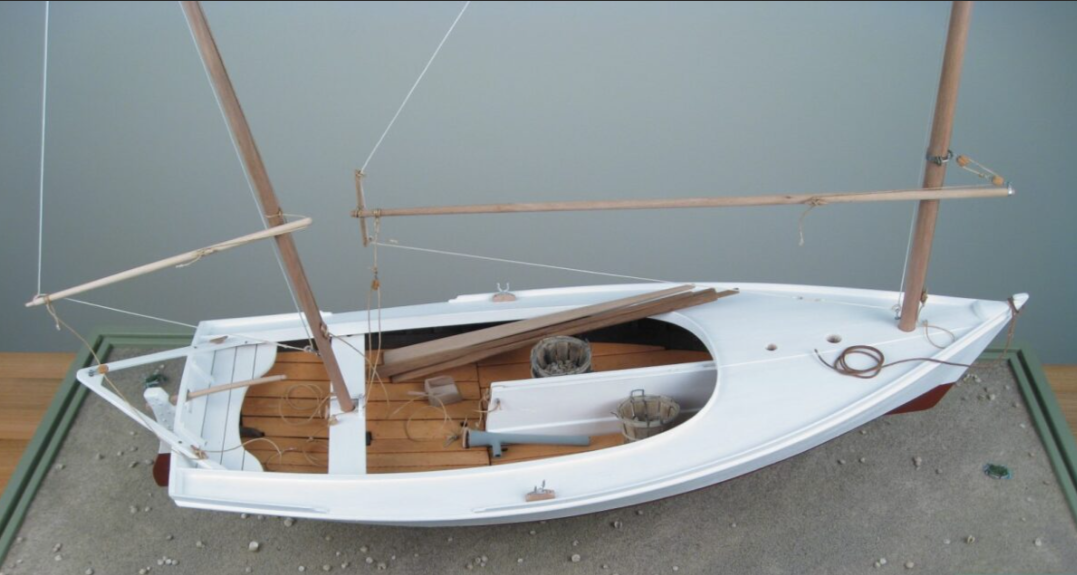
Seaside Bateau
1:12 Scale Model by Edward R. Thieler
CBMM Catalog No.: 2022.0004.0012
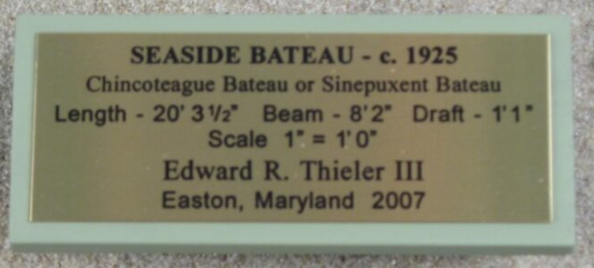
Chincoteague Bateau or Sinepuxent Bateau
Length - 20’ 3 1/2” | Beam - 8' 2" | Draft – 1’ 1”
Scale 1” = 1’ 0”
Edward R. Thieler III
Easton, Maryland 2007
The Chesapeake Bay workboat models in the Edward R. Thieler III Collection at the Chesapeake Bay Maritime Museum (CBMM) are historically accurate and are a valuable resource for the traditional builder and historian.
Text and photos are published here with permission from CBMM and Ed Thieler.
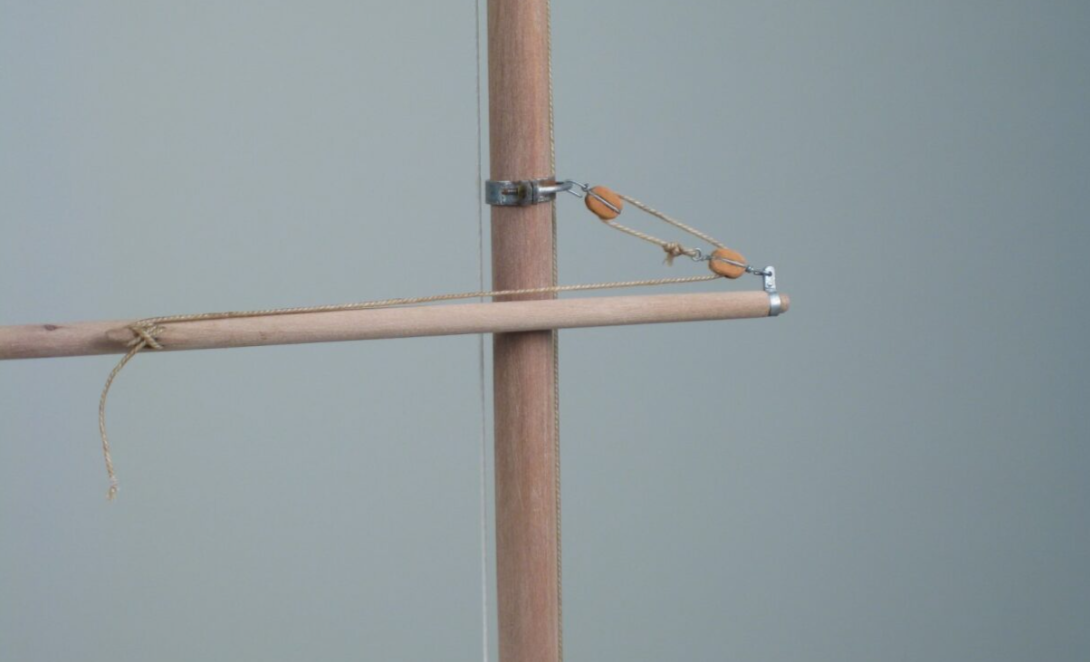
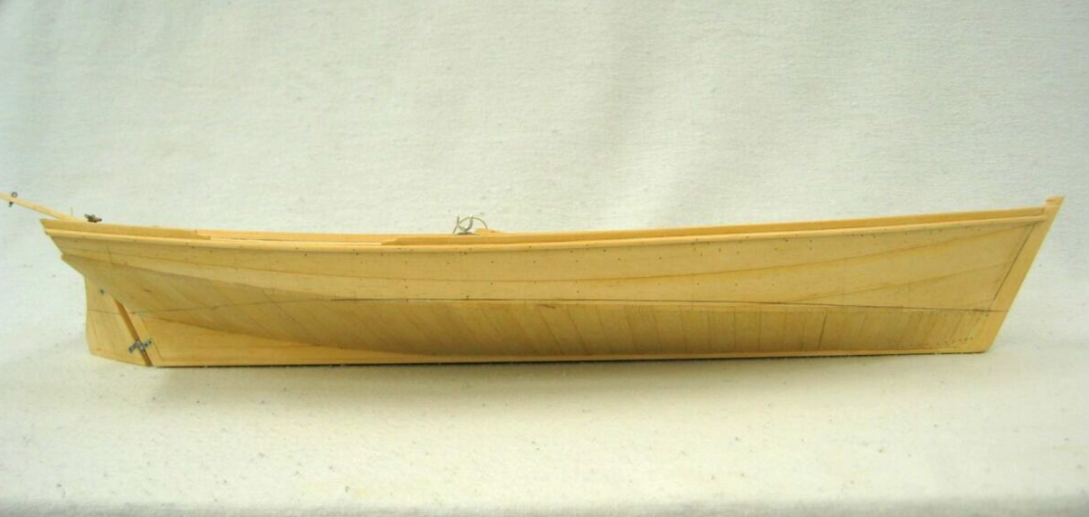
Selected Photos of the Seaside Bateau Model
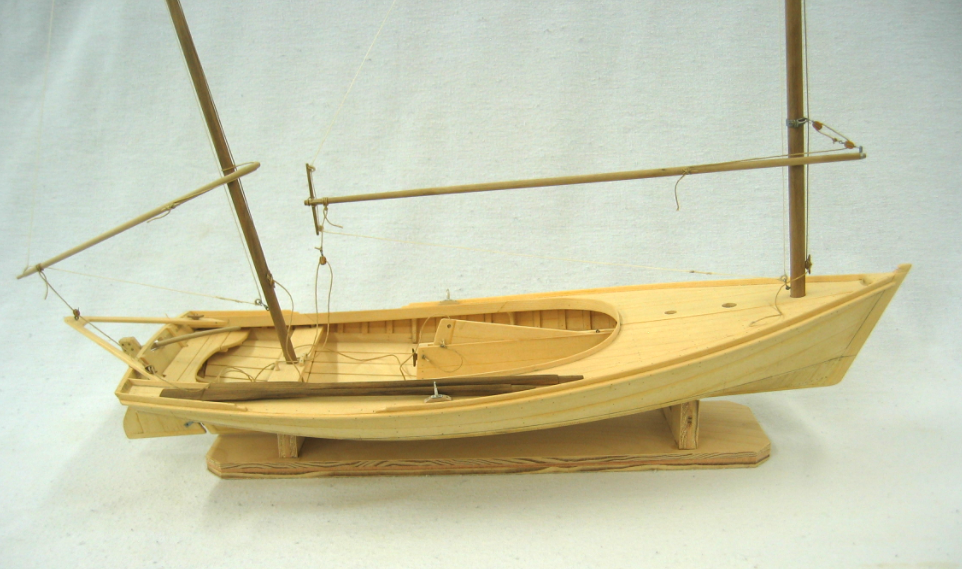
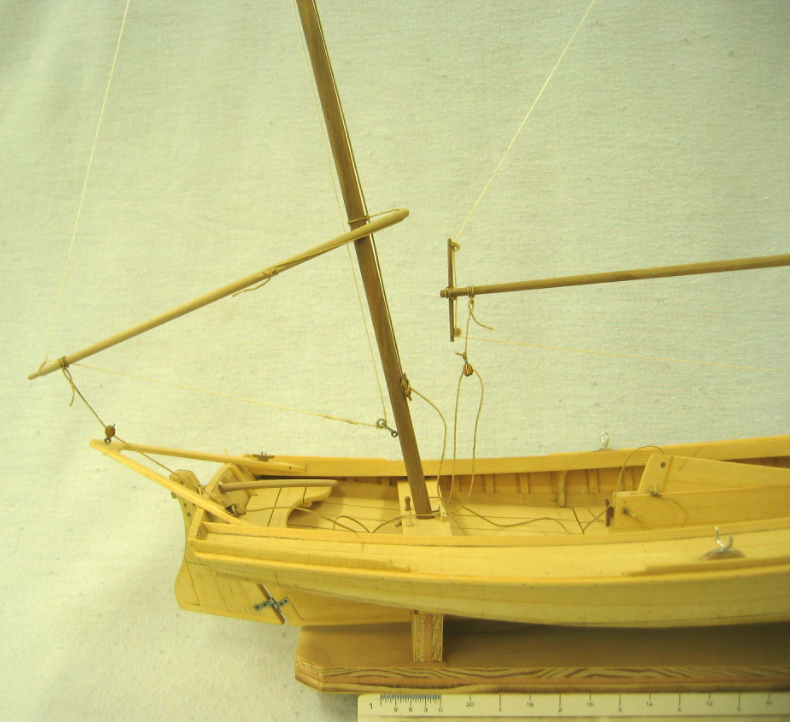
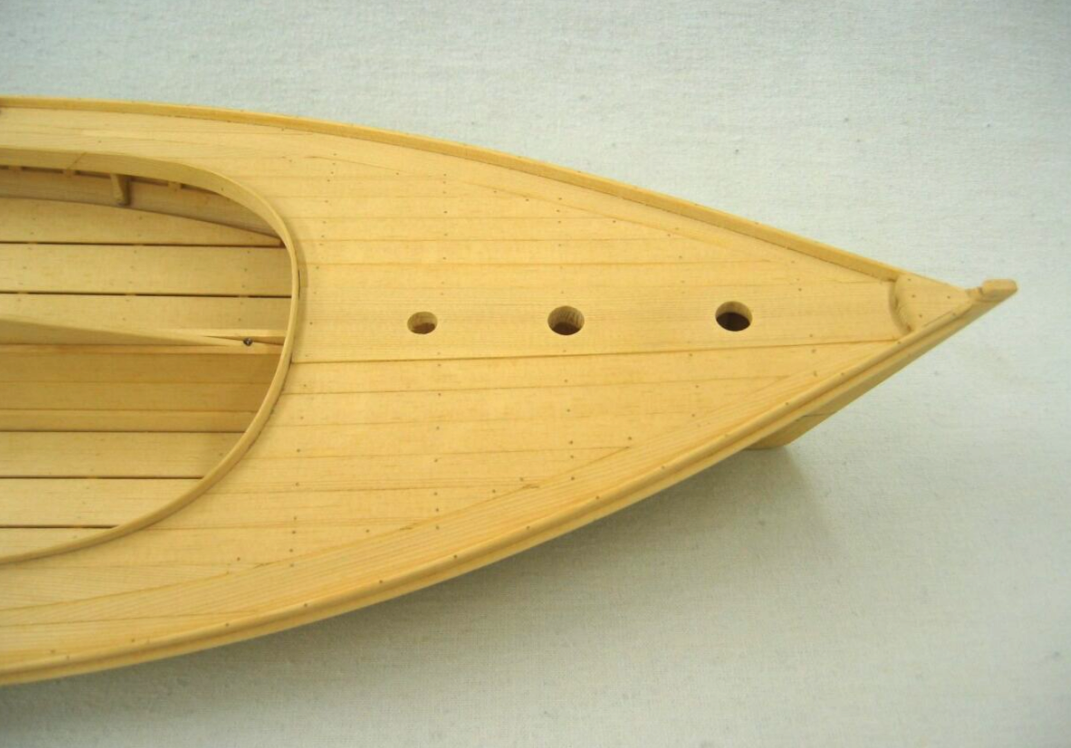
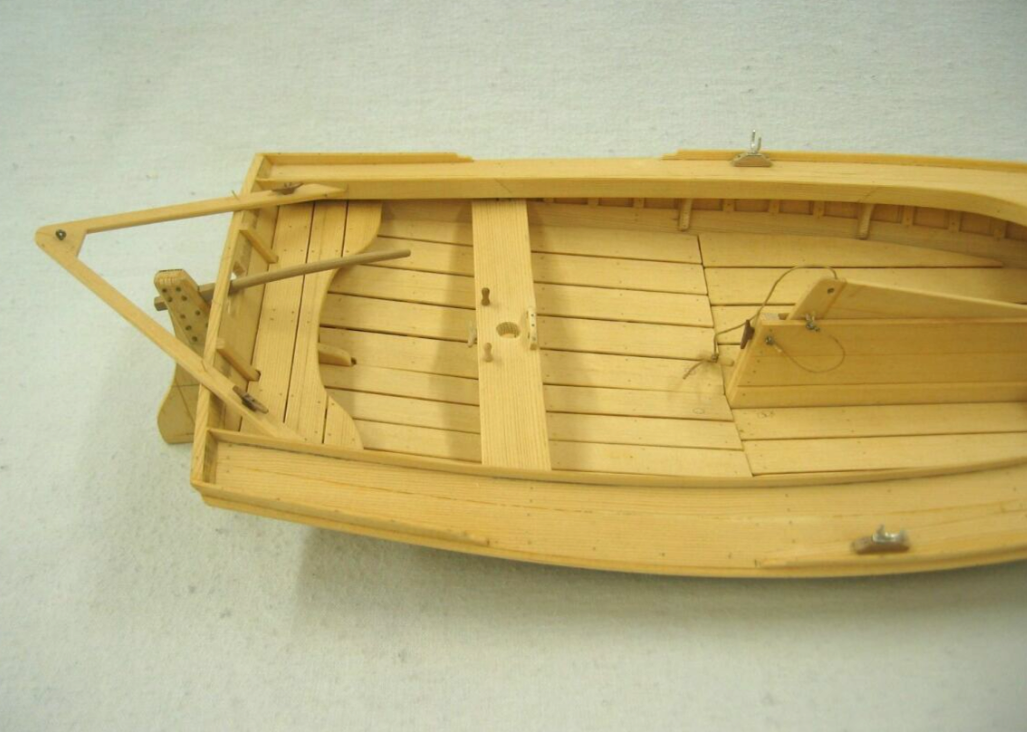
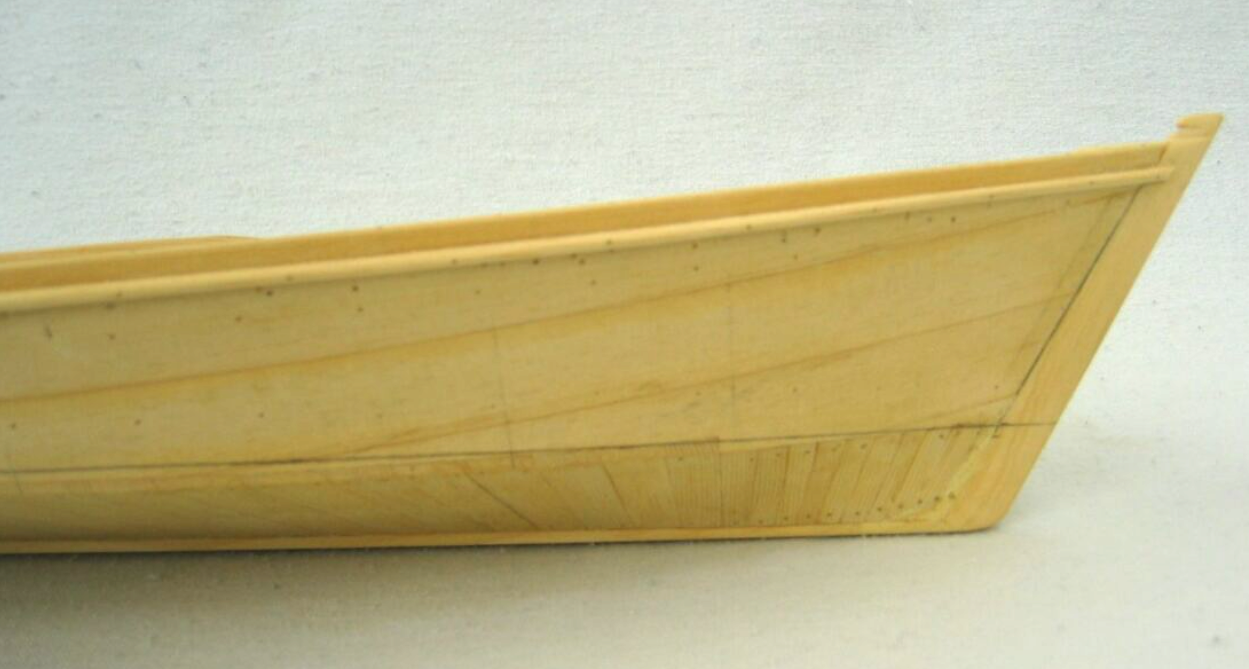
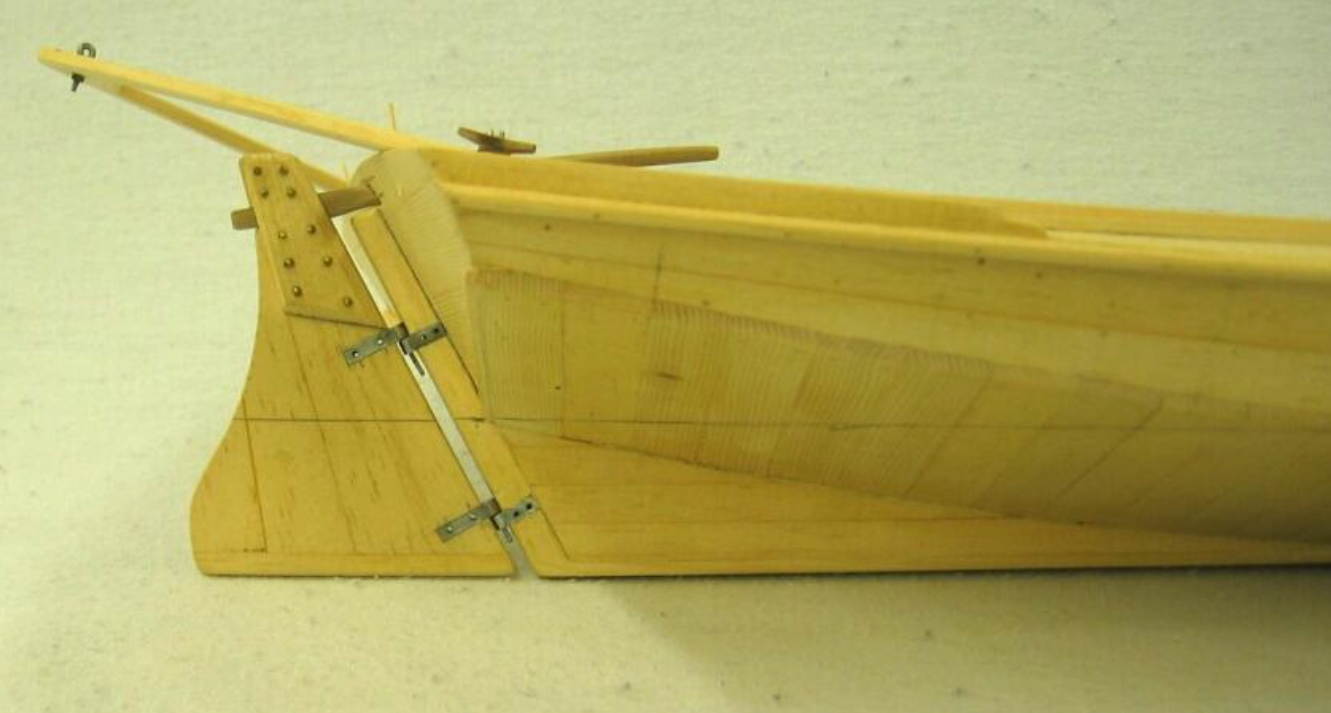
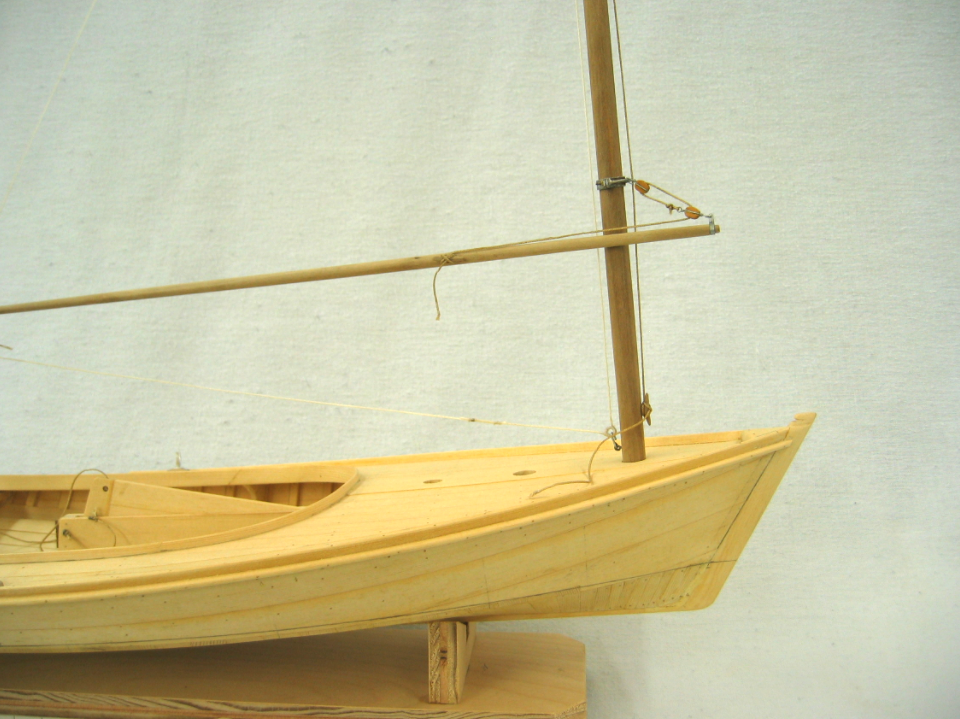
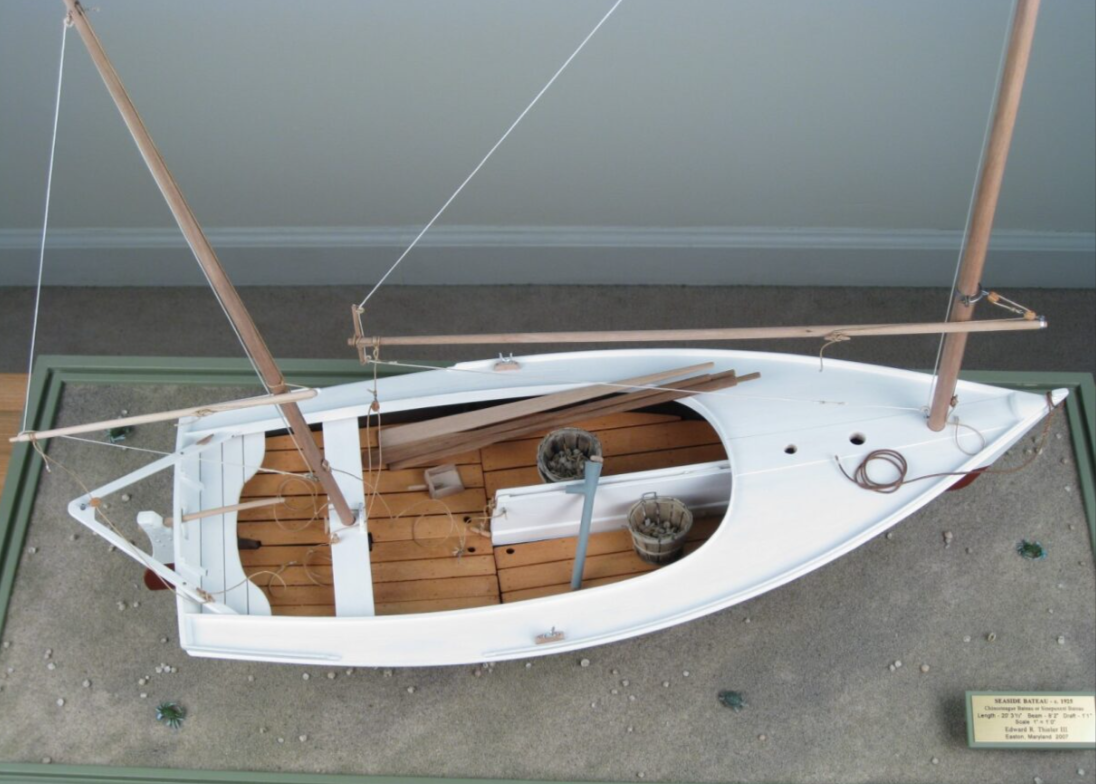
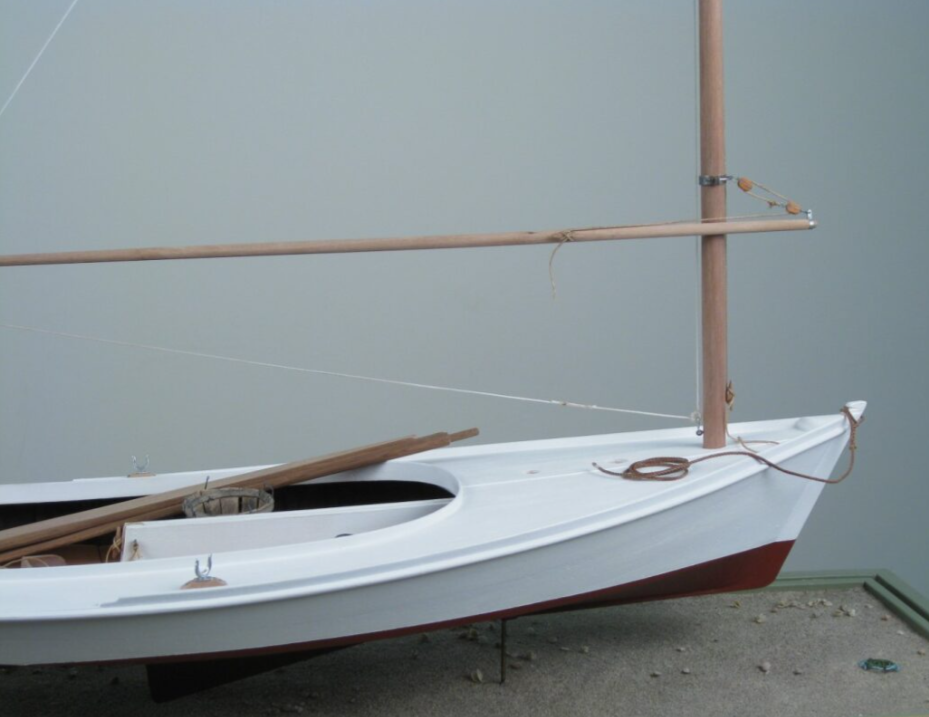
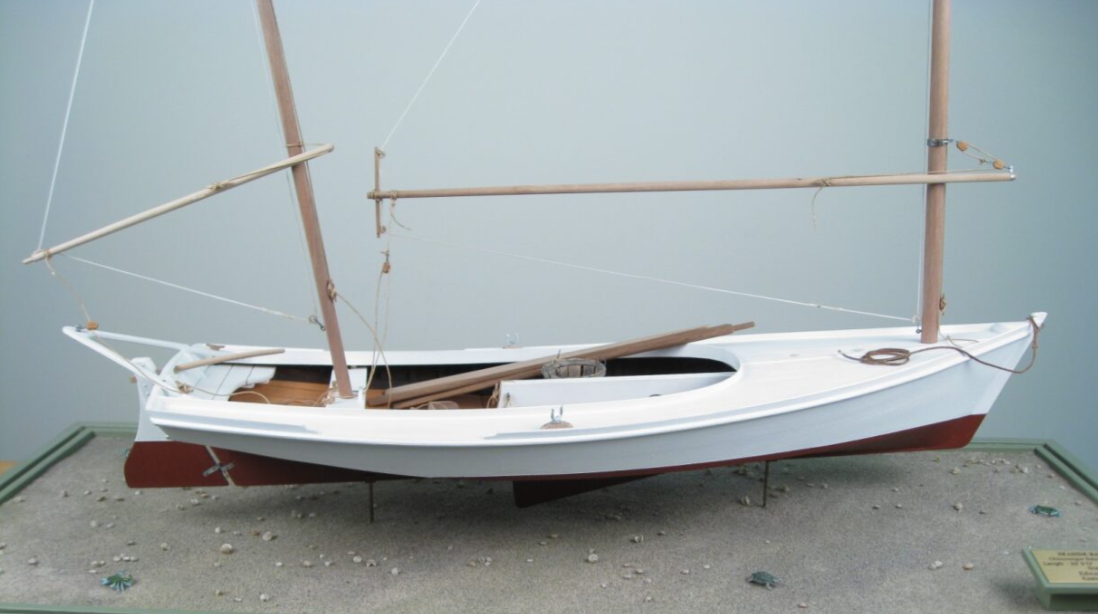
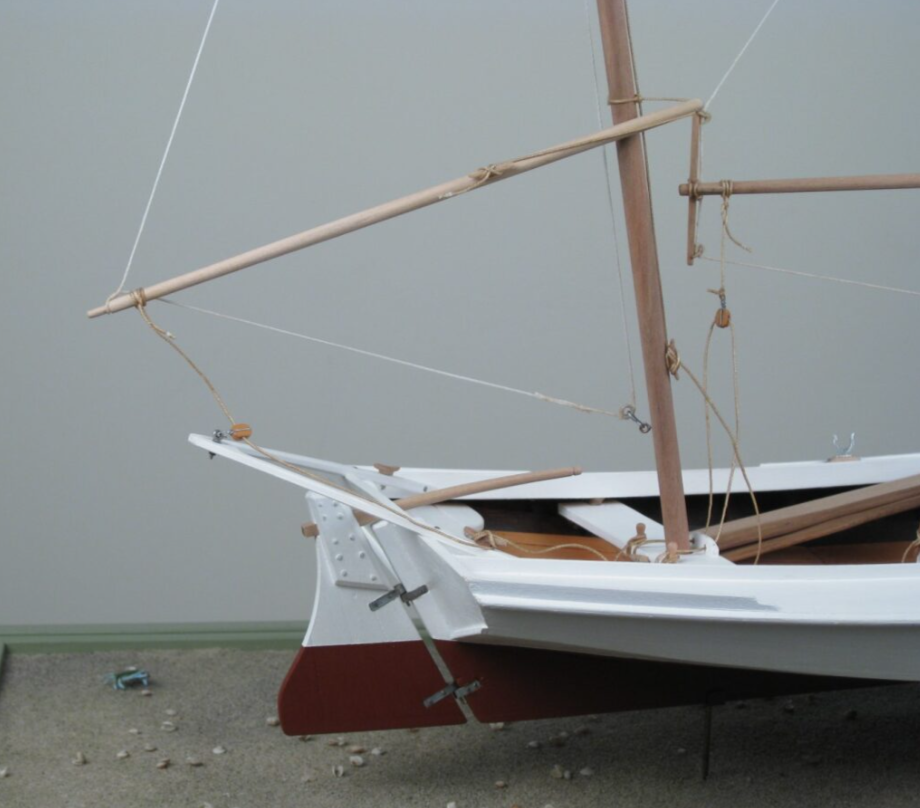
Ed Thieler's Notes on the Design and History of the Seaside Bateau
This kind of V-bottom bateau was used almost exclusively on the Atlantic Coast (Seaside) of the Delmarva Peninsula, where it was developed to sail in the shallow waters behind the barrier islands and in and out the inlets between them. Their characteristic marked sheer, wide beam almost half the length, great side flare, wide foredeck, and washboards made them well suited to this purpose.
Although Howard I. Chapelle wrote that they began to appear in the early years of the 1900s, photographs and written descriptions suggest that they may have achieved full development by the middle of the 1800s.
Terminology describing these vessels needs clarification.
There were two kinds of boats sailing these waters during the same time period. Both had similar proportions and similar rigs and were unique to the area encompassing the bays of the seaside of the Delmarva Peninsula, but their construction was quite different.
One kind of vessel was built using extensive interior ribbing, had round chines and hollow garboards, and fore-and-aft bottom planking,. These were invariably referred to as “skiffs”. Locally they were referred to as “Chincoteague” or “Sinepuxent” but regionally they were known as “Seaside Skiffs.”
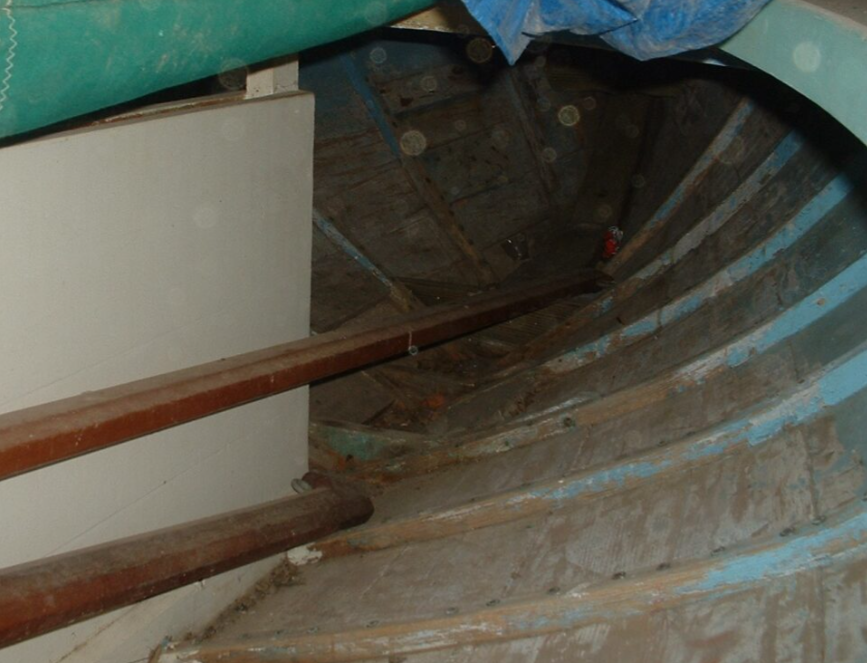
Chincoteague Skiff Reproduction by Browning.
Photo 2003.
The other kind of craft was built using no floor framing; the deadrise V-bottom was "herring bone" cross-planked and had a hard angled chine. These were invariably referred to as “bateaux.” Locally they were known as “Chincoteague” or “Sinepuxent” but regionally they were always called “Seaside Bateaux.”
They were said to sail very well and were used for tonging for oysters and clams, and for crabbing, net fishing, and general transportation. From the beginning they were raced when not working and they were used recreationally. Newspaper reports of the races always carefully distinguished between the “skiff” and “bateau” results.
The distinctive two-mast sprit sail rig of the larger boats was unstayed. The larger forward mast carried a leg-of-mutton sail with a clew-club and a gunter pole at the sail head. The smaller after mast carried a simple leg-of-mutton sail sheeted to a boomkin, also referred to as an outrigger, extending aft of the transom.
Mast terminology in this region can be confusing. If the rig is considered to be a cat-ketch then the taller mast is the “mainmast” and the shorter mast the “mizzen” or “jigger”. If named schooner fashion, as is the peculiar custom of the Chesapeake Bay, Eastern Shore watermen, then the taller is the “foremast” and the shorter the “mainmast”. Both terminologies are found in the literature referring to these boats.
If winds were light both sails were carried as shown on the model. If the wind piped up a bit the smaller sail was left ashore and the larger was moved to the second step. Heavier winds called for leaving the bigger sail home and moving the smaller one forward to the third step.
A smaller version of these boats had one mast and often used the smaller mast of the bigger boat.
John Hanson Downes of Townsend, Virginia [or Capeville, both near Cape Charles] is said to have built about six including Bessie Lee (1920), now on display in the Chesapeake Bay Maritime Museum.
John Richardson, Jake Dunning, and William Wimbrough of Chincoteague Island are said to have built most of those in the Chincoteague and Sinepuxent Bay areas.
The model (#322466) in the CBMM Bay History Building is on loan from the Smithsonian and is part of the National Watercraft Collection. It was built using the same plans (ASSC, pg. 329, fig. 118) I used. It is described on page 371 of The National Watercraft Collection book. The dates and information Howard I. Chapelle gives are confusing. I think he means to say the skiffs appeared as flat bottom craft in 1905 and by 1925 had evolved into the V-bottom craft they remained.
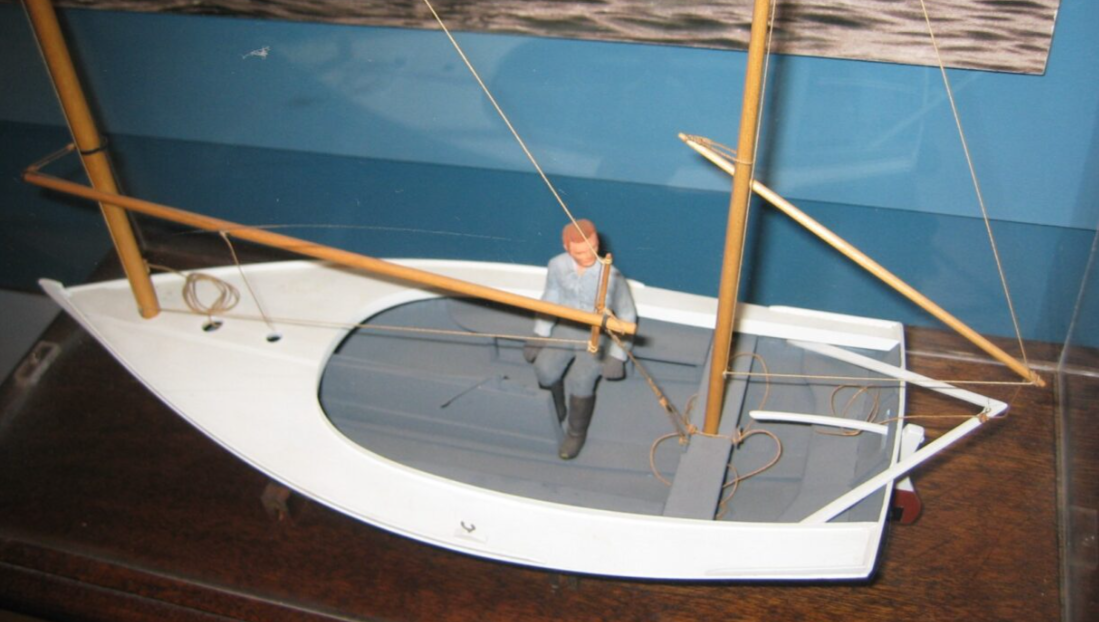
Smithsonian model in CBMM Bay History Building
The bateau shown in the photo shows a fully developed vessel. The caption identifies the scene as, “…before the turn of the century.” If that is the case then Chapelle may be way off with his dates.
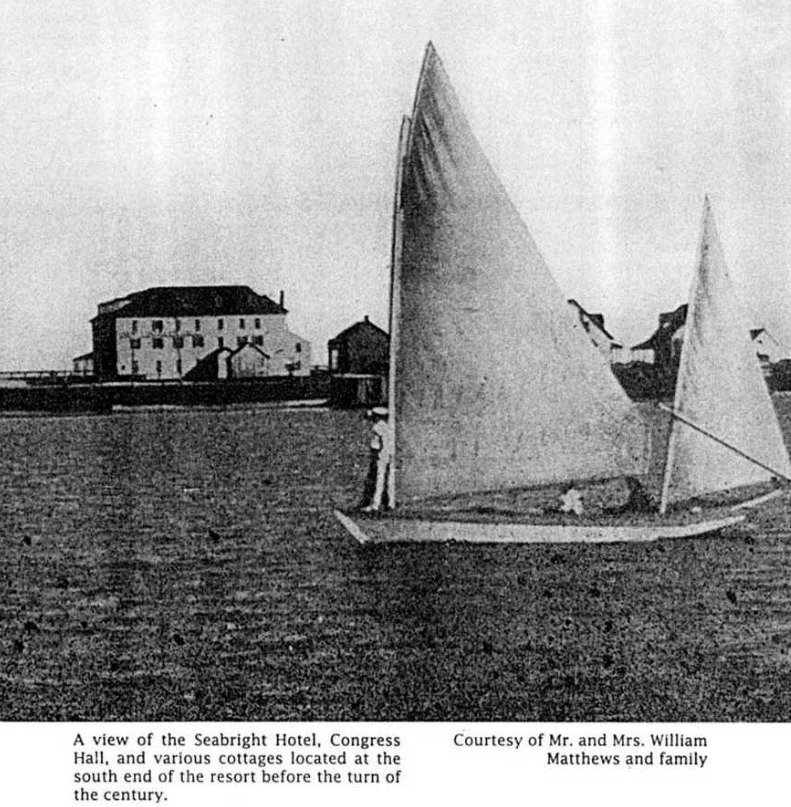
Typical characteristics:
Length of keel – most 13, 16, 18, 20.
Beam on deck = ½ keel
Transom = bottom beam amidships.
Planking begins at stern.
Yellow pine and oak.
Foremast = 4/3 x keel, main mast = keel.
Deadrise was 6-12 degrees – 6"-12" rise from rabbet to chine at amidships.
--------------
References:
Dodds, Richard J. S., Lesher, Pete, eds. A Heritage in Wood. Chesapeake Bay Maritime Museum, St. Michaels, Maryland, 1992. pg. 58. Photos, lines drawings, and text describing Bessie Lee (on display in the Museum, Small Boat Shed) and the type in general.
Chapelle, Howard I. American Small Sailing Craft. New York: W. W. Norton & Company, Inc., 1951. pg. 329, fig118. The text describes the type. The lines drawings are those I used to build my model and the model built for the Smithsonian described below.
--------------- The National Watercraft Collection. 2nd ed. Washington, D. C.: Smithsonian Institution Press, and Camden, Maine: International Marine Publishing Company, 1976. pg. 371. Text describes model #322466, now on display in the CBMM, and the type in general. No picture. Comparison of the texts in ASSC and NWC is both confusing and clarifying.
Ship Plan List, National Museum of American History, Smithsonian Institution, Washington, D.C., 2004. Has plans for Ellen, Chincoteague Sailing Bateau. In the HAMMS section, #5-7 VA.
Chowning, Larry S. Harvesting the Chesapeake: Tools and Traditions. Centreville, Maryland: Tidewater Publishers, 1990. pg 178, Making a White Oak Sculling Paddle.
Bachmann, Ed. Unpublished research held by the Chesapeake Bay Maritime Museum, c.2004. Correspondence, multiple photos, newspaper articles, analysis of bateau proportions, and other information.
Brewington, Marion. V. From Brewington CBMM collection MS 28, box 3, folder 2.
Brief one page history and description and how they were proportioned.
=========================
From the internet:
http://www.chincoteague.com/ -- nothing about the boats but some nice old essays.
http://freepages.genealogy.rootsweb.com/~fassitt/ --has the photos, “Seaside 1890” and “Big gun in deadrise skiff….c. 1915”.
Plans and Lofting
Large format images of plans and lofting are here.
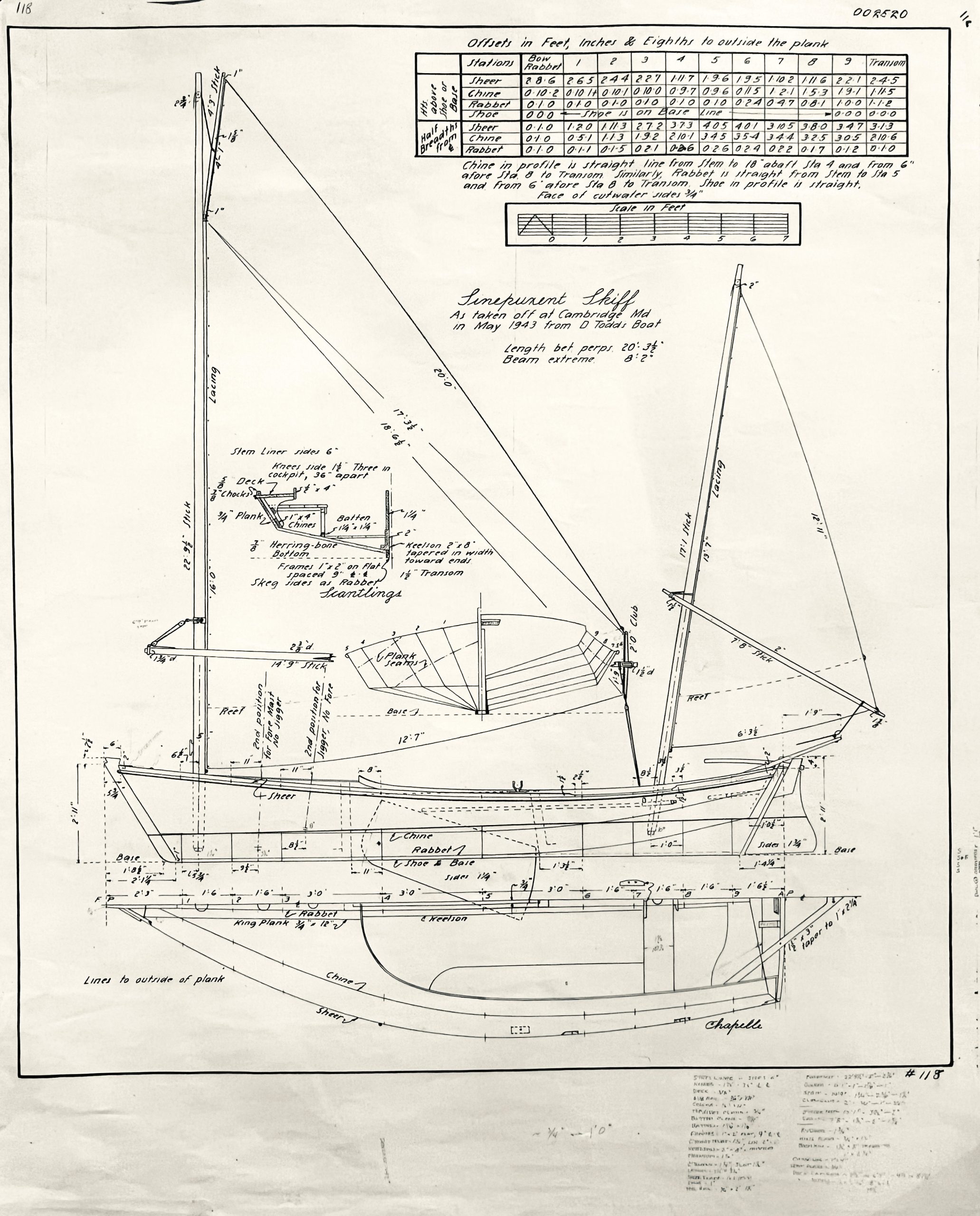
"Sinepuxent Skiff"
From American Small Sailing Craft by Howard I. Chapelle, pg 329, fig 118.
Notes on the Chapelle plans:
“Sinepuxent Skiff – as taken off at Cambridge, MD in May, 1943 from D. Todd’s boat.
Length between perps, 20’3 ½”; Beam extreme, 8’ 2”.”
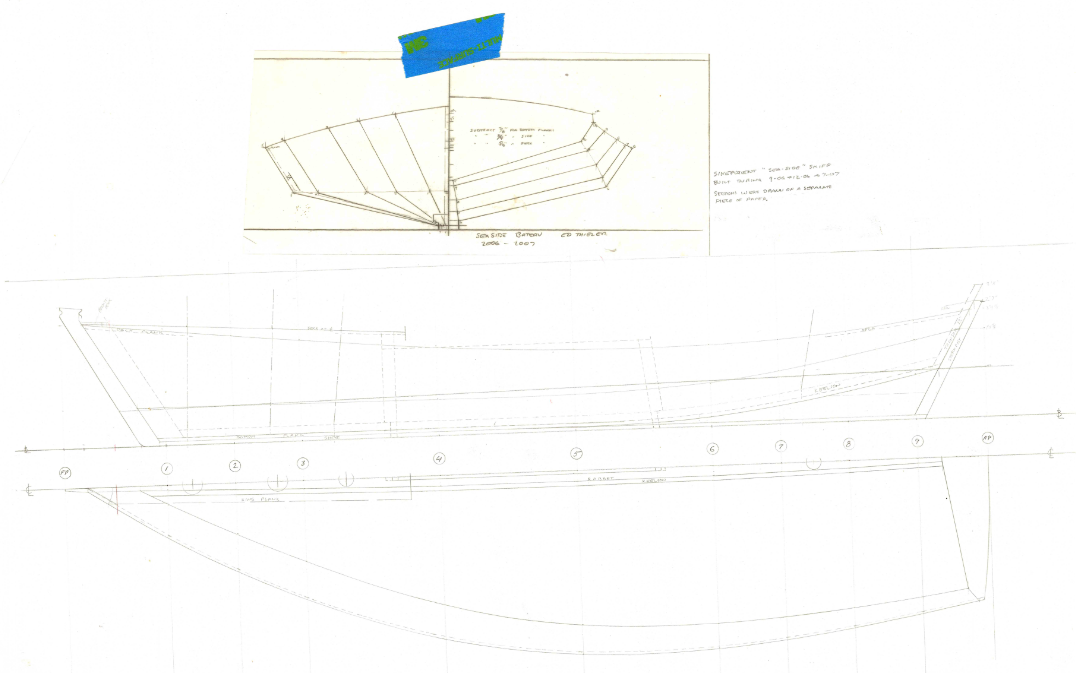
Ed Thieler Notes on Plans, Lofting, and Model Construction
The Plans
I used plans from the Smithsonian Institutions and redrew them to 1’ = 1’0” scale.
Some elements of the bateau in the Chesapeake Bay Maritime Museum (Bessie Lee) were incorporated into this model.
The Model
Hull –
Fine grained fir, quarter sawn. Glued with Titebond II, most joints fastened with bamboo treenails.
Spars – Sweetgum from trees on our property.
Sculling Oar – plans from Chowning – Sweetgum.
Paints –
Liquitex Acrylic Artists Colors.
Titanium white
Burnt sienna
Minwax Stain– Colonial Maple #223 (floor boards)
Hardware –
Steel wire and plate, silver-soldered.
Baskets – fir. Clams (Mercenaria mercenaria) – supplied by Steve Bunce from his clam aquaculture business in Nassawadox, Virginia.
Case –
Base is white pine frame with MDO plywood platform, glued with Titebond II.
Plexiglas is 0.125” cemented with Craftics acrylic cement.
Paint is Benjamin Moore - Wethersfield Moss, #HC-110.
Sand is from a little beach just up the Tred Avon River from the mouth of Oxford, Maryland’s Town Creek, glued in place with Elmer’s White Glue.
More in this Website About the Seaside Bateau
[ Coming soon. ]
More about CBMM Collections
Items that are not exhibited around the CBMM campus are kept in the Norman & Ellen Plummer Center for Museum Collections. This is a climate-controlled facility that was expanded and modernized in 2023.
You can search all the collections online here. Look for the links at lower left to search these collections separately:
- Objects, Photographs, Manuscripts, Ships Plans
- Regional Oral History Database
- Books and Periodicals
See my CBMM Collections Search Tips.
The collections and library are accessible only by appointment. Email collections@cbmm.org or visit the Library and Research page.
More about Small Boats
I also write about volunteer work in small boat conservation at the Chesapeake Bay Maritime Museum:
Small Boat Shed Volunteers
And about sailing with the Dinghy Cruising Association in small open boats on the Chesapeake and its tributaries:
Shallow Water Sailors
Visit Chesapeake Eastern Shore Chapter - Traditional Small Craft Assocation