
 Maryland
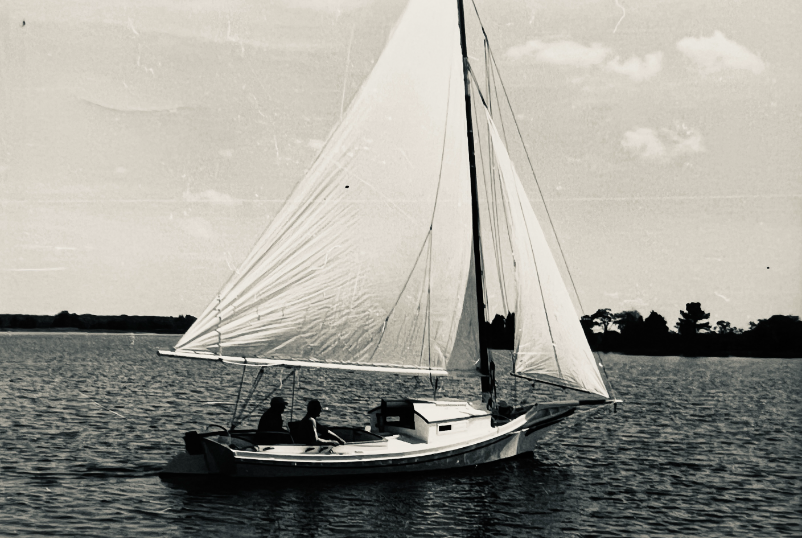
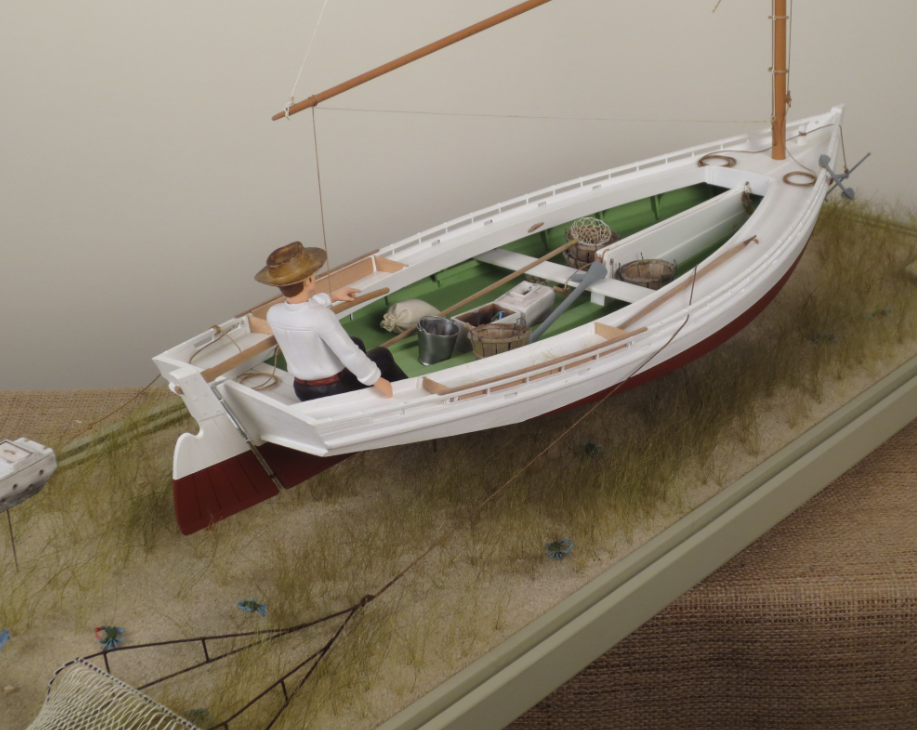
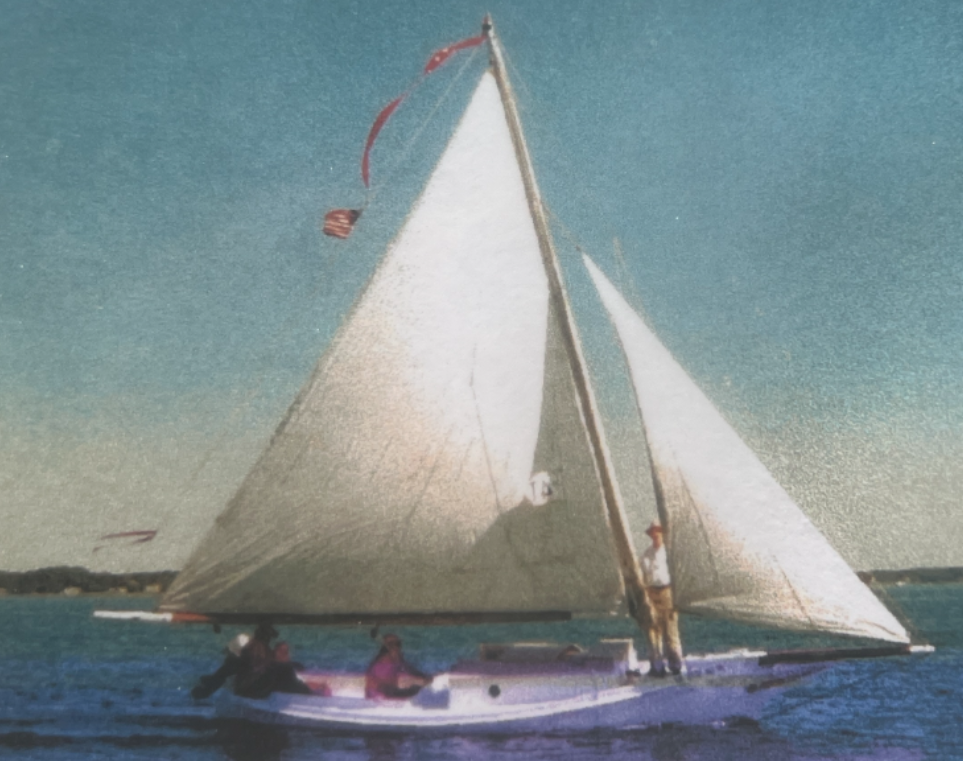
Chapelle's Sweepstakes, built for him by Jim Richardson in 1964.
[ CBMM Cat. No. 0000.0901.0259 ]
Long before Skipjacks, Crab Scrape Bateaux were the most common sailing workboats between Tilghman and Tangier.
Those who are unfamiliar with their history will call these “baby skipjacks” or “toy skipjacks” or “mini skipjacks”. They have the same lines and rig as the bigger and better-known Chesapeake Bay oyster dredging workboats. But they came before skipjacks and were built for a different purpose.
They were referred to collectively as “Crabbing bateaux” and came in two rigs:
“One-sail bateaux” (no bowsprit), sometimes referred to as “Jenkins Creekers.”
“Two-sail bateaux” (with bowsprit), sometimes called “skipjack rigged.”
(Skipjacks are called “two-sail bateaux” by traditional watermen.)
You'll find lines for four crabbing bateaux (Figures 9-12) in Chesapeake Bay Crabbing Skiffs. (Chapelle, Howard I. Chesapeake Bay Crabbing Skiffs. Originally published in Yachting, June and October 1943. Republished as a monograph by the Chesapeake Bay Maritime Museum, St. Michaels, Maryland, 1979, and available from the Museum. I reference it below as CBCS.)
I had ignored them, because my focus is on the sailing workboats under 20 feet that are typically called "skiffs." So I carefully studied Figures 1-8 in CBCS and ignored the bigger "bateaux" in Figures 9-12 at the end.
I ignored them until I came upon one. An actual descendent. A living fossil:
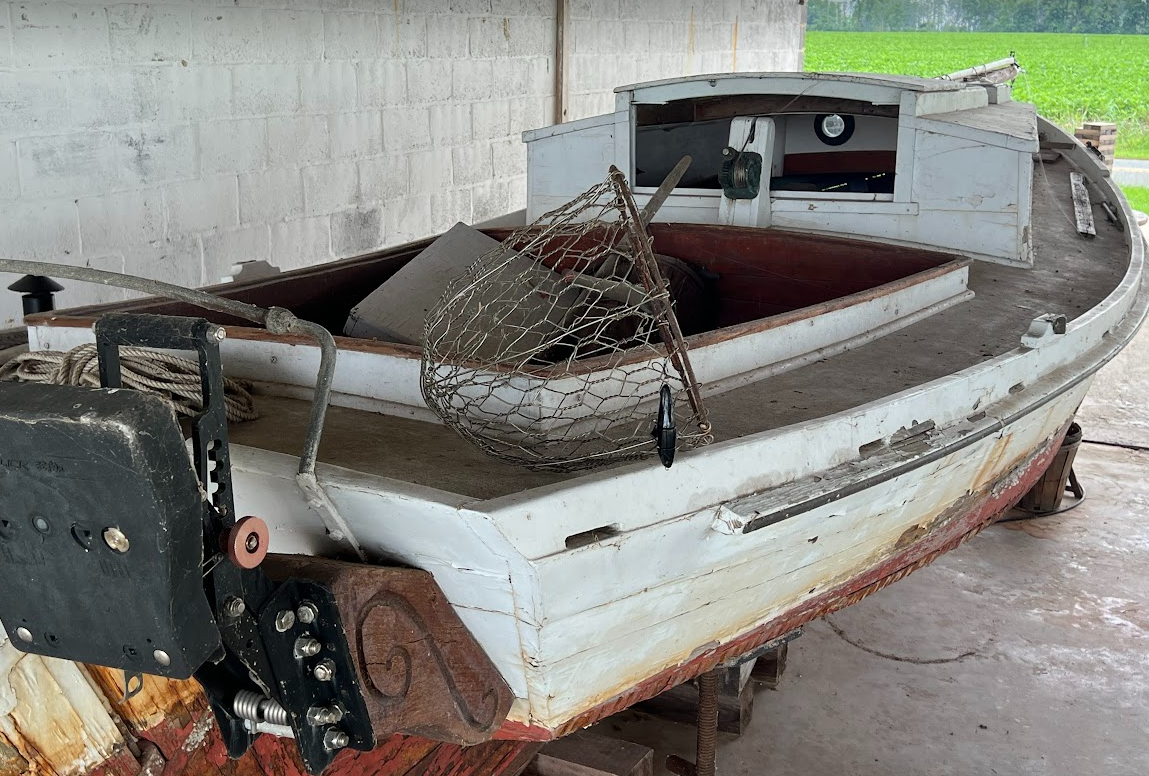
Bateau Cruiser Blue Crab
Design adapted by Howard Chapelle in 1946
from at an abandoned crabbing bateau he surveyed in 1940.
Now at Blackwater Adventures, Dorchester Co., Md.
Now I see why Chapelle included them. They were the apex of crabbing workboats under sail. They worked in the zone between the solo waterman with dip net or scrape and the watermen crews that worked the massive oyster dredges from the big skipjacks.
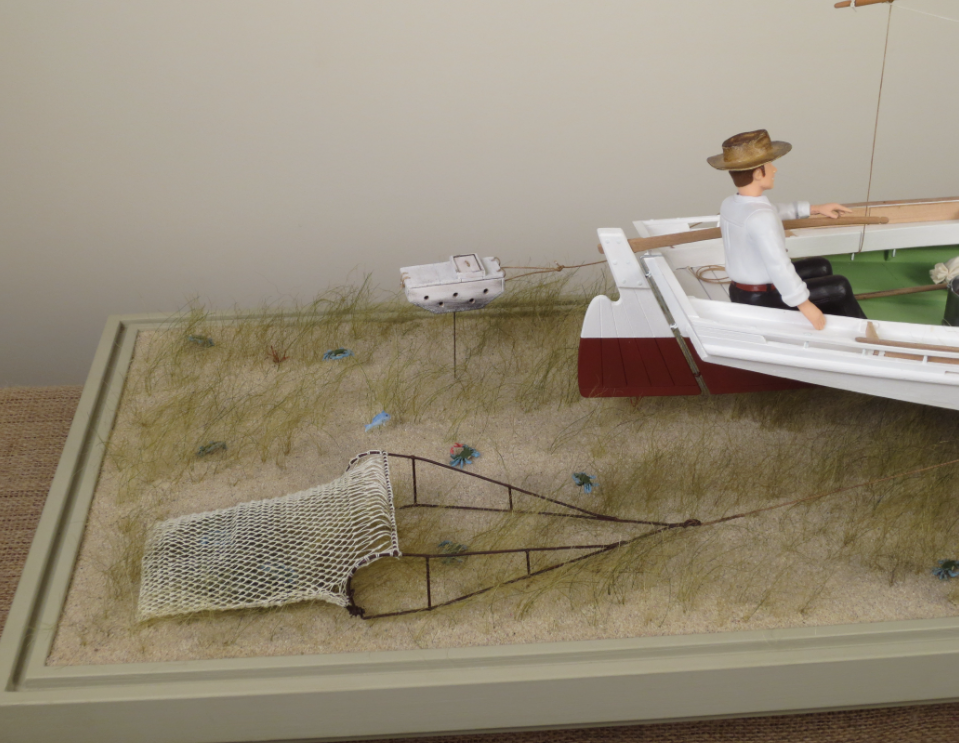
Crabbing bateaux appeared before skipjacks in the evolution of sailing workboats on the Bay. Earlier crabbing bateaux were 22-26 feet in length, later ones were 26-29 feet. These smaller bateaux carried a crab scrape for raking crabs from grass beds in shallow waters. They were also used to trotline for crabs in summer, for oyster tonging in winter, and for transportation between islands. They were designed with very low freeboard and wide side decks ("washboards") to make it easier to haul and lift the scrapes back onboard and to cull the catch.
Hundreds of crabbing bateaux worked the crab and oyster beds before WWII and were the most common sailing workboat (along with log canoes) between Tilghman and Tangier Islands. Chapelle wrote in 1943 that the recent legalizing and introduction of power for crab scraping would soon doom the crabbing bateau to extinction. He had photographed bateaux at Deal Island in the 1930s and returned in 1940-41 to take the lines off four boats - Teddy, Caroline, Rosa Lee, and an unnamed Jenkins Creeker - that had been built between Hooper's Island and Crisfield and were now lying abandoned in the marshes. (CBCS, figures 9-12.)
Chapelle listed these characteristics as typical for crabbing bateaux:
- open rail ("monkey rail", also "pin-rail")
- hawse holes in the rail
- very low freeboard or sheer for their length
- wide side decks consisting of a wide covering board and a narrow strip deck extending inboard to the cockpit coaming
- larger boats have a small removable trunk cabin
- mast is unusually tall but with little rake
By the 1950s, the crabbing bateaux were virtually extinct. Chapelle photographed and took the lines off one more, the abandoned hulk Jess Willard, which was pulled ashore at Cambridge in 1951.
Aubrey Bodine, probably 1940s, photos via CBMM Thieler Collection.
More photos are here.
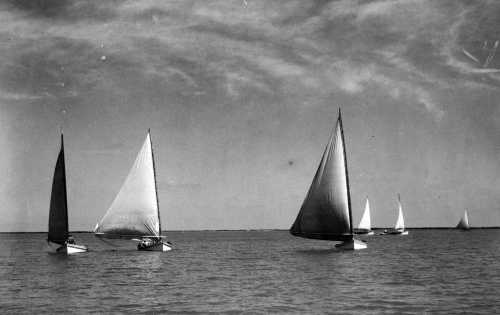
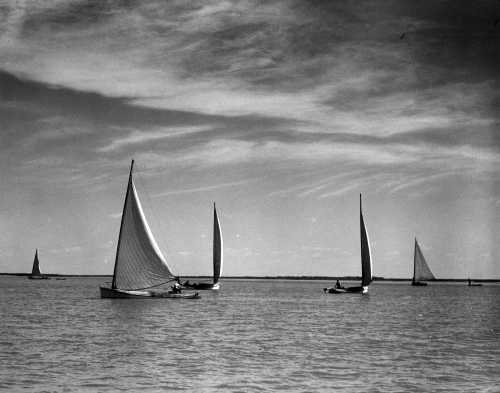
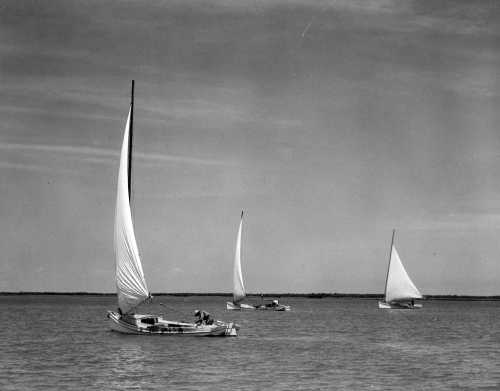
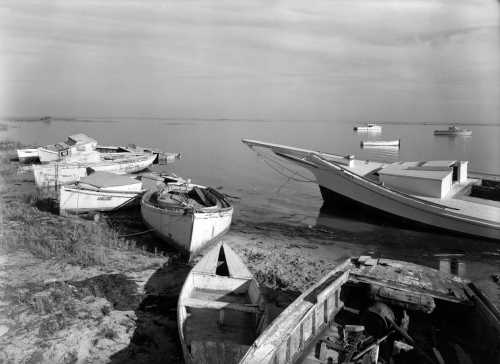
All the Crabbing Bateaux we know about. In all sizes.
I've brought together in this article all of the plans, photos, and scale models of crabbing bateaux that I've gathered primarily from the collections and archives of the Chesapeake Bay Maritime Museum (CBMM) in St. Michaels, Maryland.
CBMM's Edward Thieler Collection of scale models, and Thieler's research notes and documentation, are an especially valuable resource. Ed's models are exquisitely detailed, carefully researched, and historically accurate. I've also gained important insights from my recent correspondence with Ed.
Chesapeake sailing workboats aficionado Charley Humphrey provided Chapelle plans and valuable input on many of the items I present here.
Historic photos of the bateau cruiser Blue Crab came from the Meredith family collection.
CBMM and Meredith family items are published here with their permission.
You can browse here for all of the crabbing bateaux photos, plans, and research notes shown or cited in this article, along with other supplemental materials. Links to my online archives for specific boats and types are inserted throughout the text.
Chapelle Photos at Deal Island - 1932, 1940
Chapelle photographed crabbing bateaux at Deal Island in 1932. He returned during 1940-1942 to take the lines off several that he found abandoned in the marshes at Deal Island (Wenona) and at Hooper's Island.
Large format images of the One-Sail Dinghy at Deal Island are here.
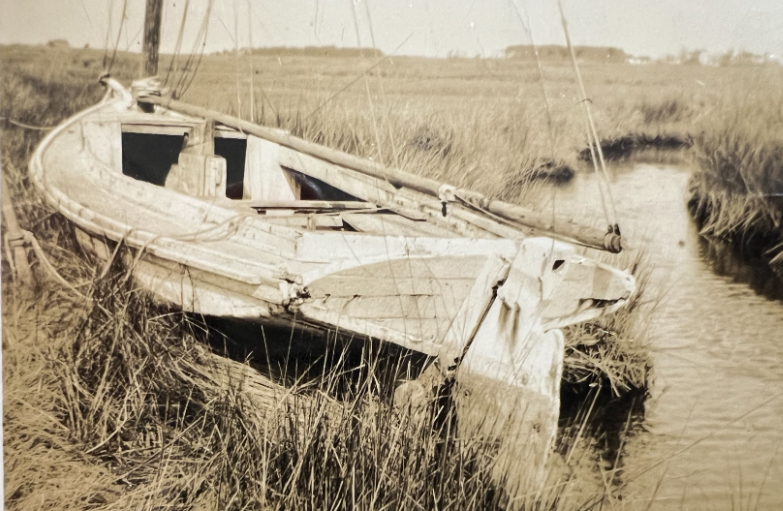
[CBMM Cat No. 000.0901.0329]
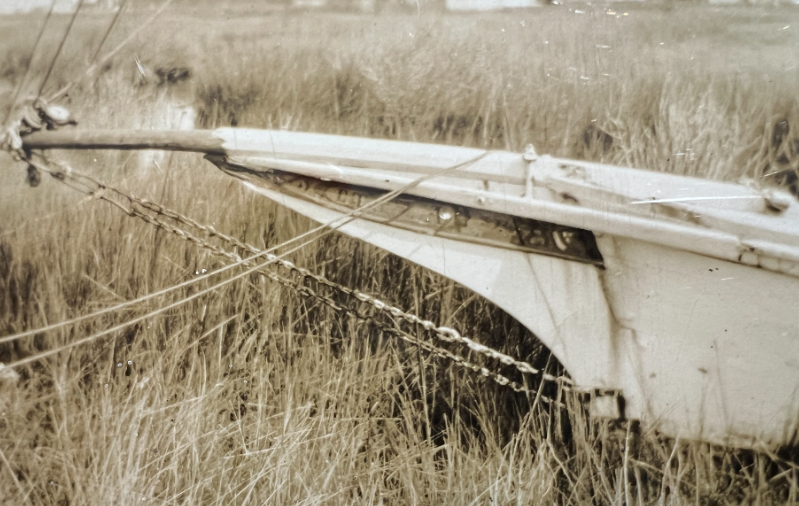
[CBMM Cat No. 000.0901.0327]
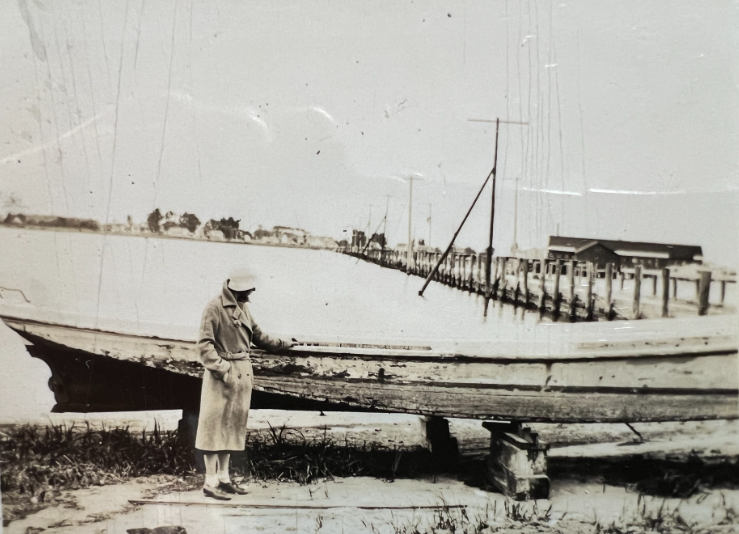
[CBMM Cat No. 000.0901.0334]
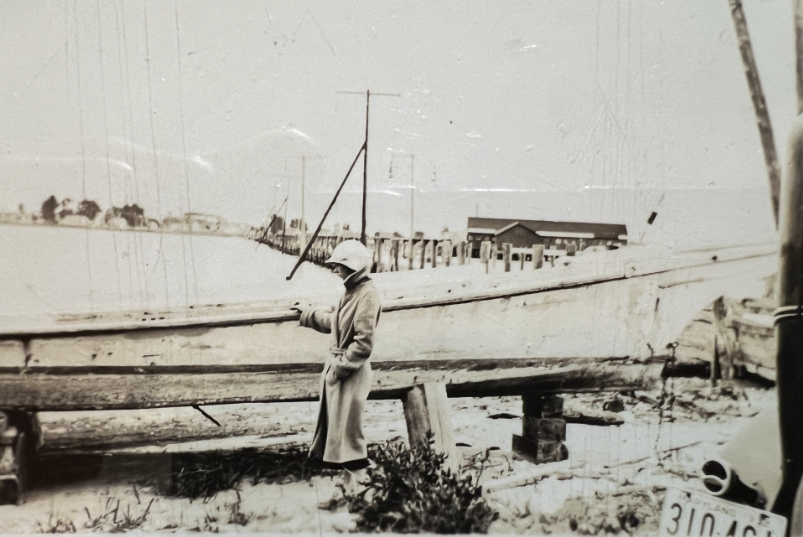
[CBMM Cat No. 000.0901.0335]
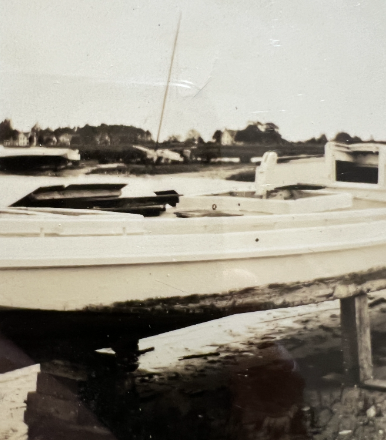
[CBMM Cat No. 000.0901.0330]
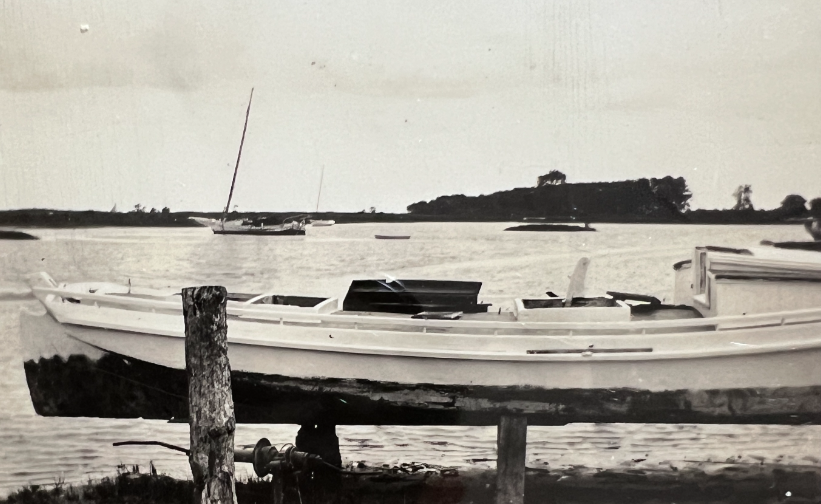
[CBMM Cat No. 000.0901.0331]
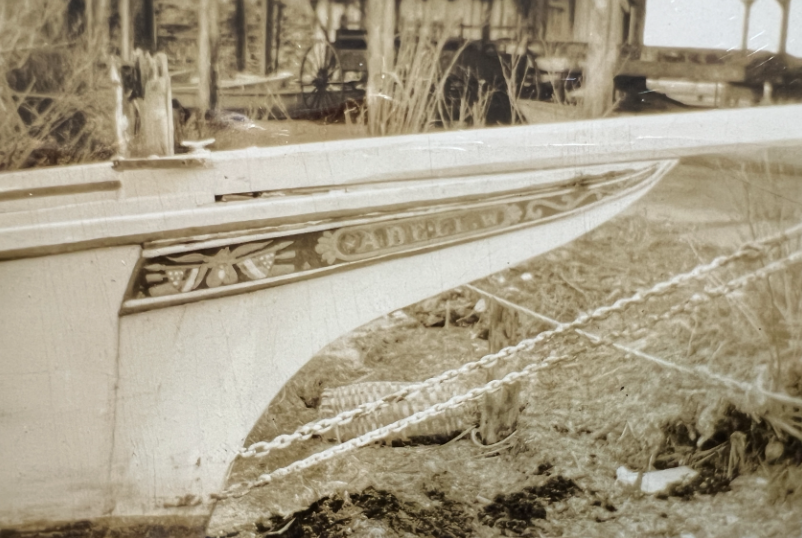
[CBMM Cat No. 000.0901.0328]
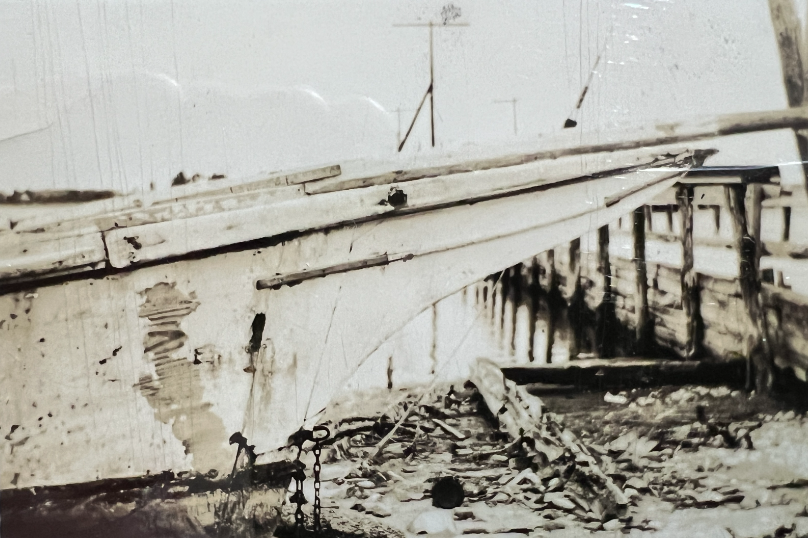
[CBMM Cat No. 000.0901.0333]
One-Sail Crabbing Bateaux - Jenkins Creekers
Chapelle photographed what he called a "One-Sail Dinghy" on the beach at Wenona, Deal Island, in 1940. He took off lines from a "One-Sail Bateau" at Wenona in 1941 and published plans from that bateau, which now appear as CBCS Figure 9.
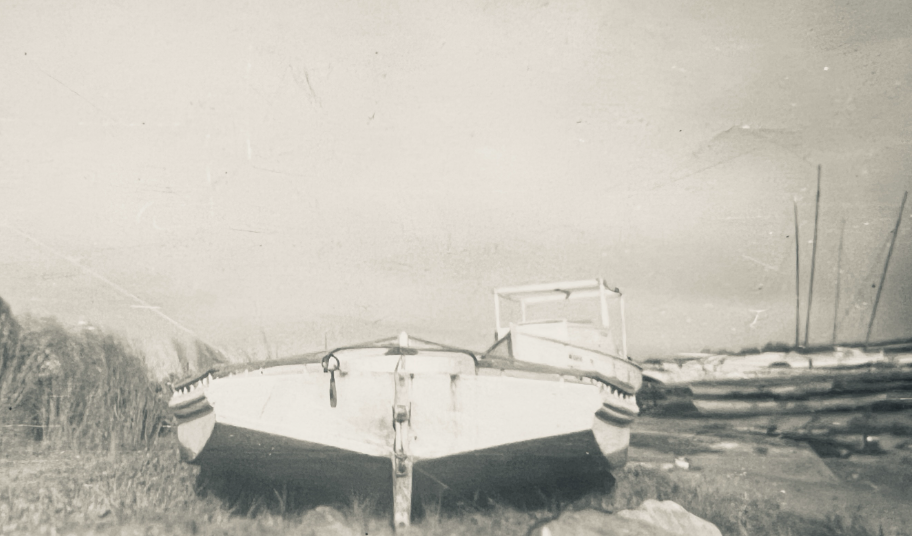
One-Sail Bateau (Jenkins Creeker).
"One-Sail Dinghy at Deal Island, 1940, Beach at Wenona"
[CBMM Cat No. 000.0901.0281.00]
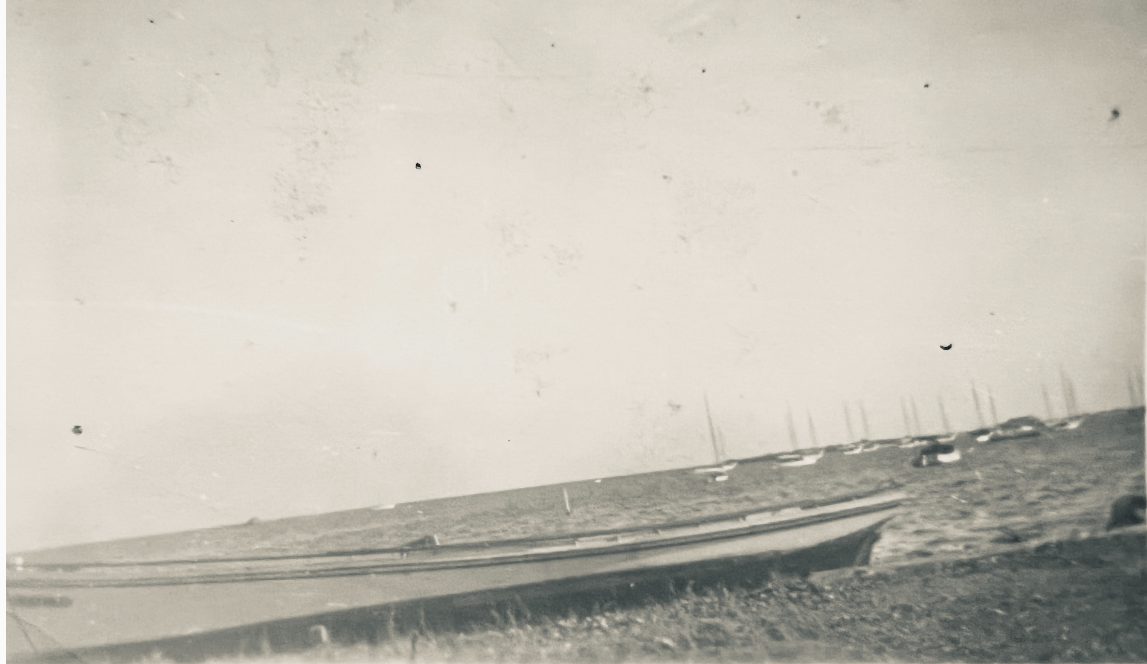
One-Sail Bateau (Jenkins Creeker).
"One-Sail Dinghy at Deal Island, 1940, Beach at Wenona"
[CBMM Cat No. 000.0901.0282.00]
Large format images of the One-Sail Dinghy at Wenona are here.
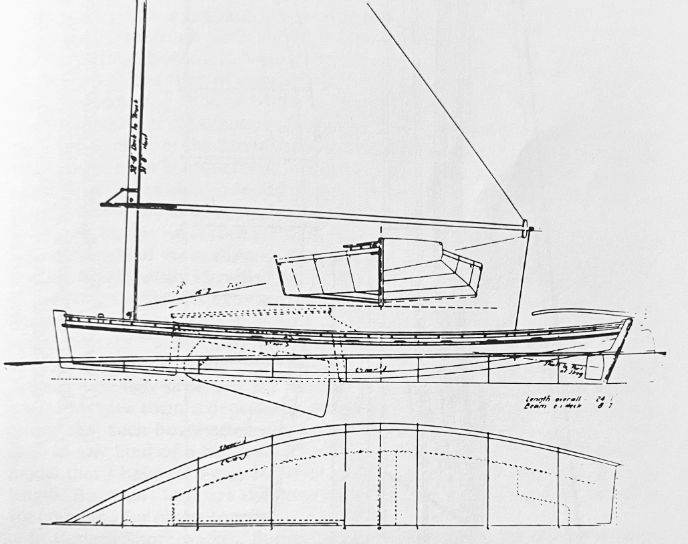
"One Sail Bateau", Figure 9.
Chapelle, Chesapeake Bay Crabbing Skiffs
The "One-Sail Bateau" that appears in Figure 9 was 24′ 1″ long with a beam of 8′ 7″.
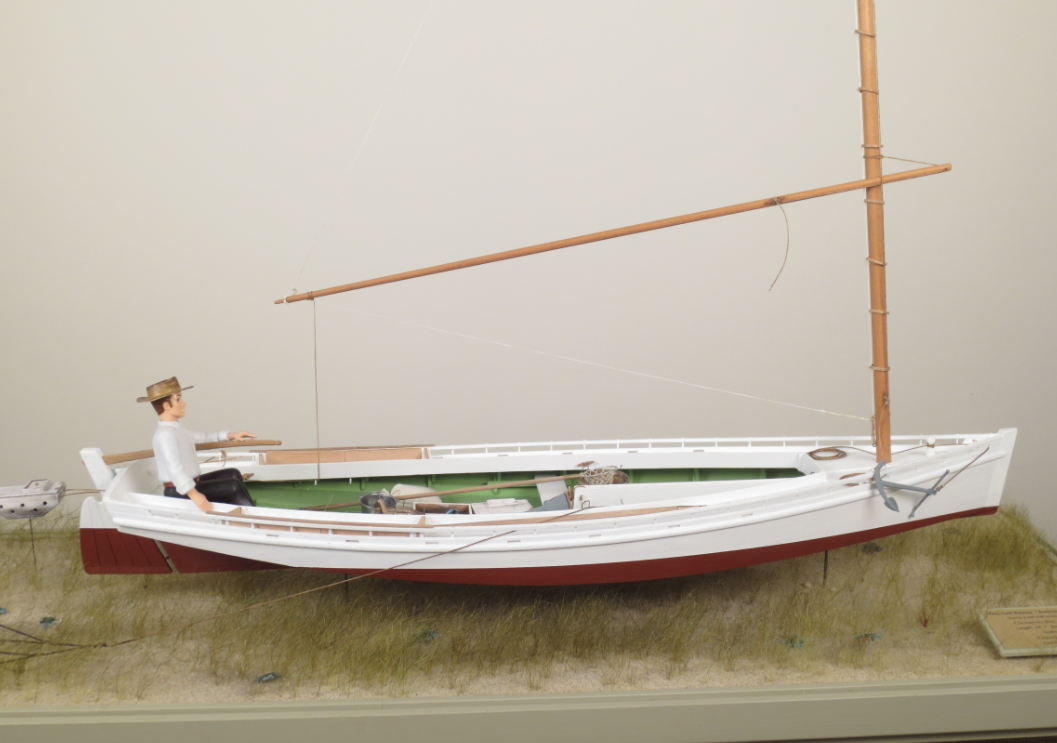
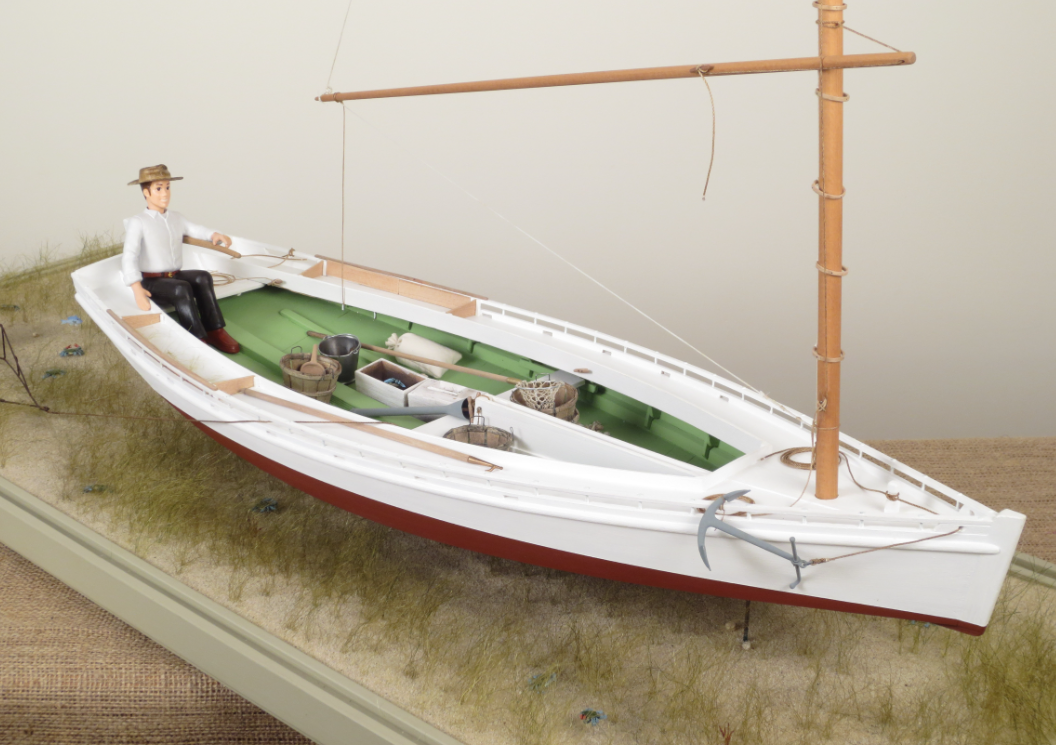
Ed Thieler built a highly detailed and historically accurate model of CBCS Figure 9 and called it a "Jenkins Creeker". He pointed out in his model documentation and in his more recent correspondence with me that it's the one-sail rig which, above all, differentiates the Jenkins Creeker from other crabbing bateaux.
Jenkins Creeker (One-Sail Bateau)
Model by Edward R. Thieler
[CBMM Cat. No. 2022.0004.0019]
Large format images are here.
Caroline and Rosa Lee
Chapelle took off lines and published plans for three other crabbing bateaux in the 1940s.
Caroline was built at Oriole Md. around 1910 at 27 ft 7 in length and 8 ft 10 in beam. Like most crabbing bateaux, she was inexpensively but not roughly built. She was an abandoned wreck when her lines were taken off by Chapelle in 1941. (CBCS Figure 11.)
Rosa Lee was built near Pocomoke in 1918 at 27 ft length and 8 ft 11 in beam, without the usual cuddy cabin. She was finished better than Caroline but was otherwise of typical heavy construction. Her last owner believed that the atypical forward position of her mast and centerboard degraded her sailing qualities. She was retrofitted for power during her later years. Her lines were taken off by Chapelle in 1940. (CBCS Figure 12.)
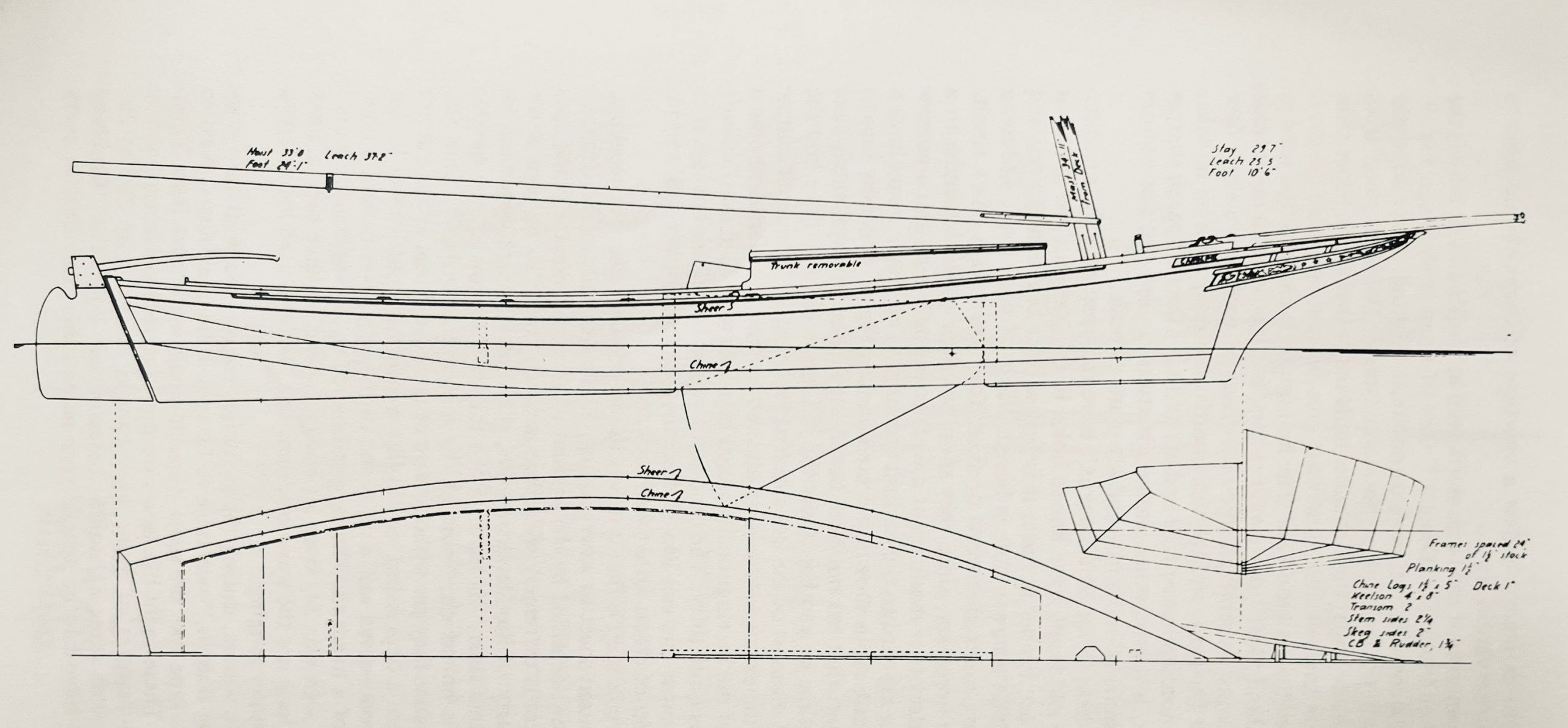
CBCS Figure 11, Crabbing Bateau Caroline
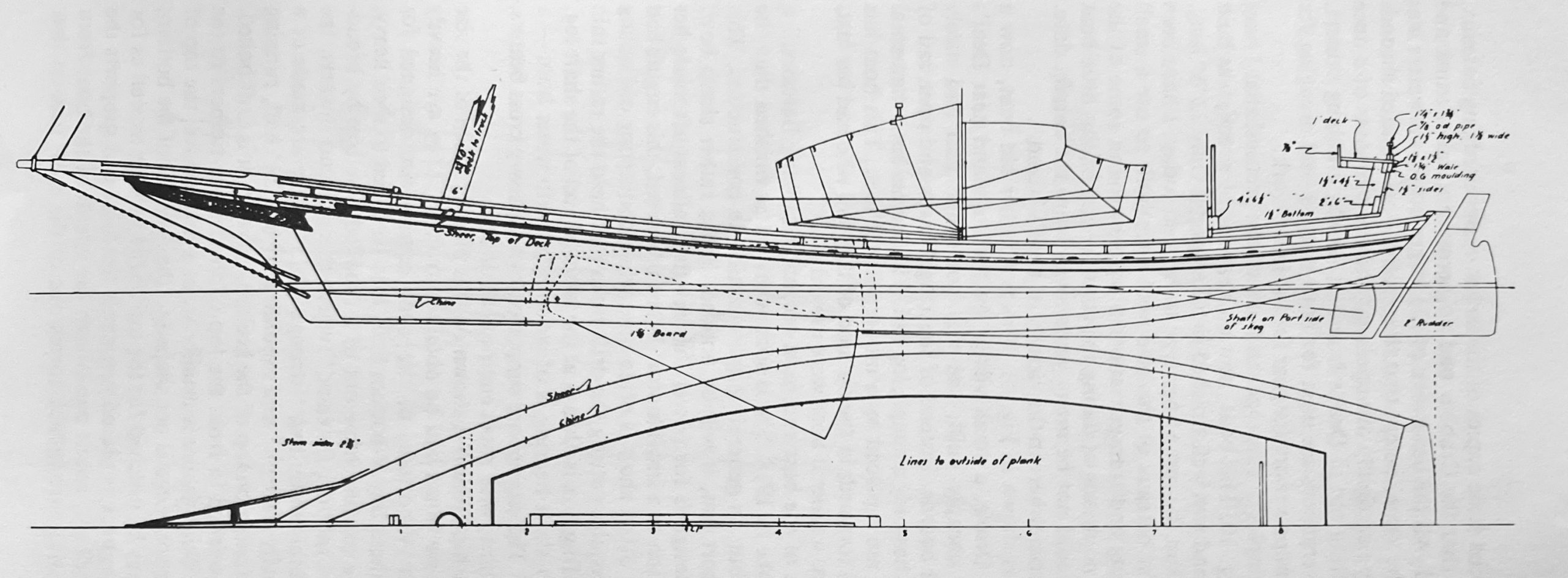
CBCS Figure 12, Crabbing Bateau Rosa Lee
Large format images of the Caroline and Rosa Lee plans are here.
Teddy - Chapelle's favorite crabbing bateau
When you look at Figure 10 in the small CBCS booklet, you can’t make out the name on the trailboard. But if you get hold of the large format plans, you see the name - Teddy.
Chapelle wrote that Teddy was “one of the oldest examples of this type, and one of the prettiest that I have yet seen ... This boat, now an abandoned wreck, was built by an expert carpenter and was well finished in all respects. Only 22' 6" long, she was much smaller than the rest of her type to be seen today. ... There was no means of dating the construction of this little boat but, as a guess, 1900 would not be many years away from the correct date. She was probably built somewhere in the vicinity of Deal's Island. "
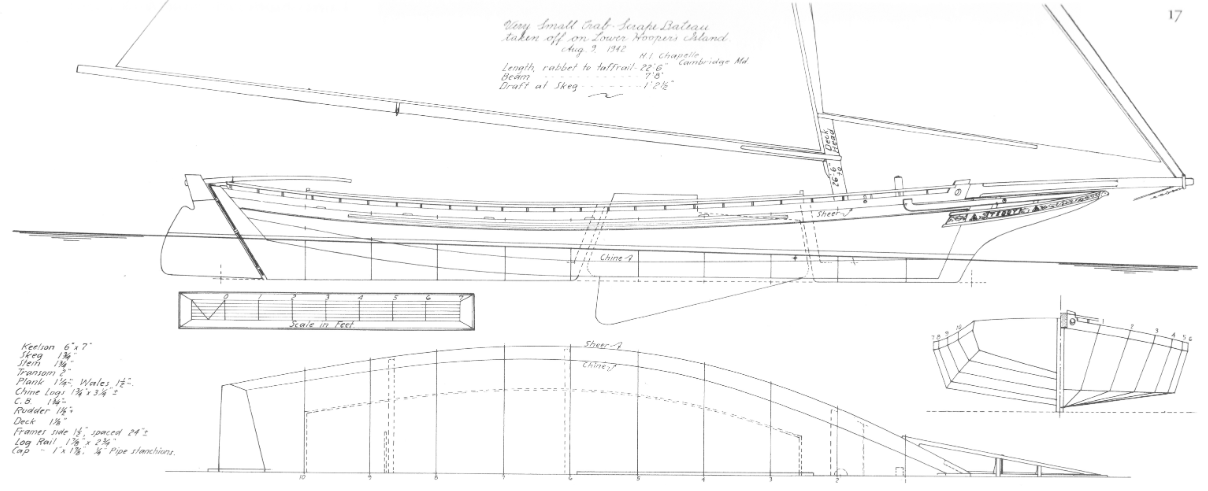
CBCS Figure 10, Crabbing Bateau Teddy
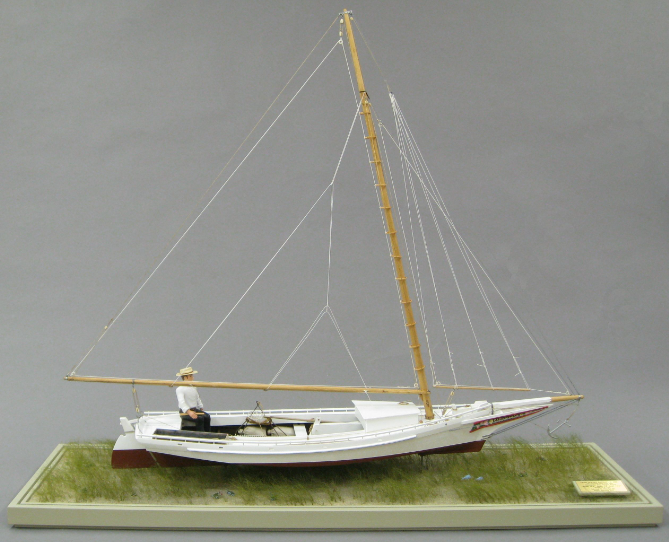
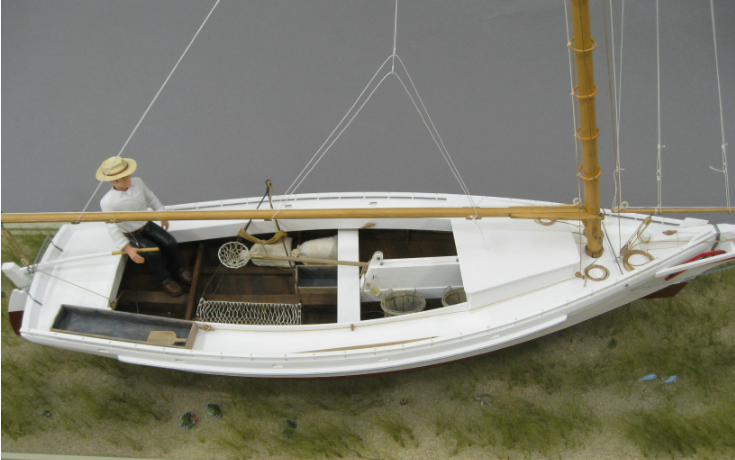
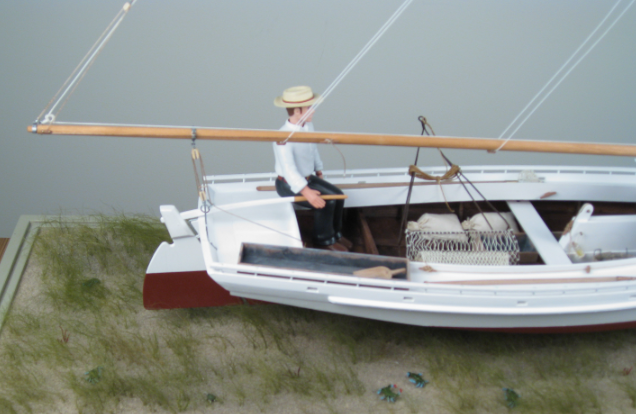
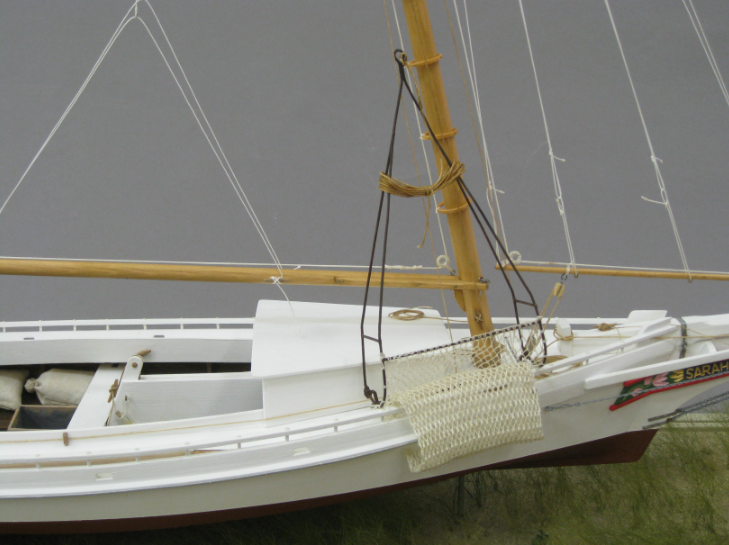
Ed Thieler used offsets and plans drawn by Chapelle for both Teddy and Jess Willard to build his model of Sarah May ex-Teddy. (Ed named this bateau after his granddaughter.)
Crab Scrape Bateau Sarah May ex-Teddy
Model by Edward R. Thieler
[CBMM 2022.0004.0002]
Large format photos and plans are here.
Jess Willard
Chapelle photographed the crabbing bateau Jess Willard pulled up at Cambridge, probably on or near the same day that he and Wayne Yarnall and William Geoghegan took her lines - August 8, 1951. Chapelle wrote on his plan that Jess Willard was built near Oriole about 1914.
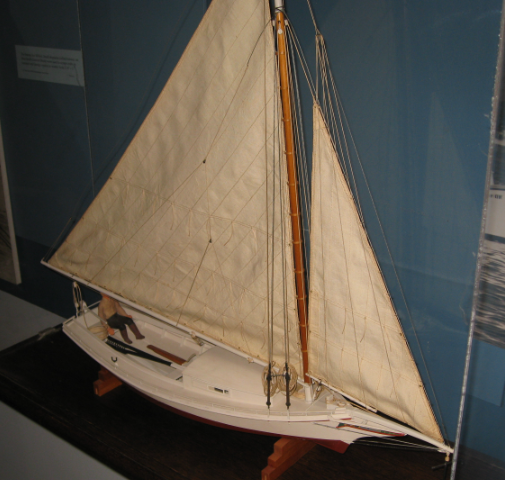
The CBMM archive record for the Jess Willard model (on loan to CBMM from the Smithsonian) says the original Jess Willard was built in 1914 at Dames Quarter, Maryland. [ CBMM Cat. No. 1975.0039.0003.00 ]
(Boxer Jess Willard won the world heavyweight title in 1915.)
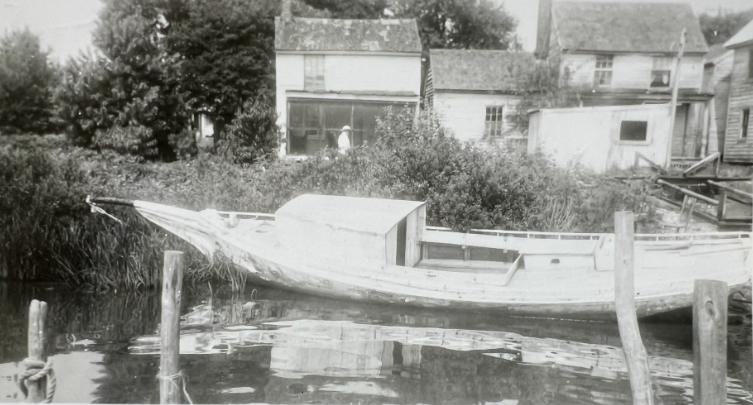
"Crabber Jess Willard at Cambridge 1951"
[CBMM Cat No. 0000.0901.0249]
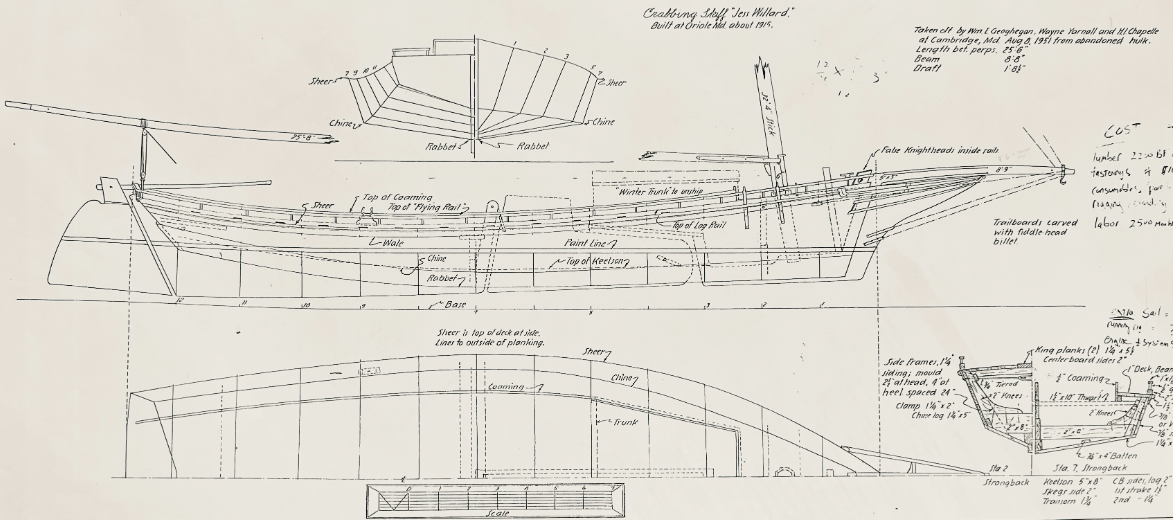
Chapelle's plan for Jess Willard
[CBMM Cat No. 1976.0042.0044.00]
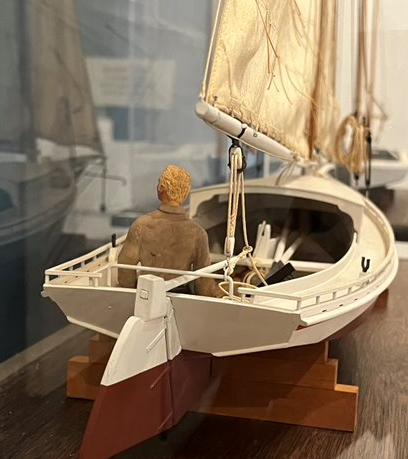
I found a model of Jess Willard on exhibit in the Bay History building at CBMM, in the space where the Maritime Model Guild operates.
Ed Thieler told me this is one of several models commissioned by Chapelle for the Smithsonian Watercraft Collection, which he initiated while he was the Smithsonian's Curator of Maritime History there. This model came to CBMM on long-term loan when the Smithsonian discontinued the Watercraft Collection exhibit after Chapelle's death in the 1974.
Model of Crabbing Bateau Jess Willard
[CBMM Cat. No. 1975.0039.0003.00]
Large format files plans, model, and historic photos are here.
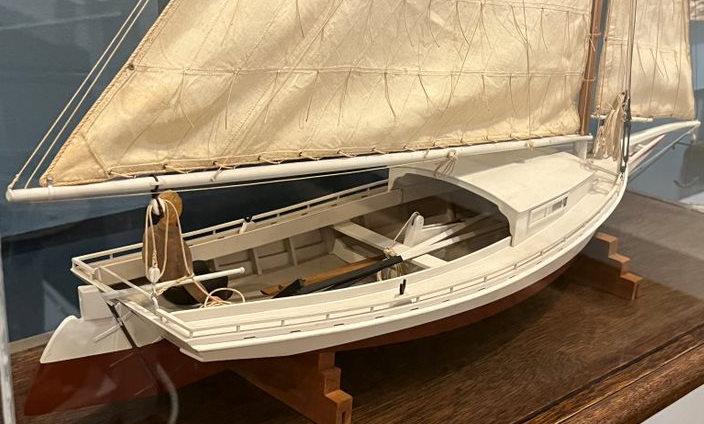
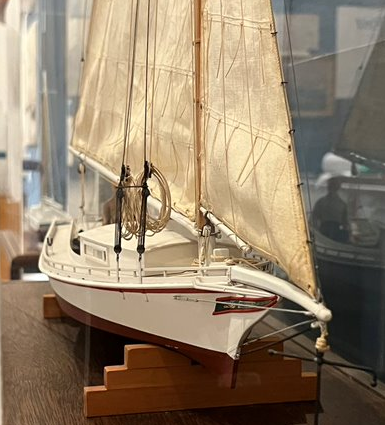
The Bateau Cruisers
When Chapelle took lines and published plans for the crabbing bateaux in CBCS, he was already thinking ahead to adapting this traditional sailing workboat as a cruising yacht. He cited these bateaux as prime examples in his argument that traditional American small craft are the ideal starting point for designing leisure craft that have evolved for local sailing conditions and are best suited for the amateur builder and sailor:
"These yacht-like boats were neither true skiffs nor bateaux but combined the features of both. ... It is apparent that the Bay builders design boats to fit wholly local conditions, even in the comparatively narrow limits of the Chesapeake. This is one opportunity for future development in yacht design. The relative low cost of the Chesapeake Bay types of V-bottom hull would give a sound basis for the application of such a development." [CBCS]
Blue Crab - Chapelle Design & Build, 1946/1952
In 1946, just a few years after the original publication of the CBCS plans, Chapelle designed Blue Crab as a cruising yacht for an unidentified client. Chapelle's plan presents Blue Crab as a "Bateau Cruiser".
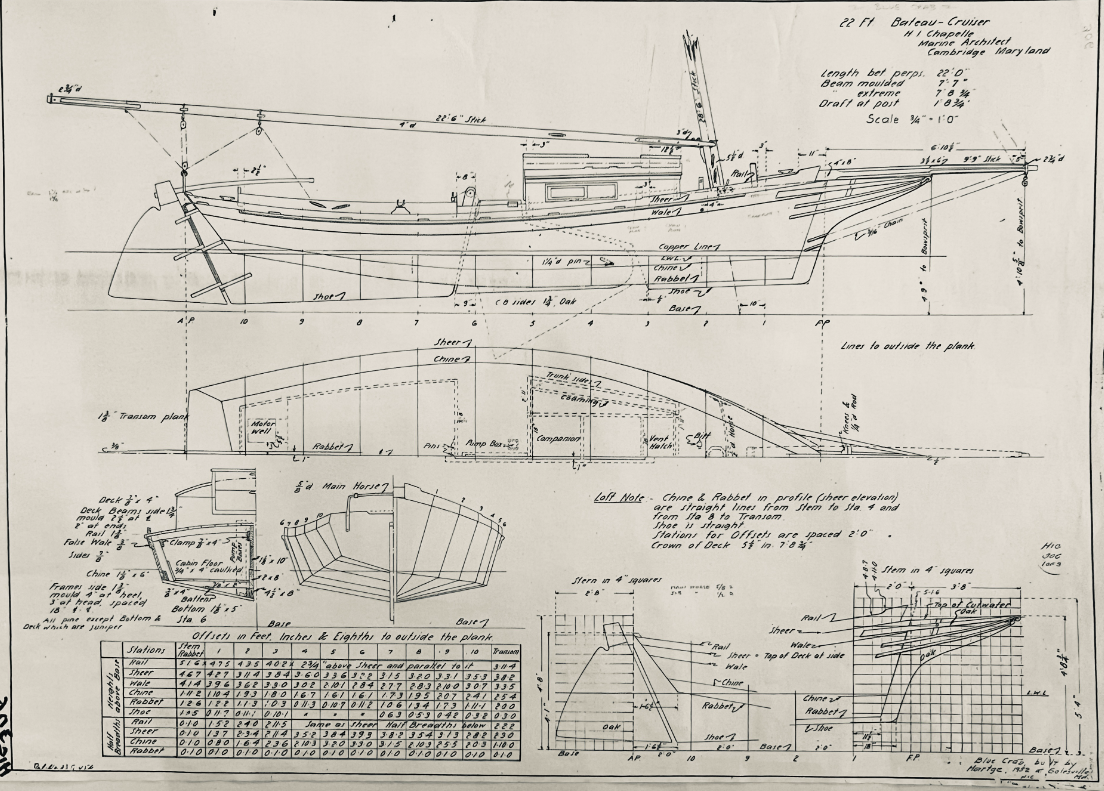
Bateau Cruiser, Blue Crab
Howard Chapelle Design, 1946
[Smithsonian Ship Plans Catalog HIC-306]
Blue Crab may be the only surviving vessel which was designed and built as a Howard Chapelle commission. She can still be seen in the event pavilion at The Cannery locaton of Blackwater Adventures, operated by the Meredith Family. The Merediths acquired Blue Crab in 2016 and have researched her ownership history and collected photos and documentation. You can read more here about Blue Crab.
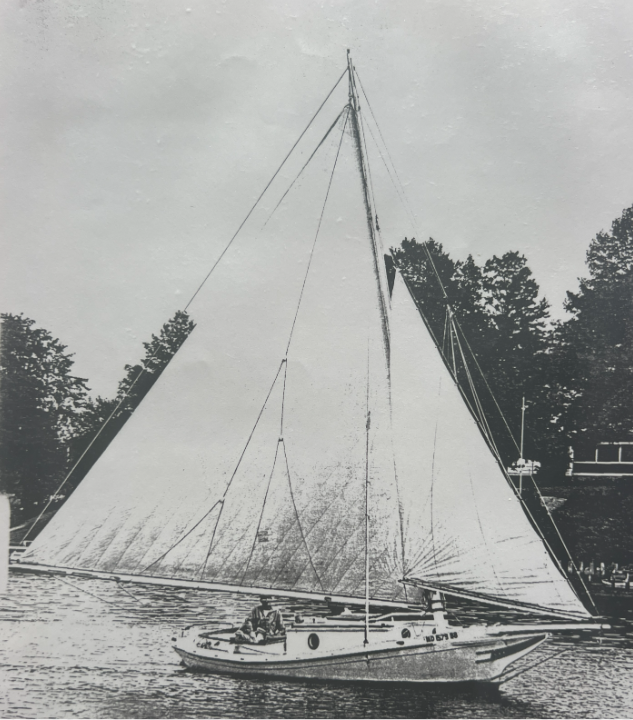
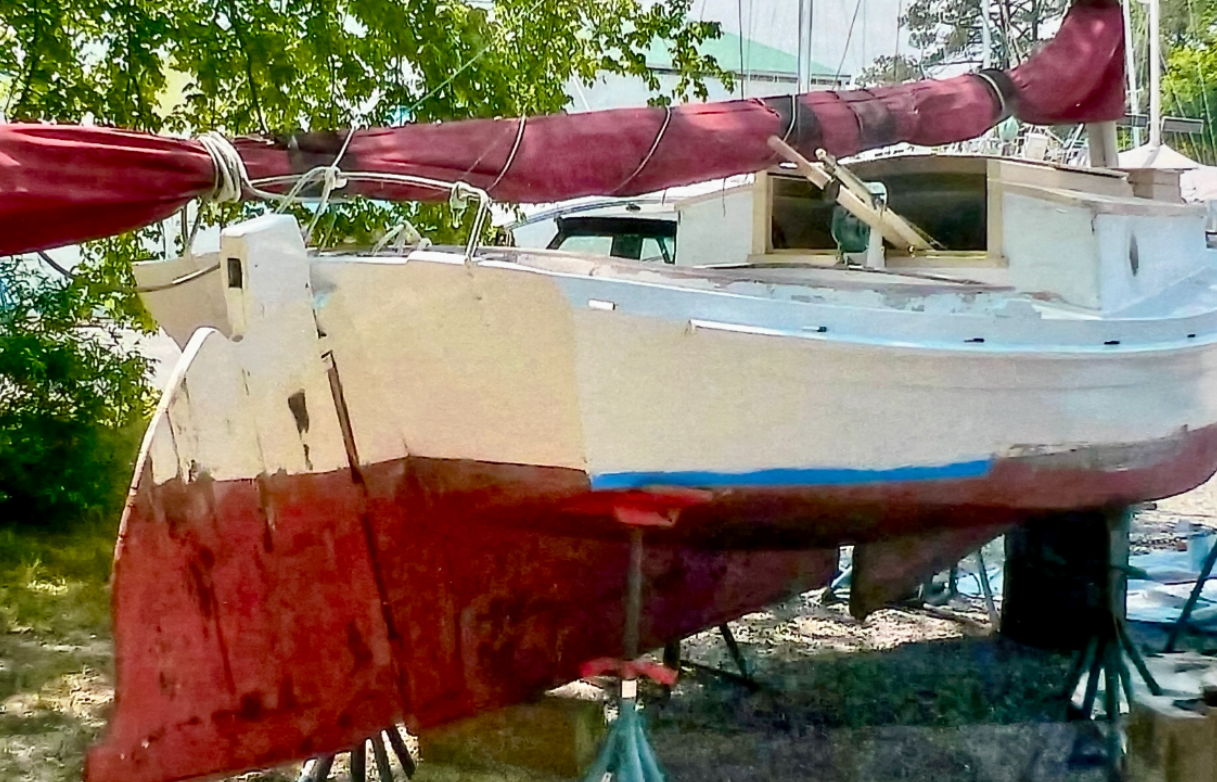
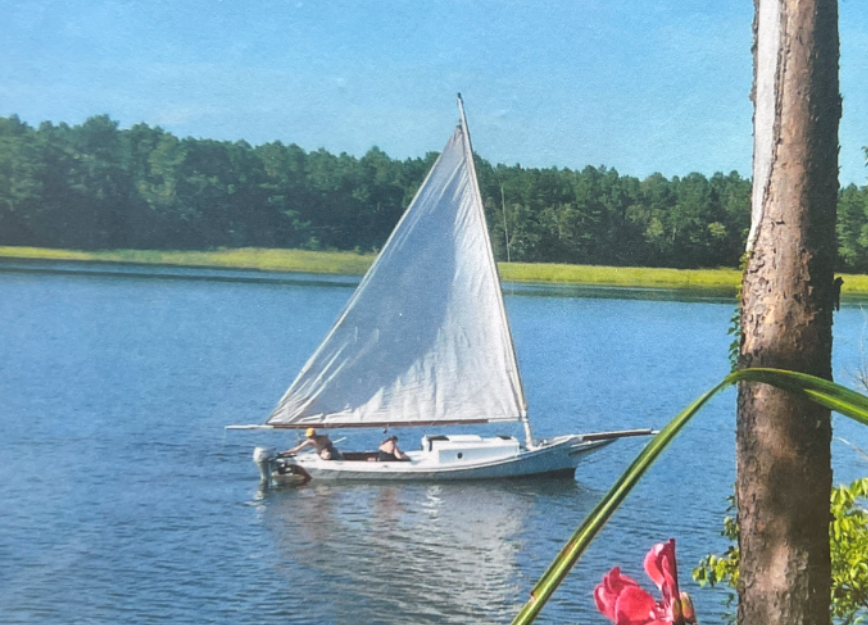
Blue Crab 2012-2015
Sweepstakes - Chapelle's Own Yacht, 1964
Chapelle modified his Blue Crab plan in 1964 and commissioned the renowned Chesapeake Bay shipwright Jim Richardson to build Sweepstakes for his own use.
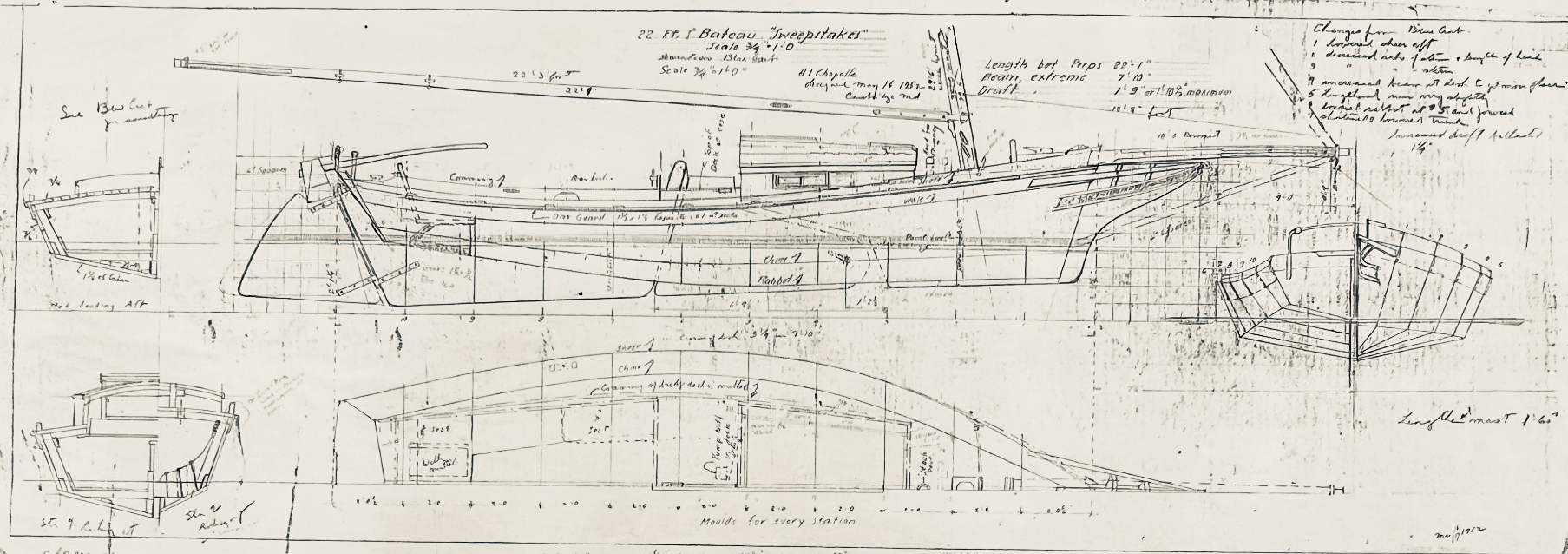
Bateau Cruiser, Sweepstakes
Howard Chapelle Design, 1964
[Smithsonian Ship Plans Catalog HIC-307]
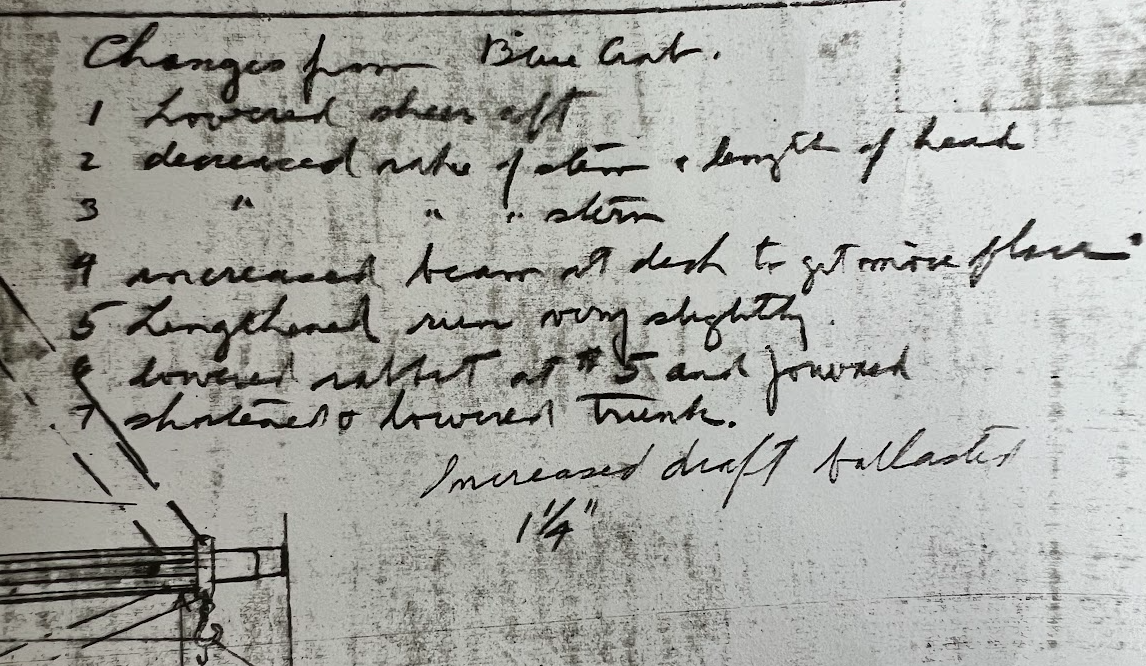
Chapelle notations on plan for Sweepstakes,
listing modifications from Blue Crab
[Smithsonian Ship Plans Catalog HIC-307]
Chapelle's Bateau Cruiser Sweepstakes
[ Large format files are here. ]
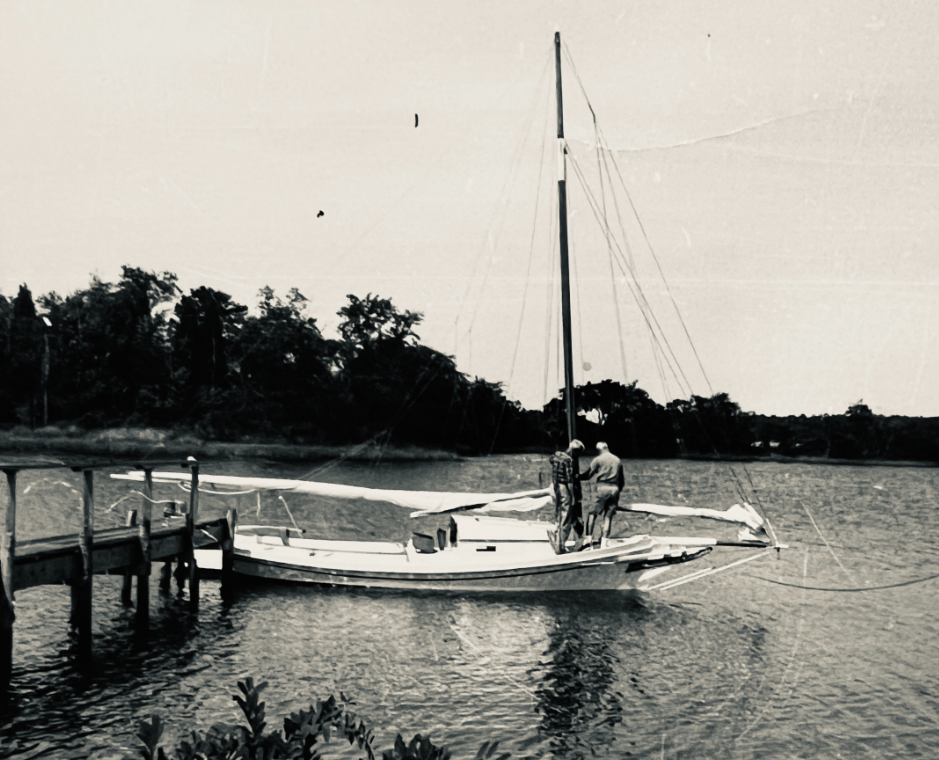
[ CBMM Cat No. 0000.0901.0237 ]
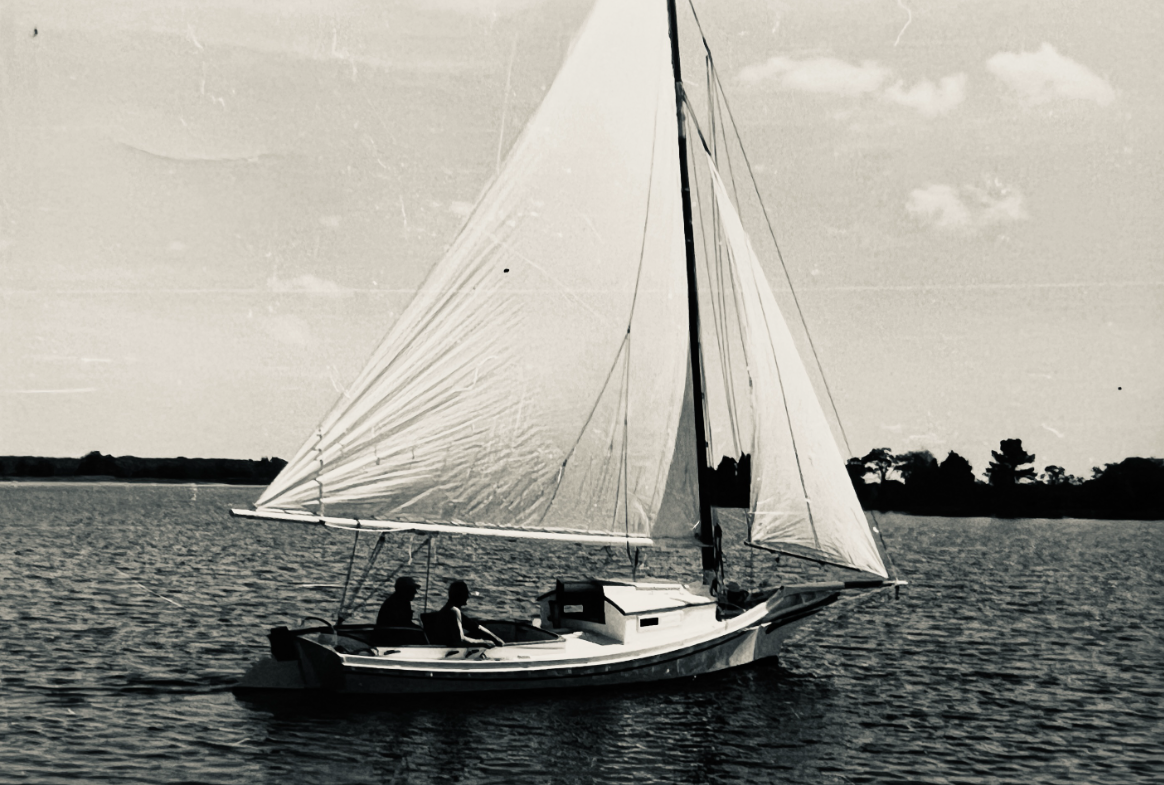
[ CBMM Cat No. 0000.0901.0259 ]
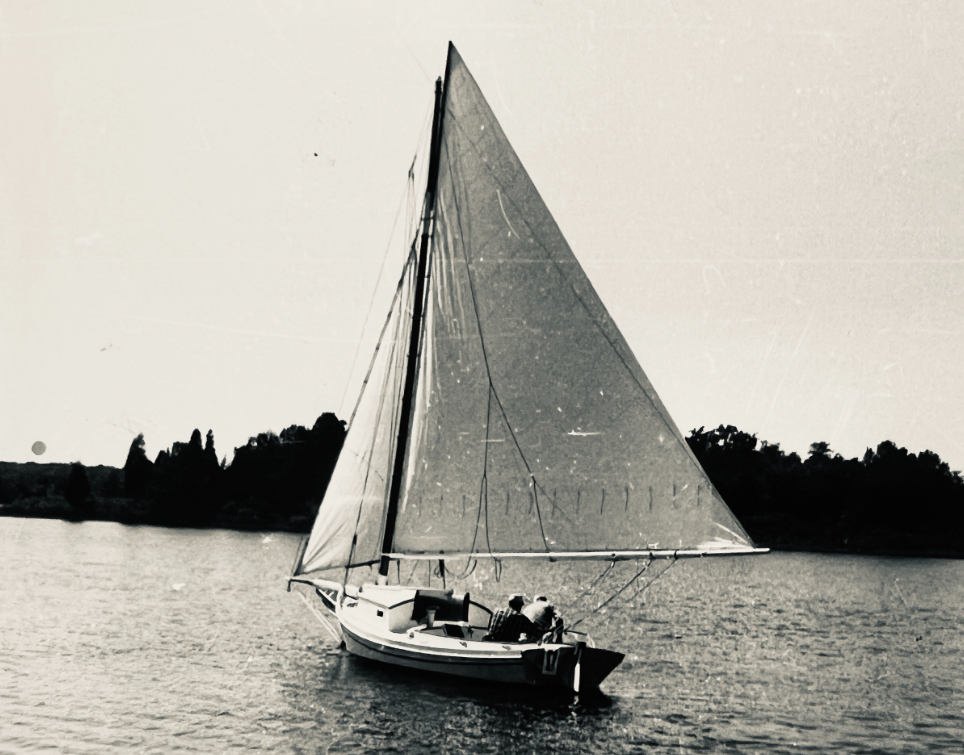
[ CBMM Cat No. 0000.0901.0258 ]
Champion Girl, 1965
Washington Post reporter Robert Keith visited Jim Richardson at his boatyard in 1964, when Richardson was building Sweepstakes. Keith commissioned Richardson to build a longer version of Sweepstakes at 28 feet LOD. Keith's bateau cruiser, Champion Girl, was completed in spring 1965.
How did she sail? Keith wrote that "with moderate wind/sea conditions, and the sails set right, I found I could ... take my hand off the tiller and let her tack off on her own, while I lie back and doze till it comes time for the next tack - a boat in perfect balance and in perfect harmony with the wind and water of Chesapeake Bay." [Robert Keith, The Jim Richardson Boat Book]
According to the Last Skipjack website, Robert Keith was approached by Paramount Studios in the early 1990s to use Champion Girl as a film prop. The studio would need to remove the cabin, which Keith objected to. He referred them instead to the bateau cruiser Applegarth, which was at CBMM.
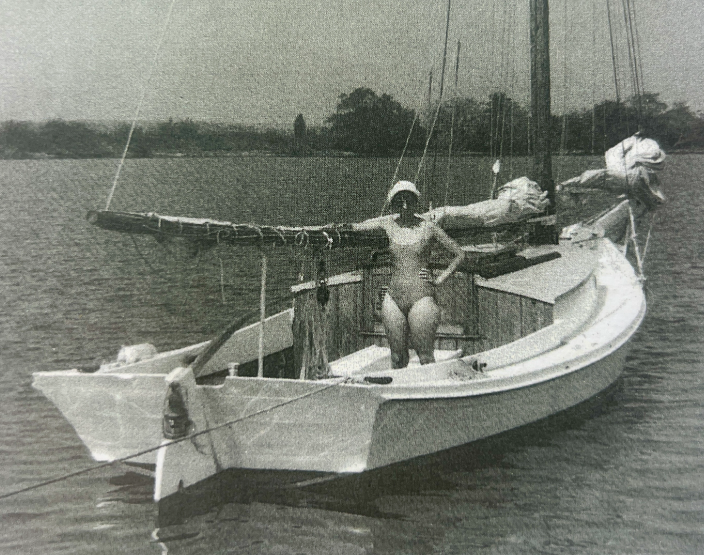
Champion Girl
From The Jim Richardson Boat Book
Applegarth ex-Pride of Erin, 1977
The Last Skipjack website records that the bateau cruiser Pride of Erin was built by Curtis Applegarth at his boatyard in Oxford in 1977. She was donated to CBMM sometime before 1990, "sat in a field for awhile", and was referred to as Applegarth by the CBMM staff.
Paramount Studios obtained ownership of Applegarth from CBMM and moved her to Princeton NJ for use in the 1994 movie IQ. After film work, Paramount sold Applegarth to Paul Thomas, who brought her back to the Chesapeake and spent three years rebuilding her. As of 2024, Applegarth is still sailing out of Havre de Grace.
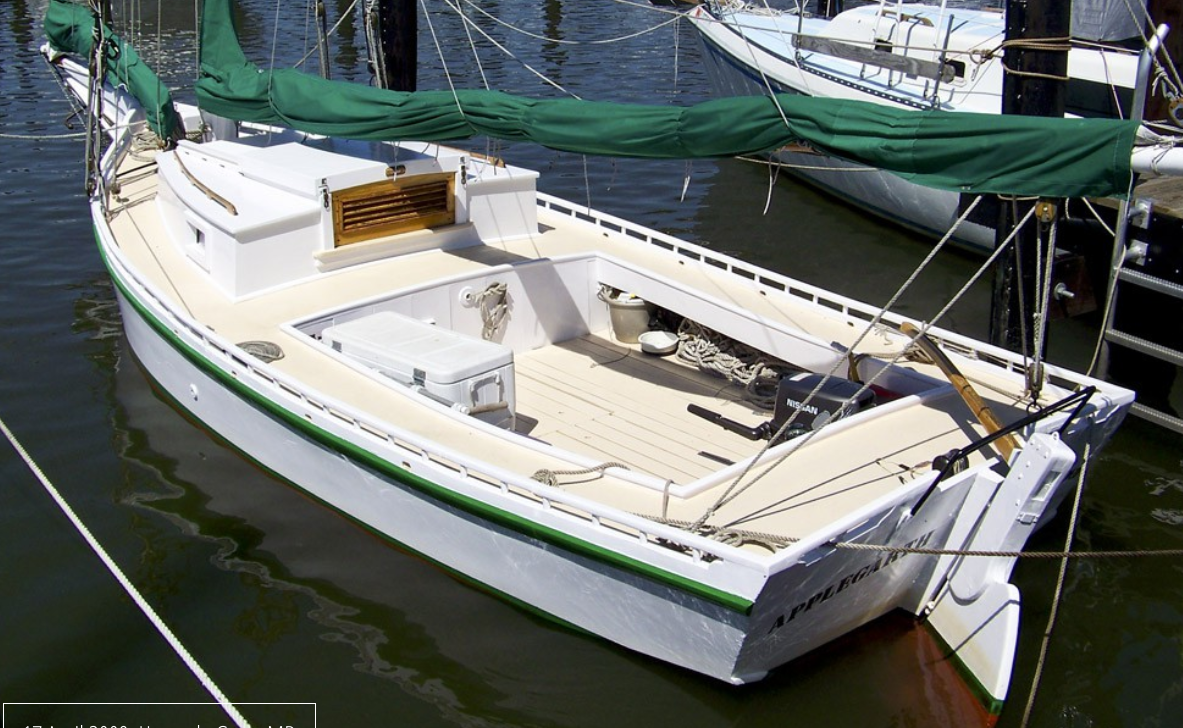
Applegarth at Havre de Grace in 2009
From LastSkipjacks.com
More photos are here.
Modern Descendants - the Power Scrapers
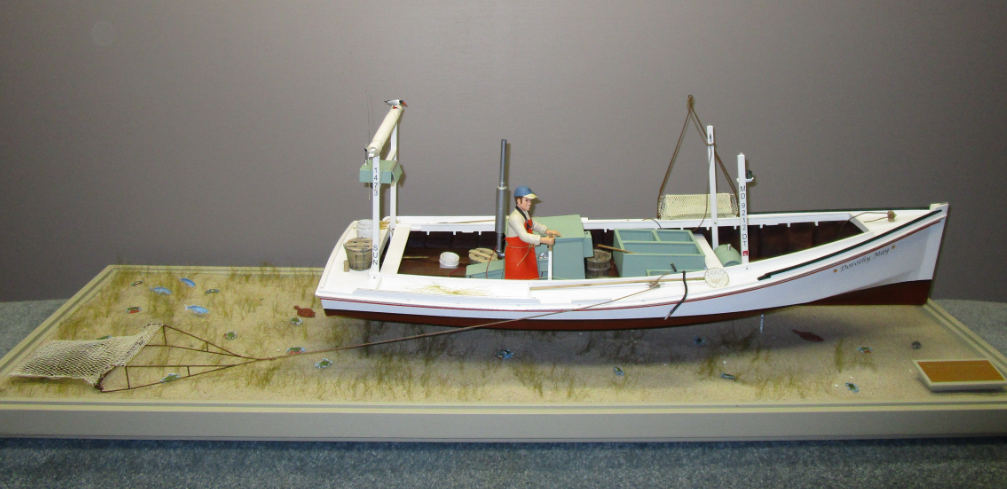
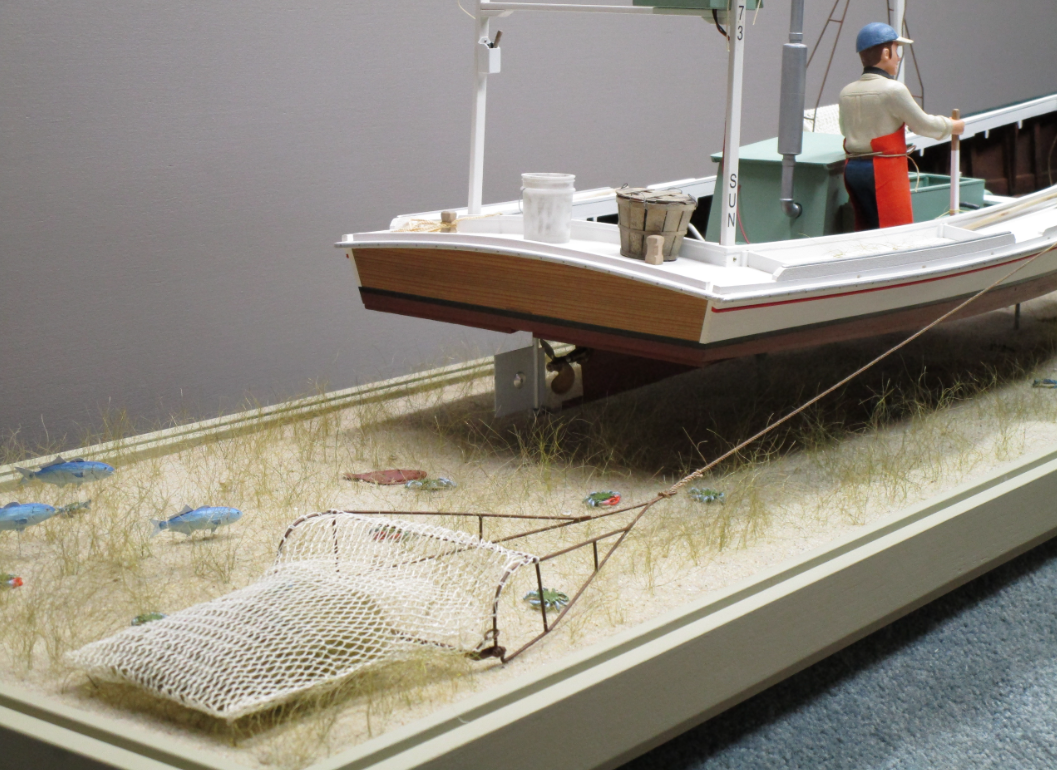
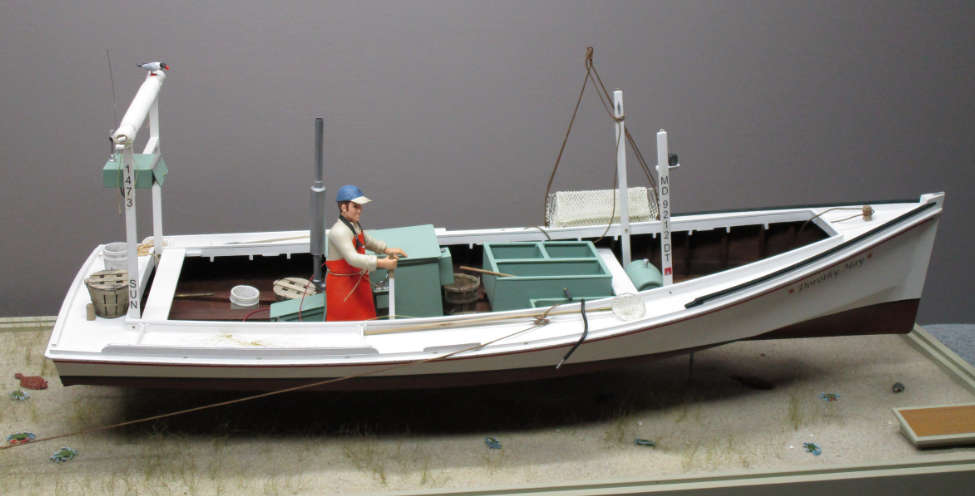
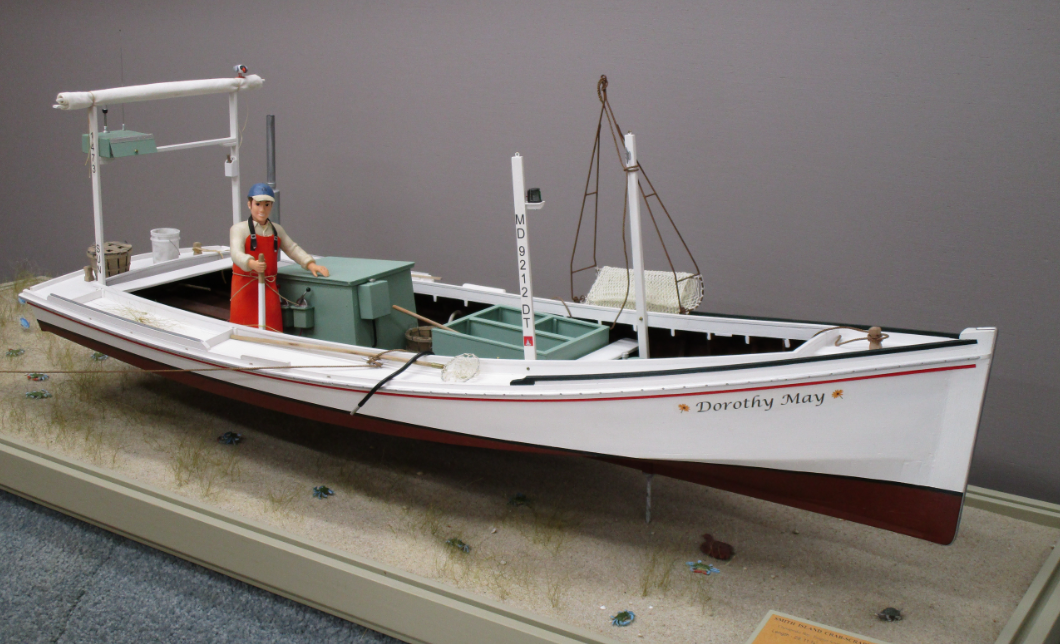
Ed Thieler points out that the powered crab scrapes that still work Tangier Sound are direct descendant of the Jenkins Creekers. Ed's exquisite model of the scrape Dorothy May shows clearly how the power scrapers still carry the graceful lines of the former sailing workboats.
You can follow the 2011-2014 build of the new scrape, Stella R. Builder-owner Robb Lake adopted some of Ed's Dorothy May details for his new scrape. He also catalogued power scrapes on the water and in museums here.
Crab Scrape Dorothy May
Model by Edward R. Thieler
[ CBMM Cat. No. 2022.0004.0021]
[ Large format files are here. ]
More about CBMM Collections
Items that are not exhibited around the CBMM campus are kept in the Norman & Ellen Plummer Center for Museum Collections. This is a climate-controlled facility that was expanded and modernized in 2023.
You can search all the collections online here. Look for the links at lower left to search these collections separately:
- Objects, Photographs, Manuscripts, Ships Plans
- Regional Oral History Database
- Books and Periodicals
See my CBMM Collections Search Tips.
The collections and library are accessible only by appointment. Email collections@cbmm.org or visit the Library and Research page.
Voile-Aviron | Sail & Oar
I also write about sail-and-oar cruising in small open boats on the Chesapeake and its tributaries at Sail+Oar - Chesapeake Log.
Archived Comments
These comments are preserved from the original WordPress site as read-only text.
Fantastic detail and thorough as always!