
 Maryland
Cinnamon Girl
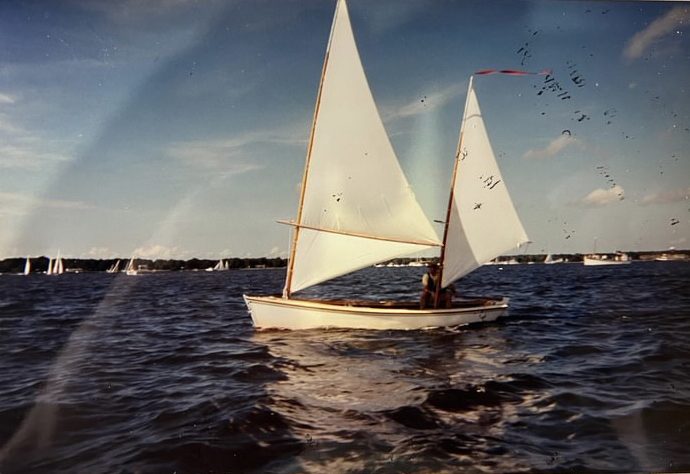
Thanks to Caden Lewis, Chesapeake Bay Maritime Museum (CBMM) Shipyard apprentice, for re-introducing Cinnamon Girl to the traditional small craft community in 2021. And for making me aware of the existence of Kevin Brennan's photo album and putting me in touch with Kevin.
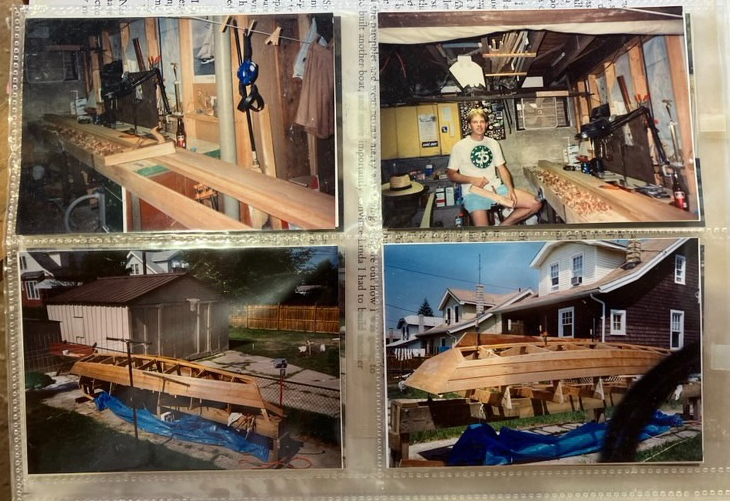
And thanks to Kevin for providing new snapshots and narrative of his photo album.
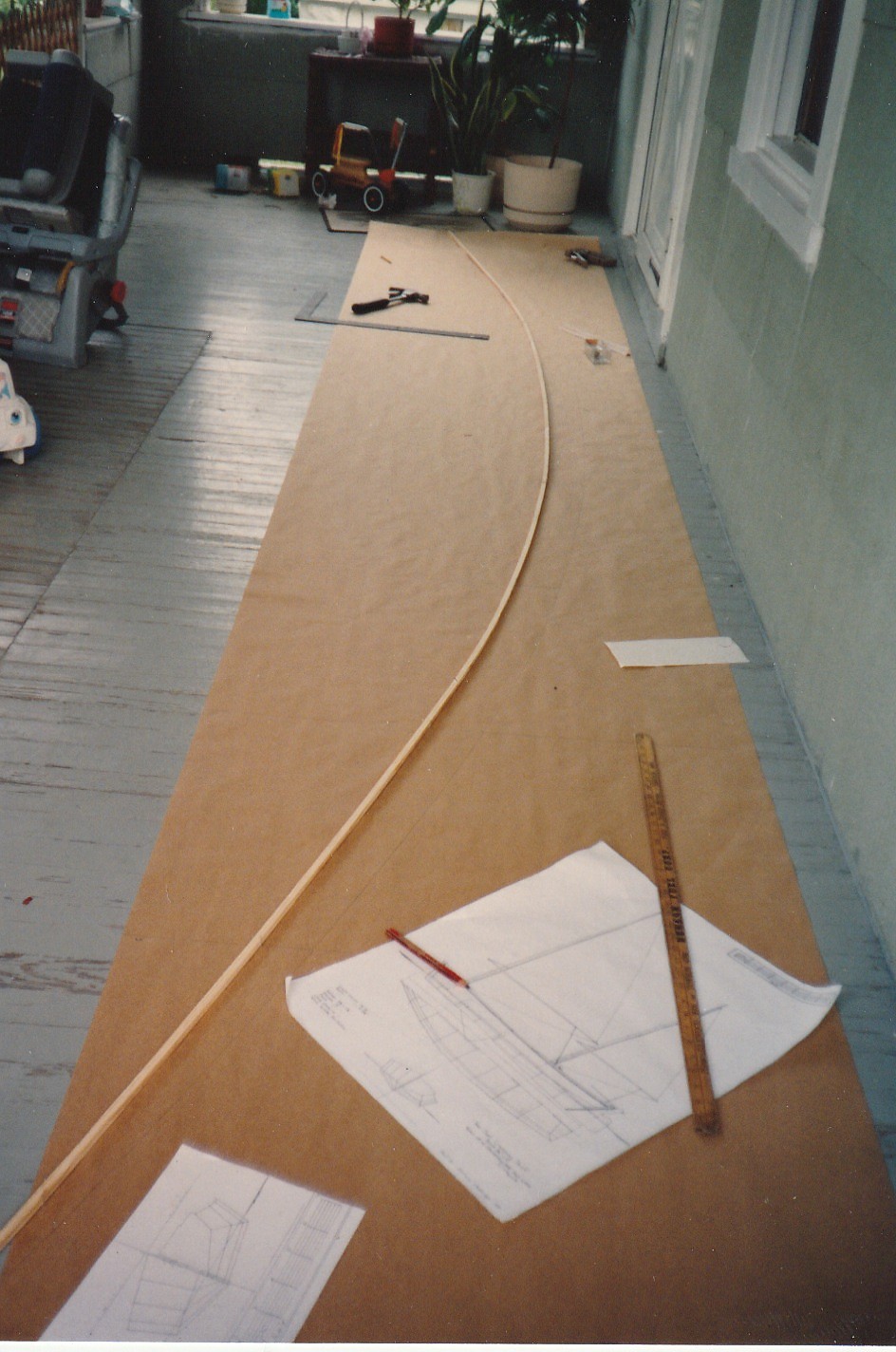
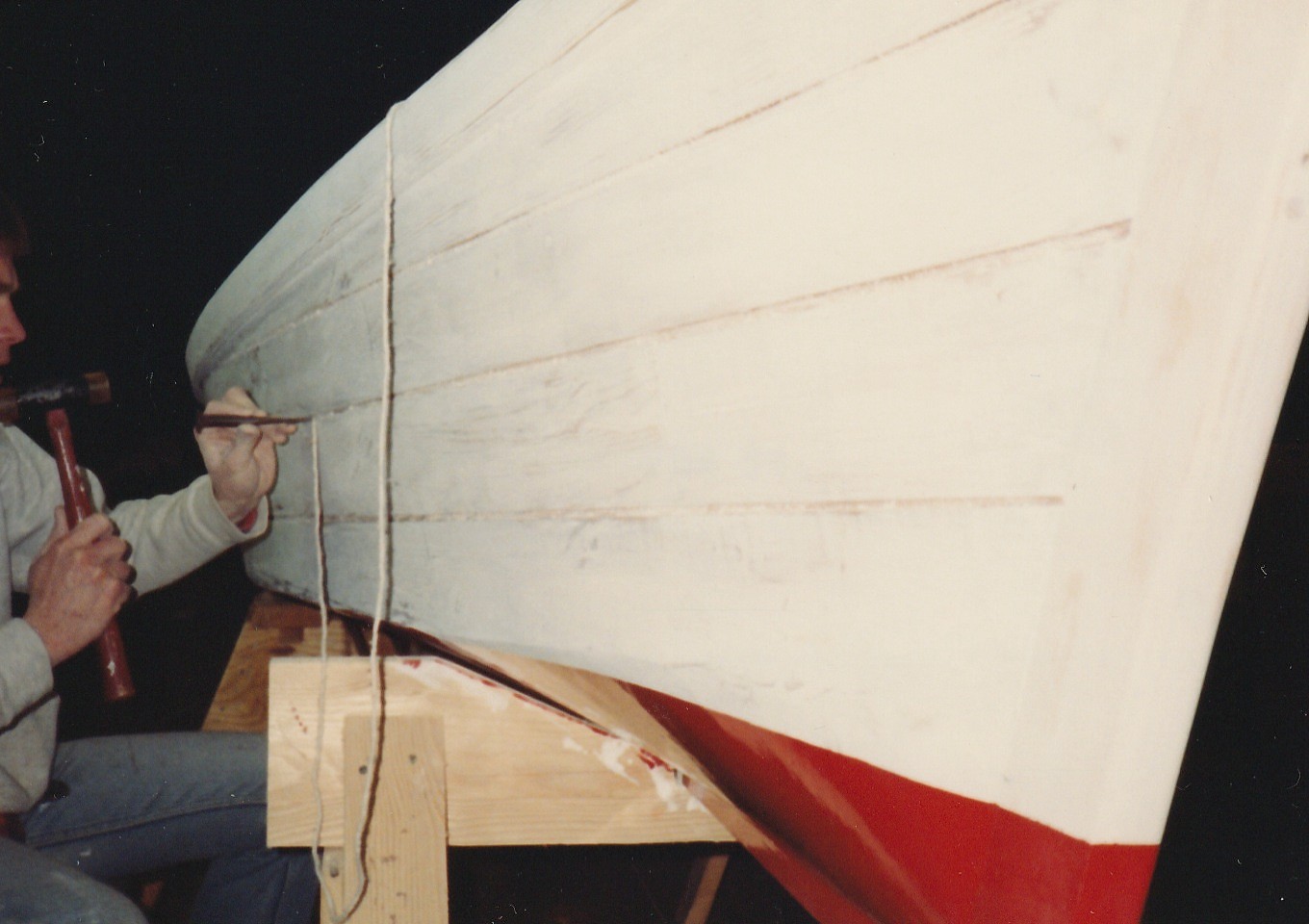
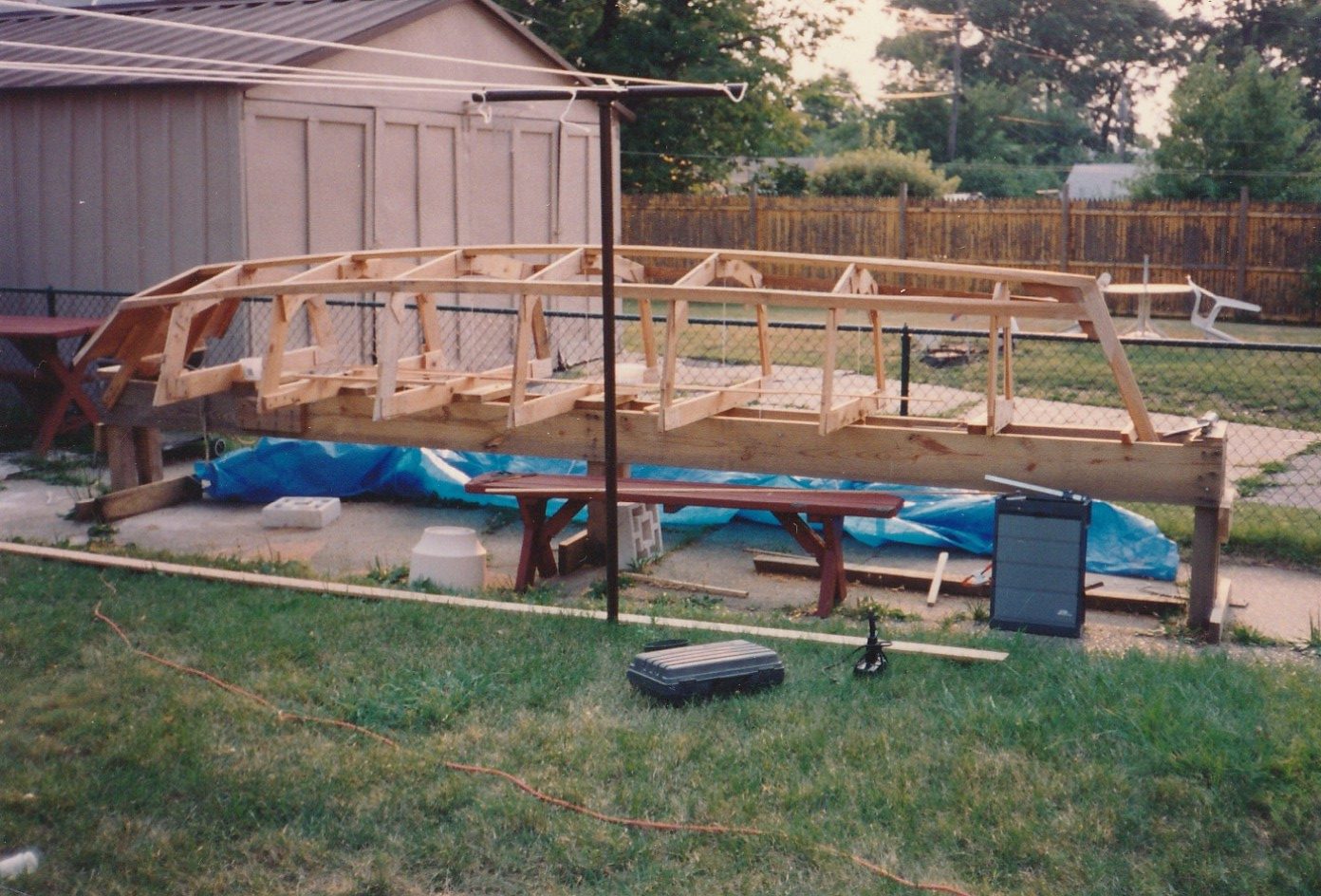
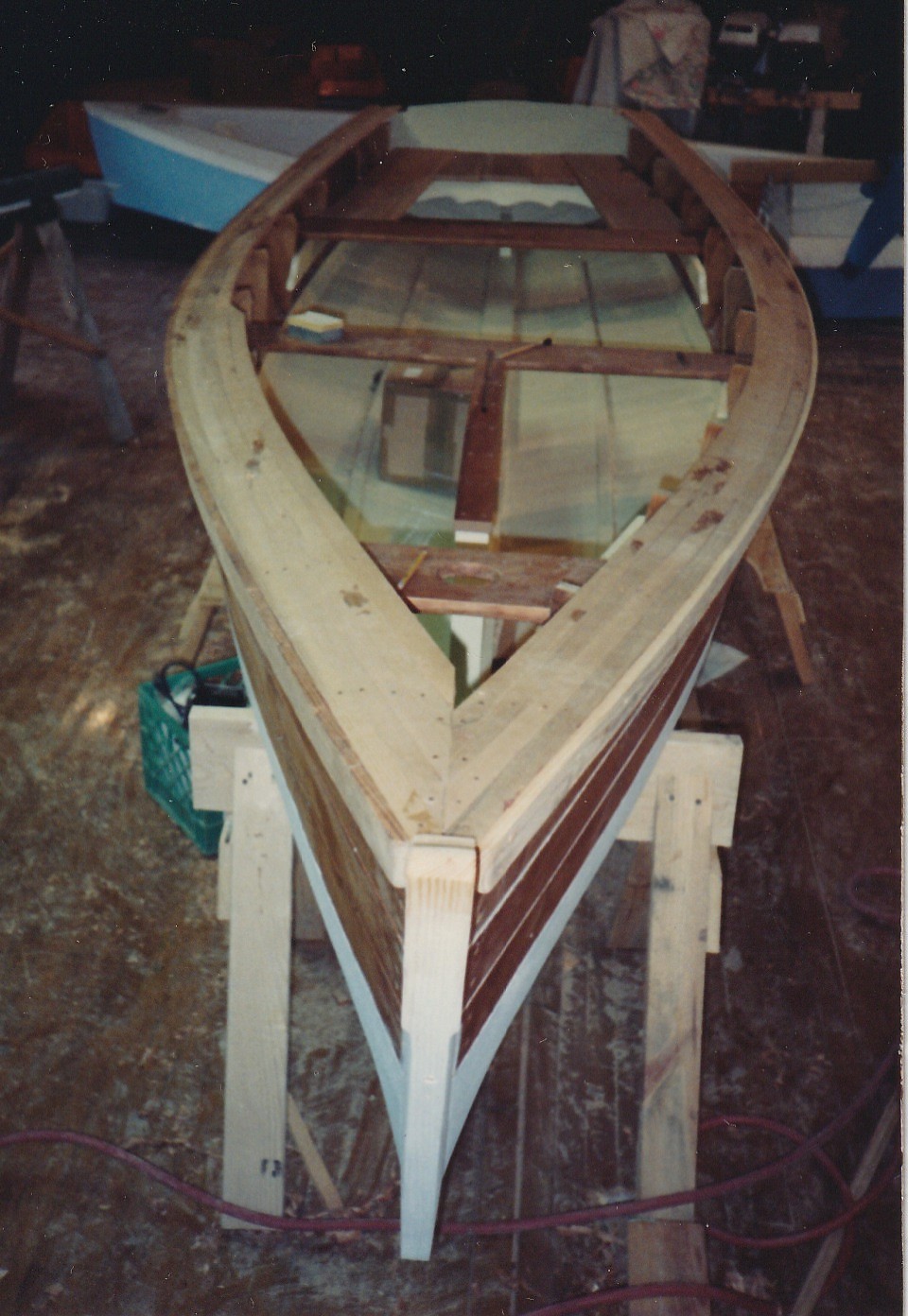
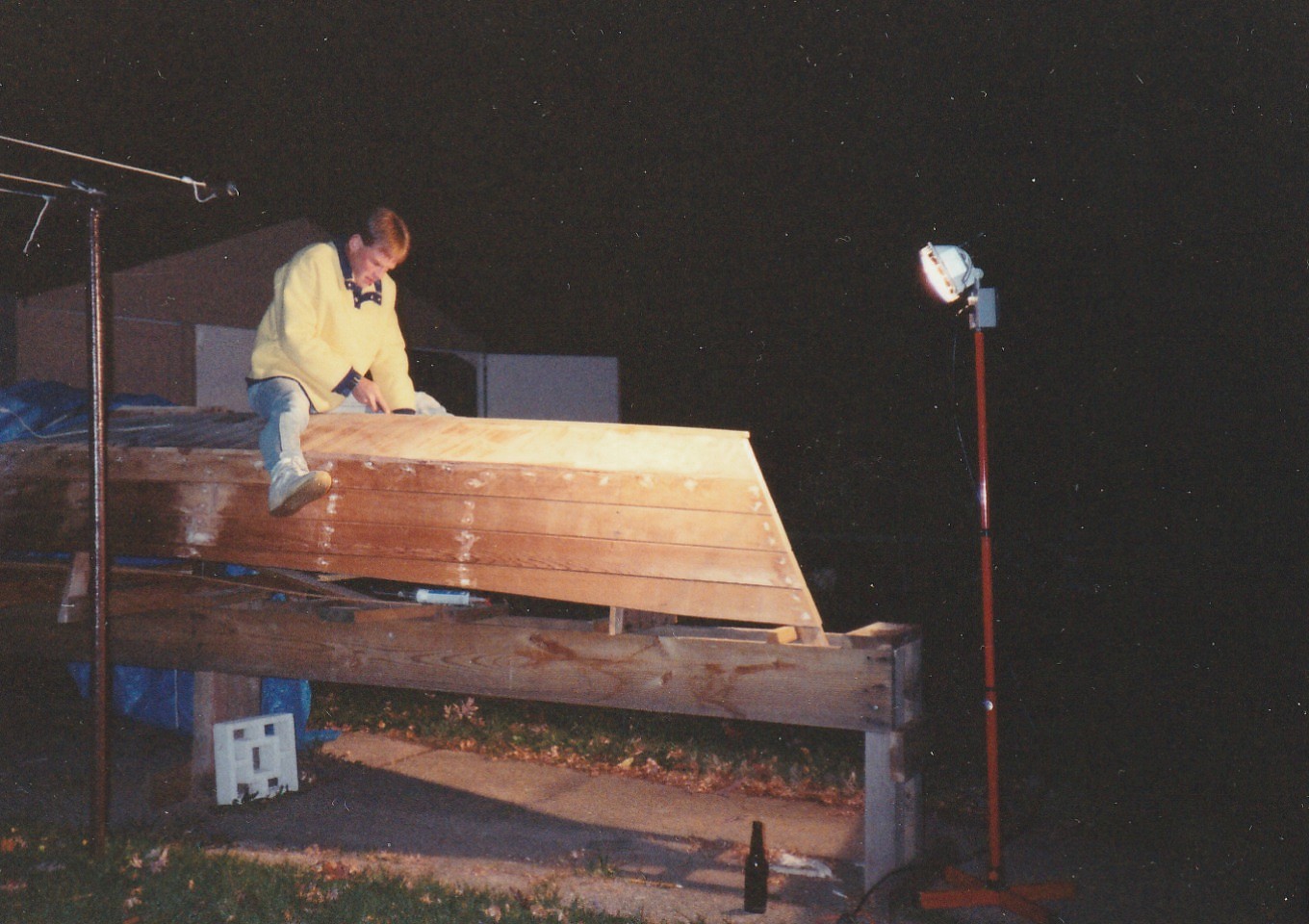
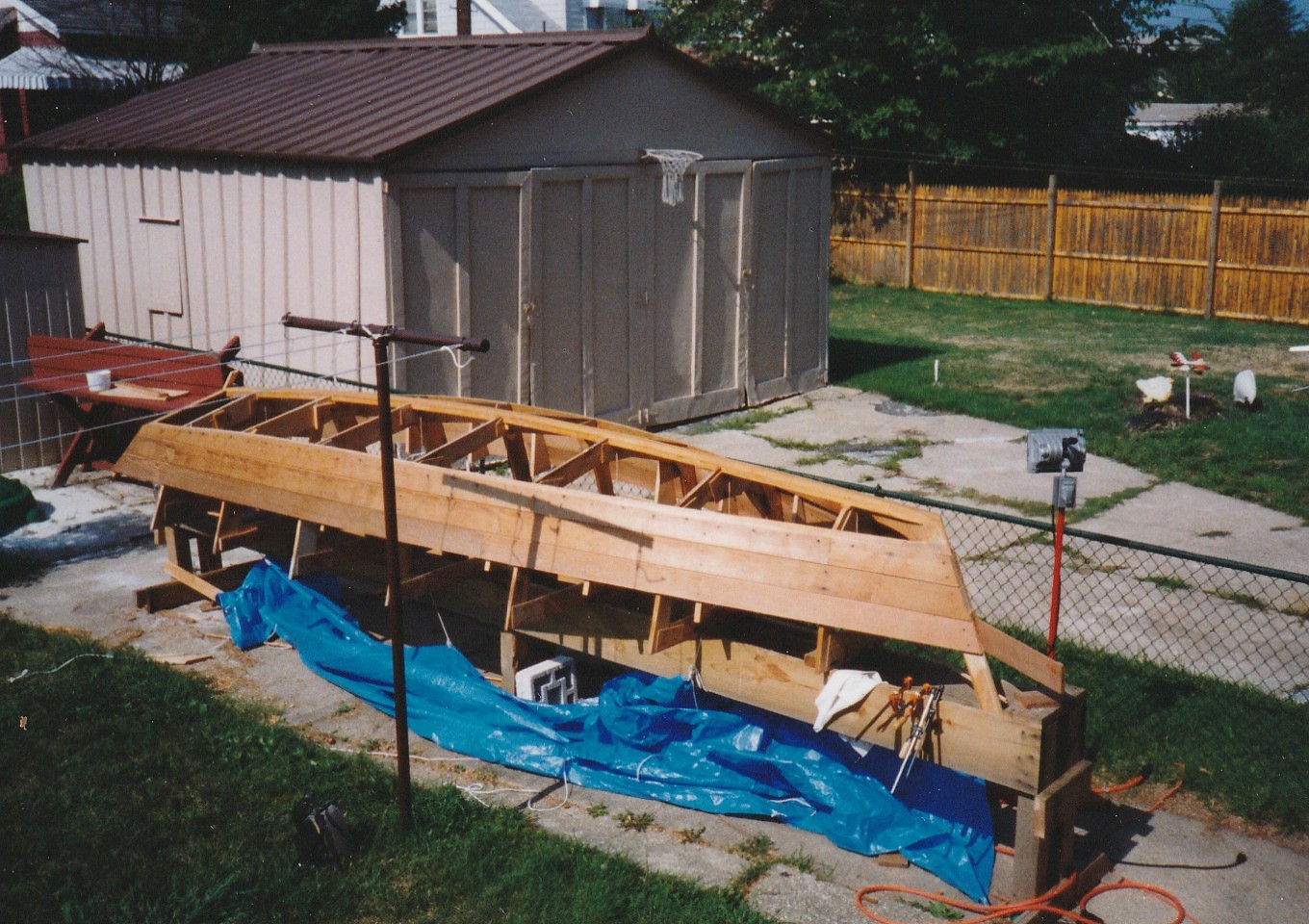
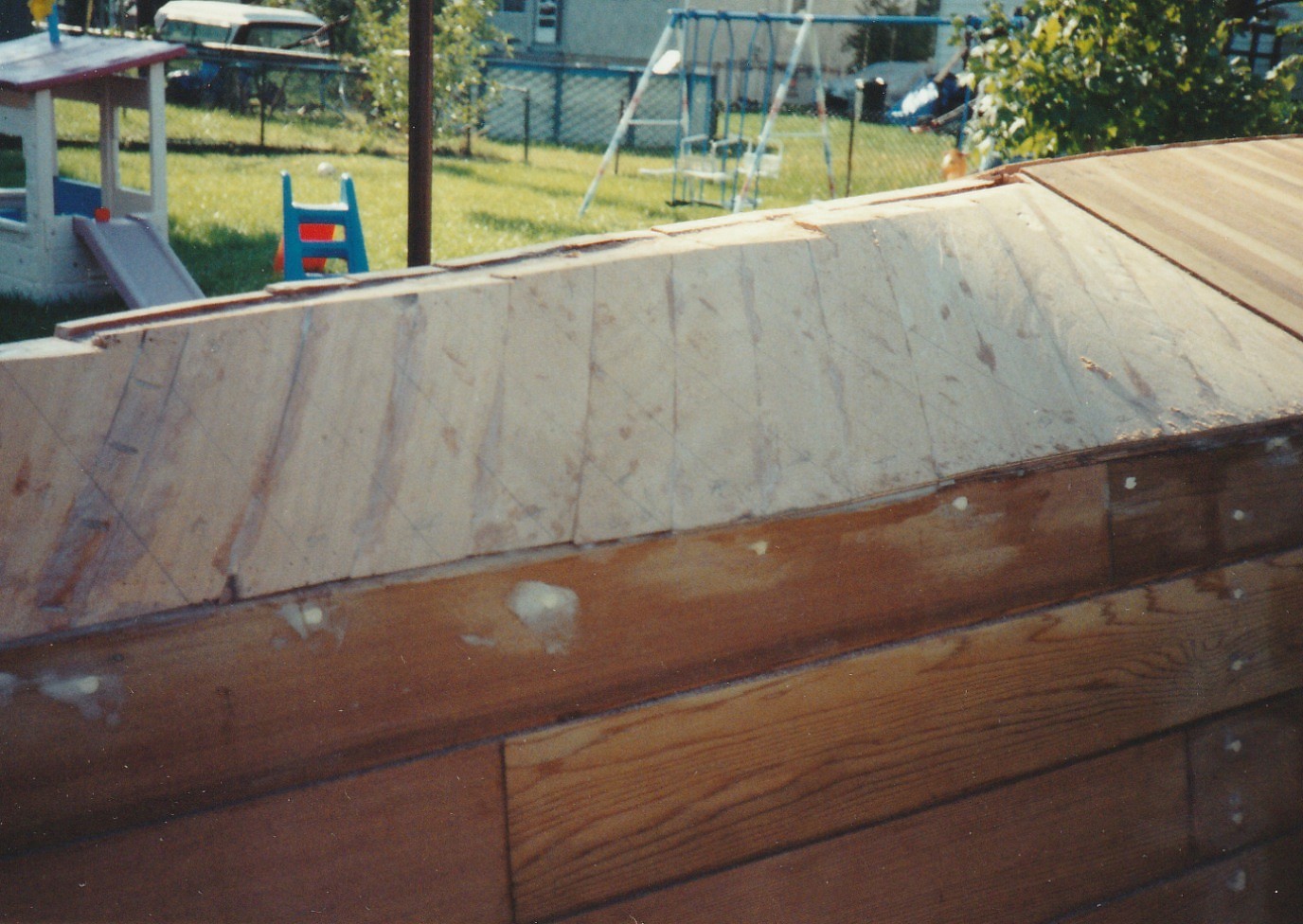
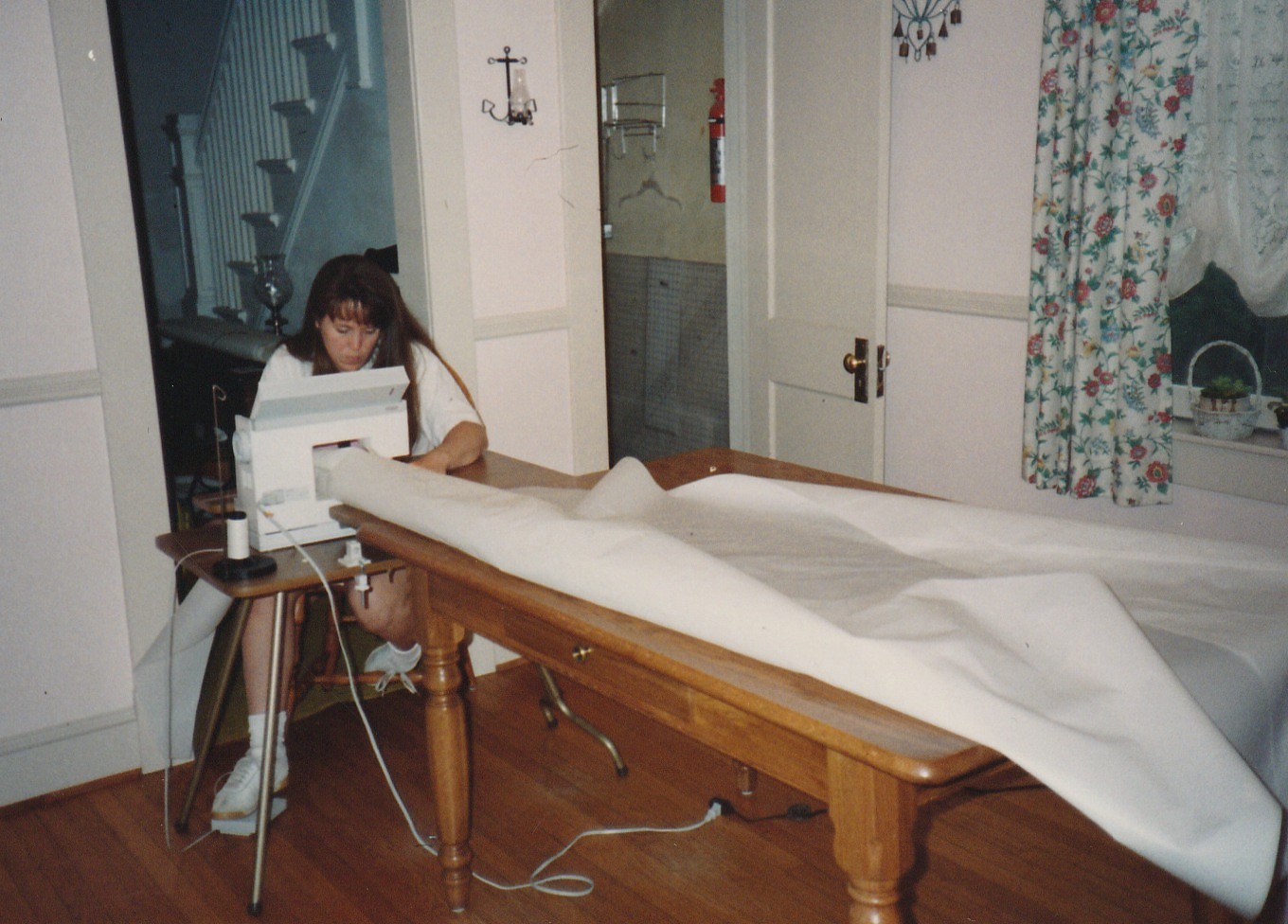
Building Cinnamon Girl - the Duckworks Article
Kevin wrote about his building processing in 2007. The original Duckworks Magazine article is here [PDF]
A Chesapeake Bay Crabbing Skiff
by Kevin Brennan - Phoenix, Maryland - USA
I have been a sailor since Boy Scouts and bought my first boat at the age of 20, an old wooden Sailfish. I probably should have set the money aside for the next semester’s tuition but at 20, you’re impulsive. I fixed that thing up, bought a new sail and proudly took my girlfriend out on it. After about an hour or so in the water I realized that it was acting more and more like a submarine with a sail. Talk about a leaky boat! I limped along with that boat until I landed a job after college and managed to upgrade to a small fiberglass one-design that didn’t leak.
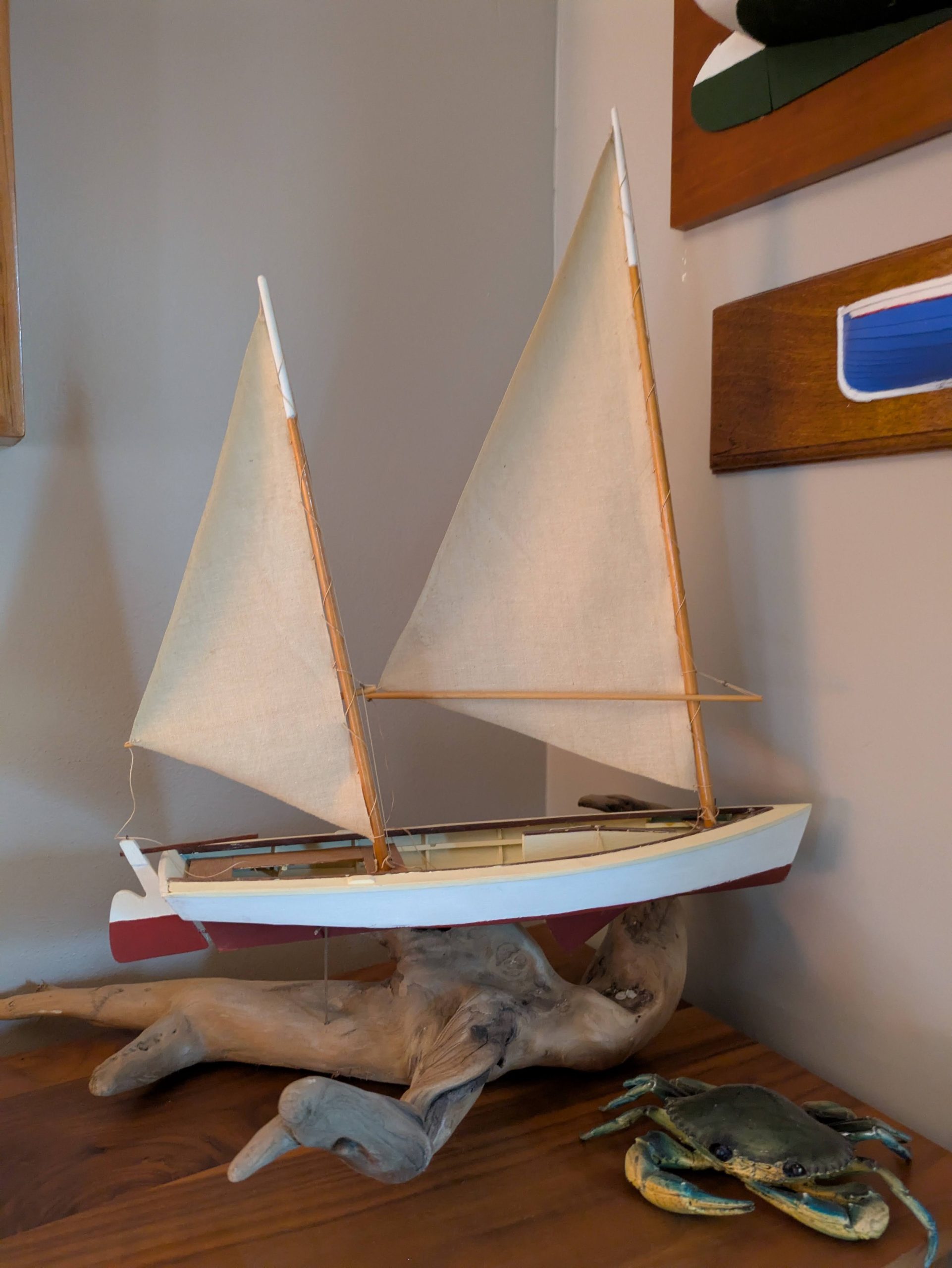
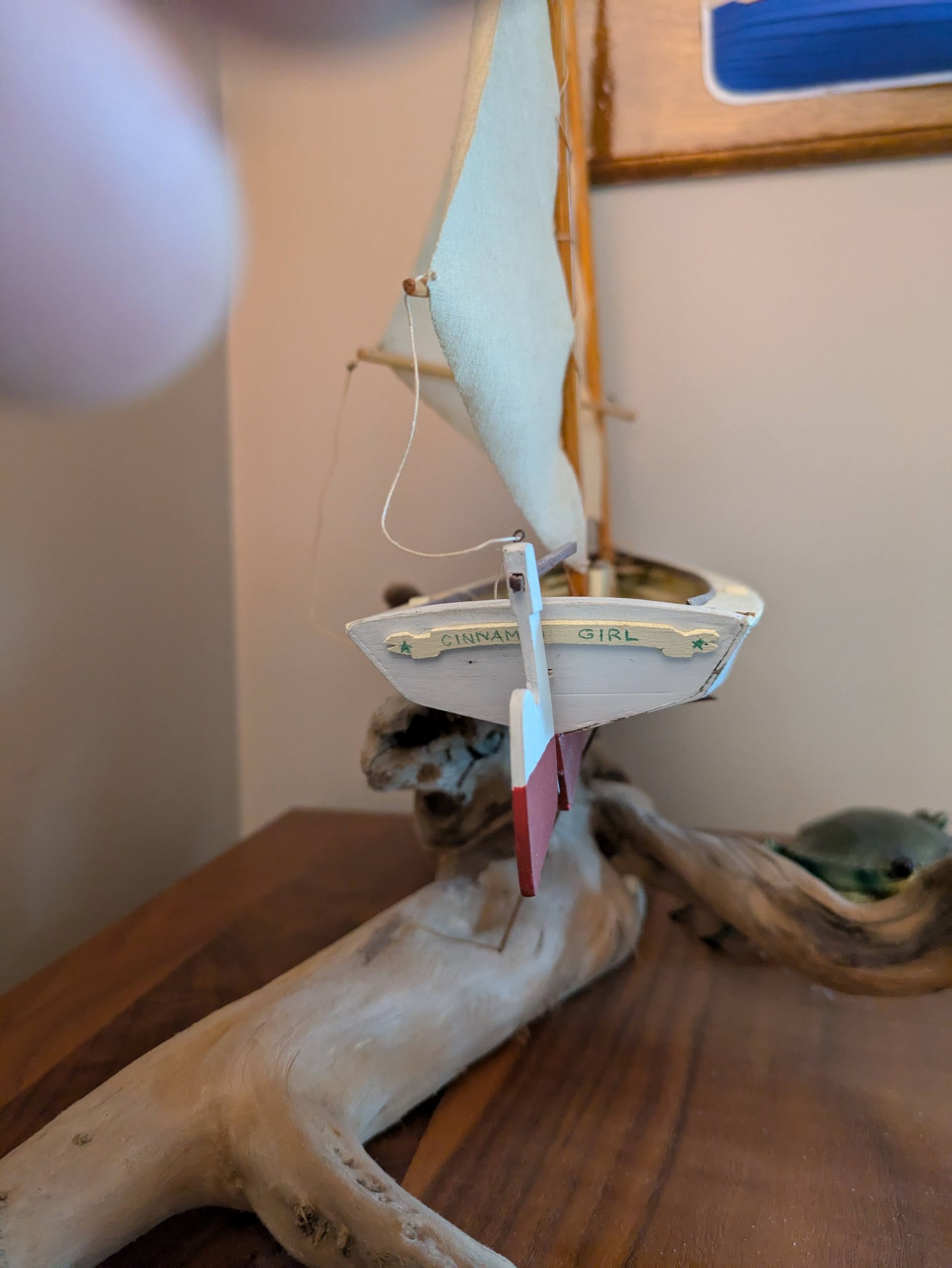
I enlarged the line drawing in the article on the copier and built a small model which still graces a spot on a shelf in my den.
As it happens with most of us, I happened to pick up an issue of WoodenBoat magazine that had an eighteen foot sharpie on the cover that rocked my world. (The same photo that would later be used on The Sharpie Book by Reuell Parker) There was something about that two-masted rig that spoke to me. I could envision myself exploring the many nooks and crannies of the Chesapeake in such a boat. I got in touch with Bill Schwicker, the guy who built this particular boat, to find out if plans existed. They didn’t. Not completely deterred, I enlarged the line drawing in the article on the copier and built a small model which still graces a spot on a shelf in my den. I obsessed about that boat for a couple of years but did not have the confidence or knowledge to build something like that from scratch. In time, Small Boat Journal ran an article on building a glued lapstrake skiff that convinced me that I could build a boat. The fiberglass racer was sold and a lovely little boat was built. It came out really nice too, but turned out to be better for rowing and not real comfortable and too tender for sailing. Being a sailor, I had to have something better.
In time, Small Boat Journal ran an article on building a glued lapstrake skiff that convinced me that I could build a boat.
My 30th birthday was spent at the Calvert Maritime Museum in Southern Maryland looking for what I hoped would be my next boat. I had been gaining more knowledge on traditional boats and knew that I wanted something that was indigenous to the Chesapeake Bay. At the end of my visit I stumbled across a small publication in the gift shop that was entitled Crabbing Skiffs of the Chesapeake Bay, by H.L. Chapelle. The pamphlet was actually a reprint of two articles that were published in Yachting magazine in the 1940’s. Of the dozen or so line drawings in the pamphlet there was one two-masted skiff called a two-sail bateau that was used on the Choptank River in the early 1900’s. That was it, this was my boat!
I bought a copy of the scale drawing that Mr. Chapelle made from the Smithsonian Institute for the outrageous price of something like $3.00. It was nothing more that a scaled line drawing, no offsets. A model was made to “build” the boat, just on a much smaller scale to gain a little more confidence. The benefit of building the model first is you get some insight on what are going to be some of the more difficult aspects of project without a total commitment to the real job at hand. After the model is built you still find yourself saying “Yeah, this is it!” you can put it on the mantle to provide the inspiration to see the project through to completion.
Of the dozen or so line drawings in the pamphlet there was one two-masted skiff called a two-sail bateau that was used on the Choptank River in the early 1900’s. That was it, this was my boat!
I had a young family and not a lot of disposable income yet there was never any doubt that this boat was to be built. The winds of fortune began blowing my way. On visits to my parents’ house I always had to check out the basement to see what new goodies my father had procured. Dad is the ultimate scrounger. On one visit to the old treasure chest there was a pile of clear, vertical grain red cedar, more than enough to build the boat. I think I bounded up the stairs two at a time to find out what he was going to do with the wood. It turned out that he got from someone who was going to throw it out and naturally he took it off their hands. “Do you want it?” he asked. I can assure you there was no hesitation on my end and the wood was loaded in the car faster than a wind shift on the Chesapeake.
Dad’s find took care of my planking needs, now how to get suitable wood for the framing? Well the winds of fate blew once again with a phone call from my brother. A friend of his had just bought an old farm and the barn was full of junk that was getting hauled into dumpsters to clear it out. In the loft was a large pile of planks that were going to be tossed and if I wanted a chance at them I should get over there ASAP.
I think I bounded up the stairs two at a time to find out what he was going to do with the wood.
I left work and headed up into the country not knowing what I would find. What was it? Would it be any good? Had termites or beetles gotten to it? My mind was racing. I met him there, climbed up into the loft, and found an ample quantity of 16-foot rough sawn cherry, maple, walnut and white oak planks which most likely had been harvested right there off of the farm for down in the barn was one of those big old belt driven saws that is powered from a tractor and a large leather belt. This was my version of hitting the lottery. I already had a large aluminum centerboard that was salvaged from a Comet several years before (Son of a scrounger!) It was clear now that I was going to be able to build the boat on the cheap. Measurements were taken from the drawing and a preliminary table of offsets was created, the boat lofted, and actual measurements captured and a boat was born. Time to build a boat!
Measurements were taken from the drawing and a preliminary table of offsets was created, the boat lofted, and actual measurements captured and a boat was born.
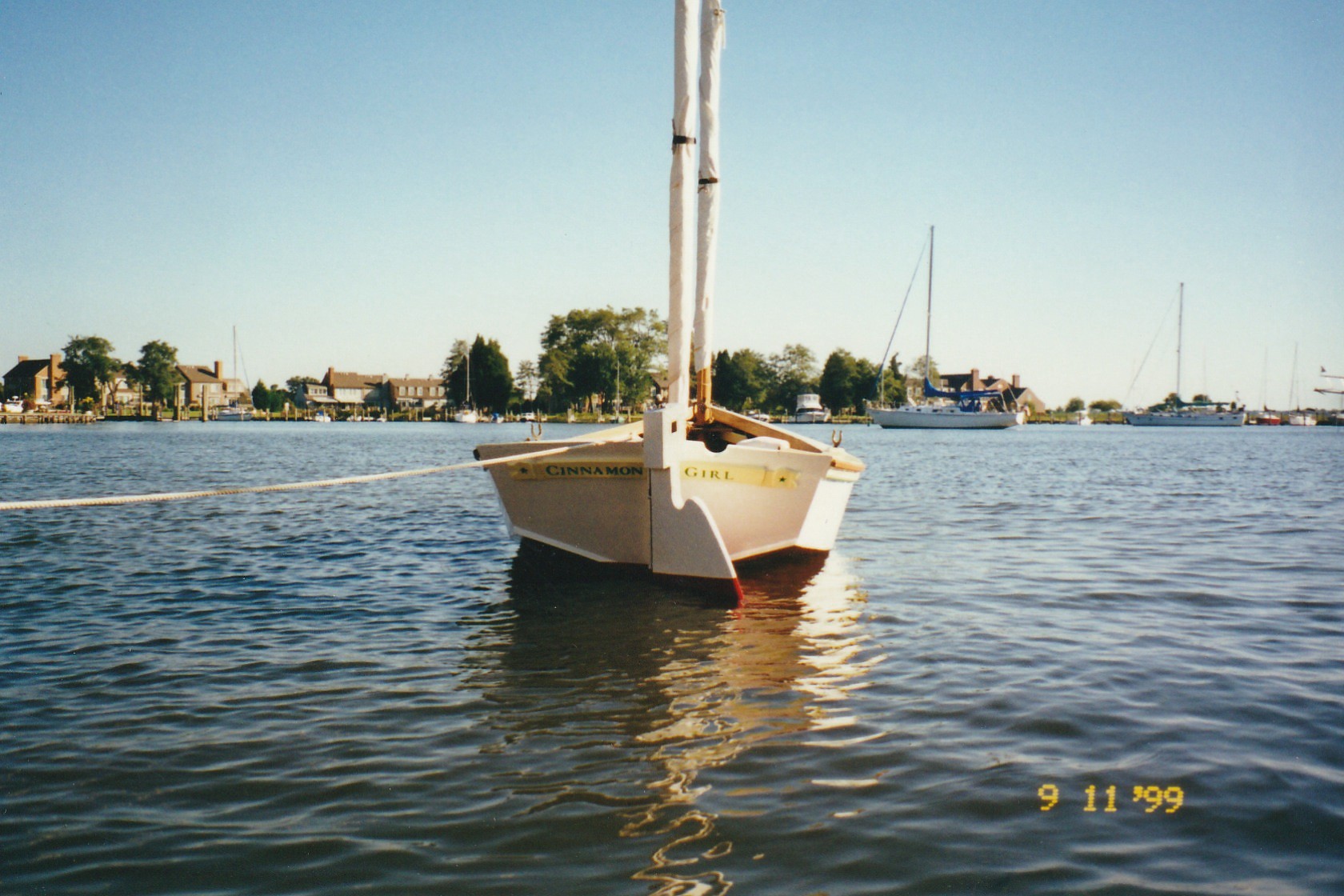
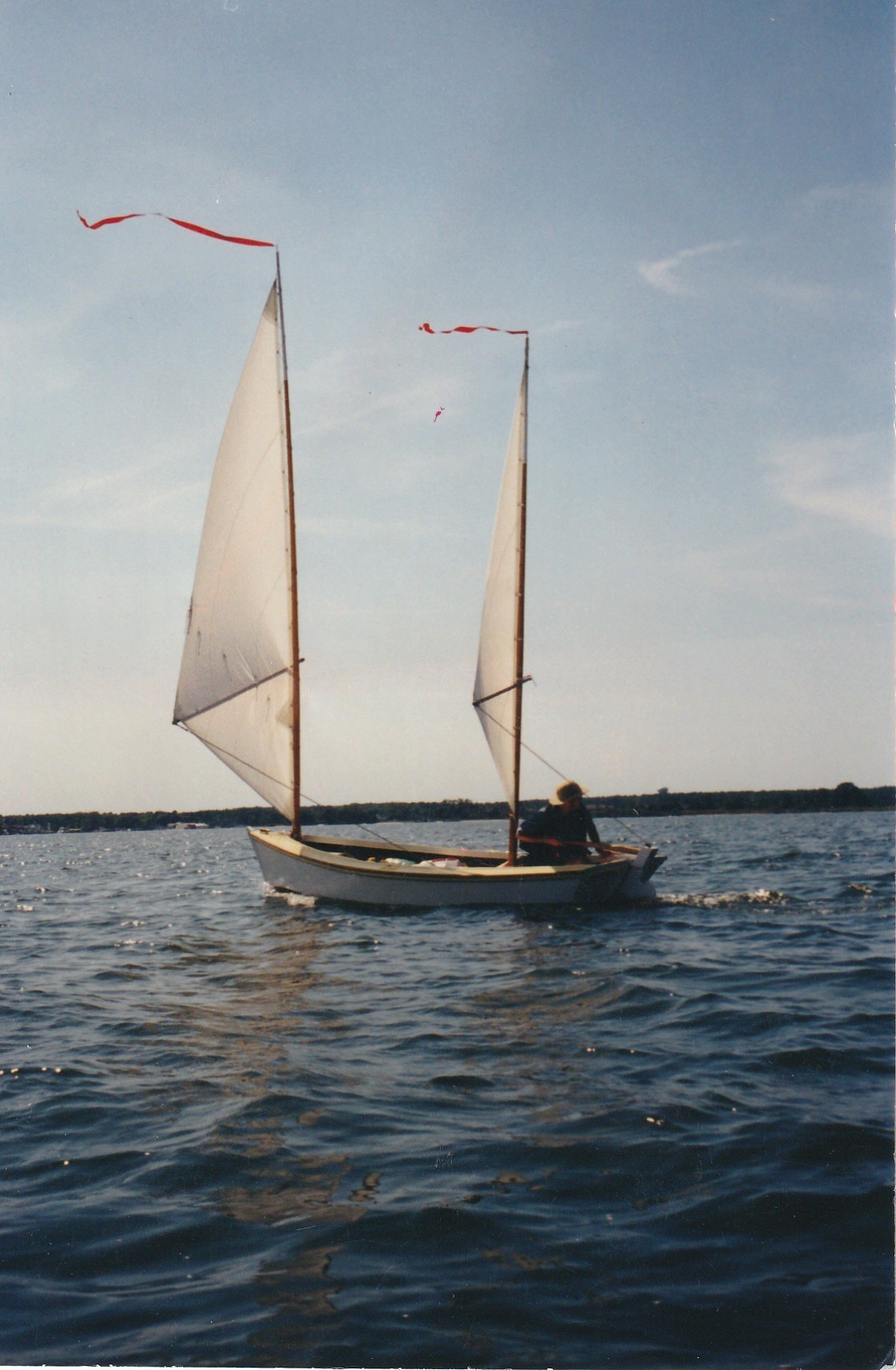
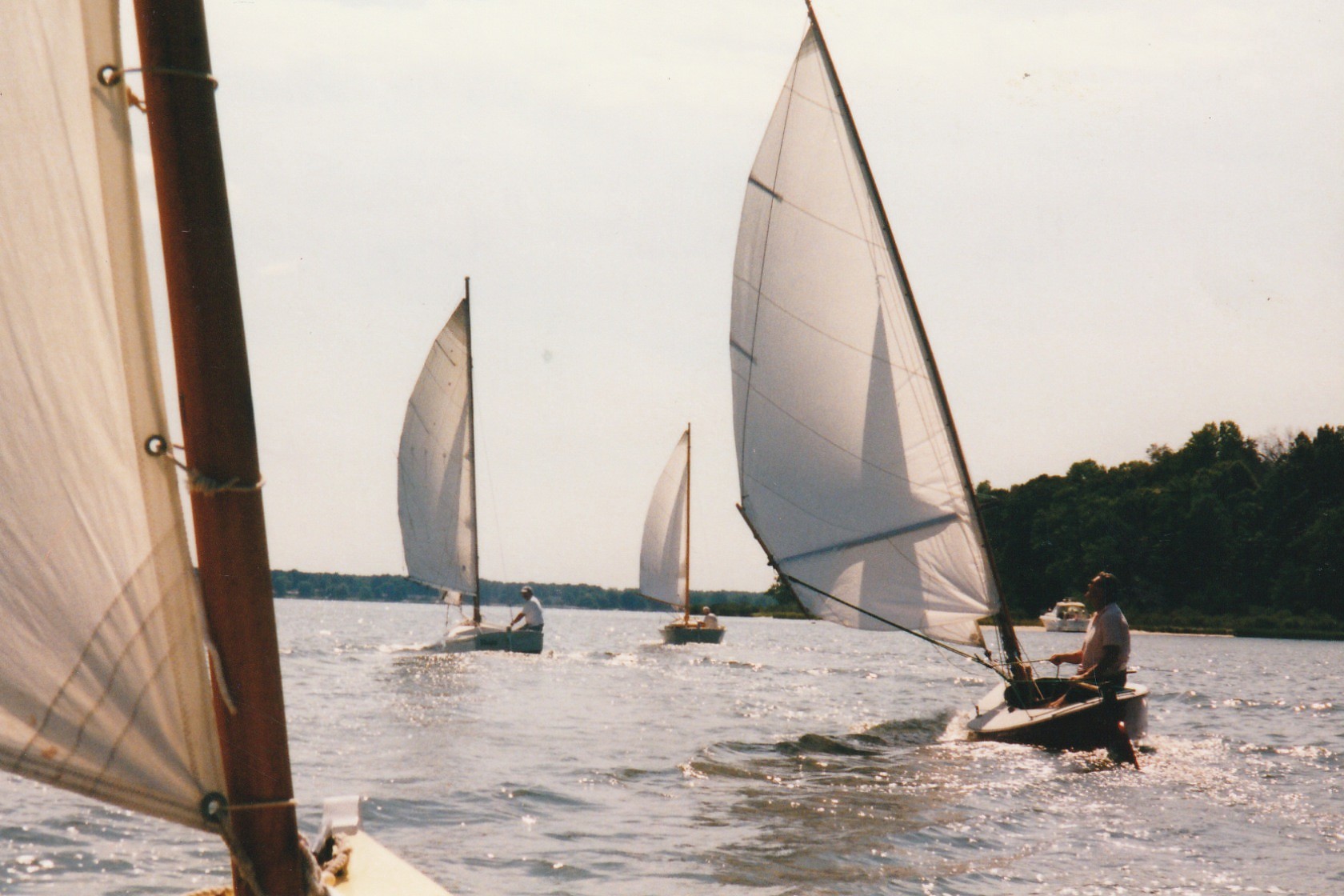
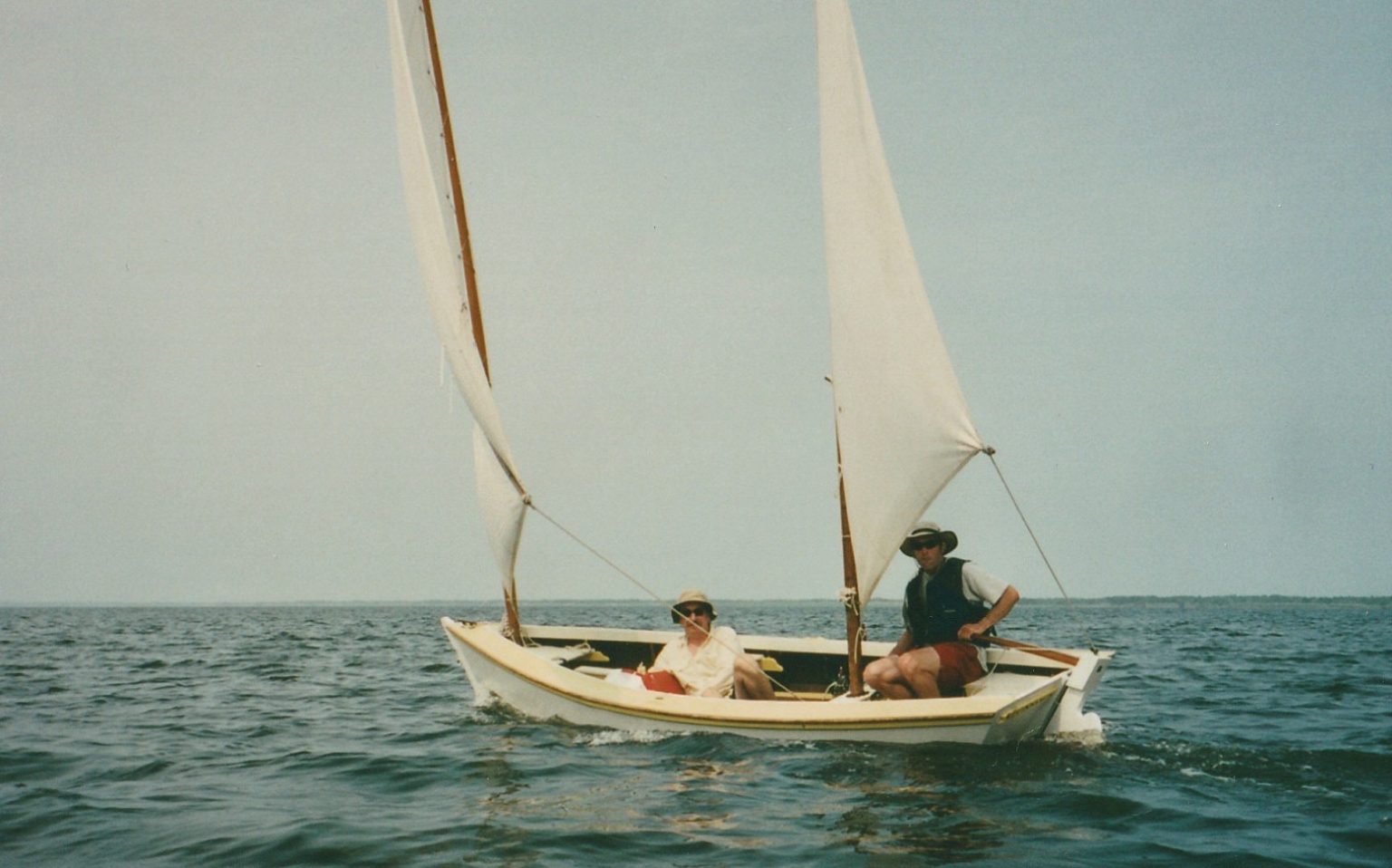
That initial trip to the museum was 14 years ago and suffice it to say the boat was launched about a year afterward and christened “Cinnamon Girl” after the young gal that sailed with me on the Sailfish. It didn’t take me long me to learn the benefits of the cat- ketch rig. Rigging time at the ramp is minimal. The sails are kept furled around the unstayed masts so all that is done is set the masts, hang the rudder and into the water she goes. She is the epitome of the mantra “Keep It Simple”. If you have never sailed a boat with a mizzen you don’t know what you are missing. Haul the mizzen in tight and tie off the tiller and she points into the wind like a weathervane thus allowing you to easily tie in a reef on the main, haul the anchor, go for a swim, whatever. I have sailed the heck out of her and done some camp sailing and she is still in top condition and a joy to own and sail. Her roots are from the Choptank River as I mentioned and it got it’s name for good reason. She handles the waves like a champ and has always brought me home. I’m not going to lie, there have been a couple of hairy moments and I’ve only put her over once, something about the combination of a cleated mainsheet in gusty conditions and no hand on the mainsheet. I’m pretty sure that is why I capsized, what do you think?
She handles the waves like a champ and has always brought me home.
The cross planked bottom was replaced a couple of years ago with 5/8ths inch marine plywood to make her more practical as a dry sailed boat and she is bone dry now. I’ve replaced the mainmast twice, the first time after an encounter with overhead powerlines at the ramp (Yikes!). The replacement was too skinny and flexed too much which in turn spoiled the sail shape. The current masts are clear and solid fir that I salvaged out of the mizzen mast of a large old derelict ketch that met her end during Hurricane Isabel.
I’ve sailed her for thirteen years now and I must say she is one hell of a great boat. But alas, I’ve had my eye on building something new and have pretty much committed in my mind that I am going to part with her, but every time I walk into the garage and see her I have pangs of doubt. Oh, and that girl that was with me on the Sailfish 25 years ago, she is still by my side, my Cinnamon Girl. Not gonna’ part with her though!
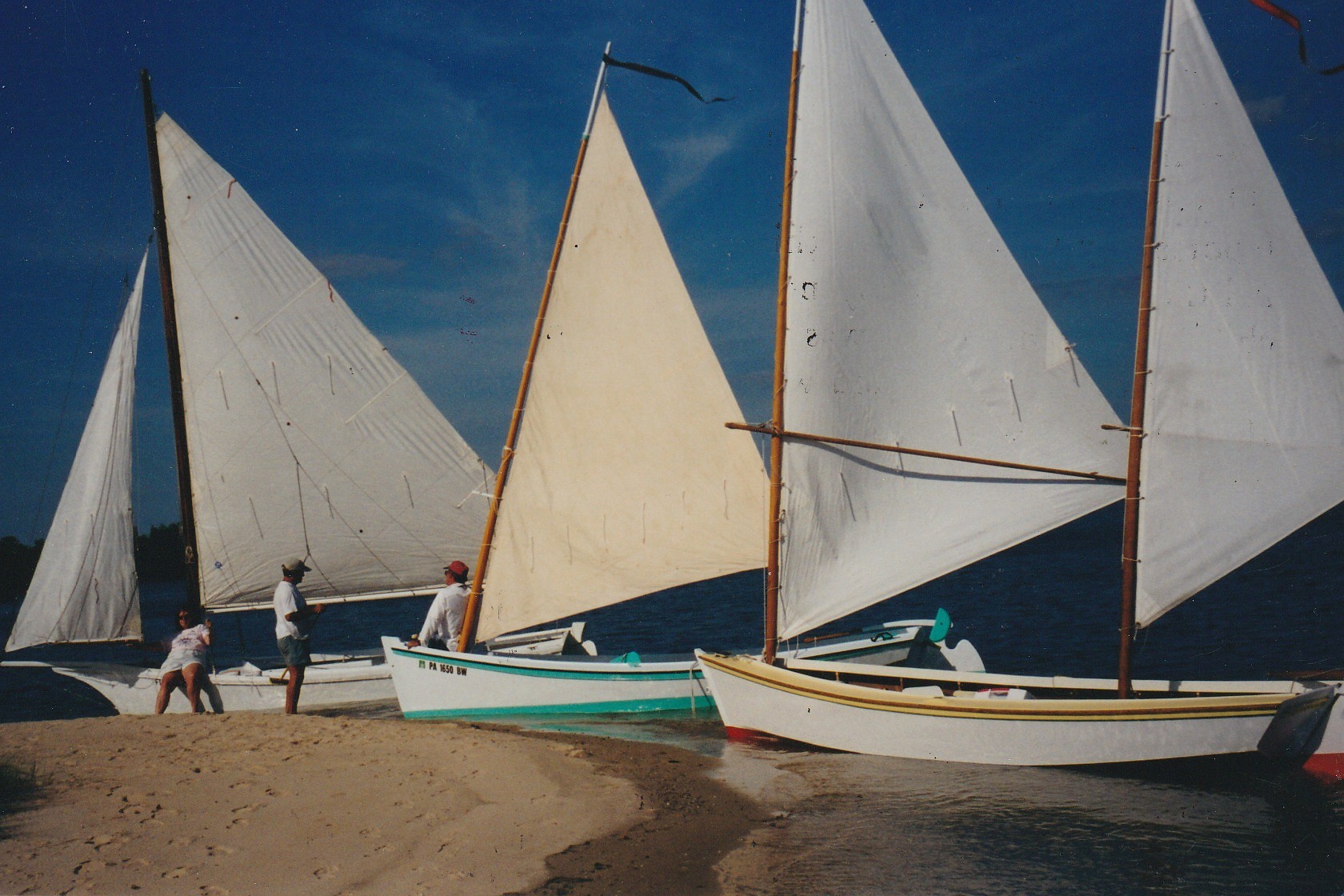
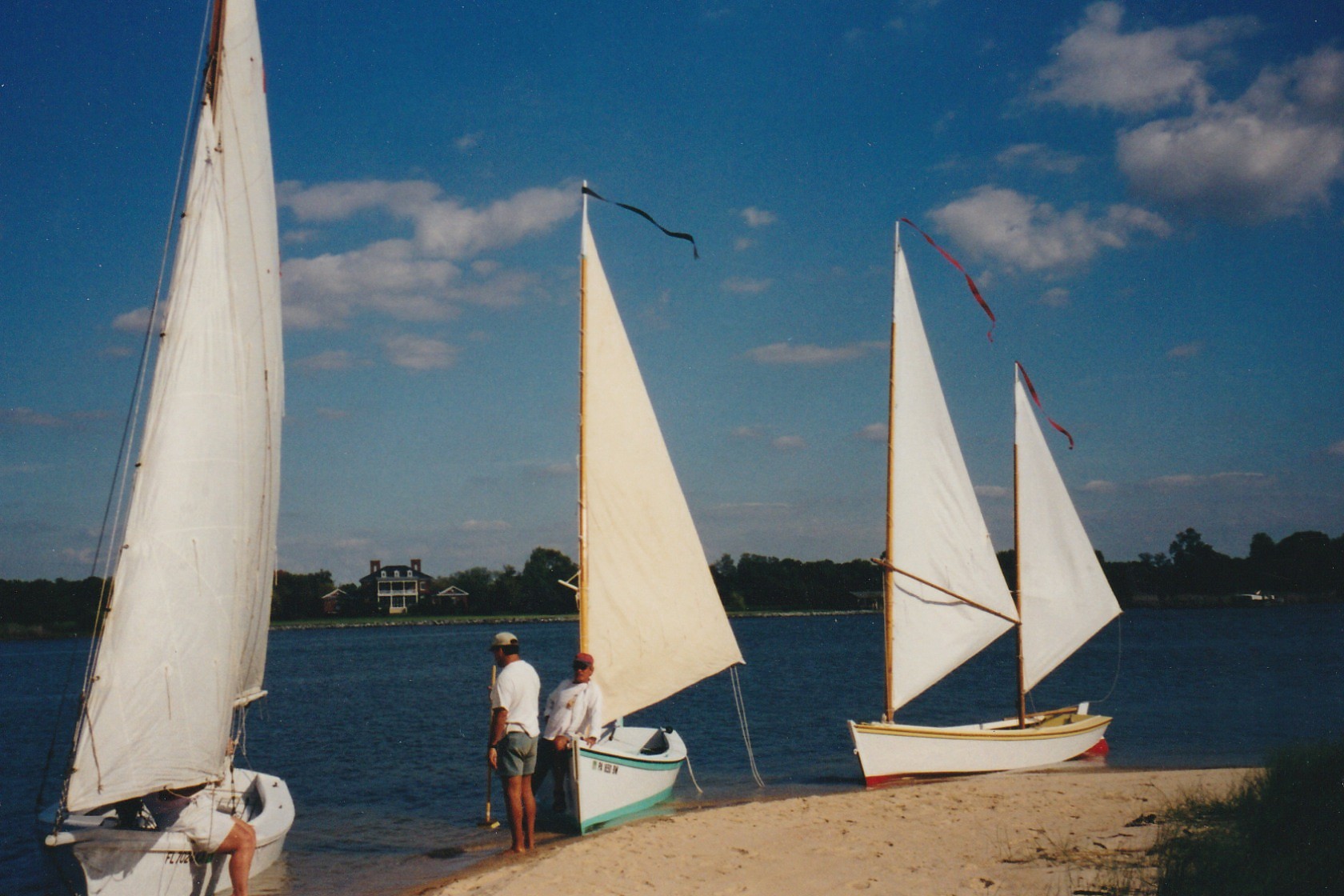
Cinnamon Girl Early Sailing - 1999-2002
Photos by Kevin Brennan.
More About the Two-Sail Crabbing Bateau
Chapelle Blueprint for CBCS Figure 4, Two-Sail Bateau by Simmons Cambridge 1910 [CBMM 1994.0027.0097.00]
Josef W. Liener Plans for the Two-Sail Crabbing Skiff with Offsets [CBMM 2004.0028.0152.01]
Ship Plans for 17′ Two-Sail Crabbing Skiff with Modifications for Power [CBMM 1994.0060.0001.00]
Cinnamon Girl – Two-Sail Crabbing Bateau at CBMM
Kevin Brennan’s Cinnamon Girl Build [1995]
My Two-Sail Crabbing Skiff Build [2024+]
I also write about
- Volunteer work in small boat conservation at the Chesapeake Bay Maritime Museum: Small Boat Shed Volunteers
- Sail-and-oar cruising in small open boats on the Chesapeake and its tributaries: Sail+Oar – Chesapeake Log.
- Building another crabbing skiff.
Archived Comments
These comments are preserved from the original WordPress site as read-only text.
Nice job, but the DW photos are missing. Is is possible to make it so that Kevin's photos can be enlarged if you click on them.
Hey Jerry, the DW photos and a few more that Kevin sent me are up there in the last section of my post. If you right click a photo then "open image in new tab", you see it full size. These are not very high-res pics, as they originated from small prints.