
 Maryland
I was looking for a traditional Eastern Shore crabbing skiff to row on the upper Tuckahoe and Choptank near where I live, and to sail in protected waters.
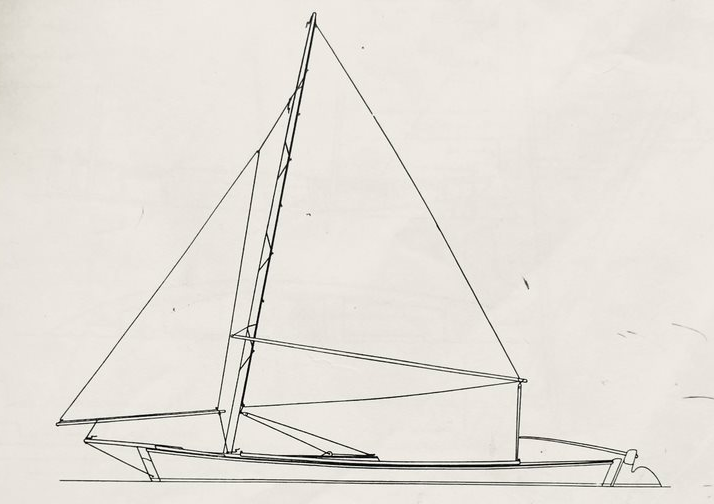
I found the traditional design I wanted in the Smith Island crabbing skiff that Howard Chapelle measured at Deal Island in 1940. It appears in Figure 1 of Chesapeake Bay Crabbing Skiffs:

[The flat-bottom skiff] was in use in some portions of the Bay as early as 1862, and photographs of two-masted flat-bottomed skiffs, leg-of-mutton rigged, exist that show the skiff was popular in 1879.
The double-ended flat-bottomed skiff was in use in the crabbing industry on the Chesapeake in the 1880's.
[The flat-bottom skiff] was replaced in popularity by the V-bottomed skiffs in the late 80's and early 90's. But the double-ended flat-bottomed skiff has retained its popularity [into the 1940s] on the southern part of Maryland's Eastern Shore.
I found the photo which Chapelle took of this skiff at Deal Island in 1940, in the archives of the Chesapeake Bay Maritime Museum:
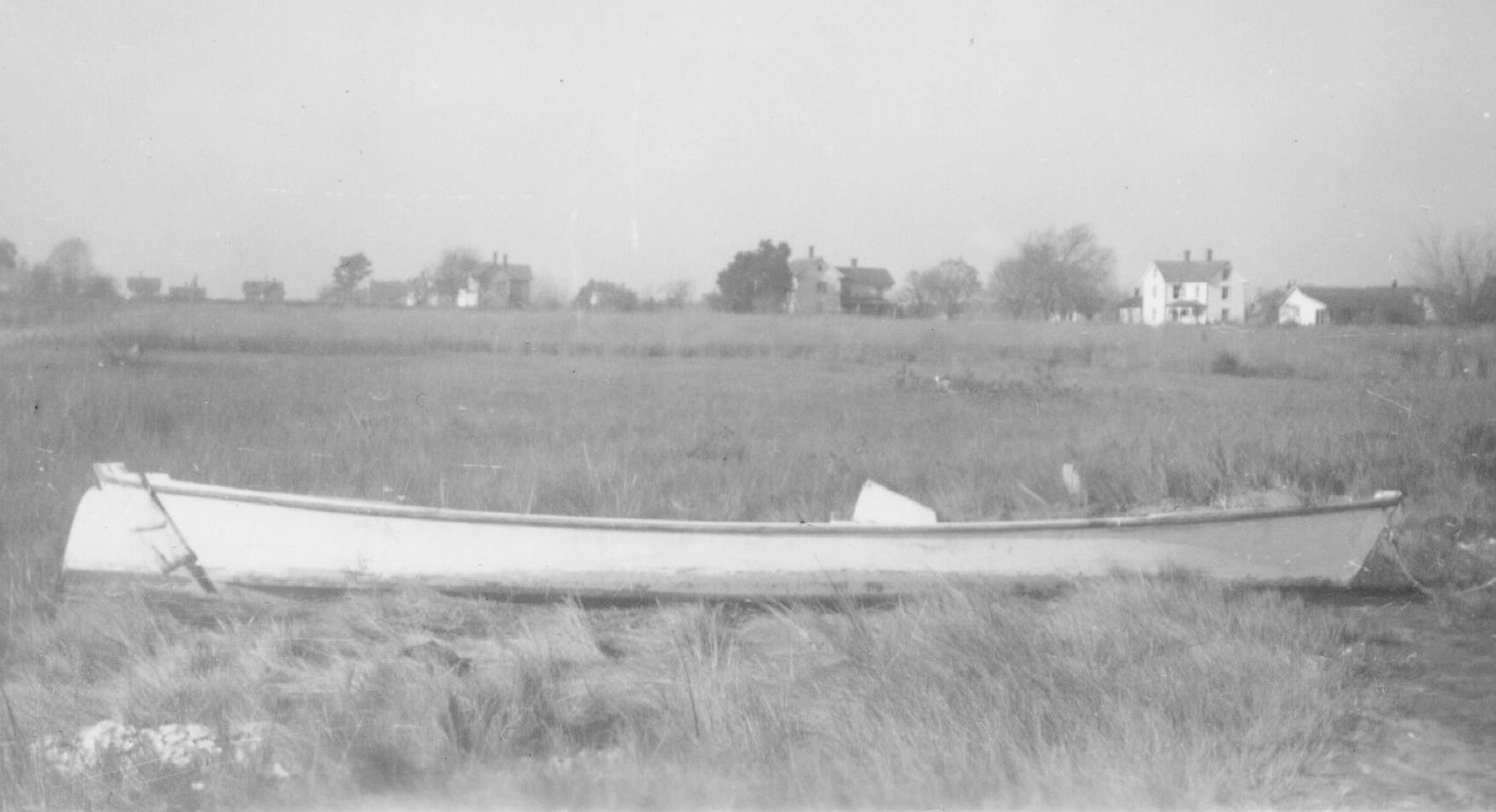
There are slight variations in the boats: one is rigged with a small leg-of-mutton and has short decks at each end of the hull with a very narrow washboard along each gunwale. This class of boat has been long in use at Smith Island, Chrisfield, and Deal Island. A very similar type, but with a jib and mainsail rig and half-decked, was used both in these waters and to the northward at Hooper's Island. Figure 37 shows one of the latter type. ...
Some boats had the jib set on a stay, and the so-called "balance Jib" appears to have become popular after 1898. The boats show no distinctive construction features and are of very simple design and build, but are good sailers in smooth water. They are rarely over 24 feet in length and most of them are 17 to 20 feet. The boats are built entirely of local pine and juniper, iron-fastened. ...
[The] double-enders are becoming fewer in number with each passing year. The hull characteristics of the double-enders of both classes are the same: straight raking ends and a good deal of flare.
Reuel Parker's Mallard
The boats are very fast and weatherly, and handle somewhat differently than anything I have ever sailed. Mallard has lee helm in light air (it helps to keep the centerboard all the way down) but develops very slight weather helm (desirable) in more wind. When the boat is overpowered, the jib is taken in, and she balances and handles perfectly under mainsail alone. …
Mallard, and perhaps crabbing skiffs in general, are very sensitive, fast vessels that require a higher level of consciousness and skill to handle than many of the other vessels shown here, particularly in tight spaces. But once in open water, the craft are like greased lightning.
Effie B. - Restored in 2010 at Coles Point, Virginia
I had started on scaling up Chapelle's 6-inch drawing of the Smith Island skiff, and I was ready to begin lofting it at 1/3 scale, when I googled into this "Launchings" notice in a 2010 issue of WoodenBoat:
"This formerly unnamed Smith Island crab skiff had been out of the water for 14 years, had become home to about 80+ carpenter bees, and was almost burned," writes Eddie Boudreaux. During the winter of 2009-2010, Eddie restored her and relaunched in June 2010 as EFFIE-B. She and Eddie sail out of Coles River, Virginia, as well as on the Potomac.
LOA: 18′ 7″
Beam: 3′ 9″
Designer Name: Unknown
Type/Rig/Power: Smith Island crab skiff
Builder Name: Restored by Eddie Boudreaux
Home Port: Coles Point, VA
Launching Date: June 26, 2010
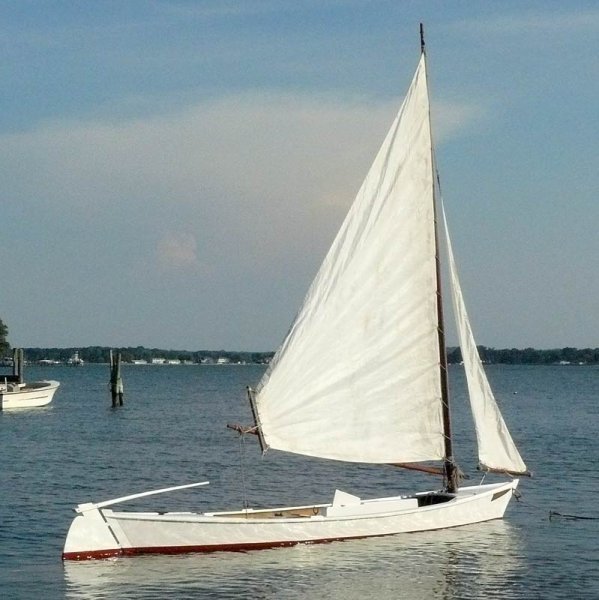
I was especially interested in the planking. Eddie thinks she's built of Virginia pine, not the loblolly which is traditional for Eastern Shore workboats. Bottom planks are random width. Side planking finished to 7/8".
Comparing Plans
Bow is left.



Comparing Profiles



Comparing body (frame) views
Bow is left.
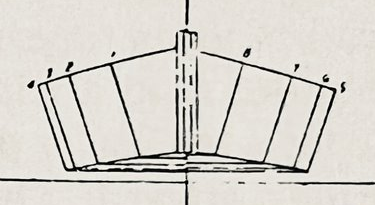
(CBSC Fig. 1)
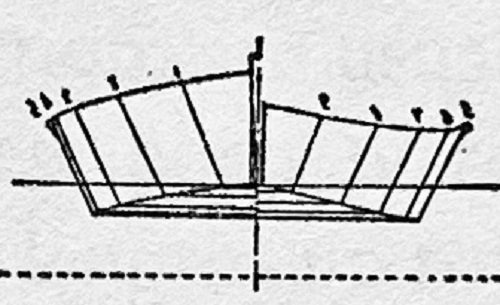
(ASSC Fig 37)
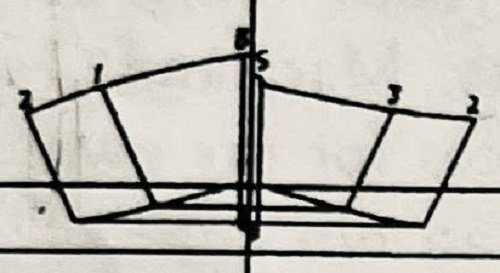
Reuel Parker's Mallard
4 skiffs in 1 table
these numbers for all five:
- Length
- Beam
- Beam-to-Length ratio
- Rocker
- Freeboard
- Flare amidships
| Smith Island Skiff (scaled) | Maryland Crabbing Skiff | Mallard | Effie B | |
| Length | 18' 6" | 20' 0" | 18' 7" | |
| Beam at sheer | 3' 10" | 4' 8" | 3' 9" | |
| Beam at chine | 2' 4" | 3' 8" | ||
| Beam-to-length ratio (sheer) | 0.207 | 0.233 | 0.202 | |
| Rocker | 6.5" | 5" | ||
| Flare amidships | ||||
| Rake of stem | ||||
| Rake of stern | ||||
| Rocker is chine max - min above baselilne |
Archived Comments
These comments are preserved from the original WordPress site as read-only text.
Hi, do you know the building Plan of the 18' Skiff "Sandy"? I bought my Plan from D.N Goodchild. In the Past some not so good Scans of the Plan were available for free from polysail.com. Both sites does not exist anymore. - I have given my original Plan to some one else and never got it back, but i have saved the Plans from the old polysail site. The Plans are verry good for self builders and my Skiff sails great. (I used Plywood for the Hull instead of the original Material).