
 Maryland
Blue Crab's direct connection to the traditional crabbing bateau deepens her historical significance.
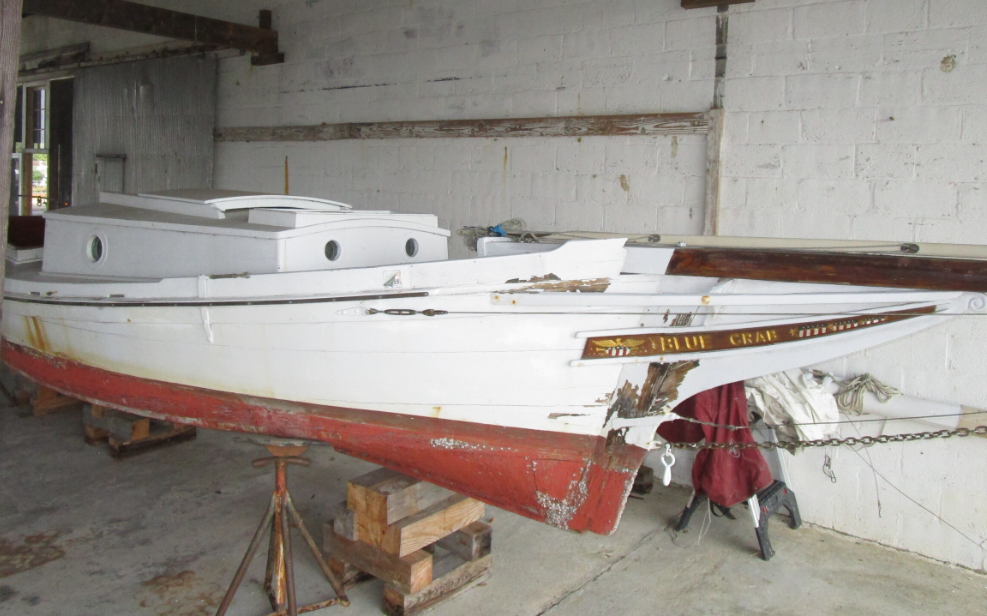
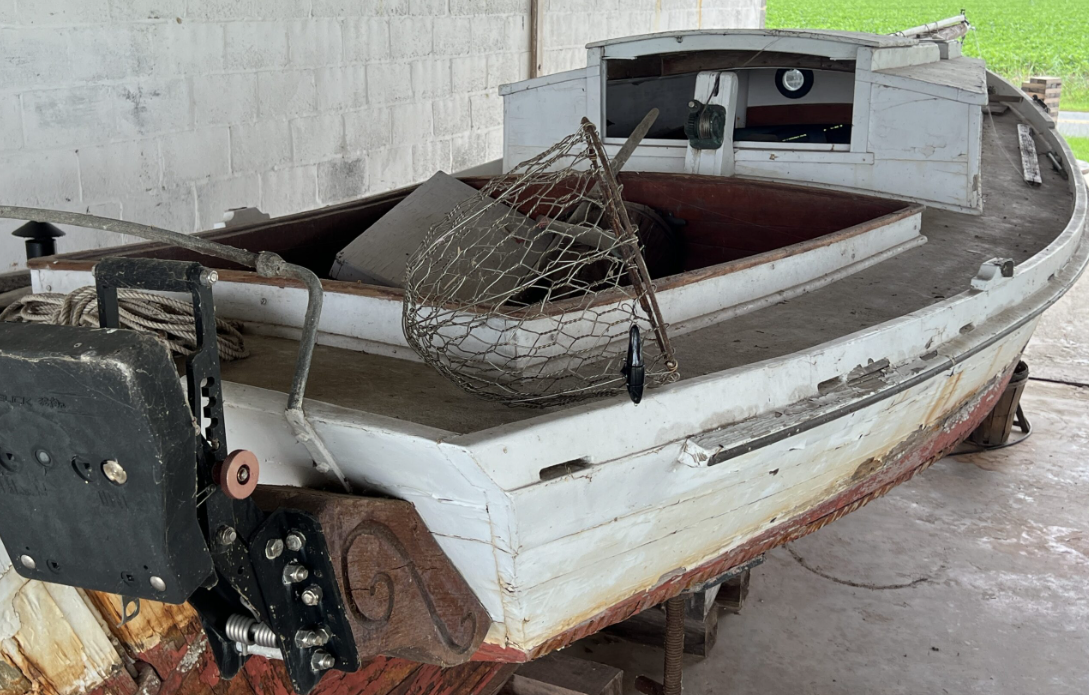
The bateau cruiser Blue Crab at Blackwater in Dorchester County, MD
Blue Crab's Legacy
Crabbing bateaux were once the most numerous sailing workboat type on the Choptank River and in Tangier Sound. After marine engines were introduced, hundreds of bateaux were converted to power or abandoned and replaced by the deadrise powered workboats we see today.
Before the crabbing bateau disappeared completely, Howard Chapelle travelled around Tangier Sound in the 1940s photographing and measuring the hulks of crabbing bateau and other sailing workboats that he found rotting in the marshes. In 1942, he took the lines off the crabbing bateau Teddy, which he believed was built around 1900. Just five years later, he adapted Teddy's lines to design Blue Crab as a bateau for cruising. Blue Crab's direct connection to this traditional sailing workboat type deepens her historical significance today.
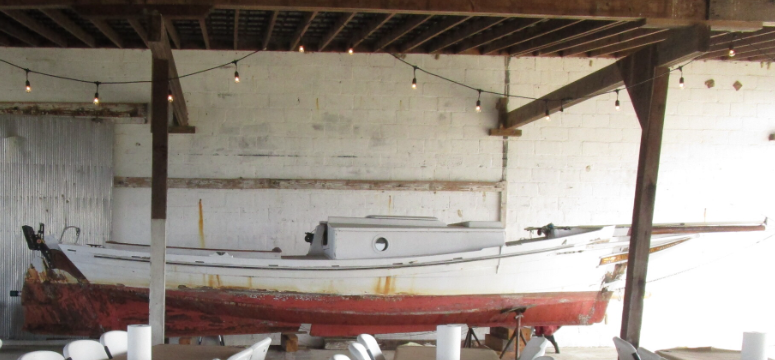
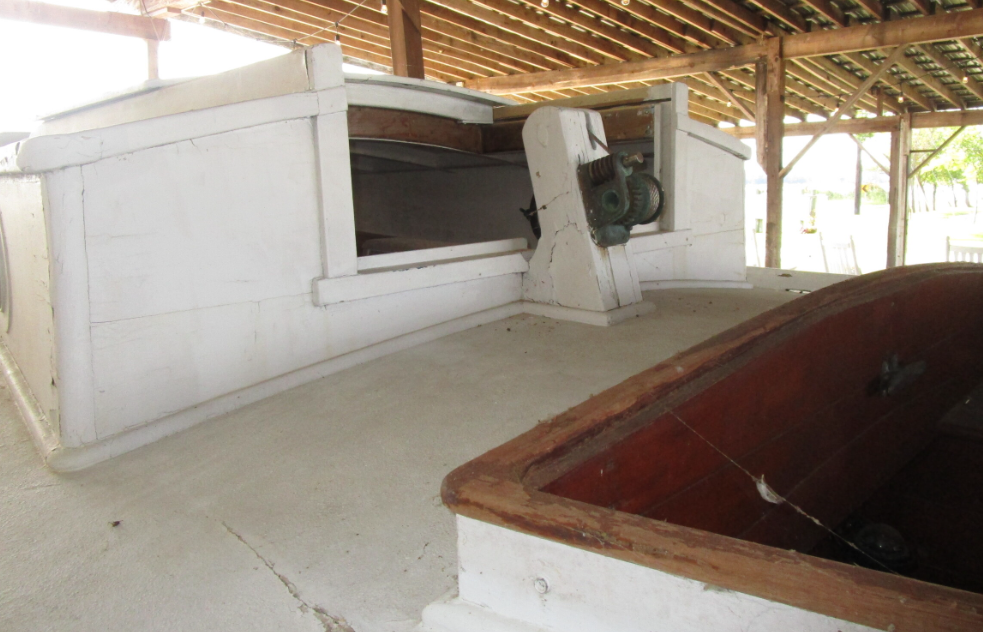
Chapelle modified the crabbing bateau design for cruising by adding a small cabin and an inboard engine. The first Blue Crab was built at the Hartge Boatyard in Galesville, Maryland, in 1952 for an unidentified Chapelle client. She is preserved today in a covered landside exhibit by the Meredith family at The Cannery at Blackwater Adventures. Blue Crab is perhaps the last surviving vessel designed and built for a Chapelle client.
In this article, I've compiled the following information about Blue Crab:
- Photos and videos taken of Blue Crab in 2018 and 2024 at the Meredith family property.
- Plans for Blue Crab which are available from the Smithsonian, and for the bateau Teddy on which Blue Crab was based.
- Design and build dates and details from Howard Chapelle's letters and contemporary memoirs.
- A timeline of Blue Crab ownership, locations, and maintained condition.
- References to similar crabbing bateaux - workboats, cruising yachts, and models.
Thanks to the Meredith Family for allowing me to photograph Blue Crab on exhibit and to photocopy records from their Blue Crab scrapbook, and to publish them here.
The complete collection of my photocopies of the Meredith family archive is here.
The Last Crabbing Bateau
These photos were taken at Meredith's Blackwater facility in 2018 by Ed Thieler and in 2024 by Don Barker.
Large-format images are here.
Blue Crab in 2018.
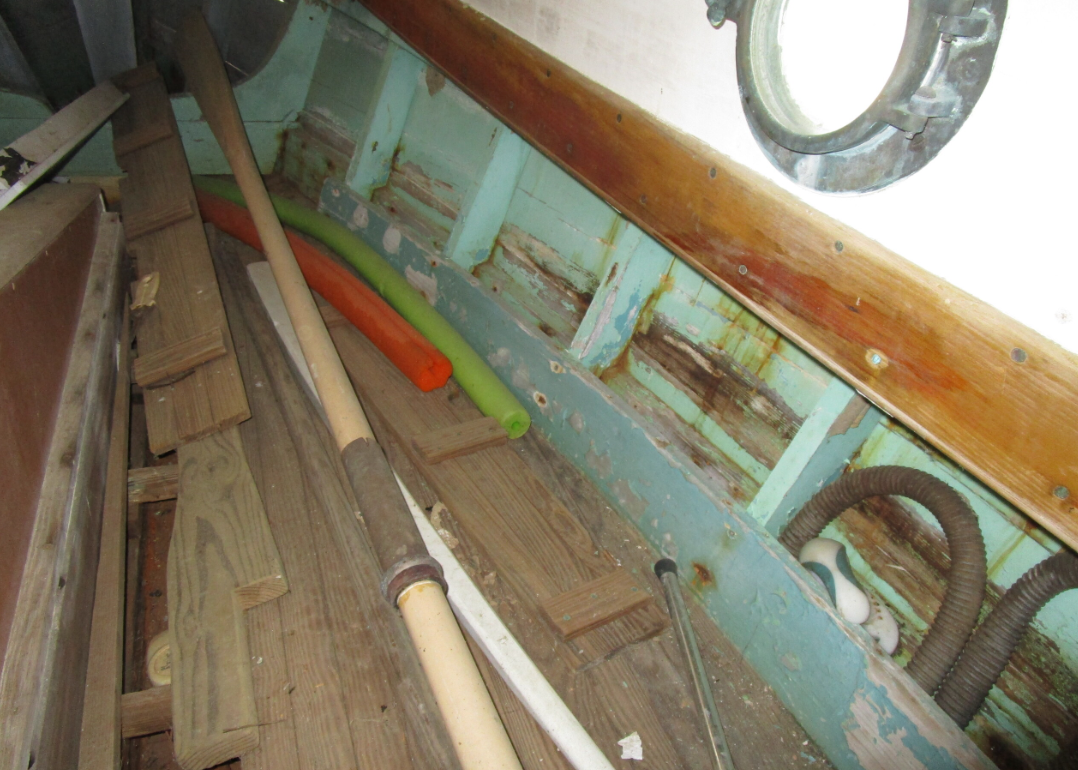
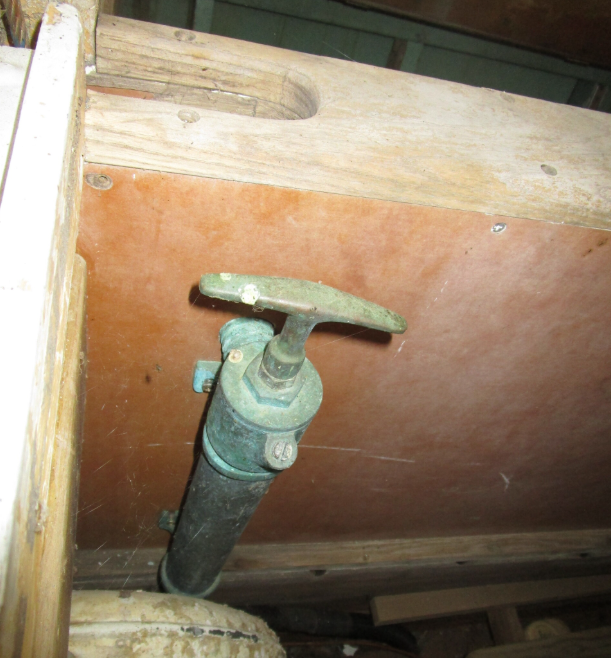
-
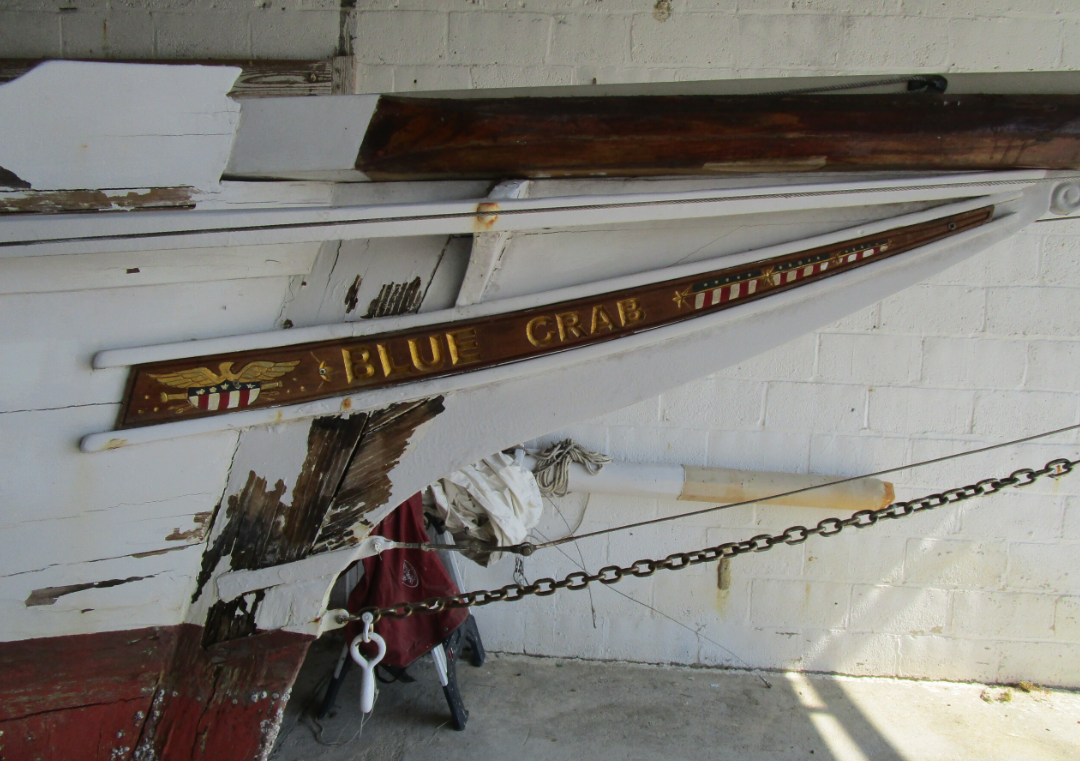
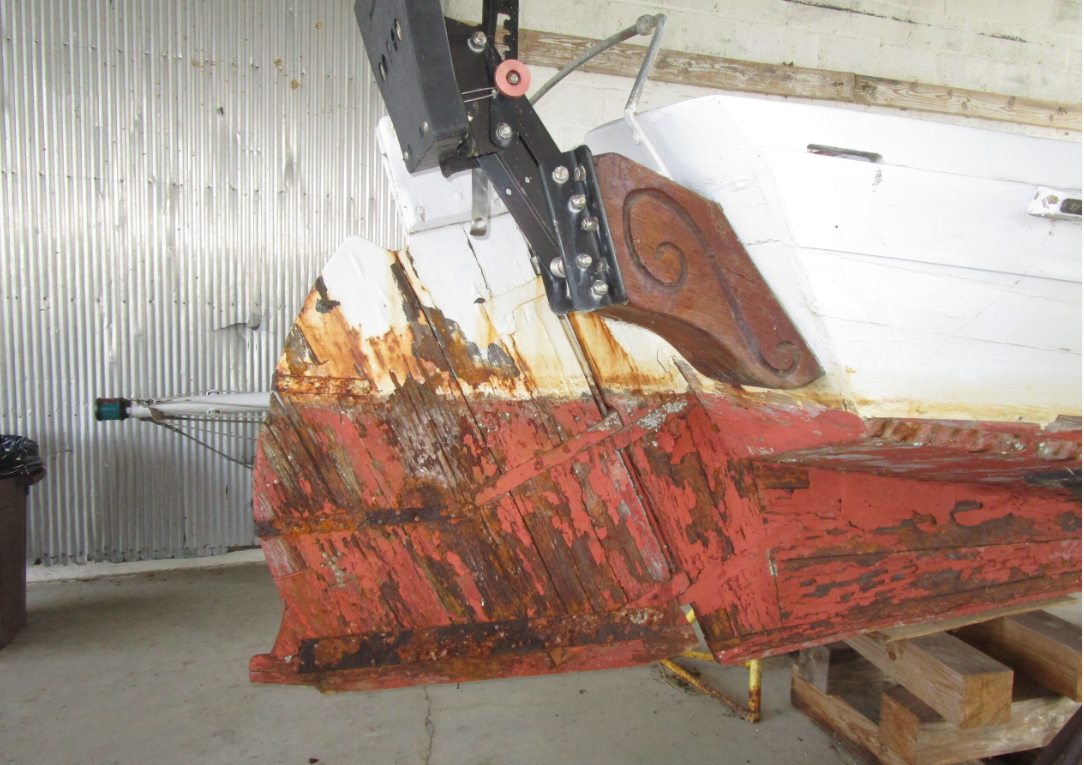
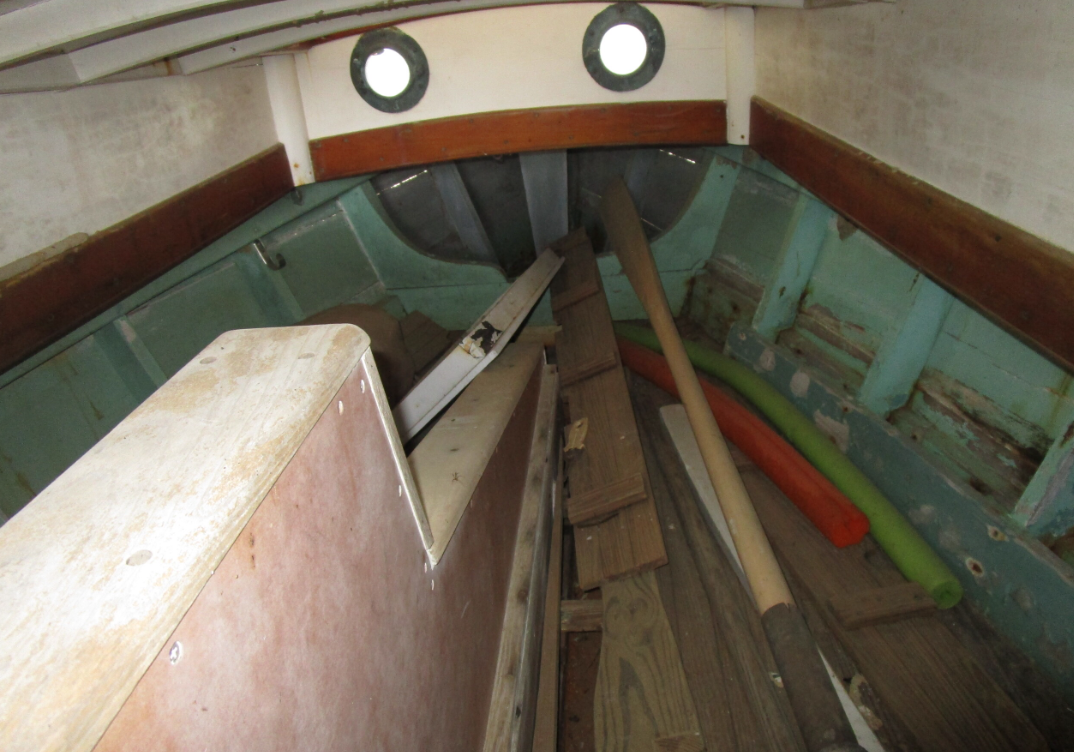
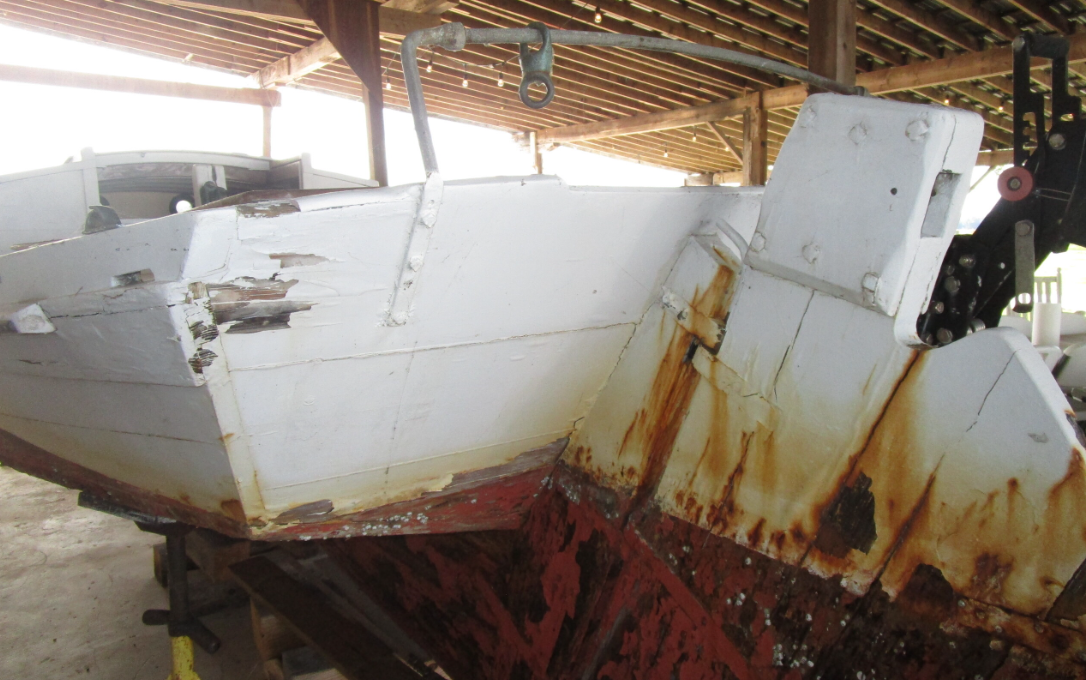
Blue Crab in 2024.
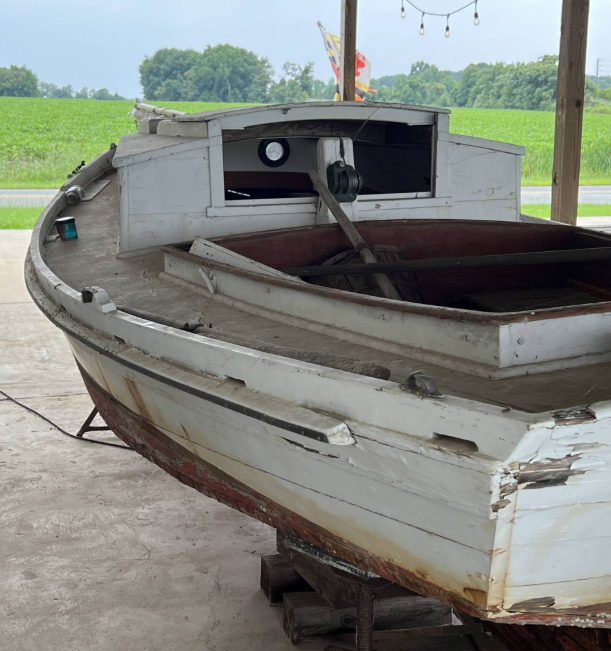
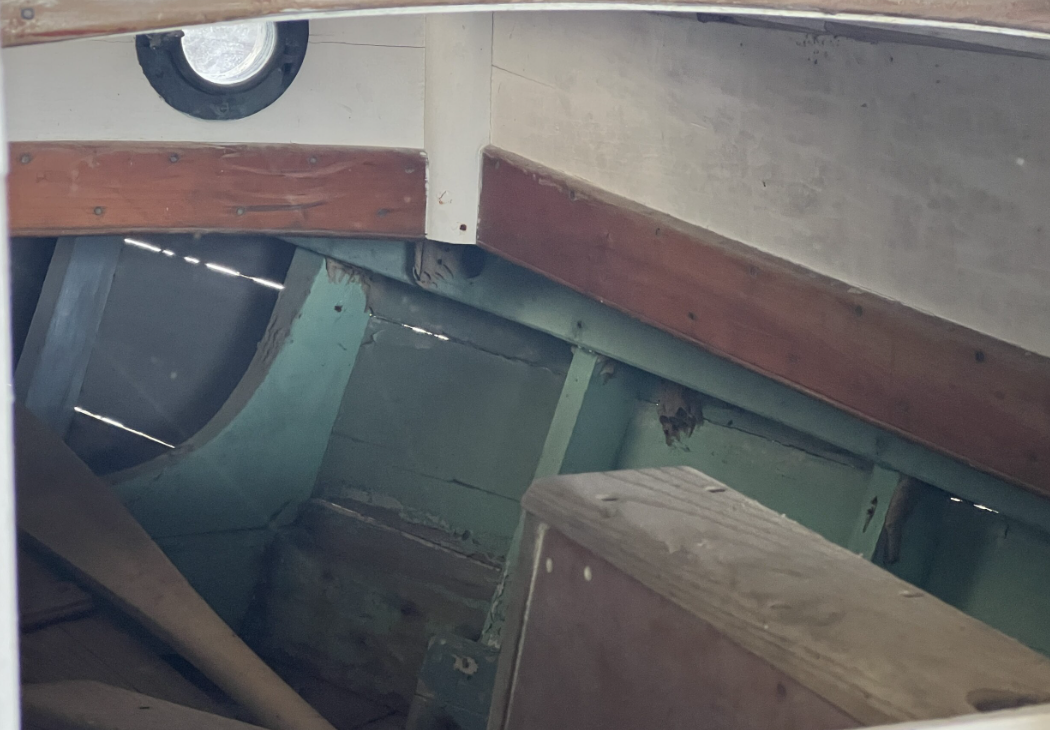
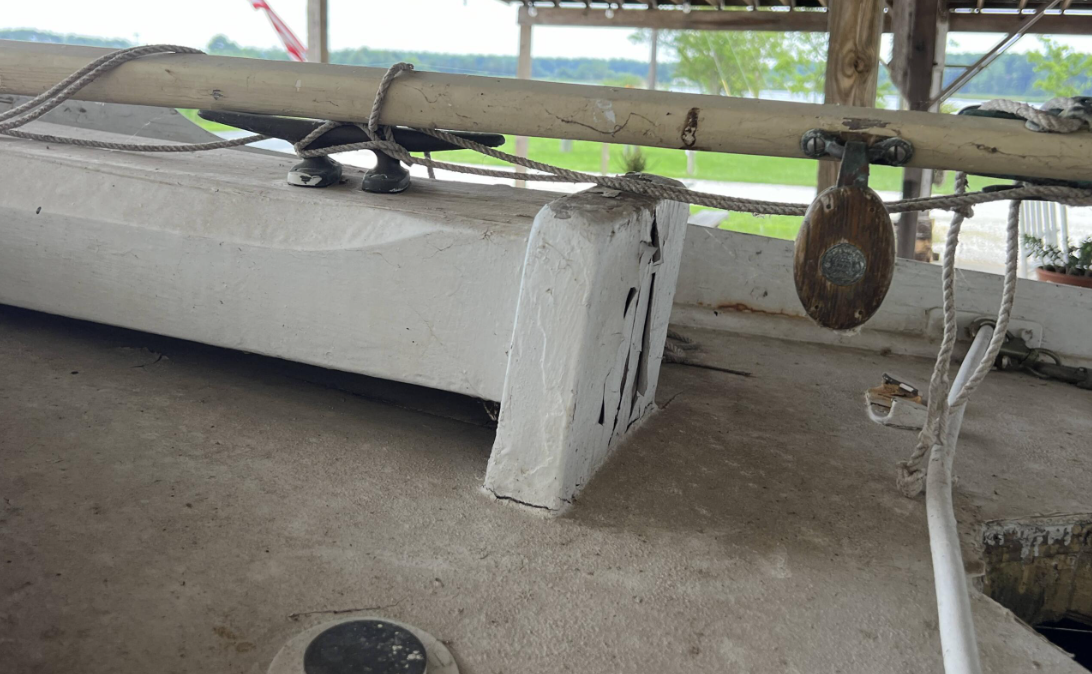
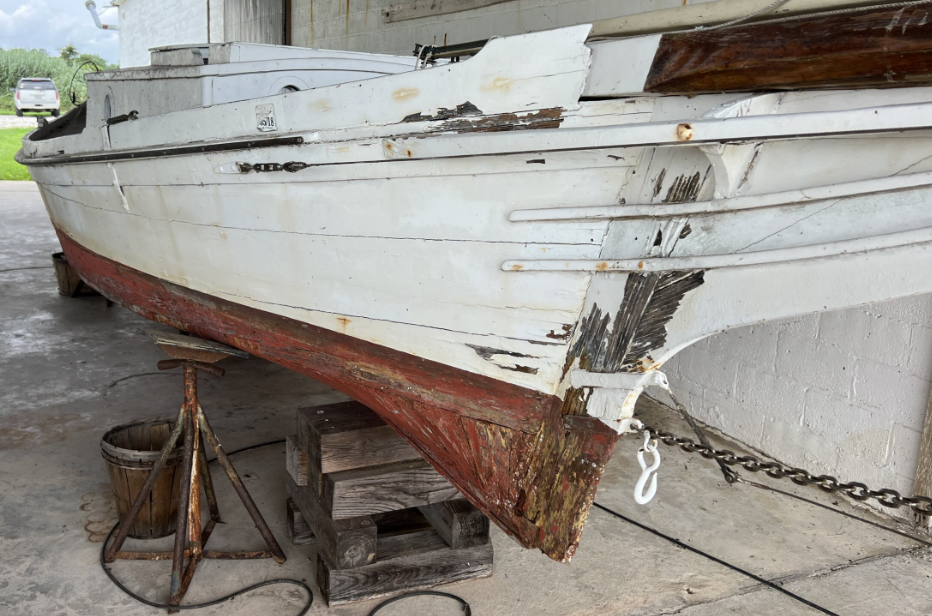
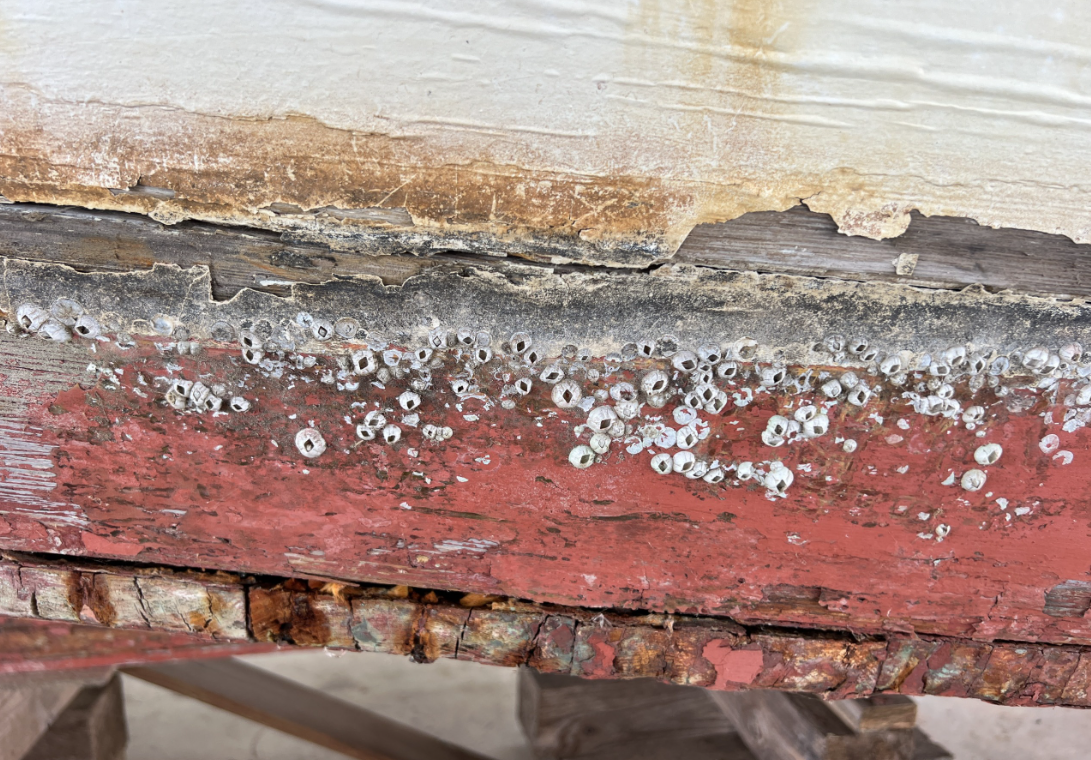
-
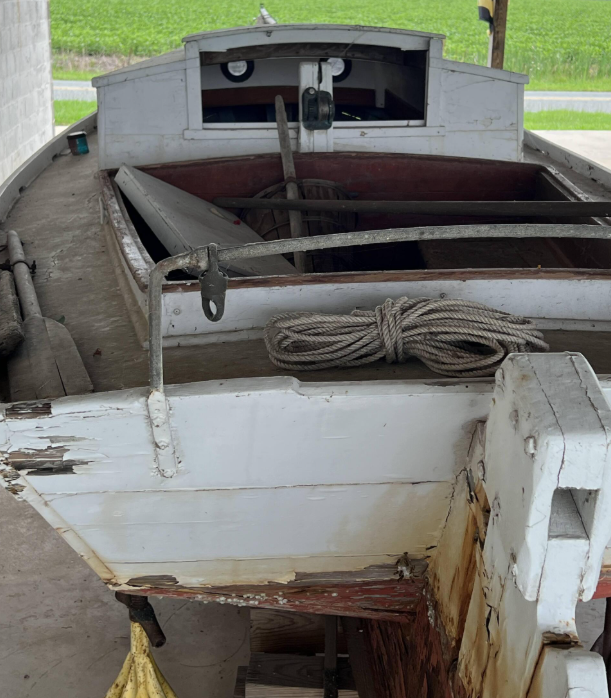
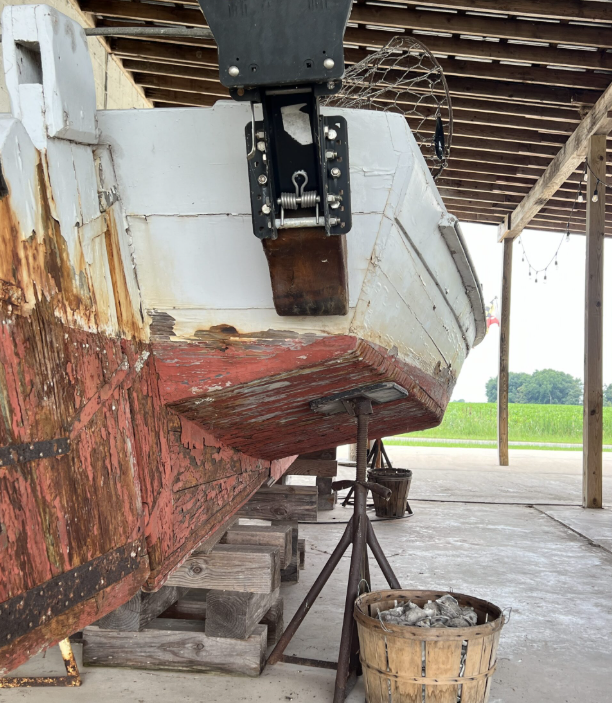
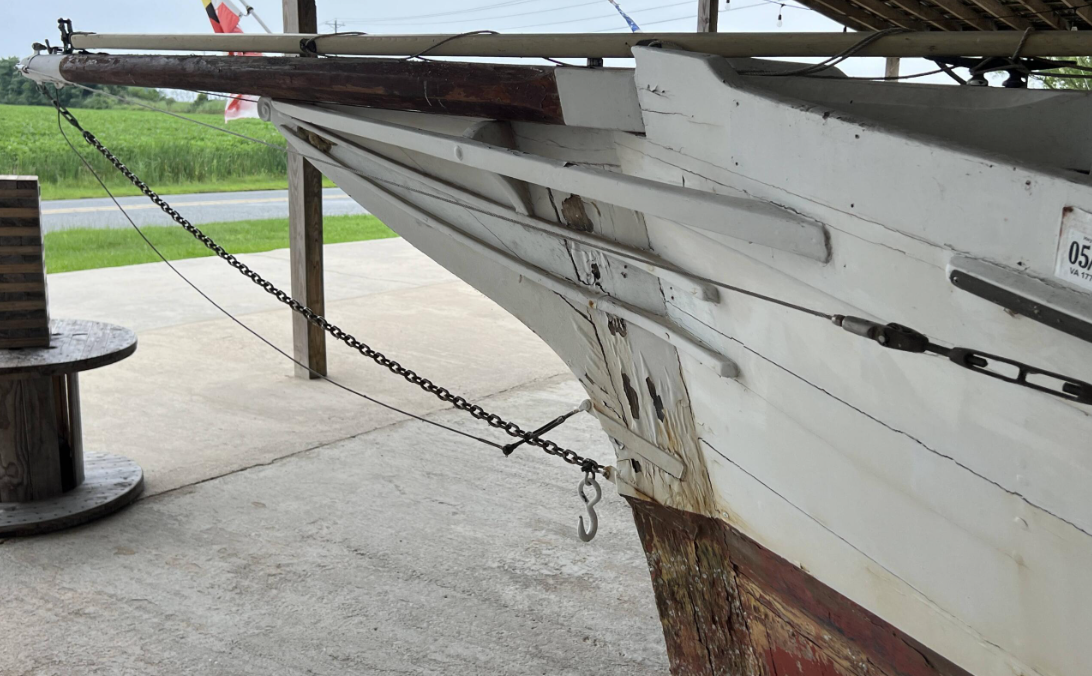
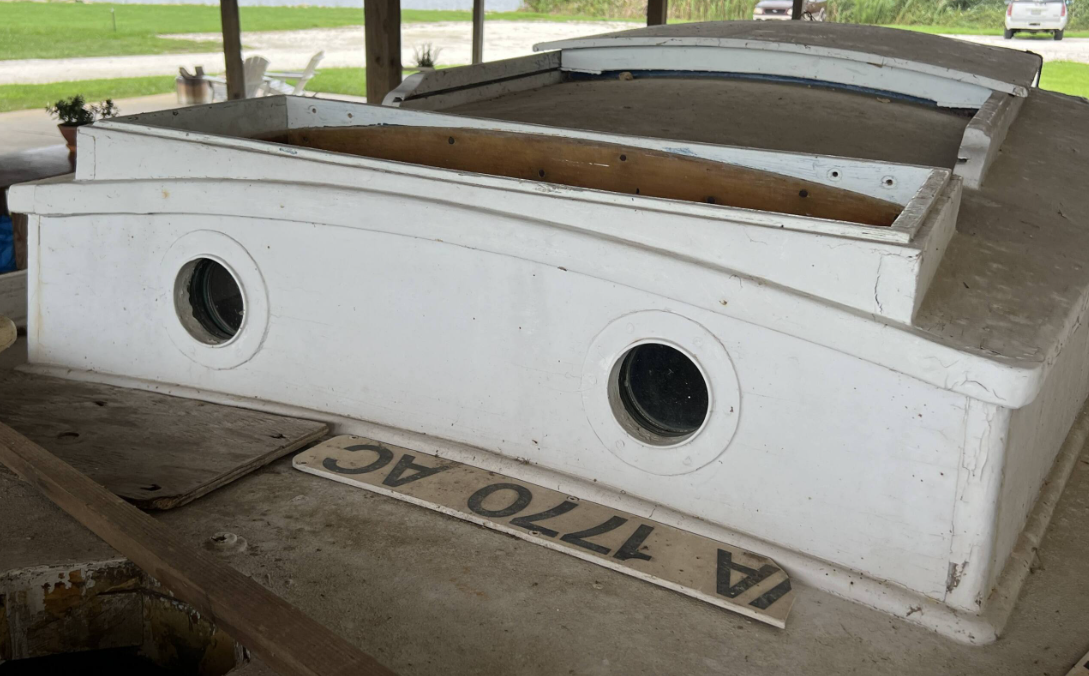
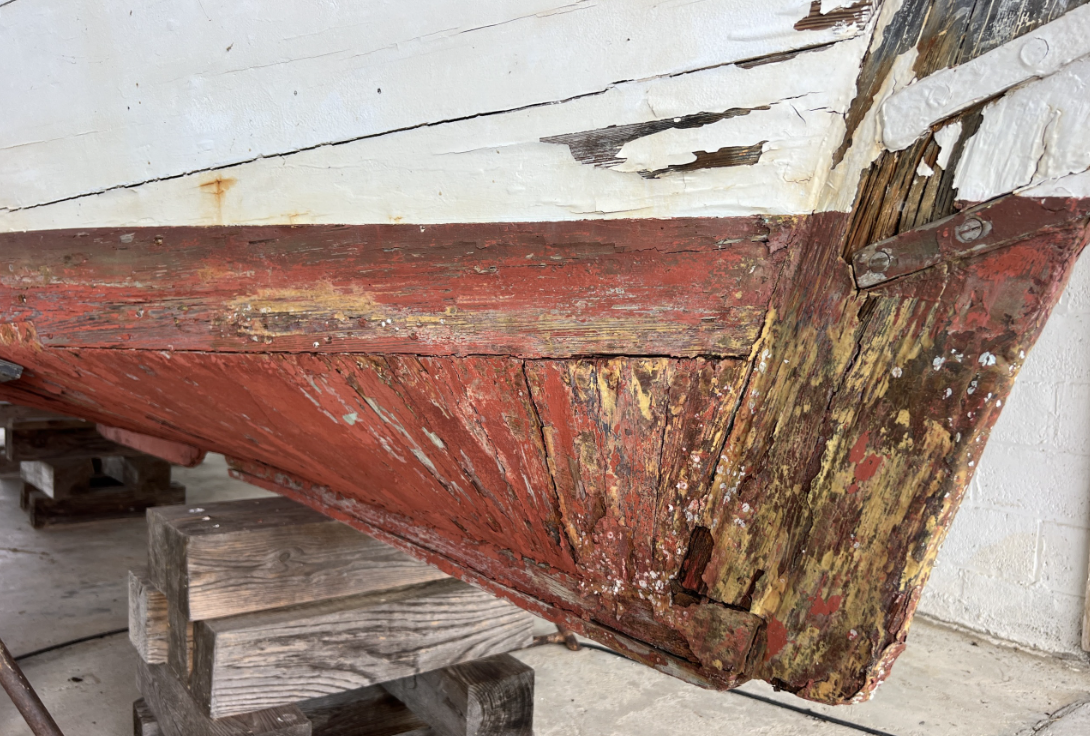
Walkaround videos of Blue Crab were created at The Cannery in 2024.
Bow to stern - 26 secs.
Walkaround - 1 min., 17 secs.
Chapelle's Design Based on the Crabbing Bateau Teddy
Chapelle's design for Blue Crab closely follows the lines of the crabbing bateau Teddy, which he found abandoned on lower Hooper's Island in 1942. Chapelle's Teddy plan is published as Figure 10 in Chesapeake Bay Crabbing Skiffs (CBCS).
Chapelle wrote that Teddy was “one of the oldest examples of this type, and one of the prettiest that I have yet seen … This boat, now an abandoned wreck, was built by an expert carpenter and was well finished in all respects. Only 22′ 6″ long, she was much smaller than the rest of her type to be seen today. … There was no means of dating the construction of this little boat but, as a guess, 1900 would not be many years away from the correct date. She was probably built somewhere in the vicinity of Deal’s Island. ”
Read more about the design of Teddy and the construction of the model by Ed Thieler here.
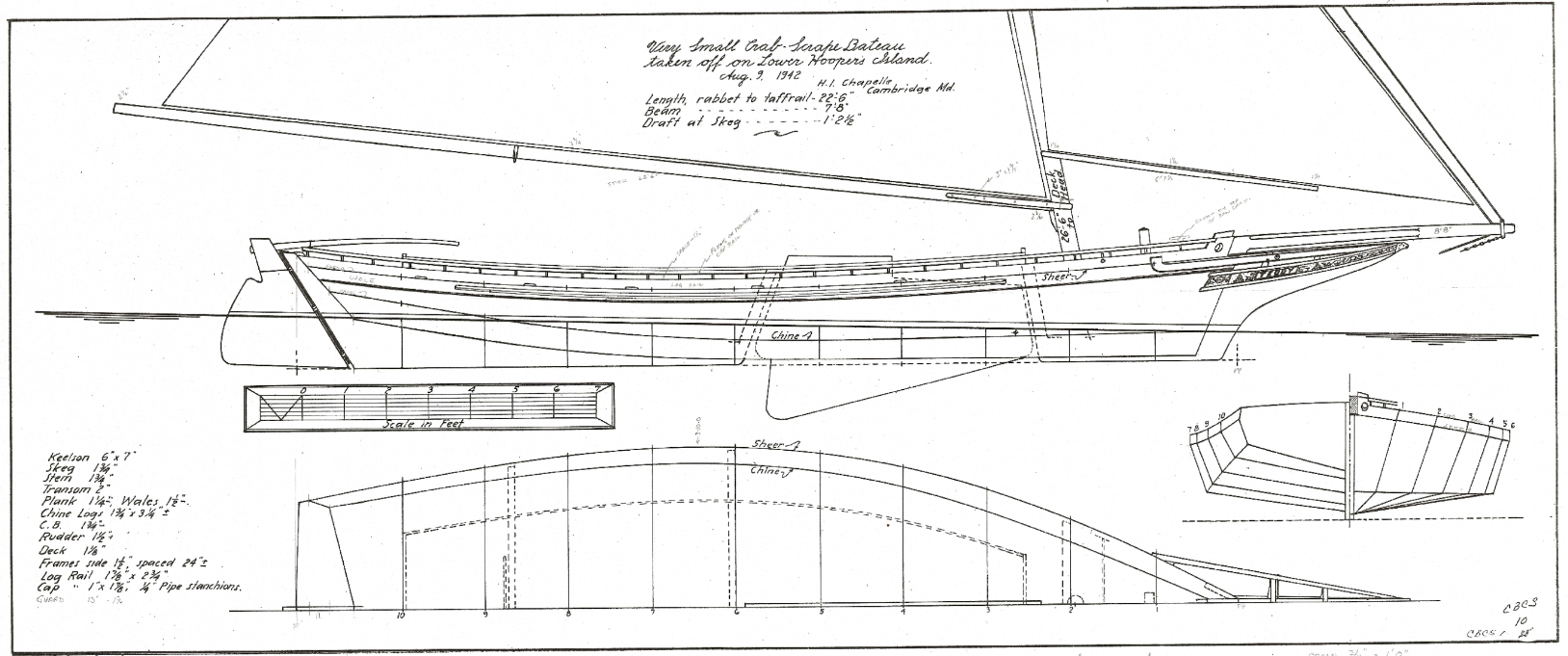
CBCS Figure 10, Crabbing Bateau Teddy
Chapelle's Blue Crab Plans
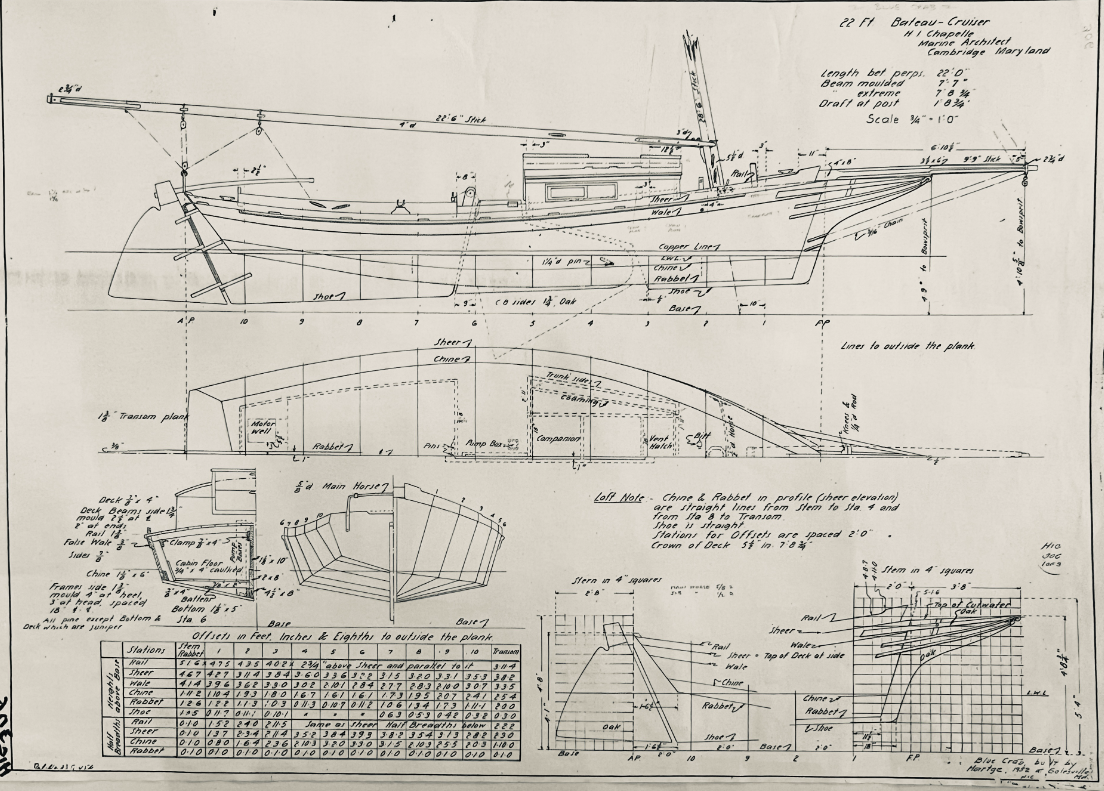
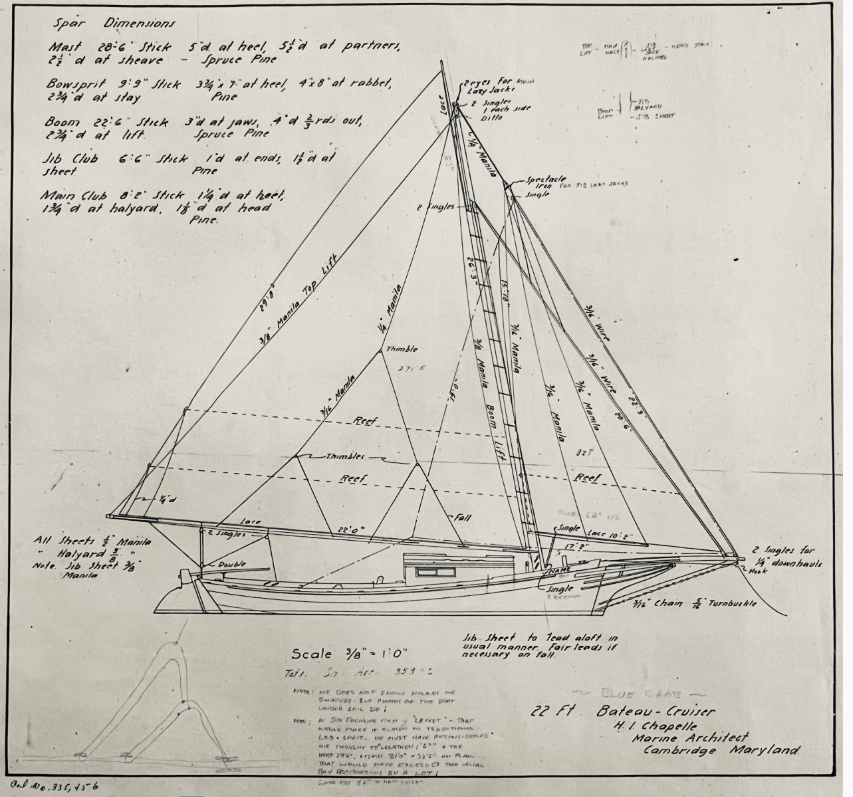
Plans for Blue Crab are listed in the Smithsonian Ship Plans Catalog, HIC-306. A listing of all the Chapelle plans from the catalog can be found here.
Large format images of the Blue Crab plans are here.
Construction at Hartge's Boatyard in Galesville, MD
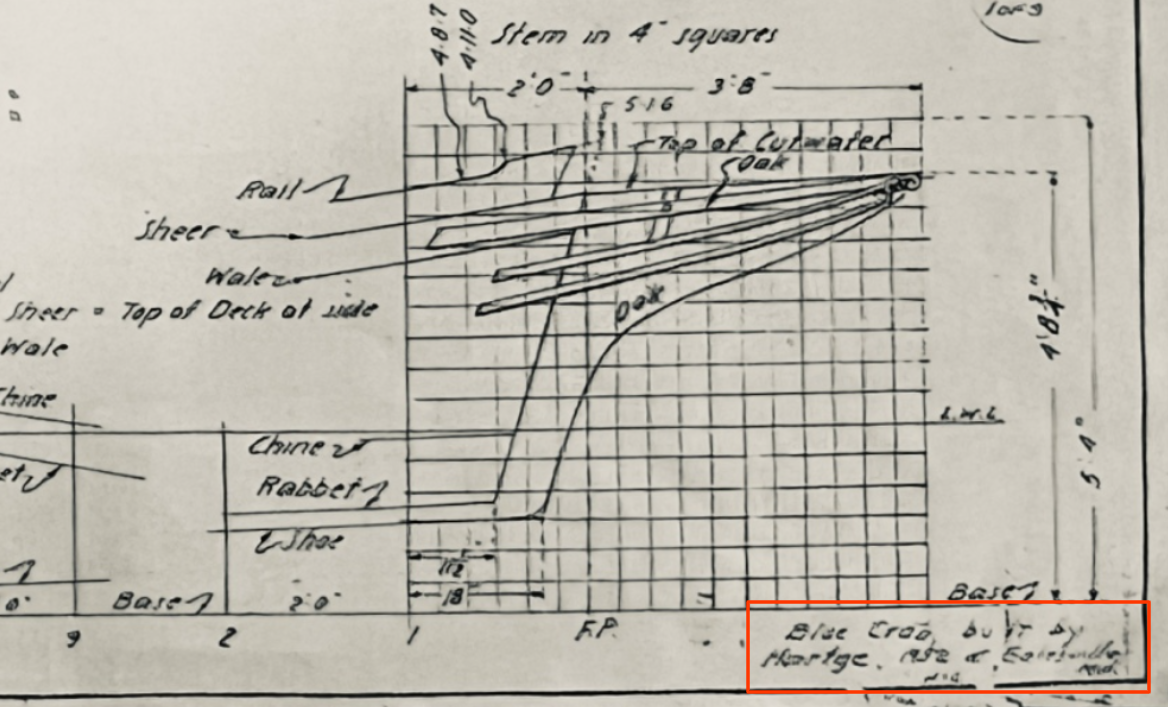
We know the timeline and some details of Blue Crab's construction at Ernest "Captain Dick" Hartge's boat yard from these sources:
- A Chapelle notation on the plan (see the image above);
- Original blueprints used by Hartge;
- Correspondence between Chapelle and his friend and colleague Wayne B. Yarnall;
- The memoirs of naval architect Ken Court of Annapolis;
- Jane Hartge memoir.
Chapelle-Yarnall Correspondence, Spring 1952
Here are selections from Chapelle's letters to Yarnall, which were among the Yarnall papers that his widow, Naomi Yarnall, donated to the Lewes Historical Society in 1984:
15 Feburary 1952
"Earle is carving trailboards being carved for one of my skipjacks building over at Galesville." [W. Earle Geoghegan was a neighbor and colleague of Chapelle.]
Late Winter or Early Spring 1952
"22 ft bateau Hartge built is attracting much attention and Hartge has another to start pronto. She sails very well by all accounts and Earle's trailboards make her doubly interesting apparently. Have a man coming next Monday about a similar boat, perhaps 24' long. I have lines done for such a boat but it is not in final state. Have a lot of sketches done for sailboats of various types, all between 22 and 25 feet long - some of which I will work up when I get a chance."
17 April 1952
"The 22 ft bateau built by Hartge turned out very well and Hartge is building a sister. I have had a number of inquiries about her. Have a 24 ft boat of the same type under consideration - outboard engine powered too. 7-1/2 hp is enough for these boats."
14 May 1952
"The Hartge built bateau worked out very well indeed and another is to be built. She is typically a handscraper in appearance with a long run; somewhat like a Seascout bateau I designed but smaller. ... I think you would like the Hartge-built boat - she is small but roomy and will be at Galesville until sometime next month. I want to have a sail in her - everybody seems enthusiastic who has sailed in her and I wonder why. She has the long head and Earle made the trailboards - very neat."
28 May 1952
"I have a design for two nice bateaux started, one 24 and one 22 feet; the latter I am designing with myself in mind. I shall try to sell the 24' to Fawcett too." [Chapelle modified the Blue Crab plan for the construction of his own bateau cruiser, Sweepstakes, by shipwright Jim Richardson in 1964. Read more about Sweepstakes here. Fawcett may have been Arthur Fawcett, owner of Fawcett Marine Supply in Annapolis, located just 10 miles from Hartge's boat yard. See more about Arthur Fawcett here.]
Original Blueprints
The original construction blueprints for Blue Crab were in the possession Stephen Marks probably as late 2016. Marks owned Blue Crab from 1984 to 1988. (See the ownership timeline below.) According to the Meredith archive, handwritten notations by builder Dick Hartge appear on the back of these blueprints. His handwriting was verified by Laurence Hartge, a nephew of the builder. Photocopies of the blueprints are here.
Ken Court Memoir
This excerpt was originally published as part of Ken Court's online memoir.
1952 – MY APPRENTICESHIP WITH CAP ‘N DICK HARTGE
"I served an apprenticeship under Cap’n Dick Hartge, master boat builder, designer of the Chesapeake 20 and other boats. This was in the summers in 1952 & 53 (when I had completed the 8th and 9th grades)."
...
"Cap’n Dick cut the tips off the index and middle finger of his left hand, a real loss since he could no longer play the fiddle which he had been very good at; this loss at the fiddle was explained by his son, my good friend Totch Hartge. The accident occurred when the sail batten Dick was cutting to size flipped over. It was his swearword, “oh Shaw,” that alerted me that something was badly wrong. This was his worst cuss word. Oh yes, we reinstalled the plane’s guard before the insurance inspector came. This sail batten was for Miss Gantz’s Moth sailboat." ...
"That all happened in 1952, the summer we built the 23 foot Chapelle skipjack Blue Crab; Dick maimed his fingers just before she was completed. At the beginning, we shaped her keel by hand since the yard’s large size bandsaw was not working . So we had to cut the keel to the marks with a crosscut saw and one of them shaped it with an adze; to finish the keel I used Cap’n Dick’s hand tool, a joiner plane. The Georgia pine, as yellow pine was known, was so full of pitch that I had to use an oil can of turpentine to keep the blade clean & sharp. The plane made the sound, “ Chirpee” which Dick said reminded him of his grandmother’s name.
"In the course of building Blue Crab, I also used Cap’n Dick’s band saw to fashion the corner pieces of the cabin trunk. This was challenging as it required cuts at different angles and gave me a taste of what drafting at Webb Institute of Naval Architecture would be like.
"Blue Crab is now an antique boat; I saw her at the Chesapeake Bay Maritime Museum about 10 years ago. Told the owner that I helped build her, he was impressed. He sent me a photo of her at the mouth of the Rappahannock and we’ve kept in touch."
Timeline of Ownership, Location, and Maintenance
Chapelle's Unknown Client - Blue Crab's Owner #1
I found no clear record of the client for whom Howard Chapelle designed Blue Crab.
The only clues come from the brief recollection of Mrs. Jane Hartge, widow of Capt. Dick Hartge, who was contacted by Blue Crab's owner in 1998. By that time, she had no clear recollection Blue Crab specifically. But she recalled that two bateaux were built at Hartge's yard in the early 1950s. One was built for a Washington DC family to sail out of Old Lyme, CT. The other was for a buyer named English.
I found no evidence of a Chapelle client named English. Nor could I identify any members of the congressional delegation from Connecticut in the 1950s, who would therefore be living in DC, and who appeared in news media or other records as avid sailors or owners of Chesapeake Bay sailing craft.
Whoever this client was, he did not keep Blue Crab for long. In May 1956, she was sold to Dr. Clarence Dawson, an Annapolis dentist. (See the recollection below of a subsequent owner, Richard Moore, who believed that Dawson was Blue Crab's first owner.)
Dr. Clarence E. Dawson, Edgewater, MD, 1956-1964
- Dawson renamed her Diana D.
- Powered by a Gray Marine 25 hp engine (identified by later owners as the Sea Scout model, which was popular in the 1950s.)
- Centerboard winch on the bridge deck.
- Custom-made white canvas cover.
- Located on the upper Chesapeake.
- Price reduce from $3500 to $2650, then reduced further to the final sale price of $2250.
- Delivery to the Dawson on South River at Edgewater.
Yacht broker's description:
"This skipjack was designed as a yacht, and built to excellent yacht standard by Captain Dick Hartge. Rigging and deck fittings are of the highest standards. Includes: s/s rigging, dacron sheets, two bronze #2 winches and one bronze [unclear] winch, bronze turnbuckles, bronze ports, screens, cleats, and clew outhaul, etc., cockpit awning, cockpit cover, spare tiller, spare engine parts, compass, ground tackle, bilge pump, electric running lights, etc."
A note probably written by Dawson:
"Large winch on the starboard deck controls the boom by going forward and then back to traveler through a series of blocks on the boom."
According to Richard Moore, to whom Dawson sold the boat, Dawson spent so much money "having Diana D. built" that he had serious disagreements with his wife, who was happy to see him get rid of her. In a 1995 letter to a friend or family member, Moore referred to Dawson specificially as Blue Crab's first owner. It's difficult to reconcile Moore's recollections with the sale documents and title transfer to Dawson in 1956.
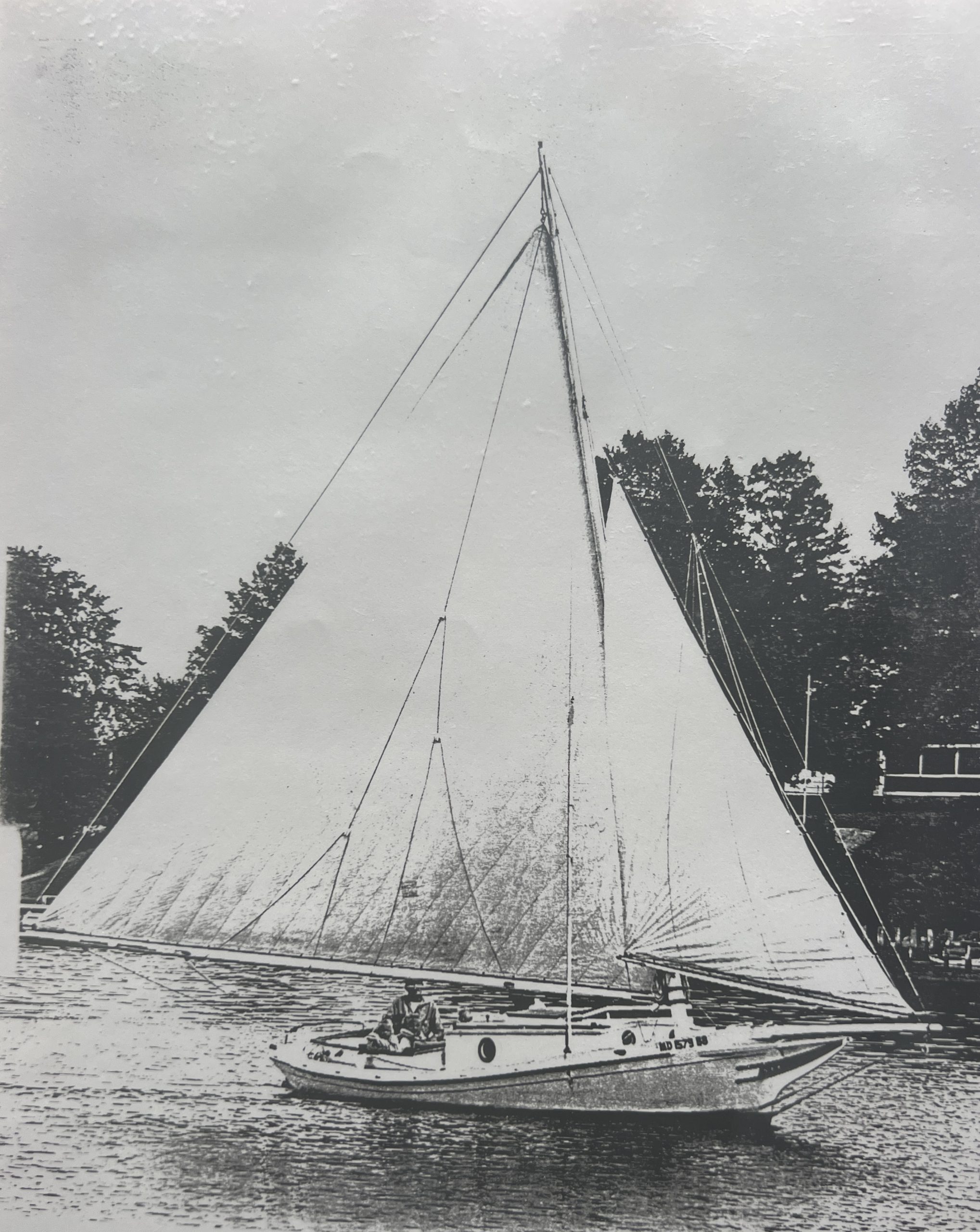
Blue Crab probably at time of sale in May 1956
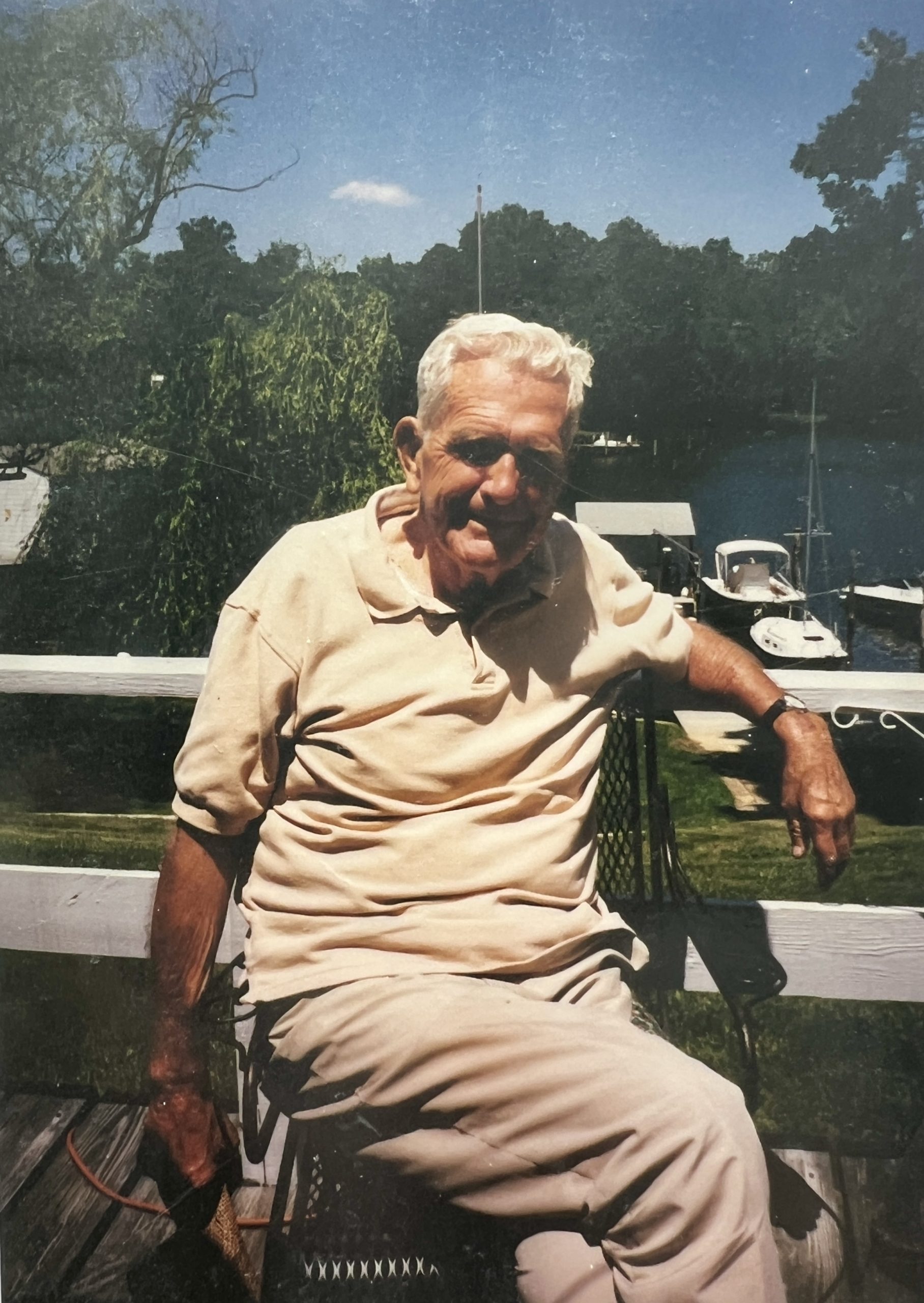
Dr. Clarence Dawson probably 1998
Richard Moore, Middle River, MD, 1964-1983
Richard Moore of Lutherville, MD, bought Diana D. ex-Blue Crab from Dawson and renamed her Albatross. He kept her at least initially on Middle River.
According to Moore, he saw an "old poster" from a yacht brokerage that presented Diana D. for sale. They told him there was no interest from potential buyers, and he should contact the owner directly. Moore visited Dawson the next day in Edgewater. Dawson was thrilled to meet someone who was knowledgeable and appreciative of Chapelle's work and the legacy of Chesapeake sailing workboats. As a result, wrote Moore, Dawson sold him the bateau on 3 May 1964 for $50 down and a verbal promise to pay the unspecified balance. A week later, the two sailed Albatross ex-Diana D. to Middle River.
According to Moore, Albatross showed strong weather helm off the wind but was perfectly balanced while sailing on the wind. The off-center 3-blade "tugboat propeller" also pushed the rudder to starboard, he said.
Moore refitted Albatross with dacron sails in 1969 and 1972. He had her bottom refastened with monel nails, and fitted her with a new propeller and strut bearing, and a new fuel pump, in 1977. The Gray Sea Scout engine was still in place when he sold her in 1983.
Moore wrote that he after 18 years of sailing and maintaining Albatross, he offered to donate her to the Chesapeake Bay Maritime Museum. They turned down his offer on 8 June 1982. At about the same time, he discovered extensive dry rot in the centerboard trunk logs and felt he could no longer maintain the boat. He sold her to a "young boatbuilder friend" (Stephen Marks) on 24 April 1983.
Moore reported in July 1995 that Albatross was in Florida. This may be a mistaken recollection based on reports that the boat was in South Carolina (with Daniel Graybill in 1988; see the section below.)
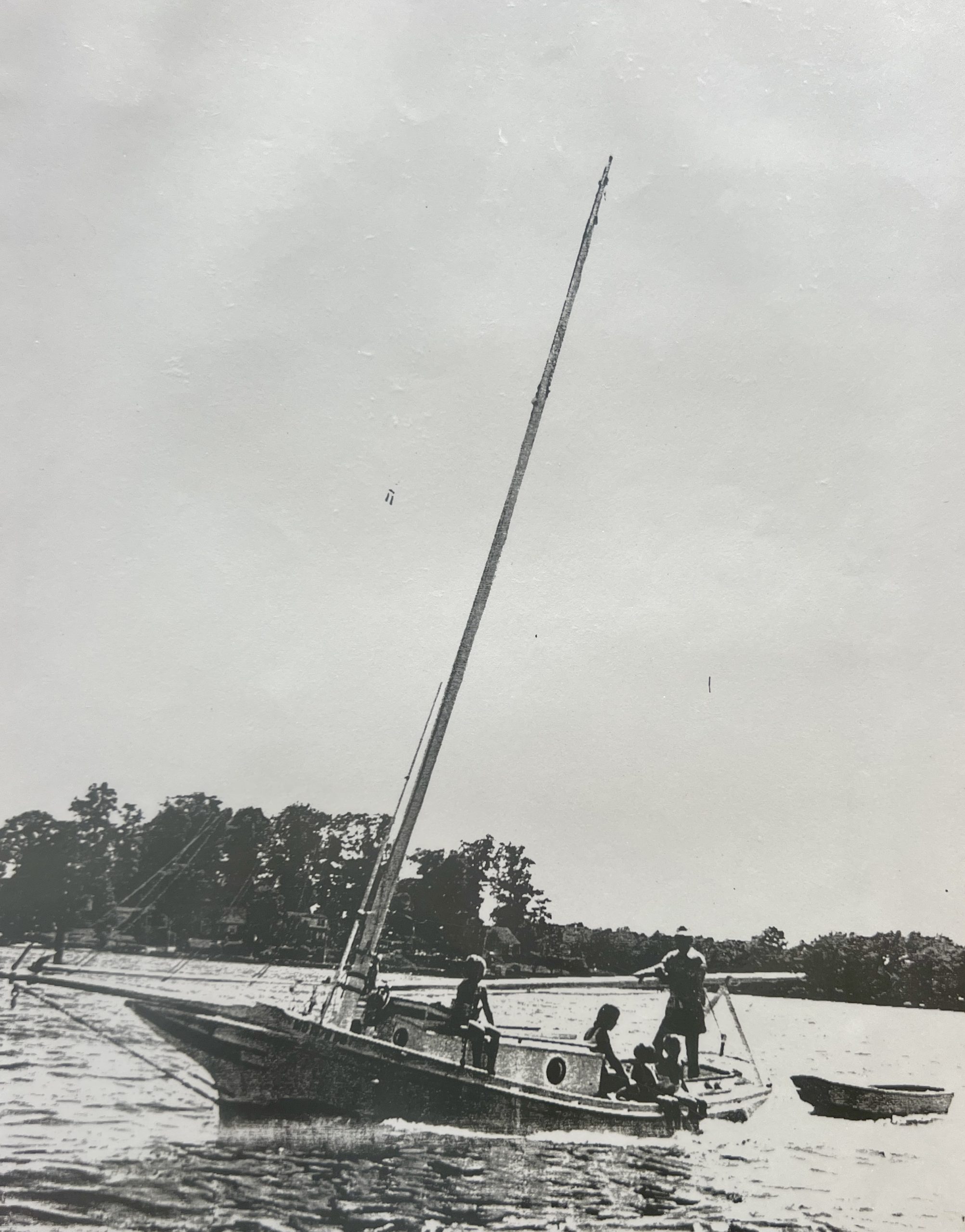
Albatross ex-Blue Crab under Richard Moore's ownership
Stephen Marks, Back River, MD, 1983-1988
Stephen Marks bought Albatross from Moore and did extensive repair and restoration at the Marks family boat yard located on Back River at 533 Island Point Road. Marks removed the Gray Sea Scout inboard engine. He engaged sailmaker C. Dudley Boycott of St. Michaels to do work on the sails. Marks reportedly compiled several photo albums of the restoration process. None of these photos appeared in the Meredith archive which I photocopied.
Daniel Graybill, Beaufort, NC, 1988-1989
Stephen Marks placed this ad in the May/June 1988 edition of WoodenBoat magazine:
22' SKIPJACK, 1951. Chapelle-designed; good sailer. Excellent condition. $5,000. 301-477-3696, after 6 p.m.
Daniel W. Graybill III of Hanover, PA, age 25, replied to the ad and, according to Marks, paid cash for Blue Crab.
Graybill apparently sailed or shipped Blue Crab to Beaufort, NC. In February 1989, he was living aboard Blue Crab while moored in Taylor's Creek and was working at a concrete plant near Beaufort. On the morning of 24 February, he was rowing a dinghy from boat to shore in high winds and waves and capsized. Graybill was unconscious when the Coast Guard pulled him from the water. He died two hours later from drowning complicated by hypothermia. [Cartaret County News-Times, Feb 27, 1989.]
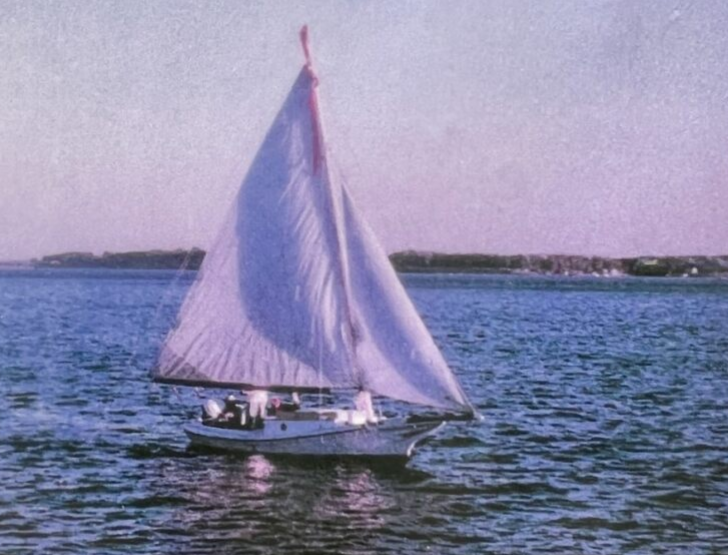
Larry Allen, Deltaville, VA, 1989-2008
Larry Allen of Falls Church, VA, had also responded to Stephen Marks's WoodenBoat ad. Marks may have given him Graybill's contact information. This or some other connection enabled Allen to purchase Blue Crab from Graybill's estate in October 1989.
Because there was no indication of any former name attached to the vessel at the time of purchase, Allen named her Pearl. He sailed and maintained Pearl ex-Blue Crab for 19 years. He compiled much of the research into her history which later appeard in the Meredith family archive.
Allen cared for Pearl with regular maintenance and hauling and painting. He replaced some of the bottom planking, dealt with rot in various locations, and repaired mast and boom ends. He covered the deck with dynel and the cabin top with fiberglass and rebuilt the centerboard trunk. New trailboards were carved in 1998. In 2005, he removed the outboard motor bracket to enhance her transom appeal. When not under sail, he propelled the boat with an electric trolling motor or a 13-foot oar.
During 1990-1995, Pearl was on loan to the Watermen's Museum in Yorktown, VA, while Allen was on a work asssignment on the west coast. During 1995-2000, she was berthed in Deltaville, VA, and was cared for by Willis Wilson, a locally well-known and respected boatbuilder and waterman. During 2000-2008, Allen kept her at Yankee Point Sailboat Marina in Lancaster County, VA, where she was maintained by a professional yard crew. Allen sailed Pearl often in the Hospice Turkey Shoot Regattas on the Rappahannock (Carter Creek). An excerpt from Pearl's log described a week-long summer cruise up and down the Rappahannock, with stops in various creeks and nights at riverside lodgings.
In 2008 (probably September), Allen donated Pearl to the Deltaville Maritime Museum. By that time, her history was well known to the donor and to the museum. She became part of the museum fleet under her design name of Blue Crab.
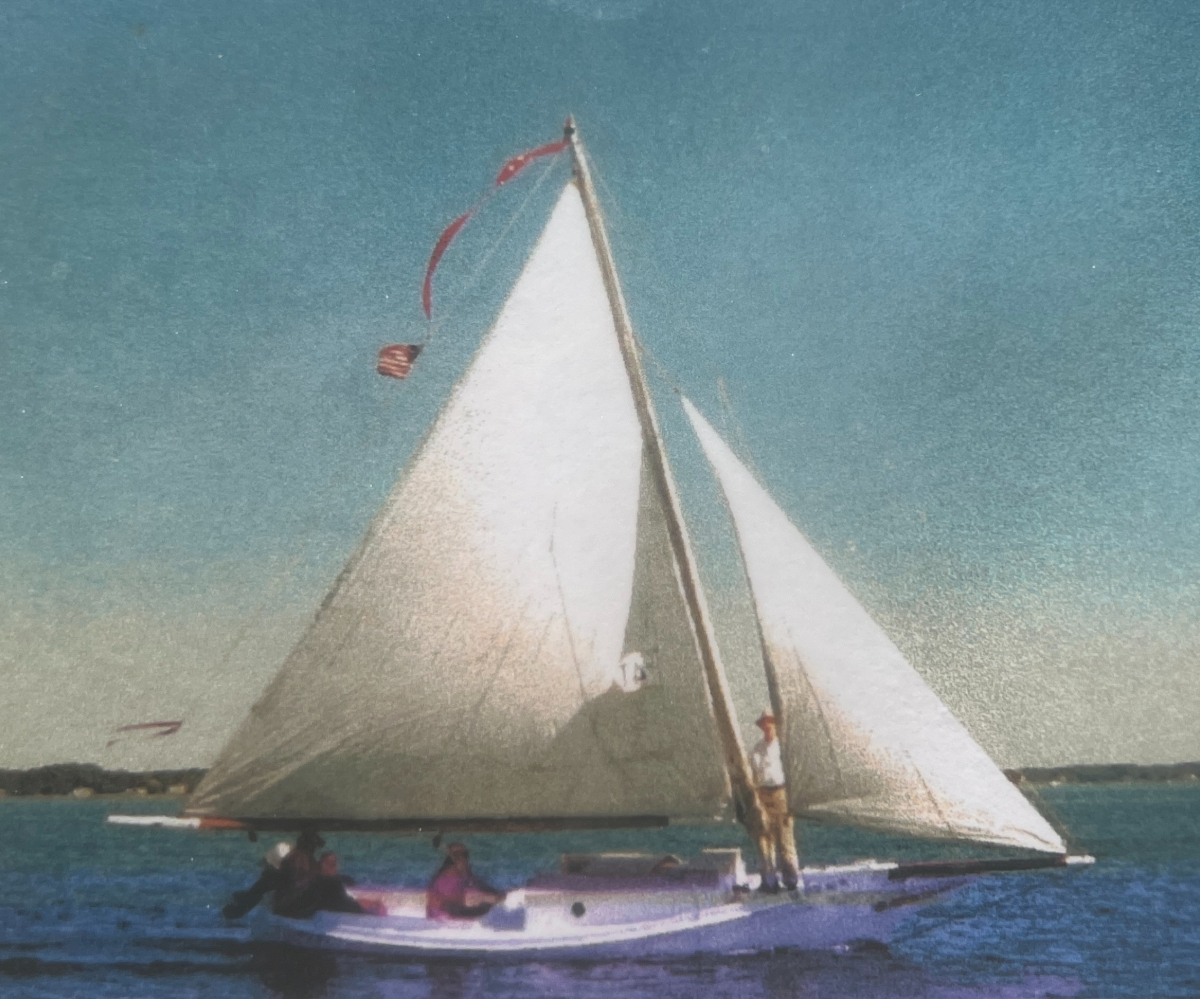
Pearl ex-Blue Crab in 2002.
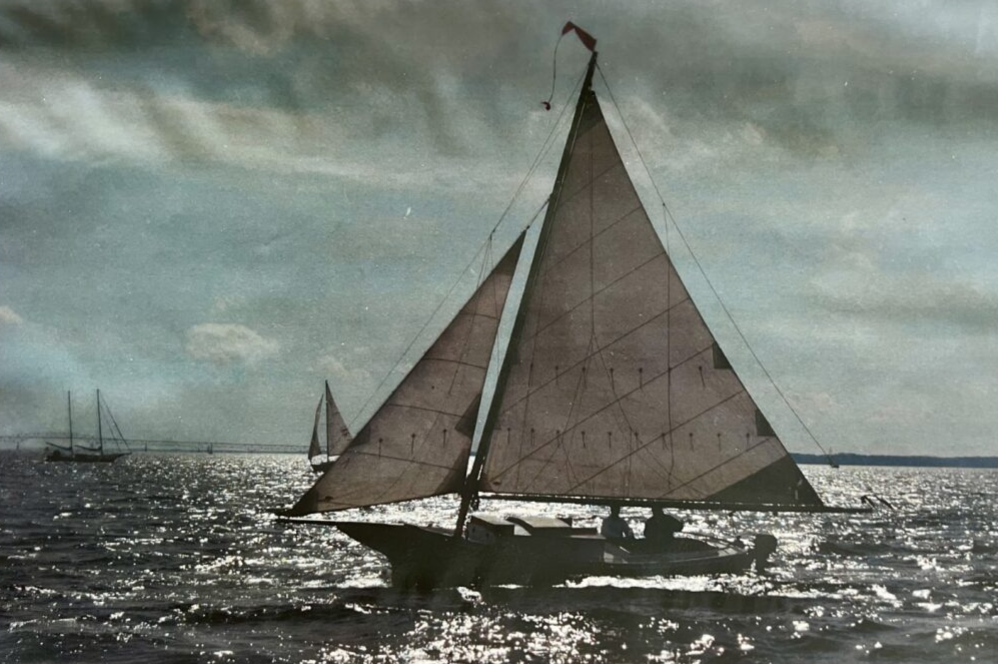
Photo above is labelled Turkey Shoot Oct 2002. ***Has outboard ***
Photo below is less certain.
Identify the two bridges.
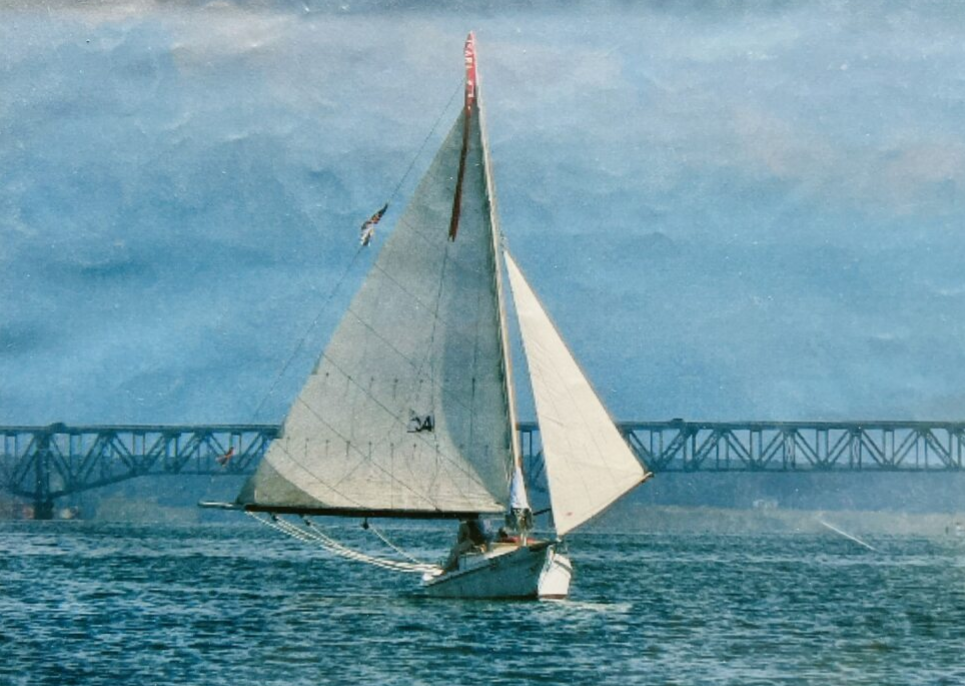
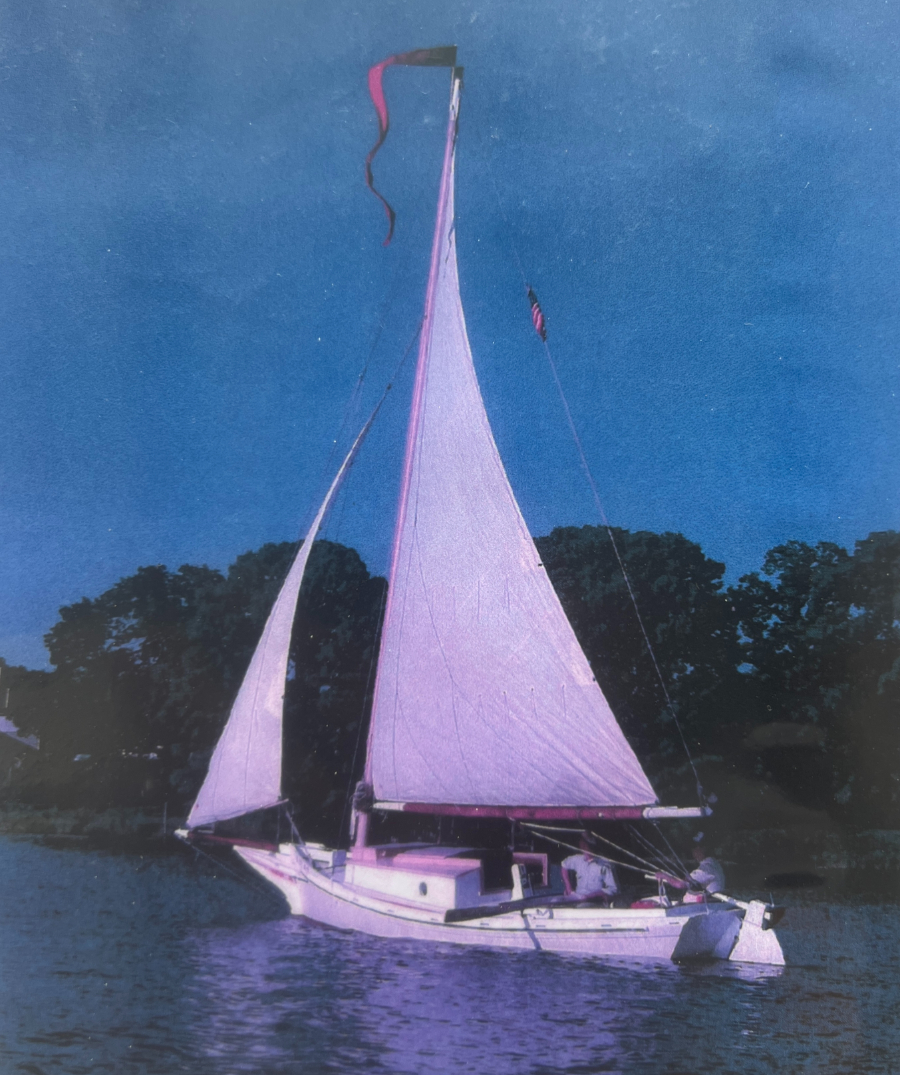
Pearl ex-Blue Crab with long oar visible.
Photo below has outboard, date uncertain
Maritime Museum, Deltaville, VA, 2008-2012
The Deltaville Maritime Museum, near the mouth of the Rappahannock, made Blue Crab part of its museum fleet for nearly four years. If Richard Allen donated the vessel in good condition, as indicated by his claims of careful maintenance and repair, then it would appear that the museum volunteer cadre was unable to keep up with maintenance while Blue Crab was under its care. They apparently felt compelled to pass Blue Crab on to a new owner who could invest the time and financial resources to keep her in sailing condition.
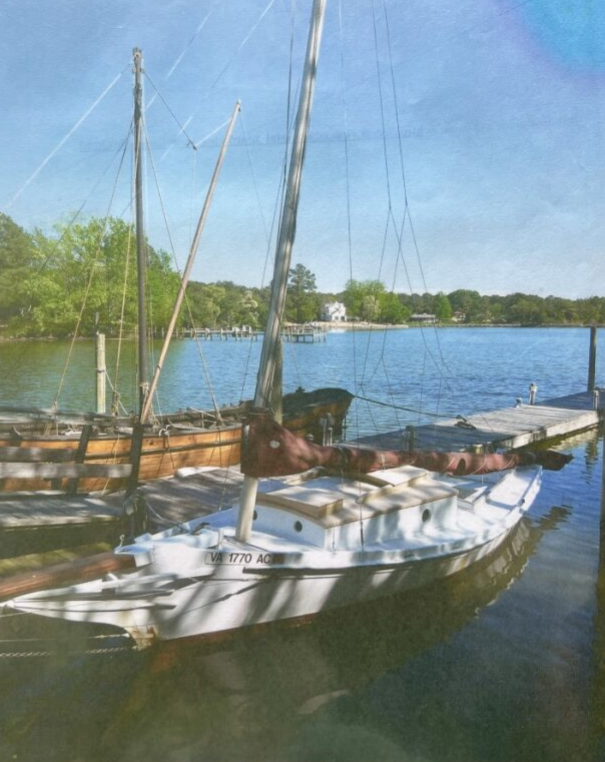
Blue Crab at Deltaville, April 2012
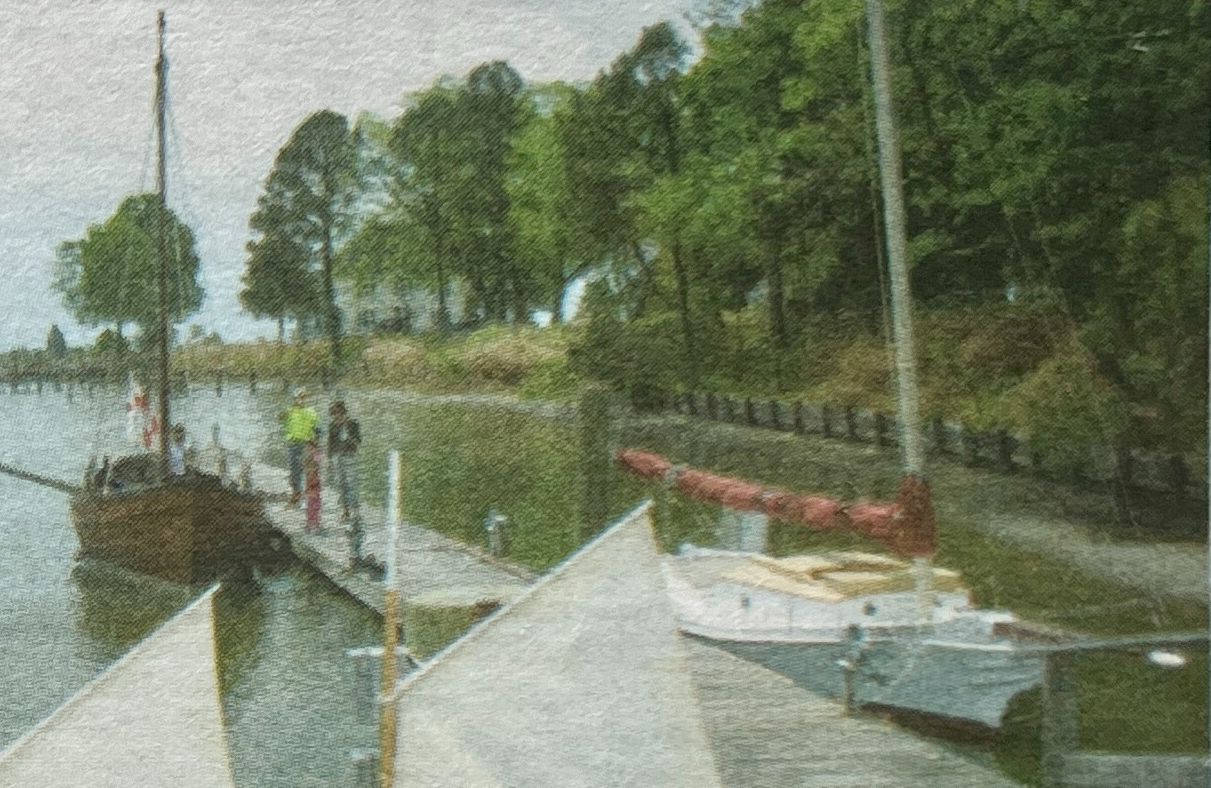
Newspaper clipping shows Blue Crab in the right background at Deltaville Maritime Museum, May 2012.
Chad Gray, Piankatank River, VA, 2012-2016
The Deltaville Maritime Museum sold Blue Crab to Chad B. Gray of Urbanna, VA, for $1800 on 11 May 2012. Gray had done volunteer work for the museum in the summer of 2011. Gray wrote later, "I saw her as a great piece of Chesapeake Bay history that I could restore. I admired her classic design and I must say that I looked her over several times dreaming of how i could work to preserve her beauty and increase her longevity for many more years, so others may enjoy her."
The museum staff moved Gray's new purchase to a nearby marina or boat yard where she remained in the water. According to Gray, "I quickly began to see what work I had gotten into after numerous hours of sanding, filling, sanding, painting, painting, and painting some more. Each task taking lots of money and lots of time."
Gray spent all his weekends through the summer and fall of 2012 "consumed with restoring Blue Crab." In November, he got the boat out of the water and drydocked, probably at the same boat yard near Deltaville, where he continued to work on the boat's hull through the cold autumn months. Some time later, he moved Blue Crab upriver to his parents waterfront property on the Piankatank and worked on the cockpit and interior. He refinished the cockpit seats, installed a new cockpit cover, and hired a boat carpenter to install wooden brackes with carved designs for a new Honda outboard. The carpenter also repaired dry rot at the bottom of the mast and reinforced it with a "custom made steel brace". Stephens C. “Kaptain Krunch” Smith IV of Deltaville carved new "Blue Crab" trailboards.
Except for moves between docks, Gray apparently never sailed Blue Crab. He kept the boat at his parents' dock. They may have sailed her on the Piankatank but, he said, they mostly used her to host dockside cocktail parties. Gray realized that he was not interested in sailing after all, and he decided to donate Blue Crab back to the Deltaville Maritime Museum. On July 4 weekend 2016, he sailed her back to Deltaville and transferred her back to the museum's care.
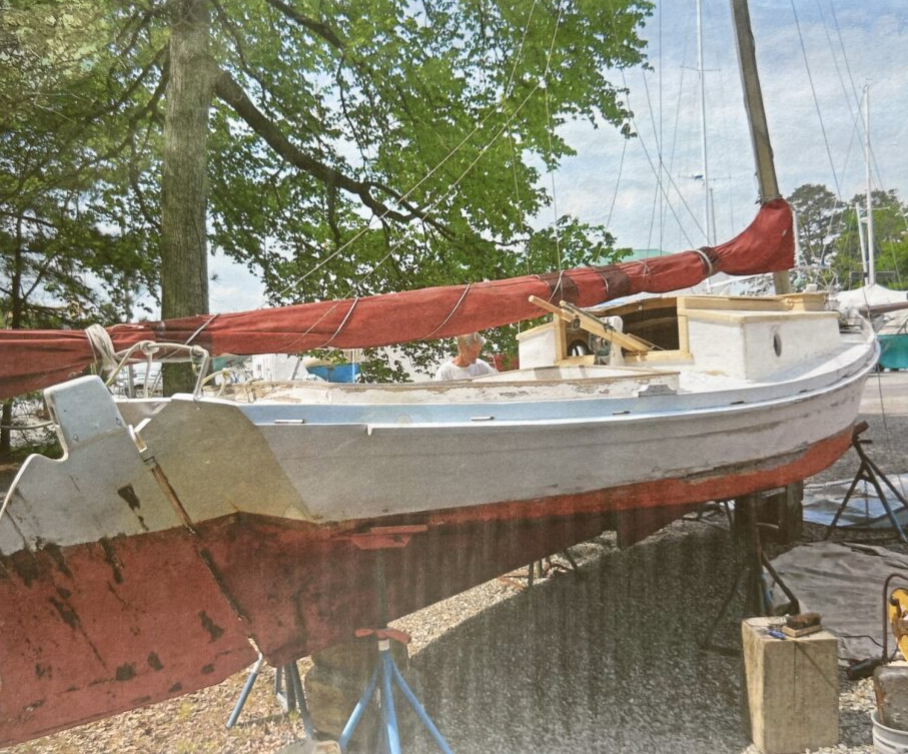
Gray worked hundreds of hours refinishing Blue Crab. His work log photos give a clear picture of her condition after nearly 60 years on the water.
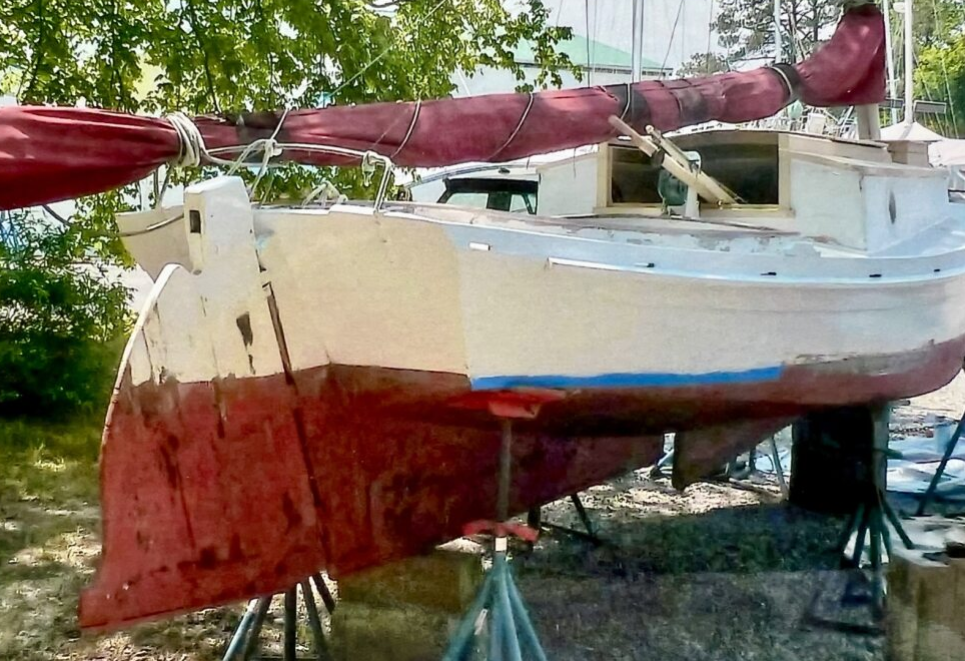
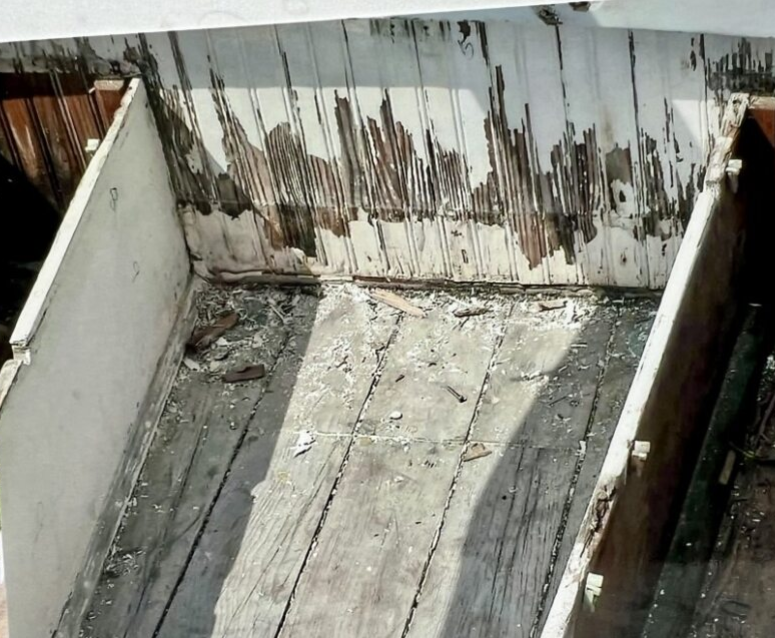
Original engine box in the cockpit.
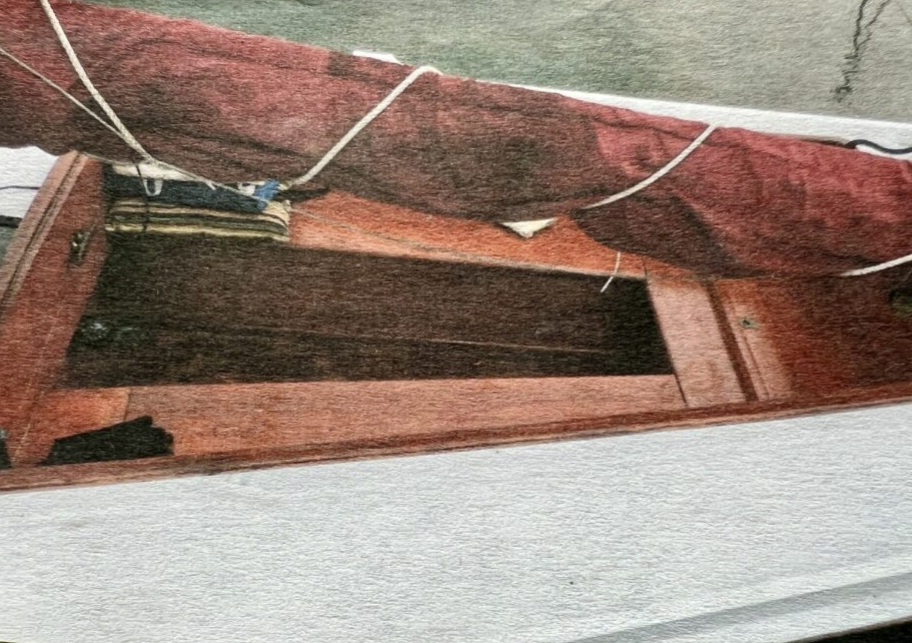
Gray refinished the cockpit seats.
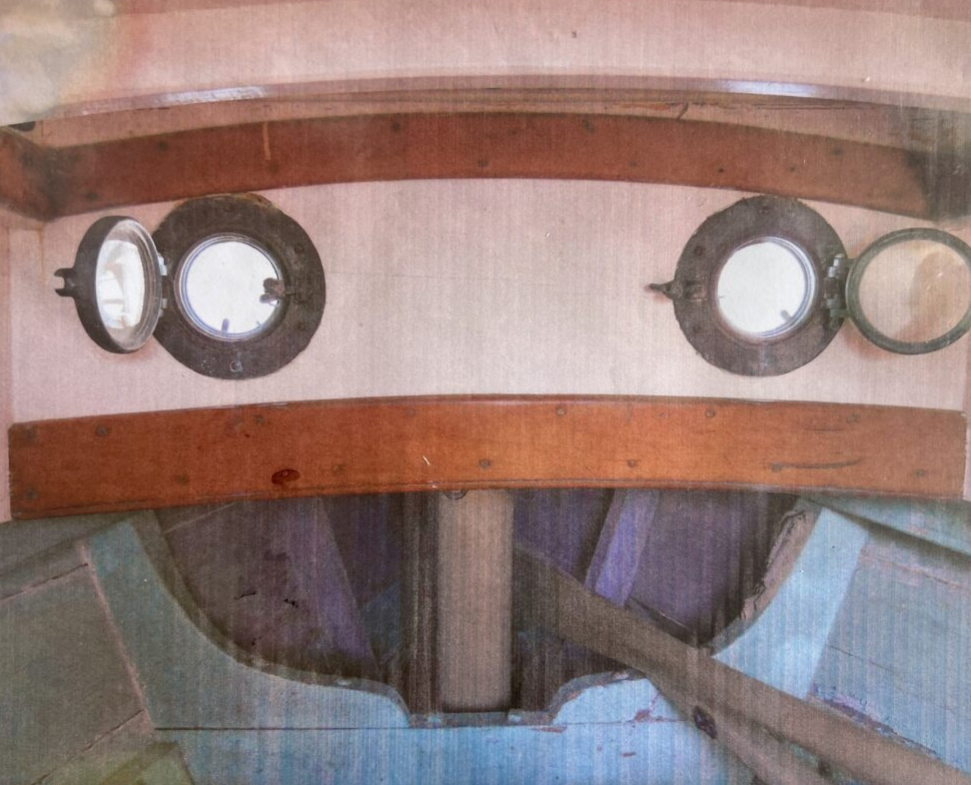
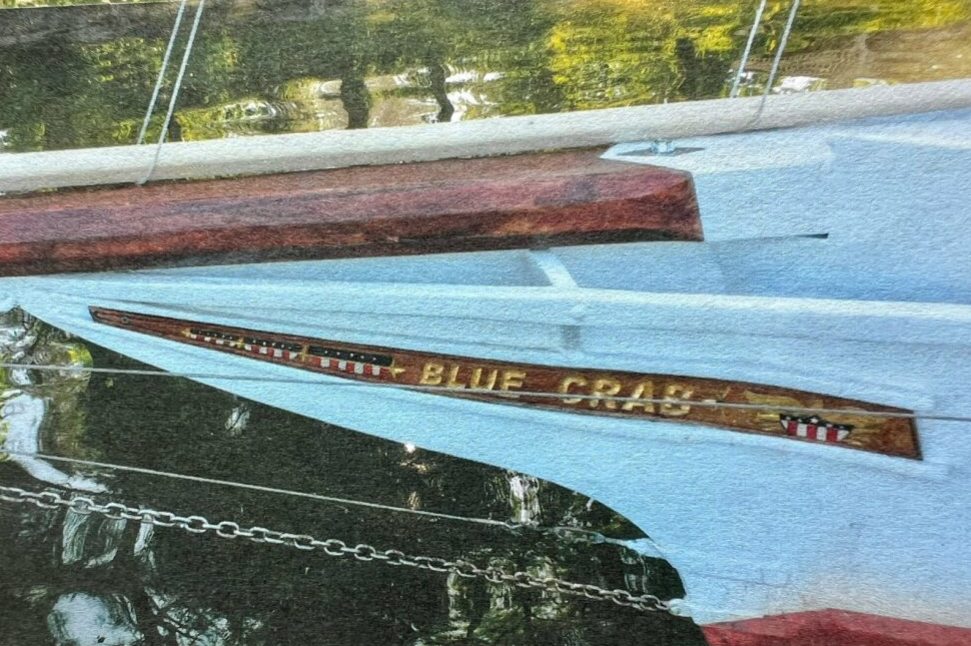
New trailboards crafted by Stephens C. “Kaptain Krunch” Smith IV at Deltaville restored Blue Crab to her design name.
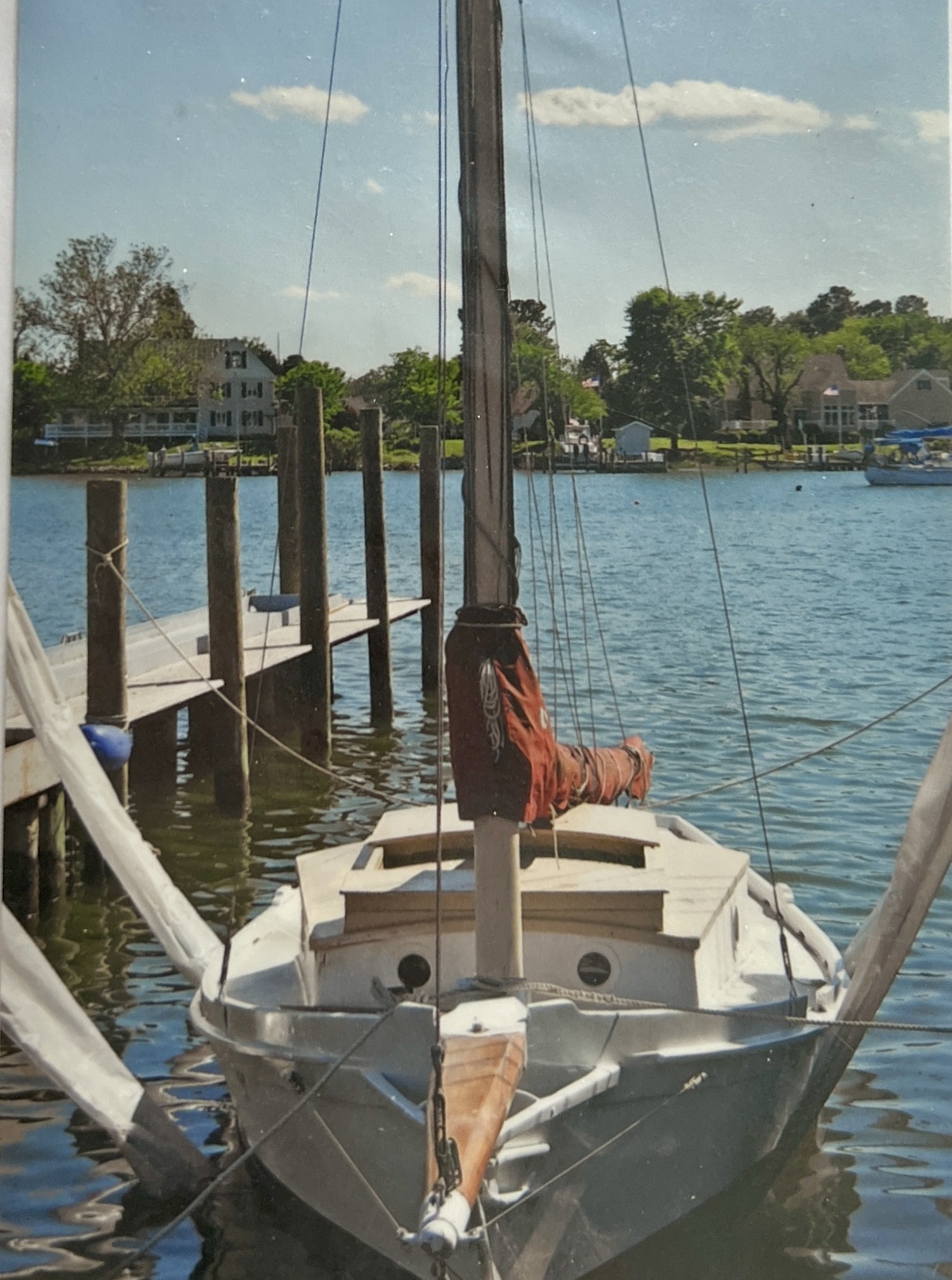
Blue Crab ready to be lifted out of the water probably at the Deltaville boat yard.
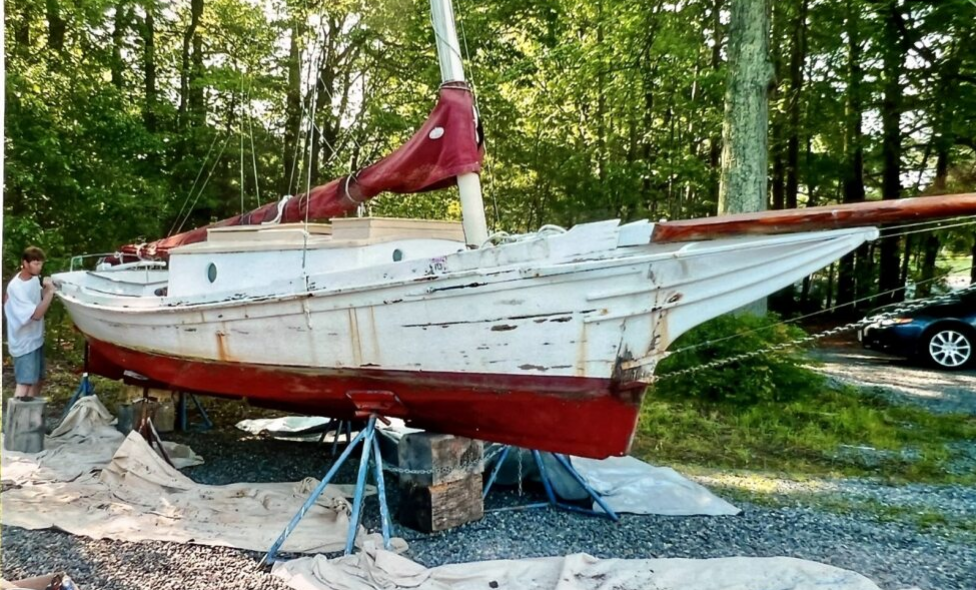
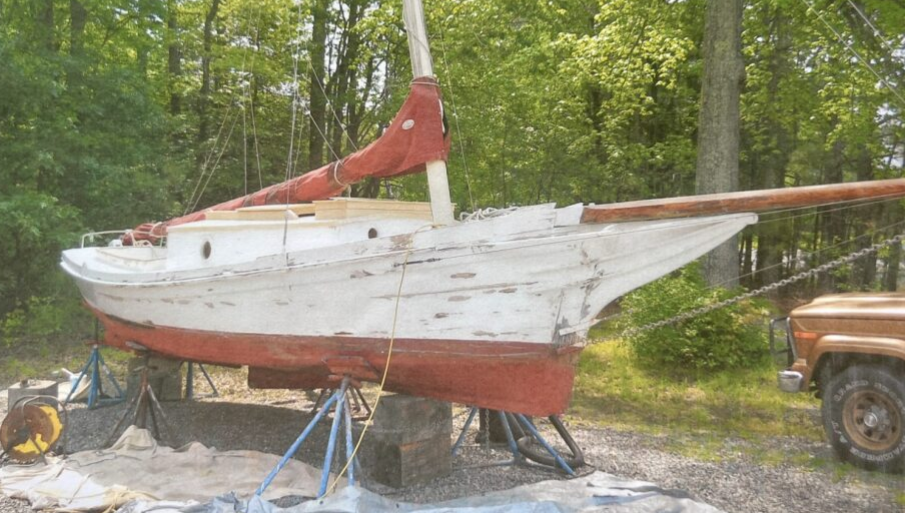
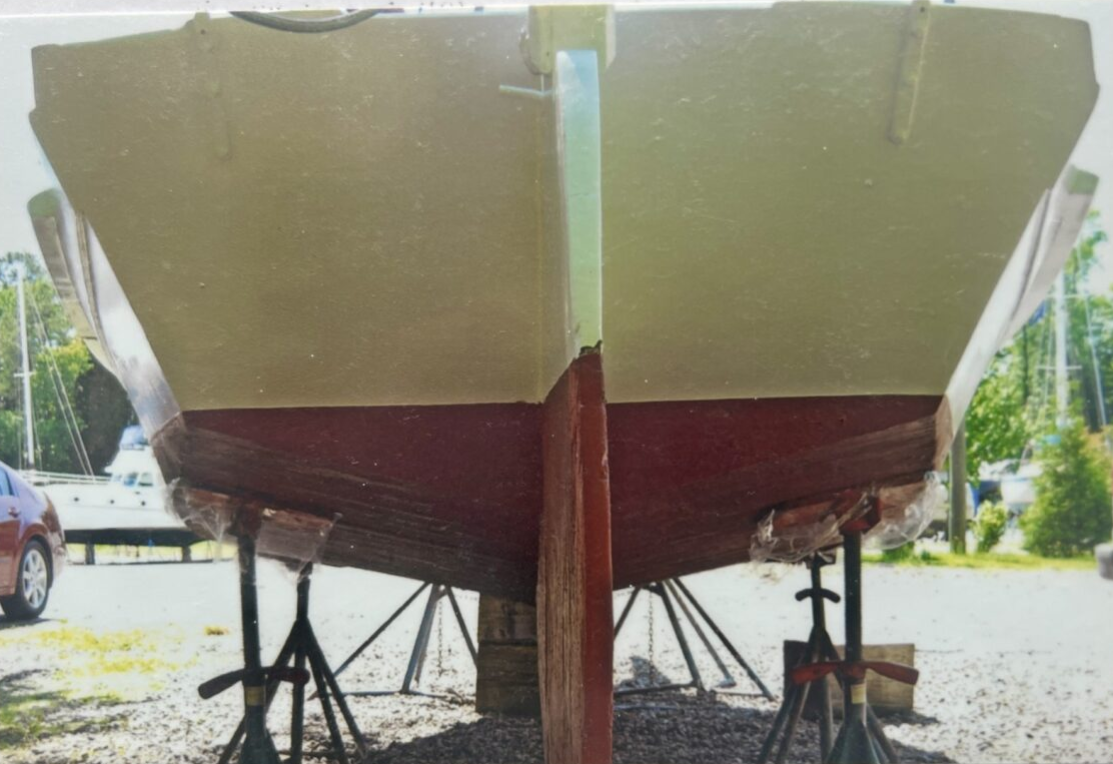
Transom and hull repainted.
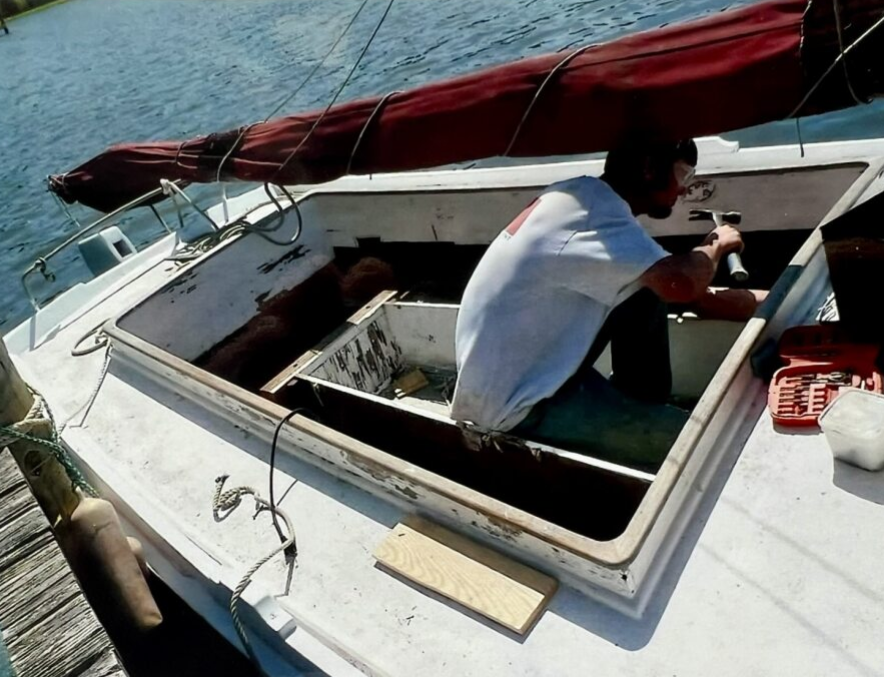
Gray moved Blue Crab from the Deltaville boat yard to his parents dock near Gloucester and continued interior work while she was in the water.
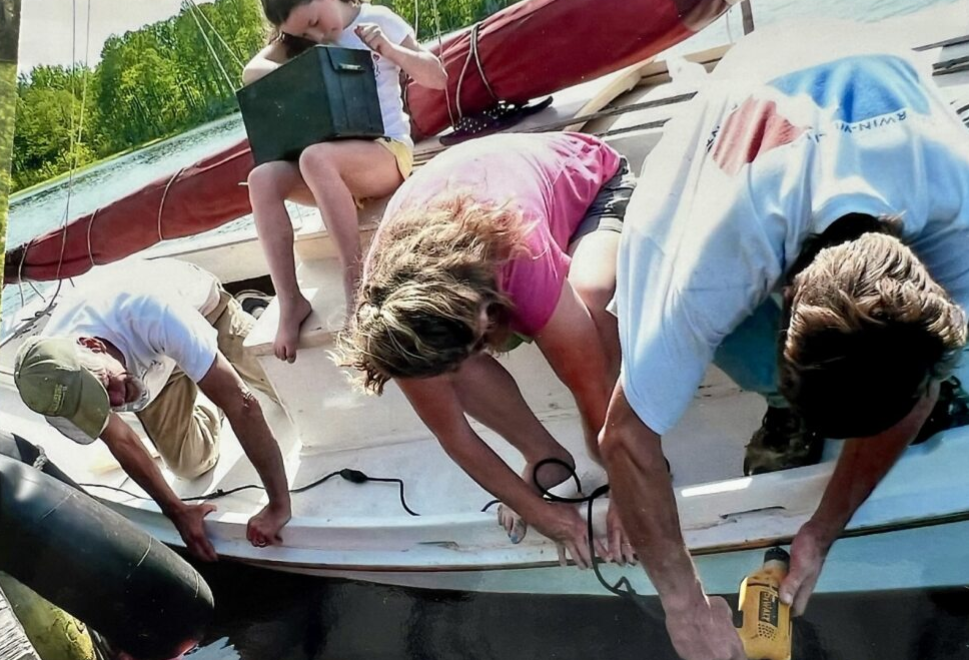
The carved wooden outboard engine bracket still visible in this 2018 photo.
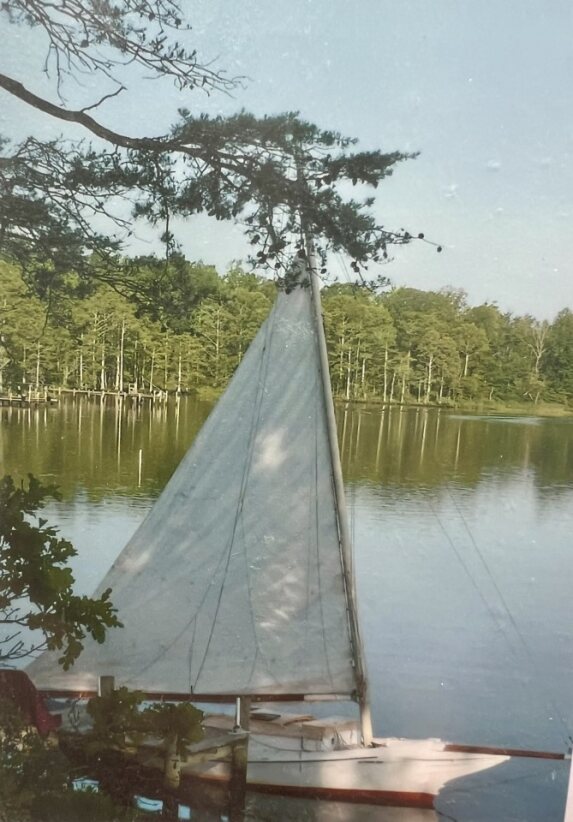
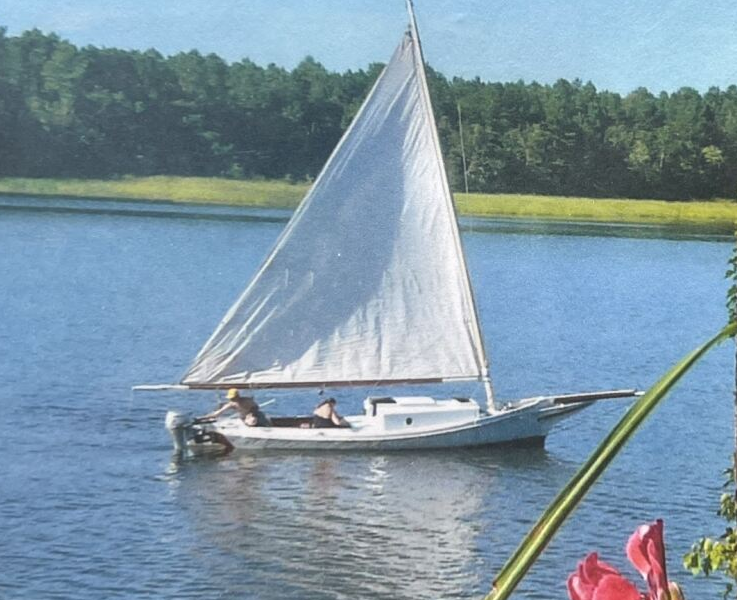
Blue Crab near the family dock on the Piankatank, mostly unused.
From Deltaville to Blackwater, 2016-2017
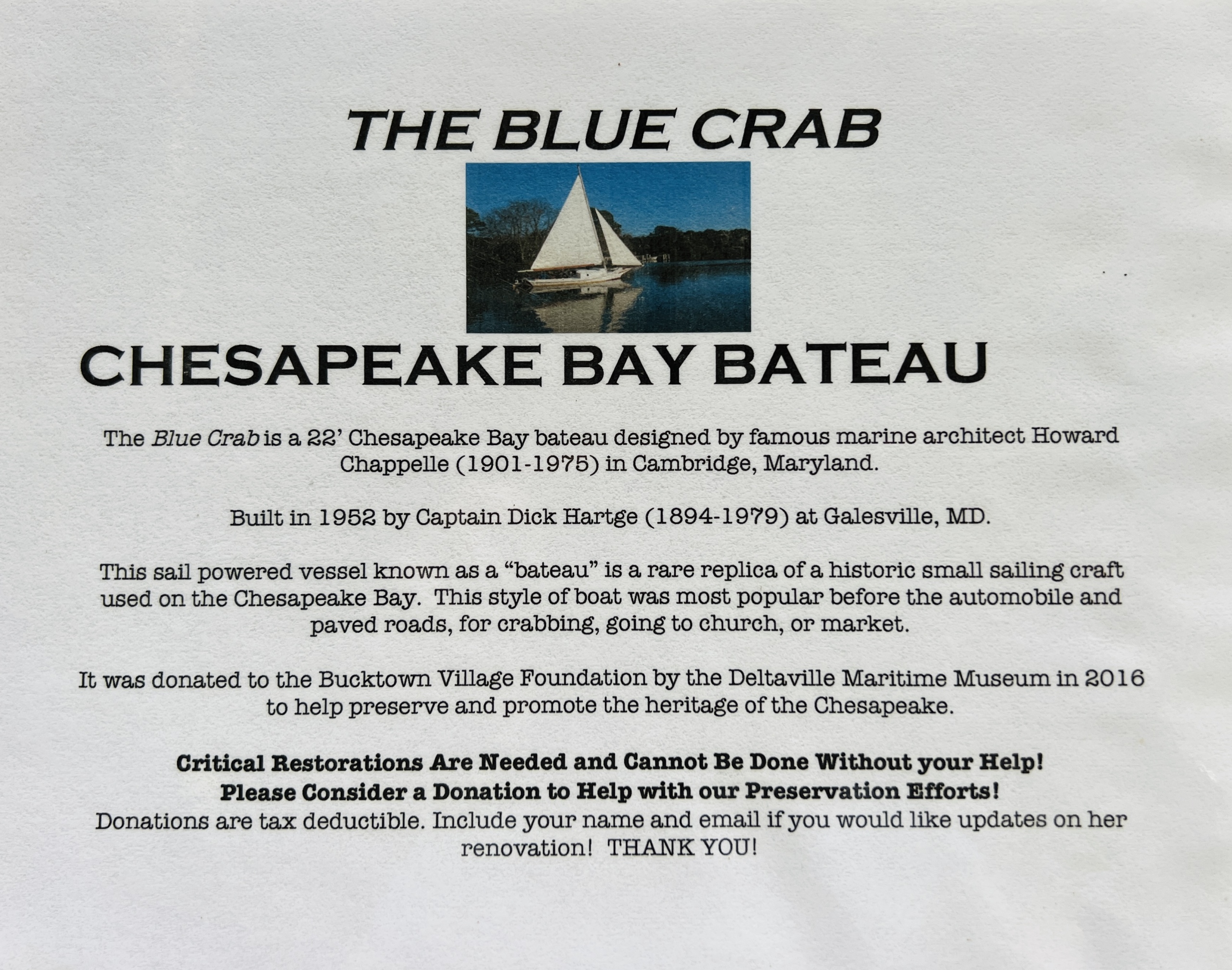
The Deltaville Maritime Museum donated or sold Blue Crab to the Meredith Family of Cammbridge, MD, and the Bucktown Village Foundation in 2016. The Merediths planned to use the historic vessel for excursions from their Blackwater Adventures facility. They wanted to sail her across the bay from Deltaville to Dorchester County.at the end of the summer. But they were unsure of her condition, so they first had her pulled out and drydocked for closer inspection. They discovered that several of her bottom planks were rotten, and she needed a new rudder. They also determined that she needed far more restoration work than they had expected. They kept her at the Deltaville Marina until they could transport her overland from Deltaville in early 2017.
The Merediths did not have experience restoring historic vessels, so they sought donations of time, boatbuilding experience, and money to fully restore Blue Crab. When these didn't materialize, they settled Blue Crab into the landside exhibit where she lies today.
More about the Crabbing Bateau
Read more about Chapelle and the crabbing bateau design here
Read more about the 1900 crabbing bateau Teddy here.