Mar 11, 2025 | New projects, new floor frames

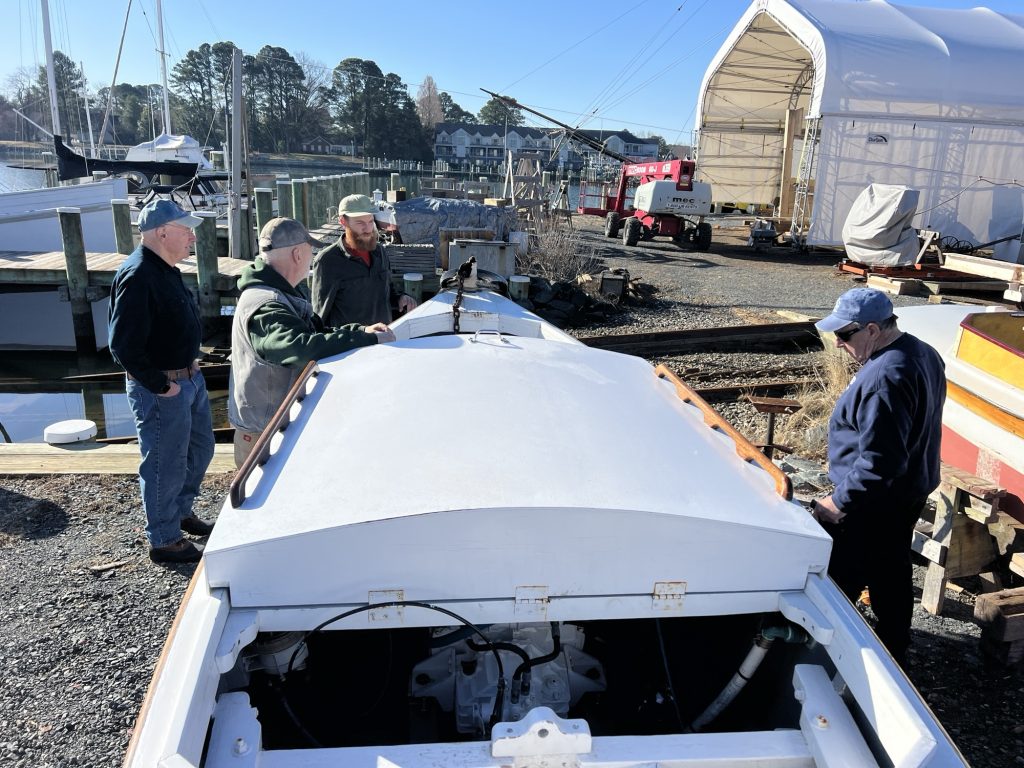
We looked over two new projects that will get under way in the next few weeks.

Cinnamon Girl – a replica of the two-sail crabbing skiff that appears as Figure 4 in Chesapeake Bay Crabbing Skiffs (Chapelle). The original was built at Cambridge in 1910. Read more here.
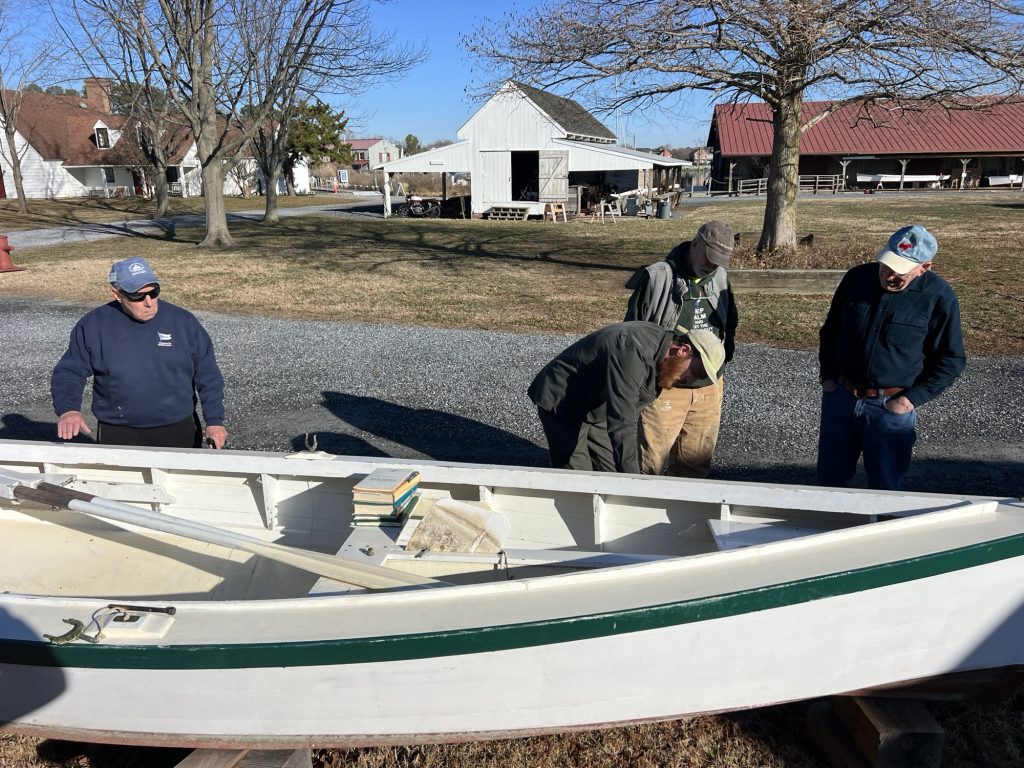
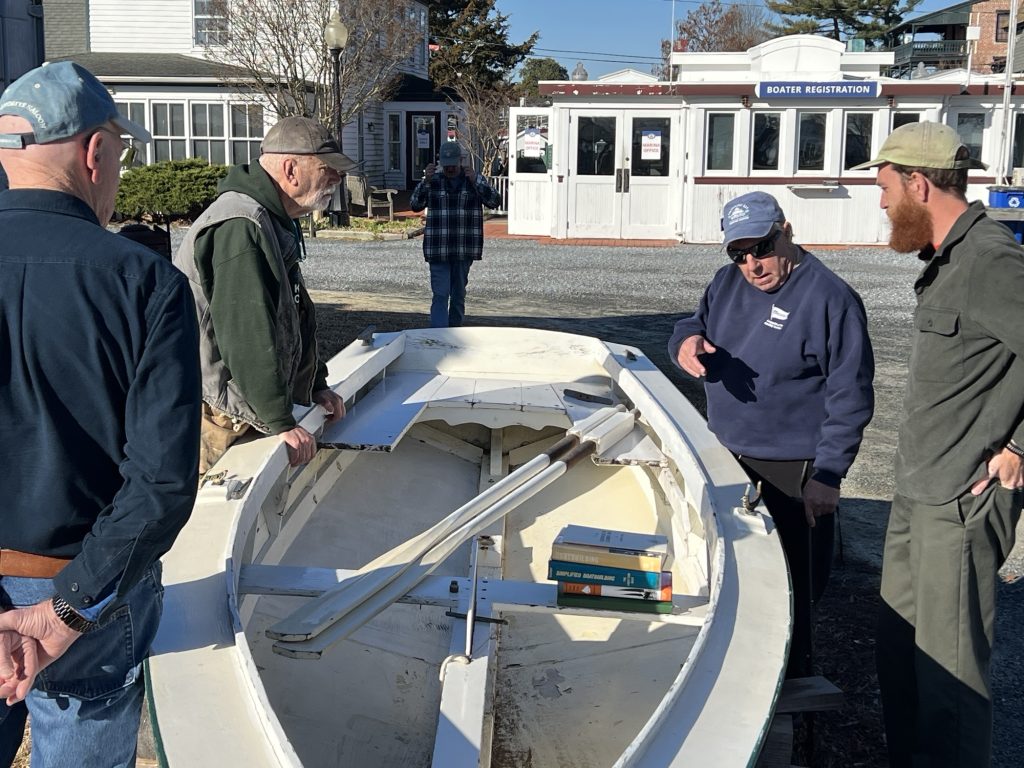
Push boats of the skipjack Rosie Parks and the bugeye Edna Lockwood.
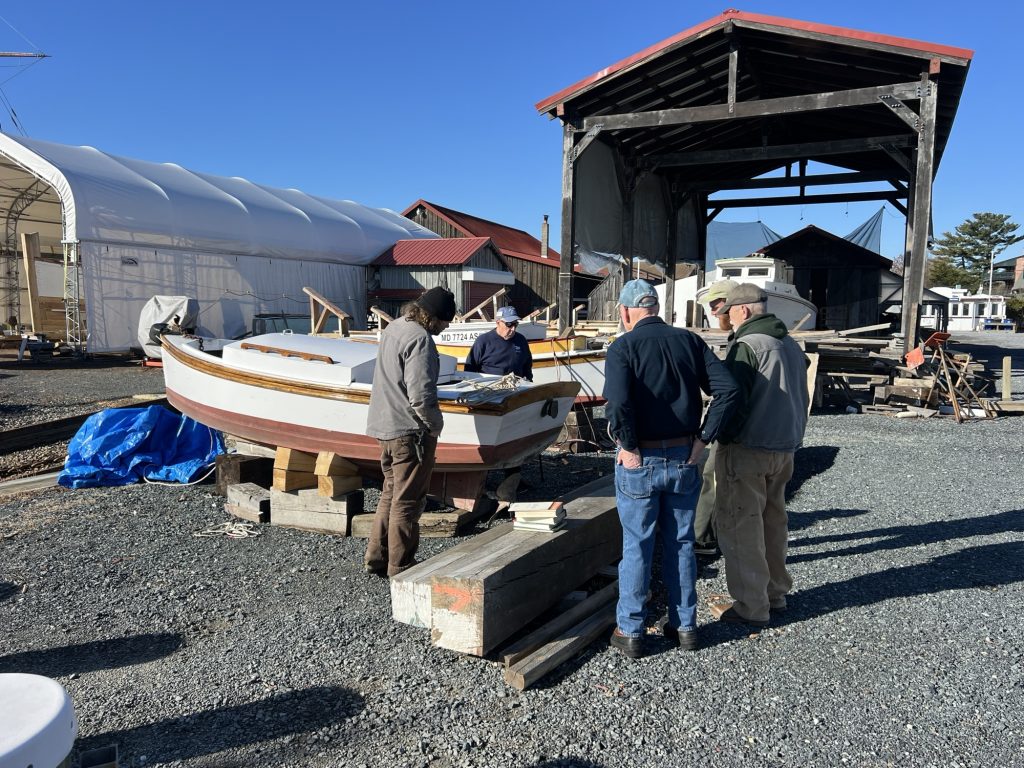
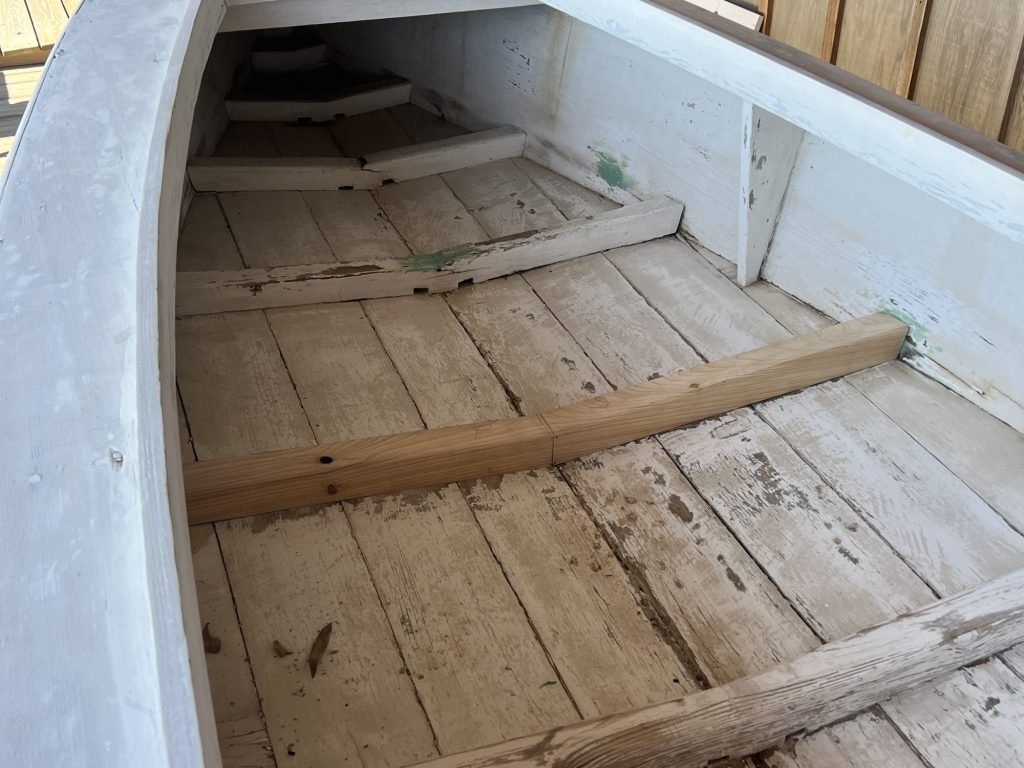
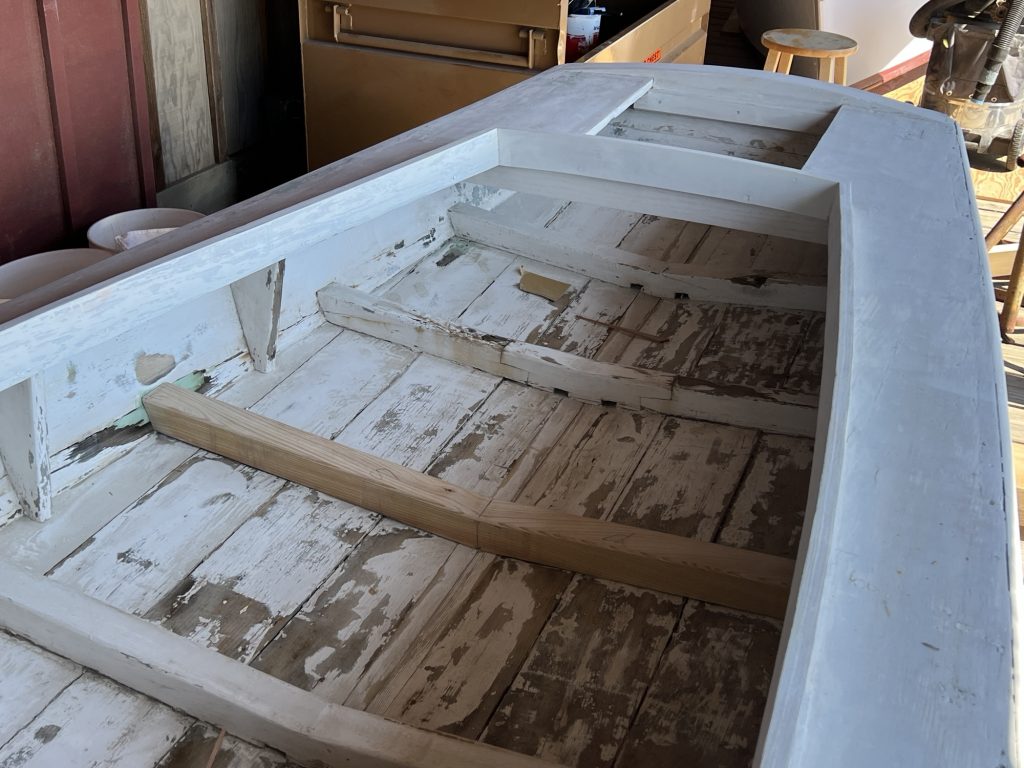
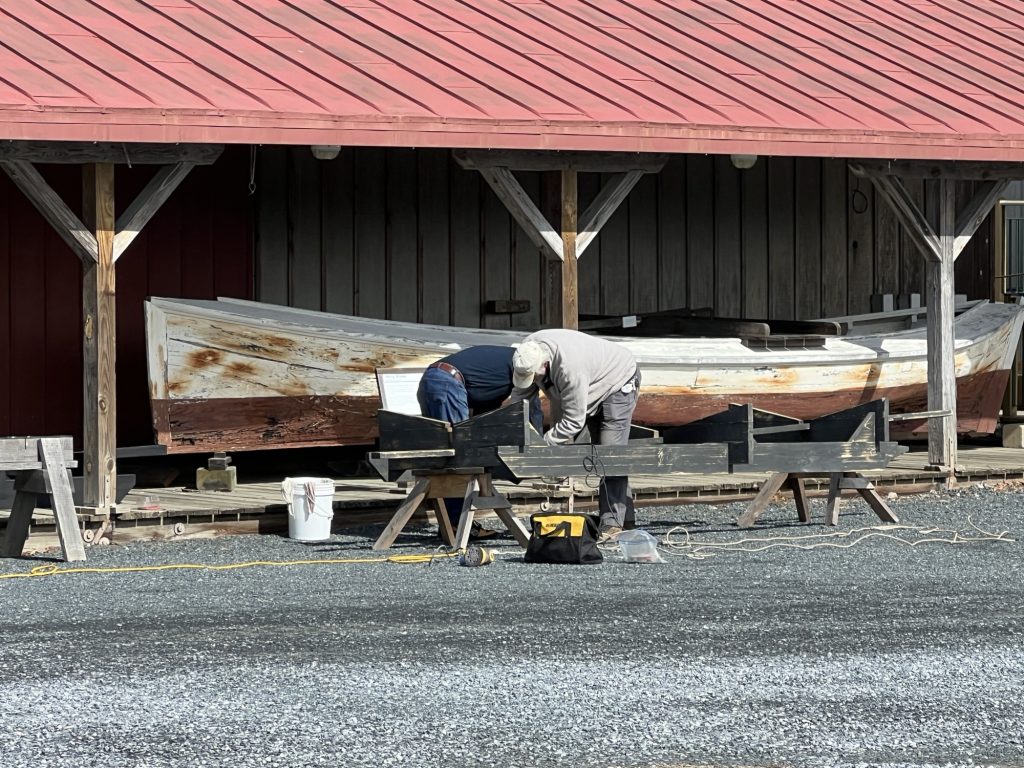
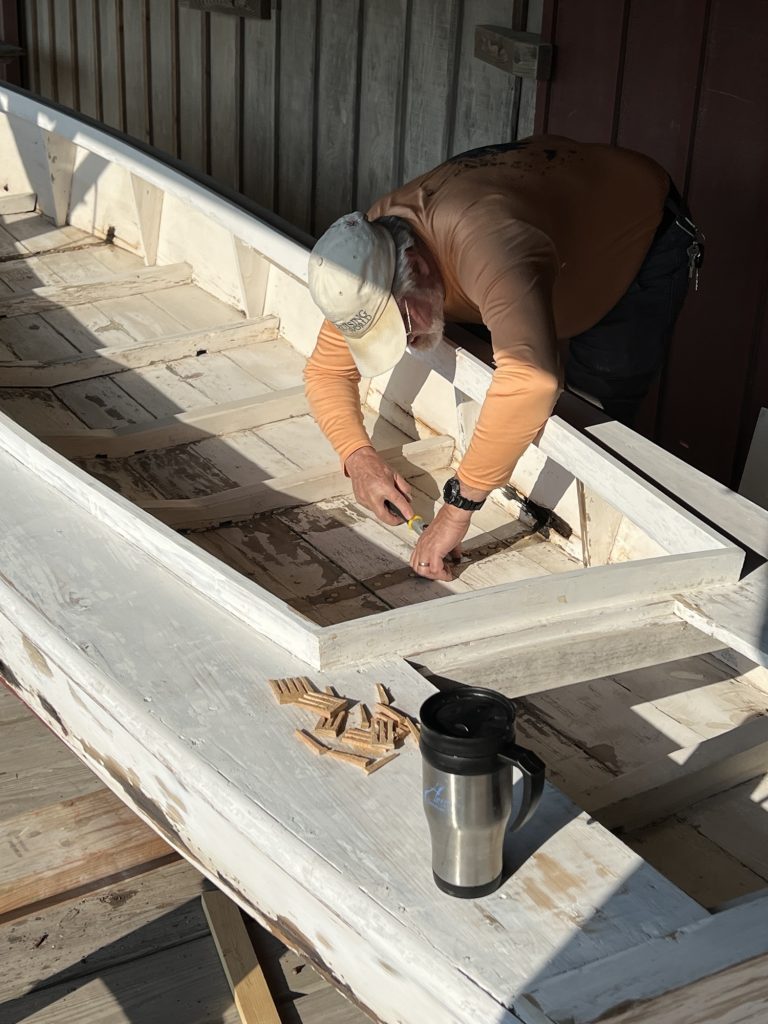
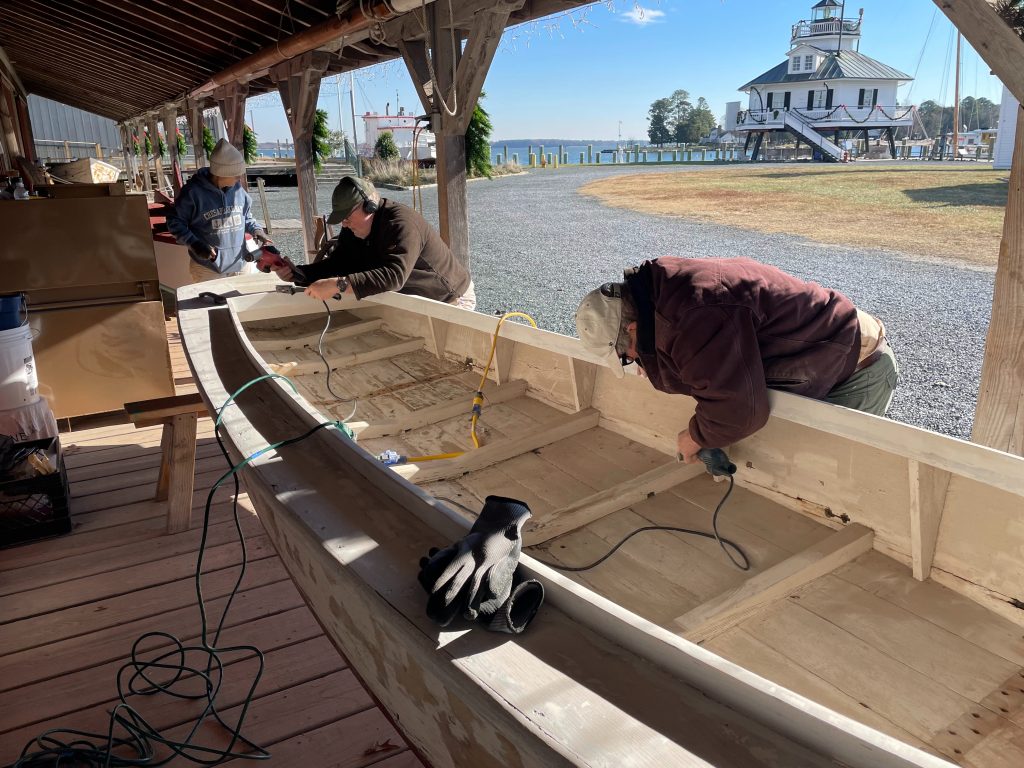
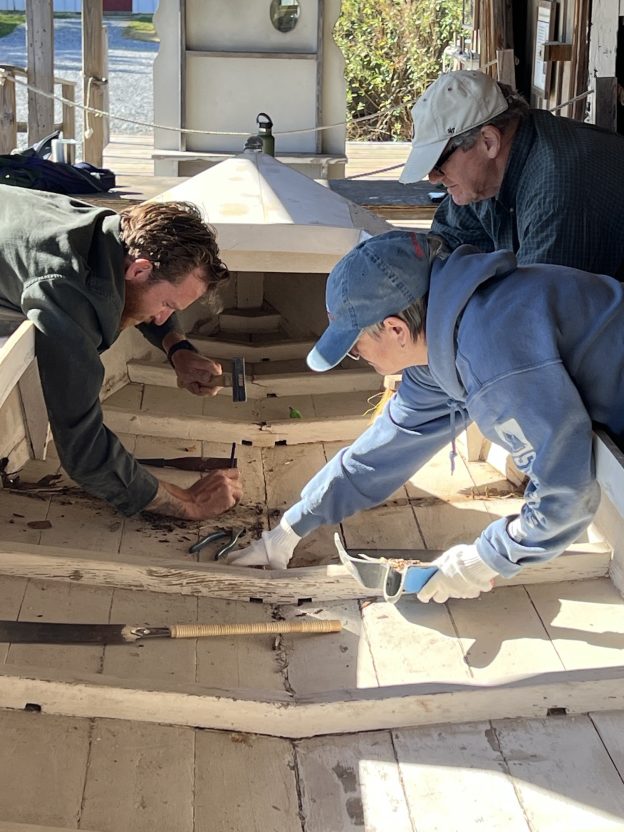
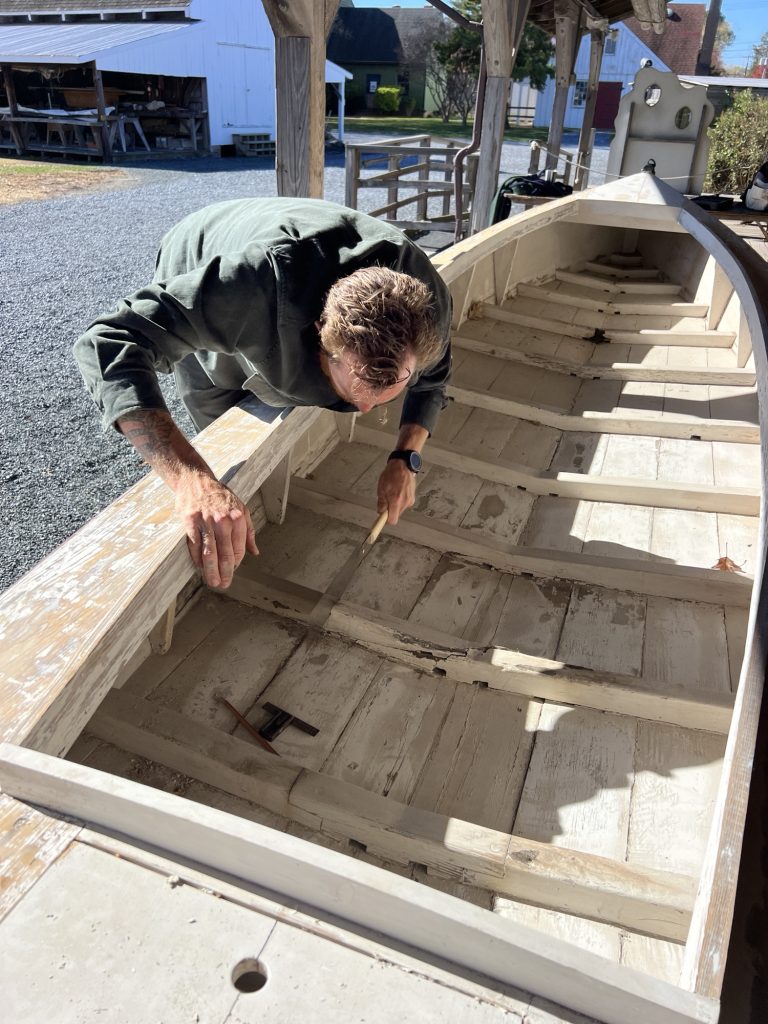
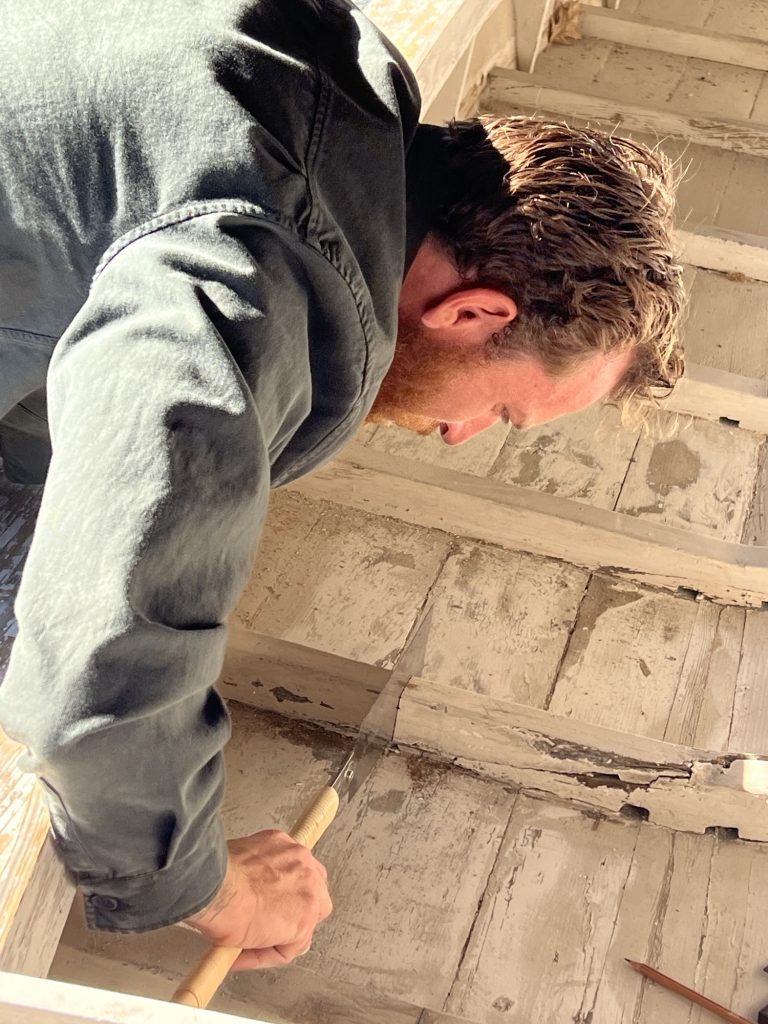
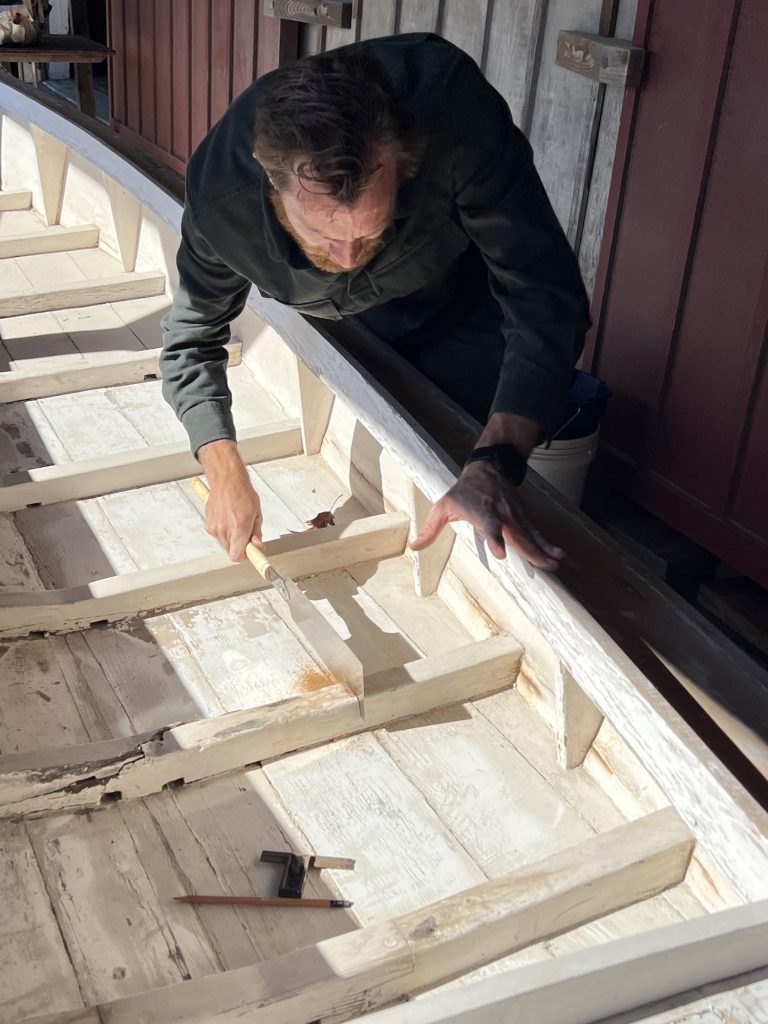
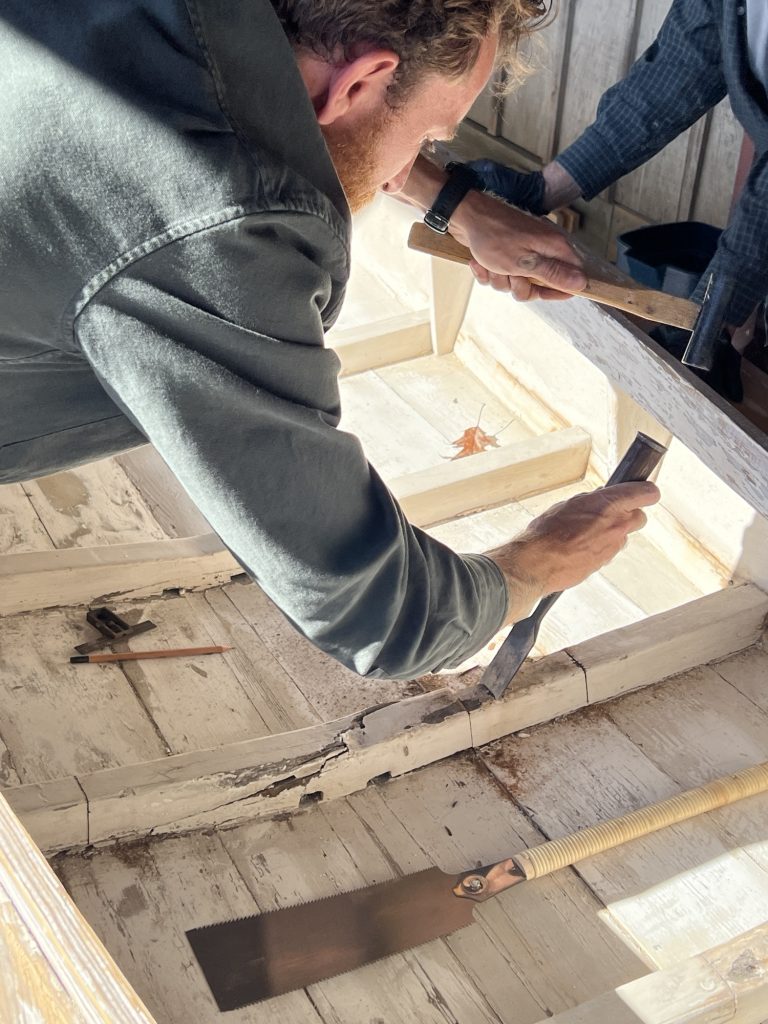
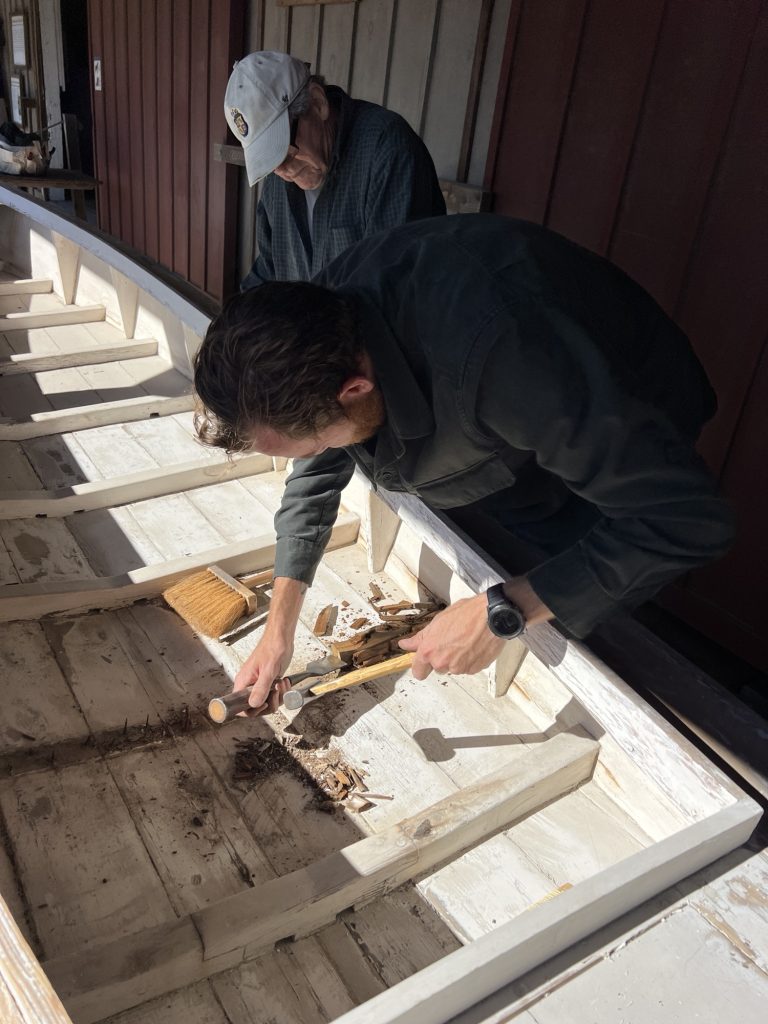
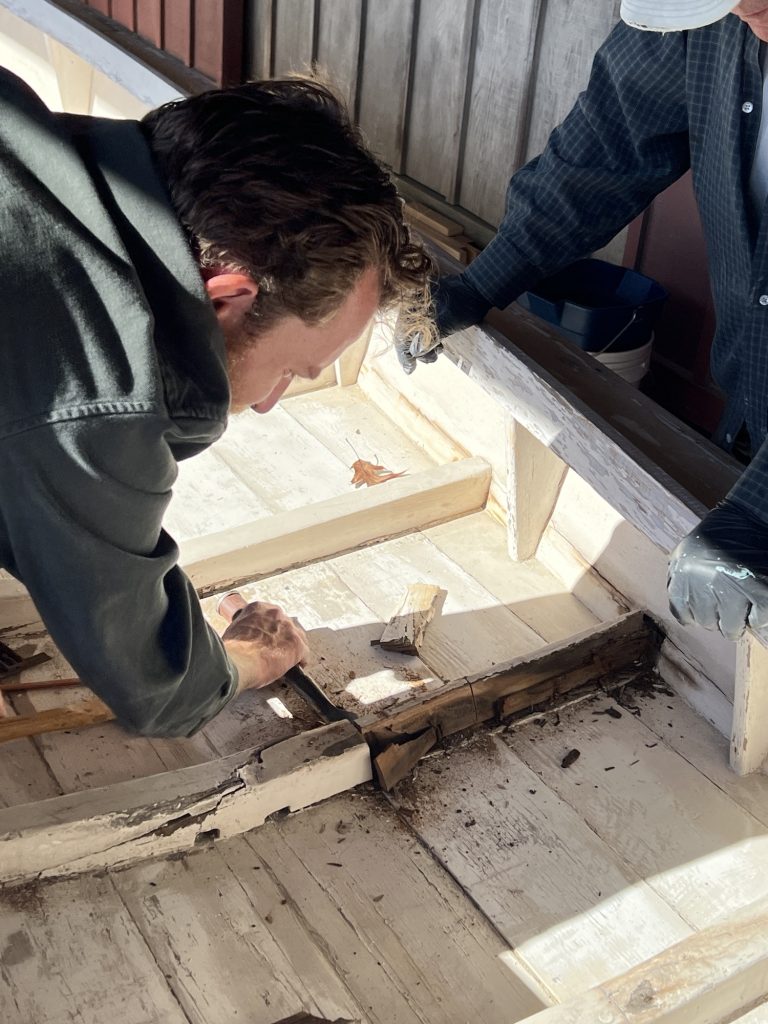
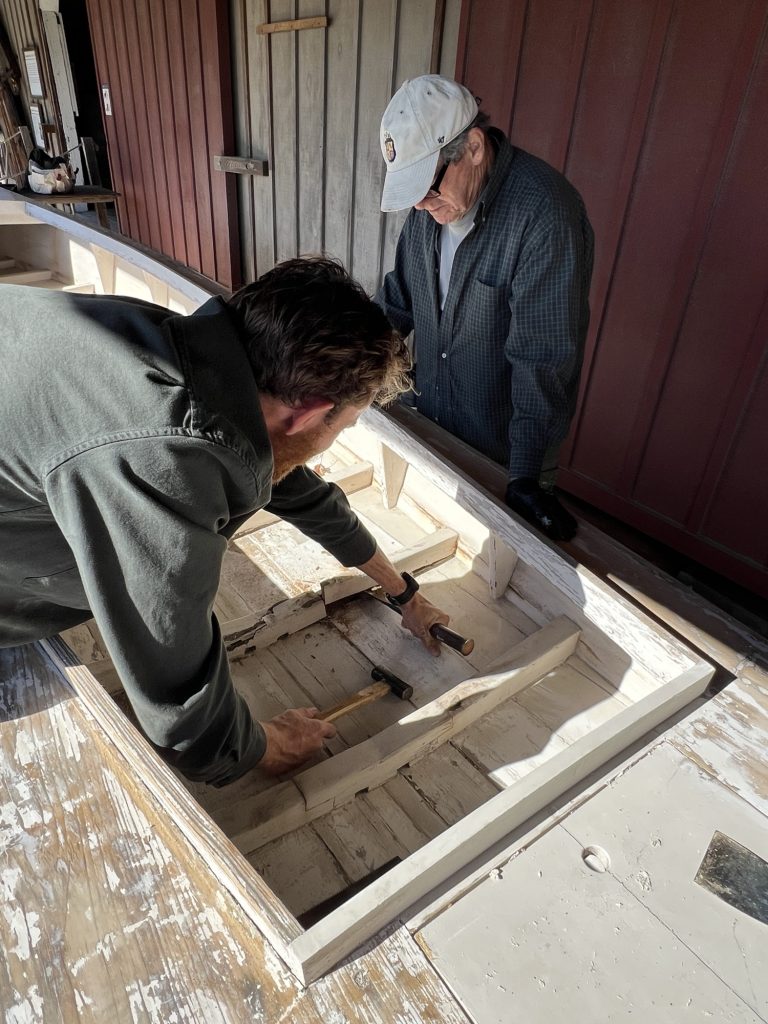
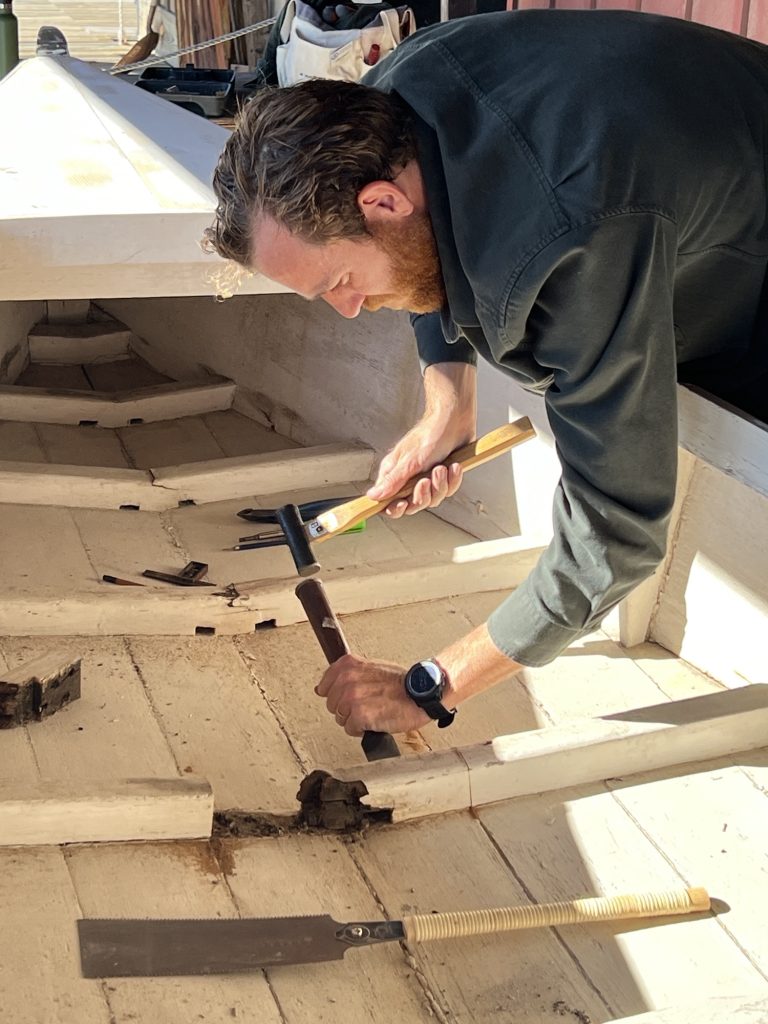
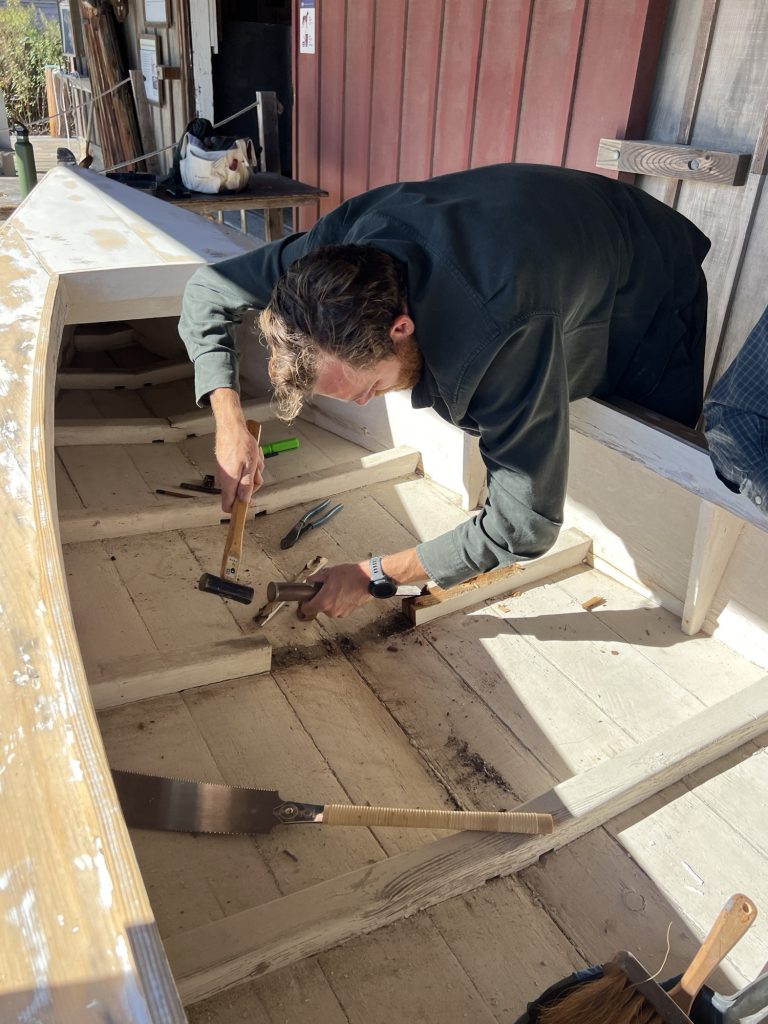
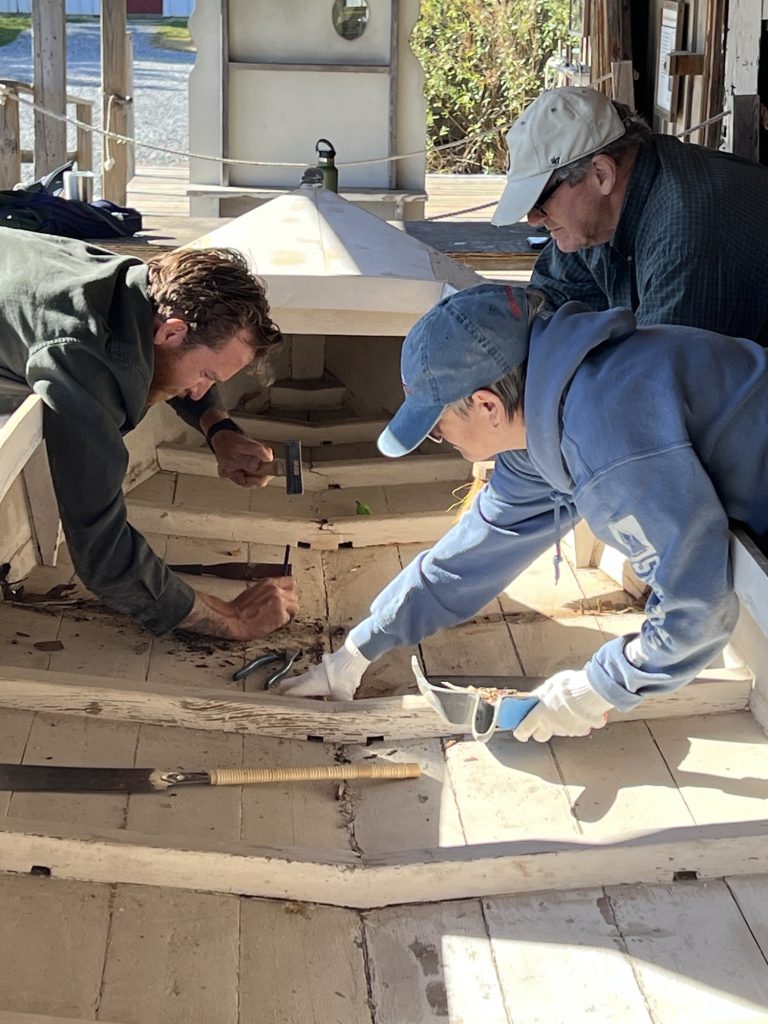
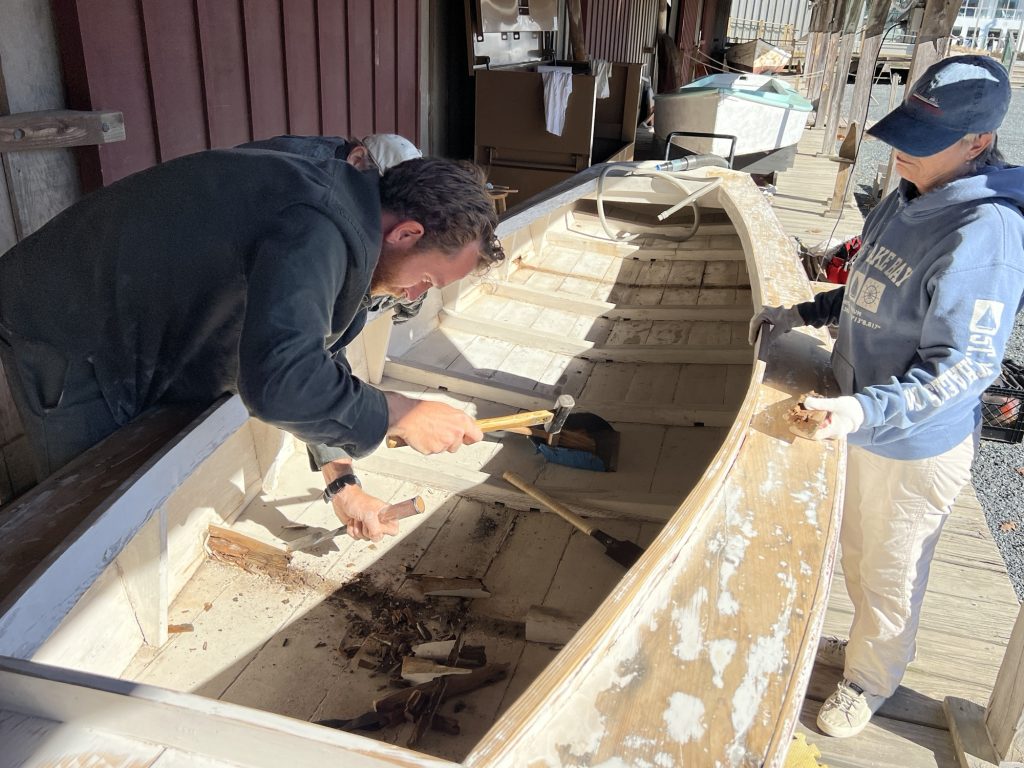
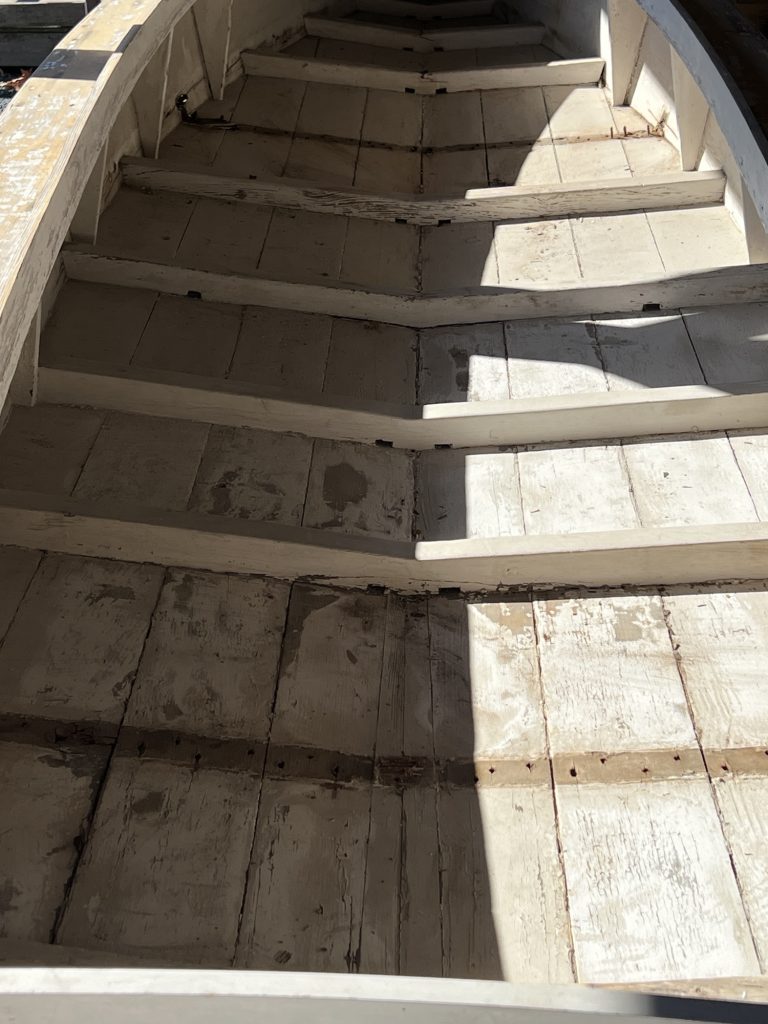
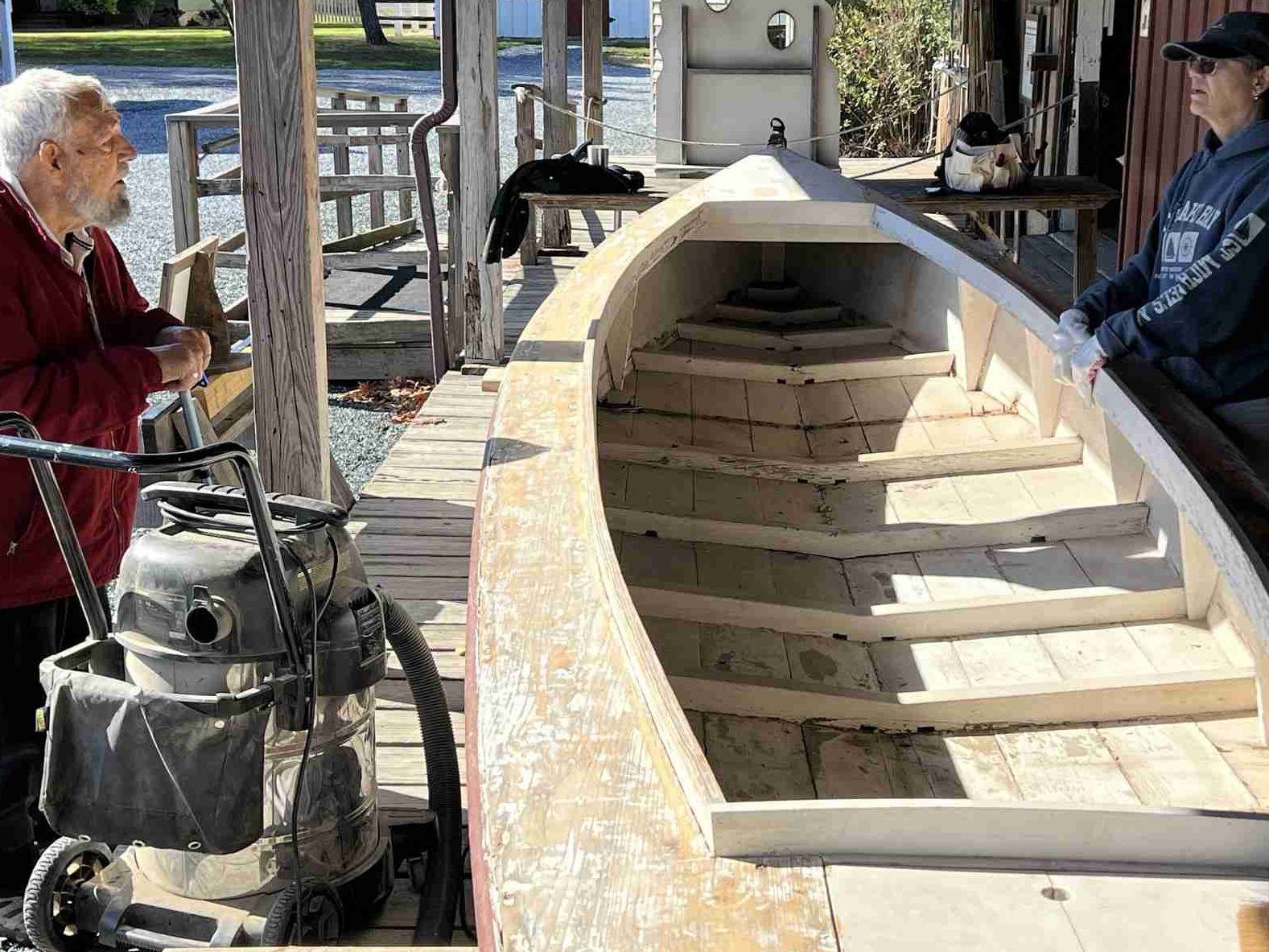
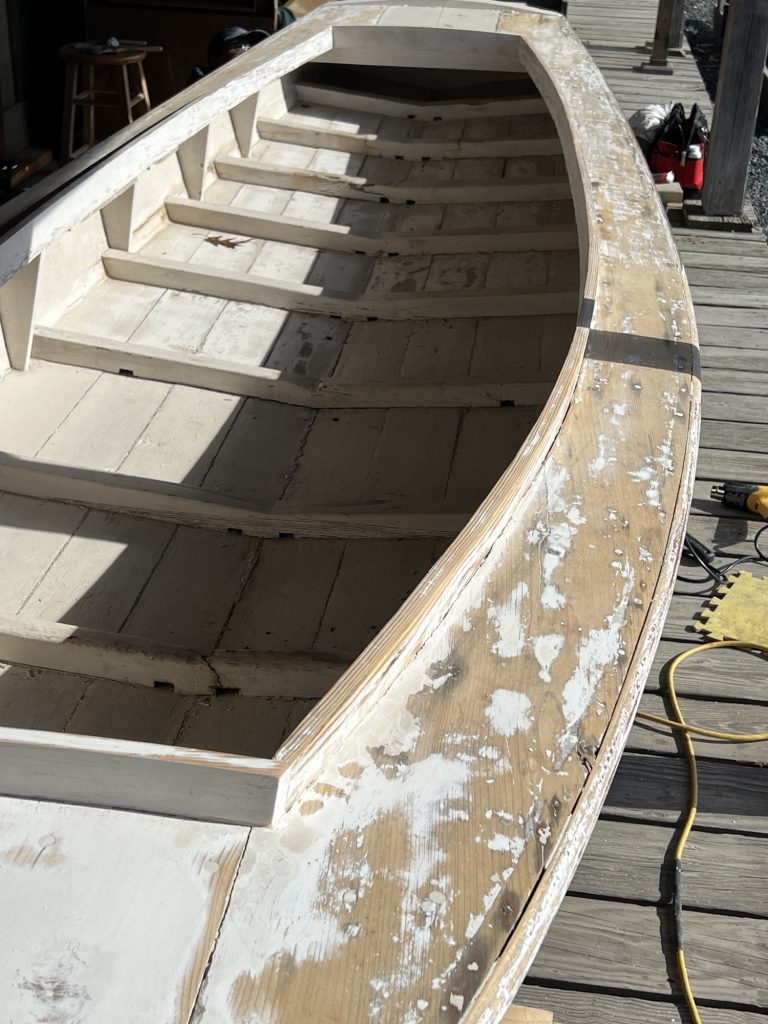
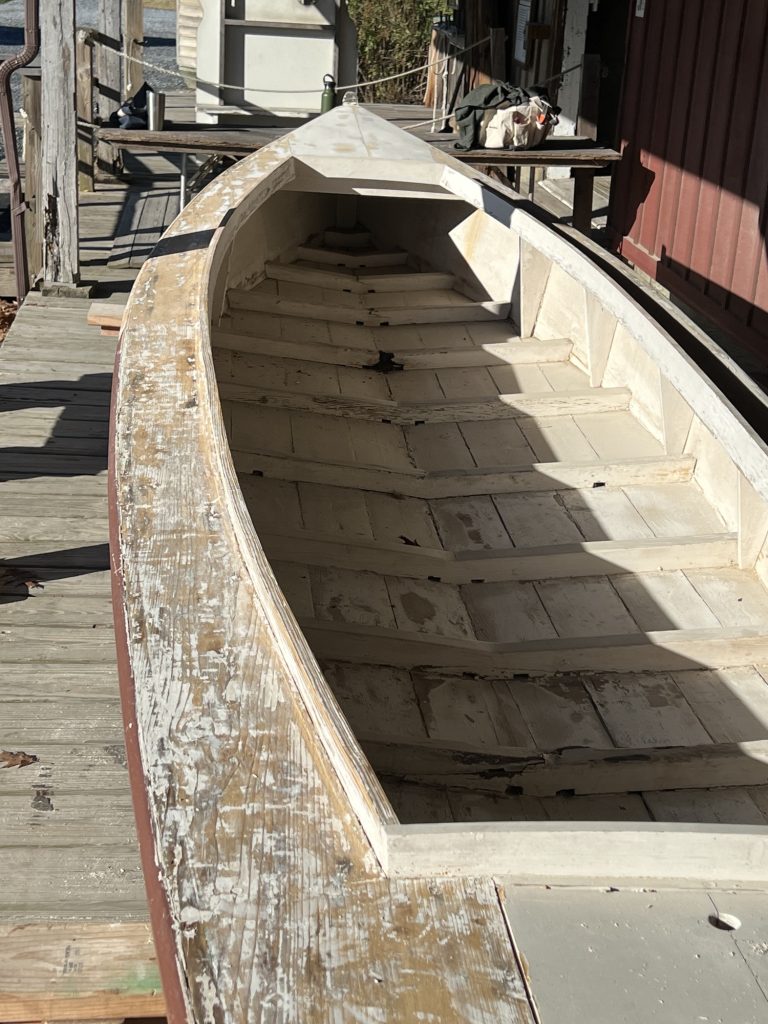
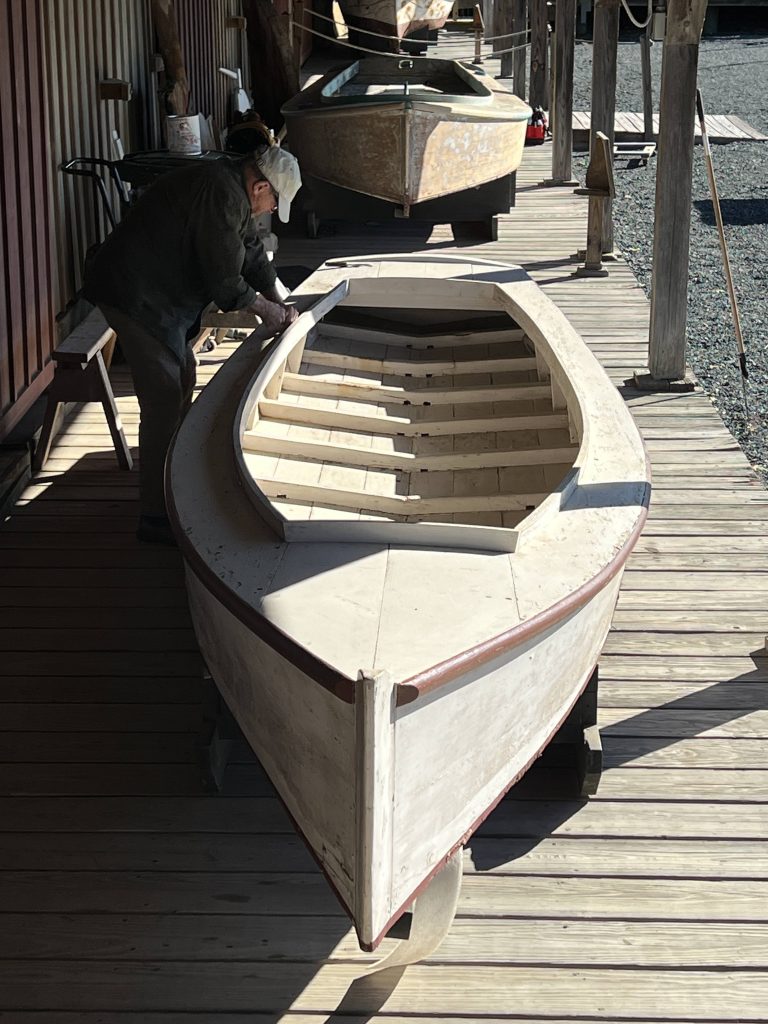
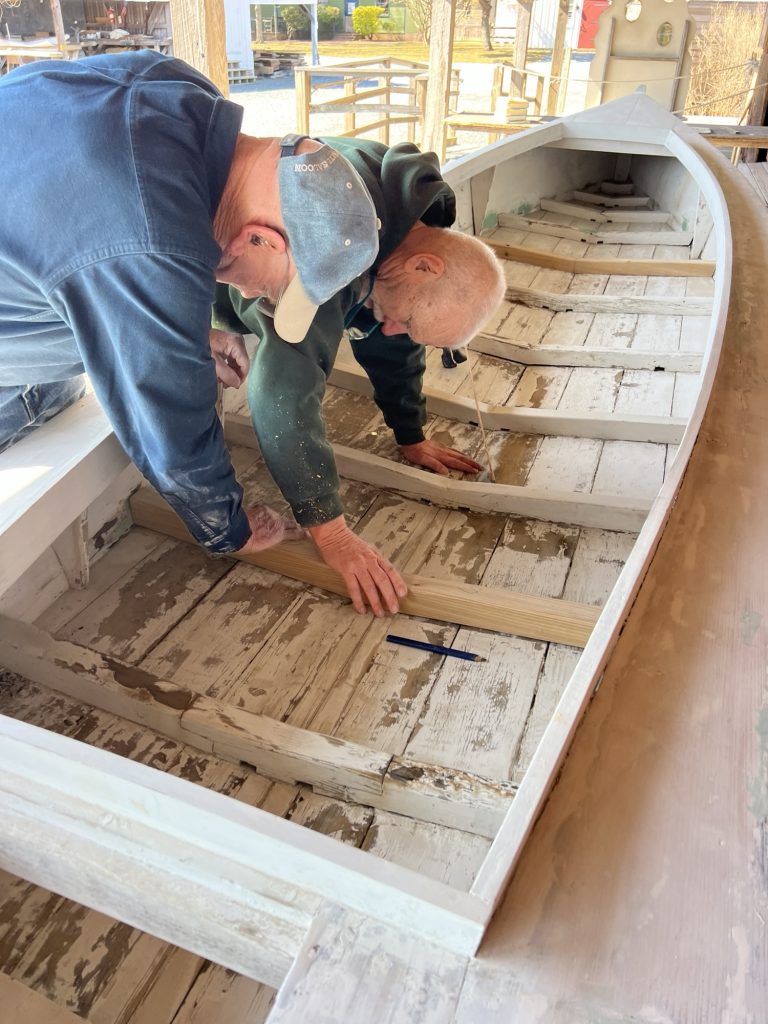
After Sam briefed us on these projects, he offered guidance to Willem and Mike on how to fit and install the floor frames into the 1920 Smith Island skiff.
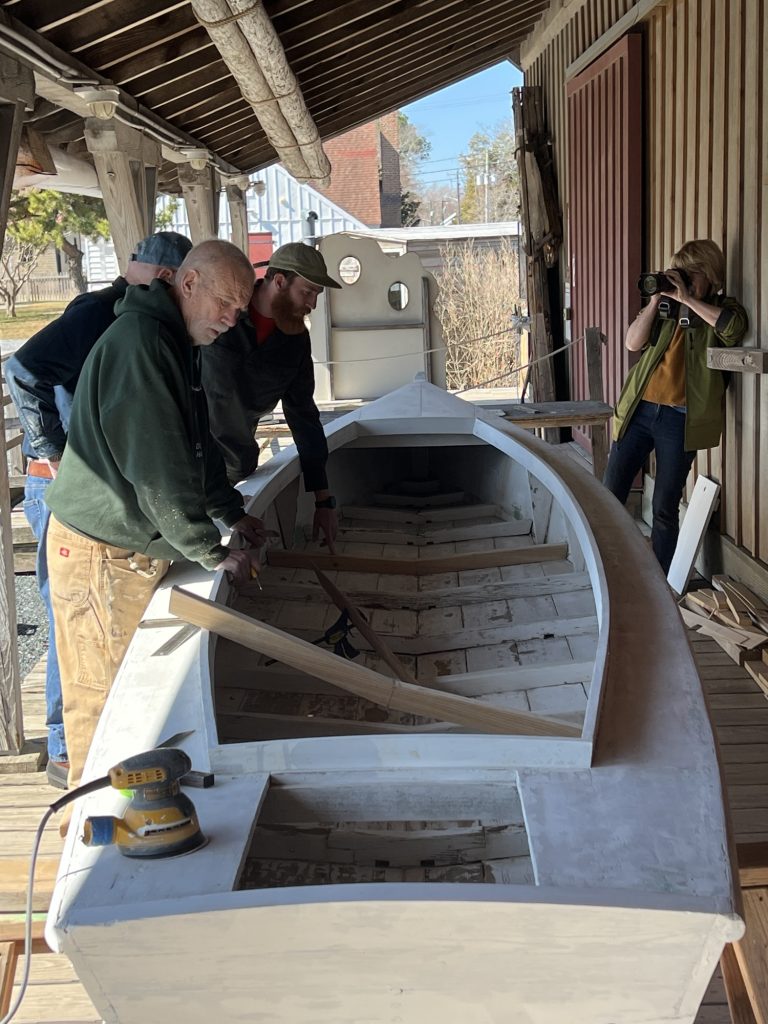
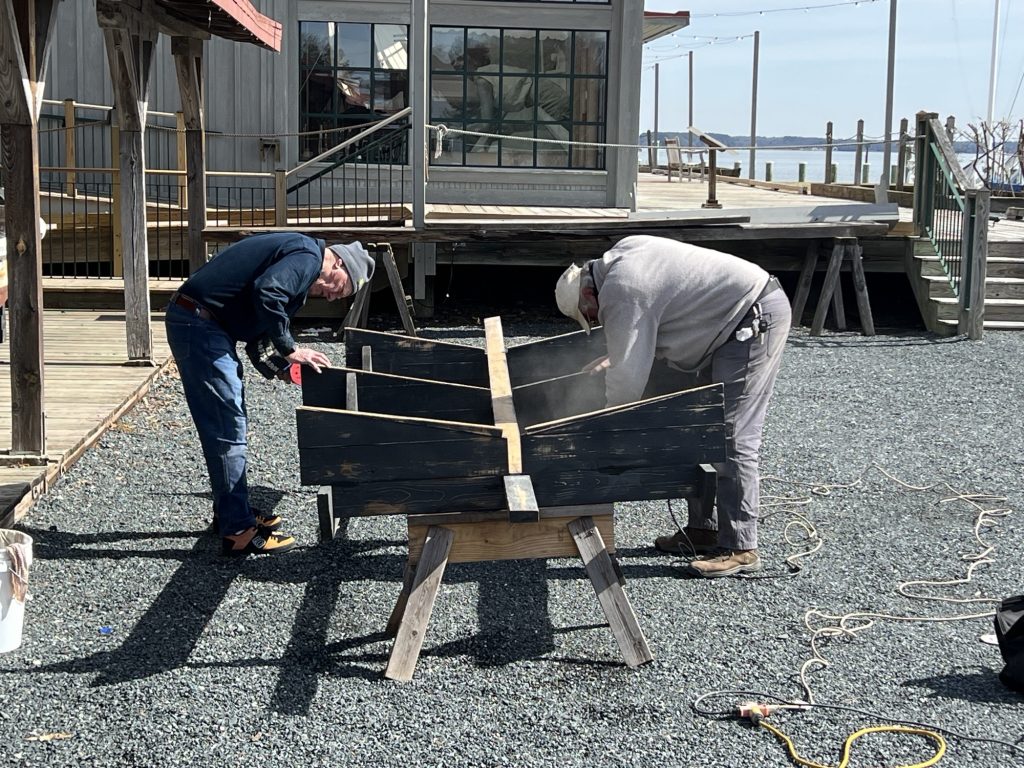
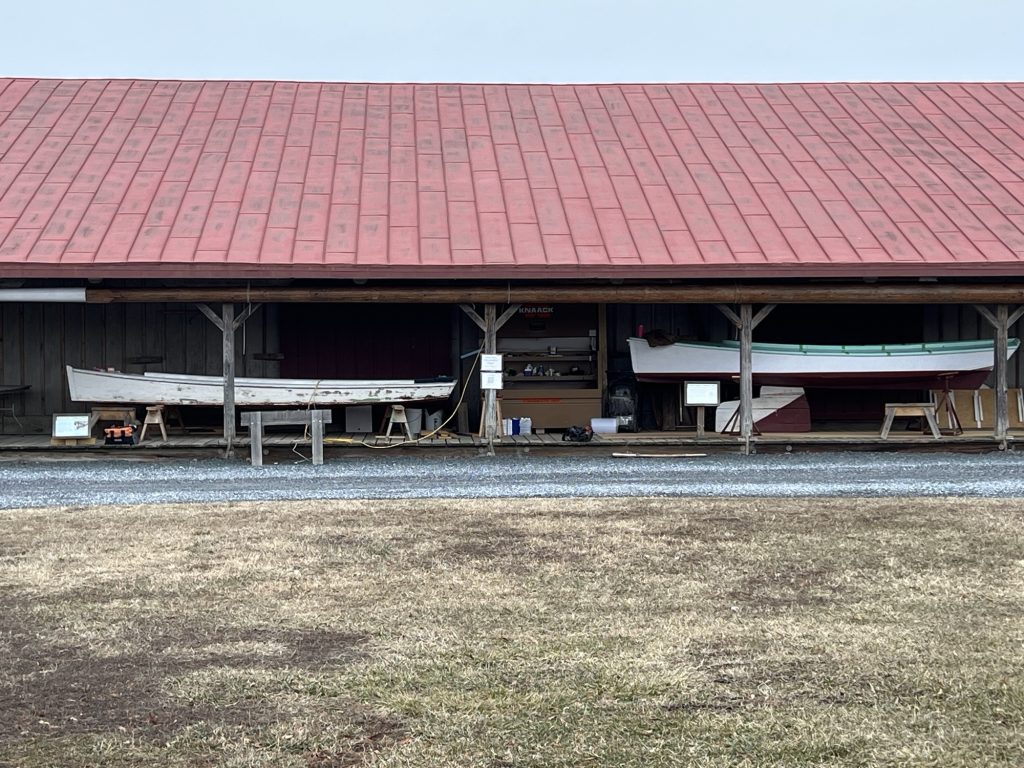
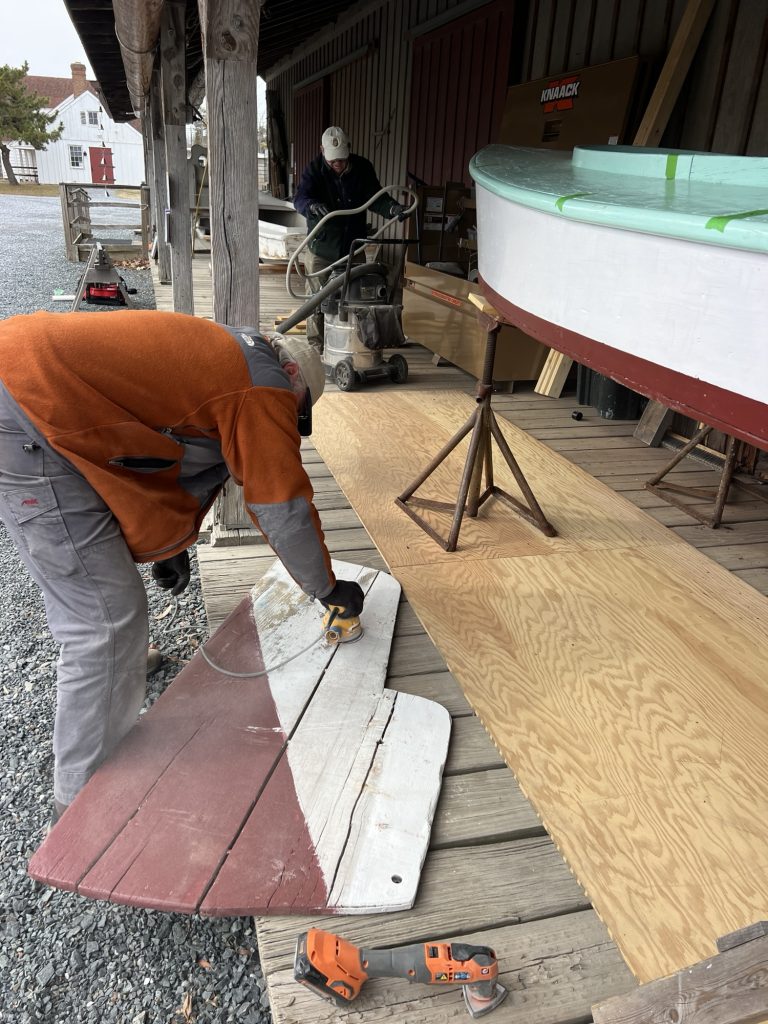
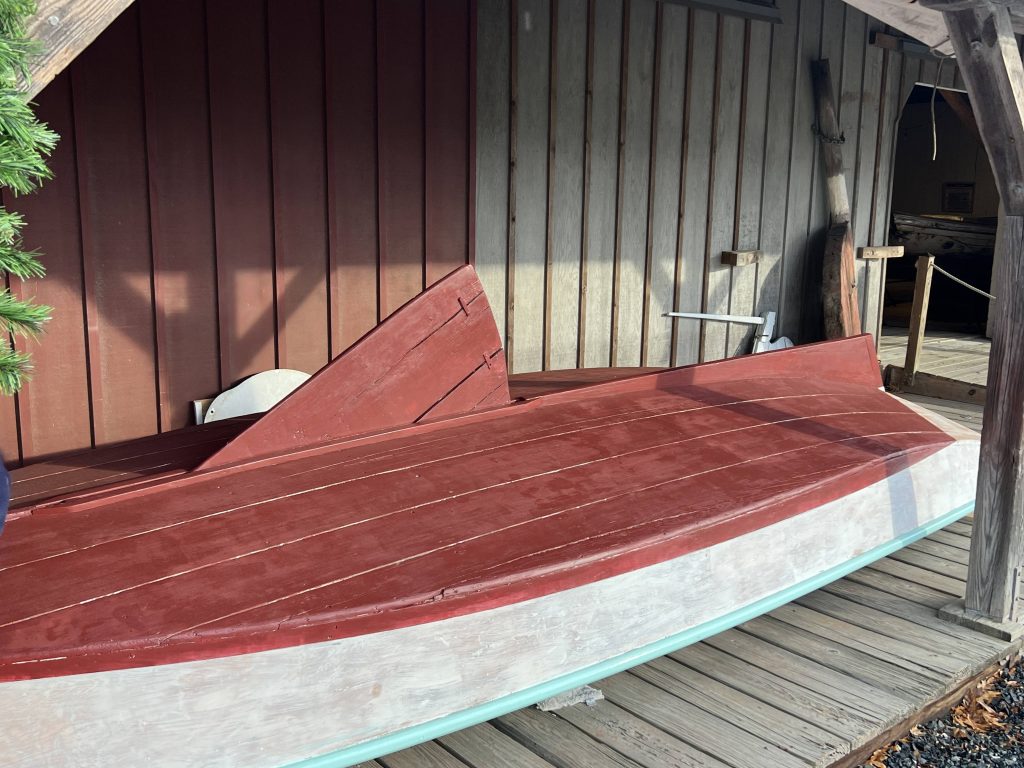
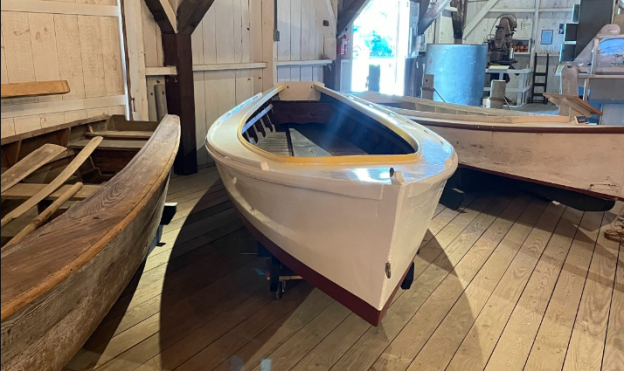
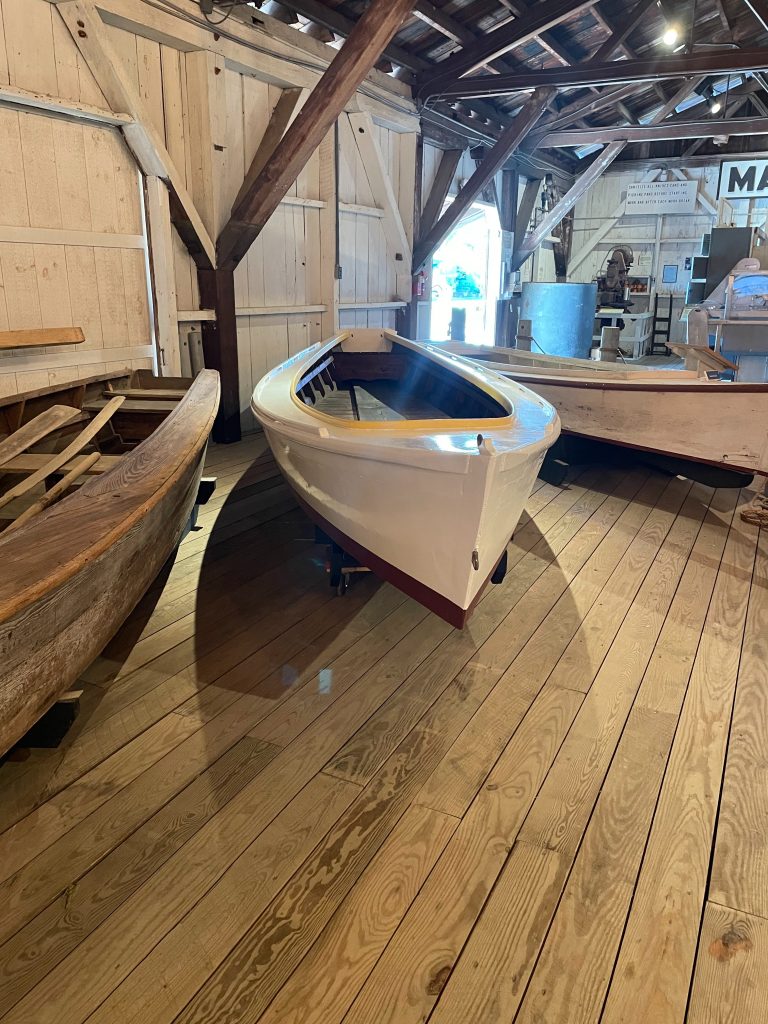
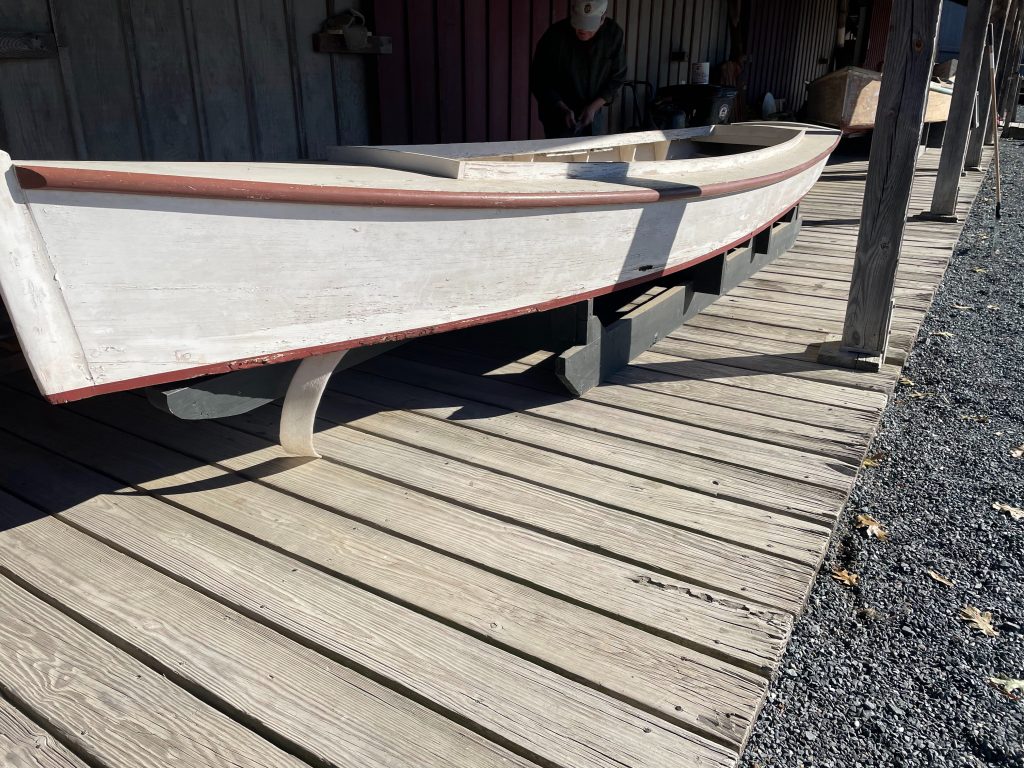
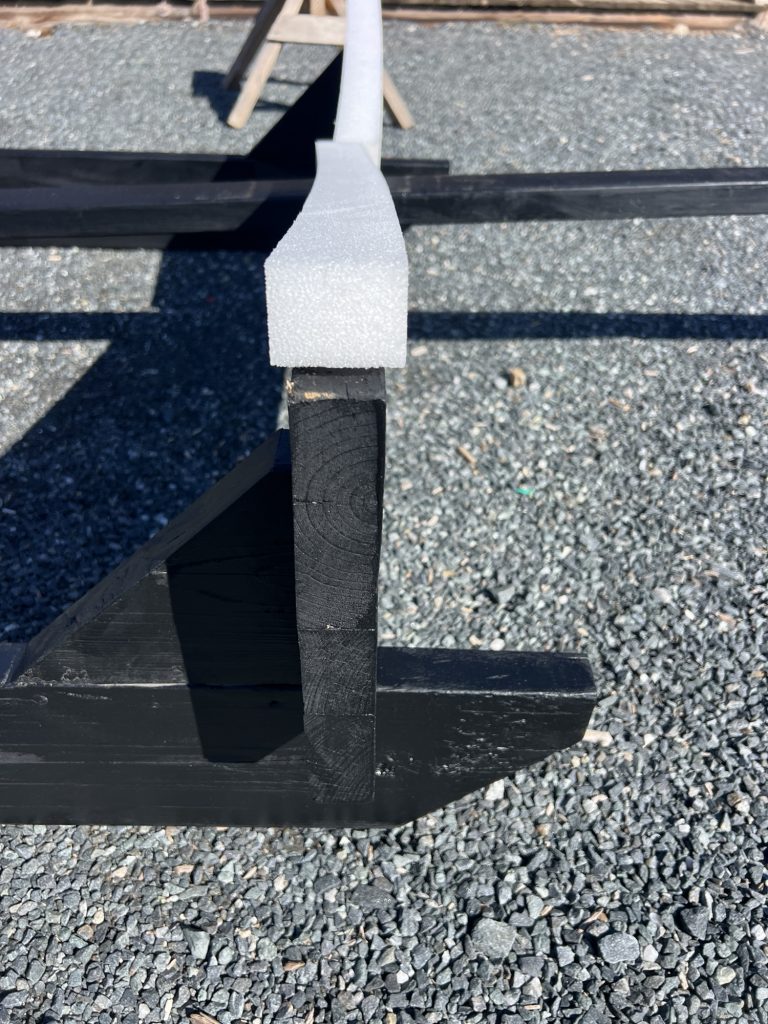
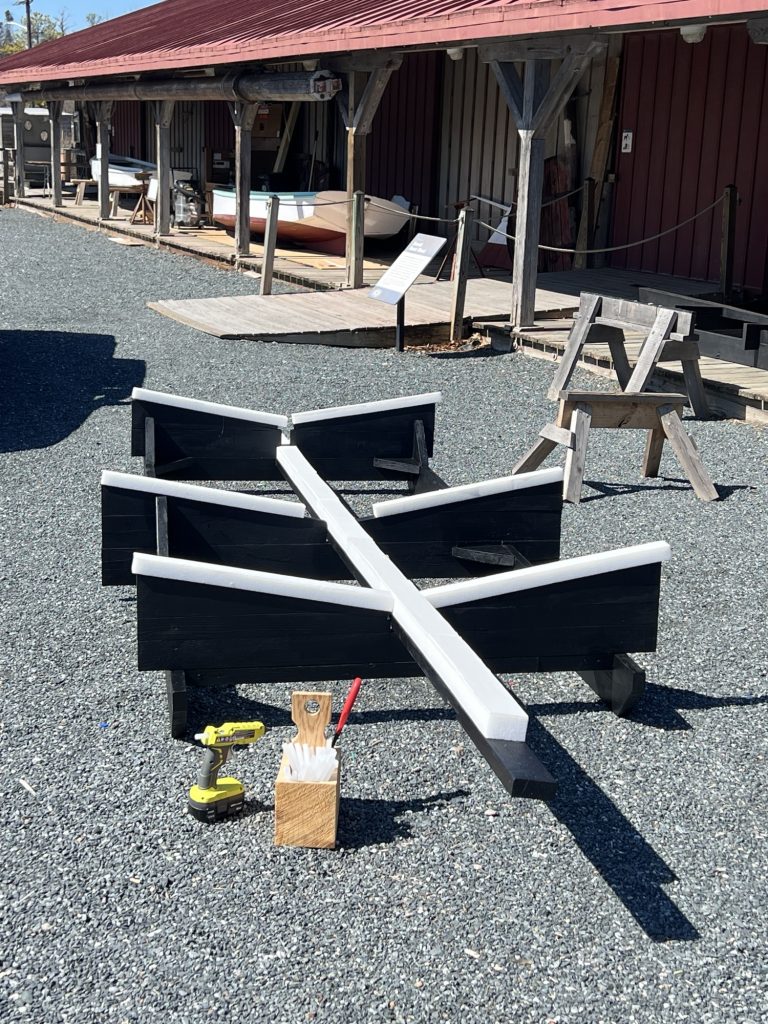
Don prepared the exhibit cradles for both Smith Island Skiffs by attaching two layers of foam (open-cell block and smooth skin) onto the cross bunks and longitudinal keel support.
Feb 25, 2025 | Priming & painting two skiffs

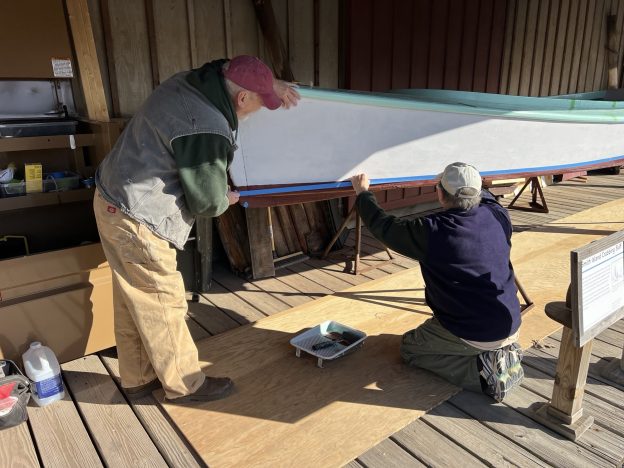
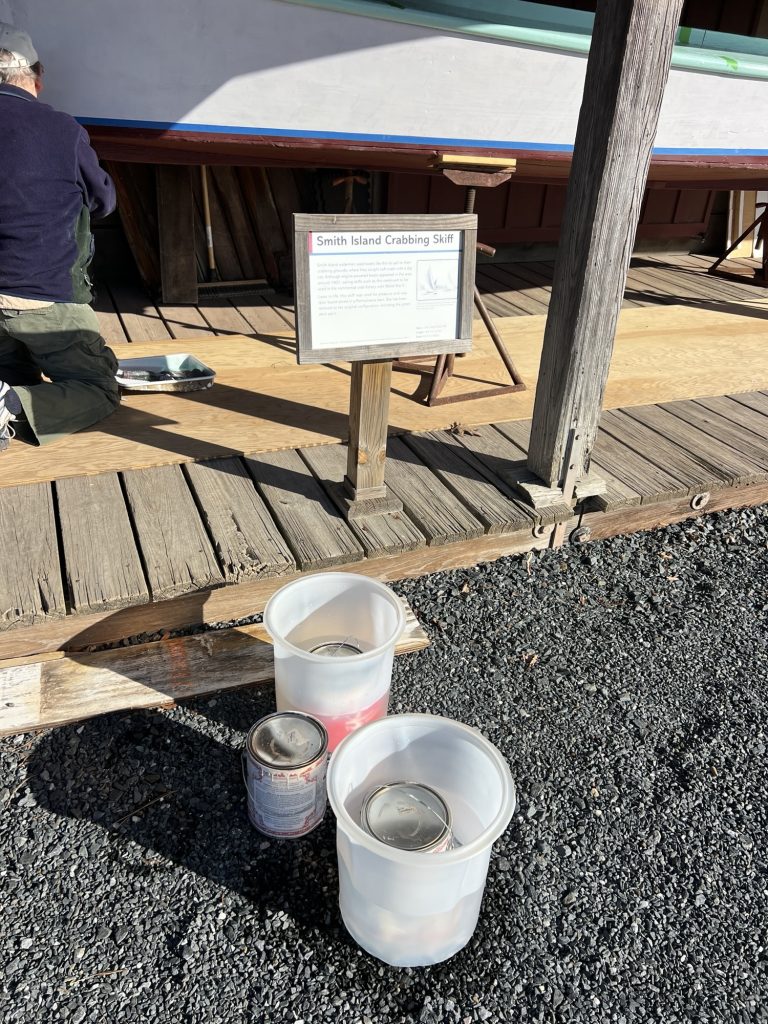
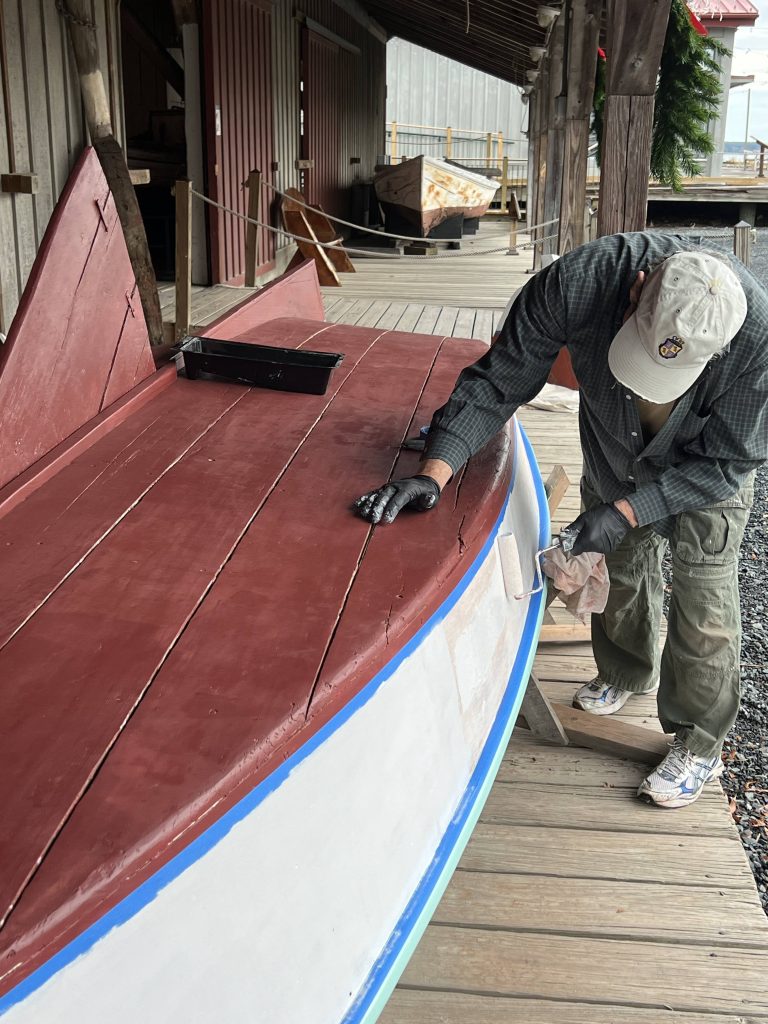
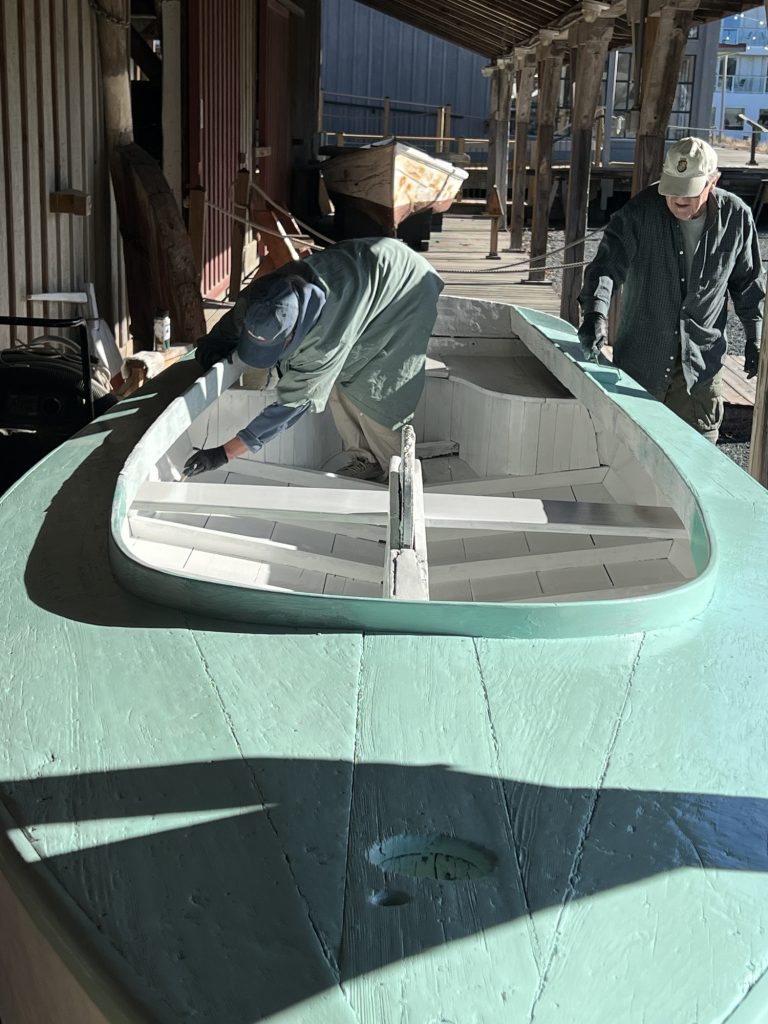
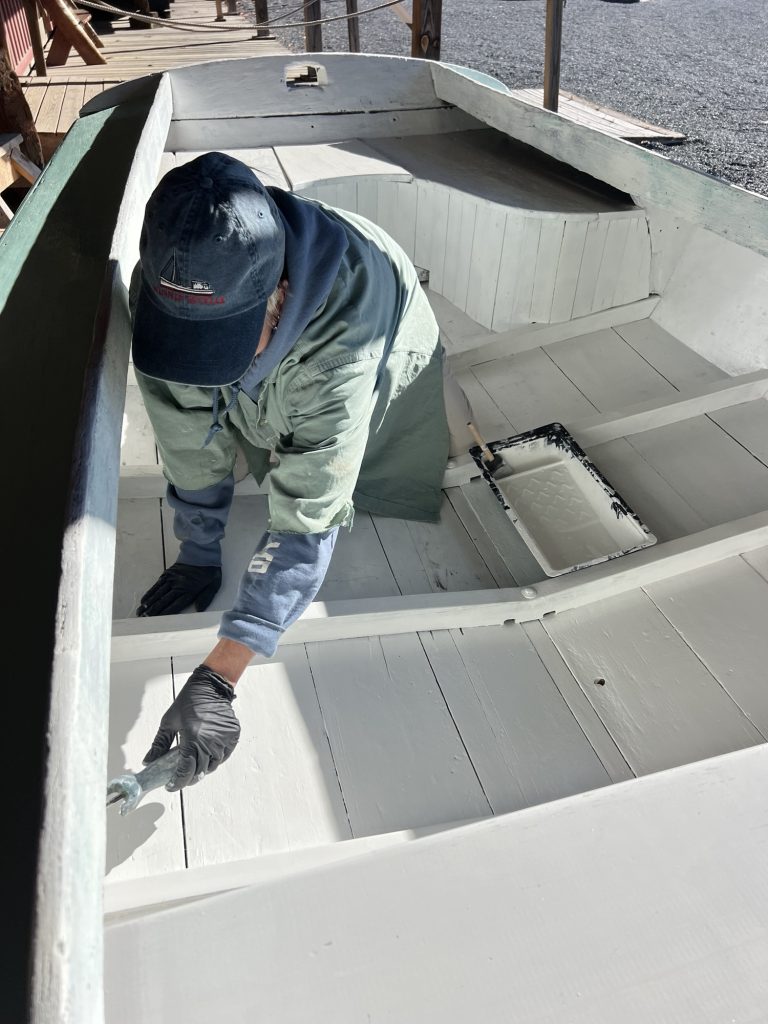
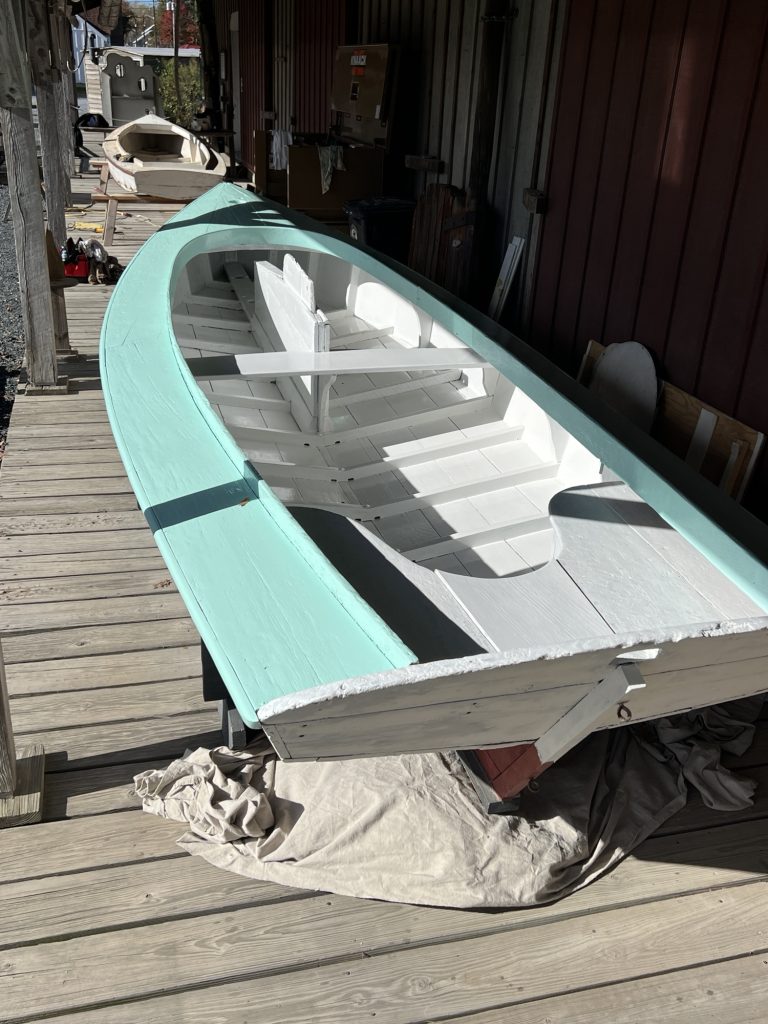
Warm enough to paint this morning – 48 degrees. But the temps had dipped to 28 overnight. We warmed up the topsides paint and primer in buckets of hot water.
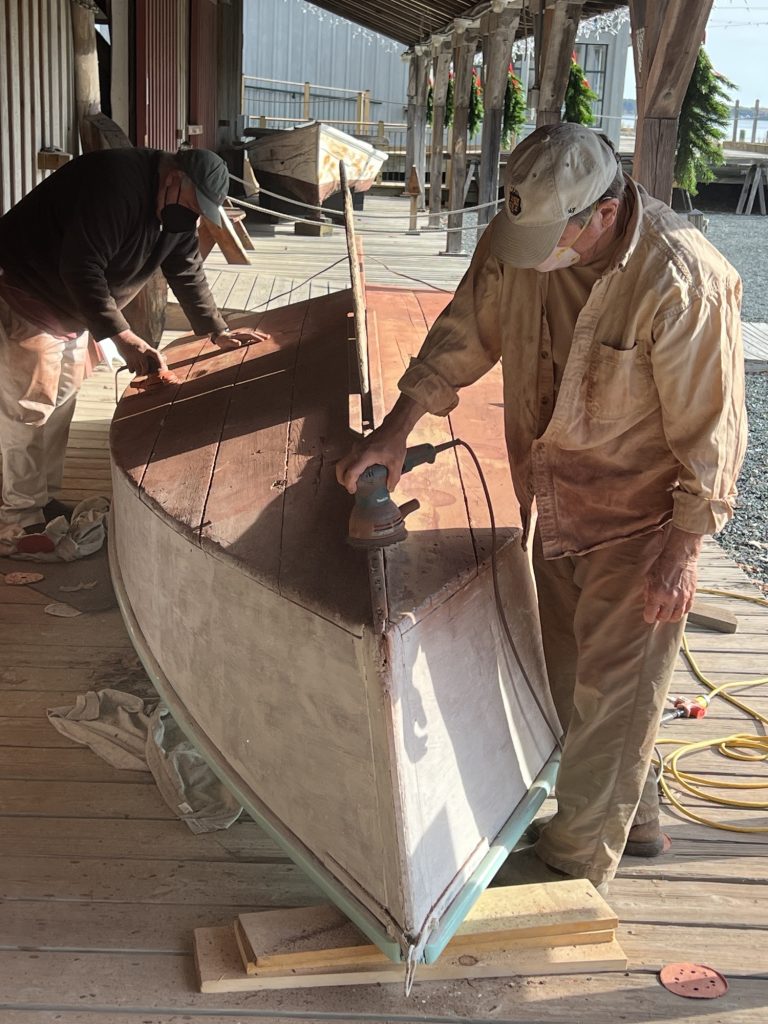
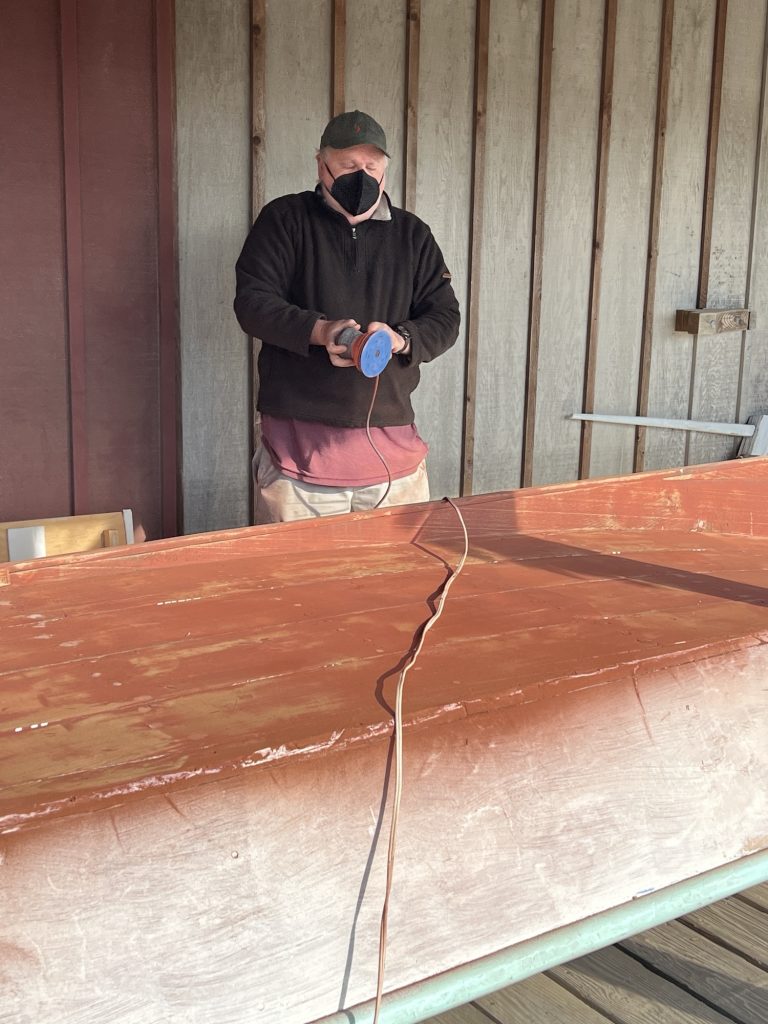
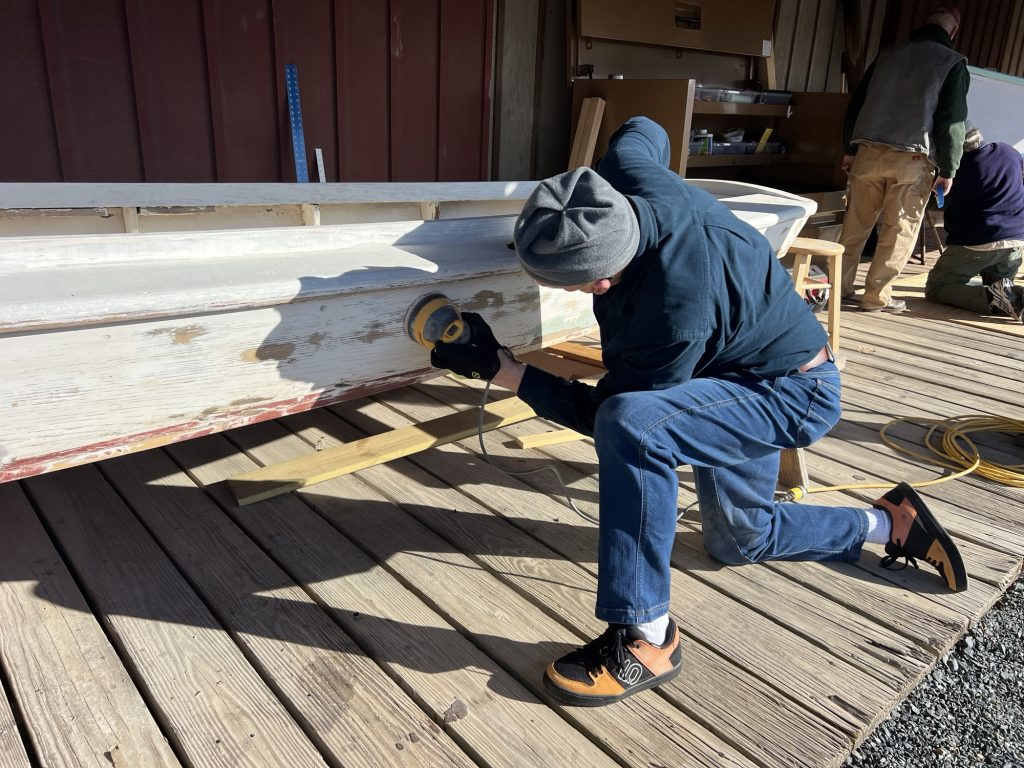
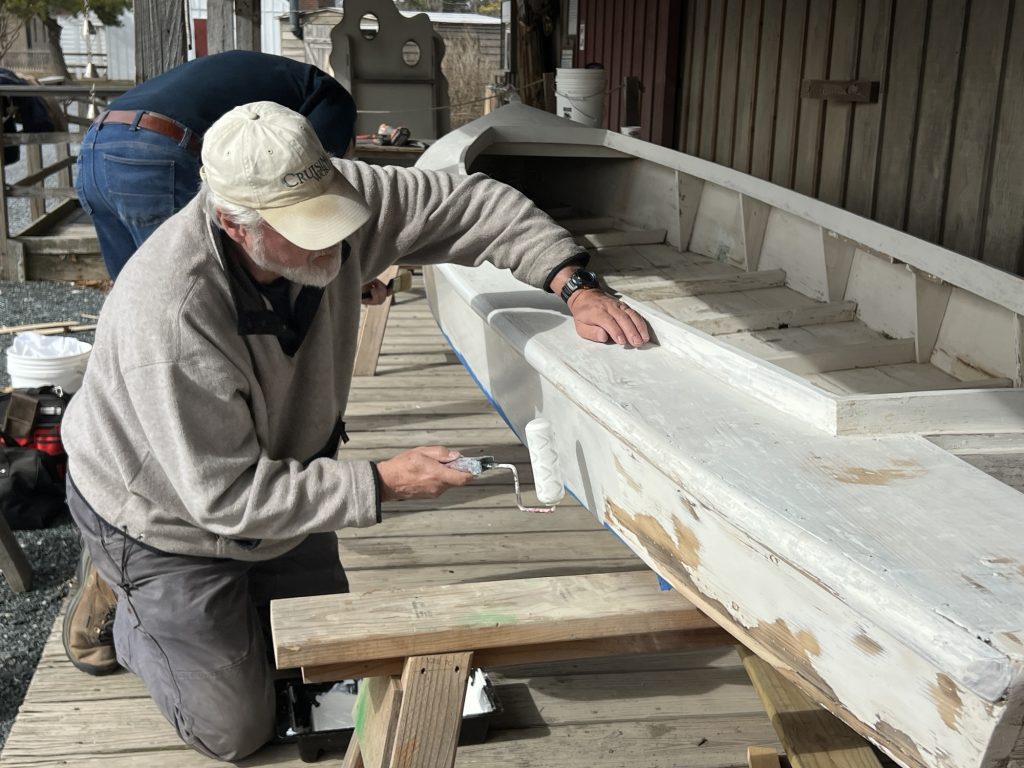
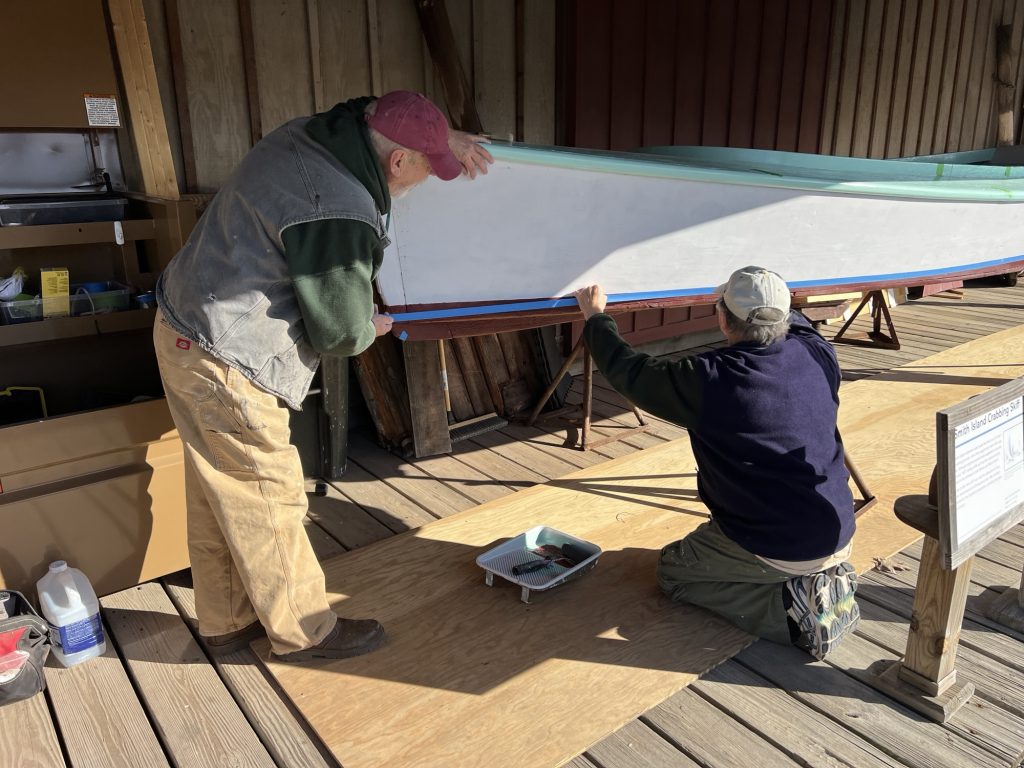
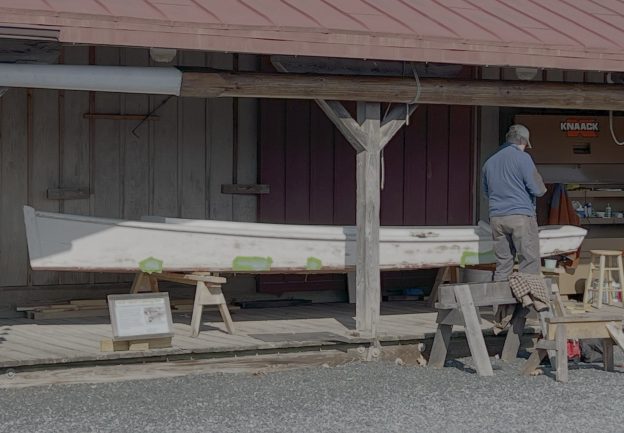
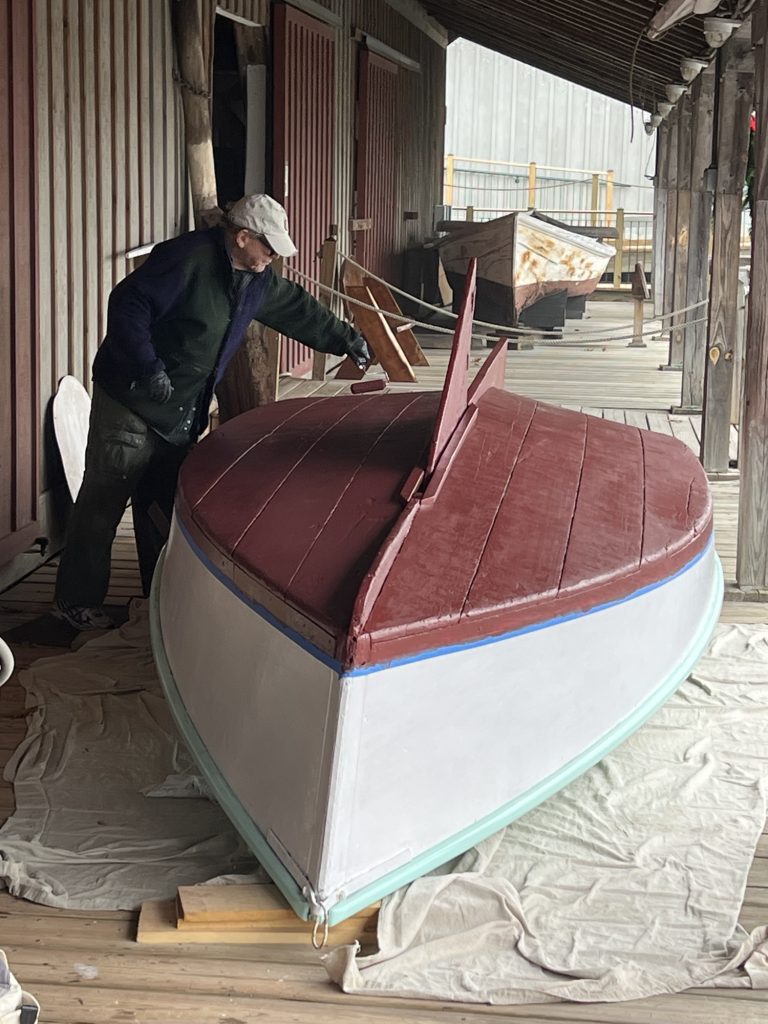
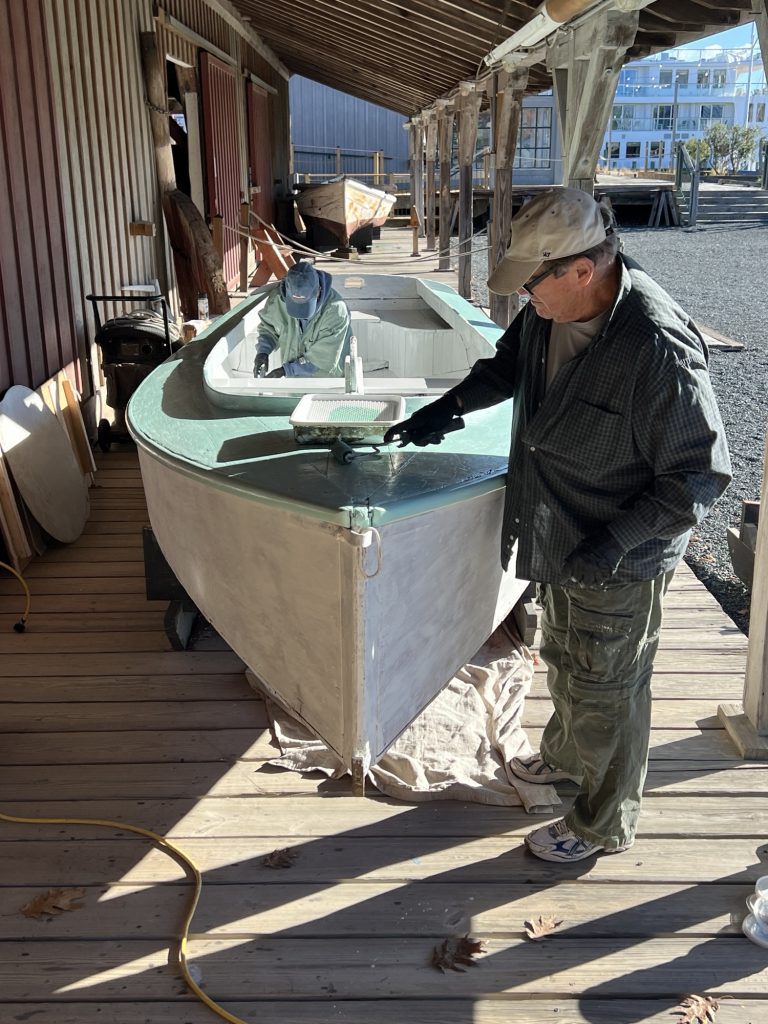
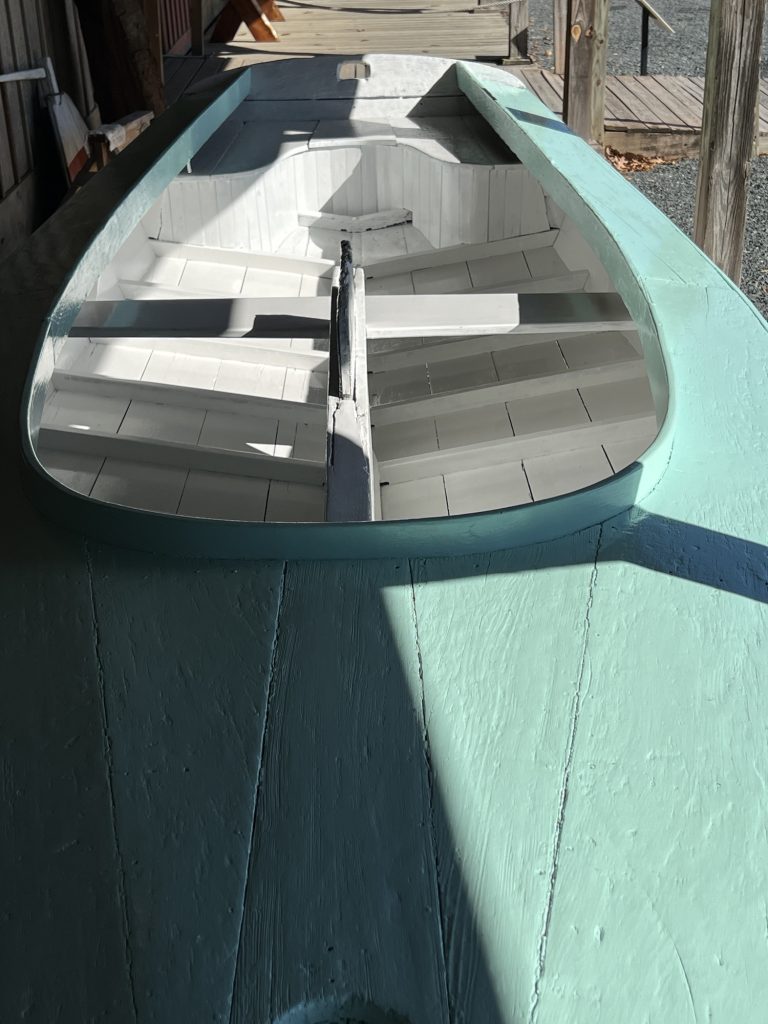
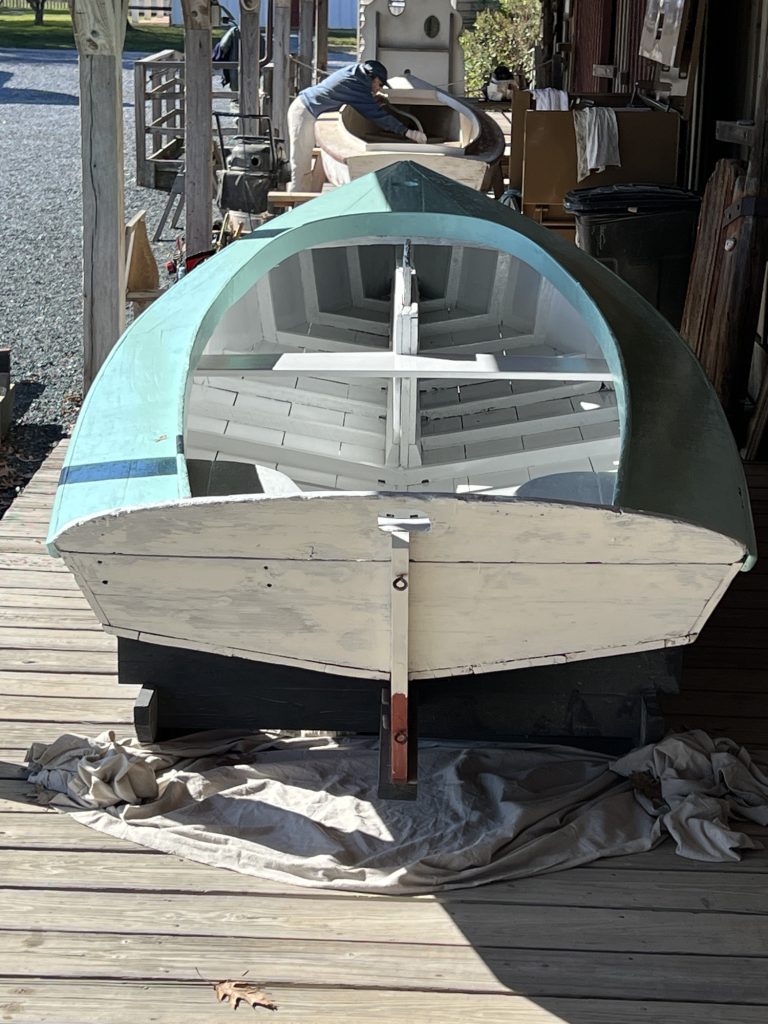
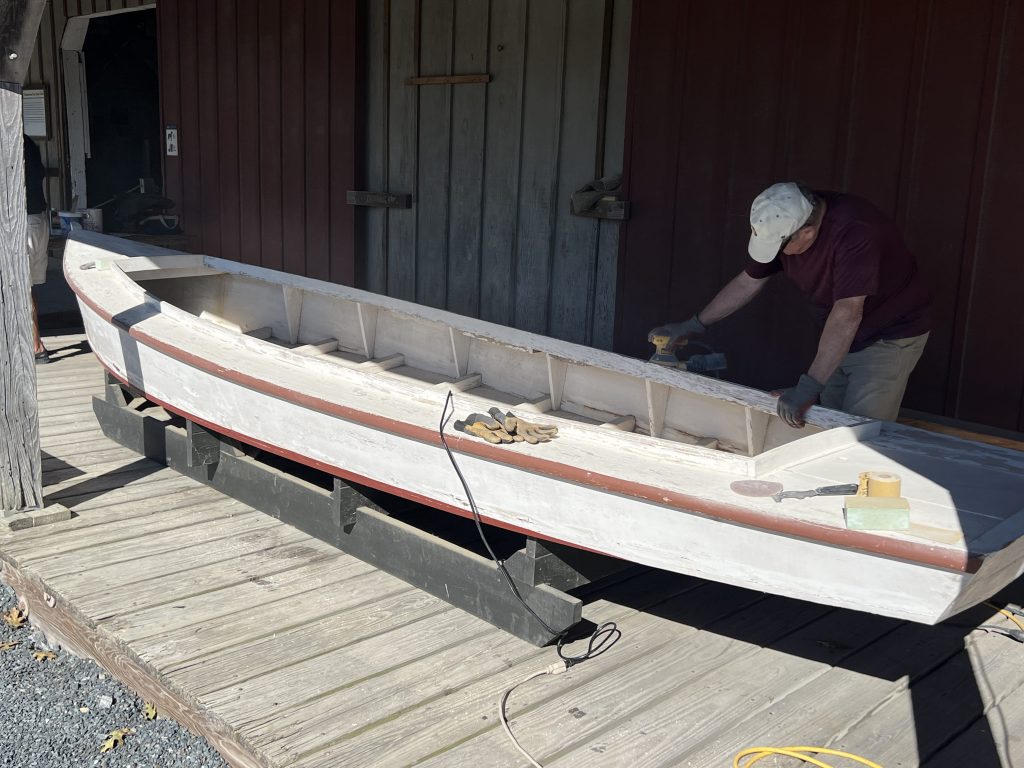
Bob and Mike sanded the filler epoxy, then taped the waterline and primed the 1920 (white) skiff. Tom and Willem taped the waterline of the 1925 (green) skiff and put on another coat of topsides paint.

While the paint dried, Tom and Willem did another coat on the 1925’s centerboard. Bob and Mike prepped a boat exhibit cradle for new paint next week.

Feb 11, 2025 | Cutting floor frames

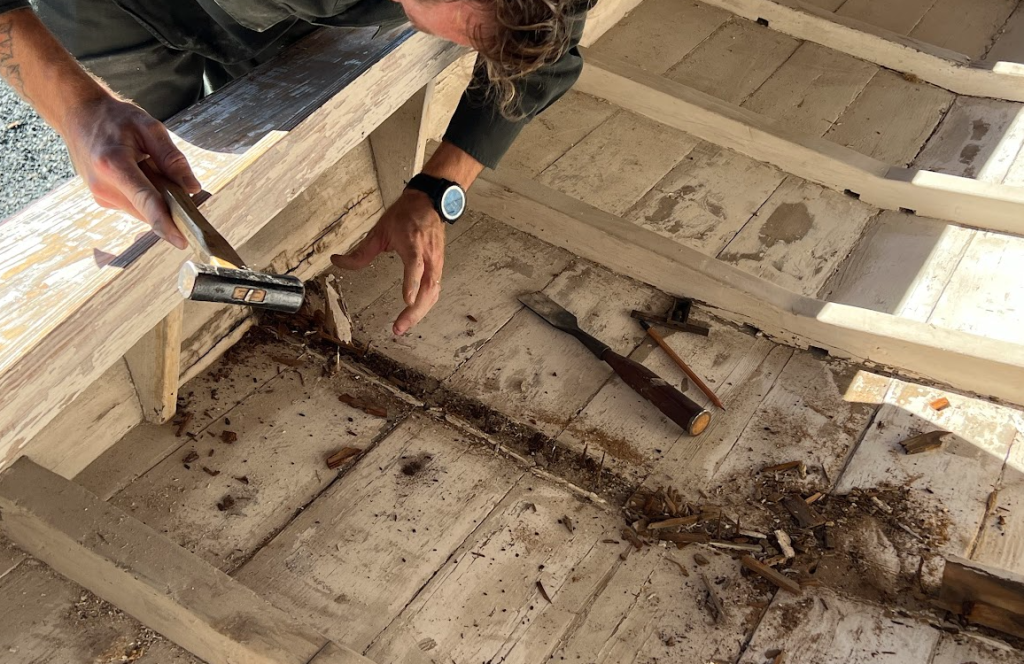
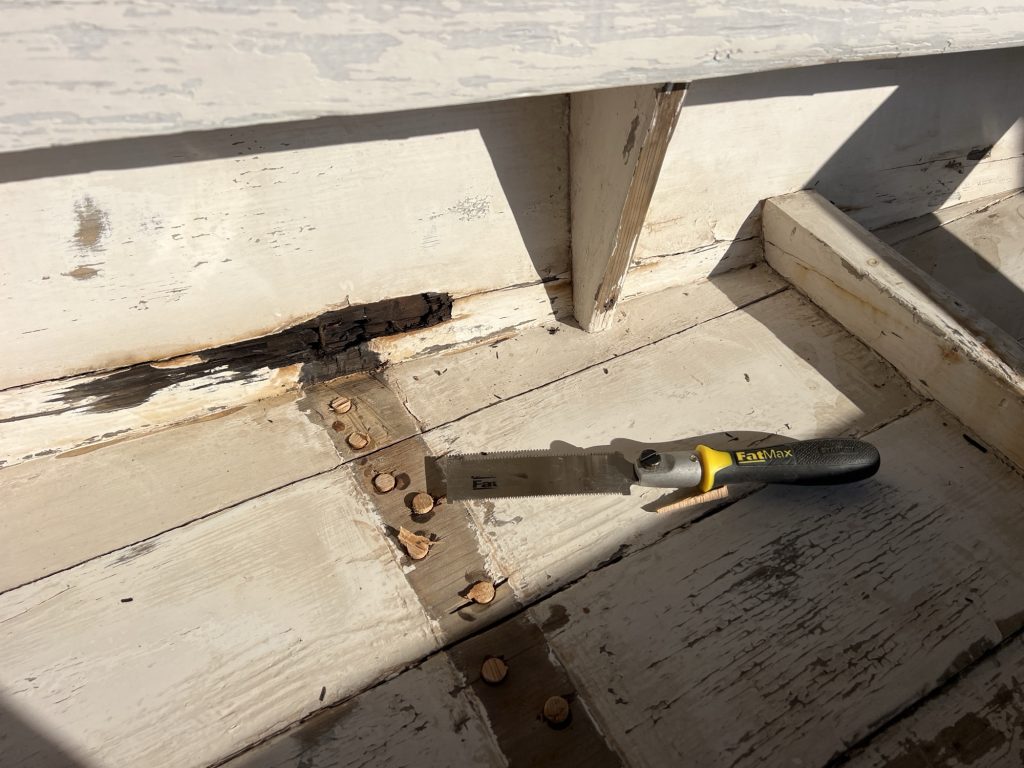
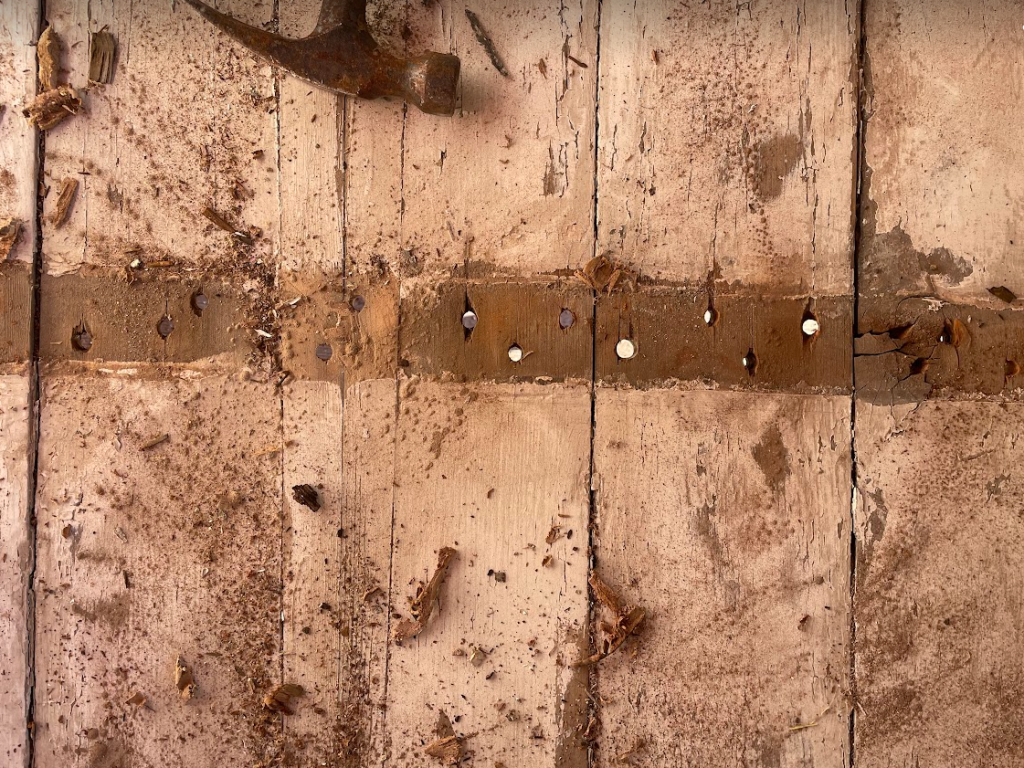
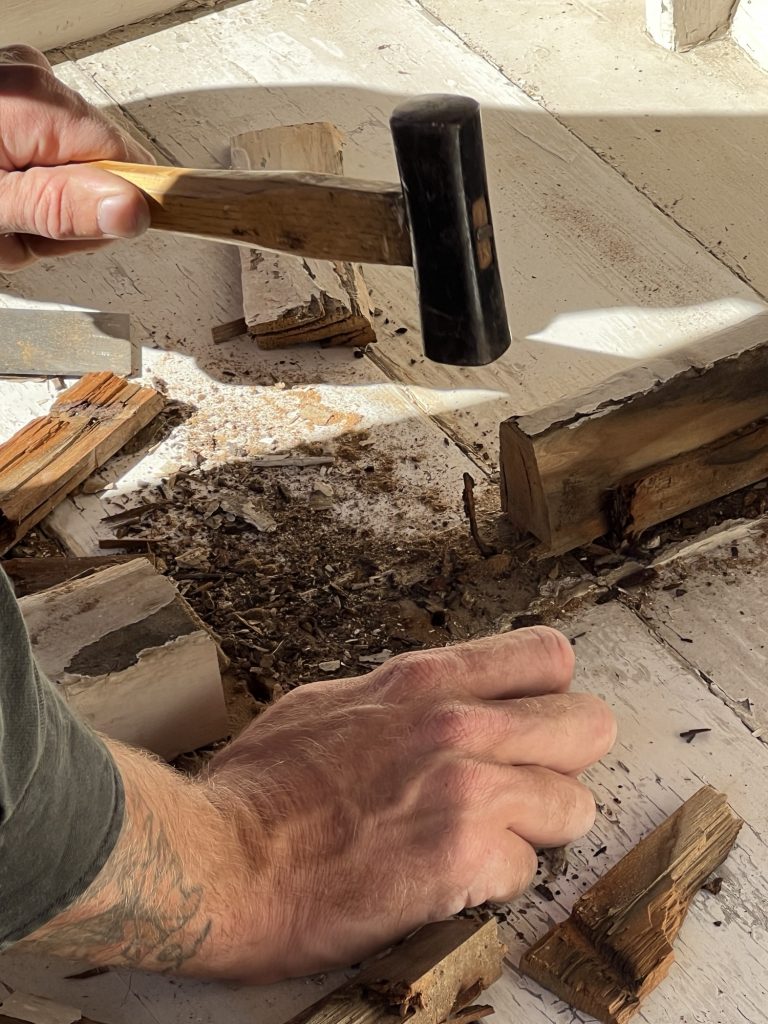
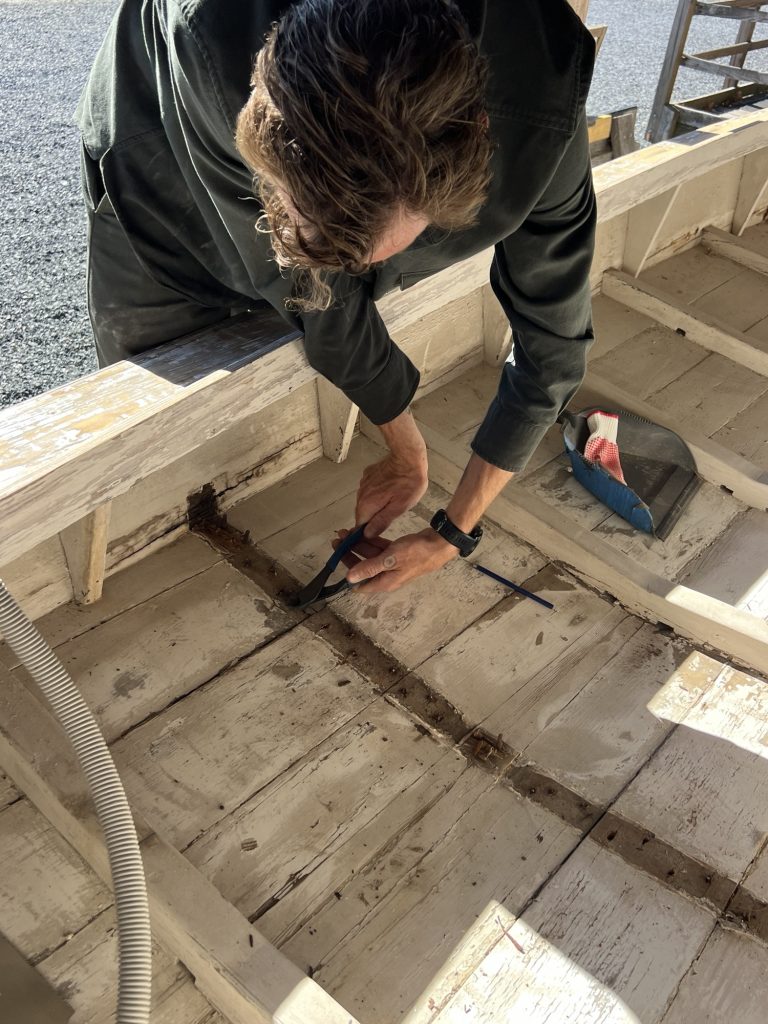
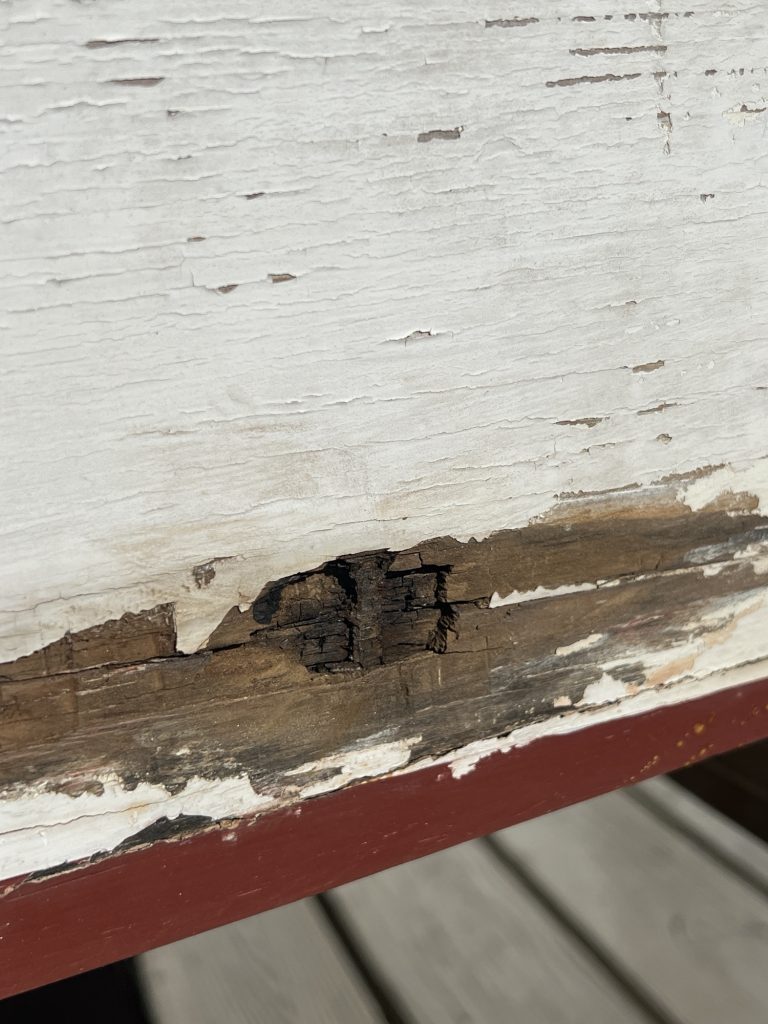
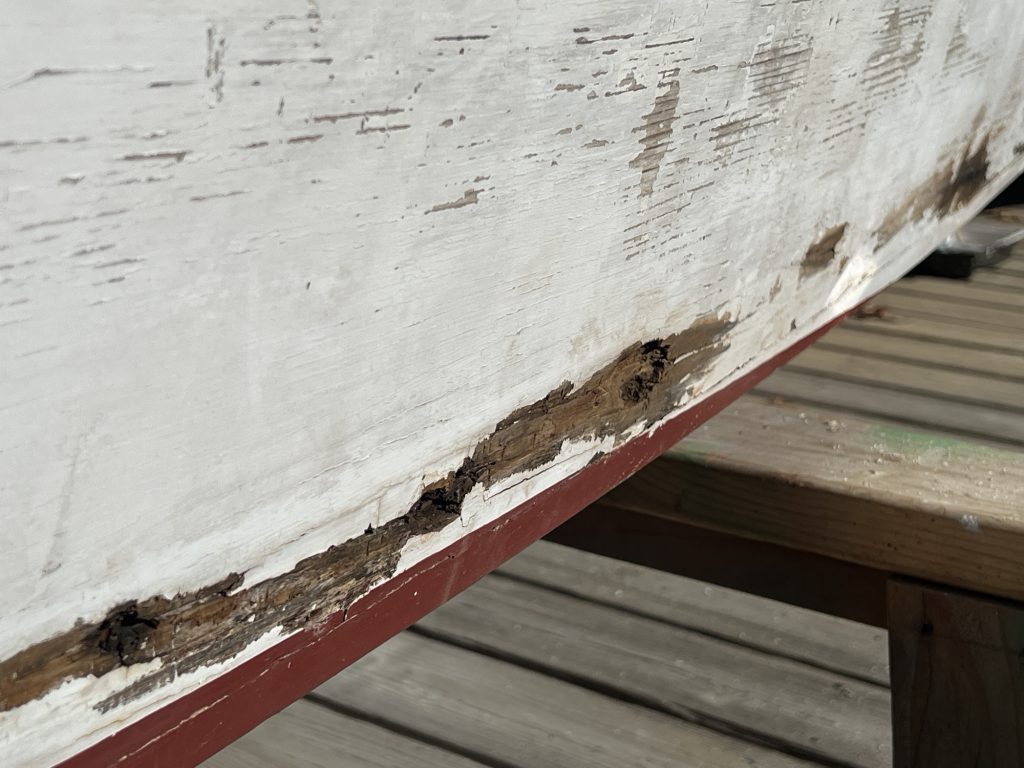
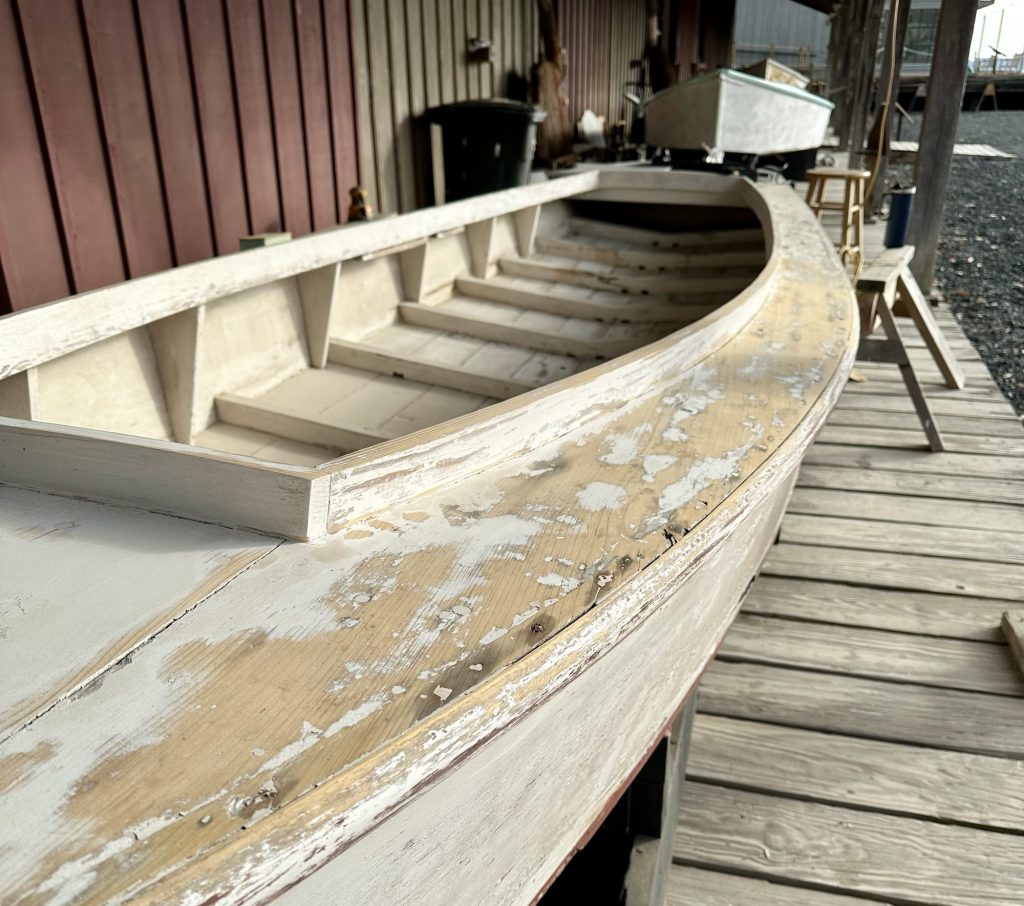
Back in November, we removed a few of the floor frames in the 1920 Smith Island skiff that were rotten. This was caused by chemical reaction between the iron nails and the wood, which caused the iron to rust and damage the surrounding wood. This condition is traditionally called “iron sickness”.

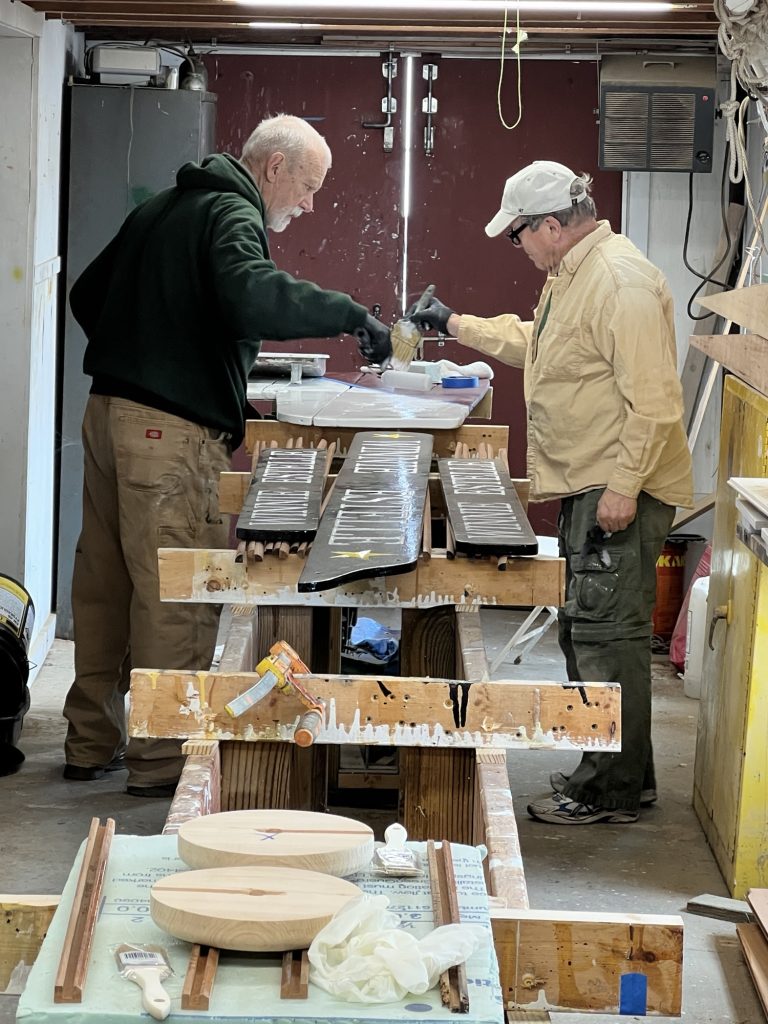
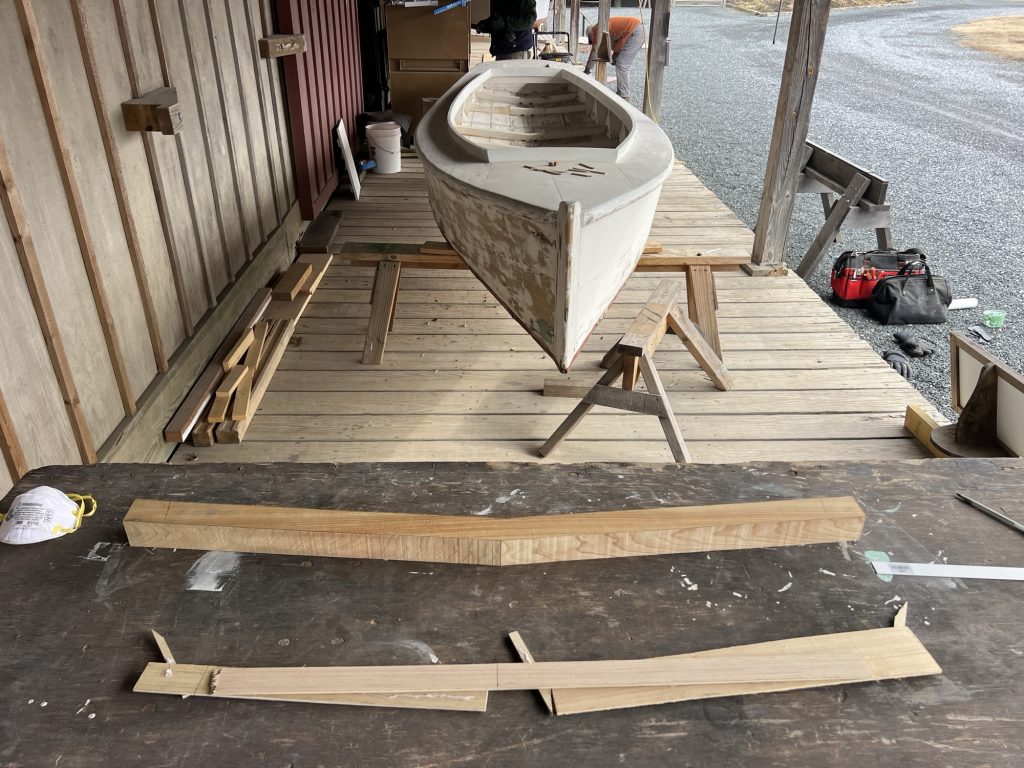
Today we worked inside the boat shop to cut out new frames from a pattern that we assembled in place inside the hull.

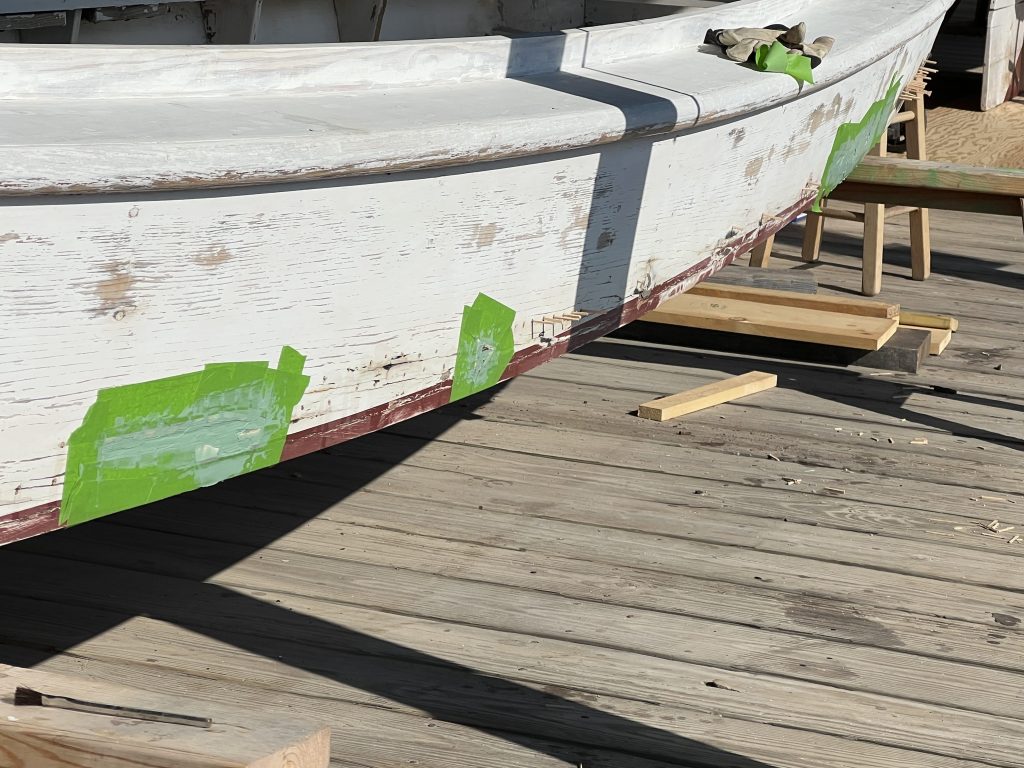
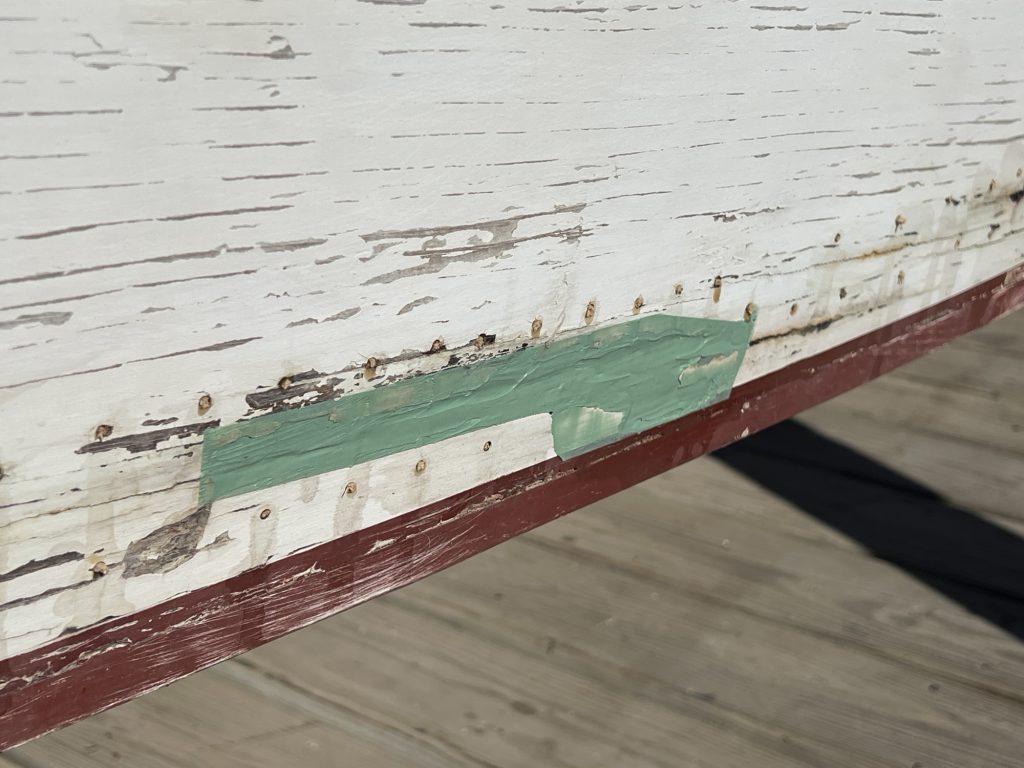
We also sanded and filled in low spots in the filler epoxy that we applied last week to rot along the chines.

Bob stayed late to sand the centerboard of the 1925 skiff, getting it ready for primer.

Feb 4, 2025 | Patching up

Bob flush cut the bungs on the 1920 Smith Island skiff – above and below.

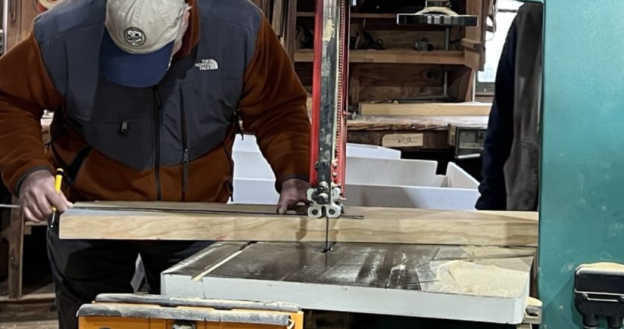
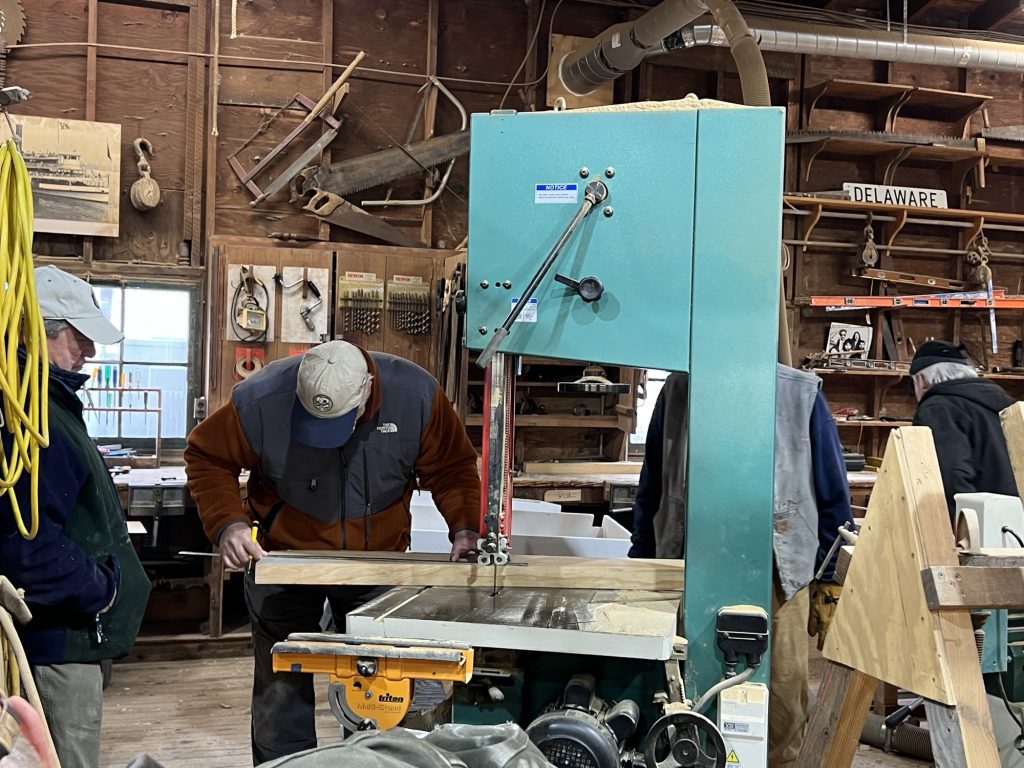
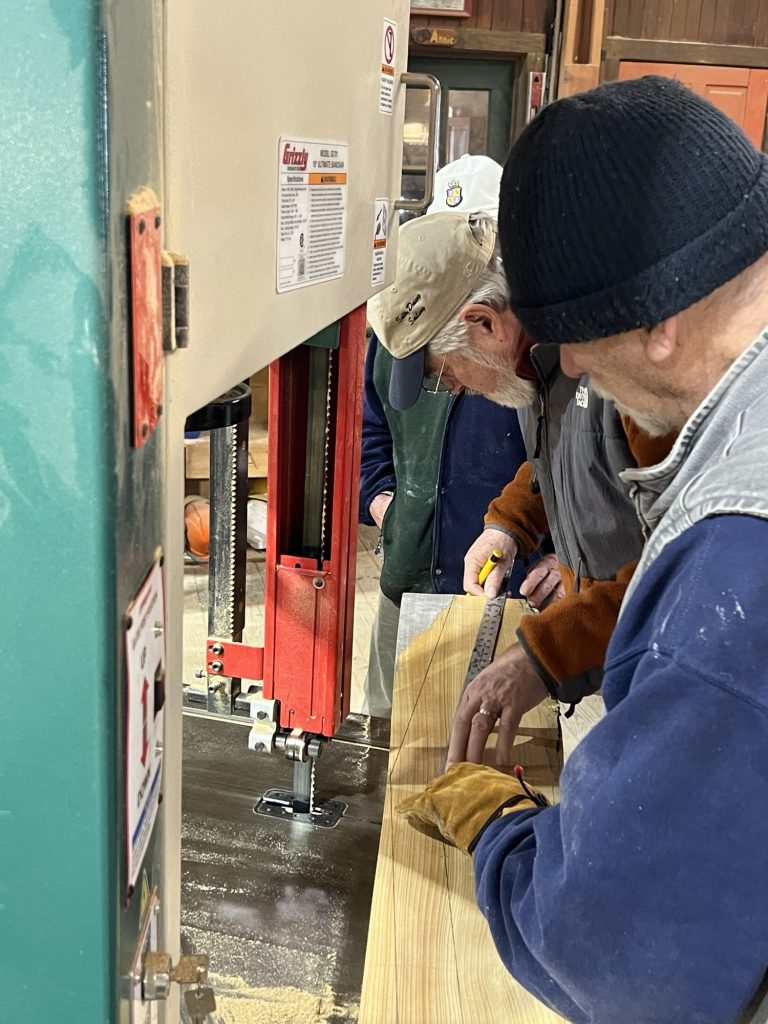
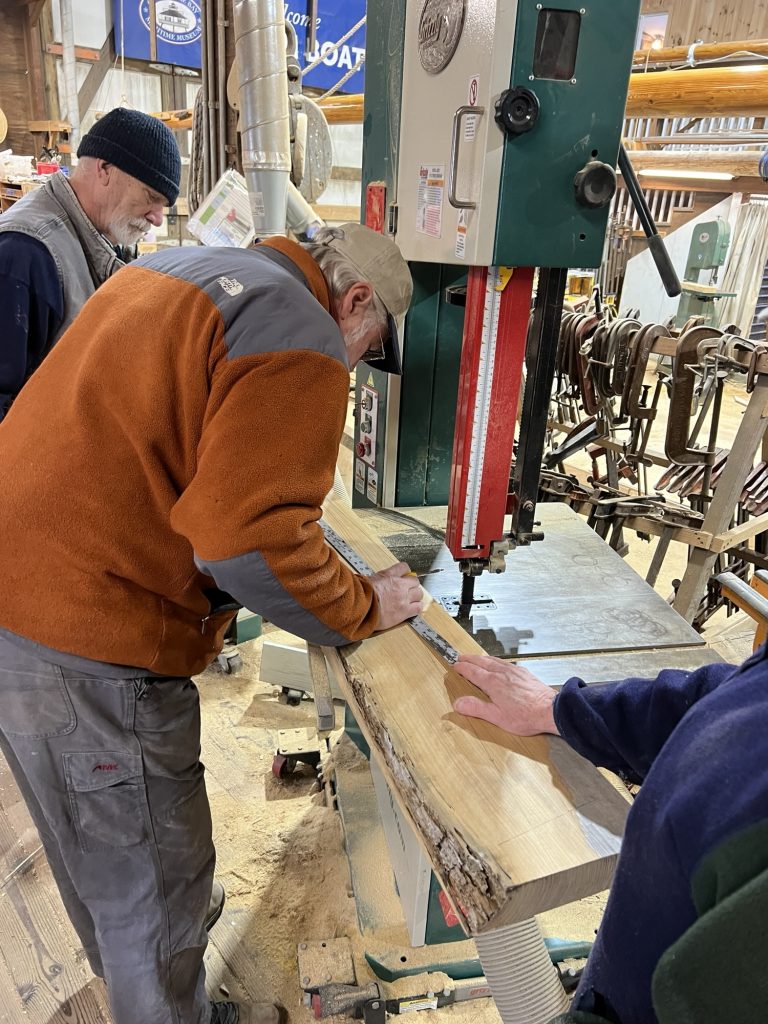
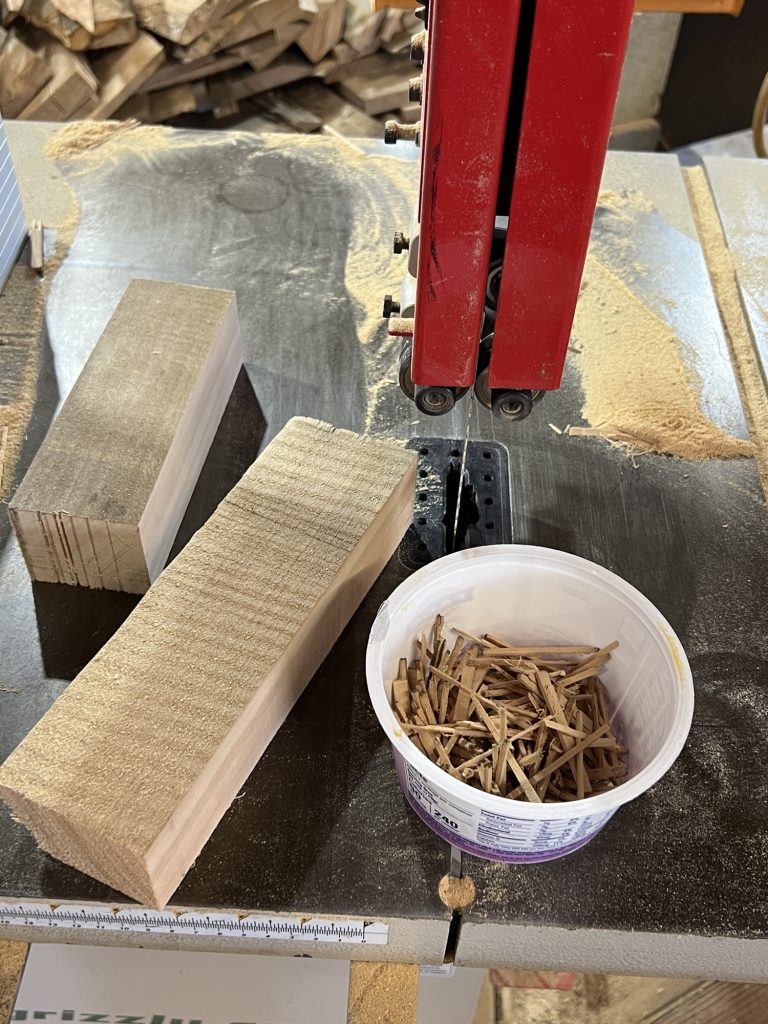
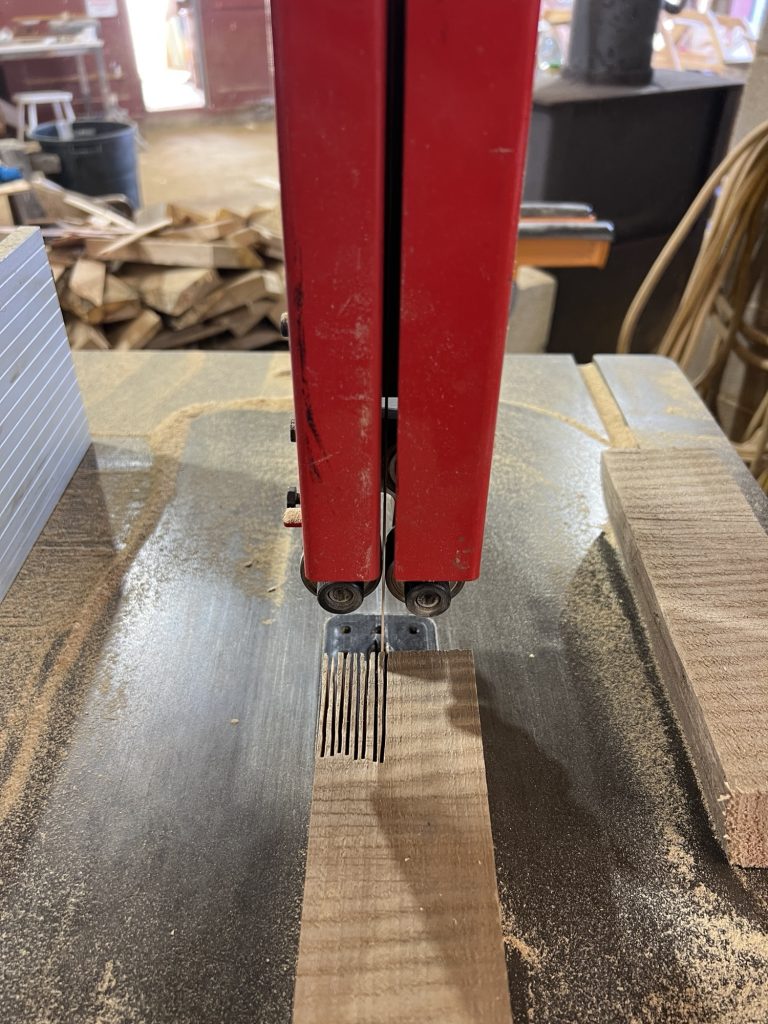
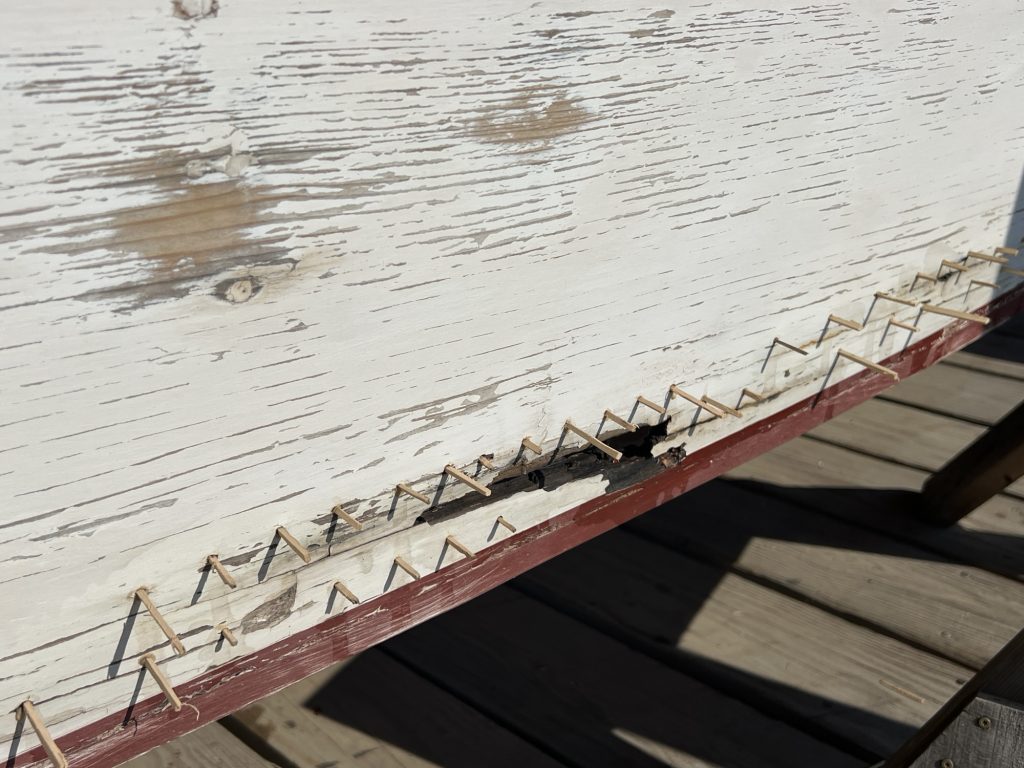
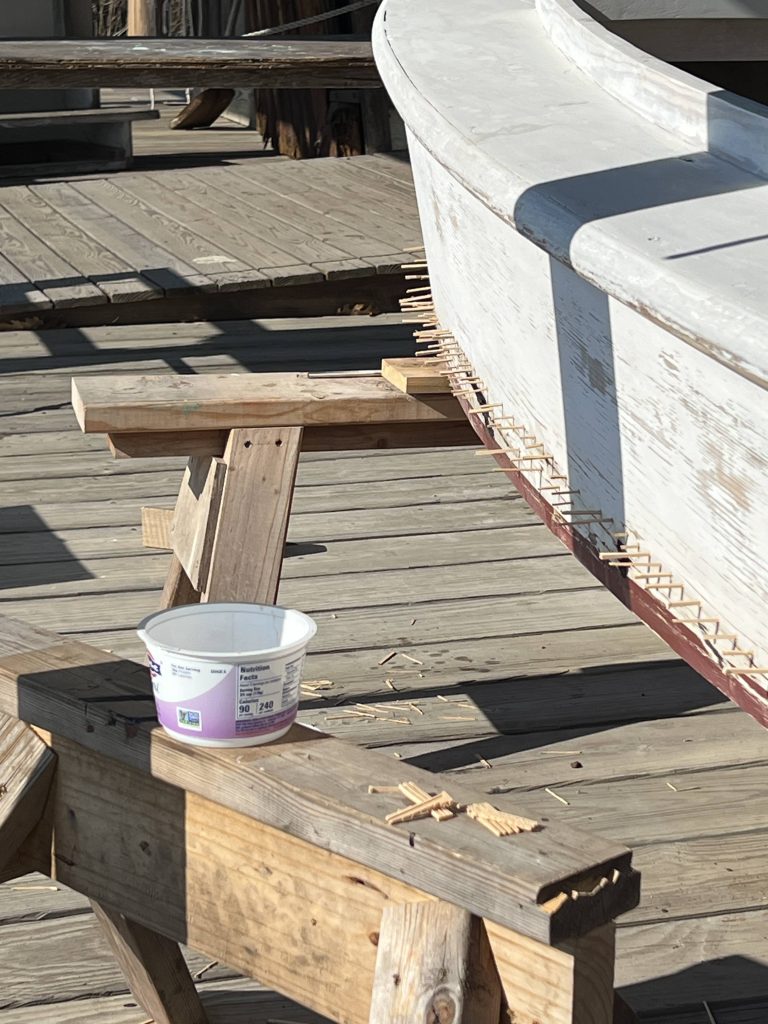
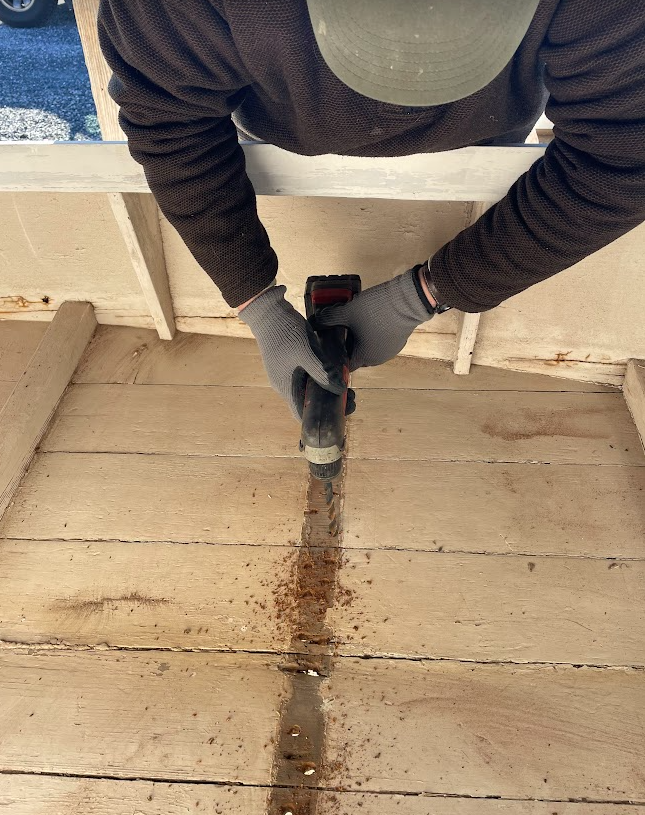
Don used the boat shop bandsaw to cut “sweetnails” to fill in the holes we drilled into the side planking last week, in order to inject penetrating epoxy.

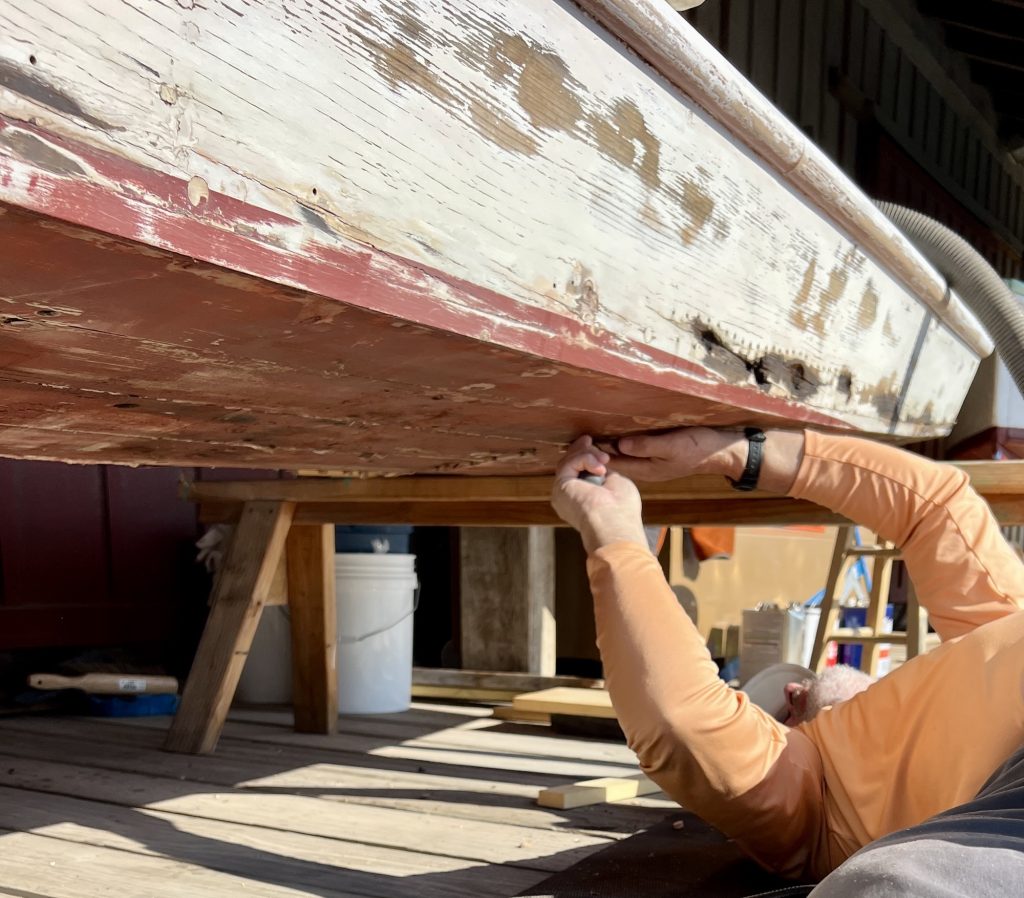
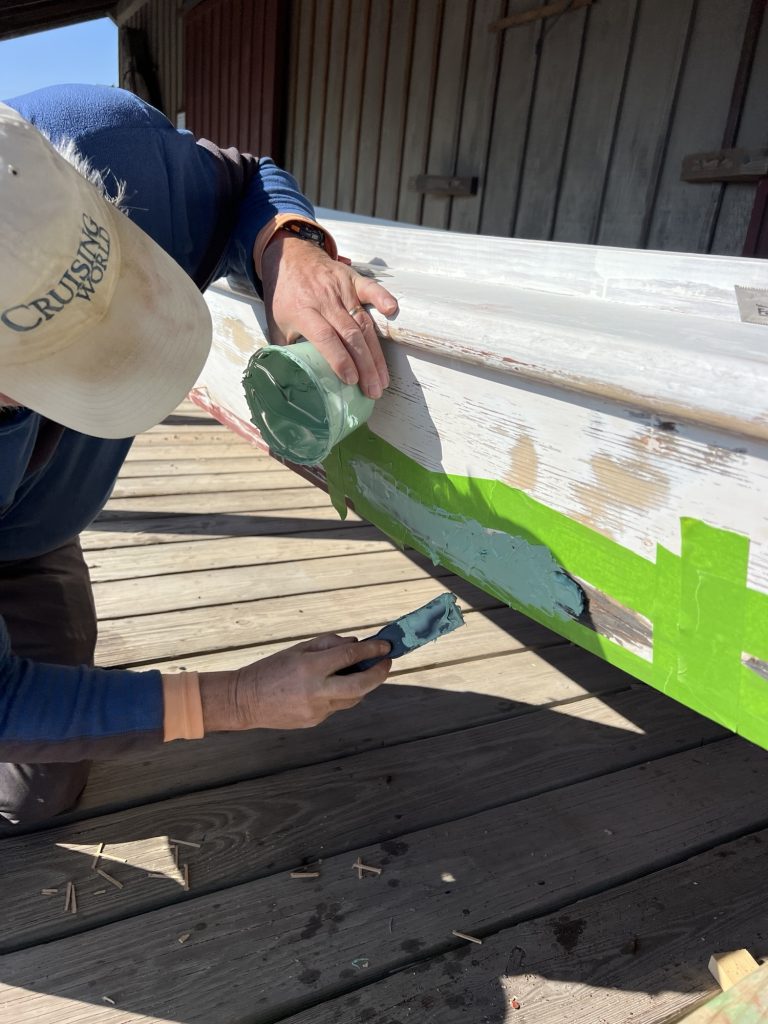
Bob and Don masked around large areas of “iron sickness” along the chines and in the cockpit, then pressed filler epoxy into the cavities.

Nov 12, 2024 | How to sharpen scrapers and remove rotten frames

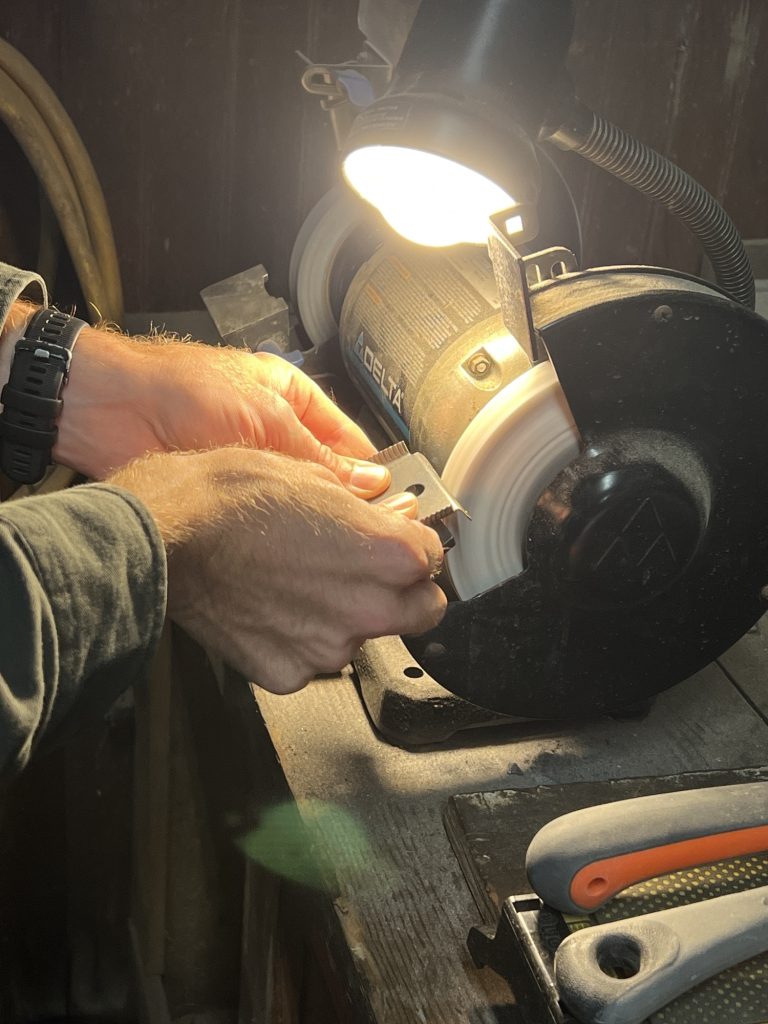
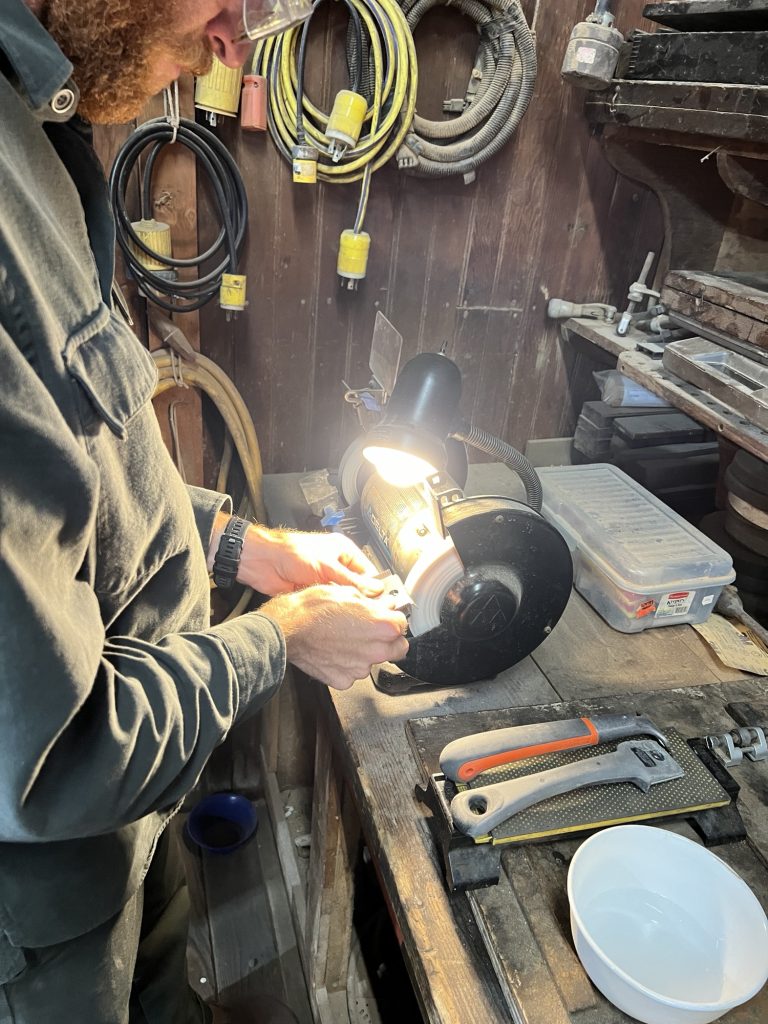
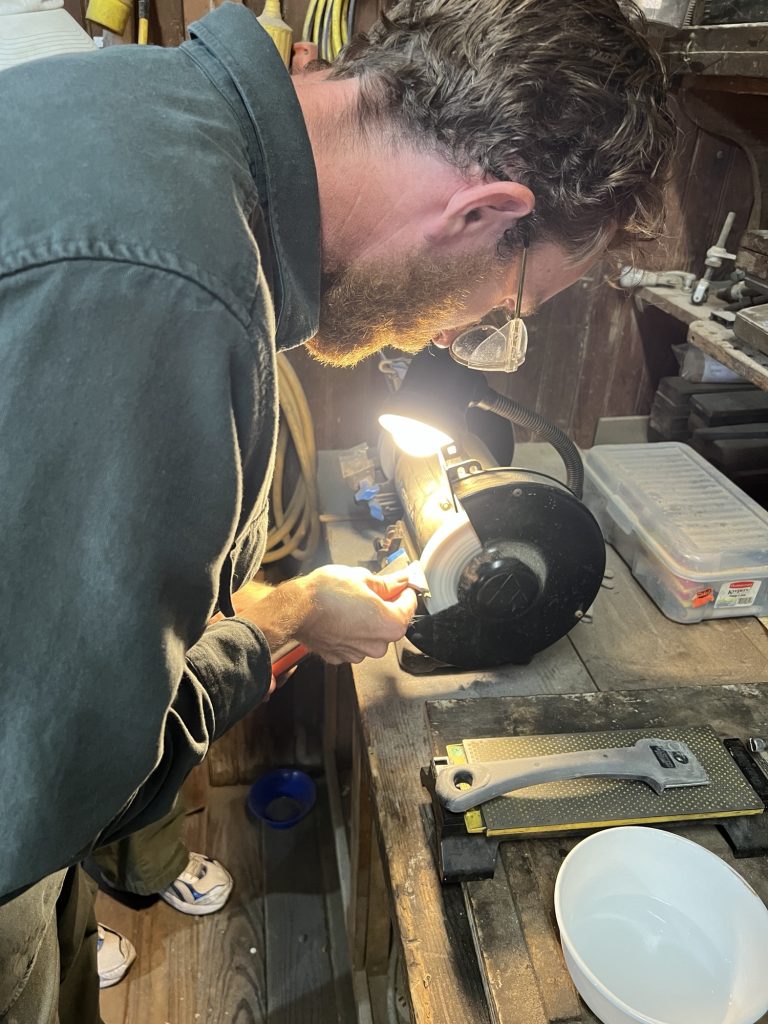
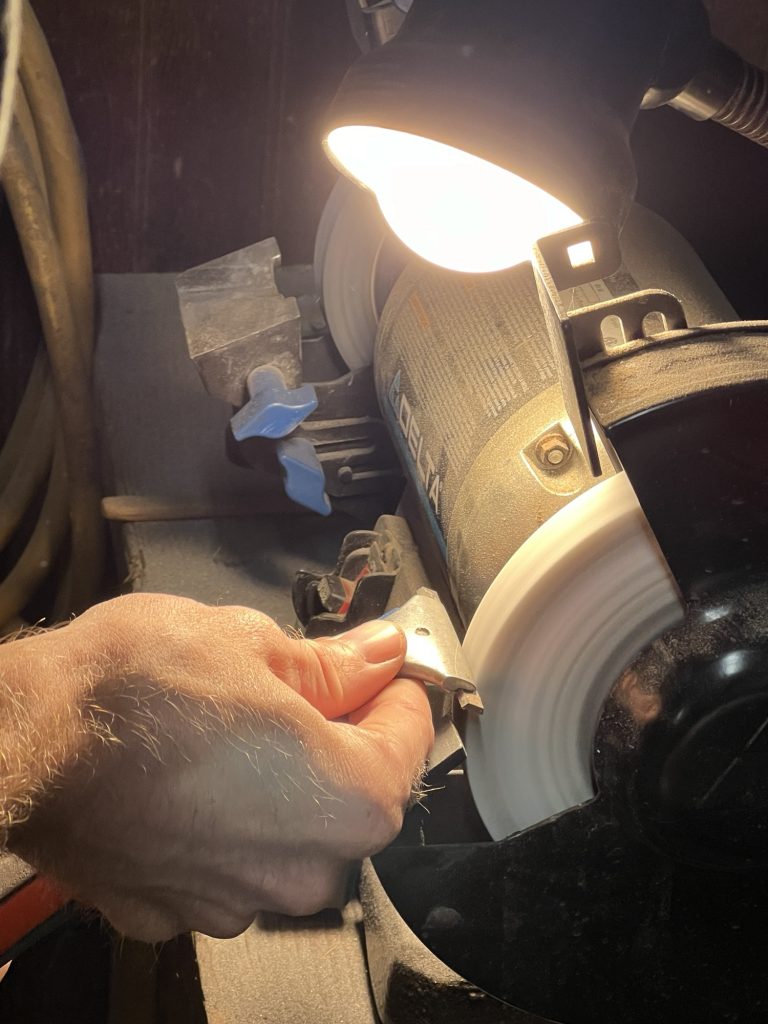
We walked over to the boat shop, and Sam showed us how to sharpen standard scraper blades with the low-speed grinder and HSS blades with the grinder and honing on a diamond stone.

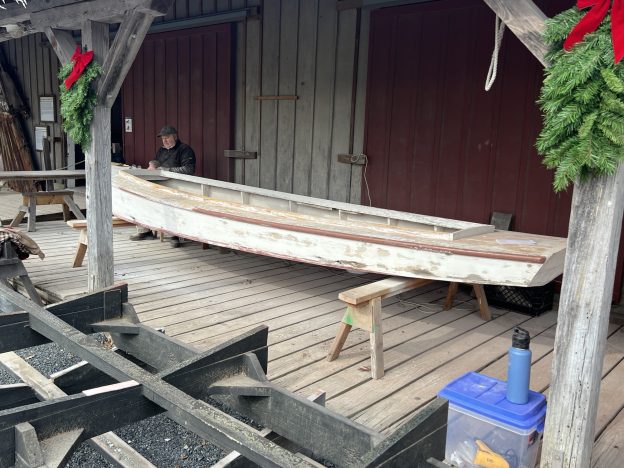
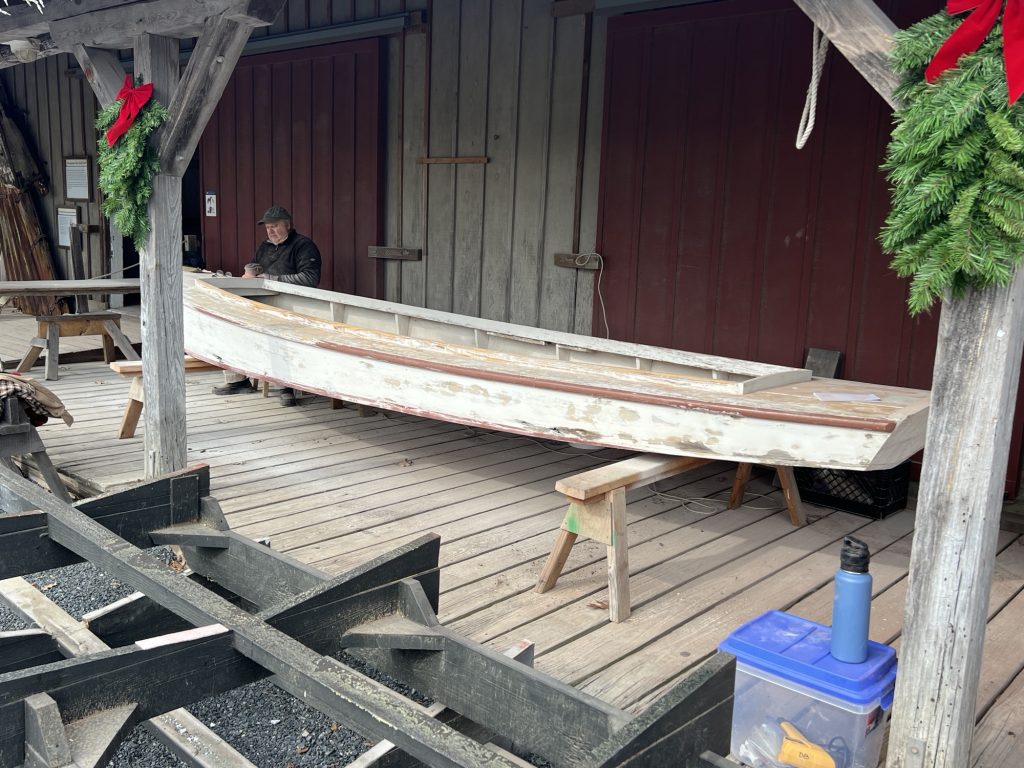
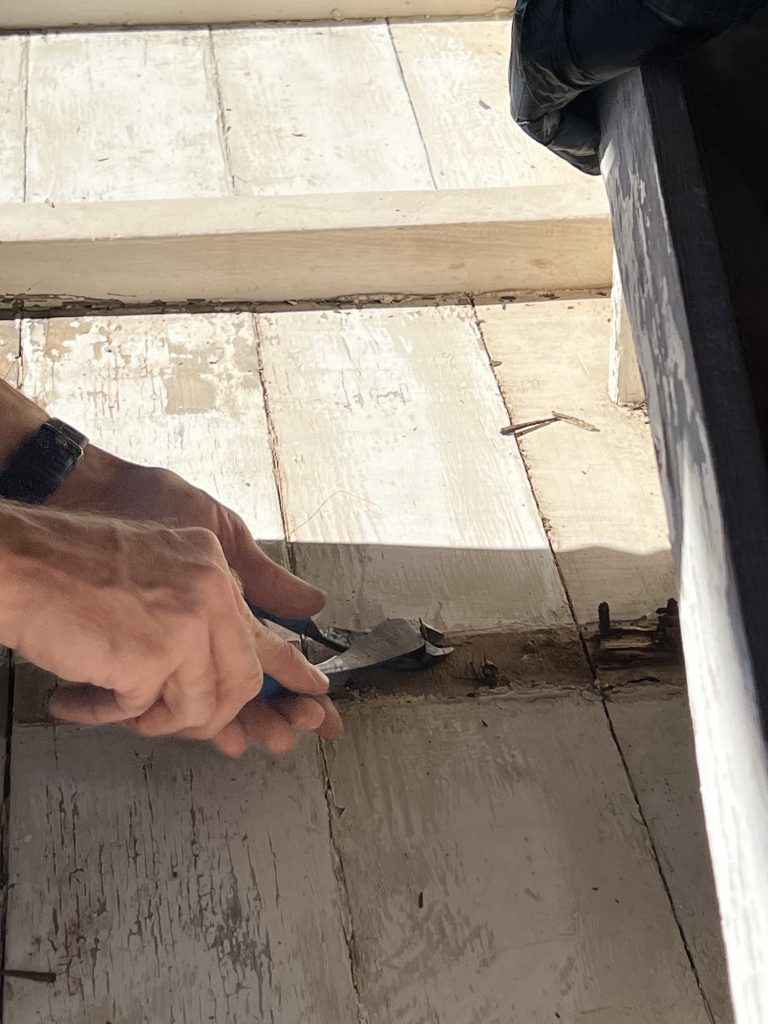
We spent the first half of our work day scraping and painting the two Smith Island skiffs. And the second half assisting Sam to remove two rotted frames from the 1920 skiff. Pull saw and chisel to remove the frames. Then nippers and punch to remove nails and screws. Remaining nails will be drilled out. The bottom planks will be primed before we replace the frames.

Nov 12, 2024 | Scraping and painting two Smith Island skiffs

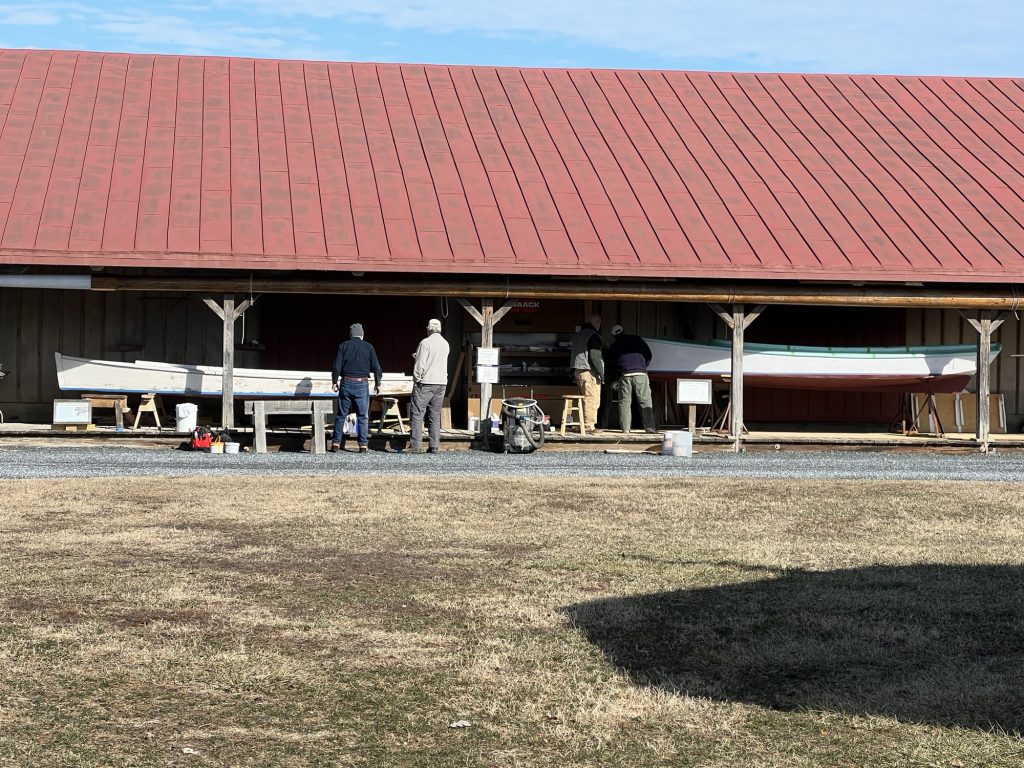
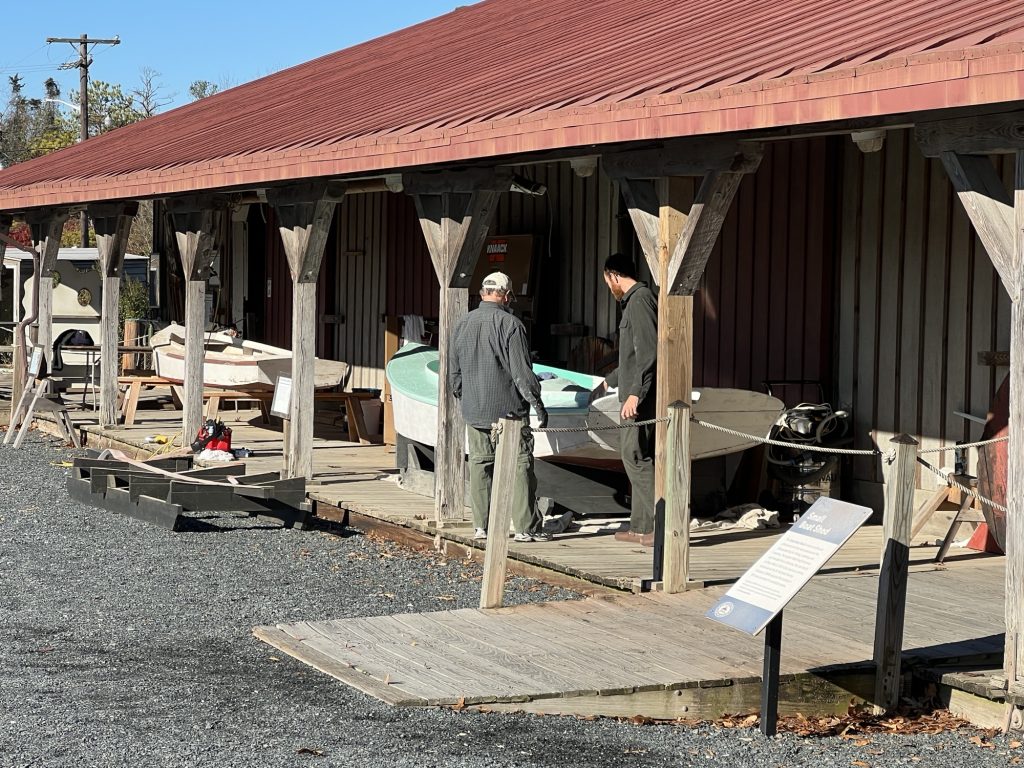
Strong winds from the NW blew up whitecaps on the Miles River. We were protected in the lee of the small boat shed and warm in the morning sunshine on the porch.

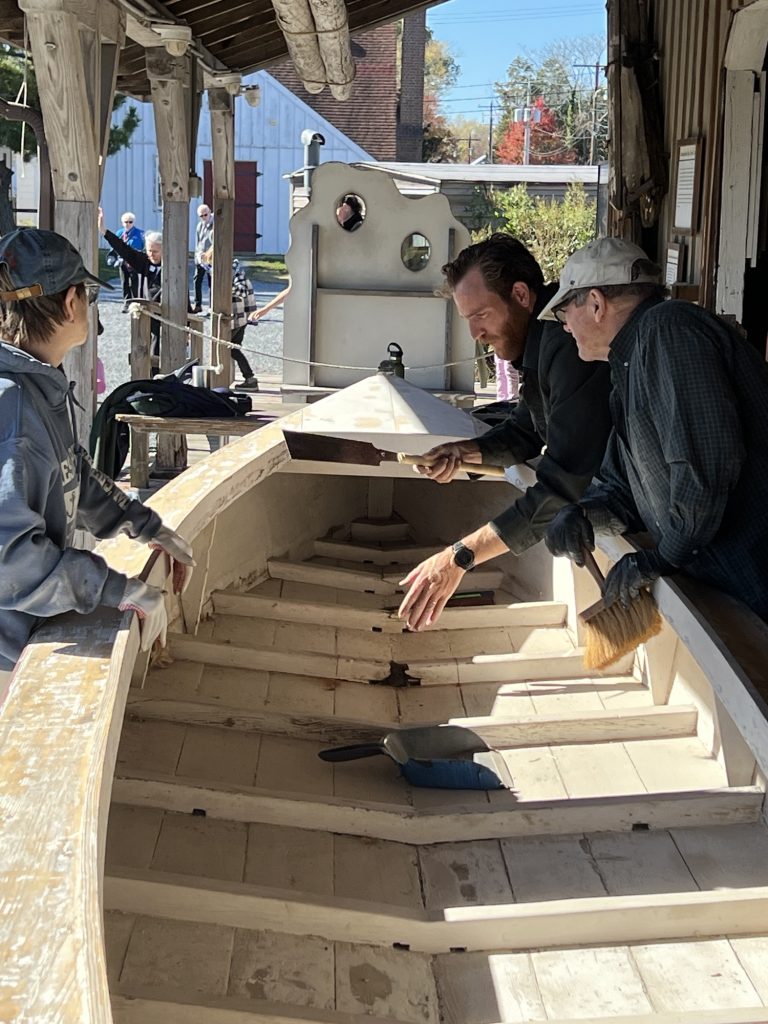
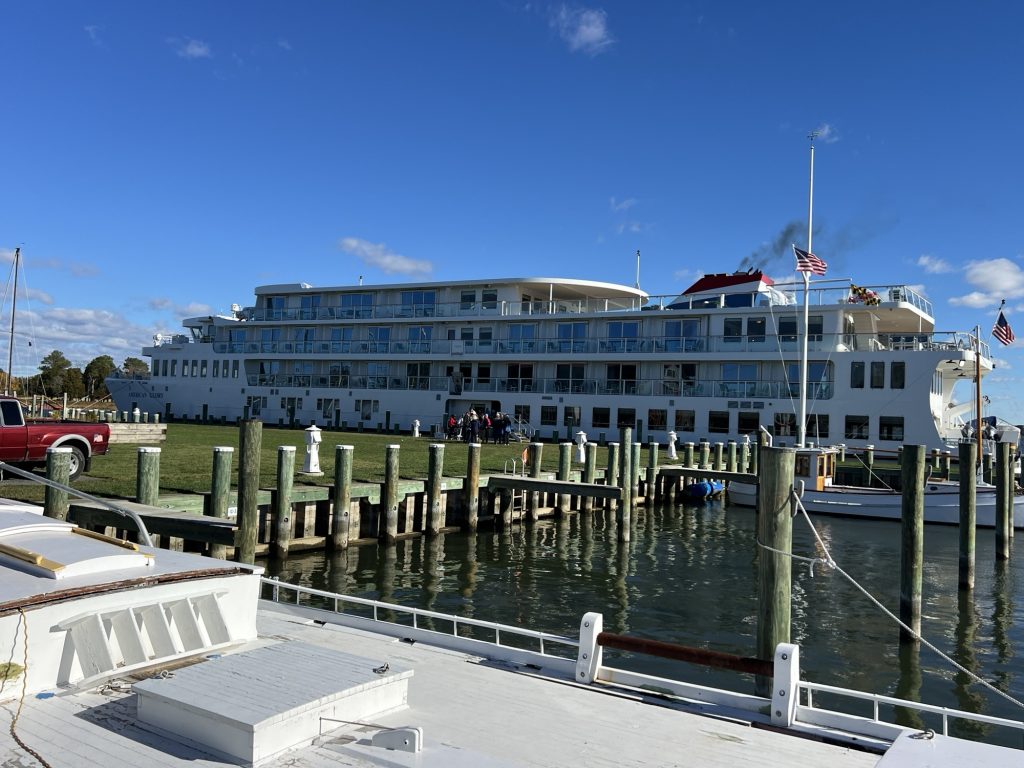
A small cruise ship was at the CBMM quayside. A few travelers stopped by to ask about our work.

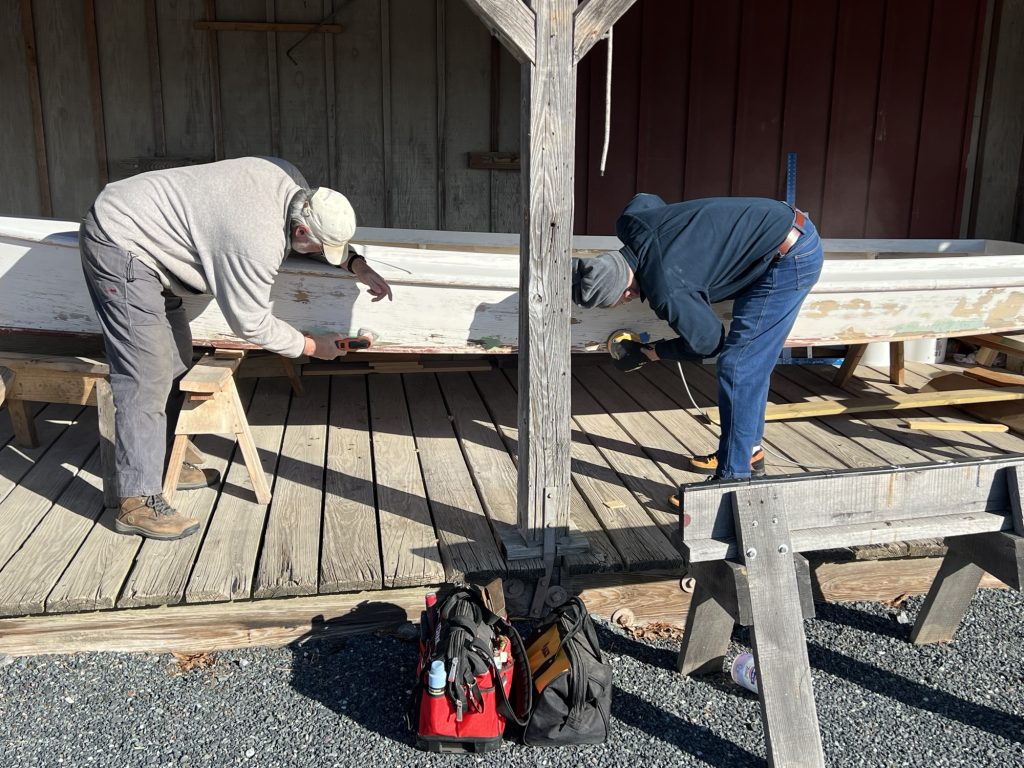
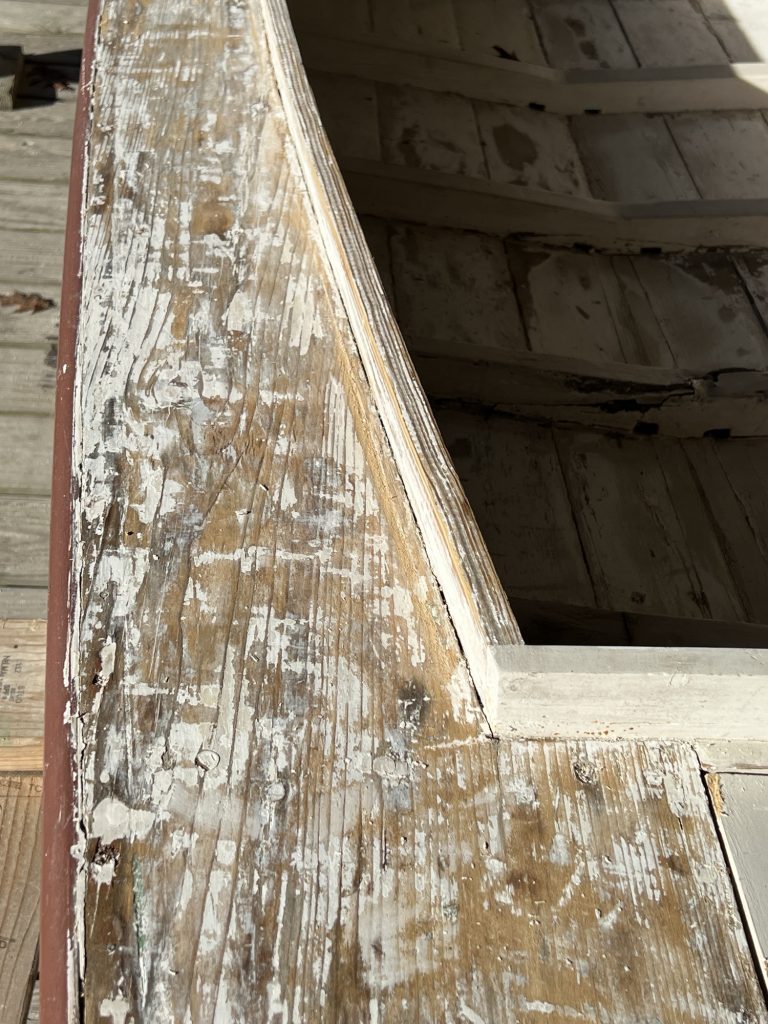
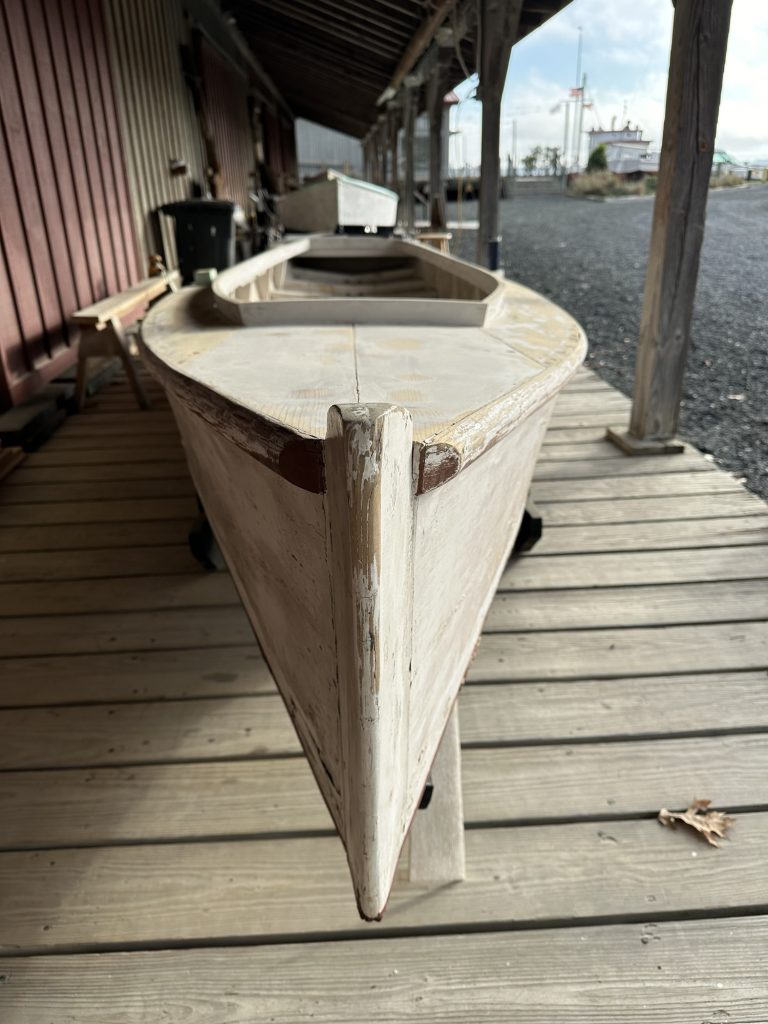
We finished scraping and sanding the deck and washboards of the 1920 Smith Island Skiff. Today we got started on the sides. Encountered wood rot at the bottom plank fastenings along the chine. This is due to “iron sickness” from interaction between the nails and the wood.

And we learned to use the heat gun with more care to avoid igniting the very dry and soft wood.

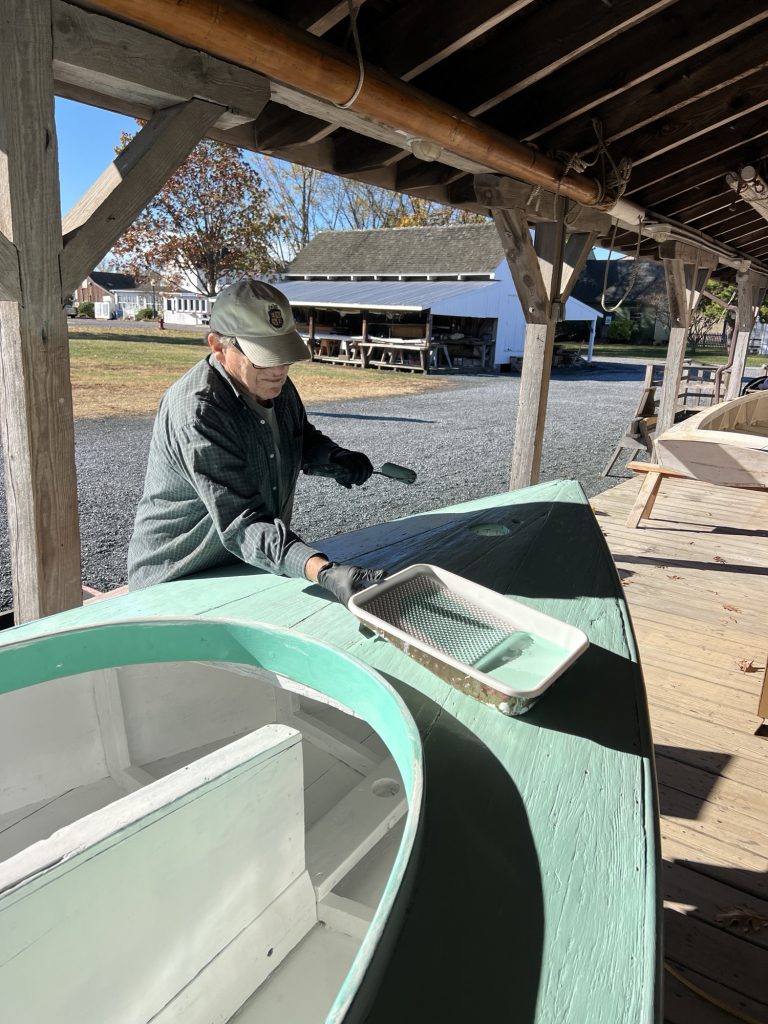
Tom and Jenn put final another coat of paint on the deck, coaming, and stern-interior of the 1925 Skiff.

Oct 8, 2024 | Barge done. 1920 skiff out. 1925 skiff epoxied.

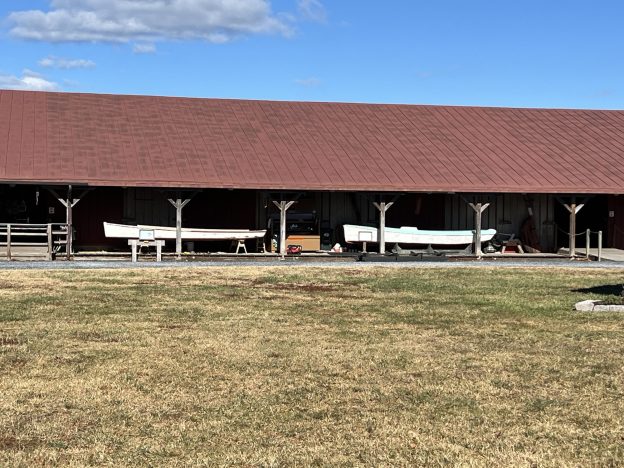
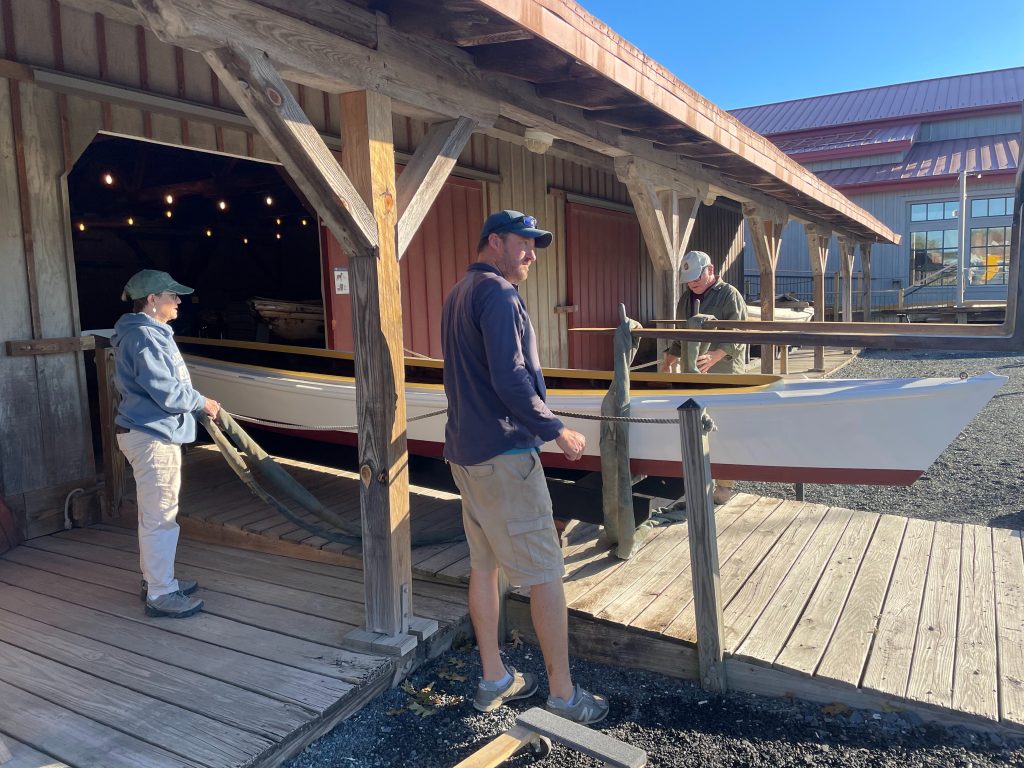
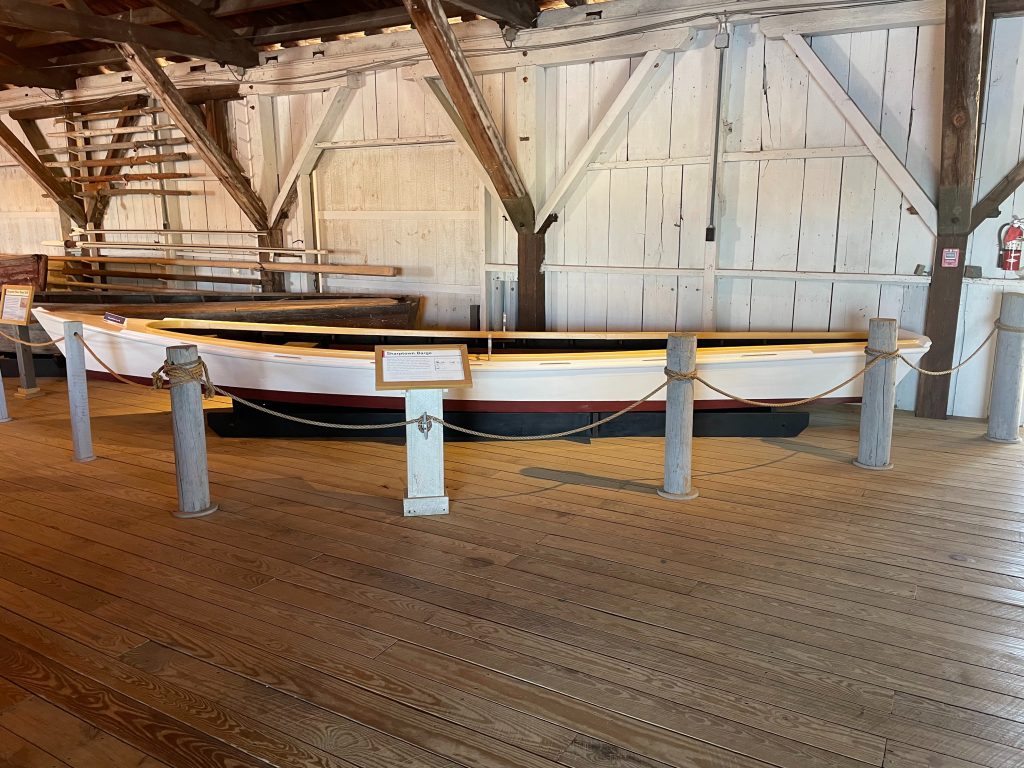
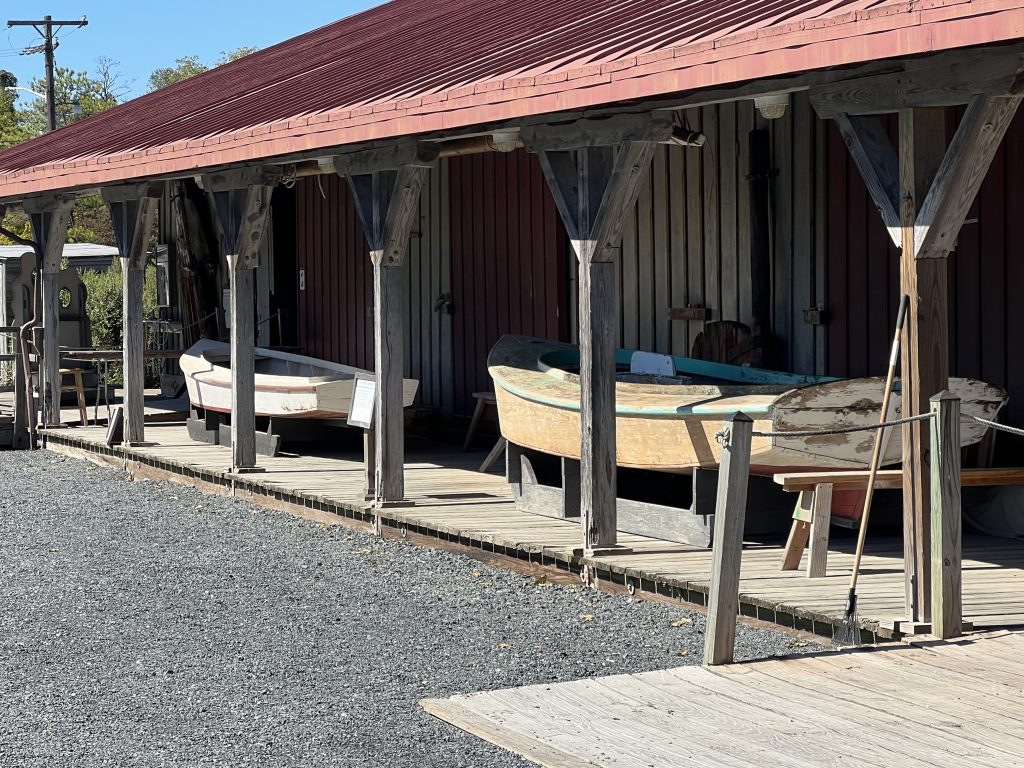
We moved the Barge back into the Small Boat Shed to go back on exhibit. We moved the 1920 Smith Island skiff out onto our work porch and set the Barge on display in its place.

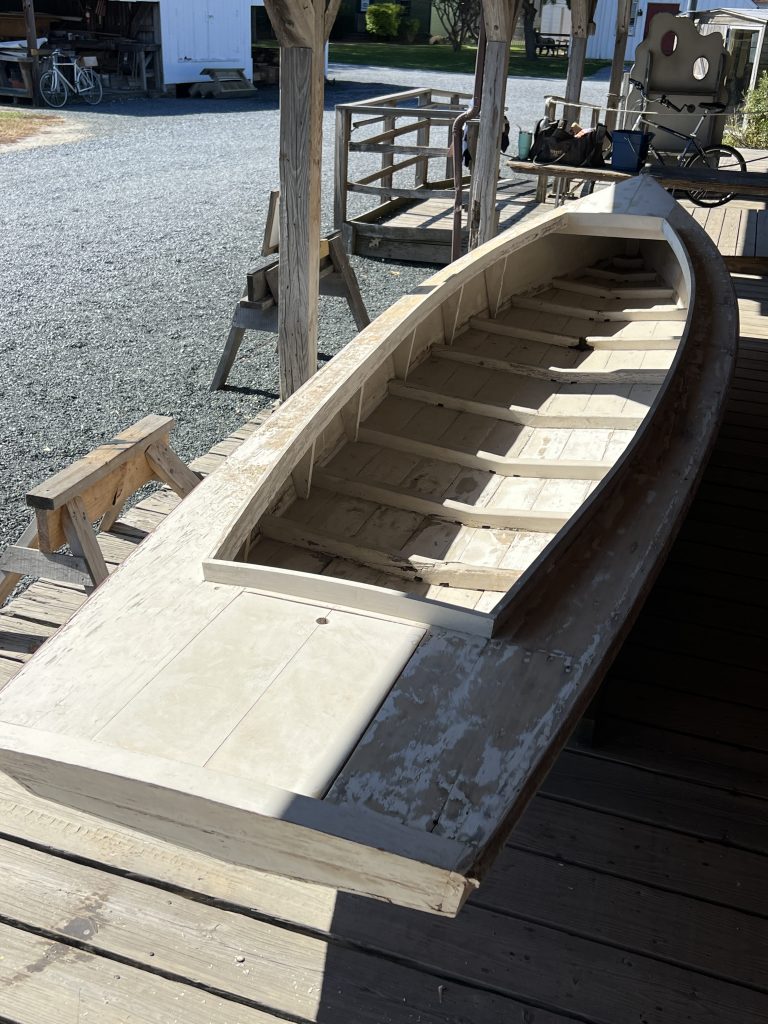
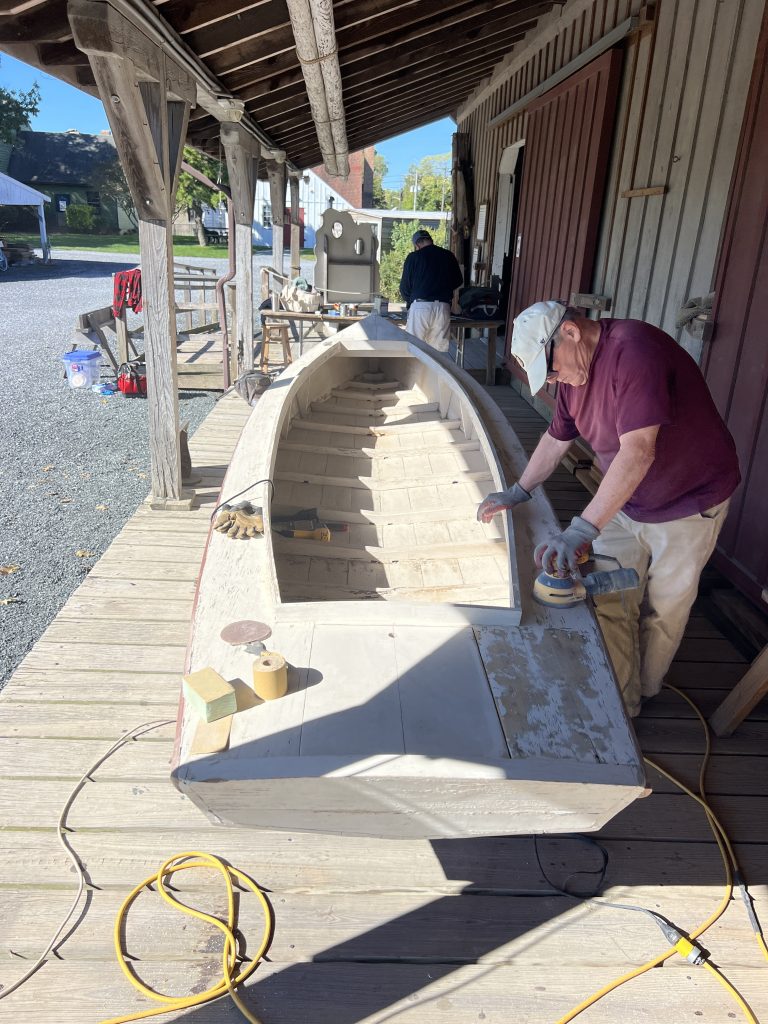
We moved the 1920 Smith Island skiff out on the porch and got right to work cleaning and scraping.

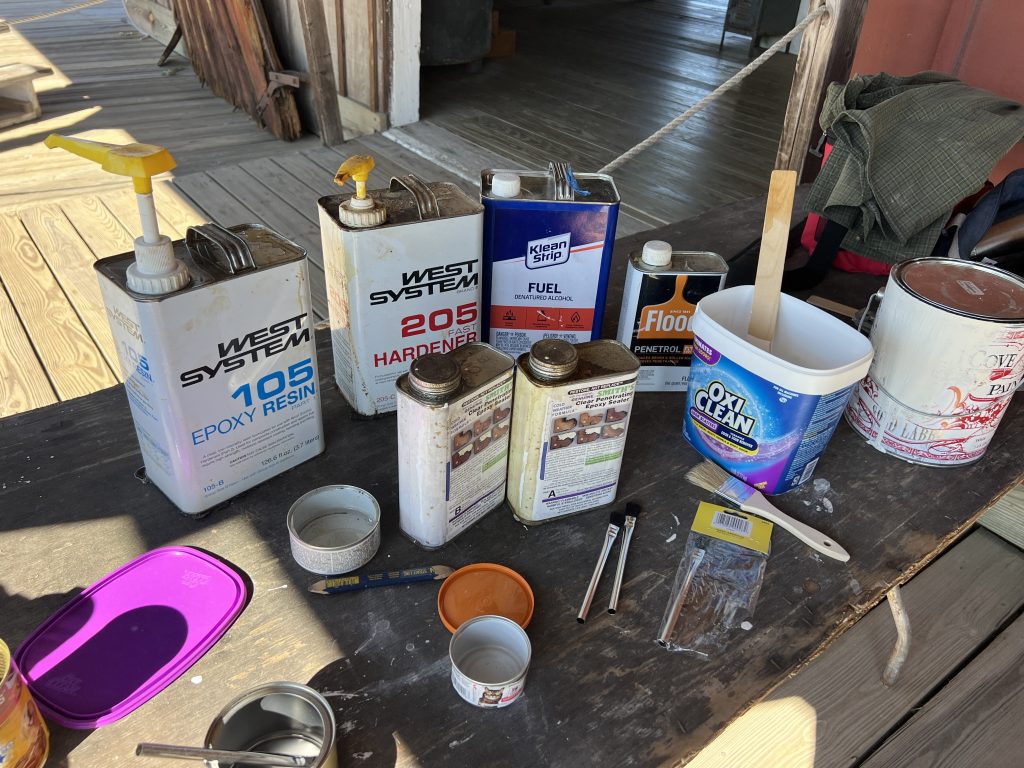
While Tom got started sanding the 1920 skiff, Jenn, Jim, and I worked penetrating epoxy into rotted sections of the 1925 skiff’s transom, coaming, deck, knees, frames, and bottom planking. When we ran out of Smith’s, we thinned West System epoxy with alcohol to complete the job.