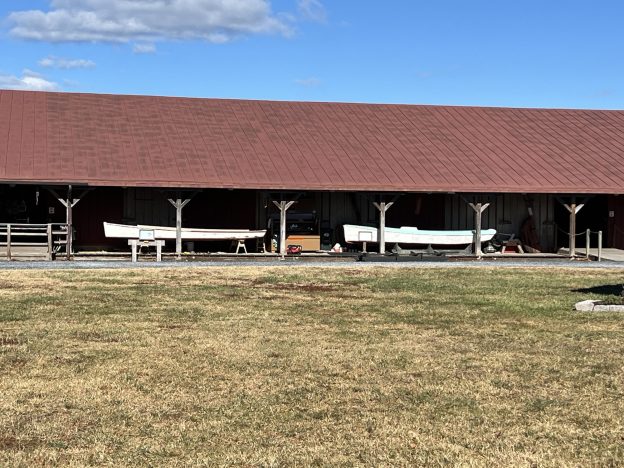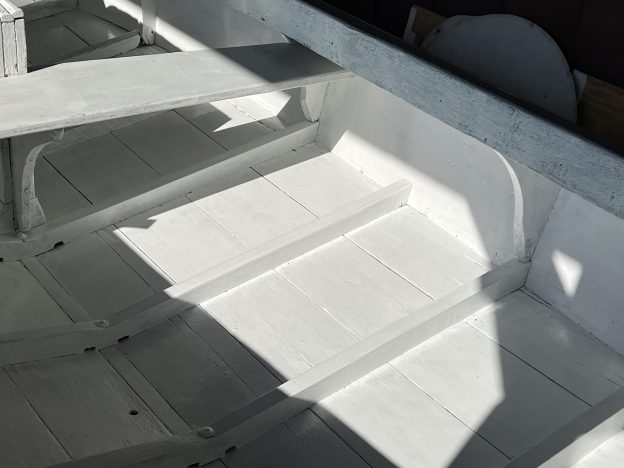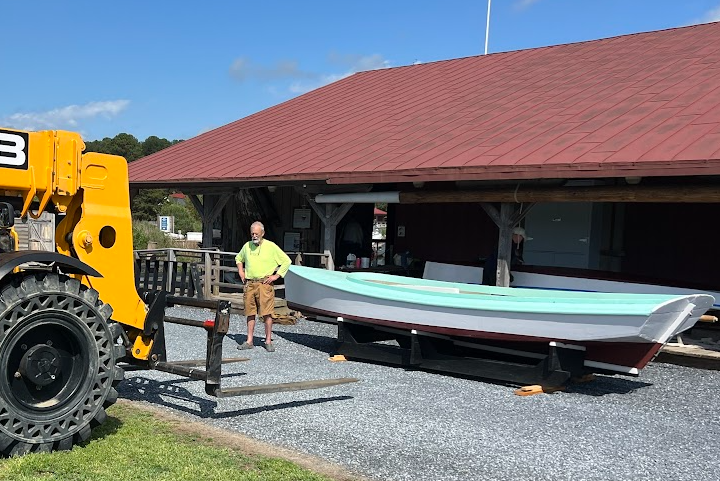
We loaded the 1925 skiff for shipment to the CBMM Easton facility, where the vessel’s lines will be taken off to prepare for drawing and fully documenting it for the first time.
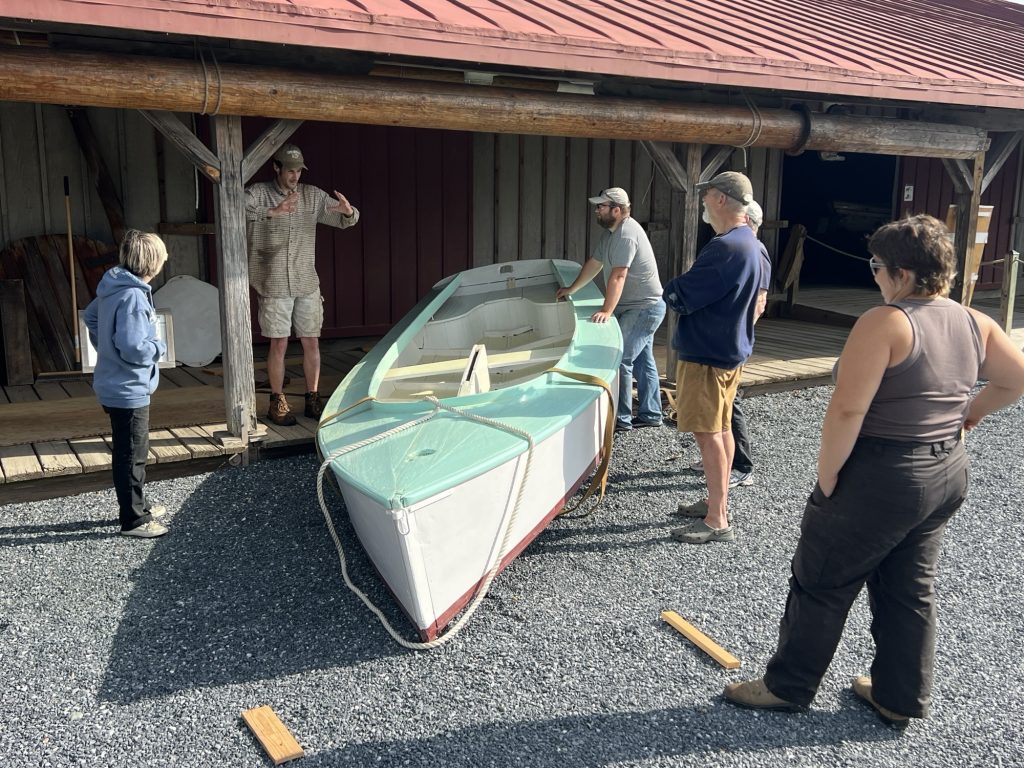
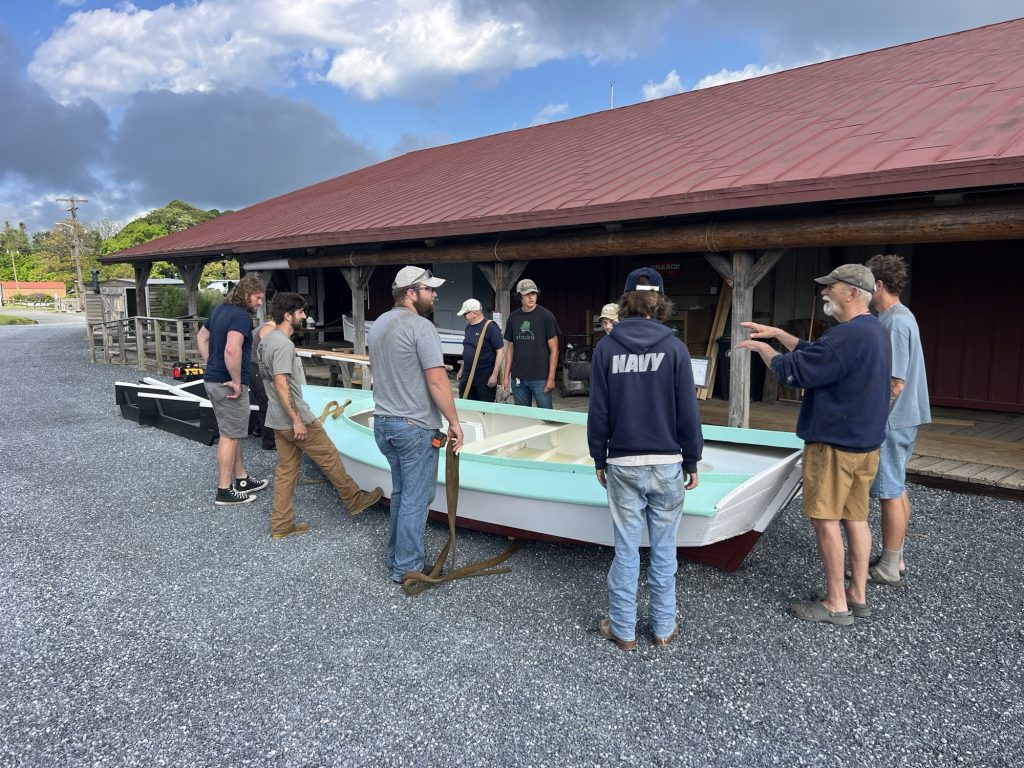
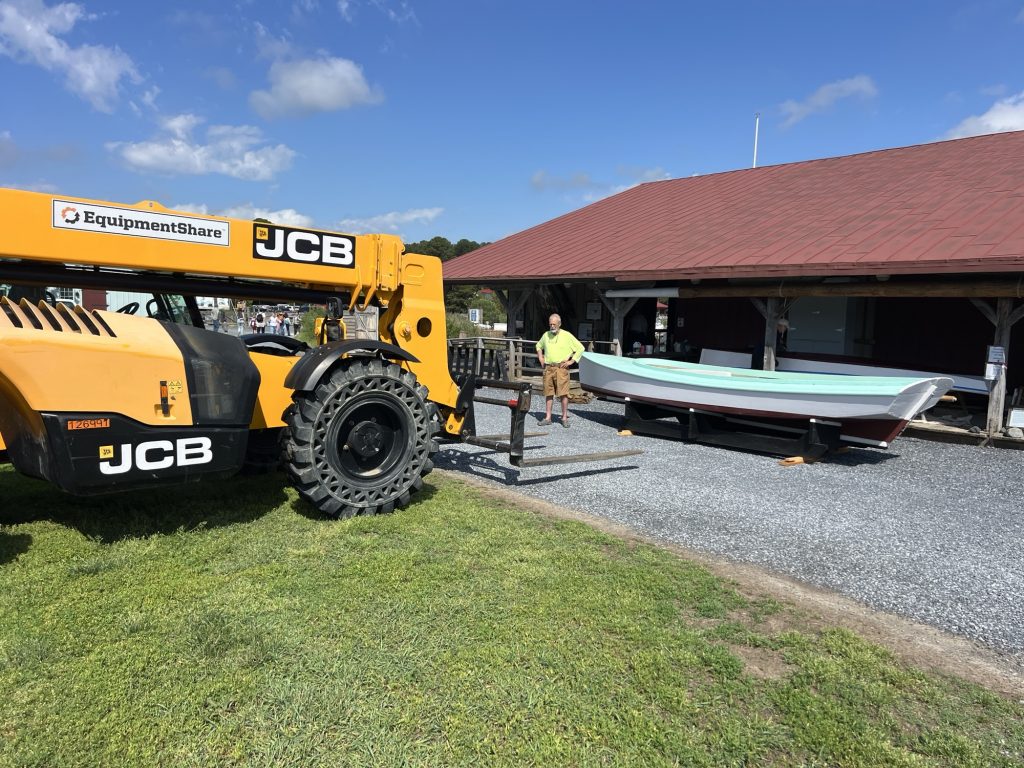
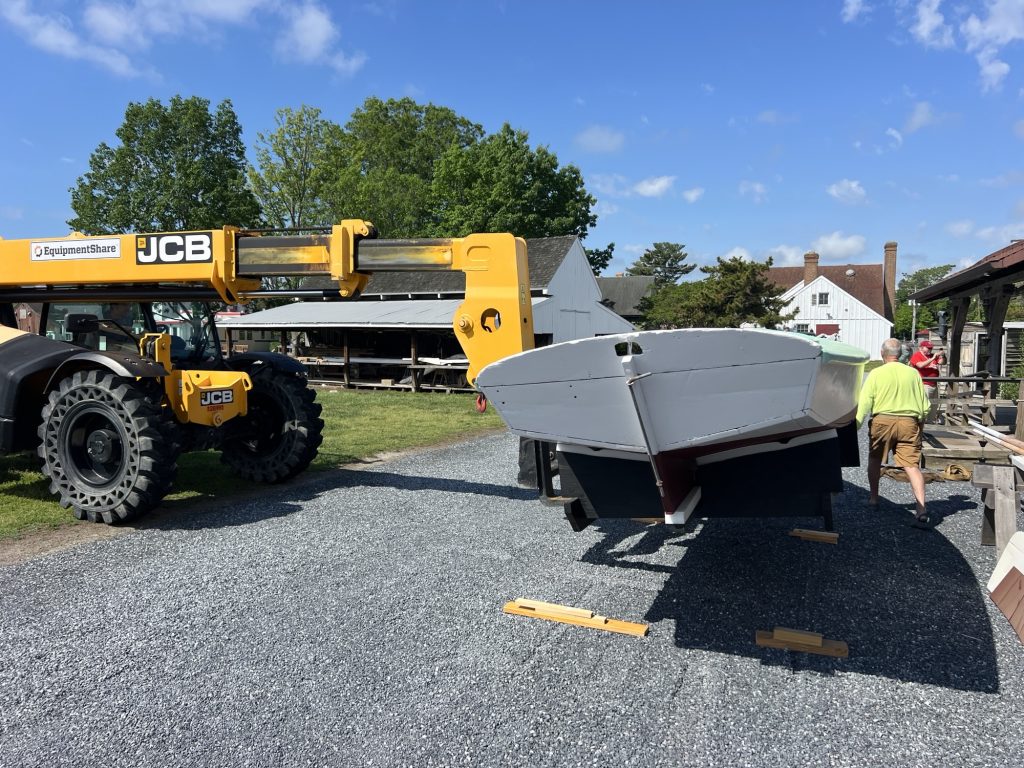
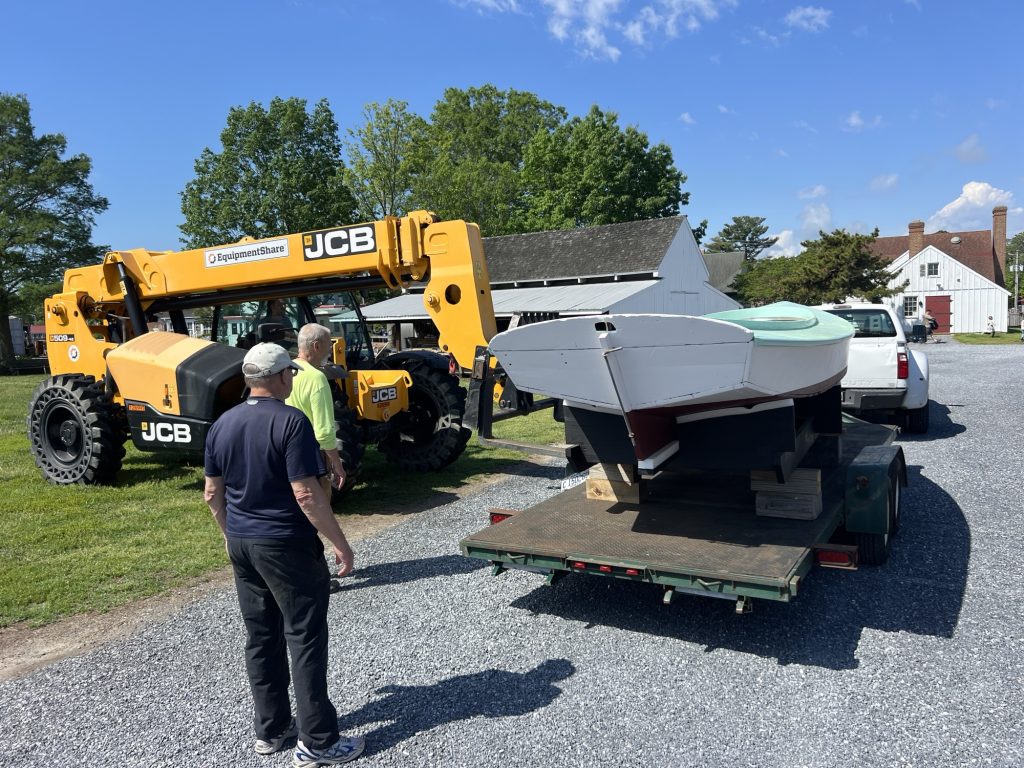
We loaded the 1925 skiff for shipment to the CBMM Easton facility, where the vessel’s lines will be taken off to prepare for drawing and fully documenting it for the first time.
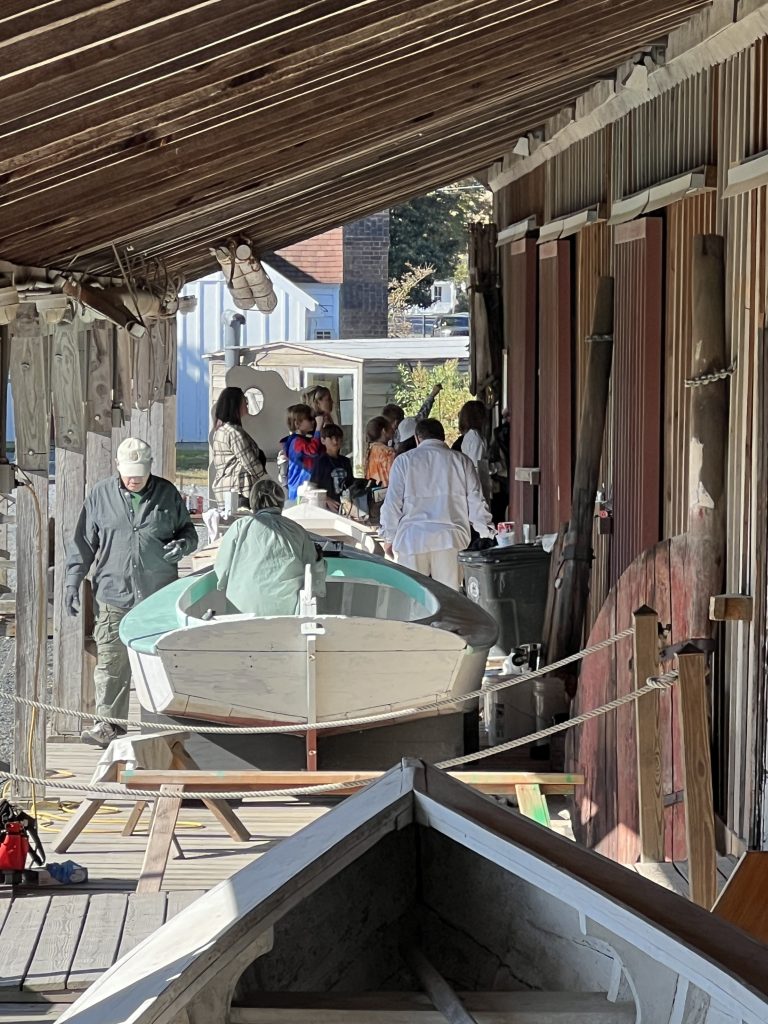
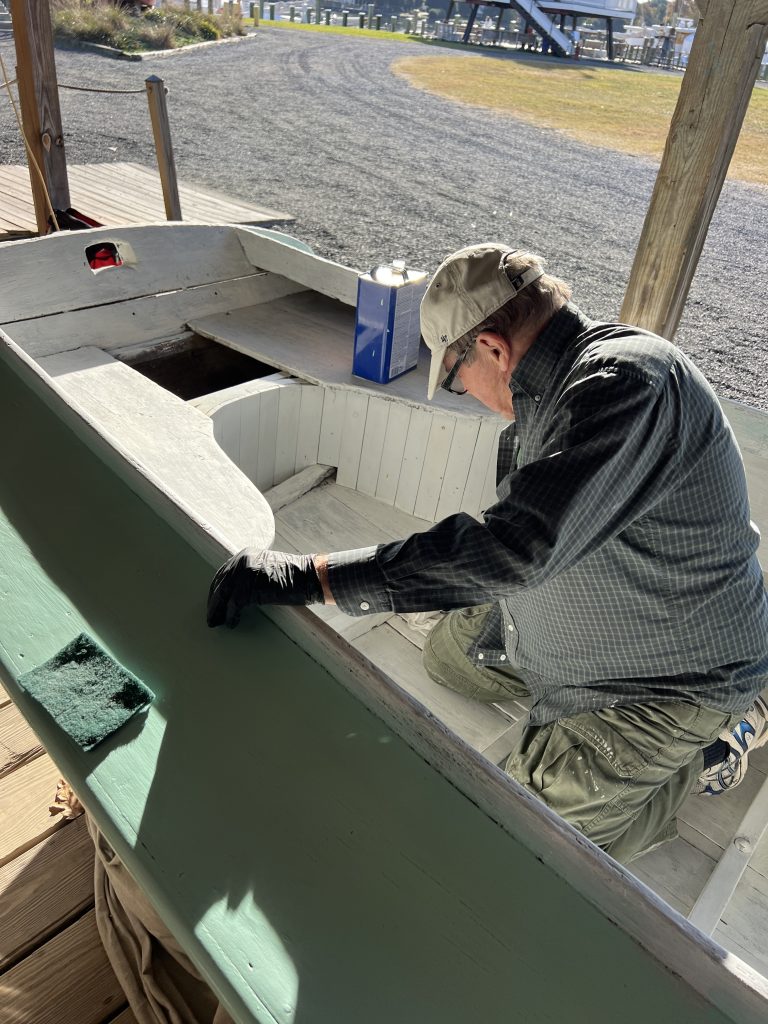
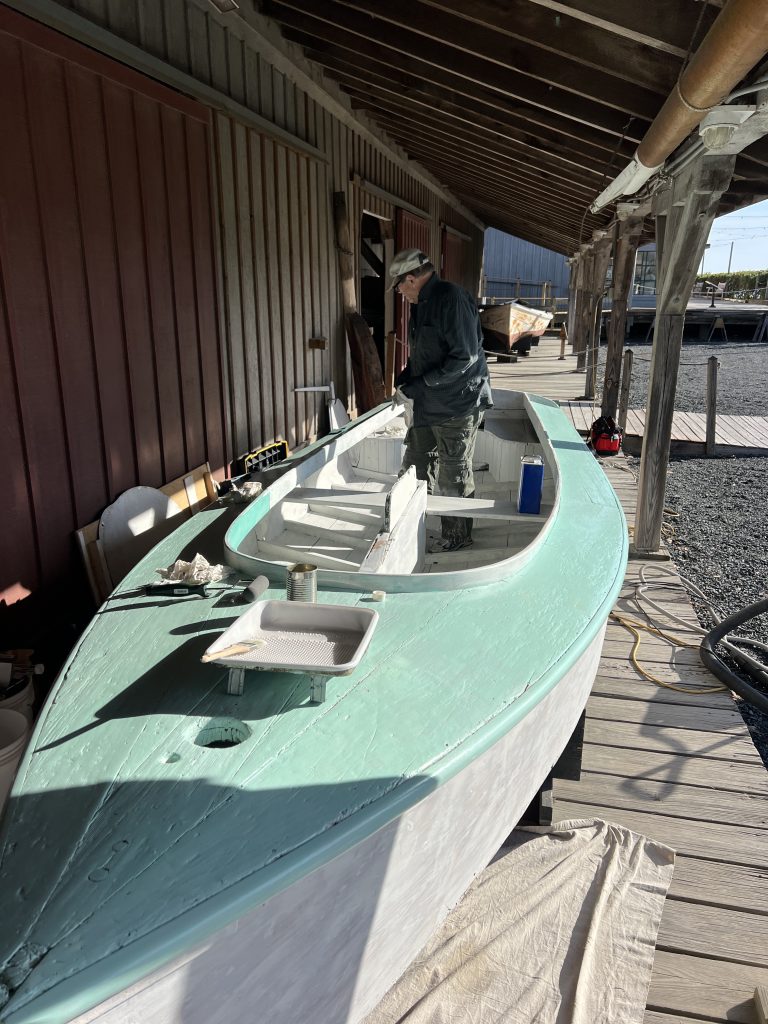
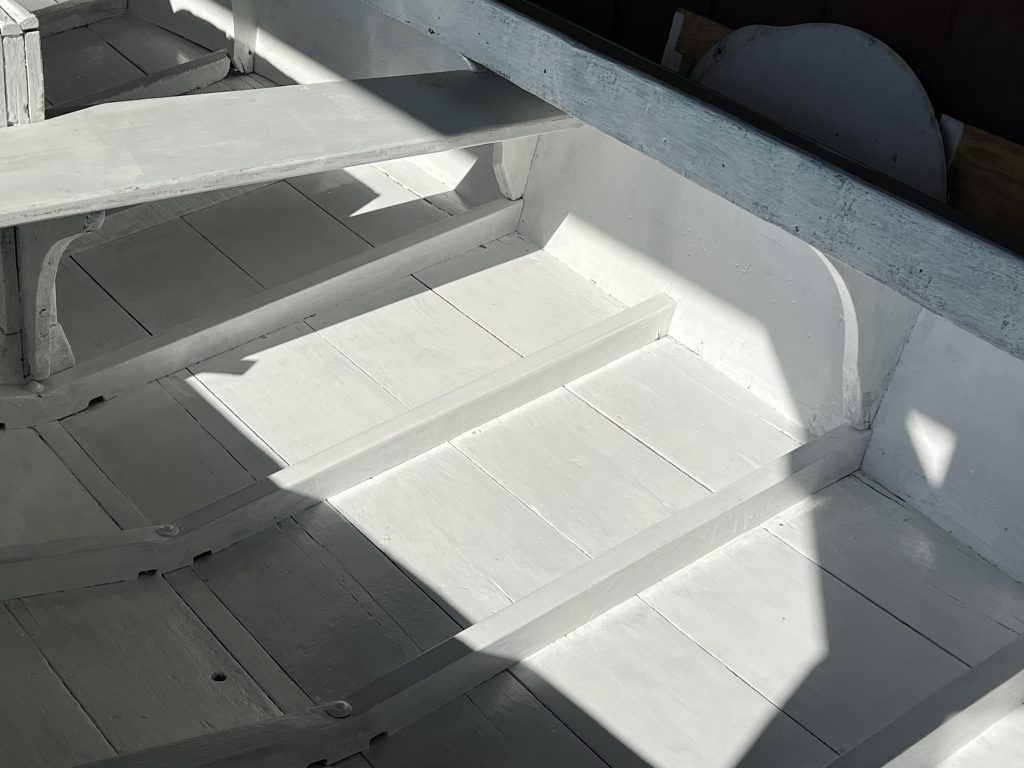
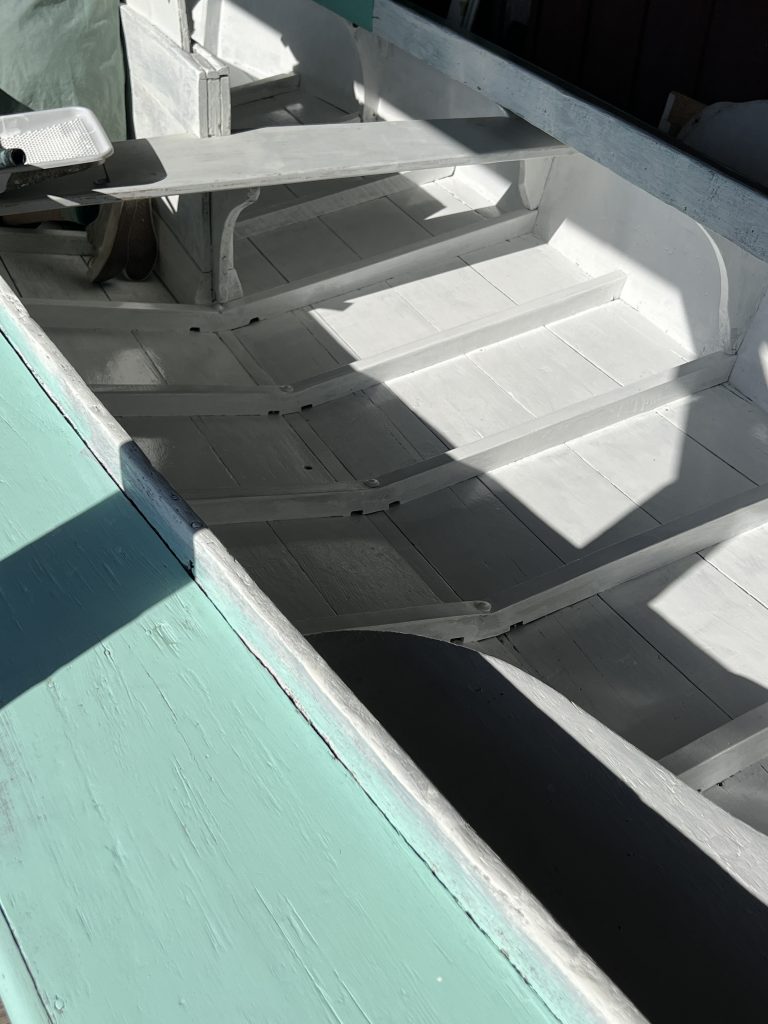
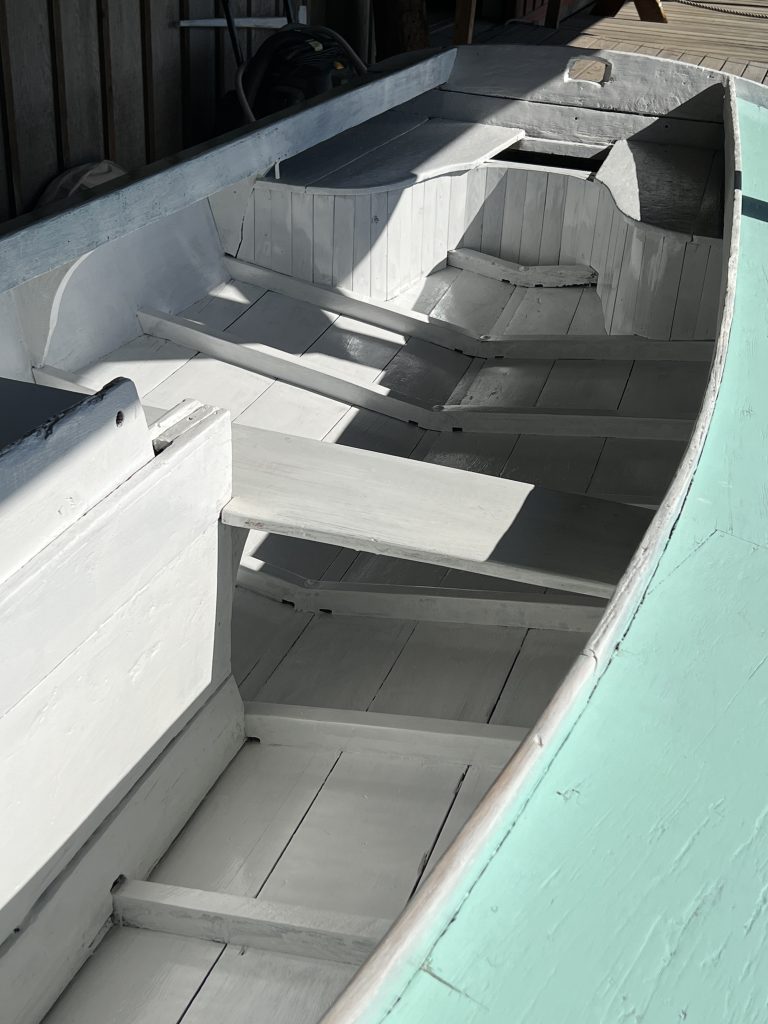
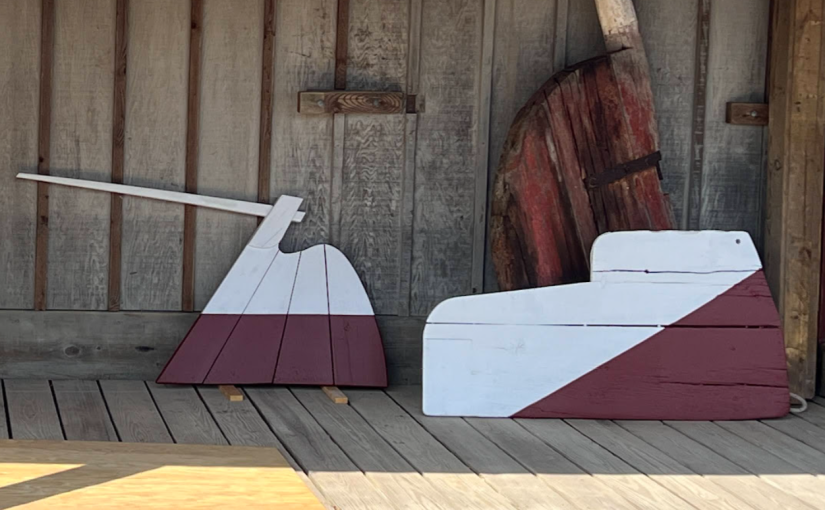
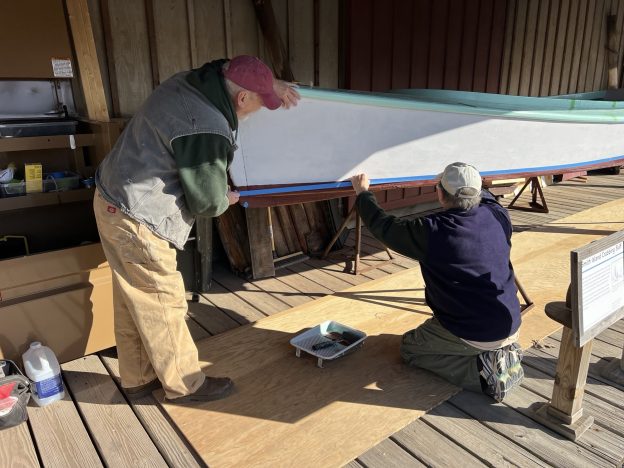
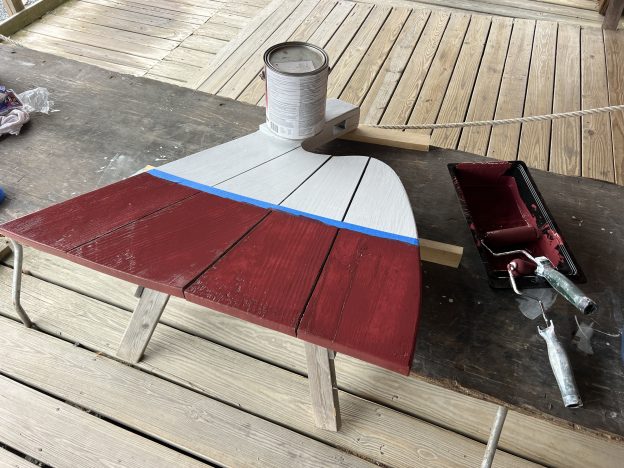
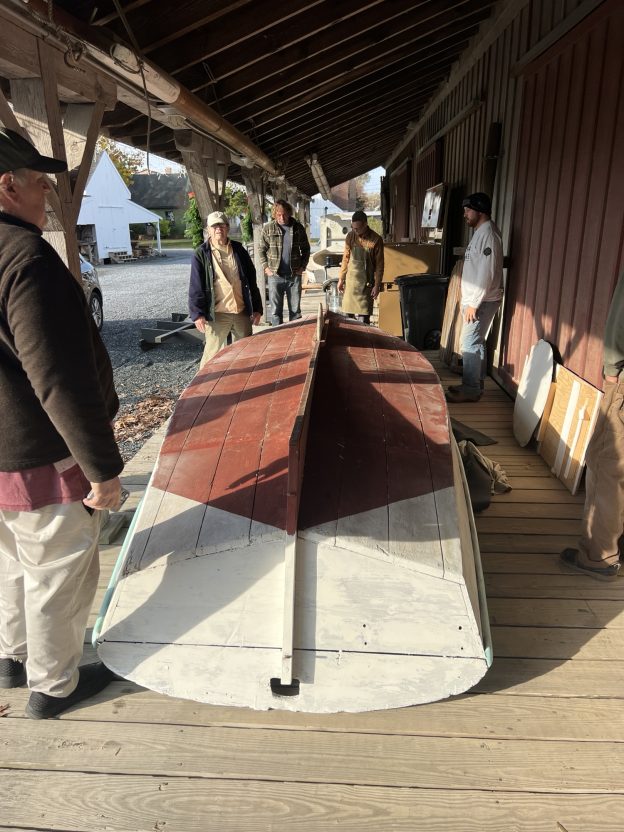
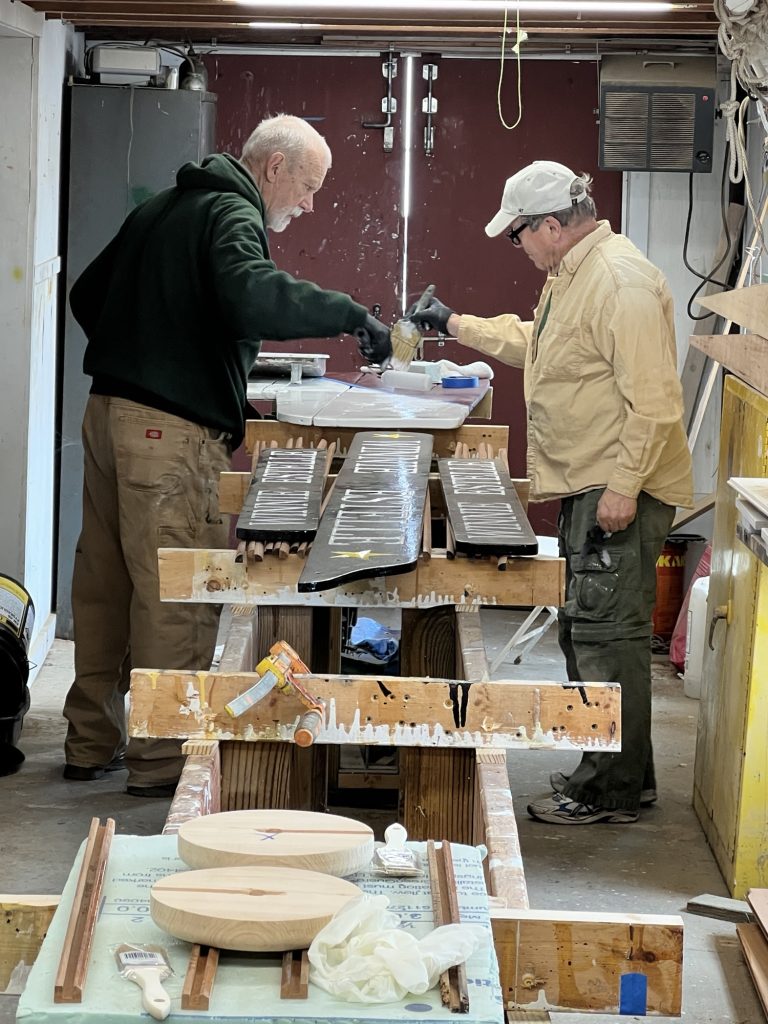
Tom and Willem rolled and brushed topsides paint onto the 1925 skiff. Will put a final coat of paint on its rudder. Bob did final prep on the interior of the 1920 skiff, ready for primer next week. Mike applied flat black paint to one of the exhibit cradles.
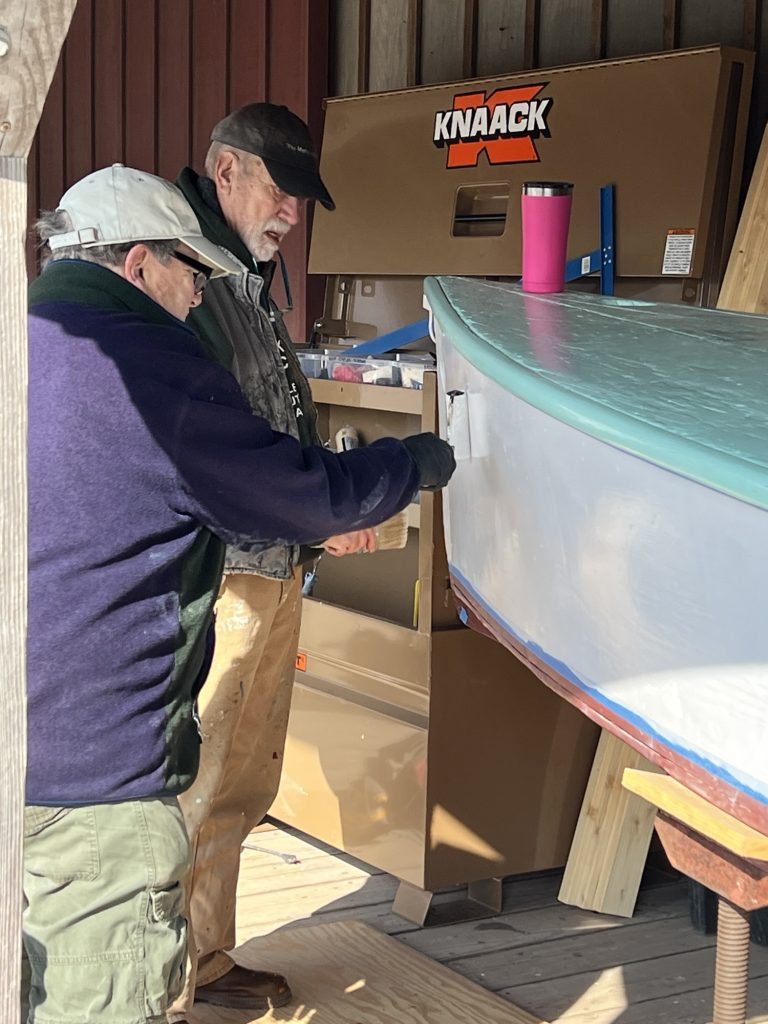
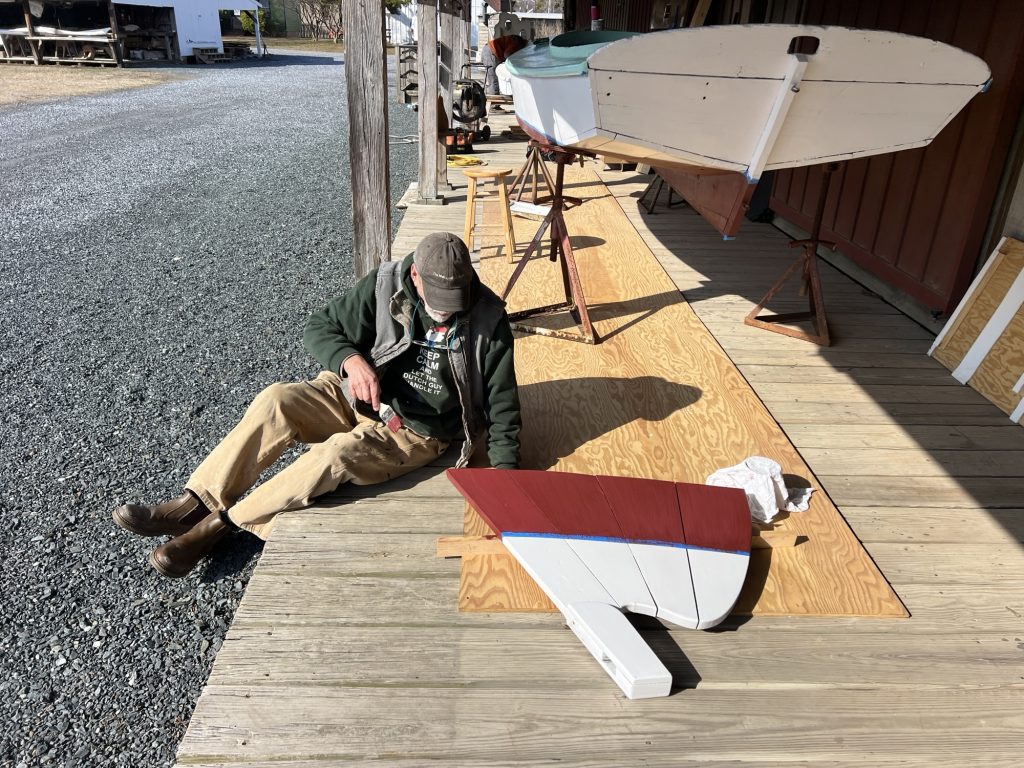
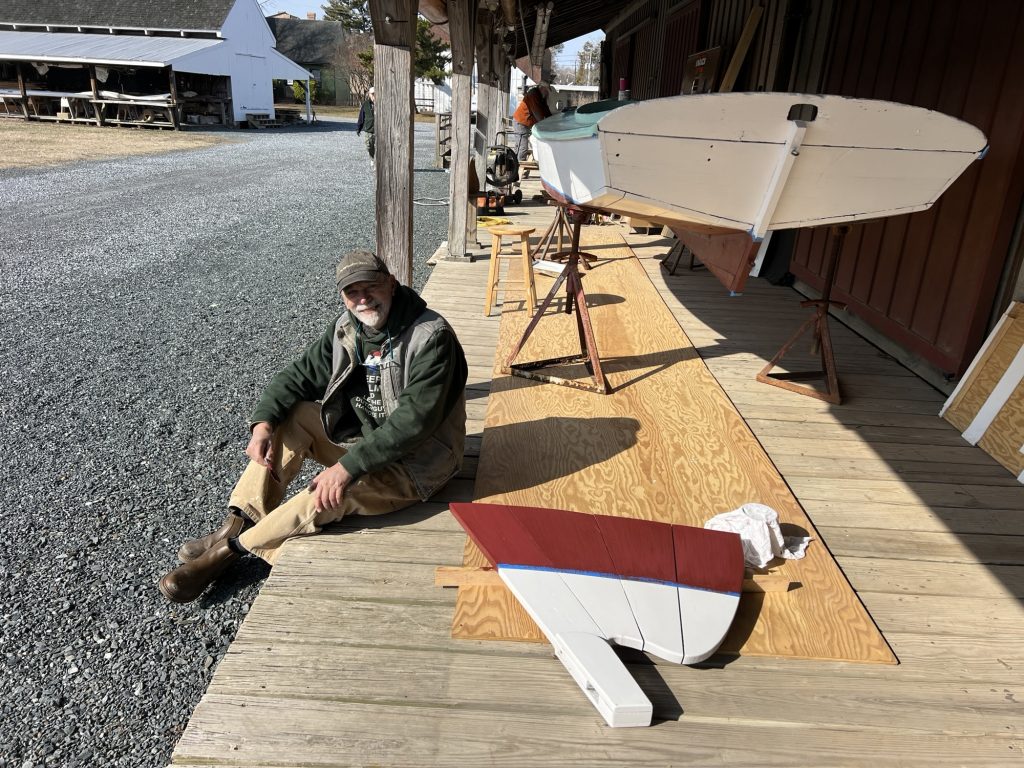
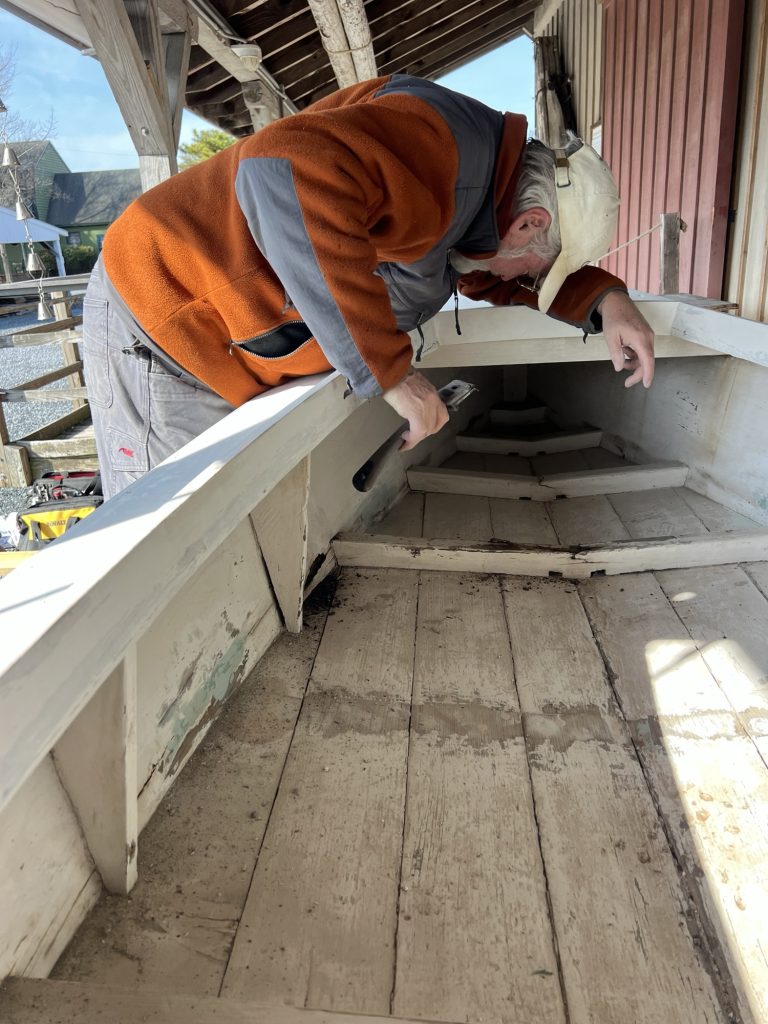
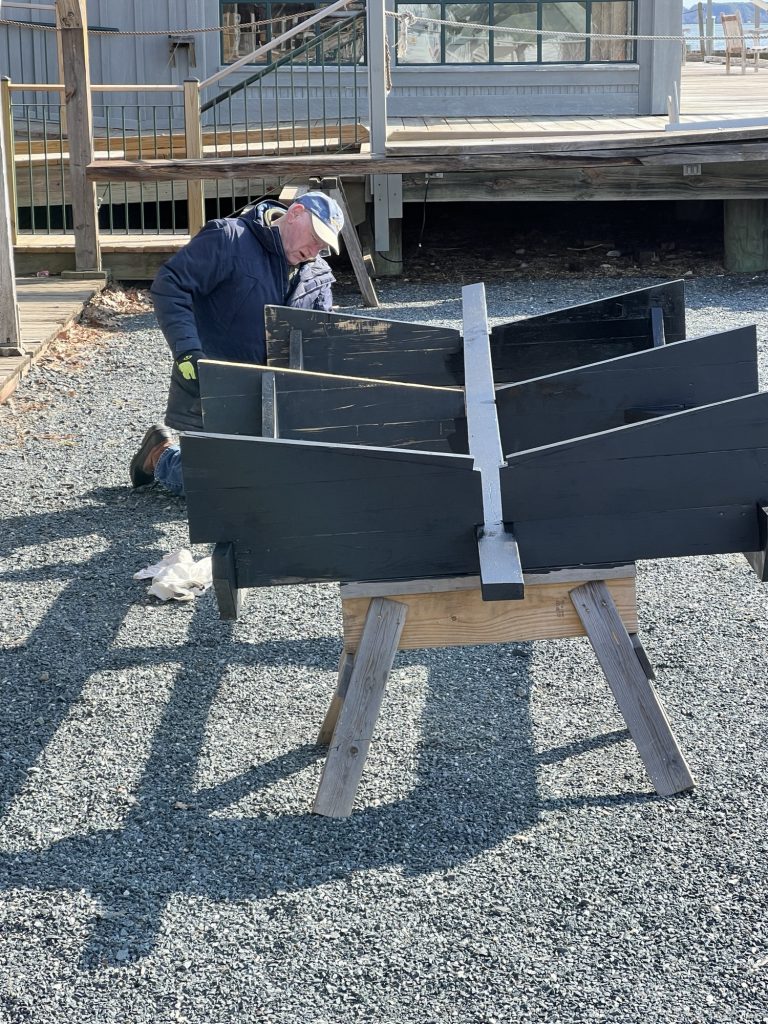
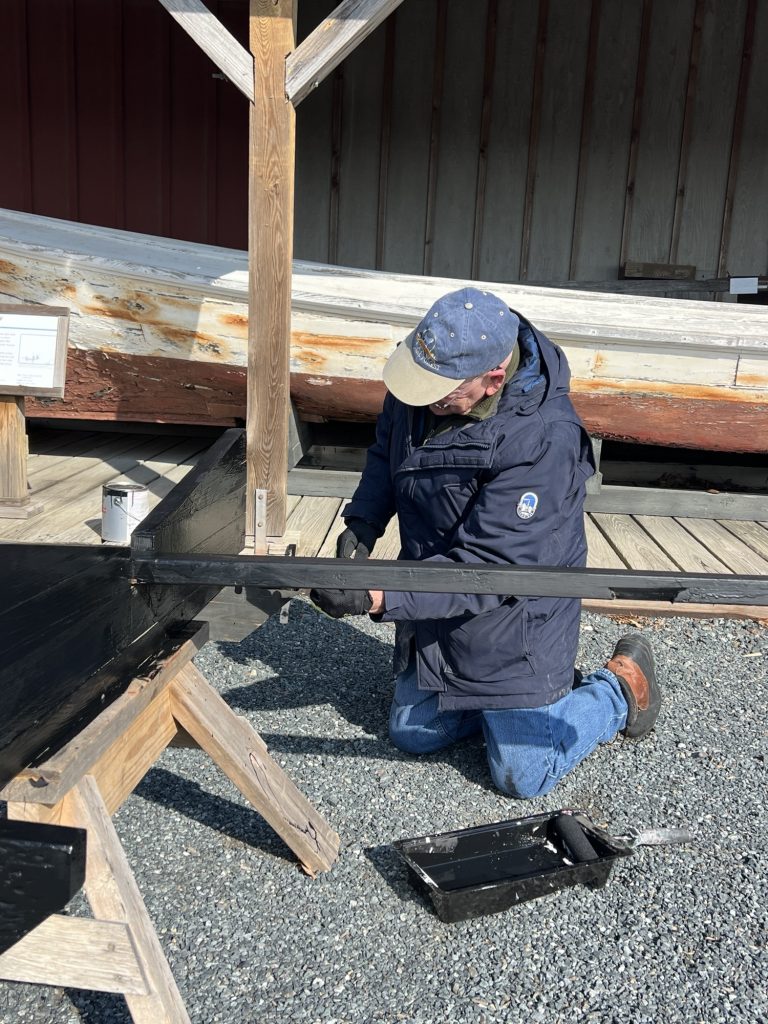
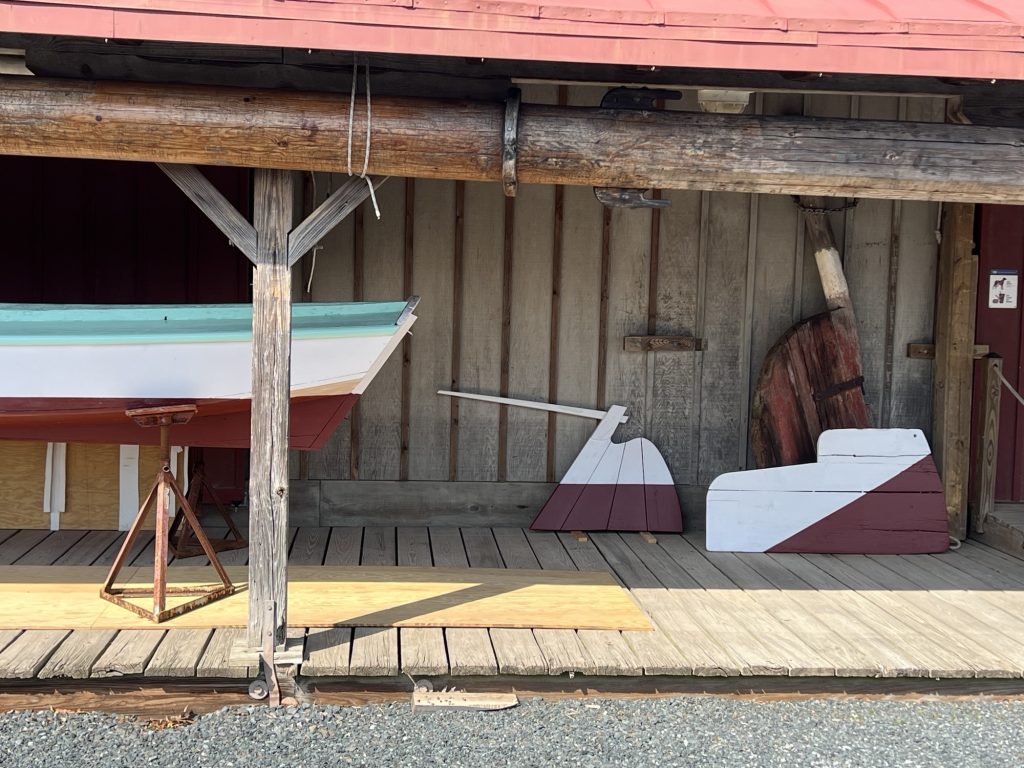
Warm enough to paint this morning – 48 degrees. But the temps had dipped to 28 overnight. We warmed up the topsides paint and primer in buckets of hot water.
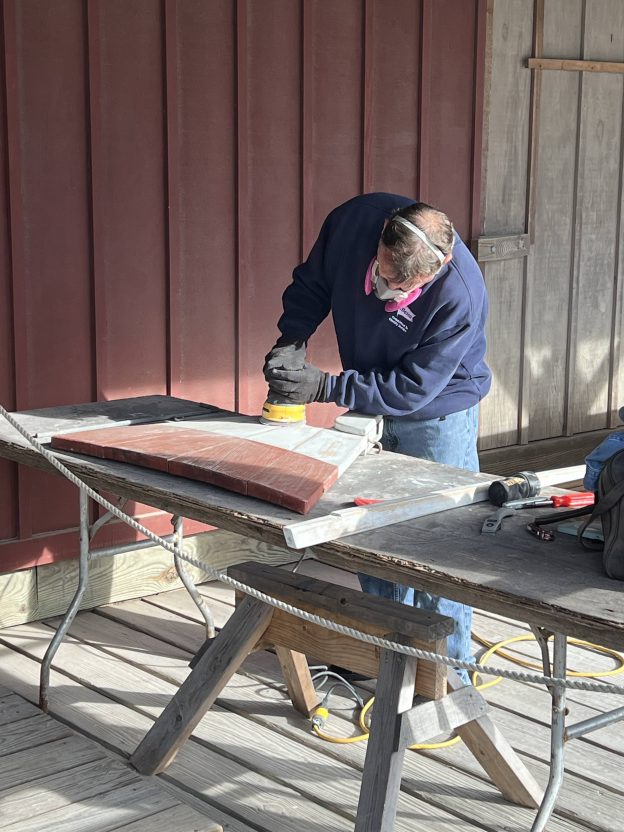
Bob and Mike sanded the filler epoxy, then taped the waterline and primed the 1920 (white) skiff. Tom and Willem taped the waterline of the 1925 (green) skiff and put on another coat of topsides paint.
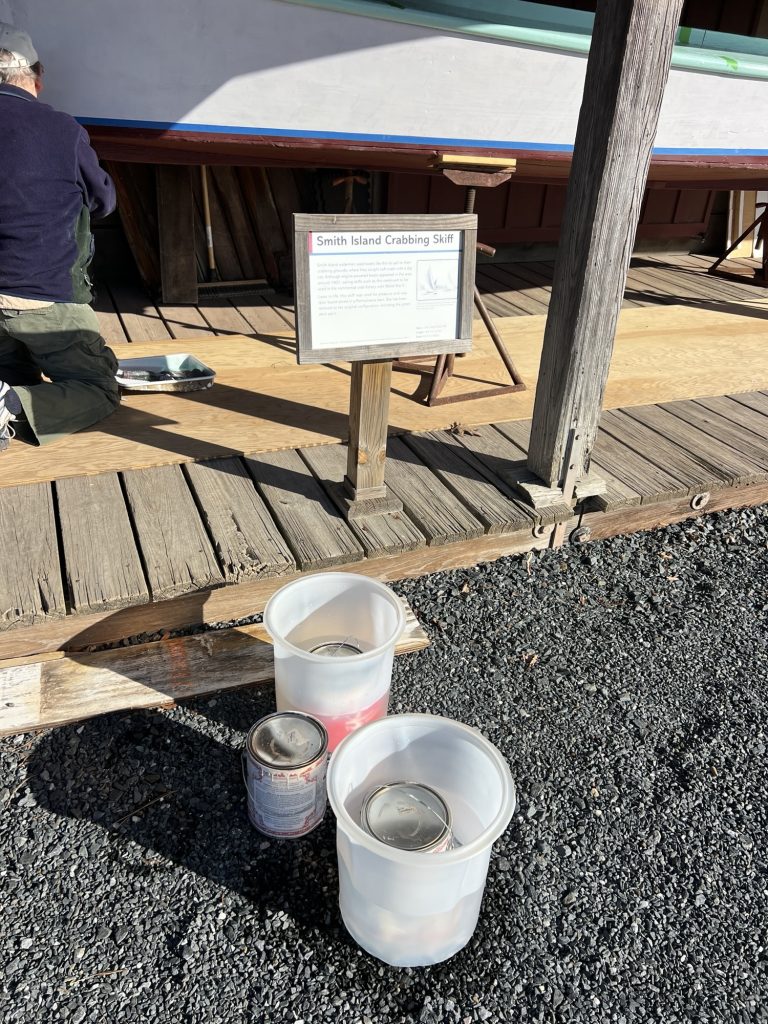
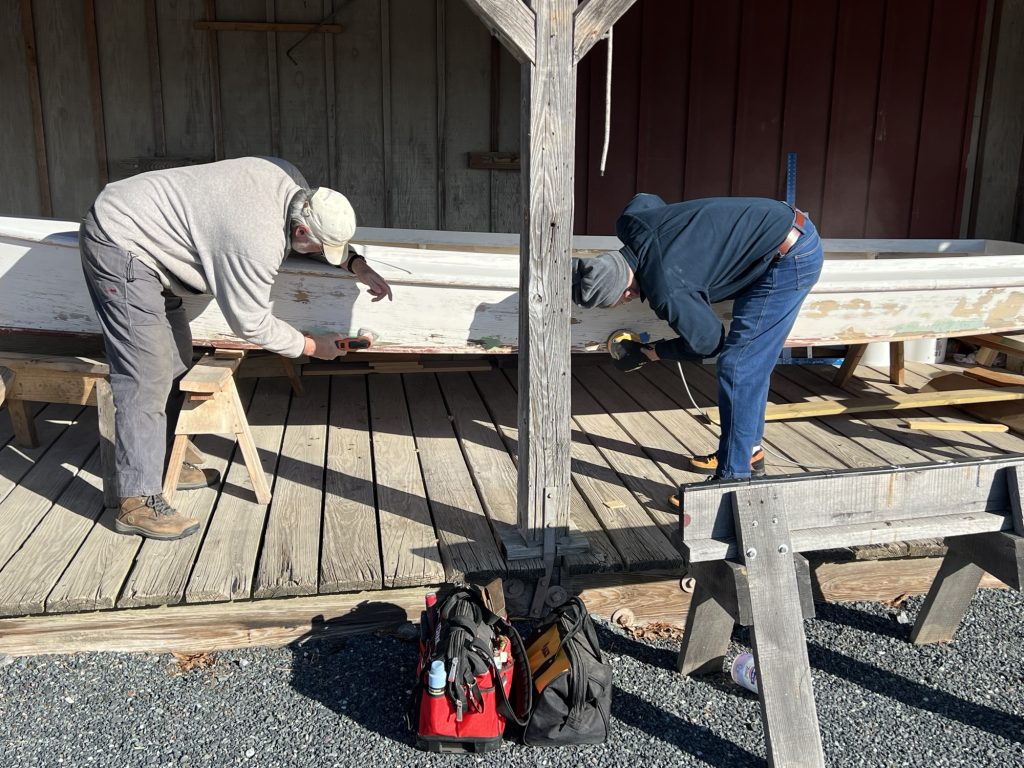
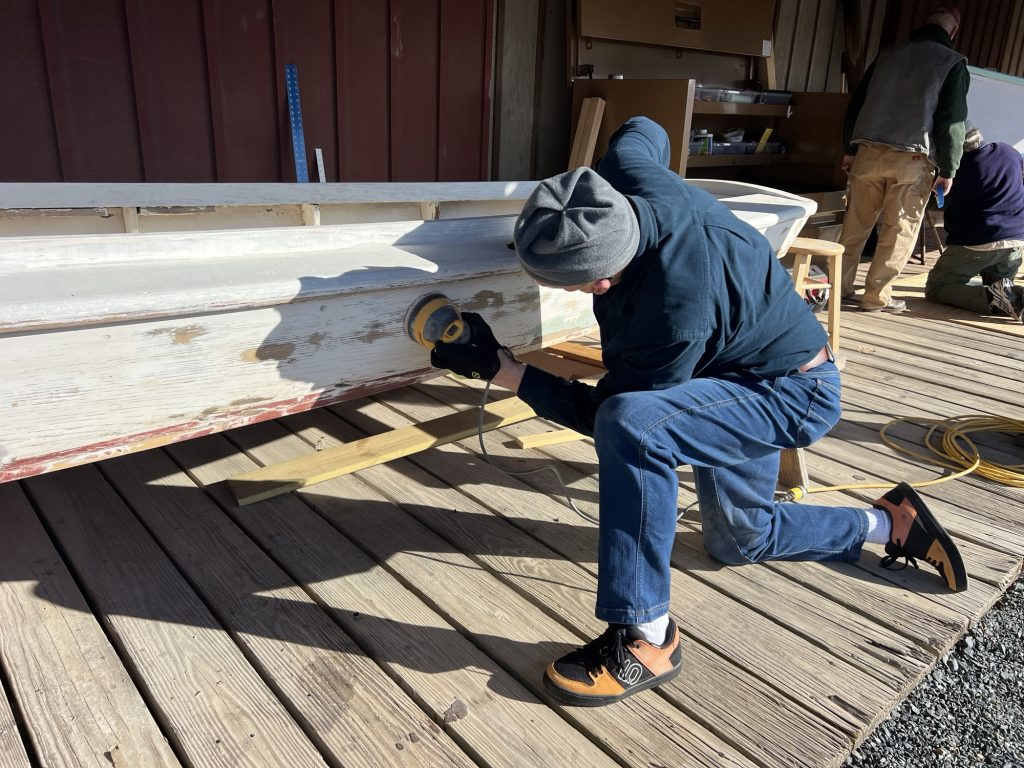
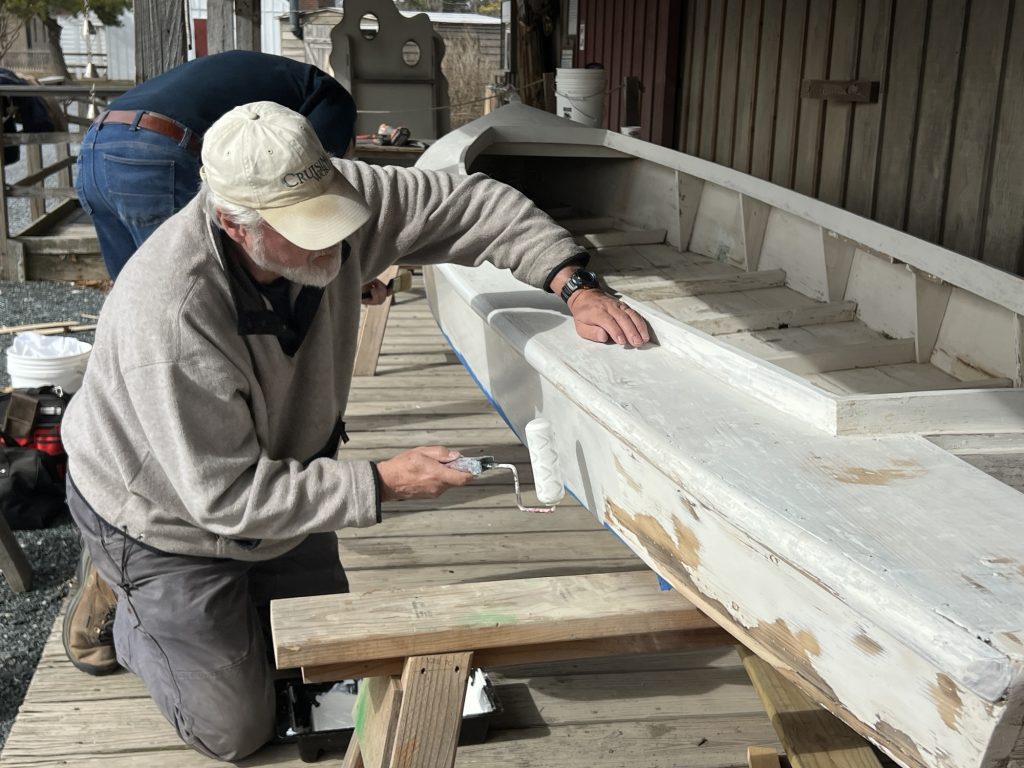
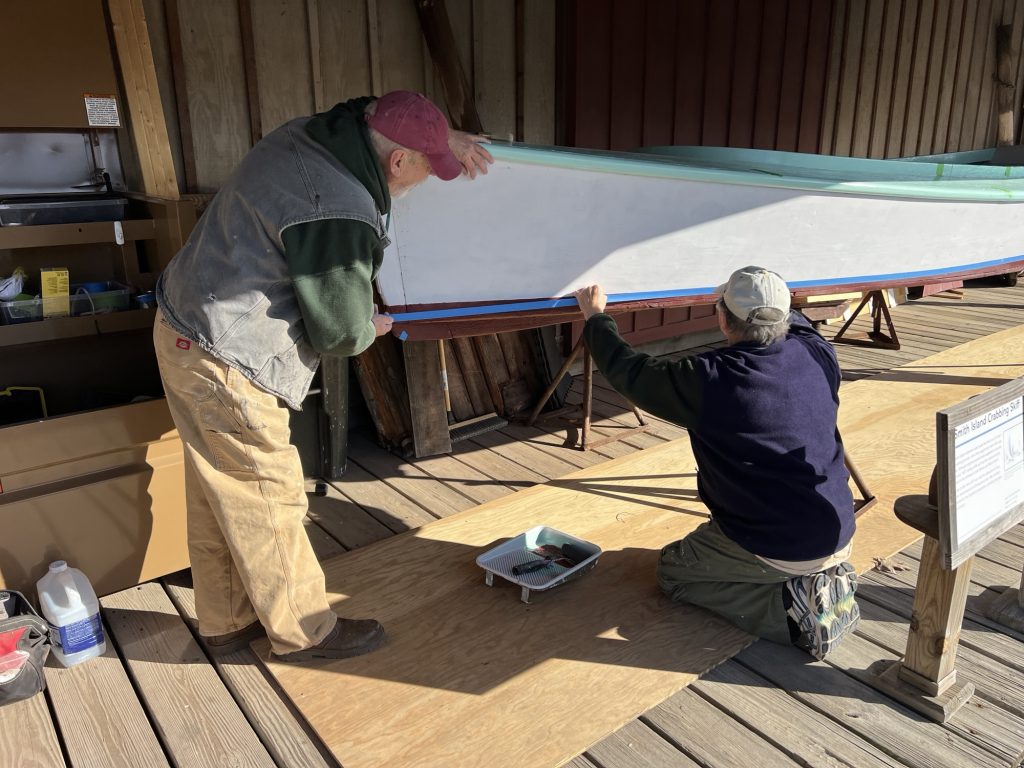
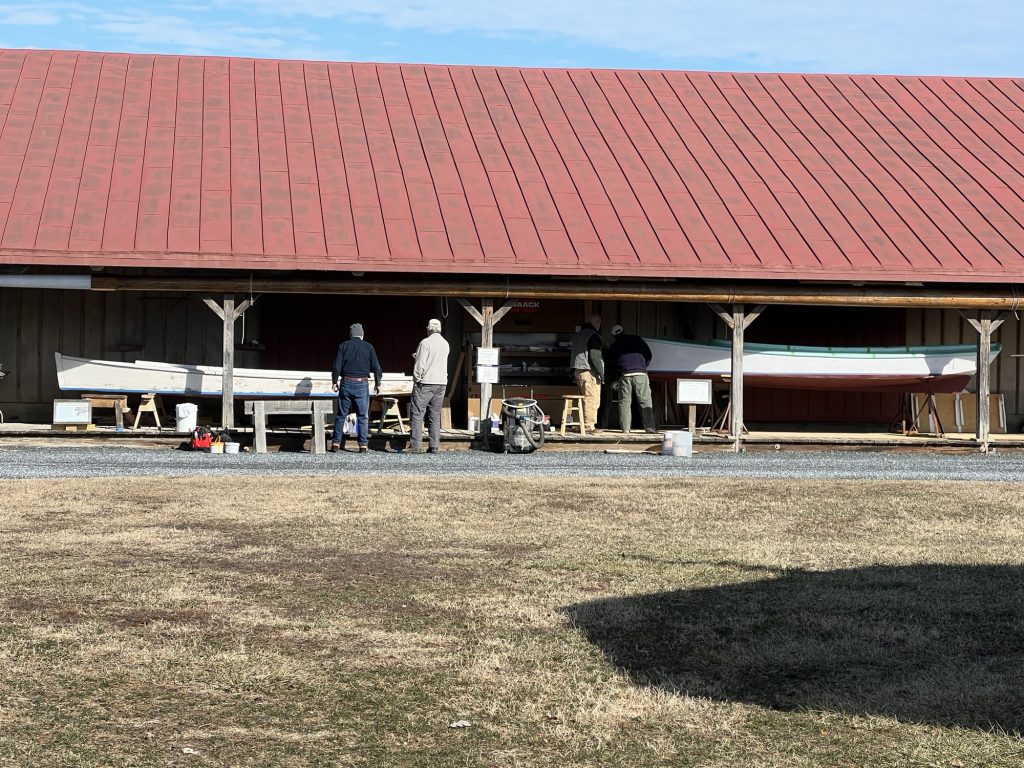
While the paint dried, Tom and Willem did another coat on the 1925’s centerboard. Bob and Mike prepped a boat exhibit cradle for new paint next week.
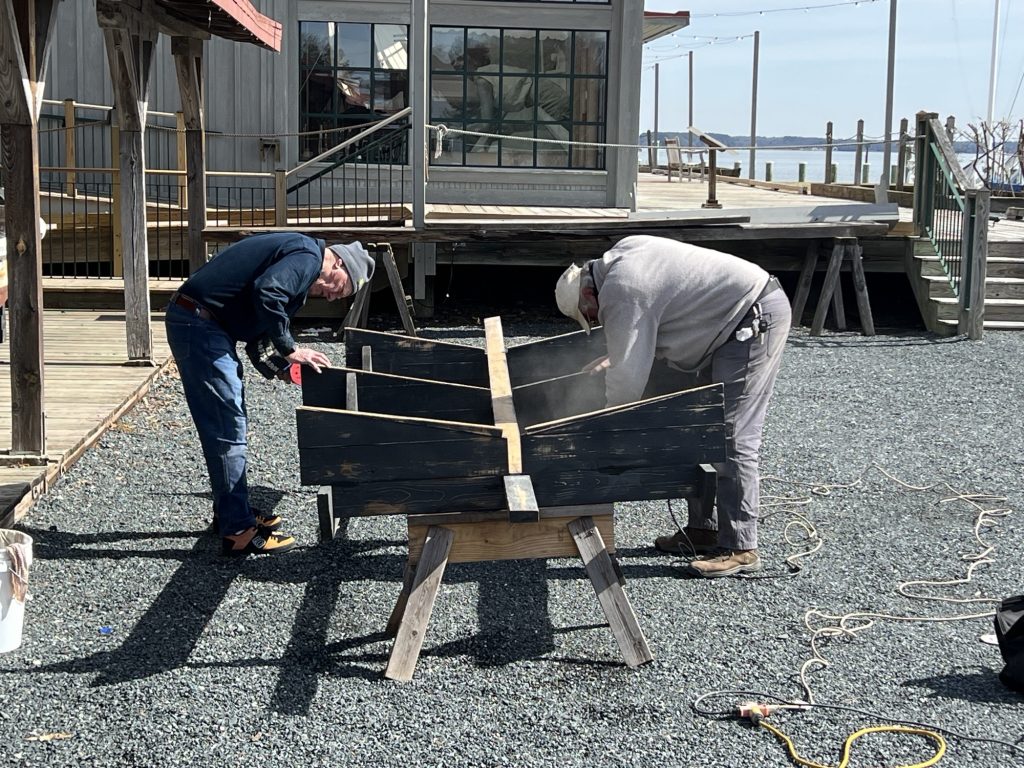
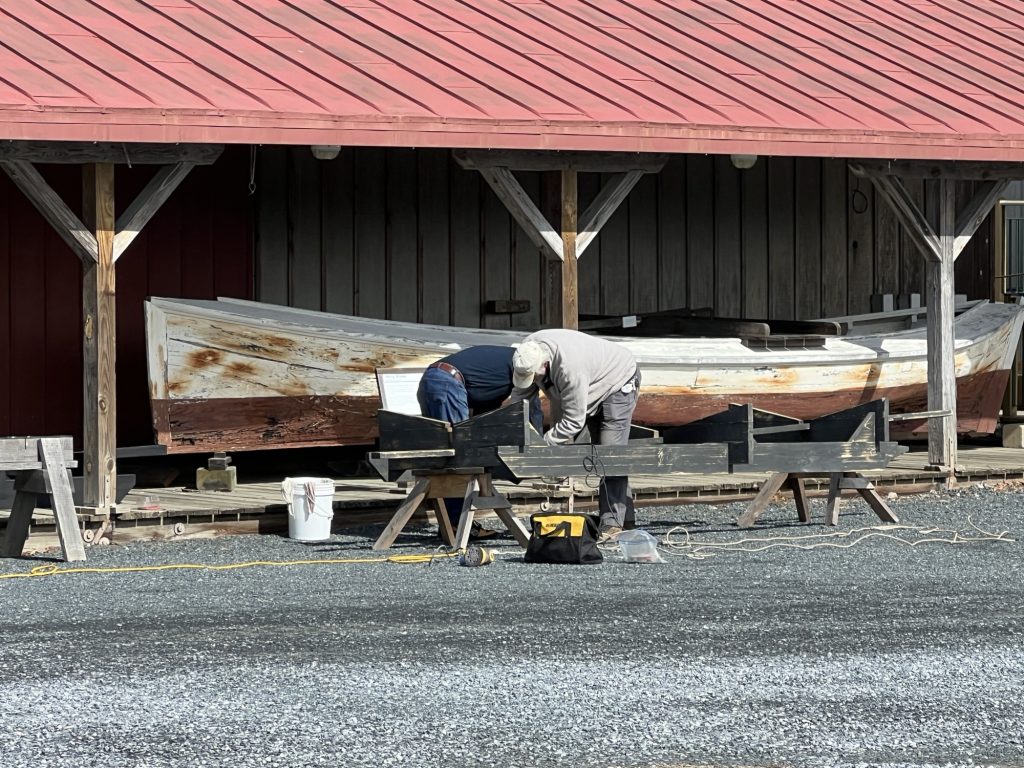
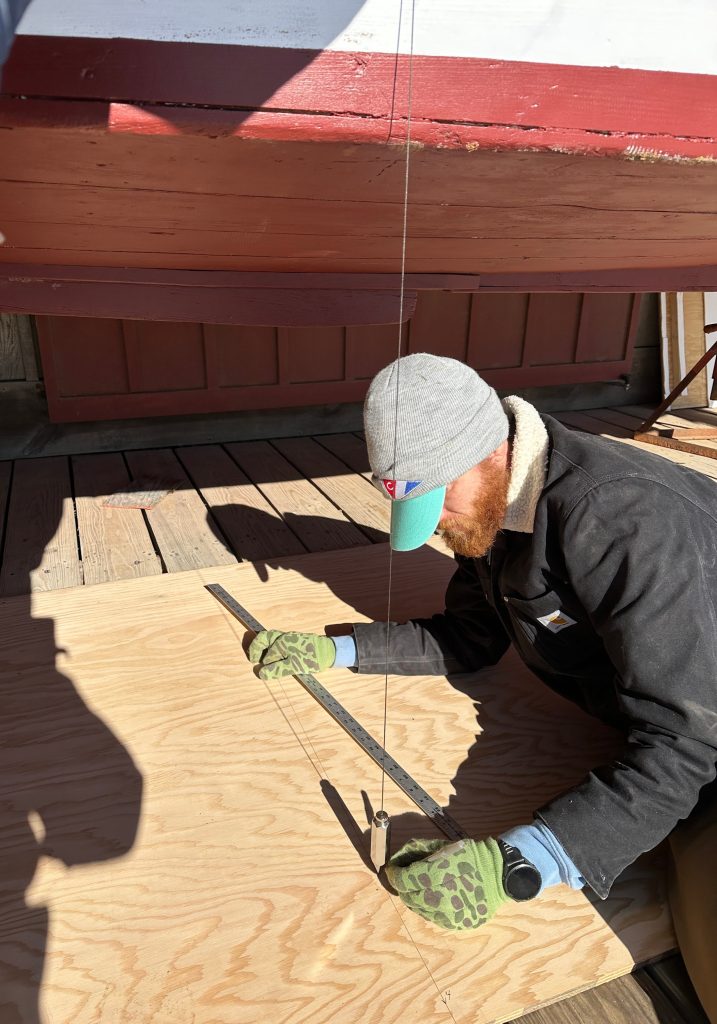
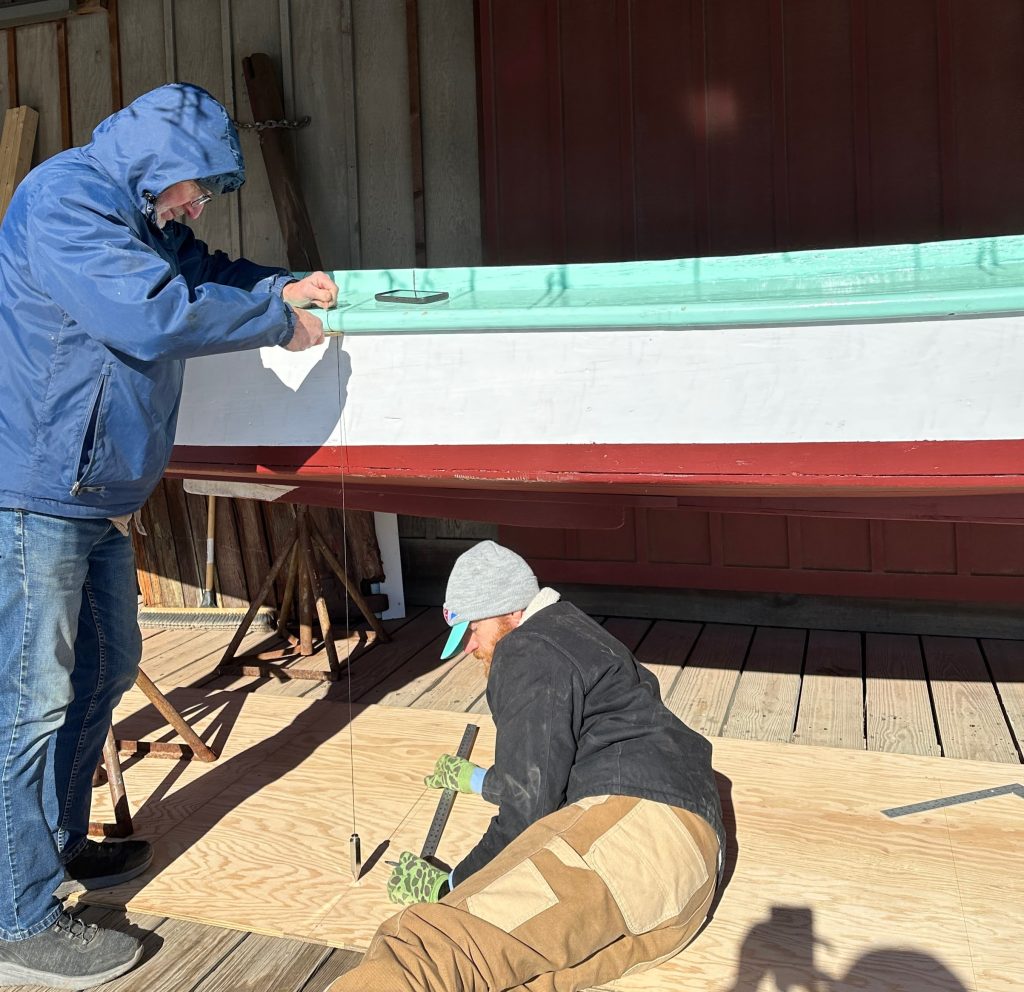
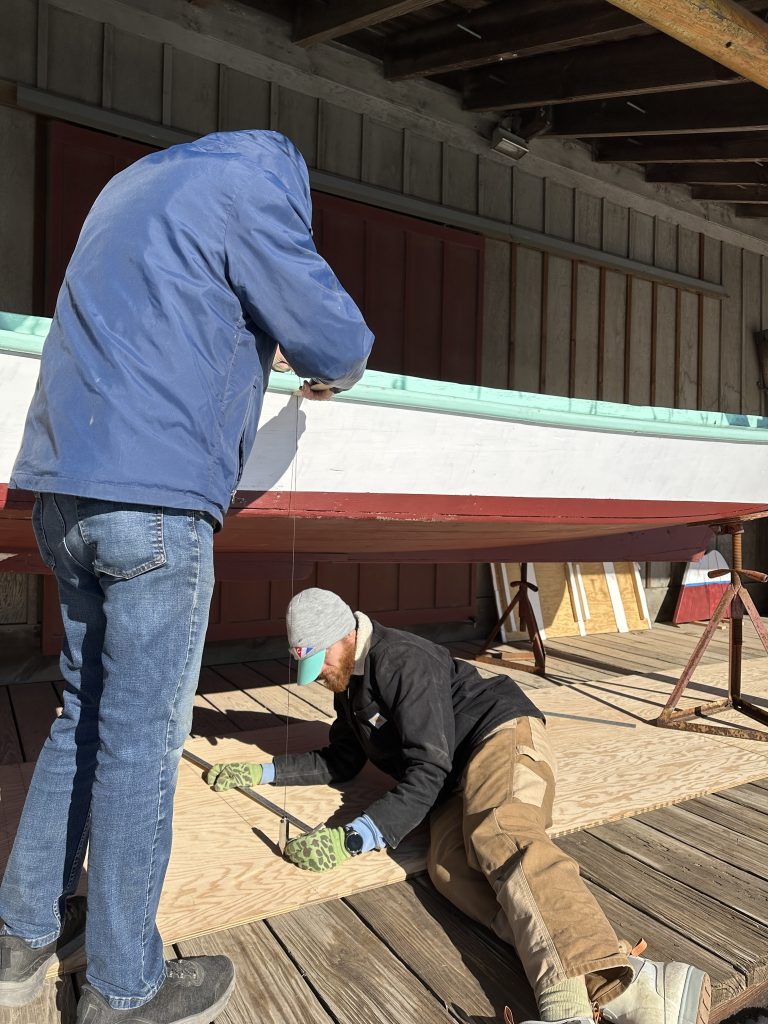
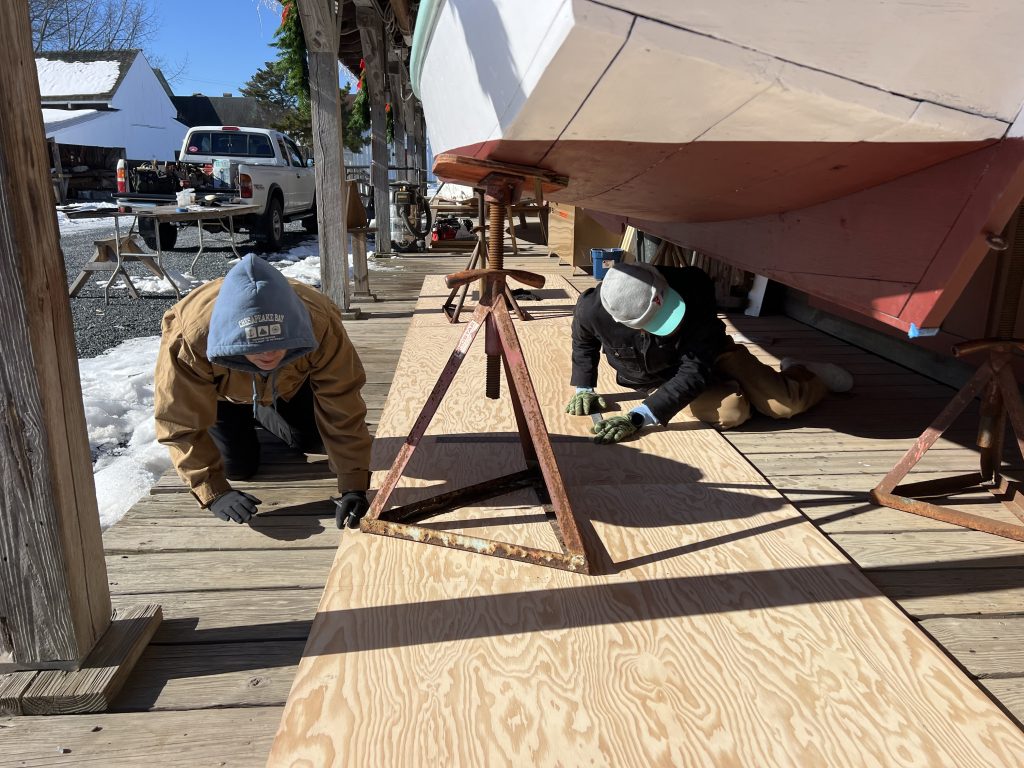
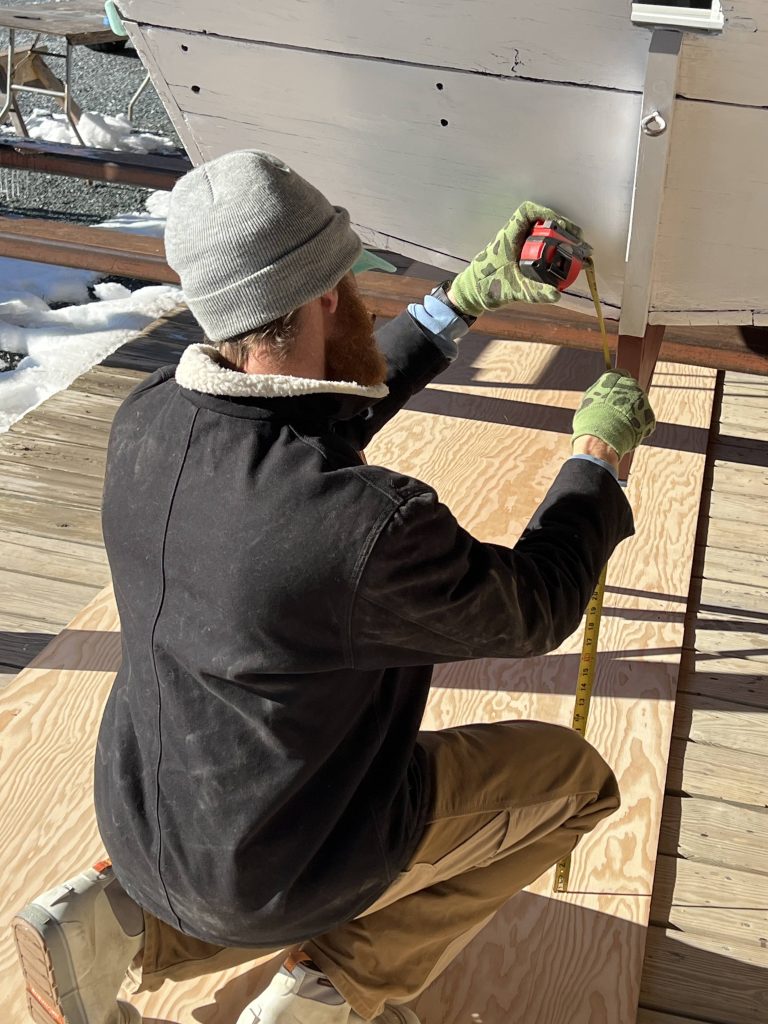
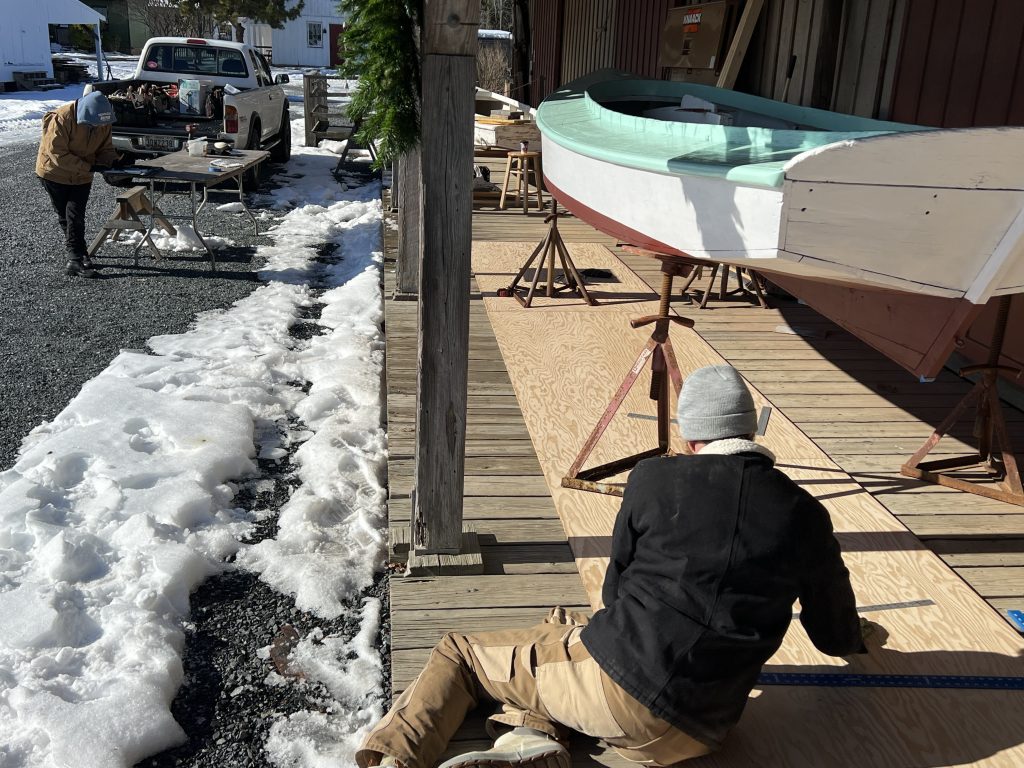
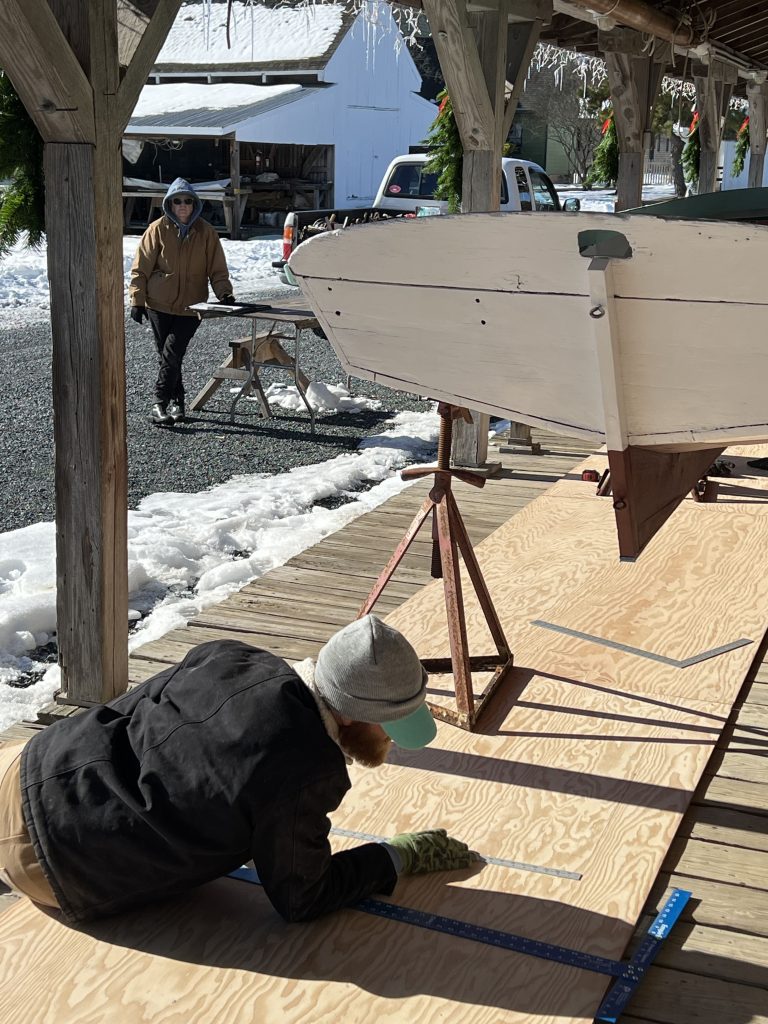
We used the shipyard forklift to raise the boat and position its keel above the edge of our plywood floor. The edge served as centerline for our half-breadth measurements.
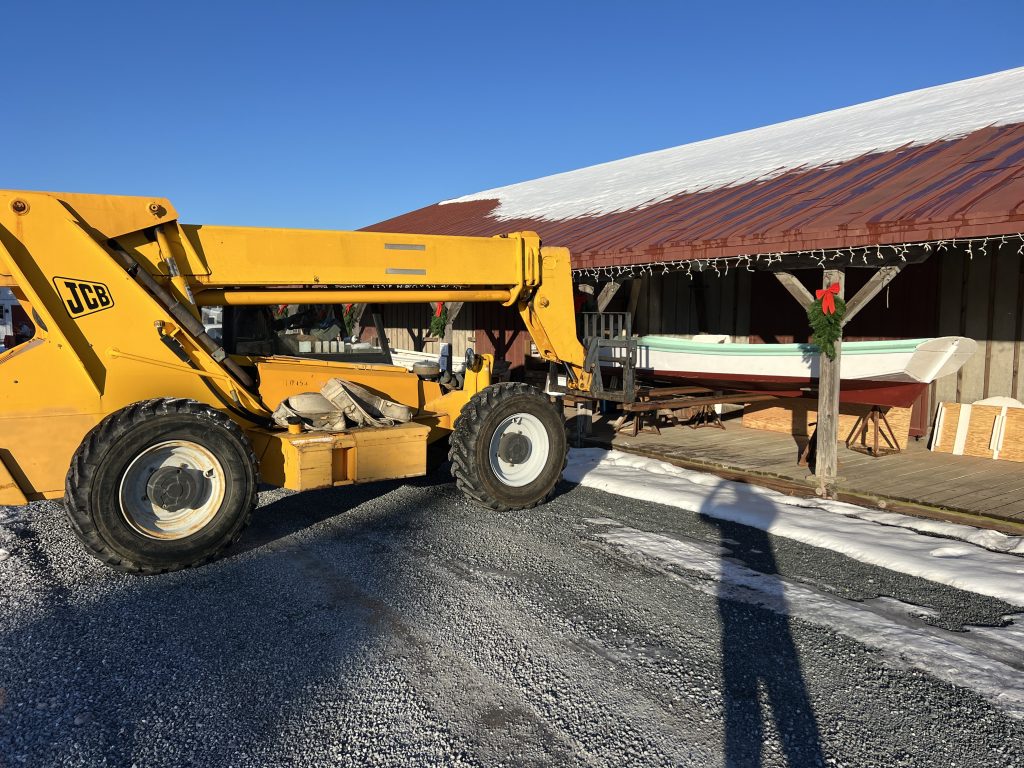
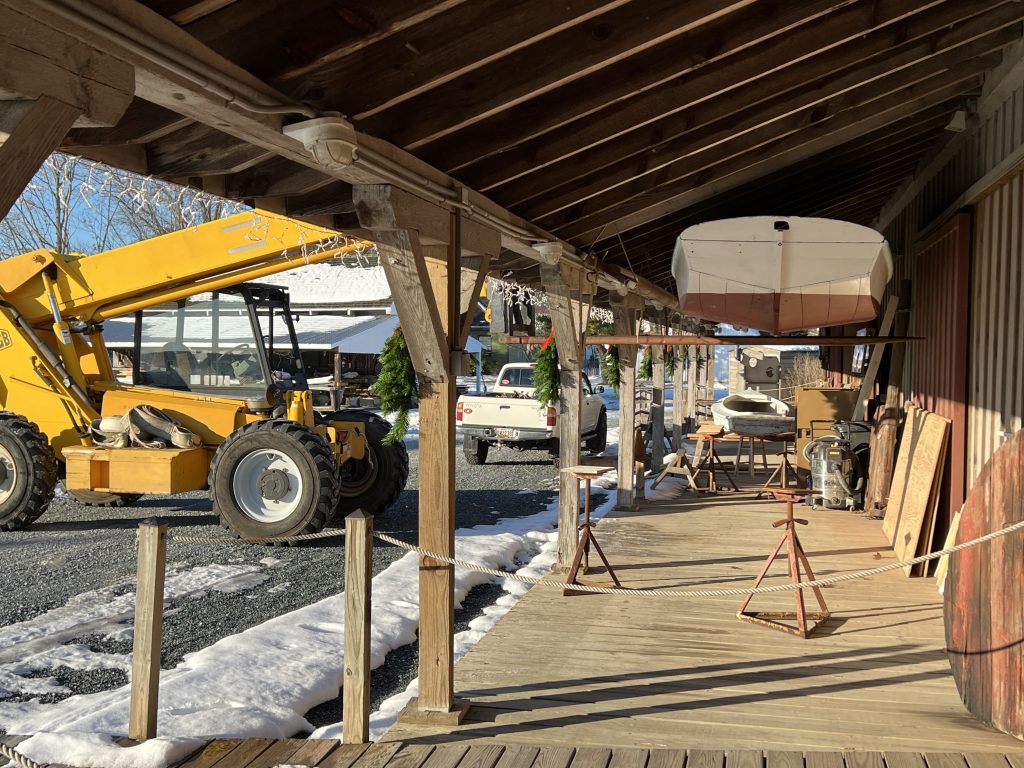
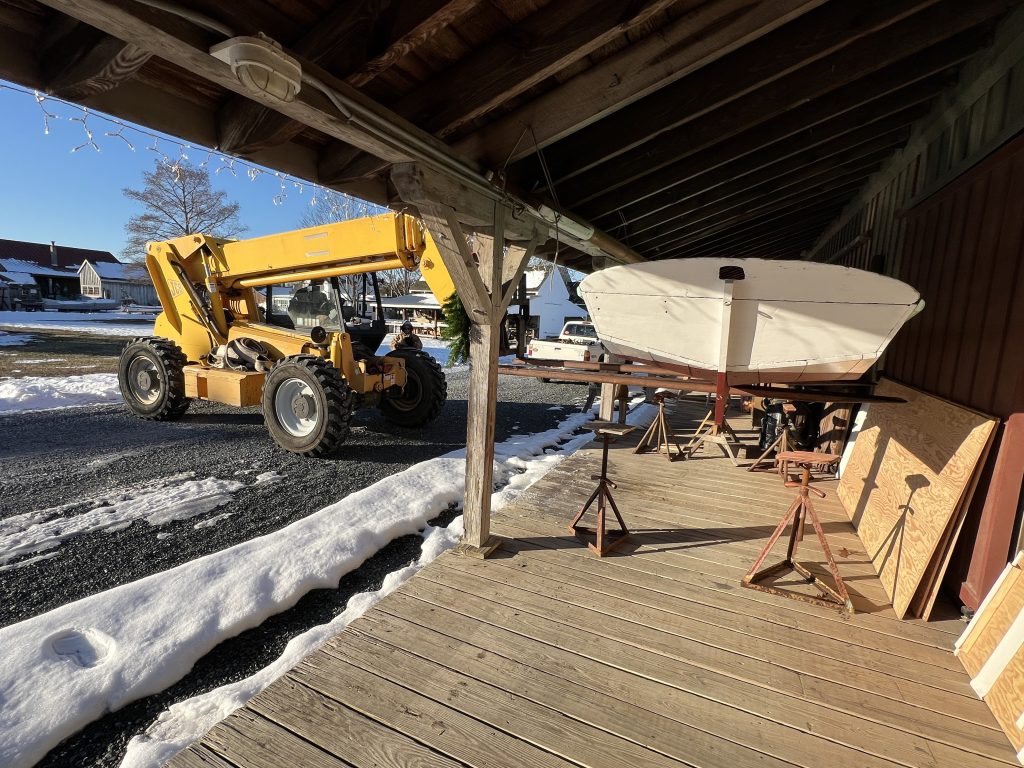
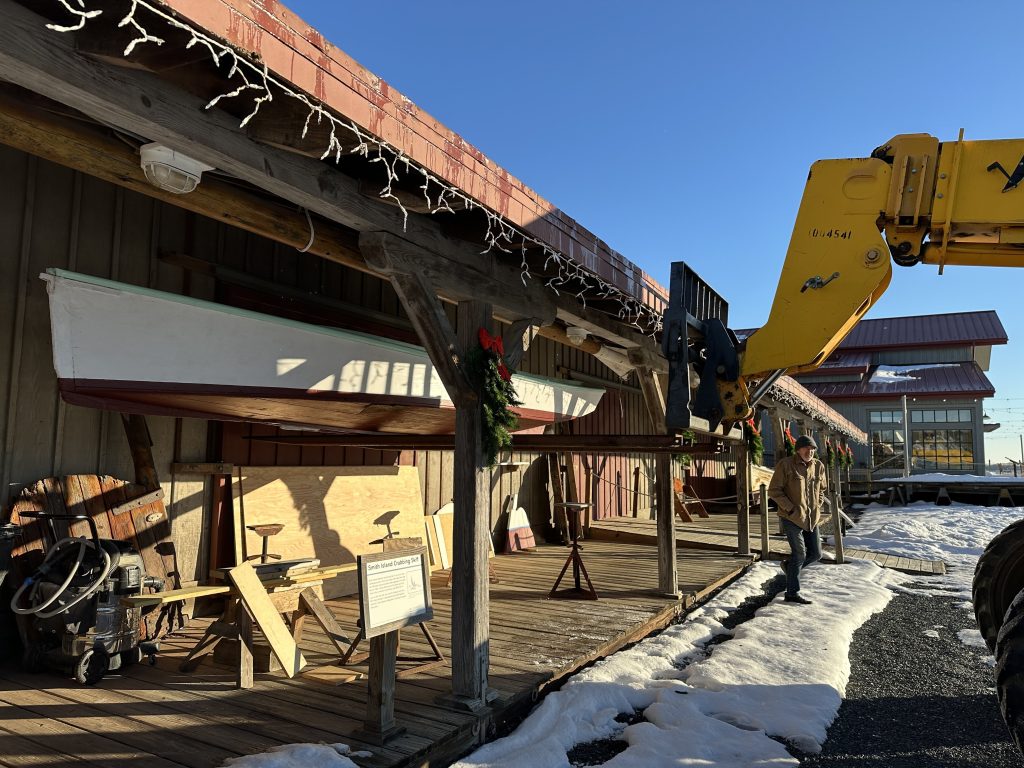
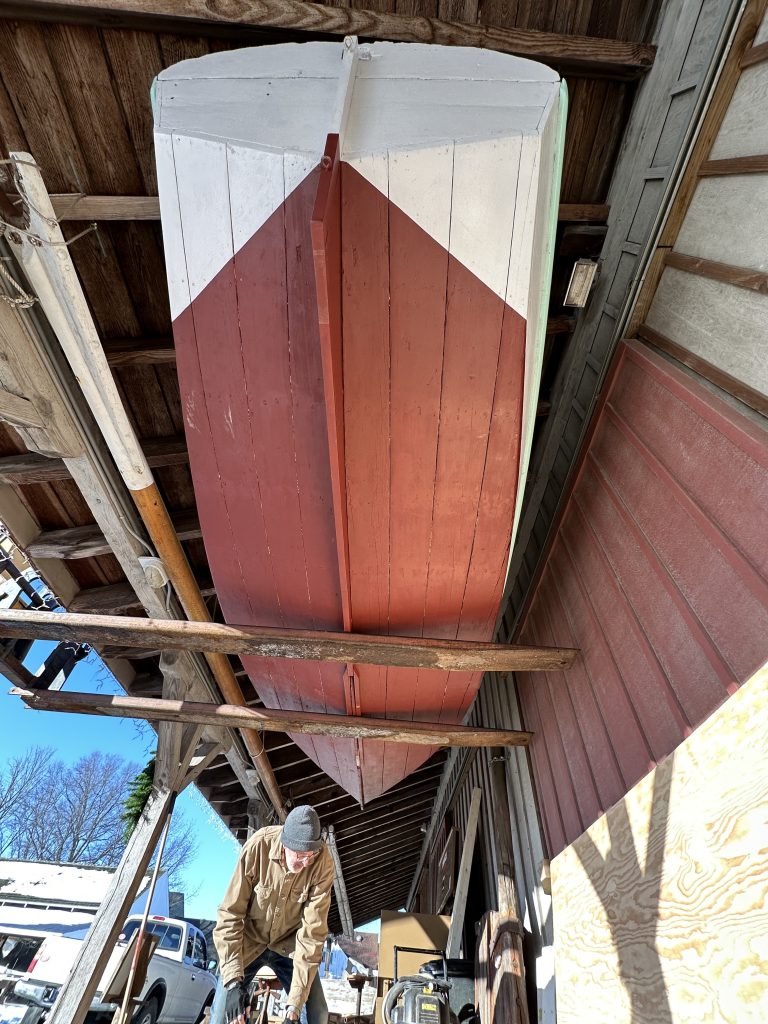
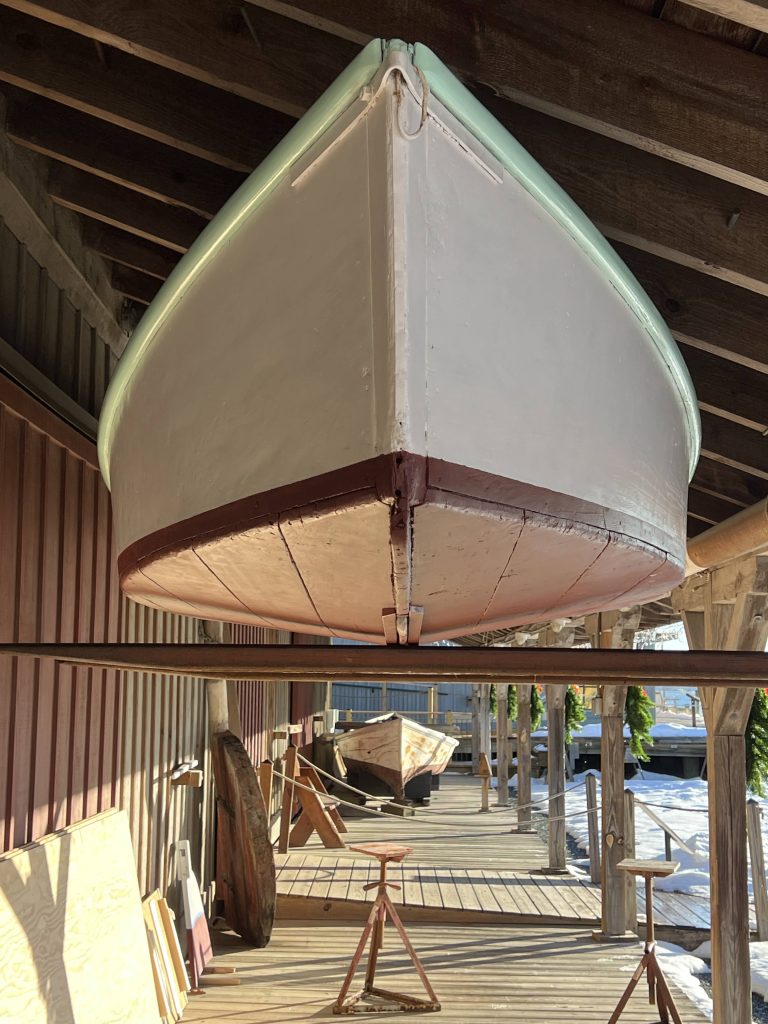
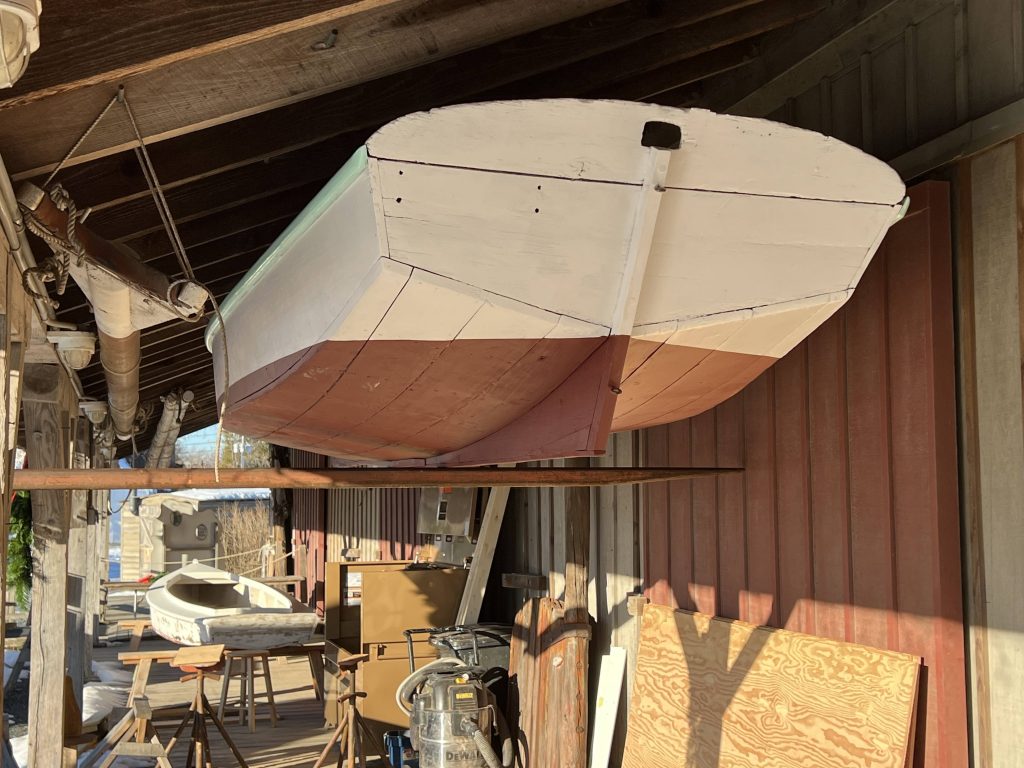
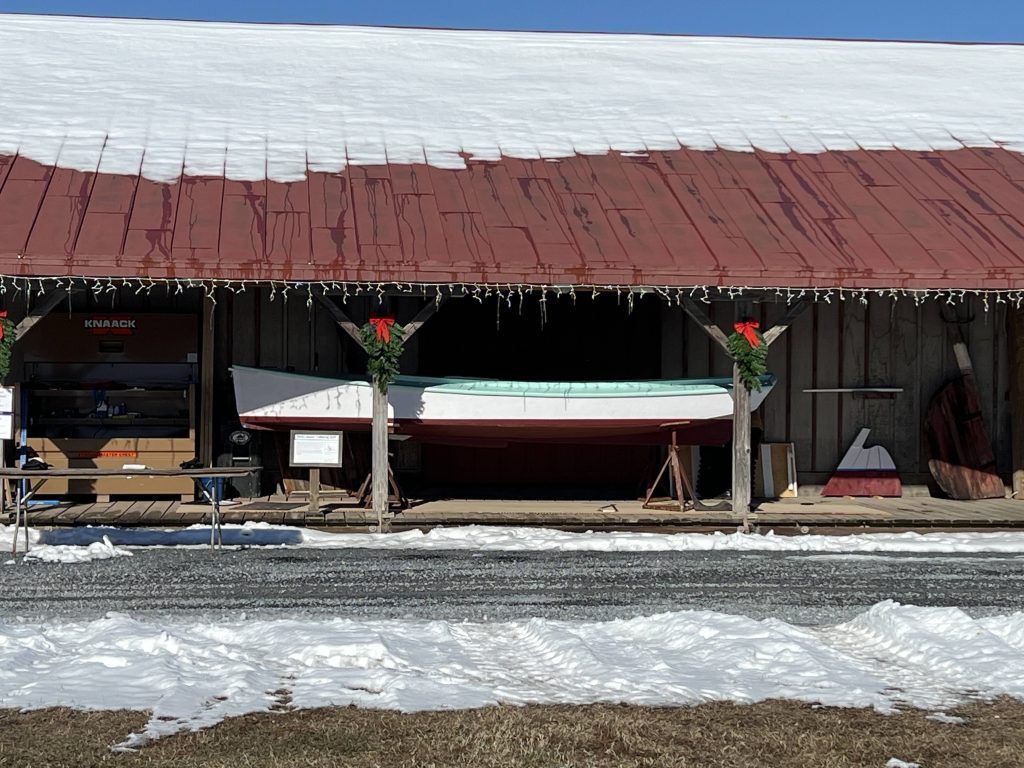
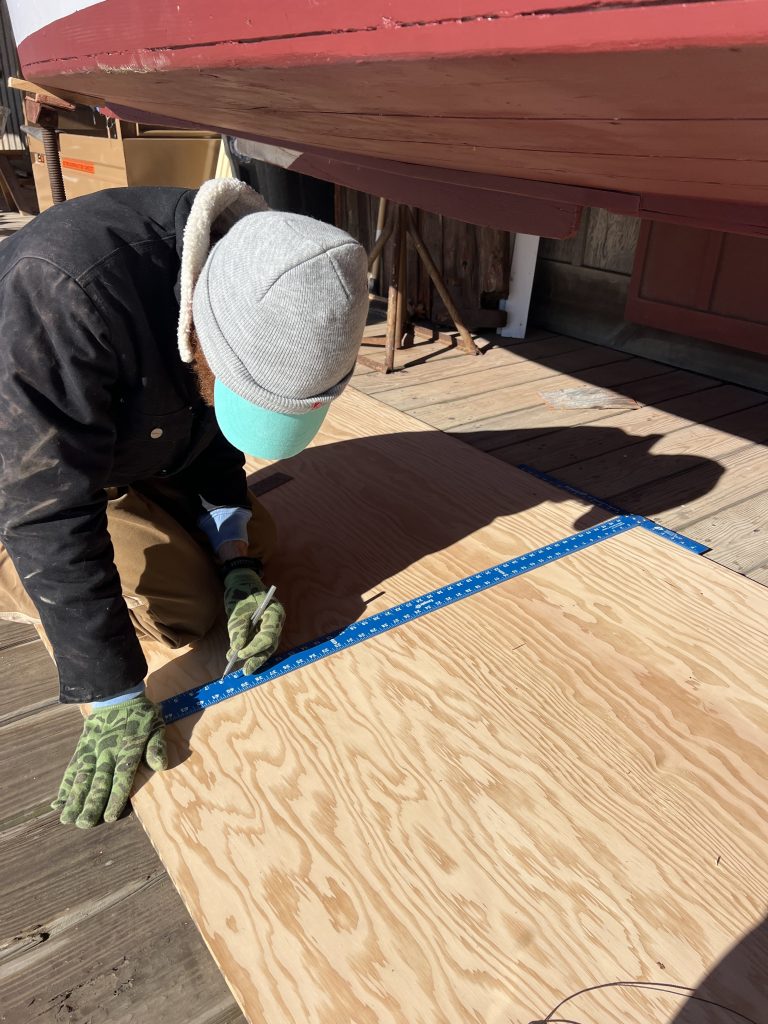
We used a plumb line and framing square to transfer the centerline to the plywood lofting floor below the boat. Then we transferred keel, chine, and sheer half-breadth measurements from the centerline at 8 stations, plus stem and rudder post, to the lofting floor. We measured the height of each of these points above the plywood baseline. We transcribed these measurements to a table of offsets.
Tom and Don put new paint on the skiff bottom and rudder.
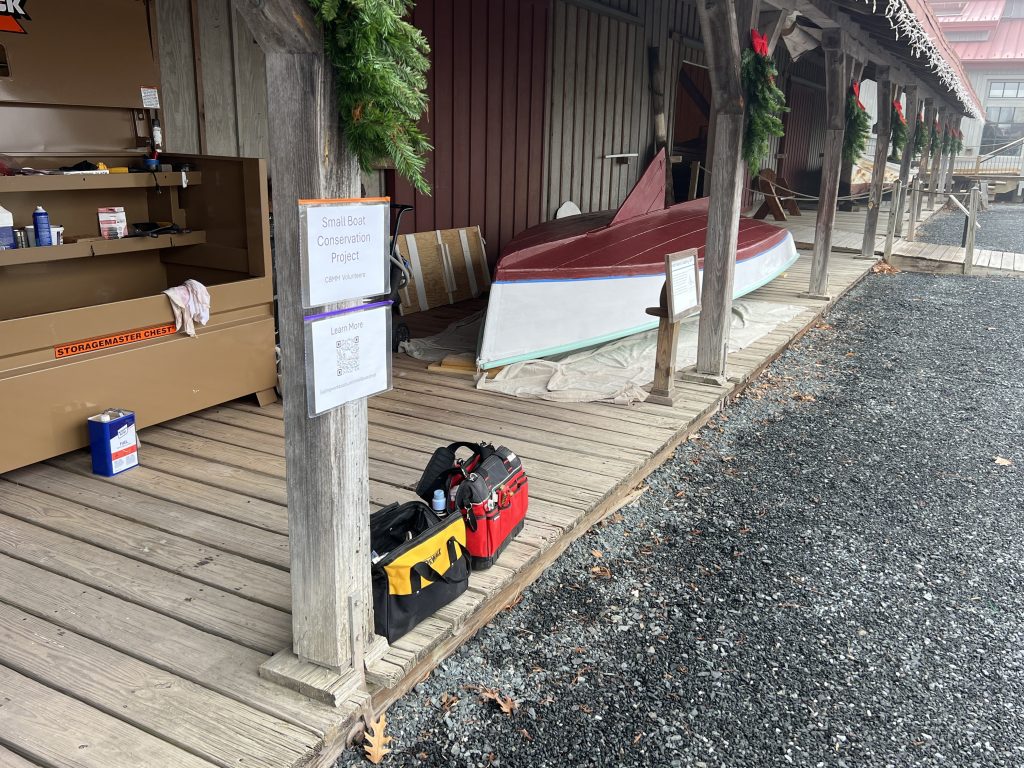
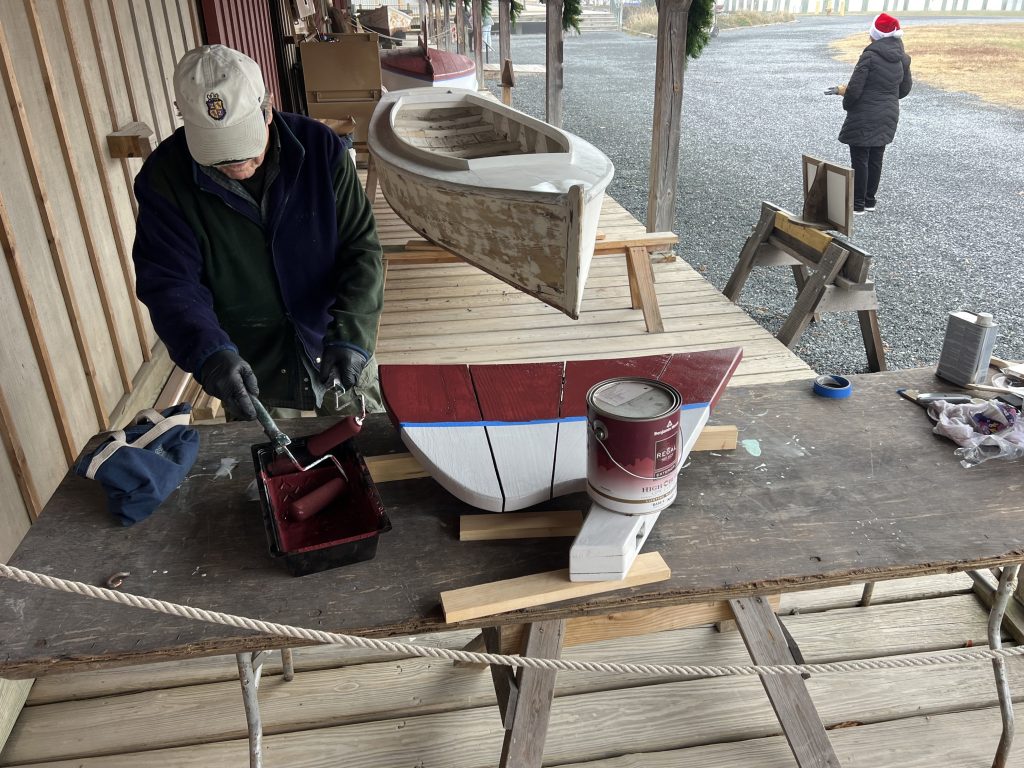
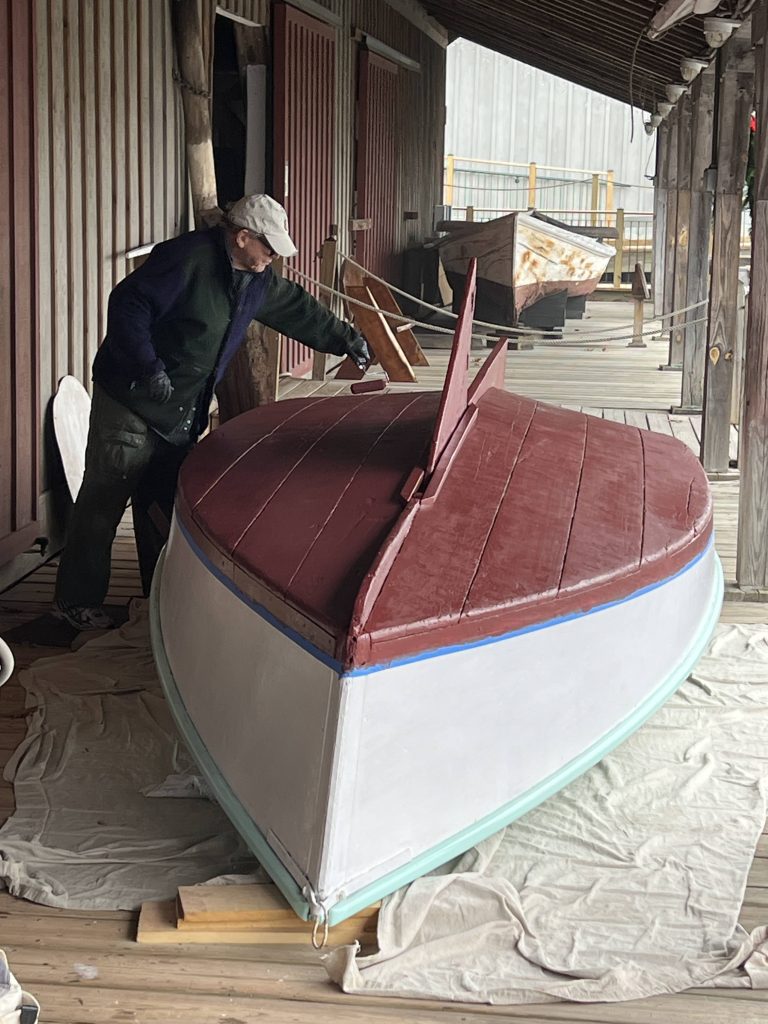
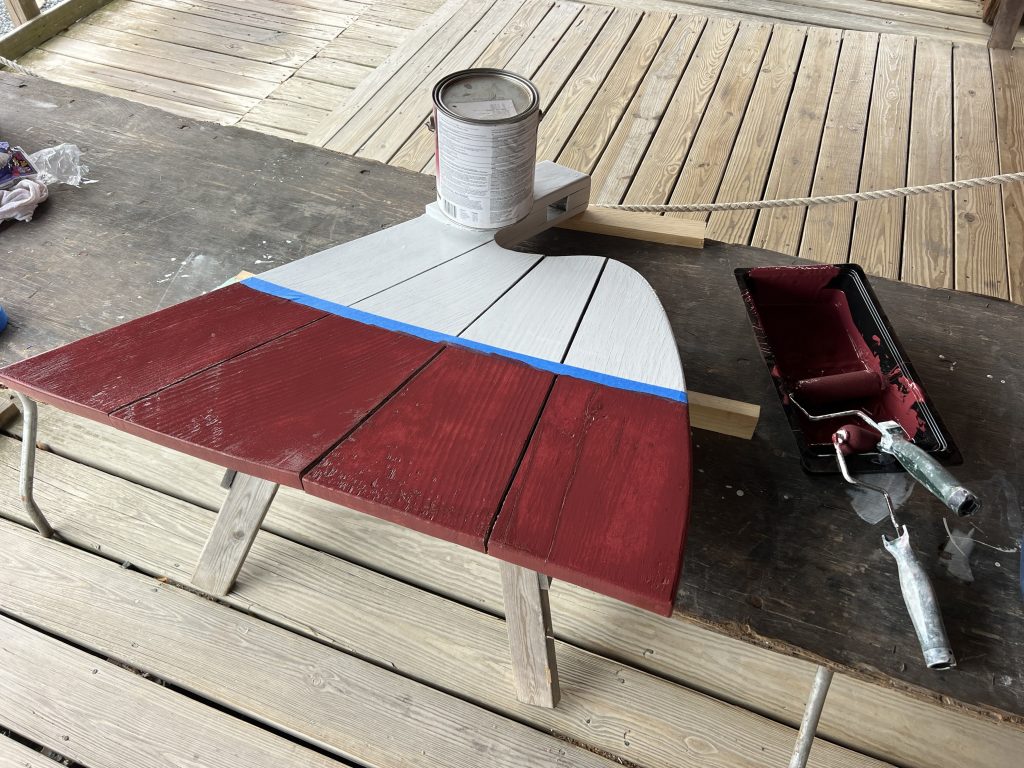
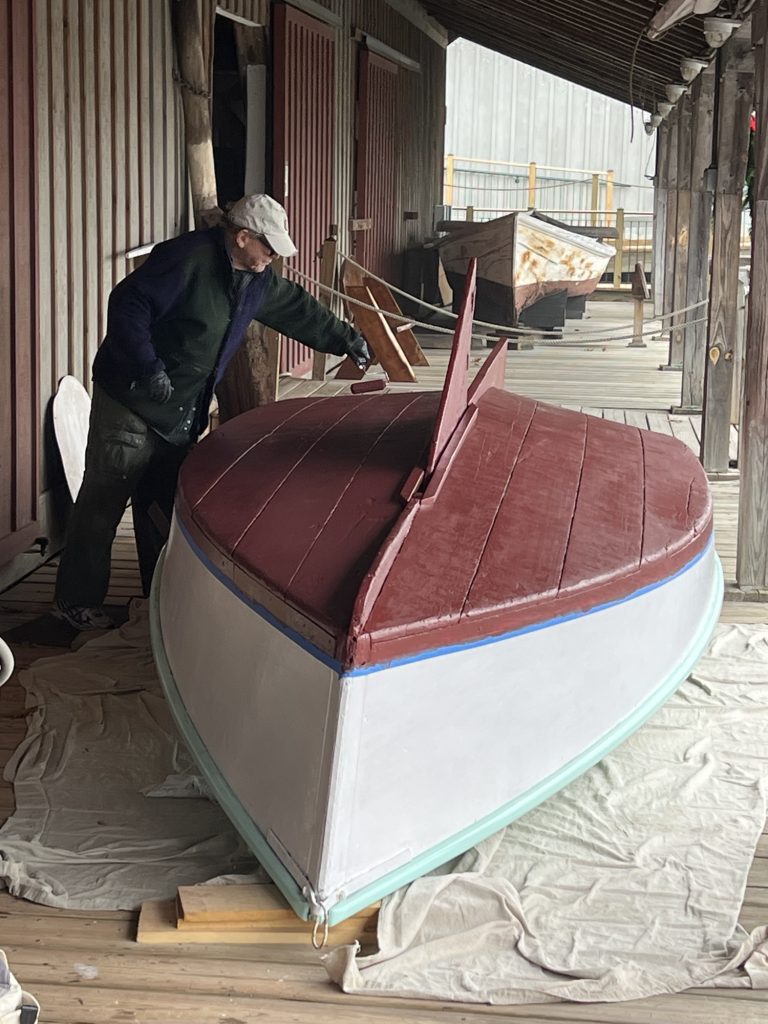
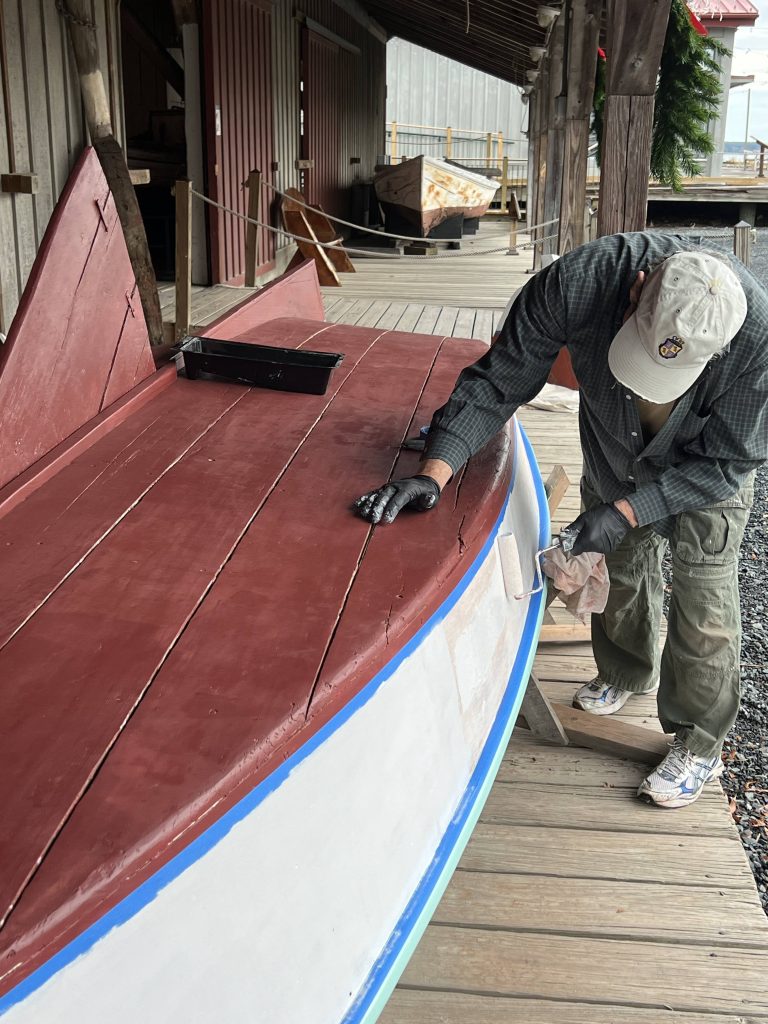
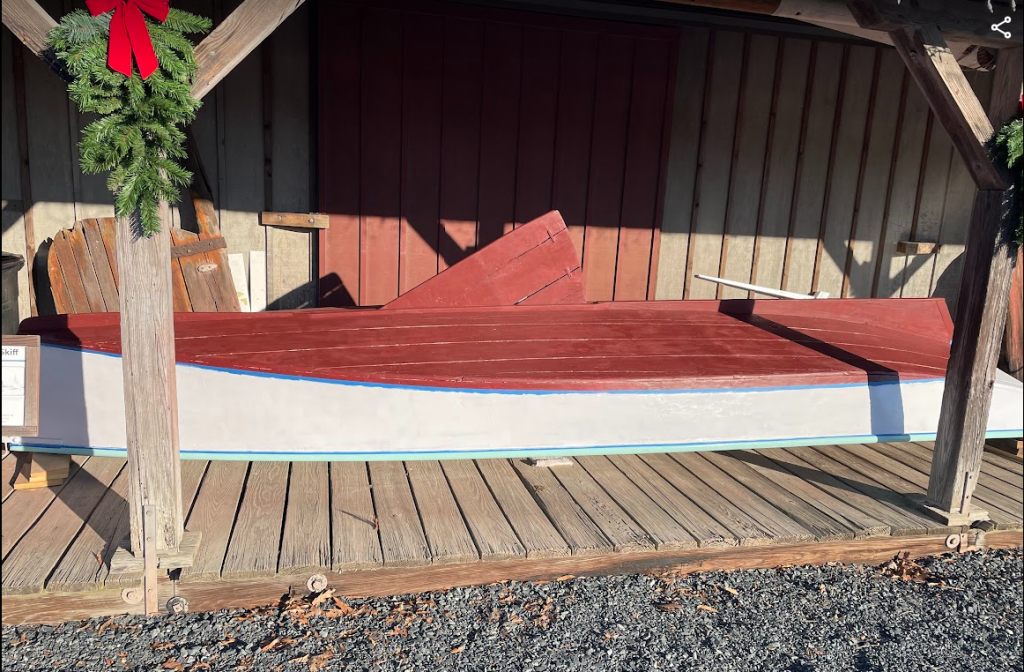
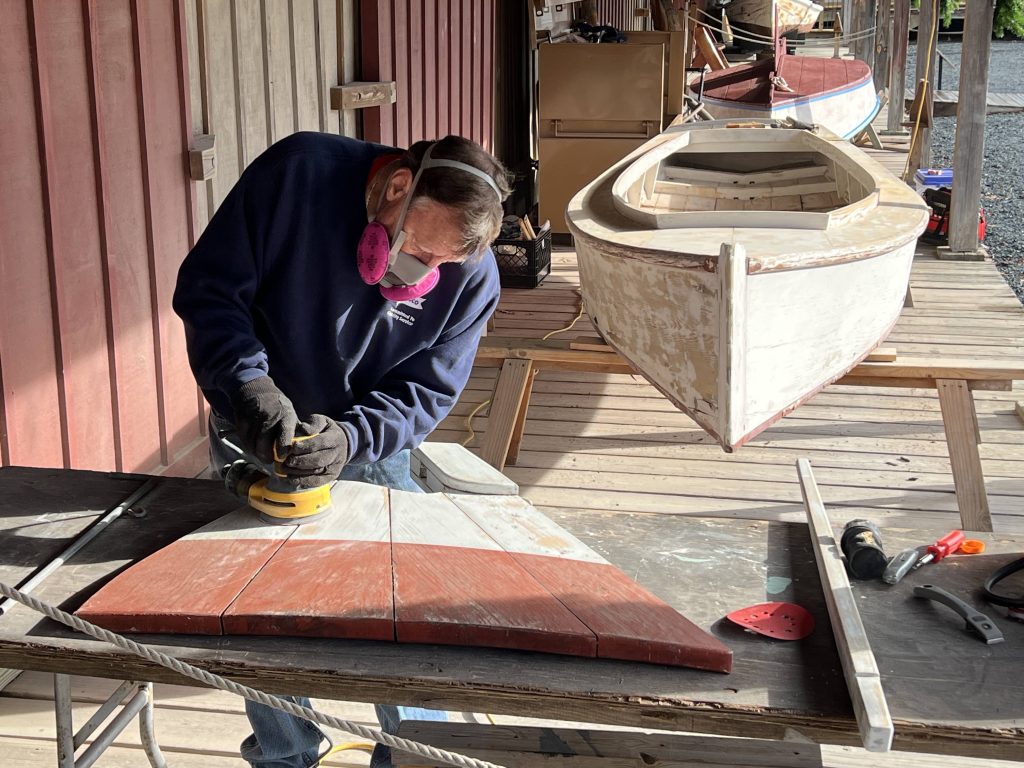
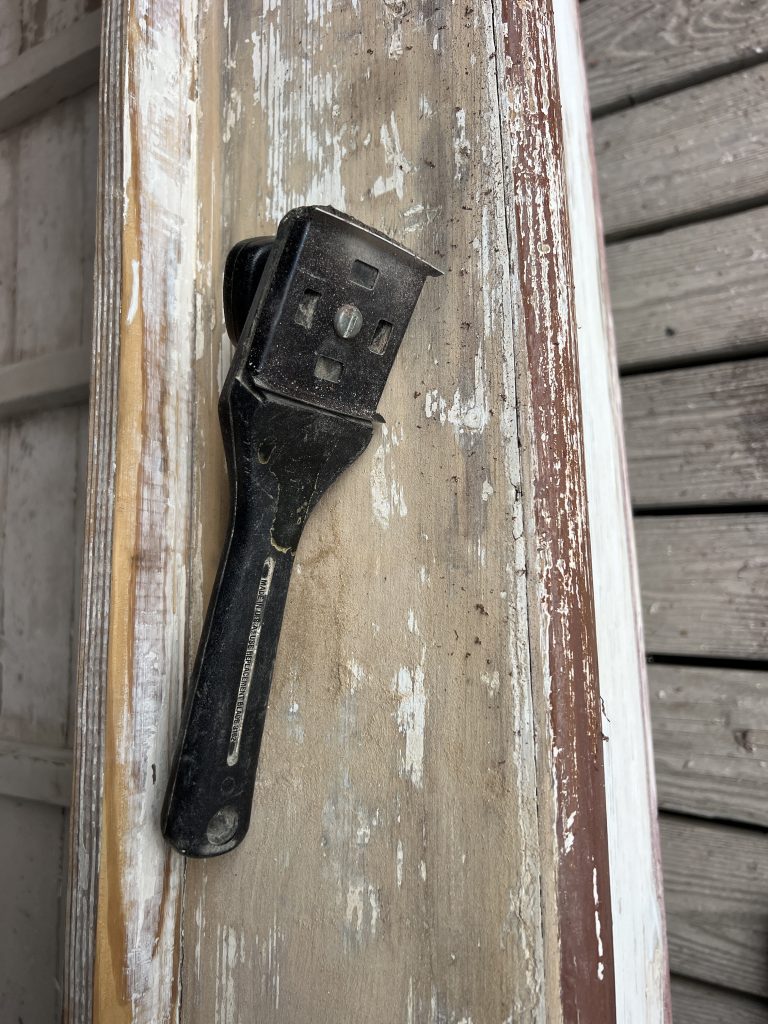
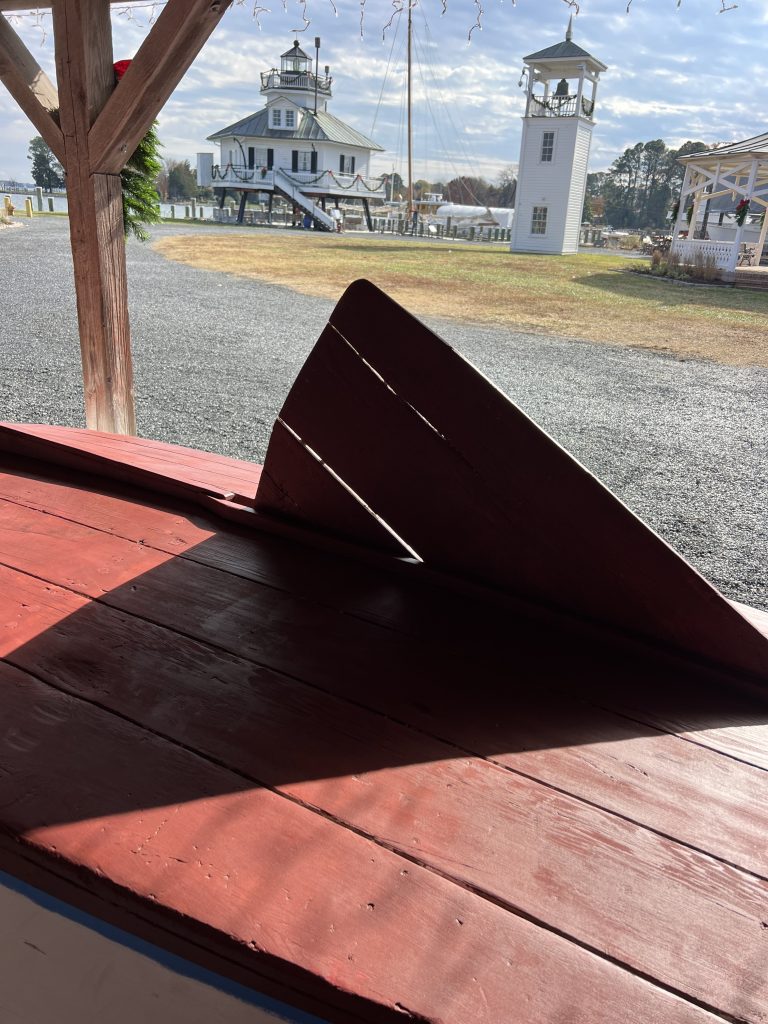
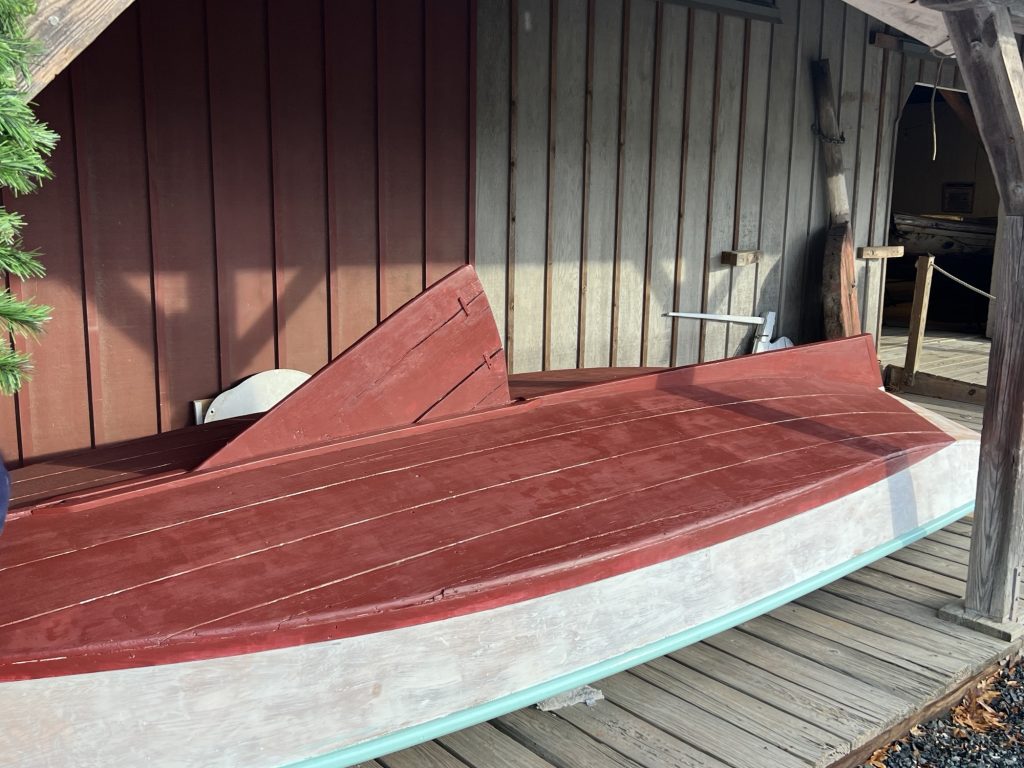
The shipyard crew showed up to help us flip the skiff. Tom and Gordon sanded the bottom. Sam showed us how to tape a waterline. Tom stayed late to do the first coat of bottom paint.
Gordon and Don finished sanding the sides of the 1920 skiff.
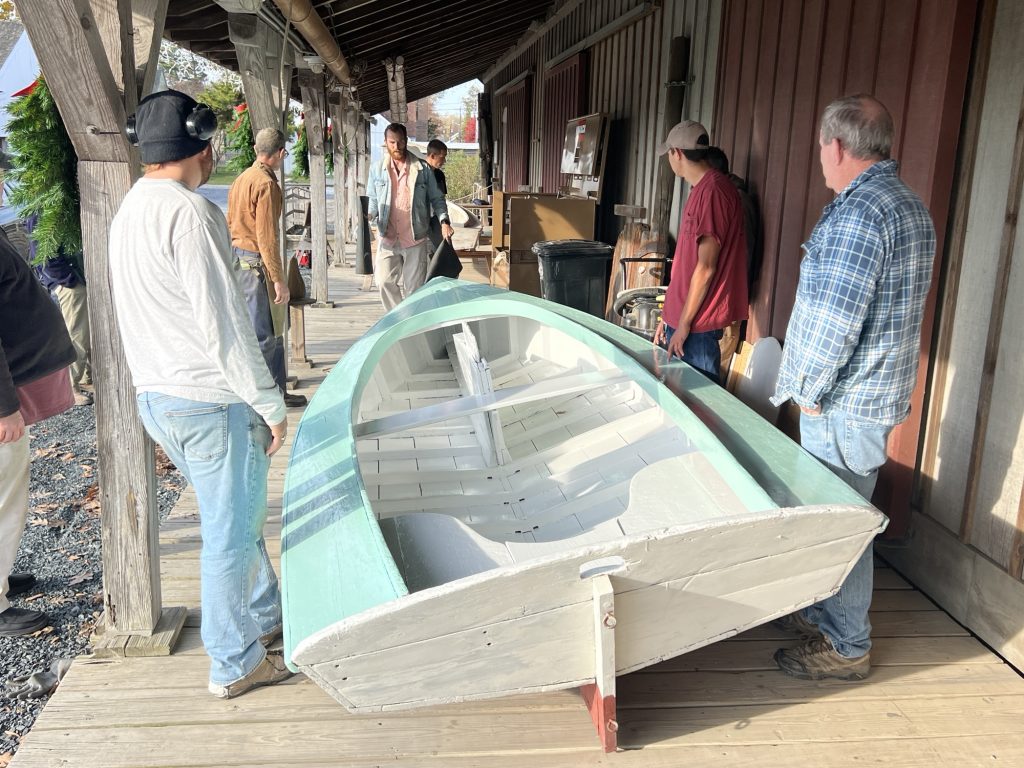
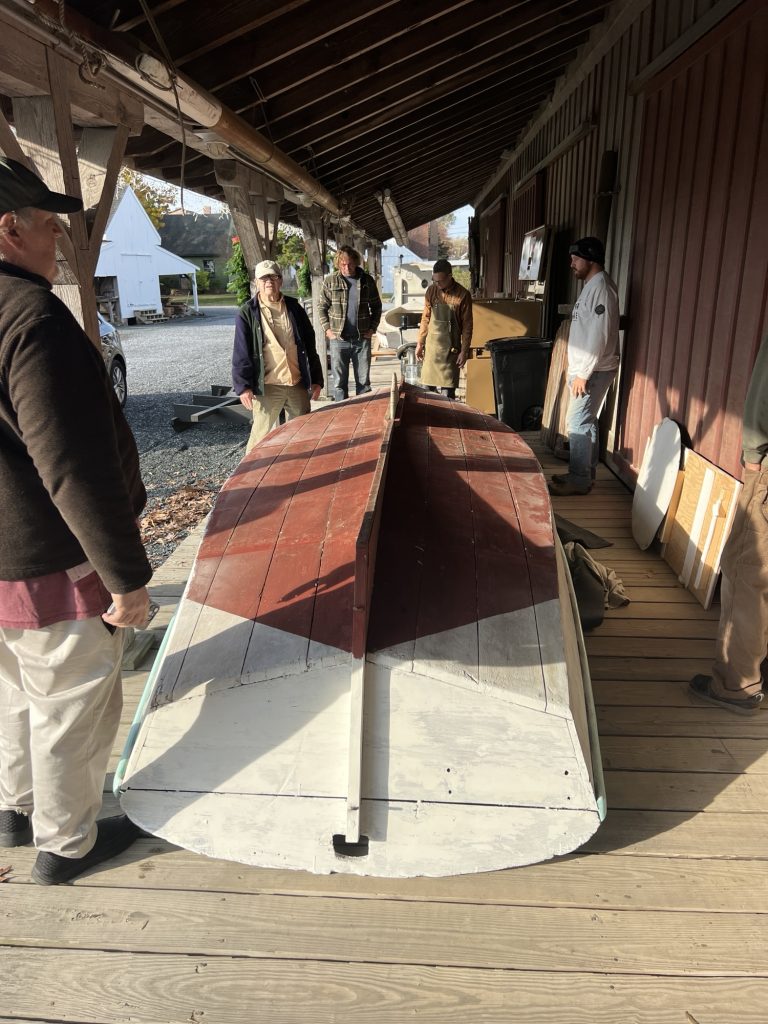
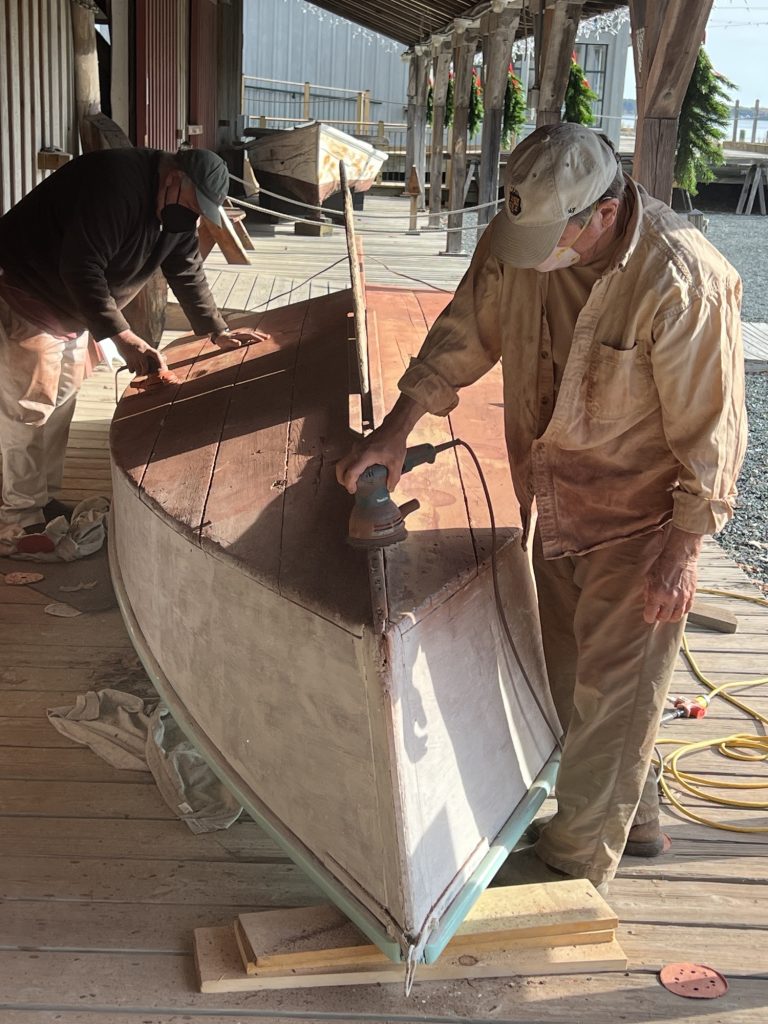
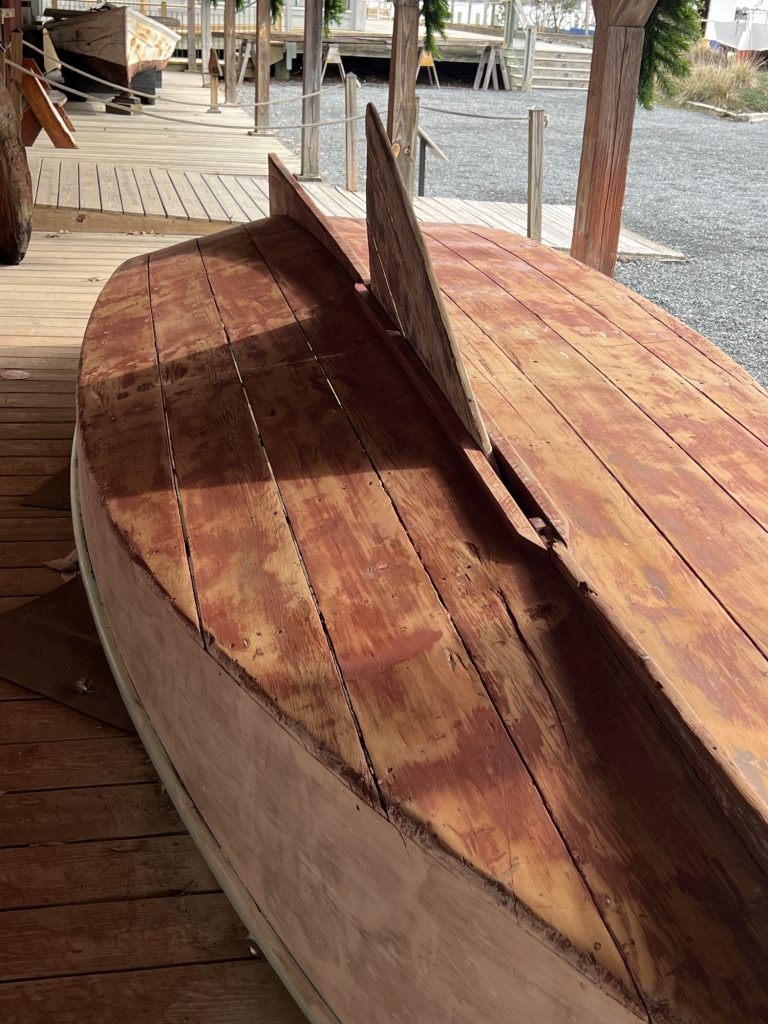
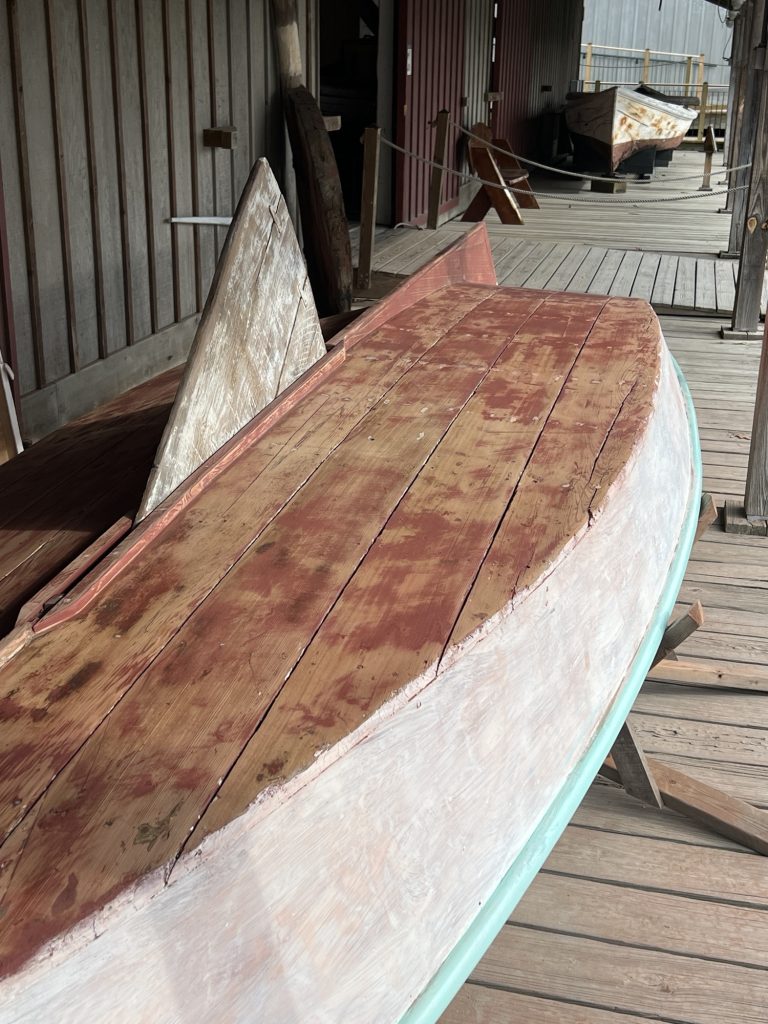
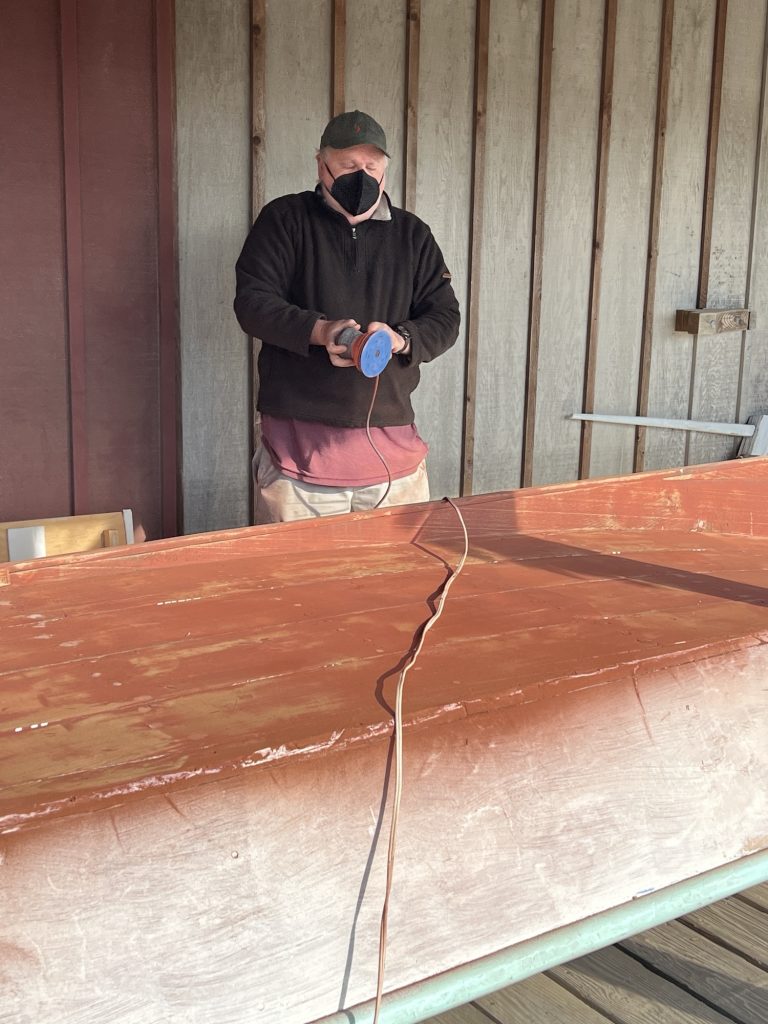
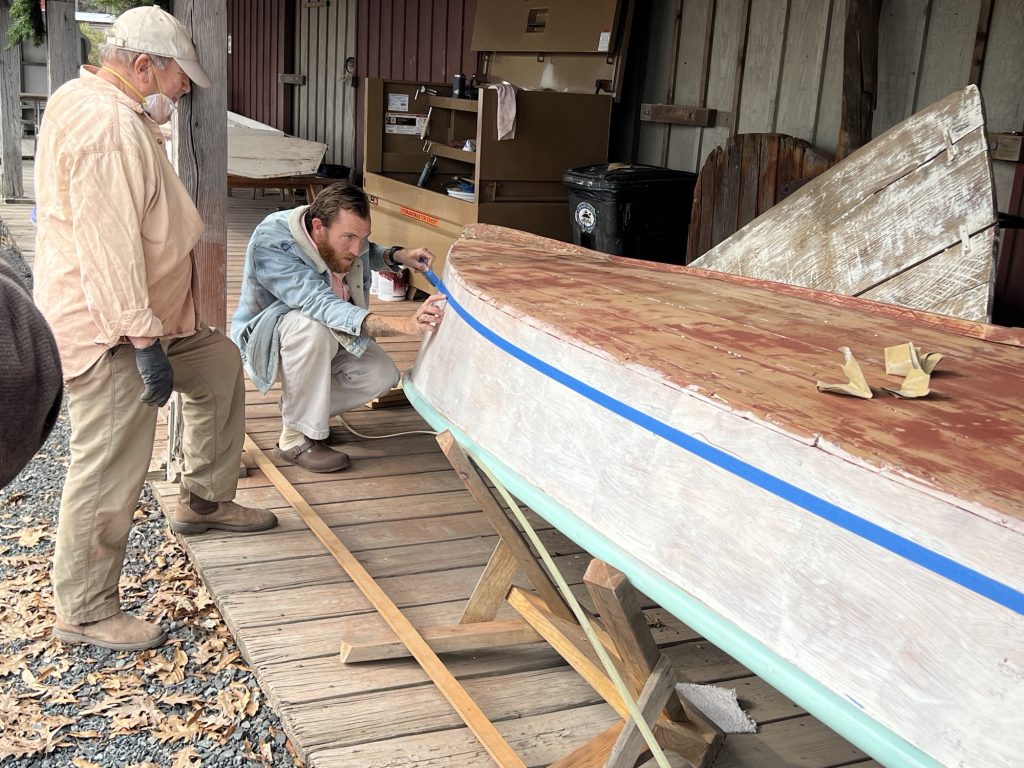
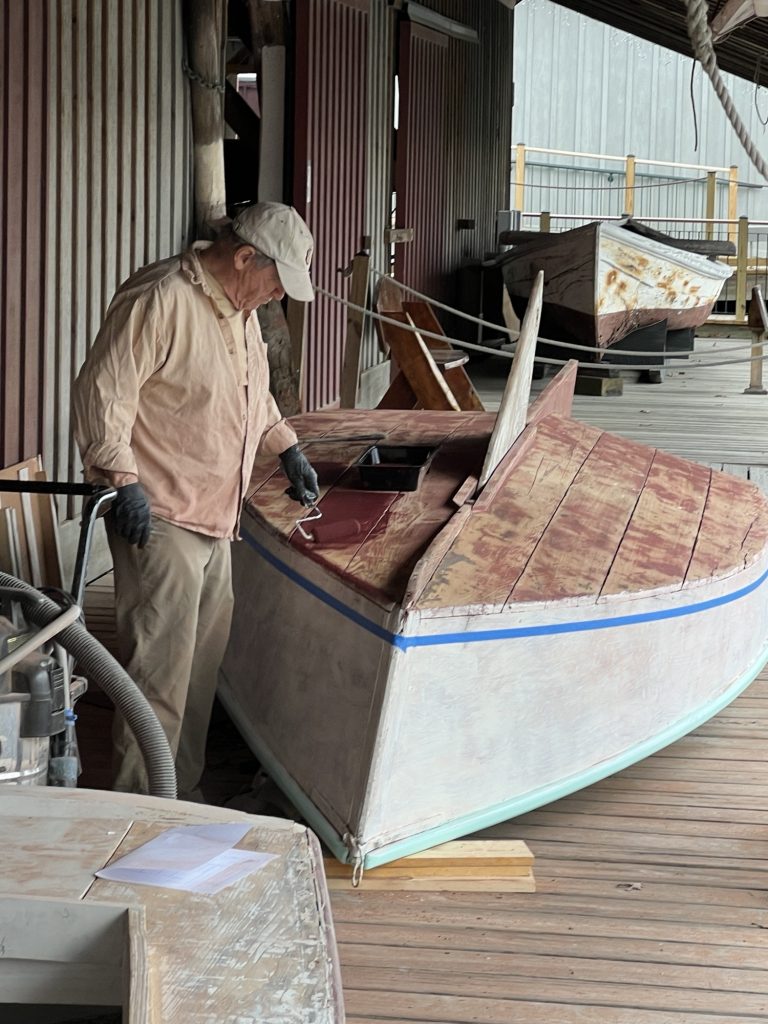
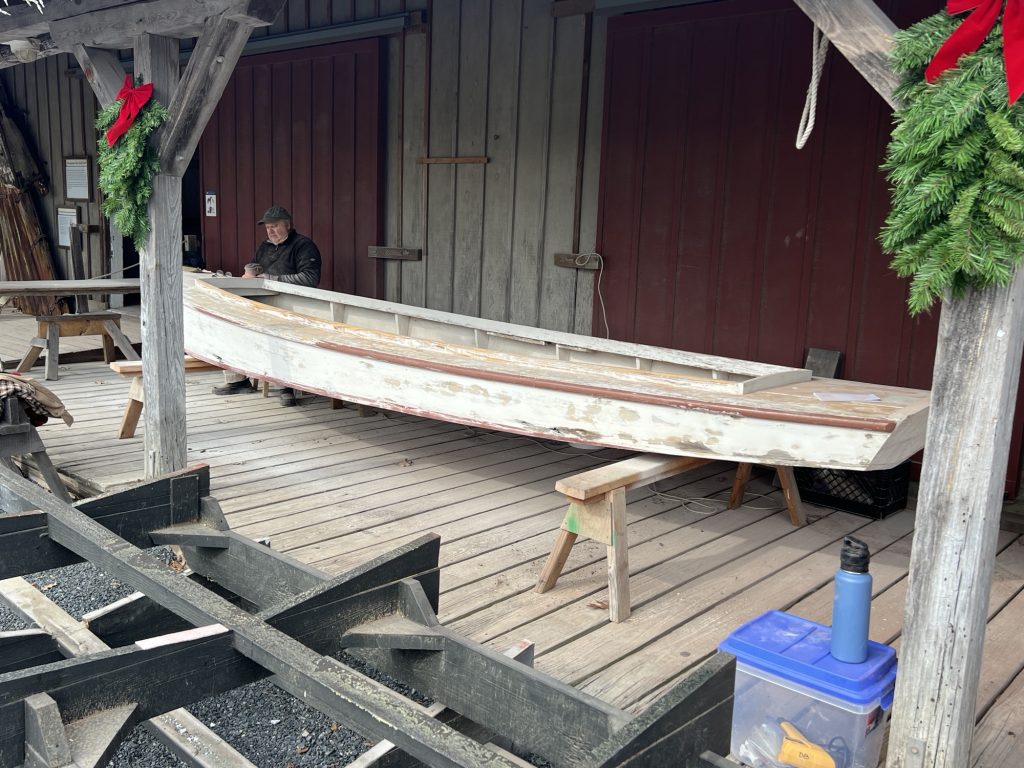
Strong winds from the NW blew up whitecaps on the Miles River. We were protected in the lee of the small boat shed and warm in the morning sunshine on the porch.
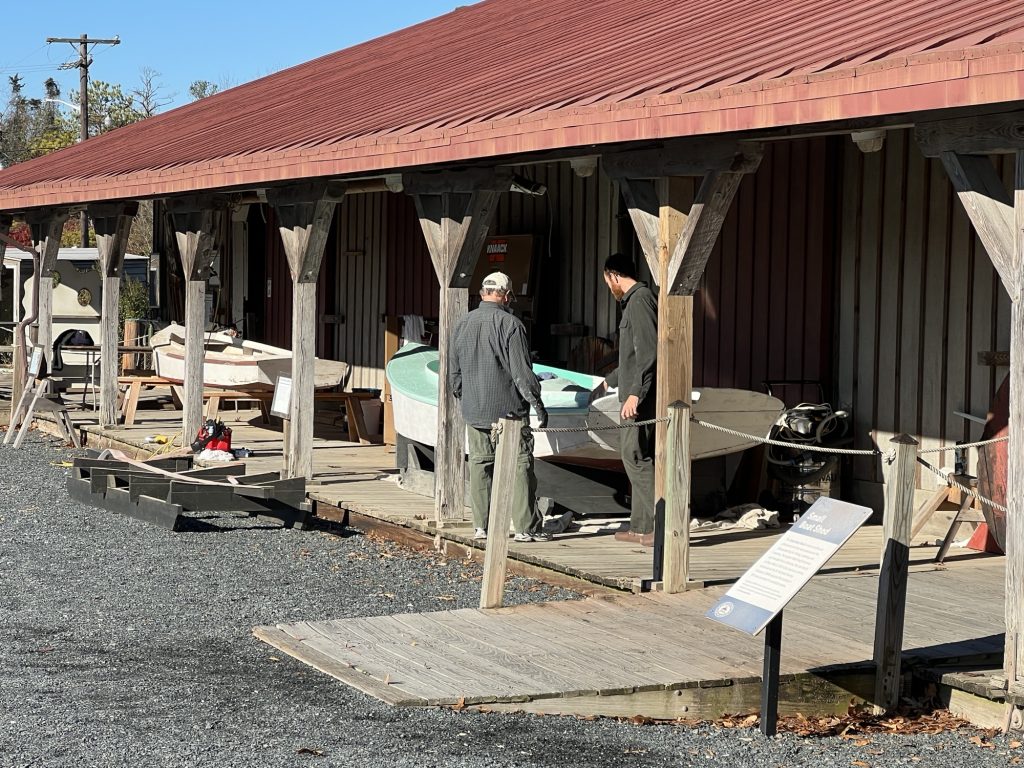
A small cruise ship was at the CBMM quayside. A few travelers stopped by to ask about our work.
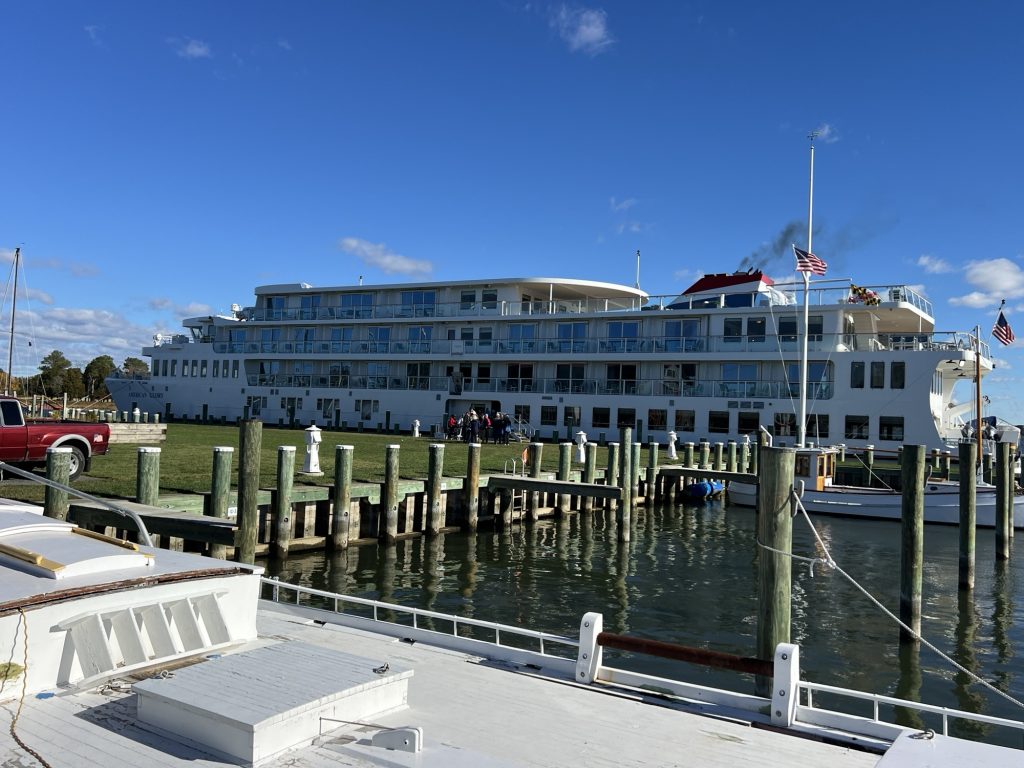
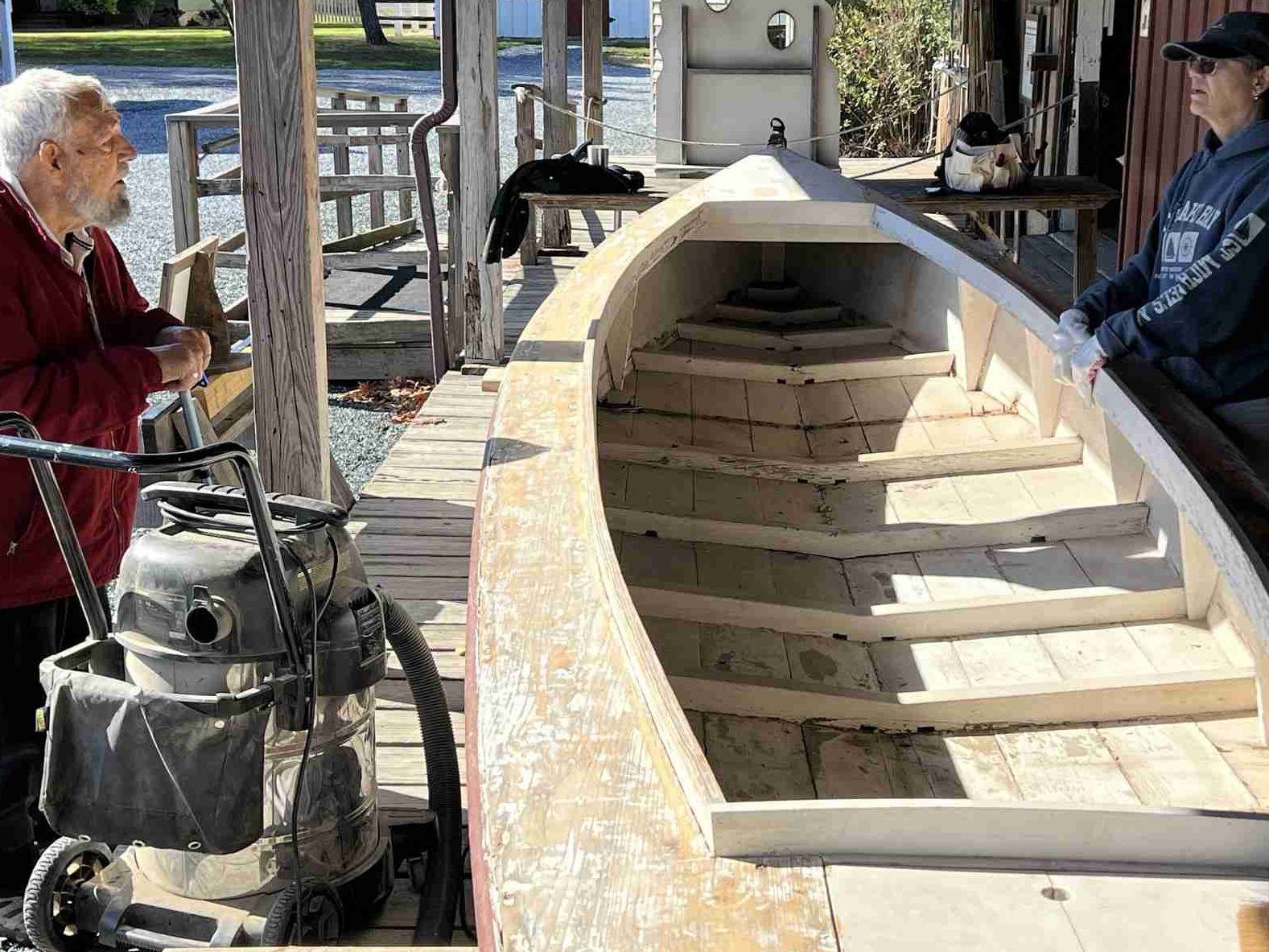
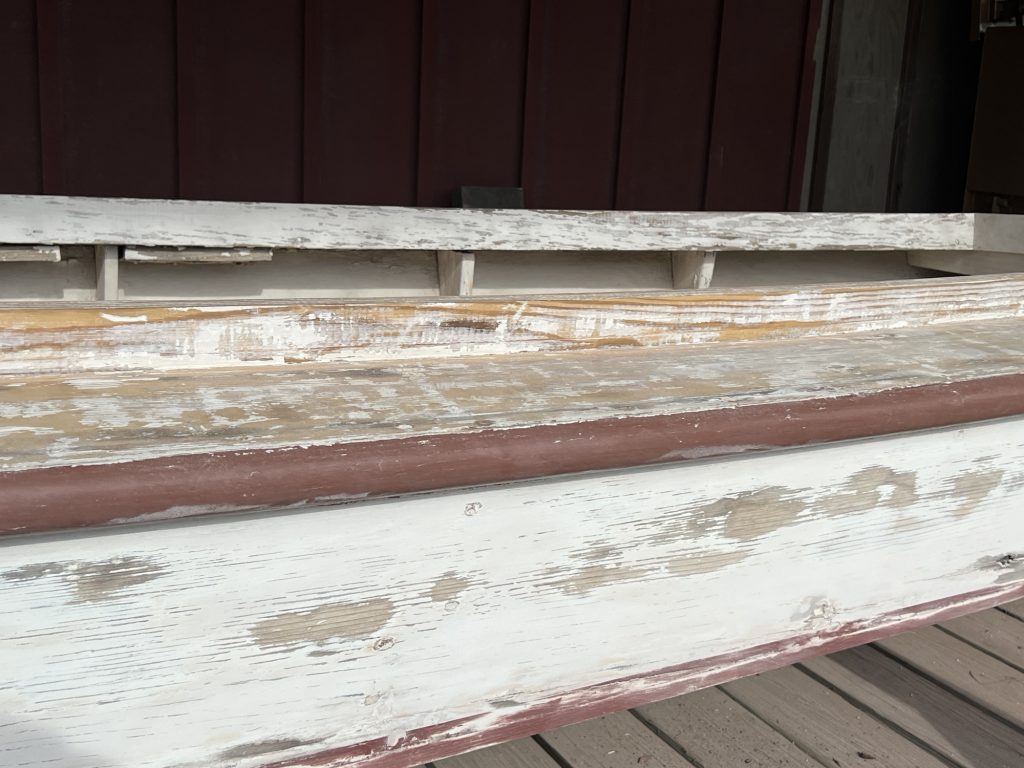
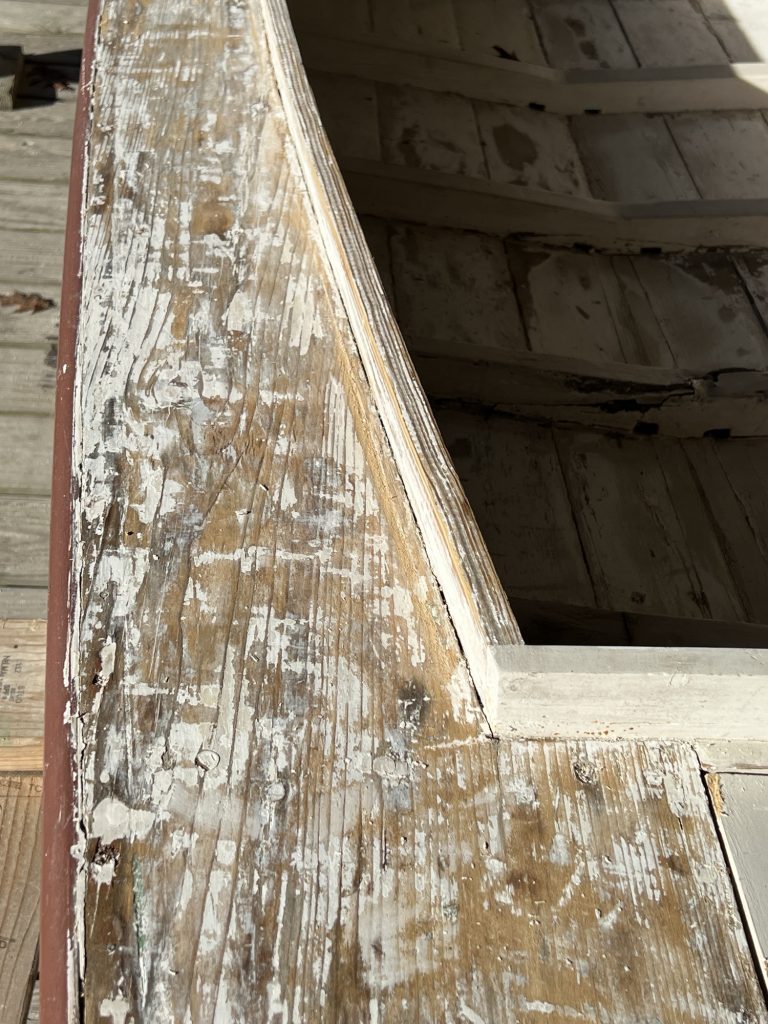
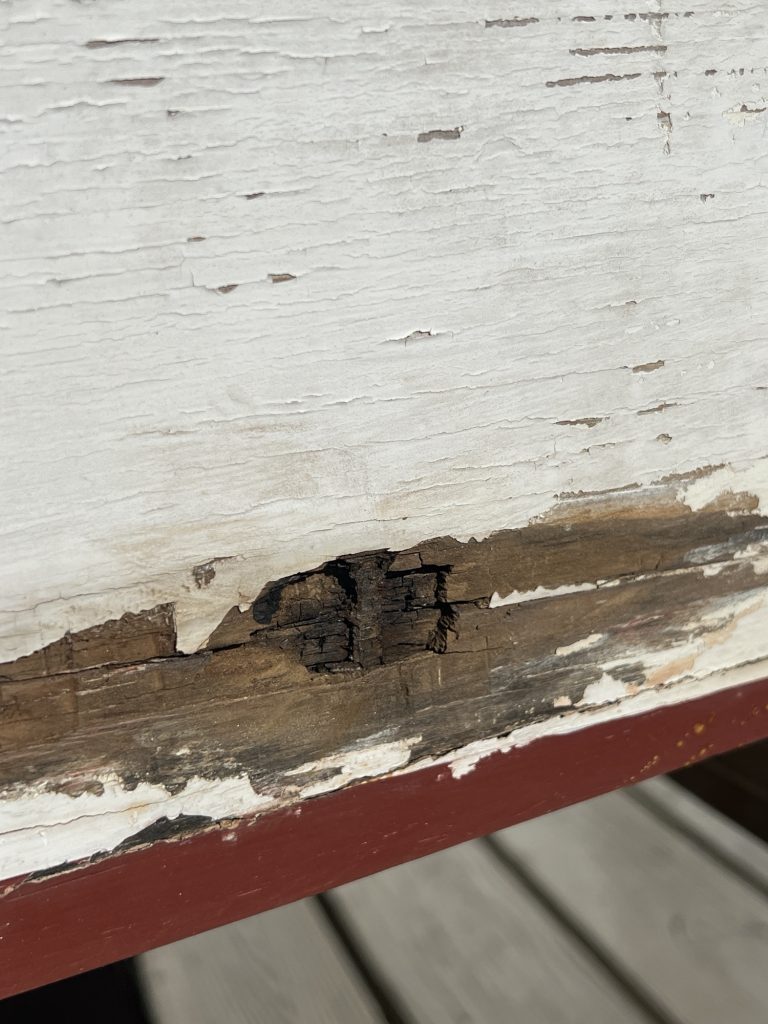
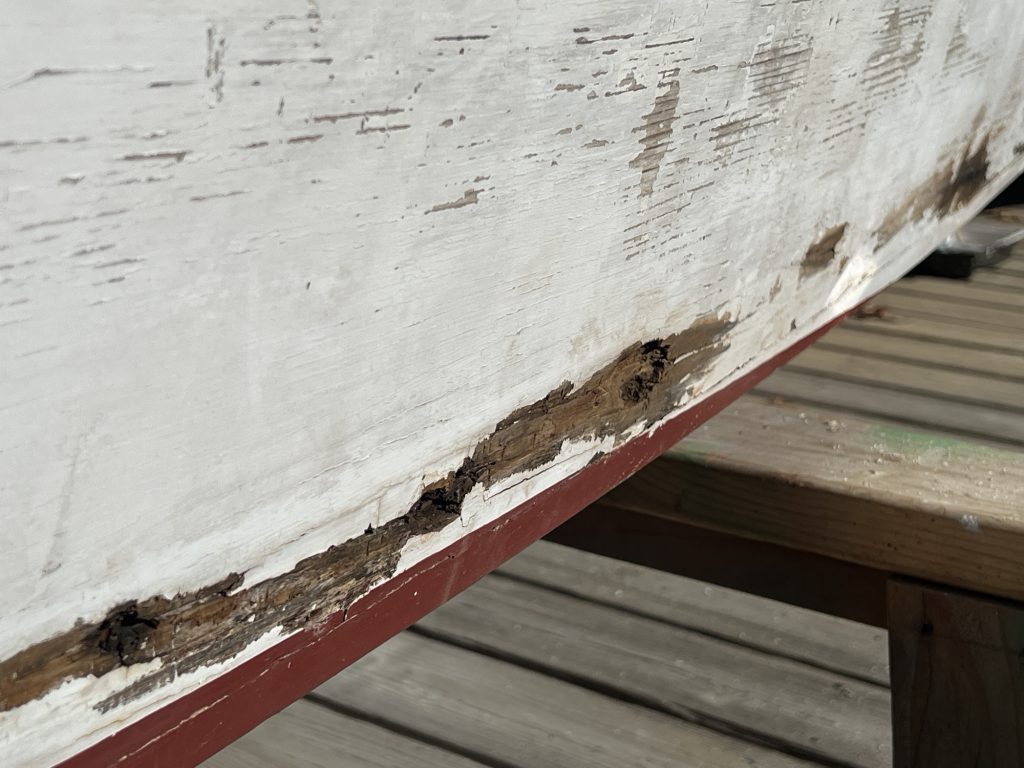
We finished scraping and sanding the deck and washboards of the 1920 Smith Island Skiff. Today we got started on the sides. Encountered wood rot at the bottom plank fastenings along the chine. This is due to “iron sickness” from interaction between the nails and the wood.
And we learned to use the heat gun with more care to avoid igniting the very dry and soft wood.
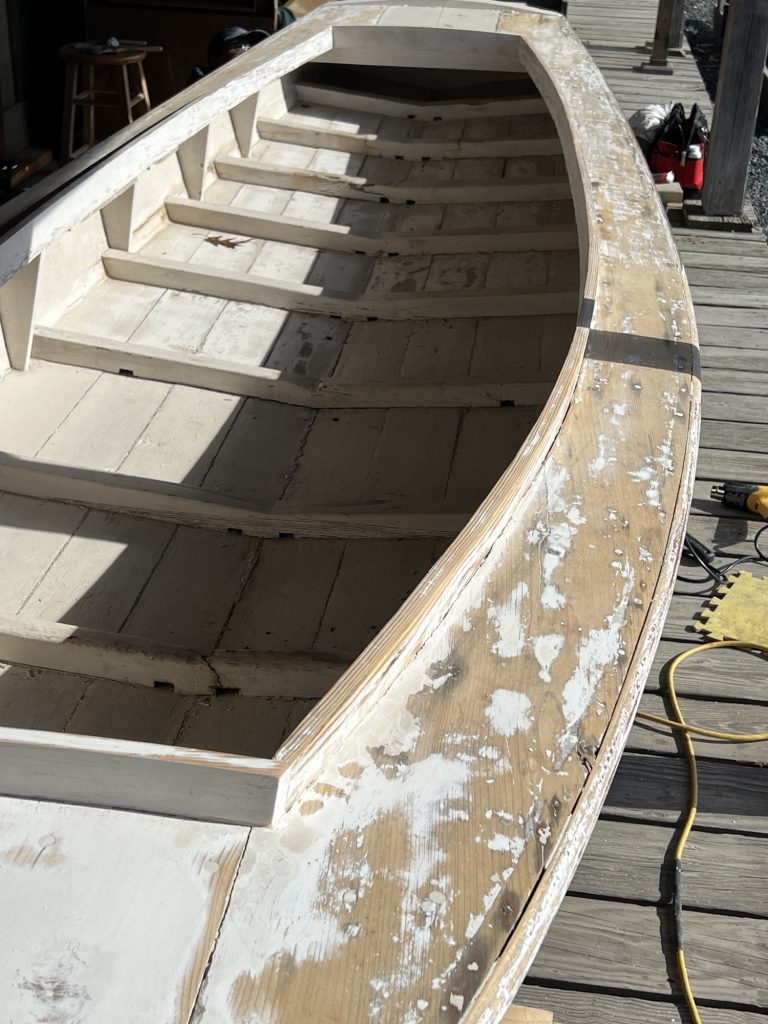
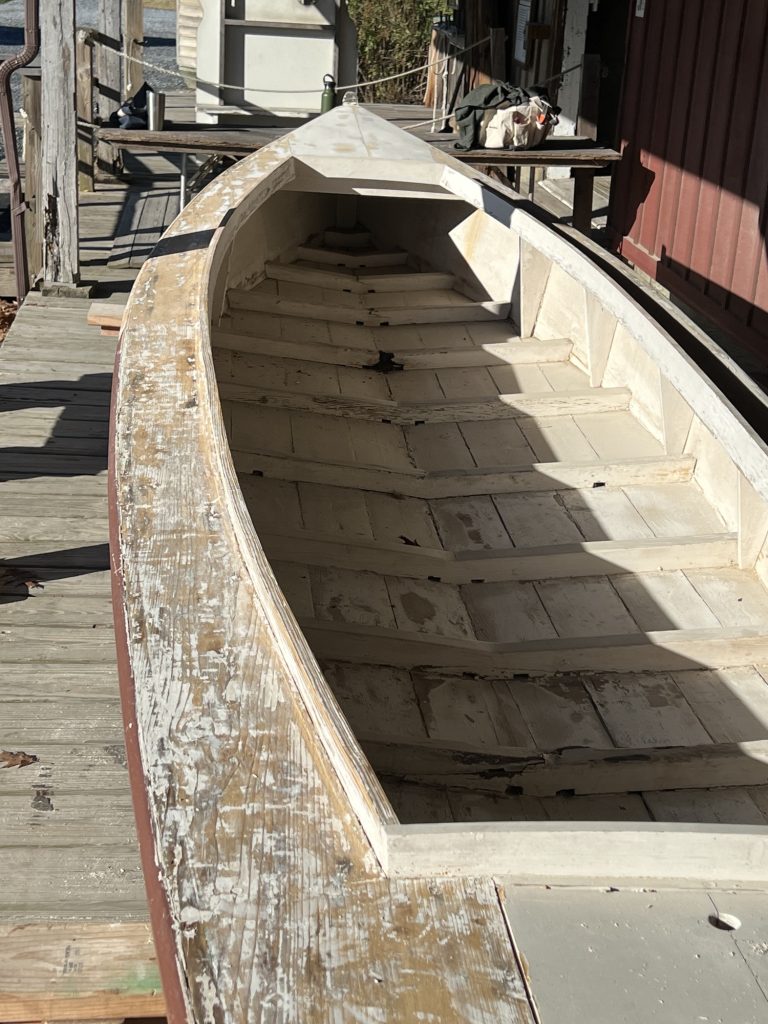
Tom and Jenn put final another coat of paint on the deck, coaming, and stern-interior of the 1925 Skiff.
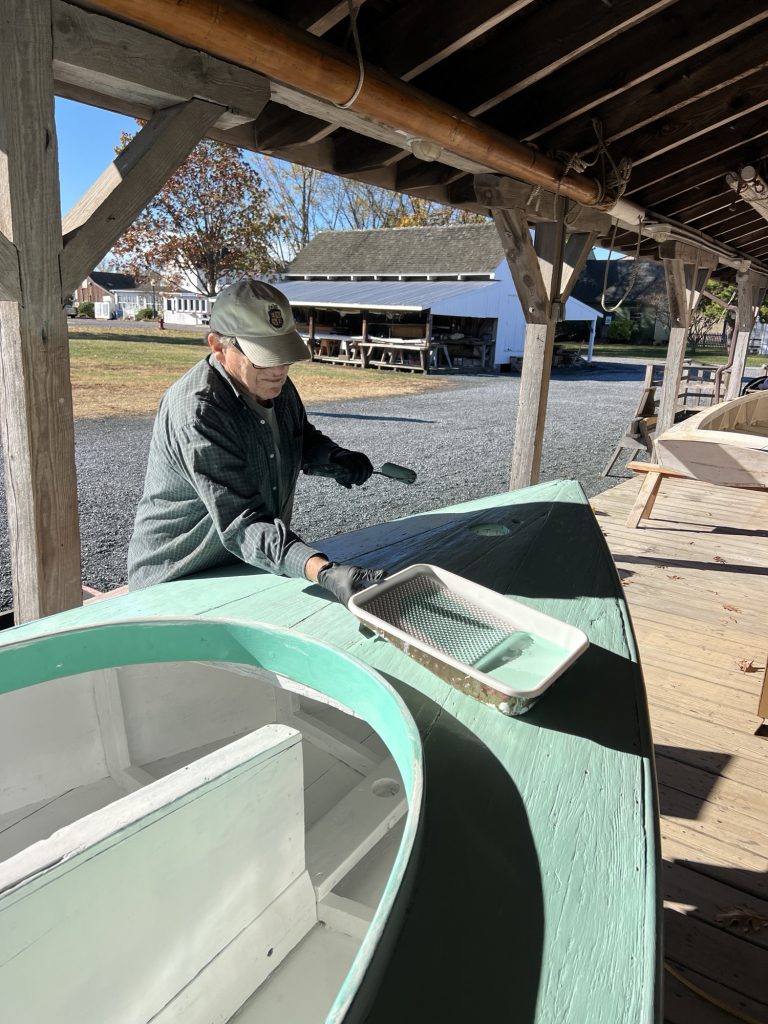
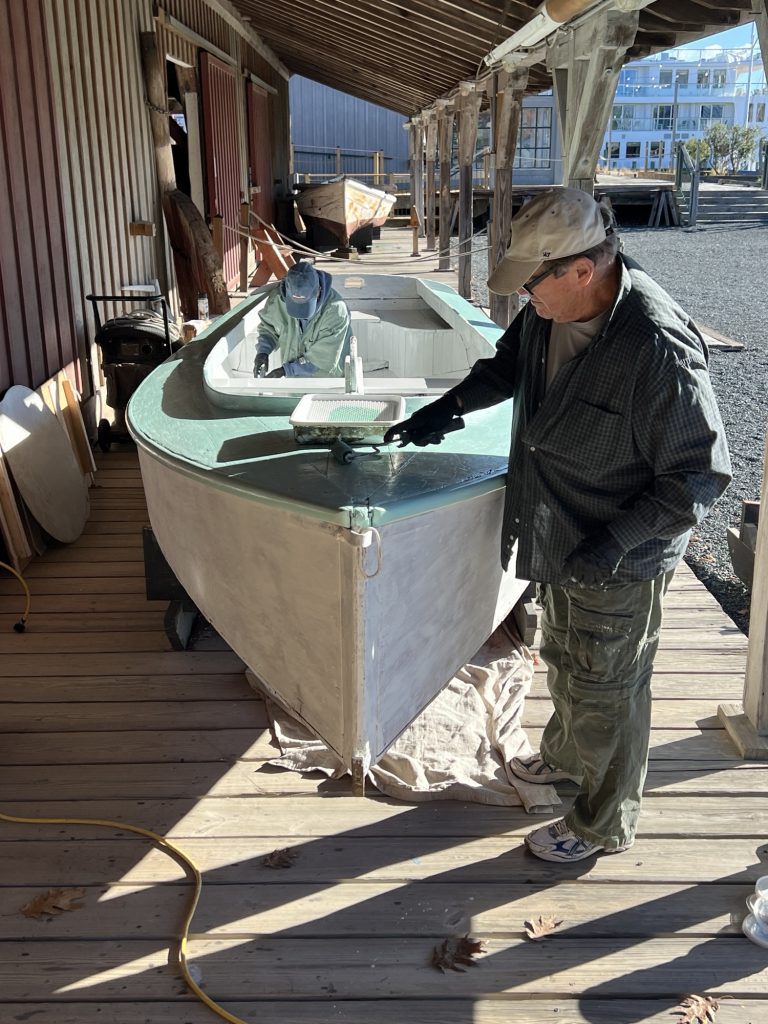
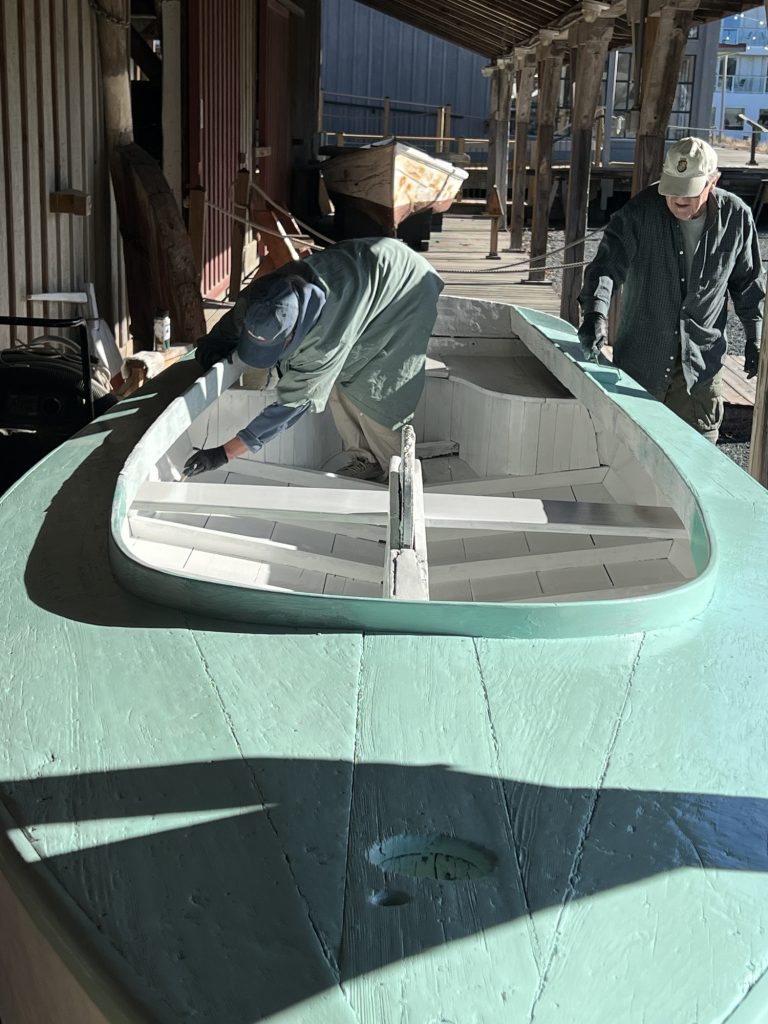
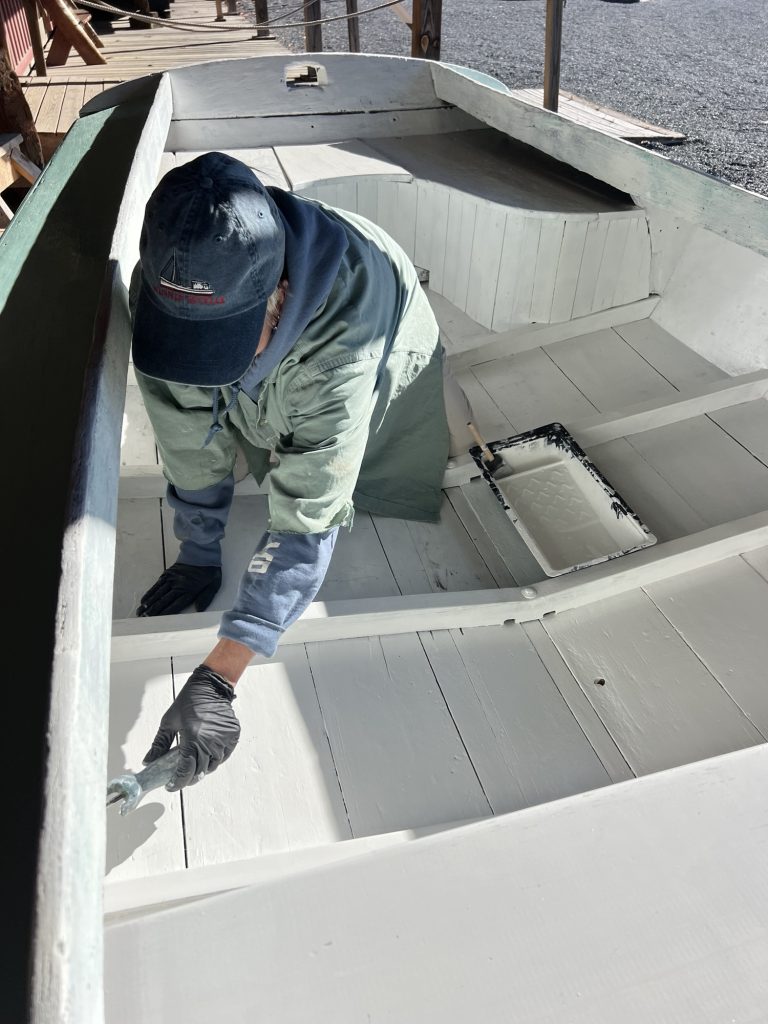
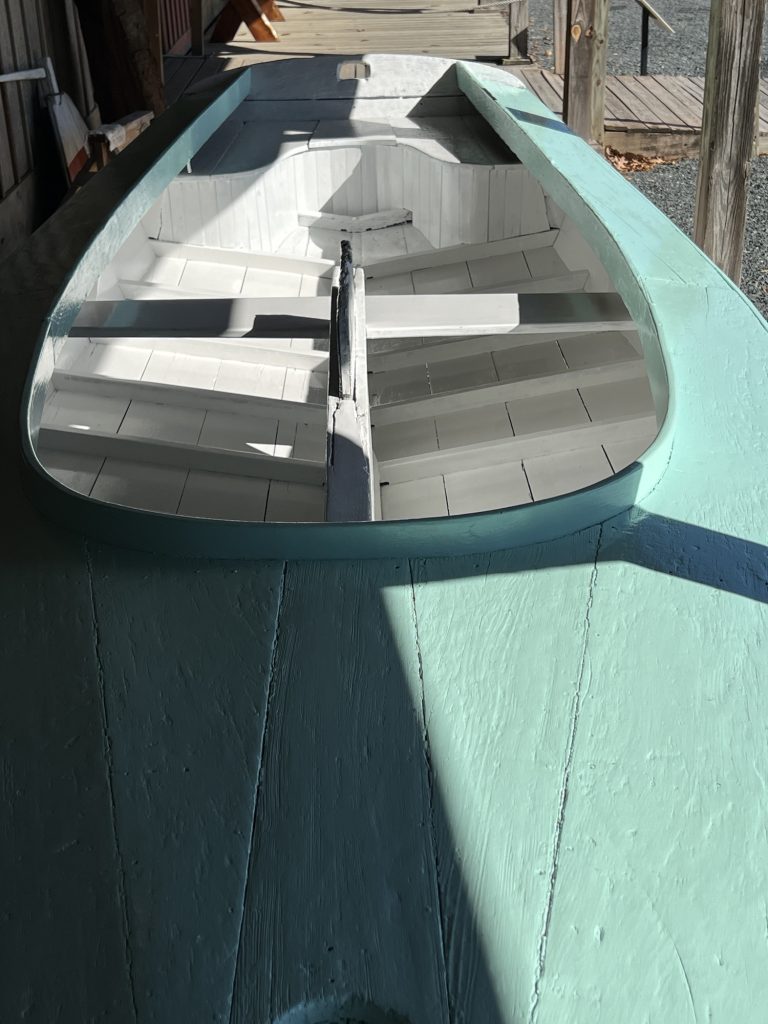
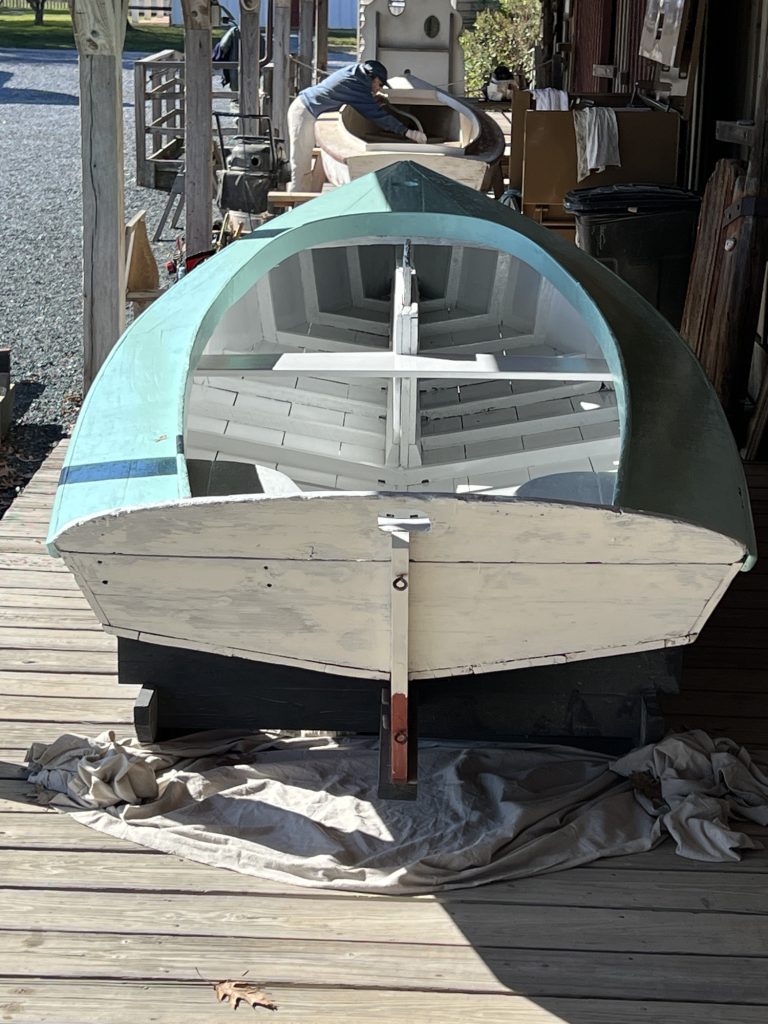
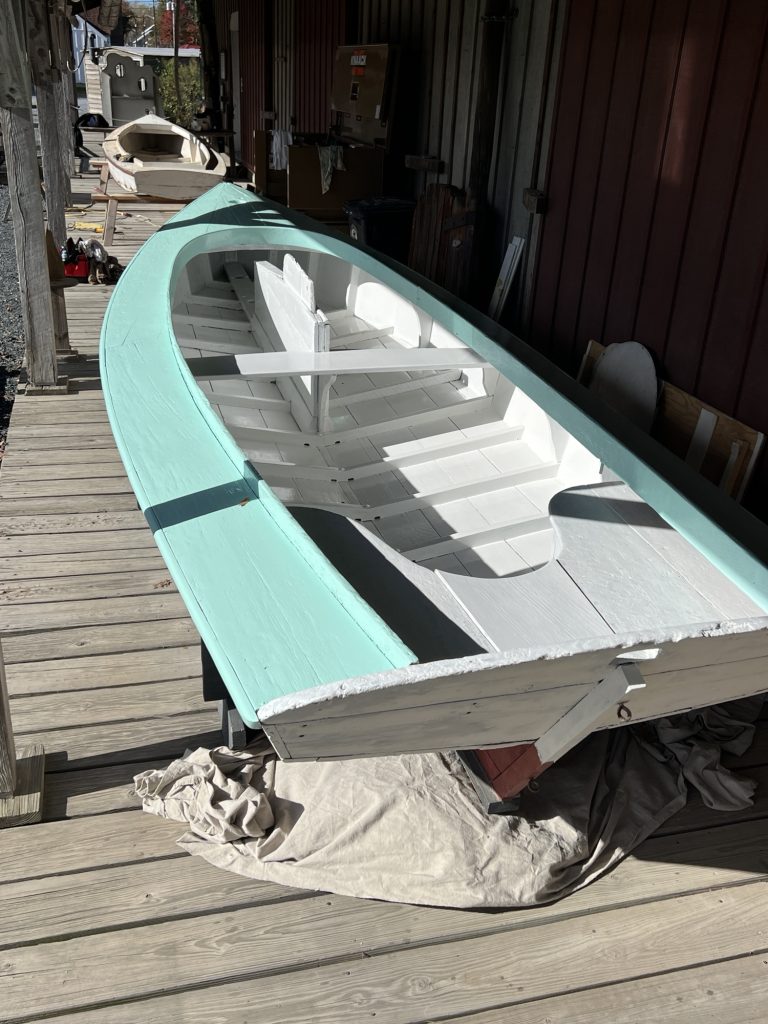
It was near freezing at dawn on the Eastern Shore. But things warmed up nicely by noon.
School kids visiting the Small Boat Shed watched Jim mixing paint. Jen is ready to dive under the fore deck to prep and paint. Tom wipes down the stern section. Then we applied the first coat of interior paint.