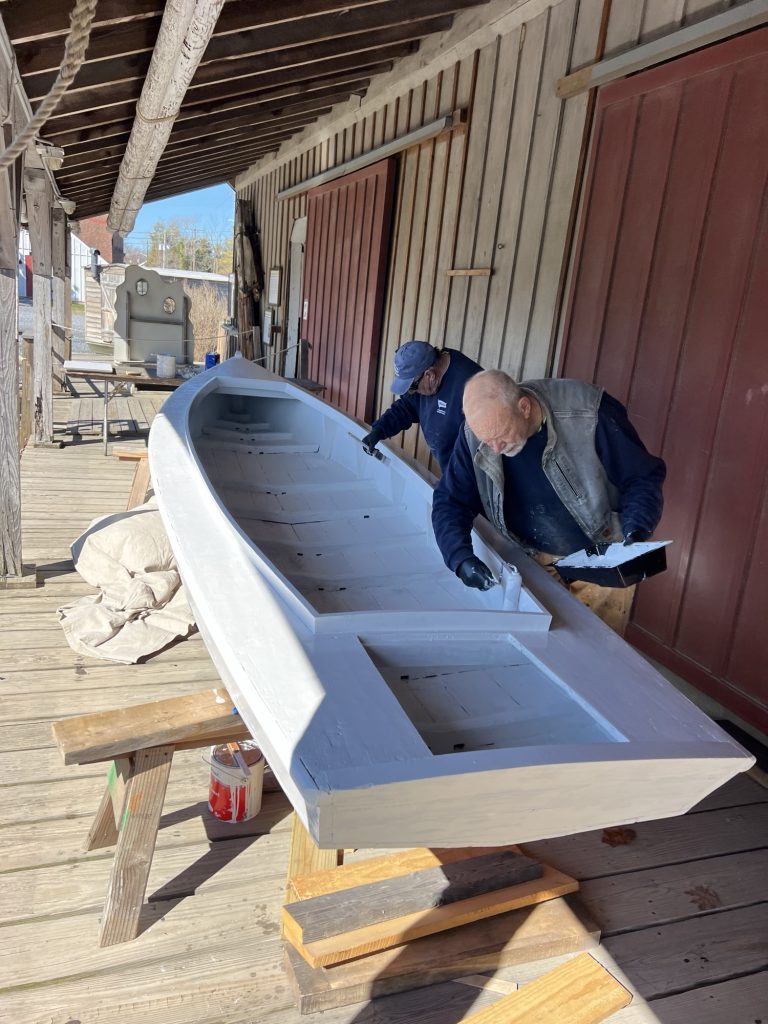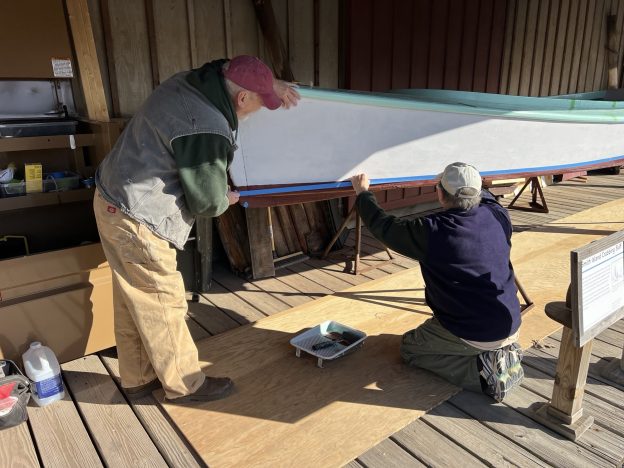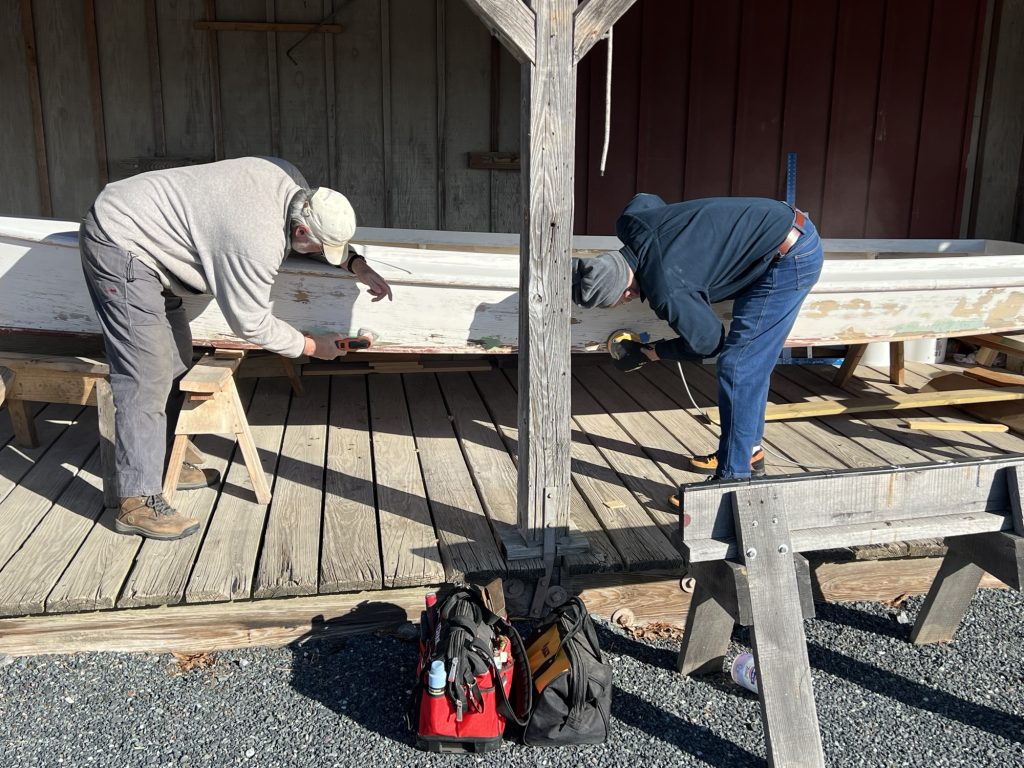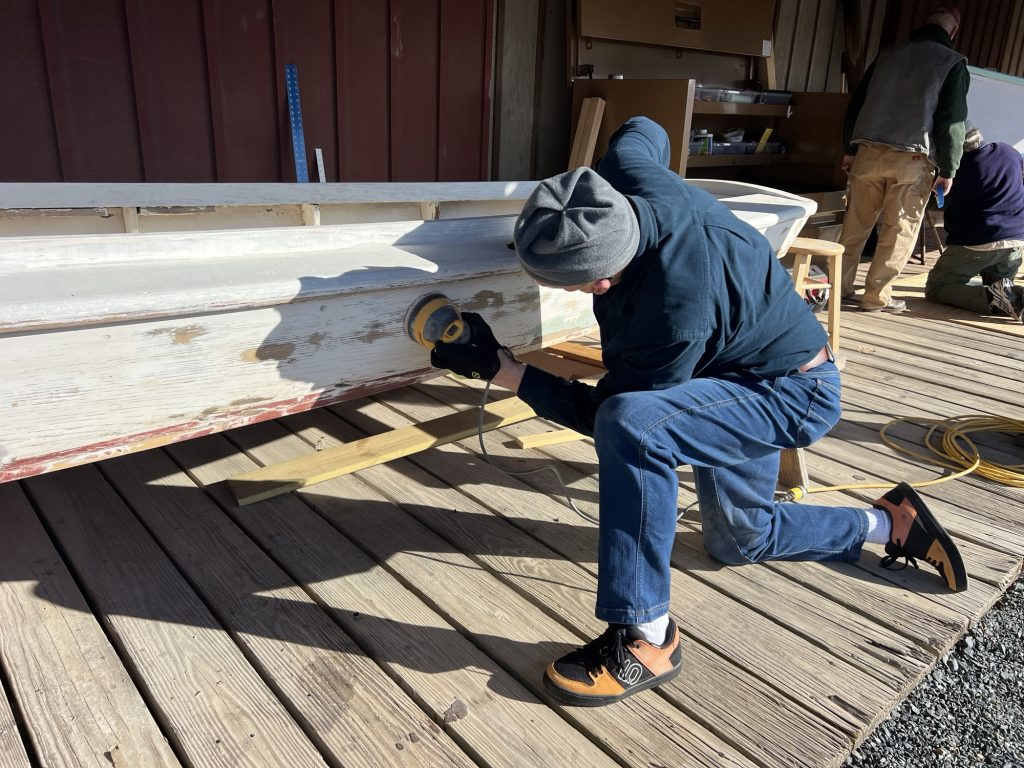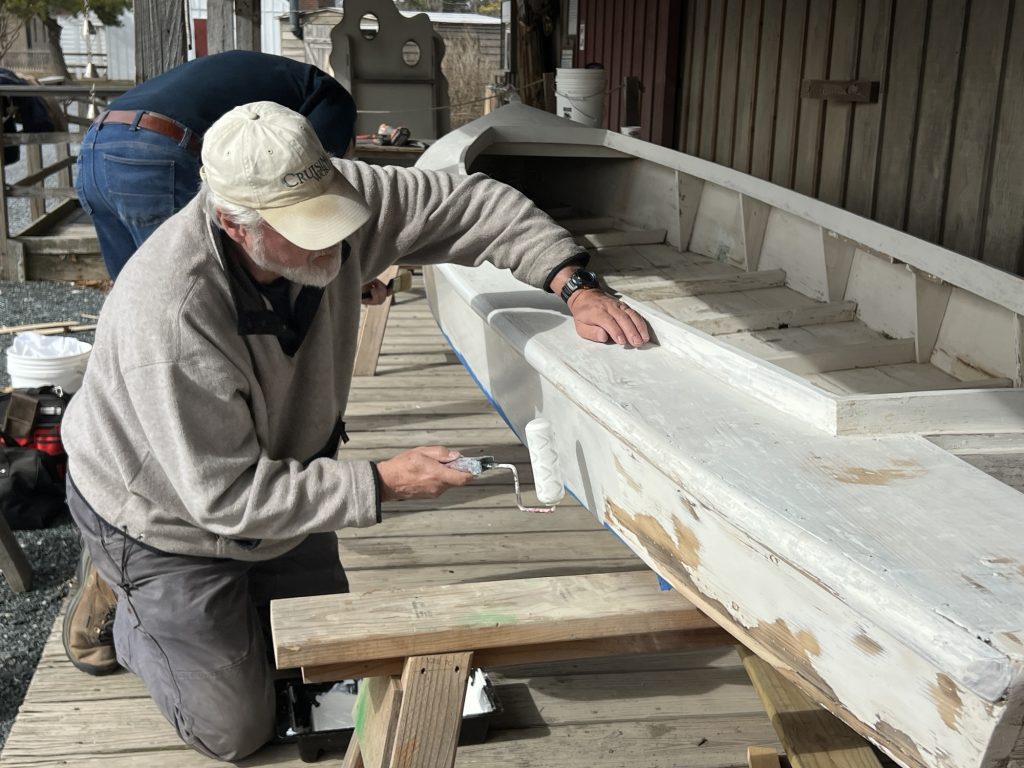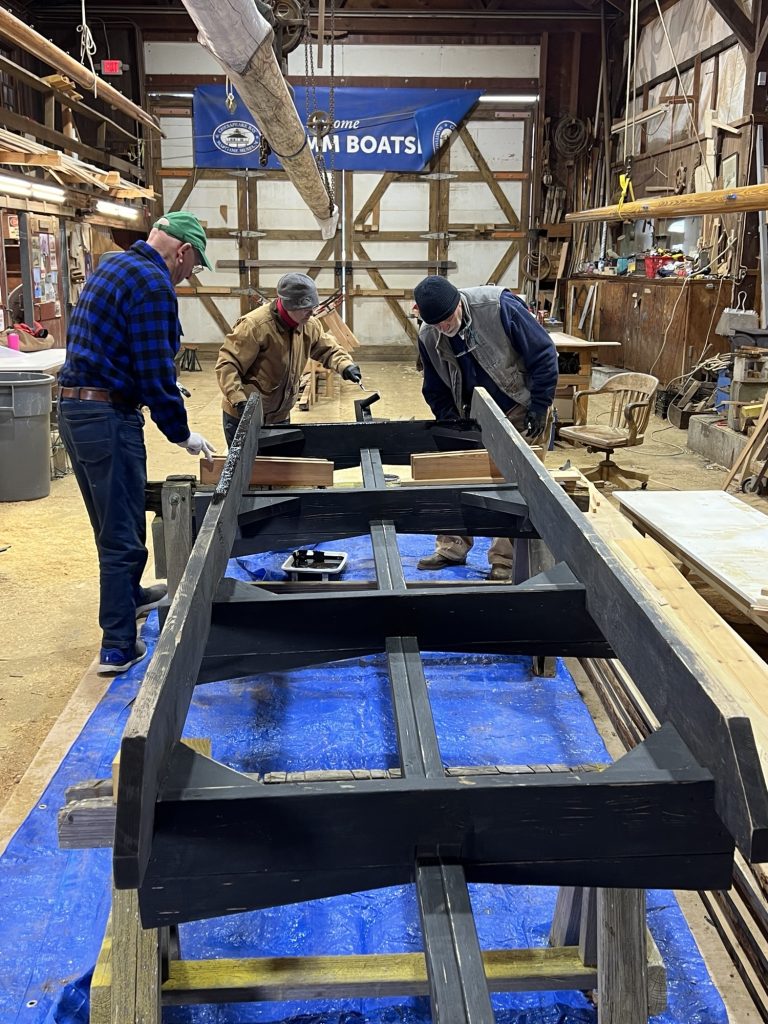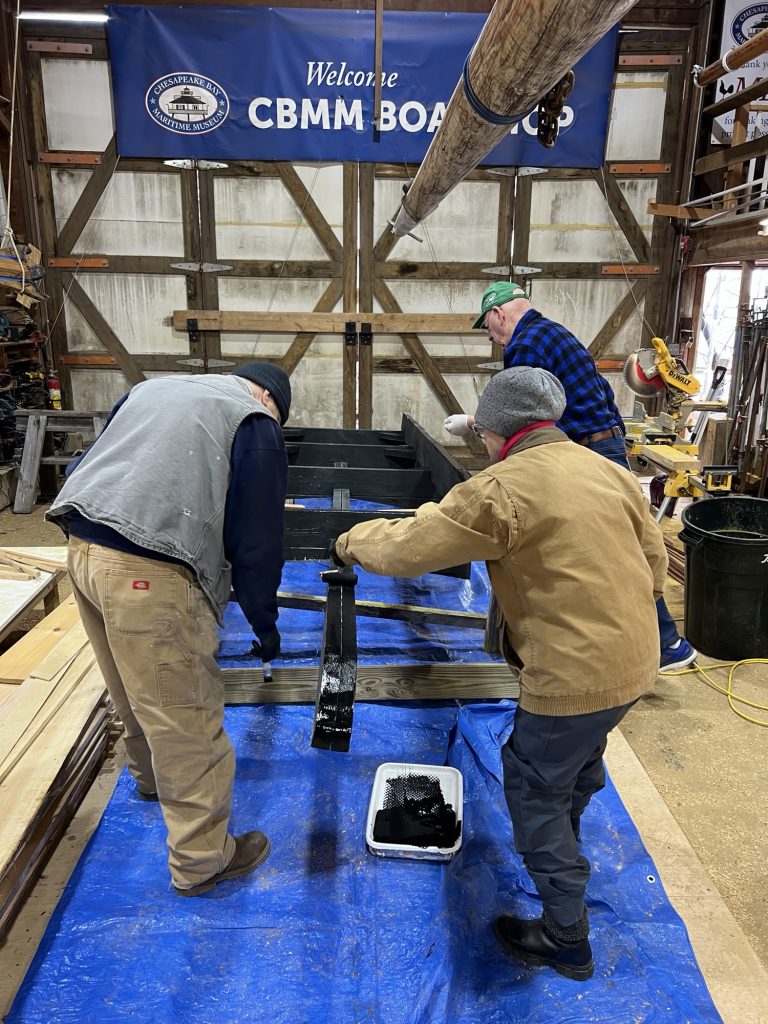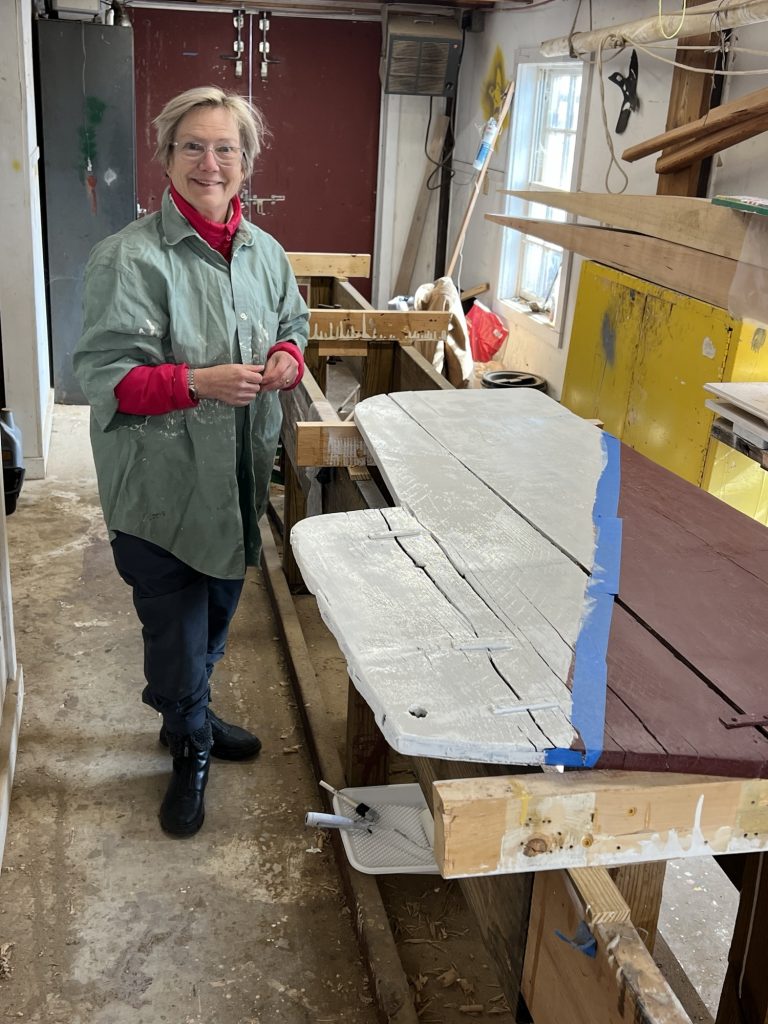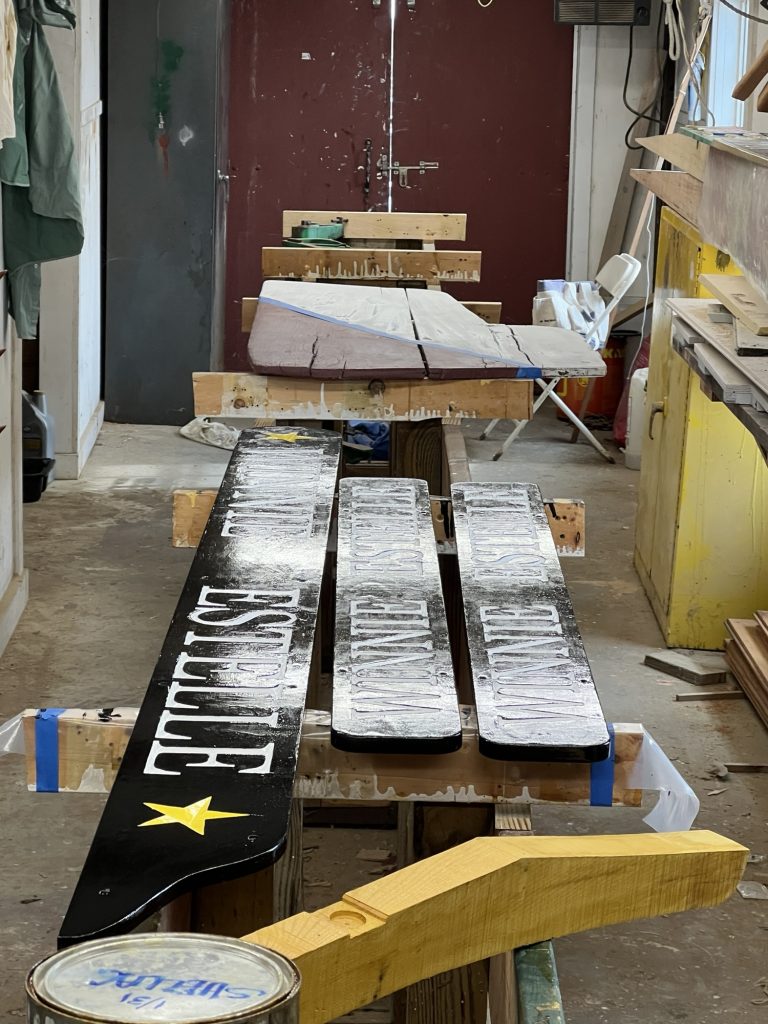
Apr 4, 2025 | 1920 skiff: Bottom primer

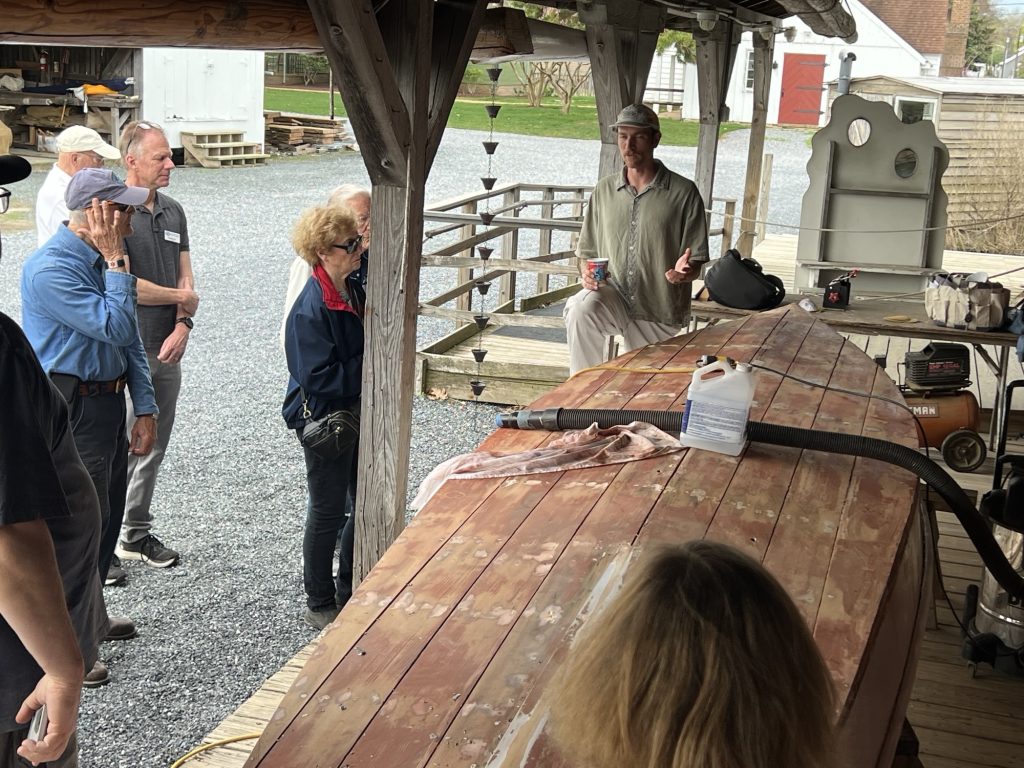
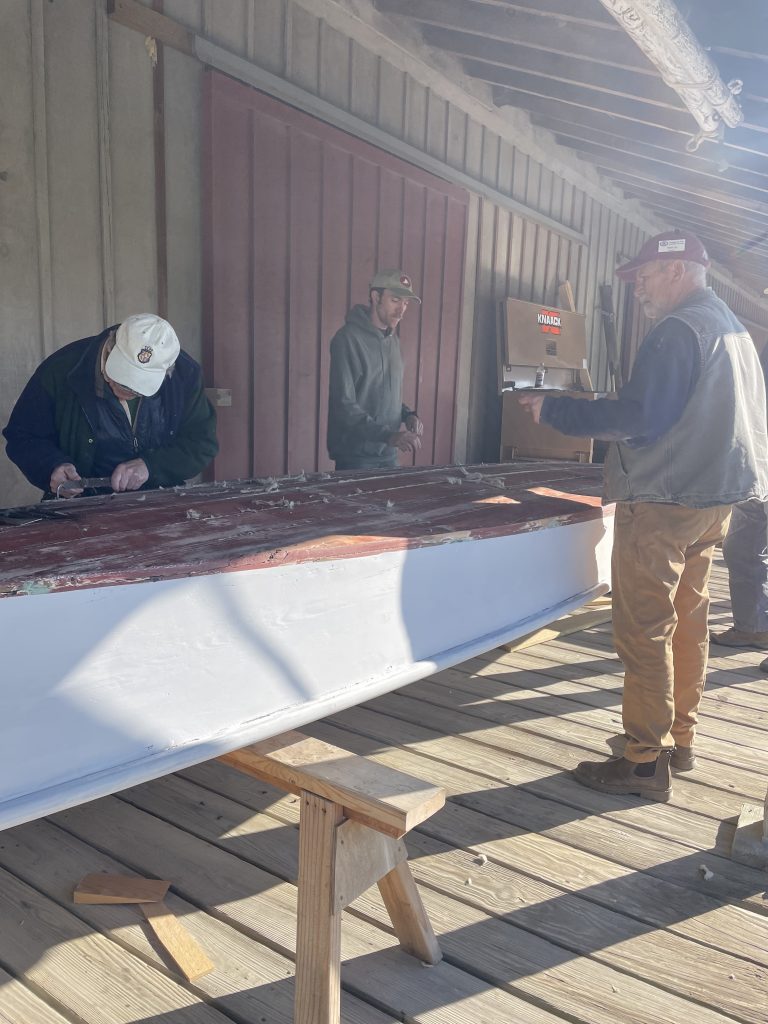
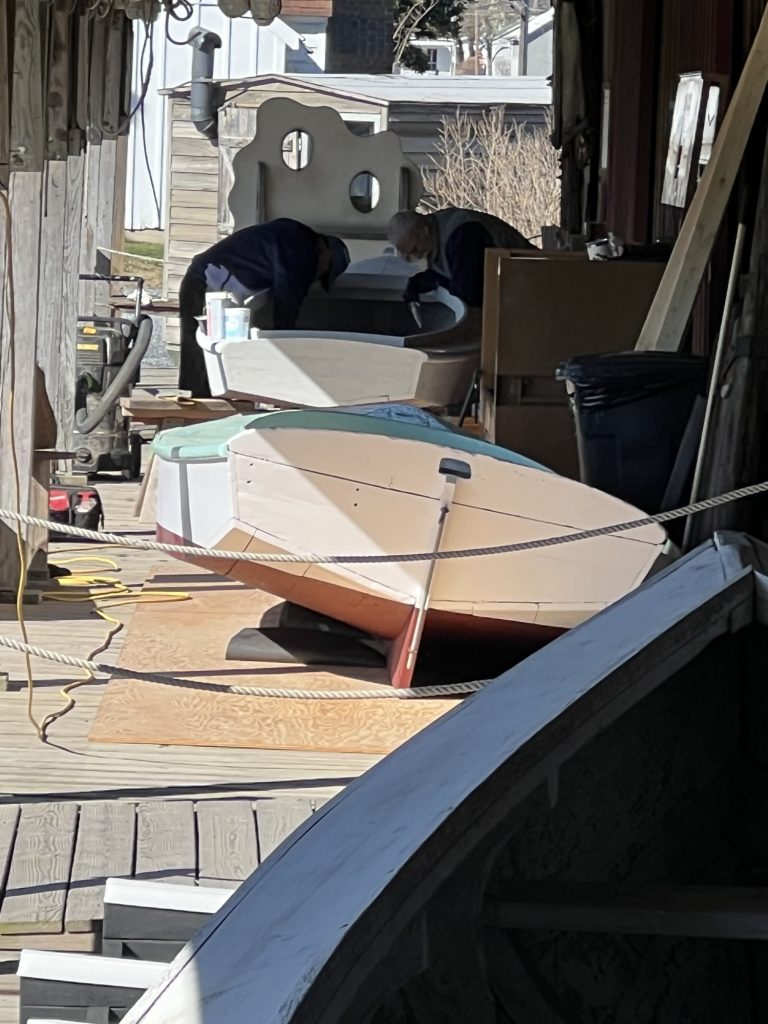
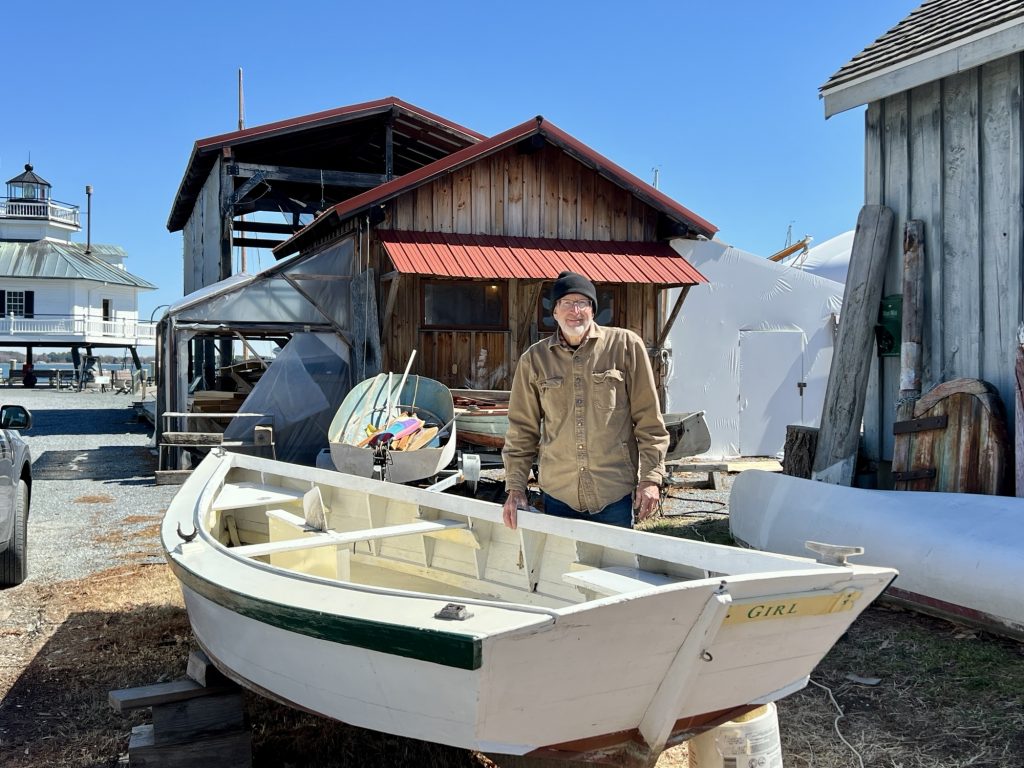
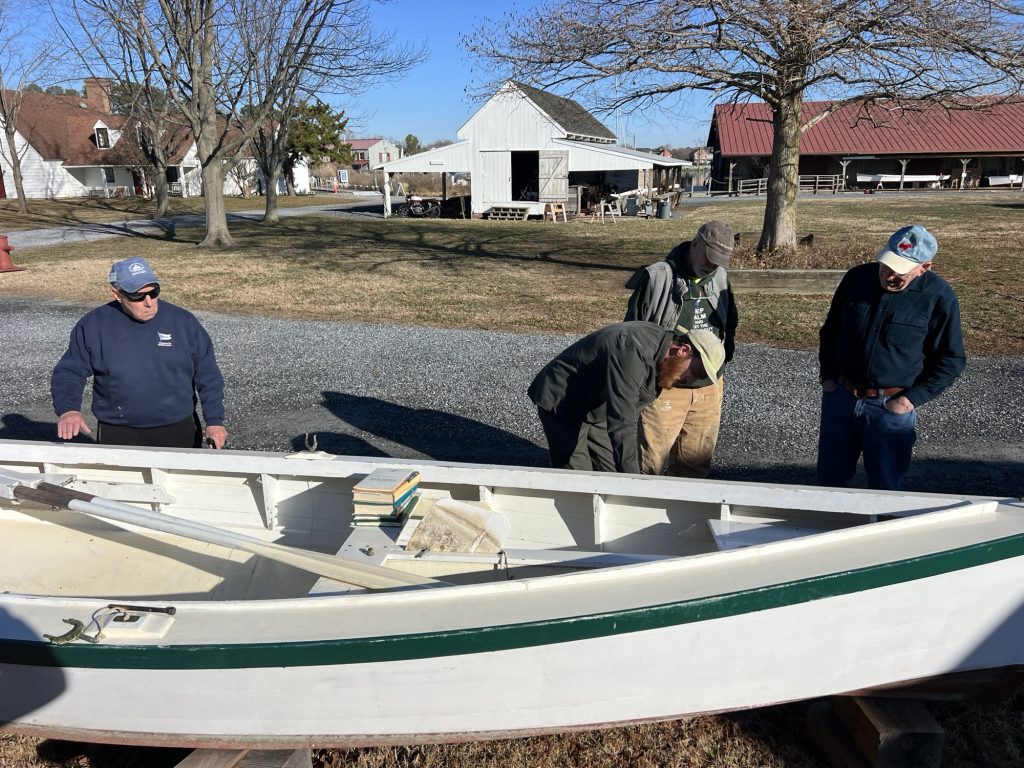
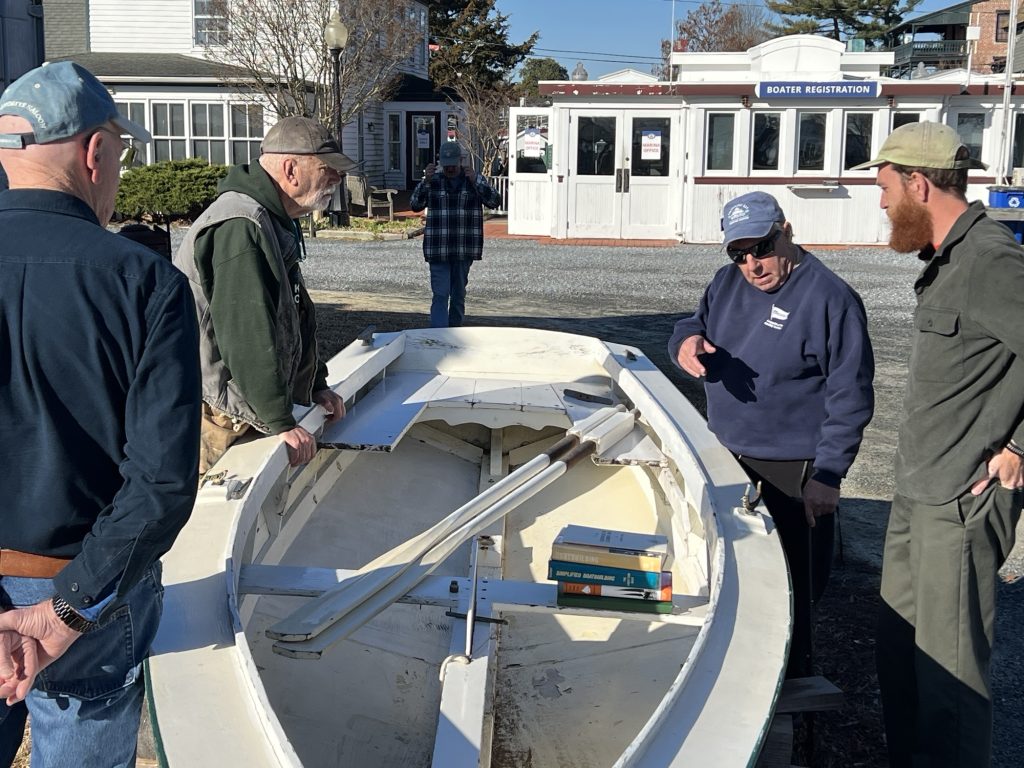
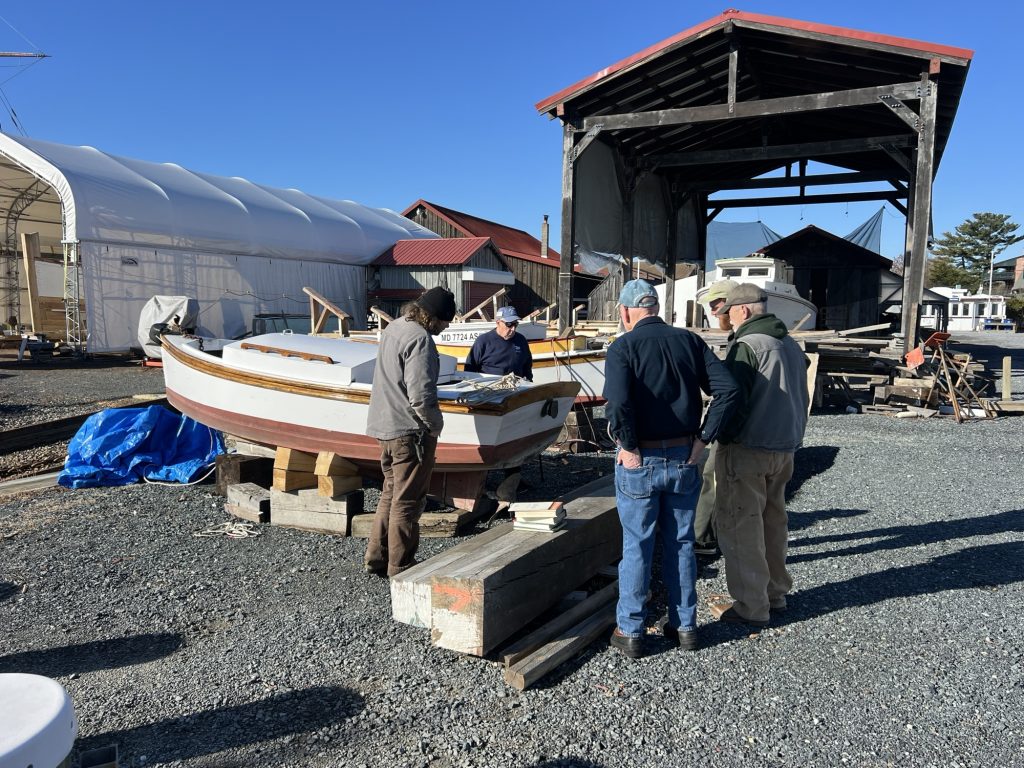
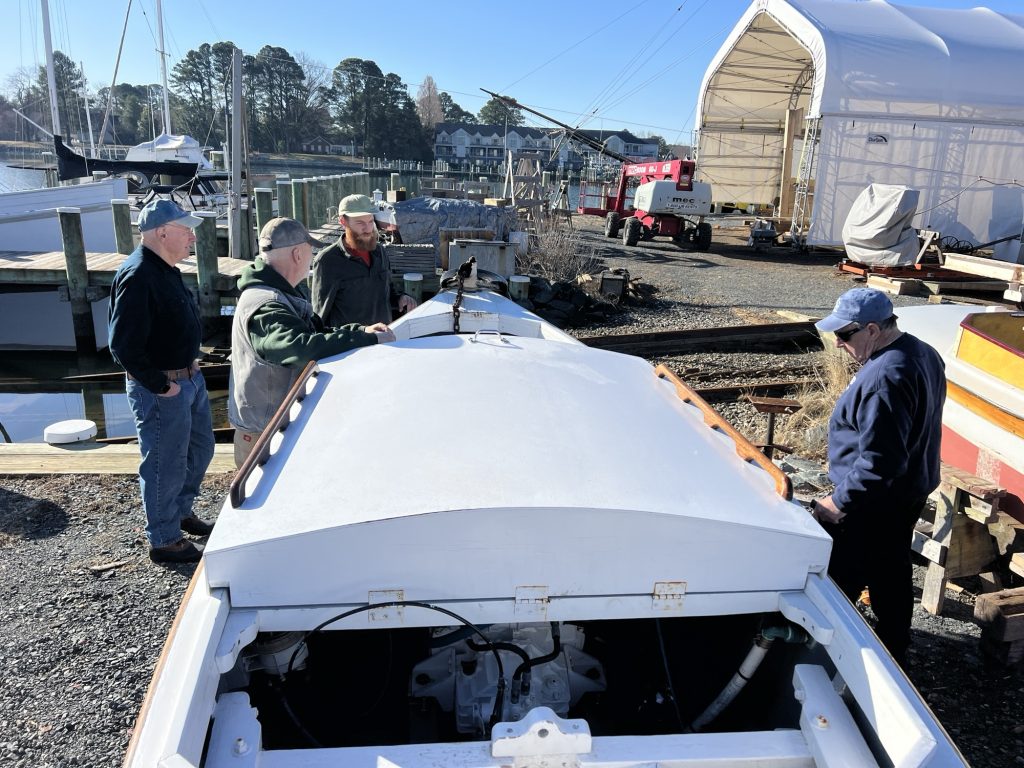
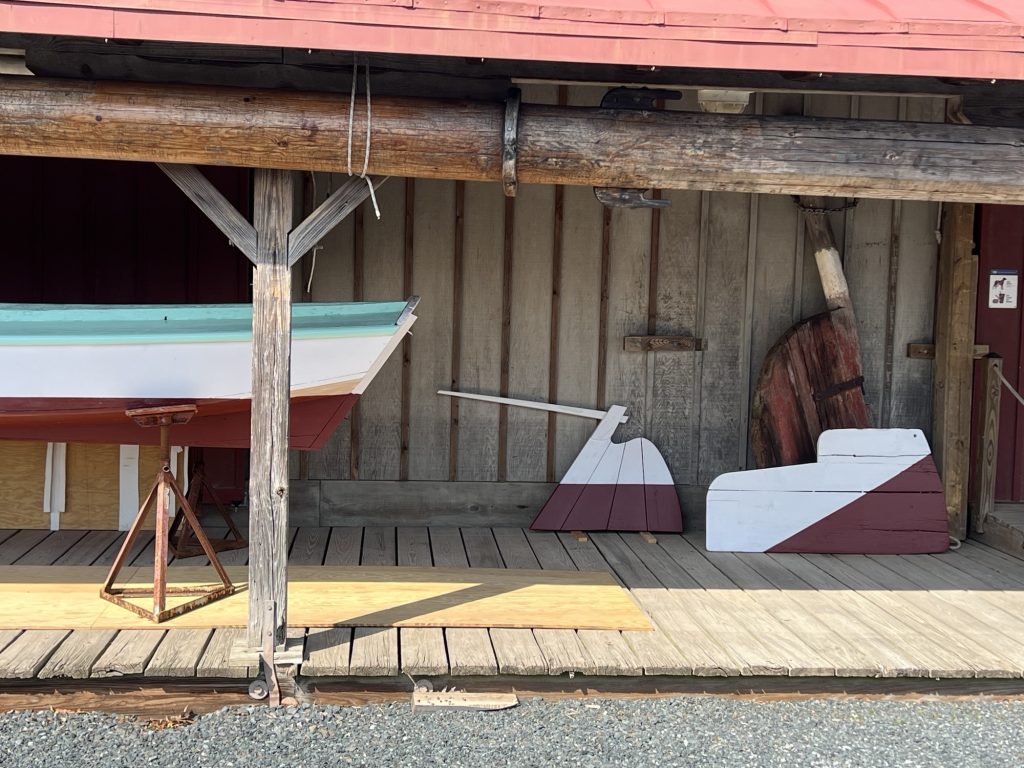
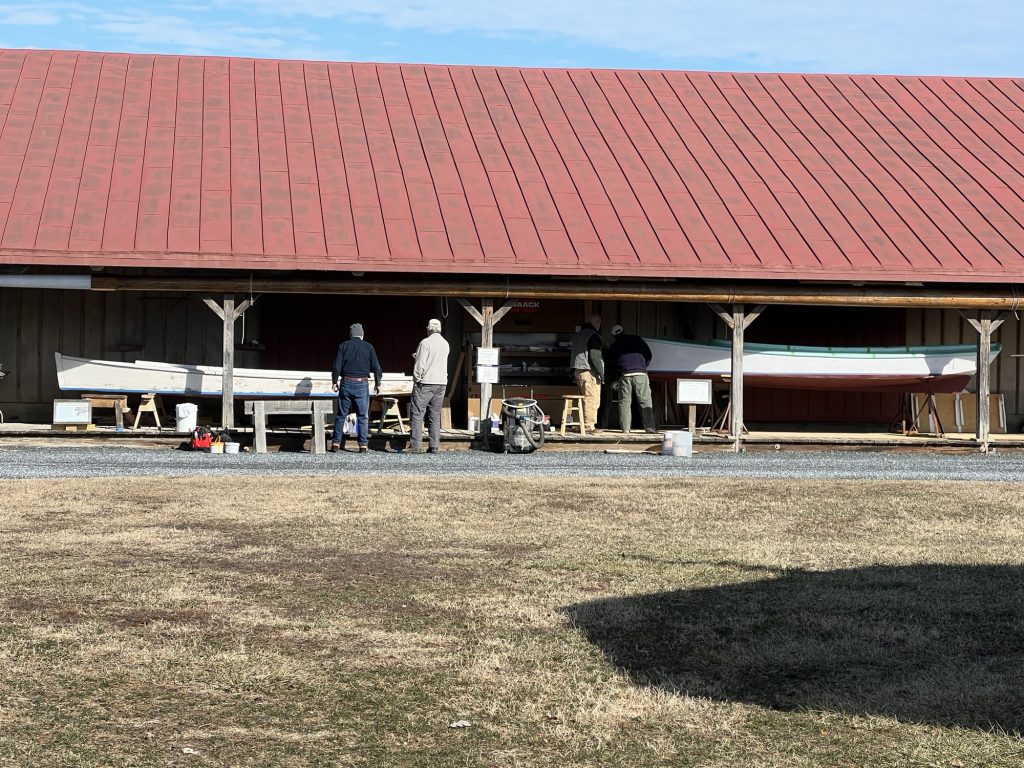
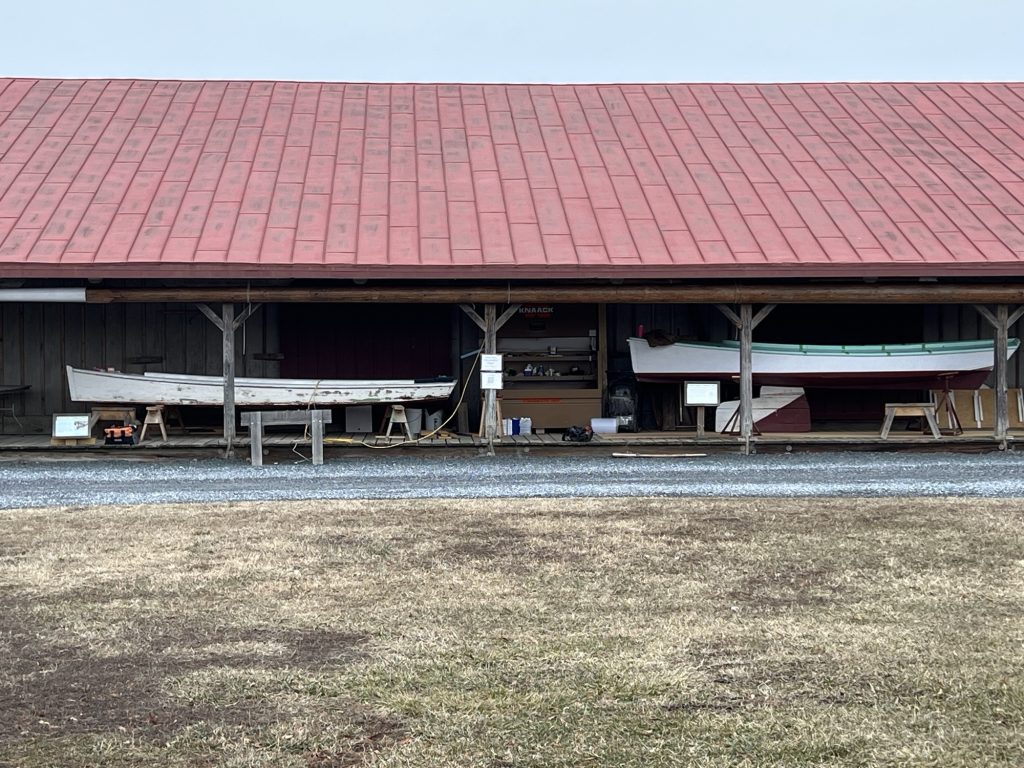
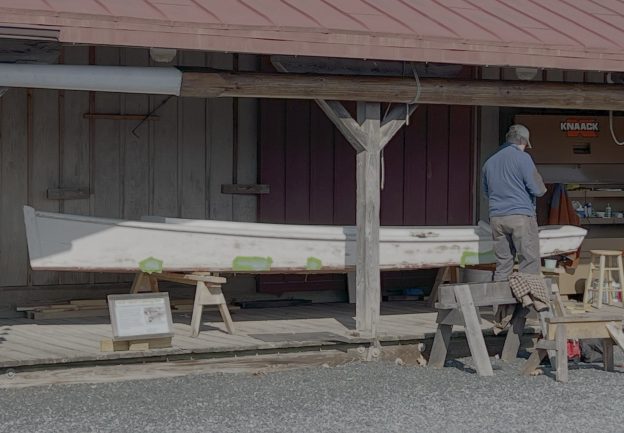
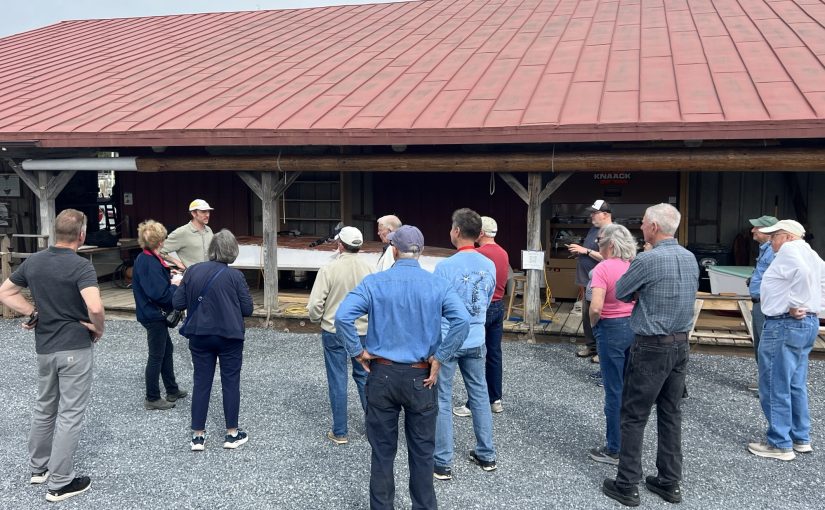
We added Friday to our volunteer days this week. Jim was on campus for a CBMM boat crew meeting. Greg, Jenn, and Don followed the Coffee & Wood Chips tour through the boat shop and shipyard. Sam led the tour group to the SBS porch and talked about our work on small craft.
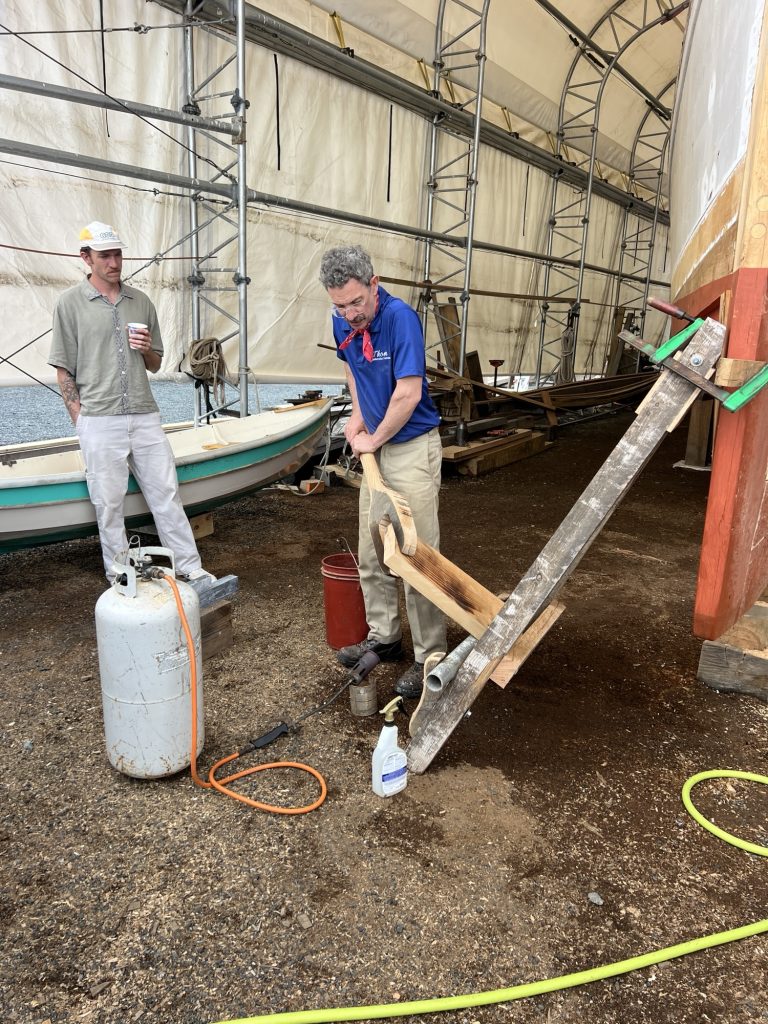
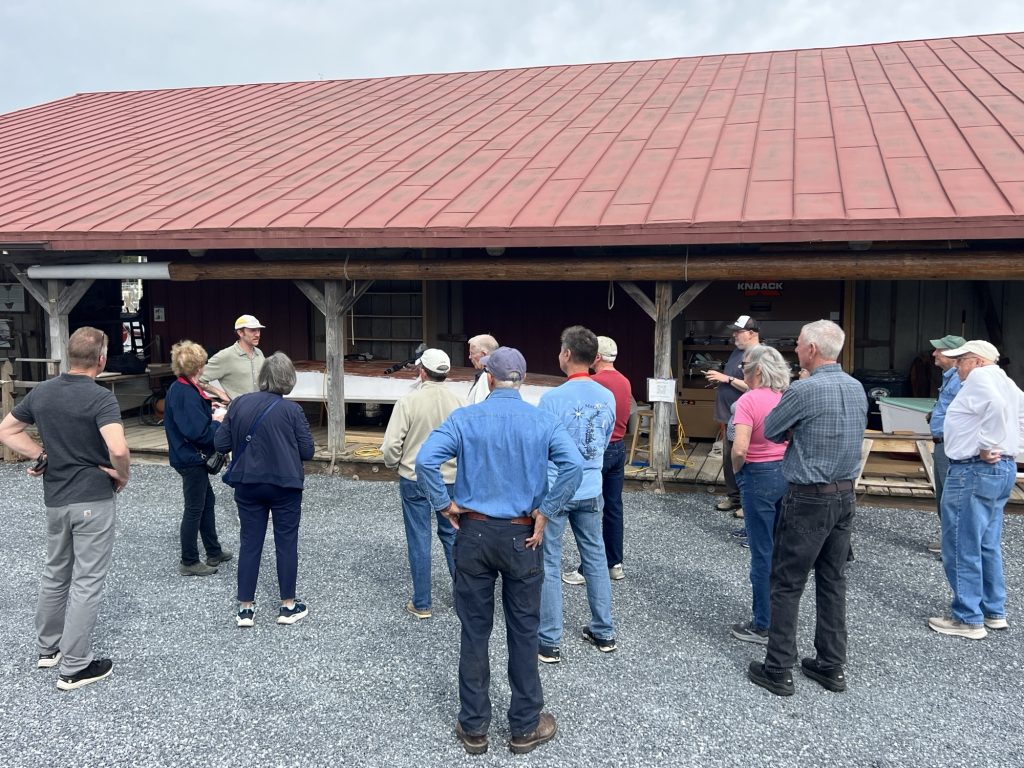
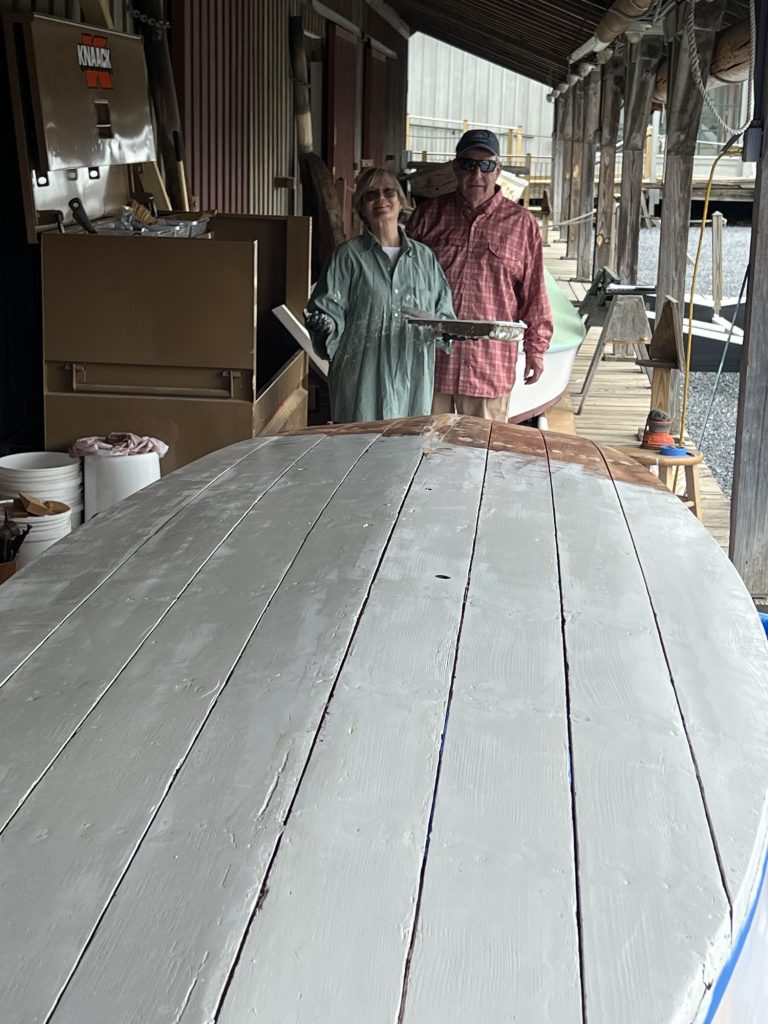
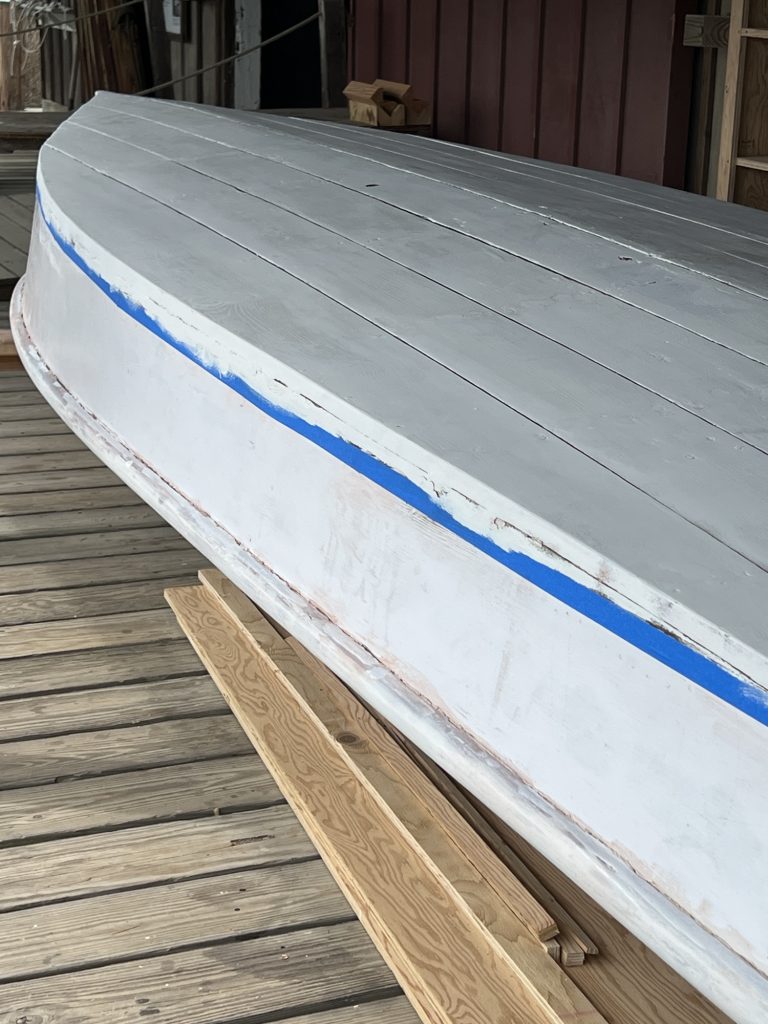
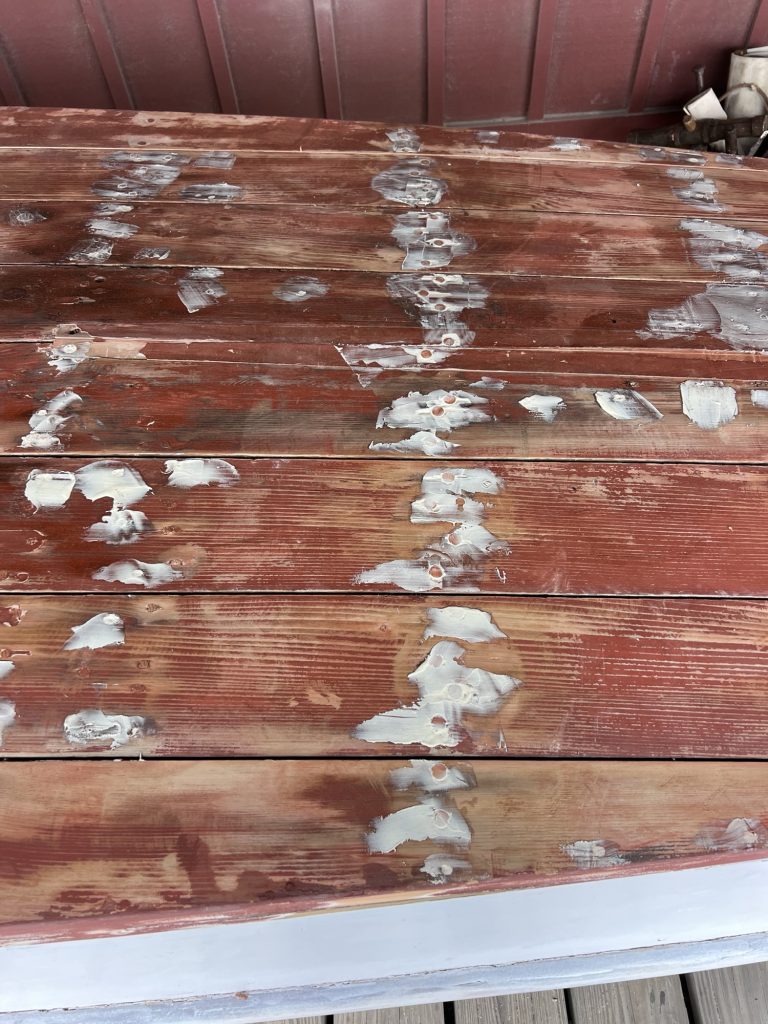
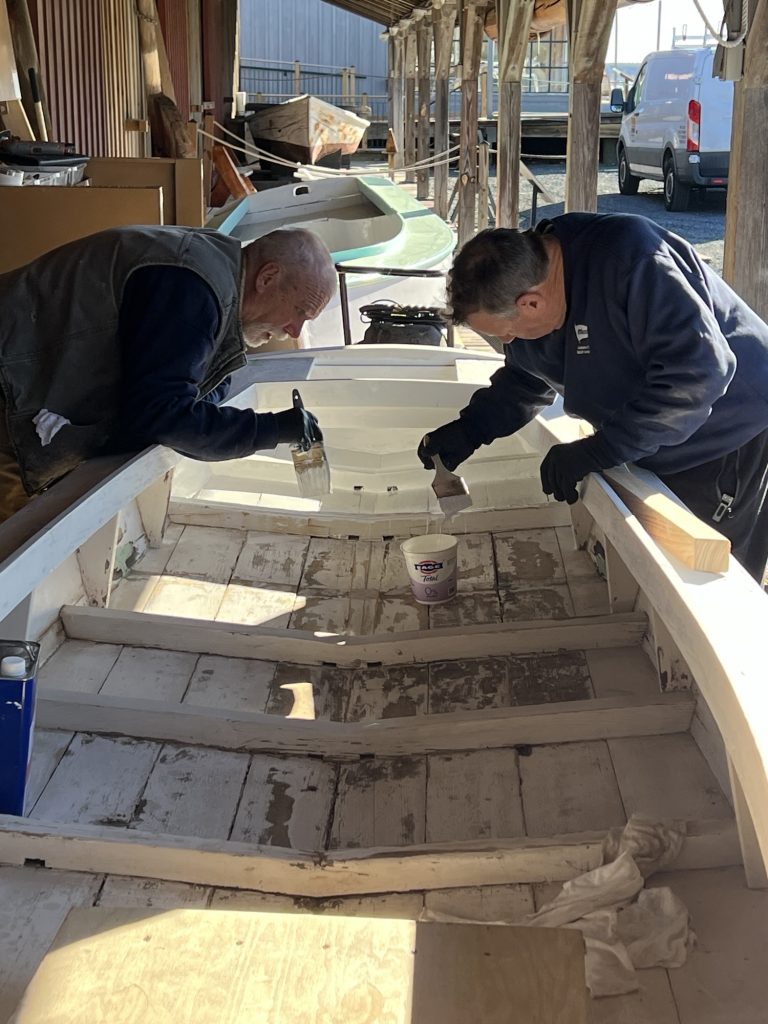
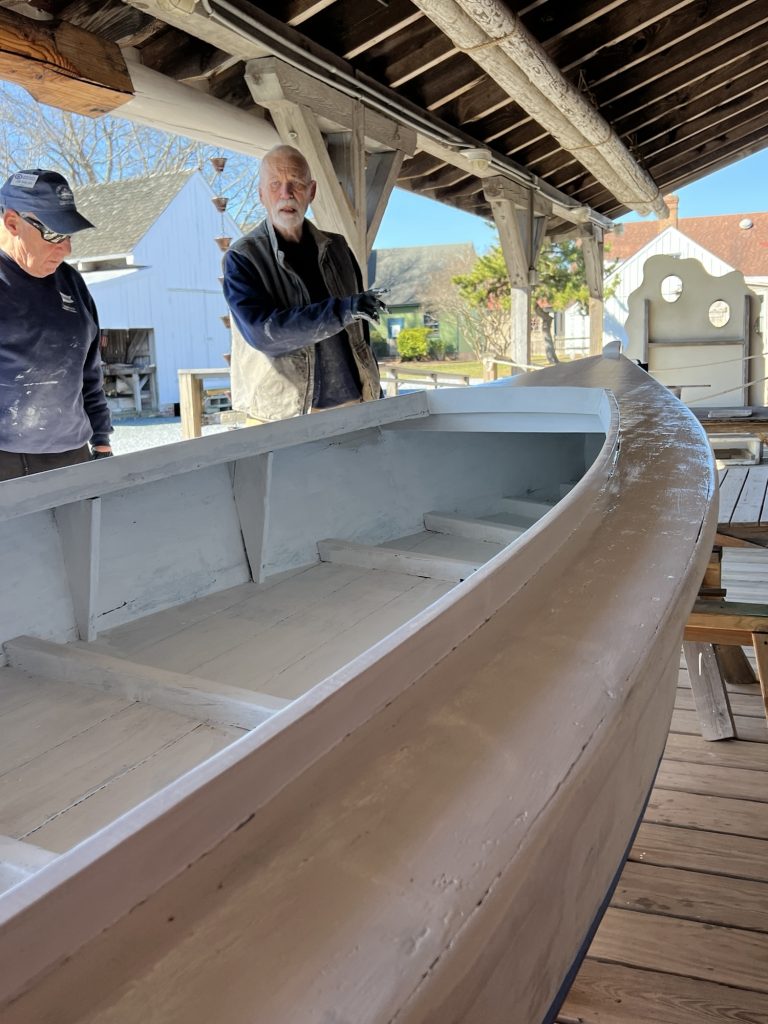
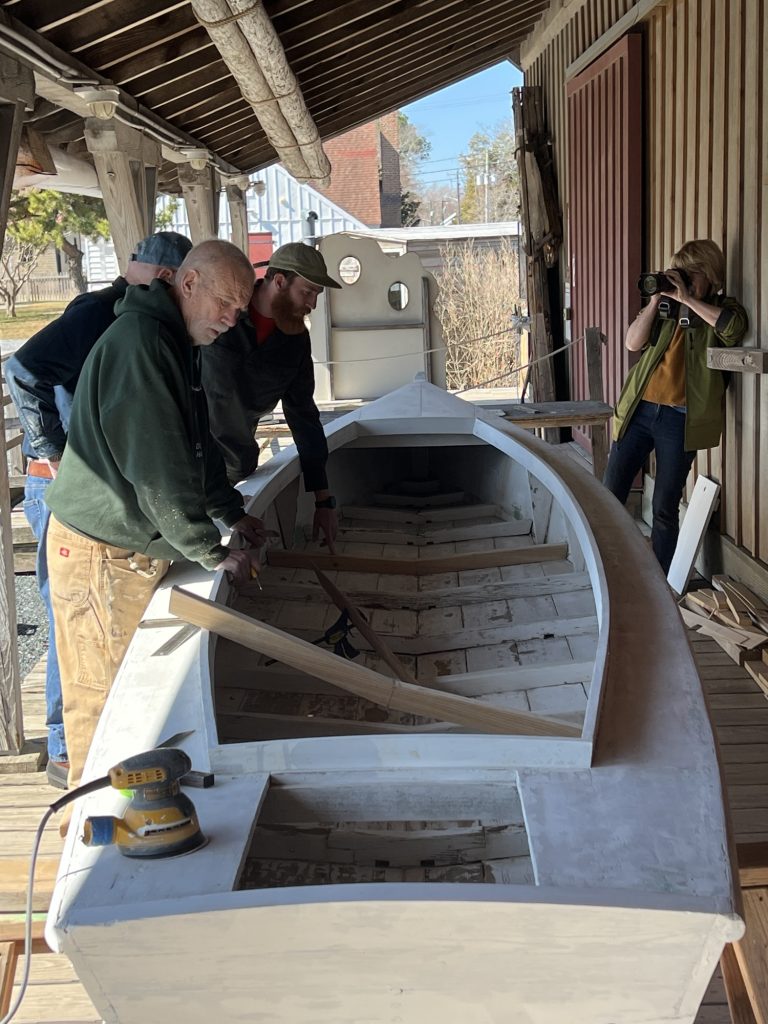
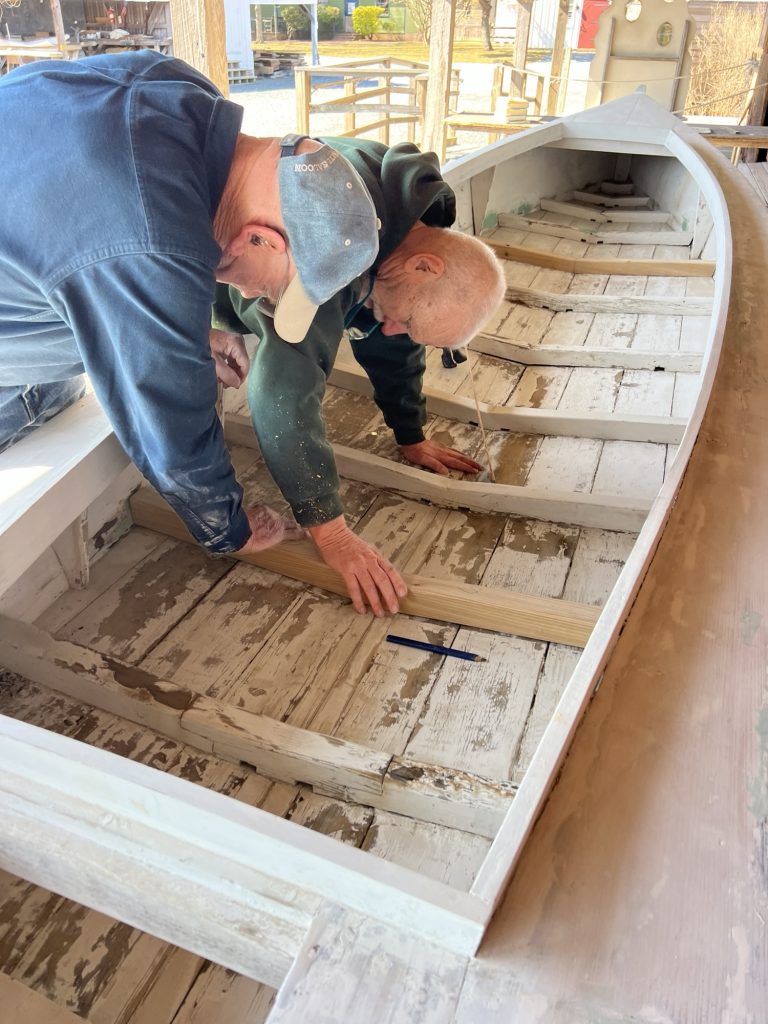
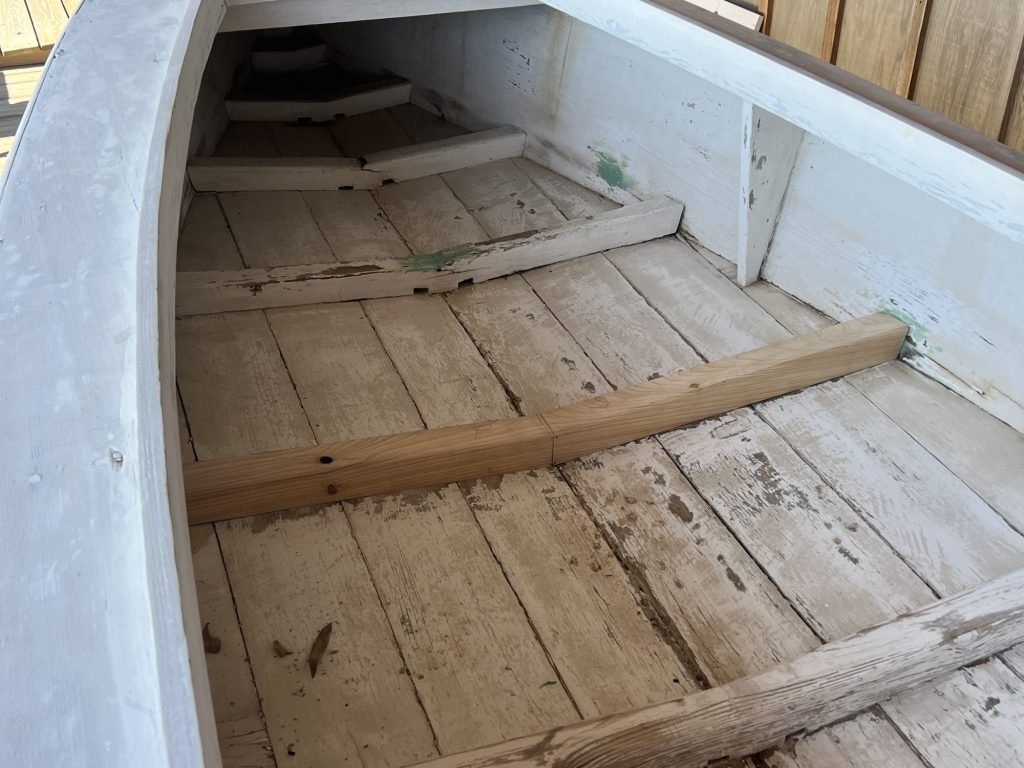
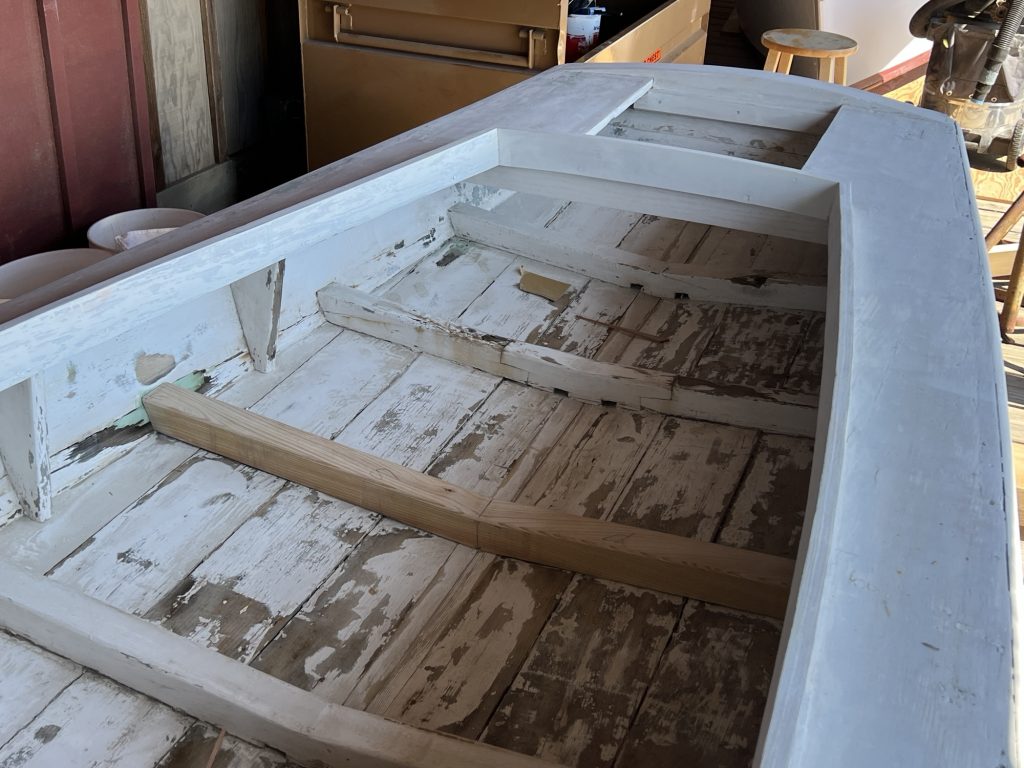
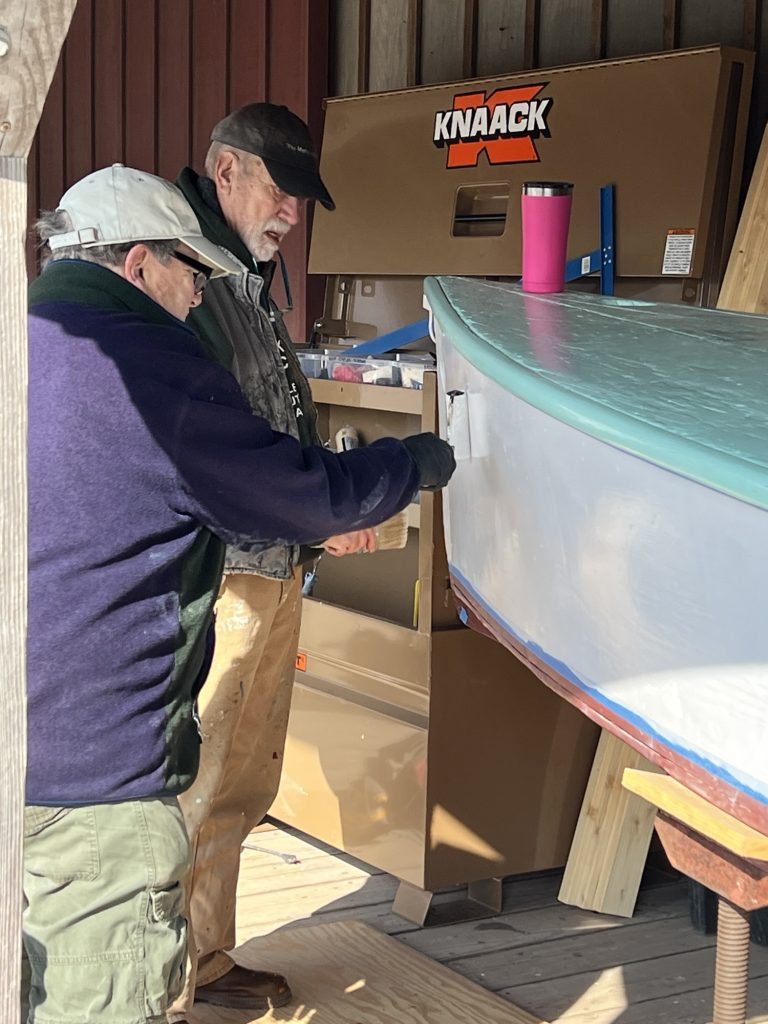
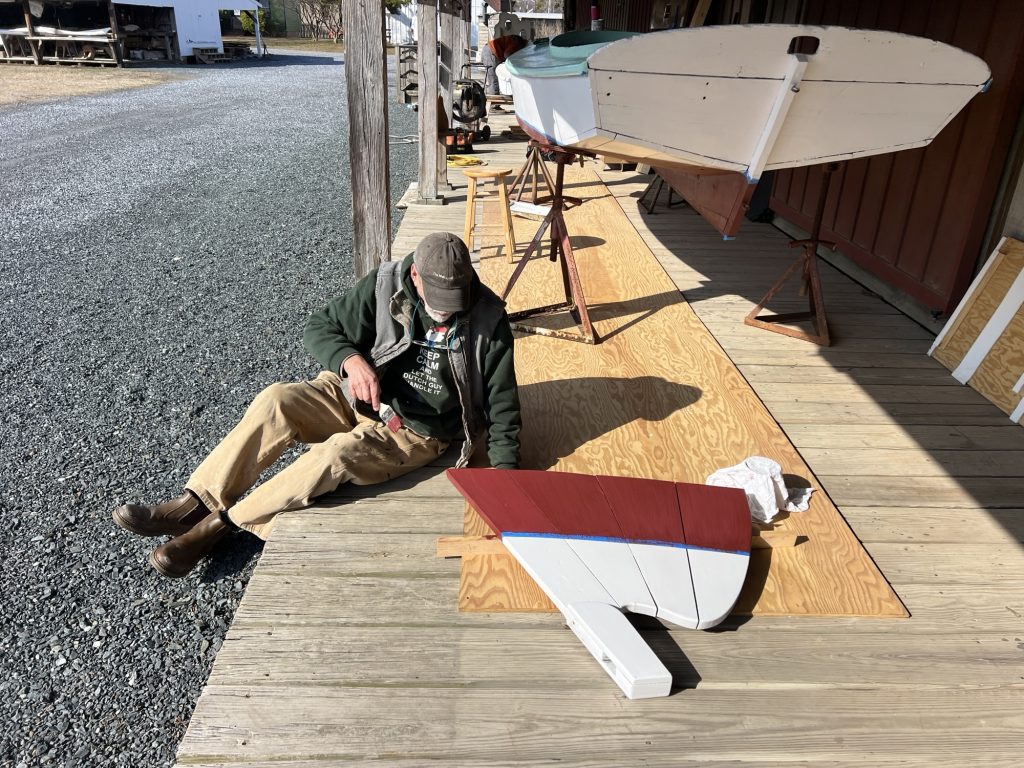
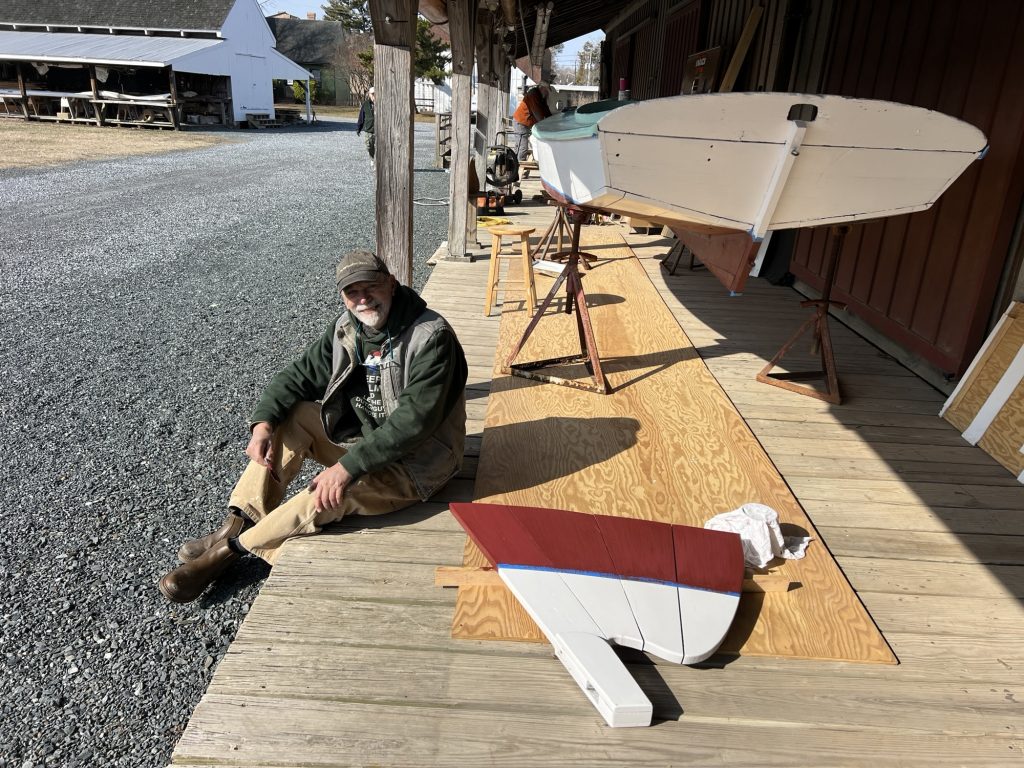
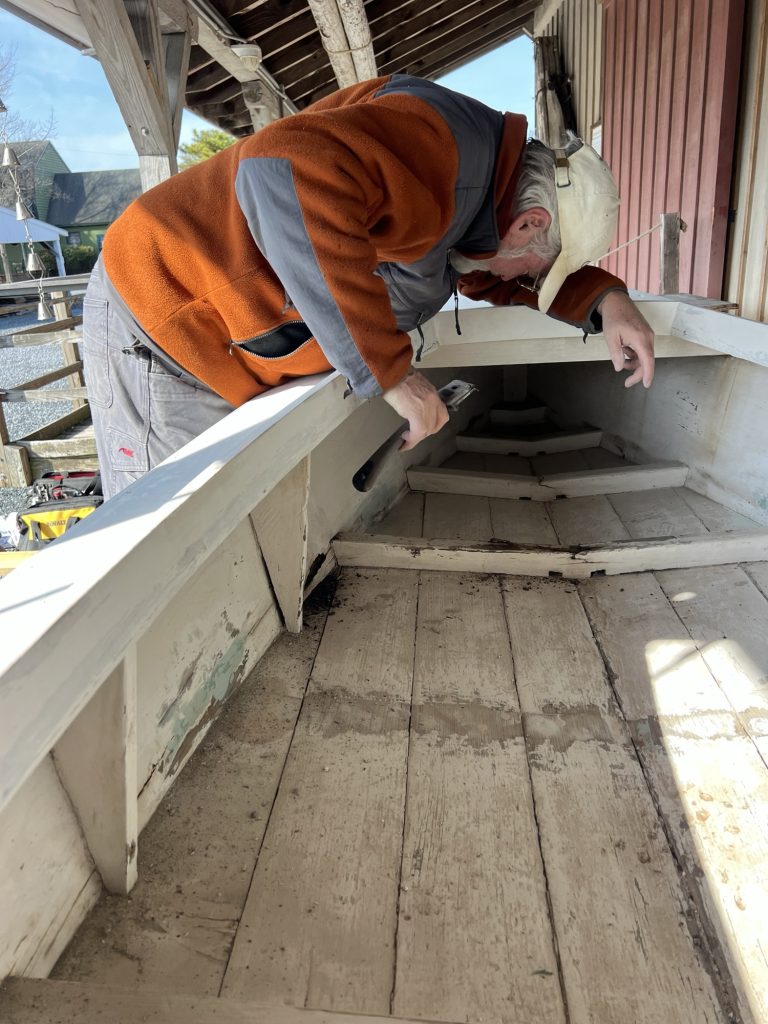
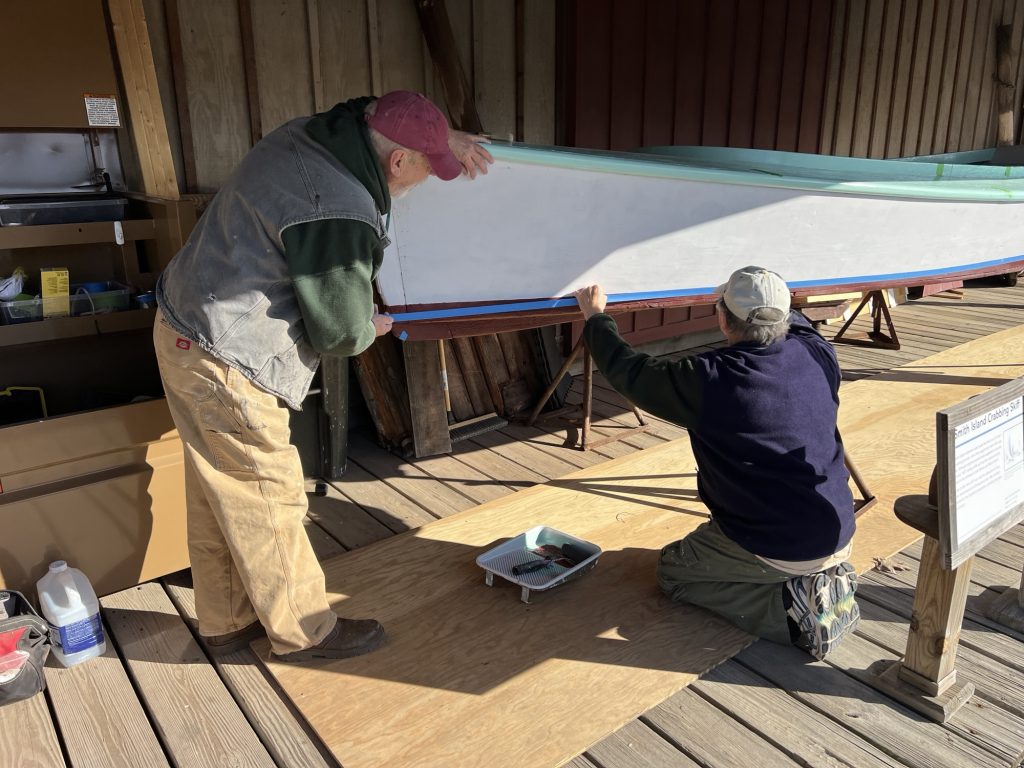
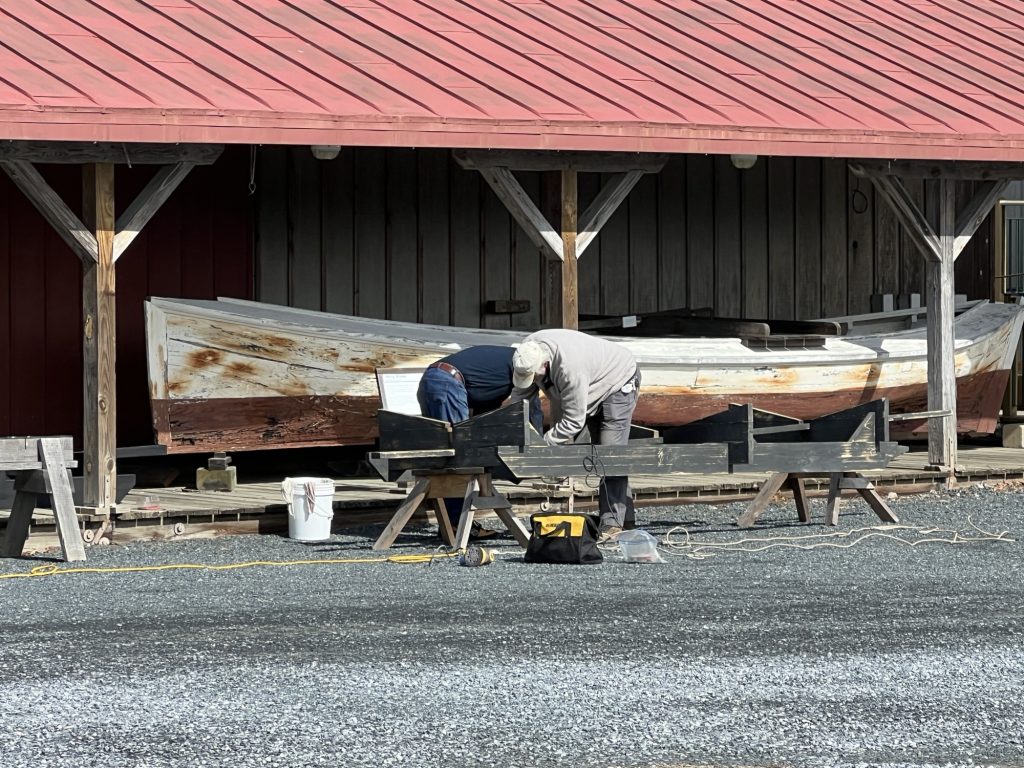
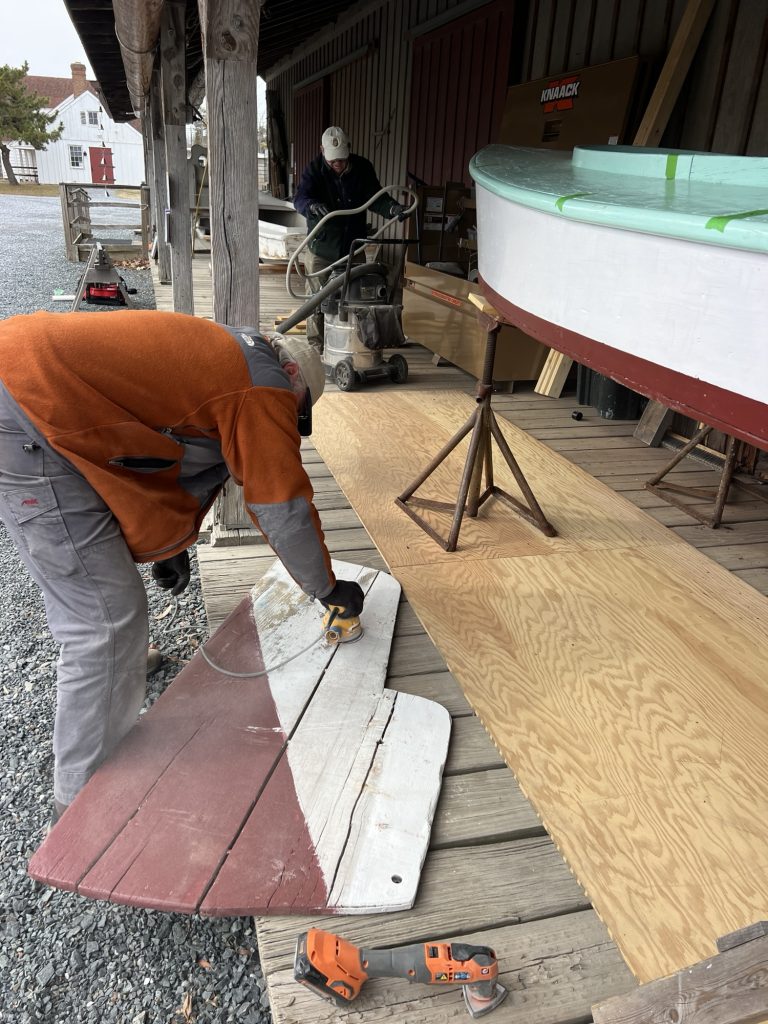
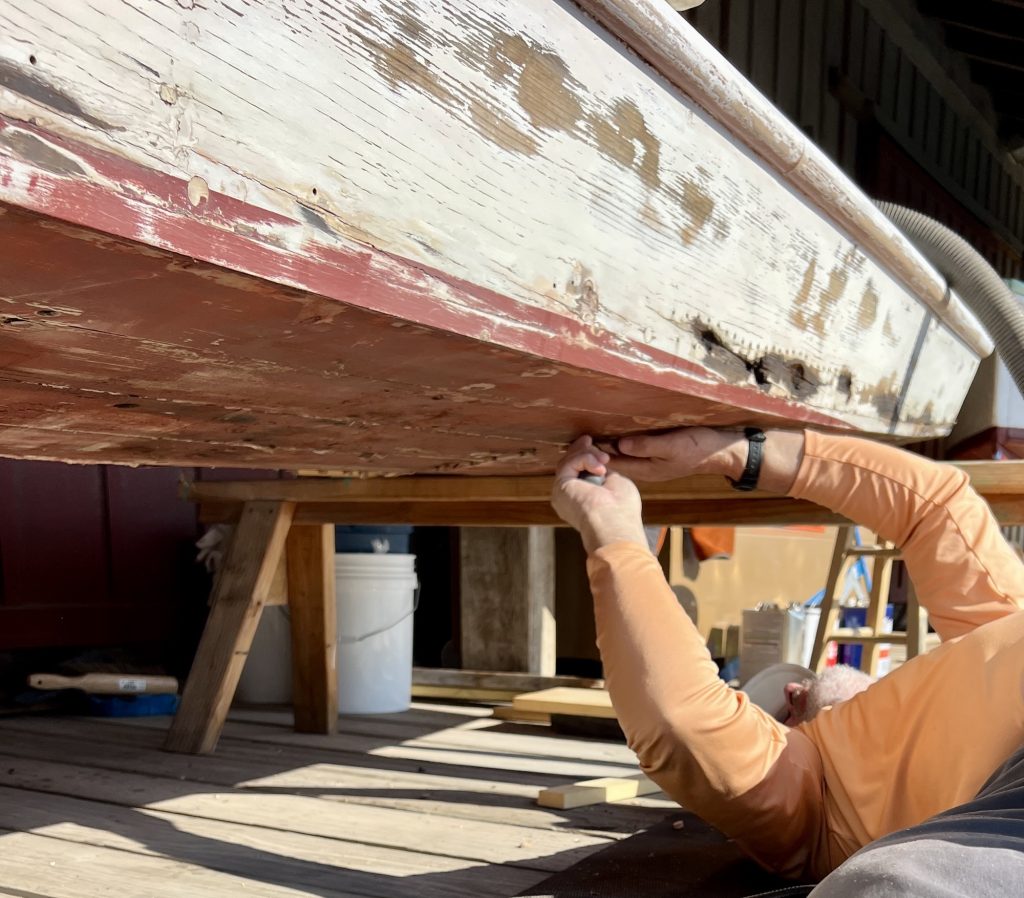
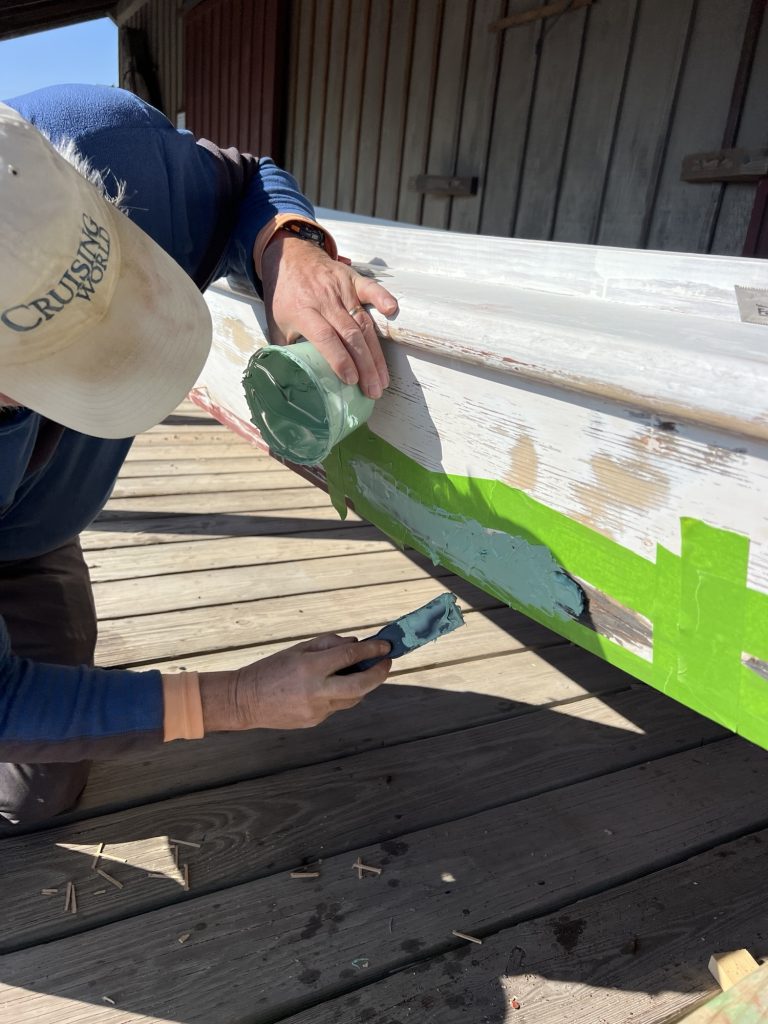
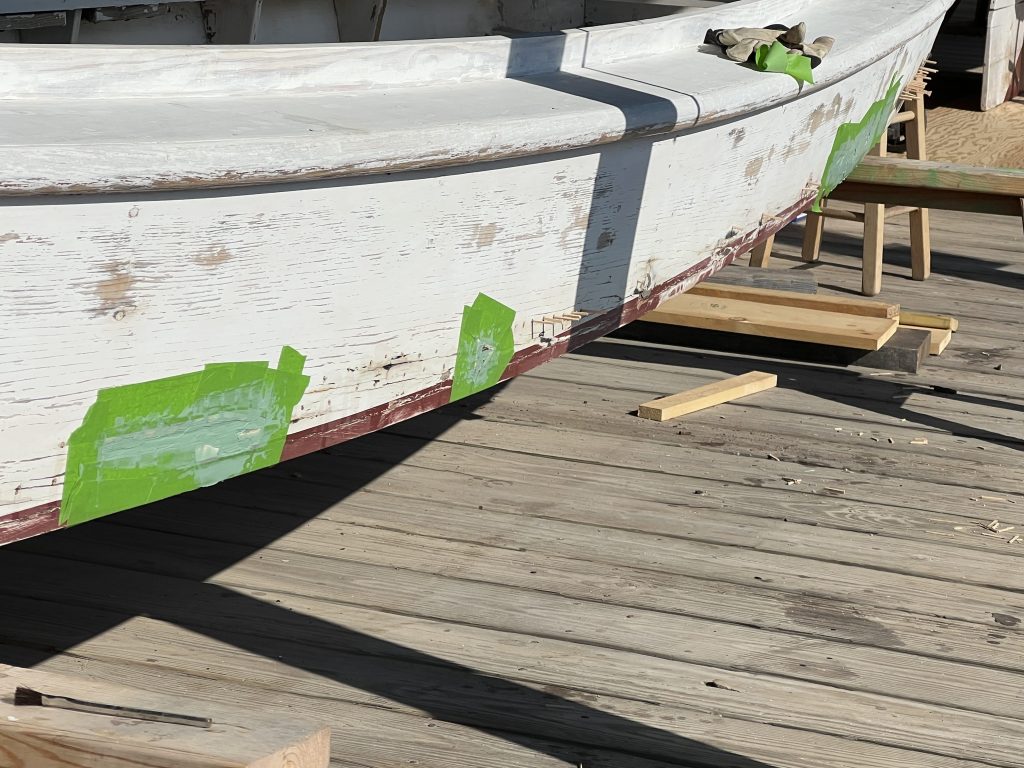
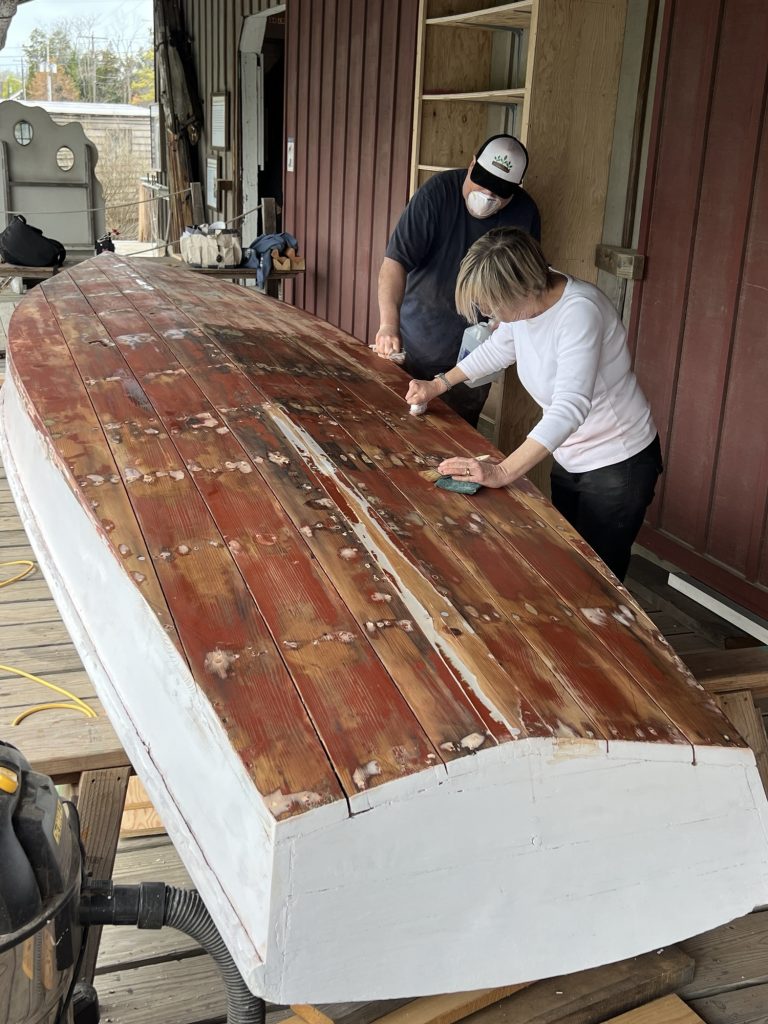
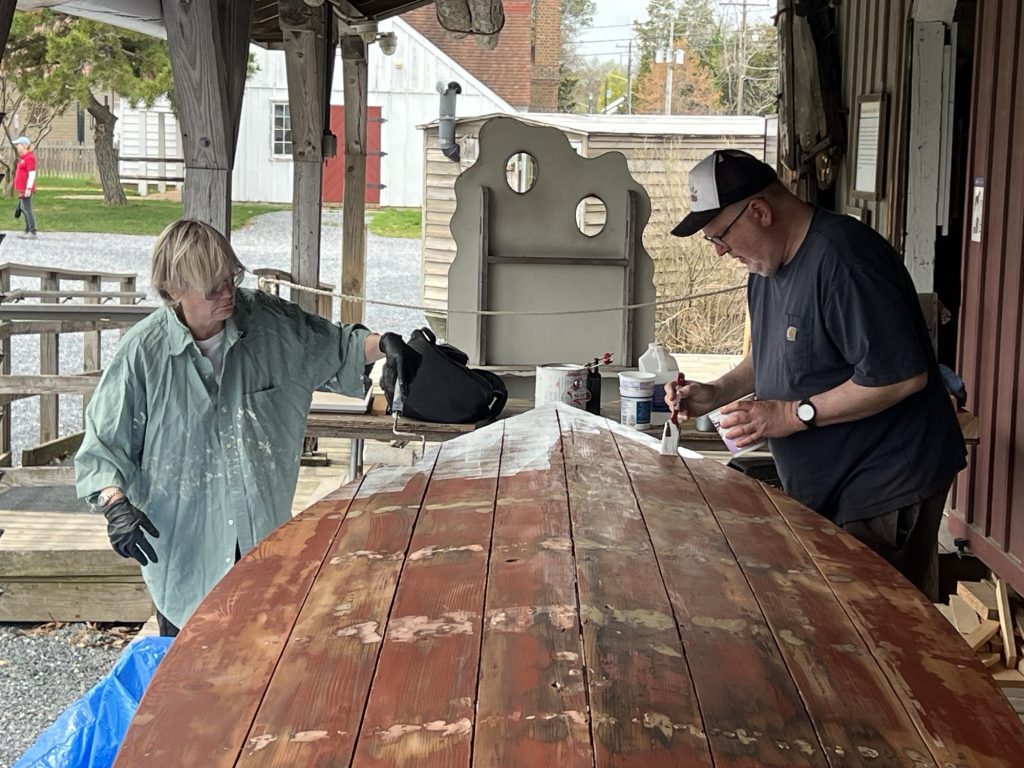
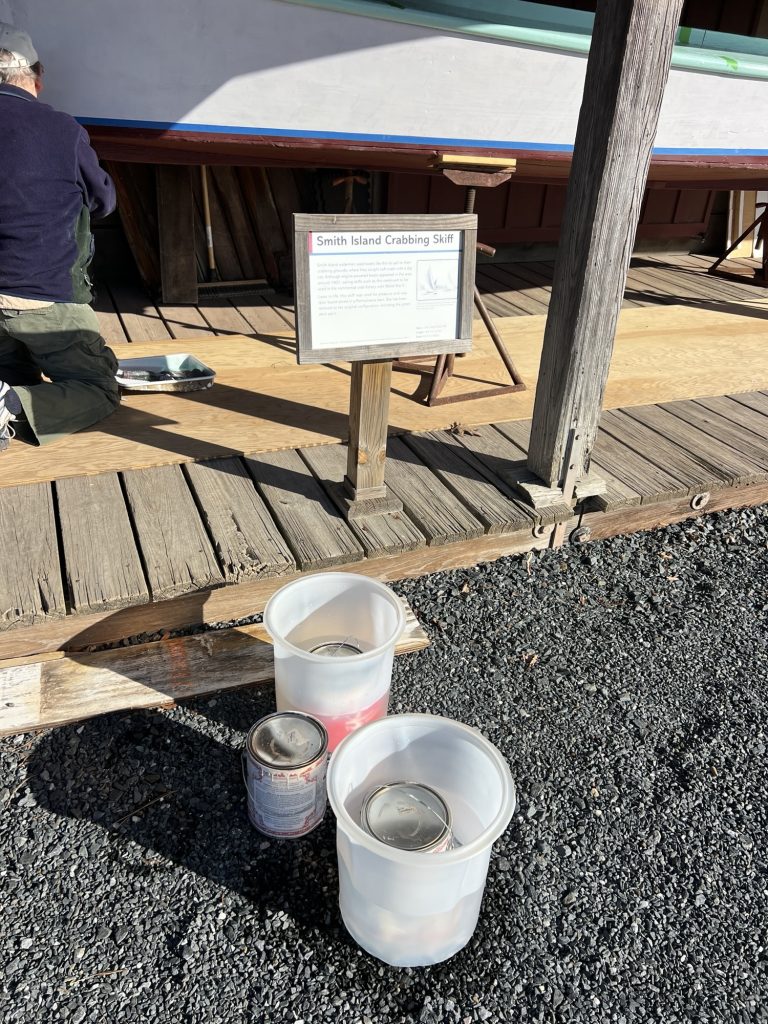
Then Jenn and Greg got back to work on the 1920 skiff – alchohol wipe-down, masking, rolling and brushing.
Apr 1, 2025 | 1920 skiff: Bungs on the bottom

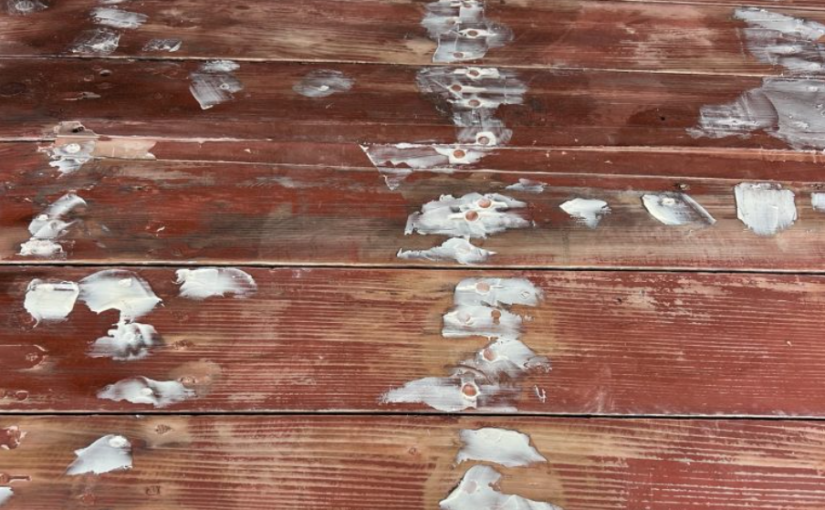
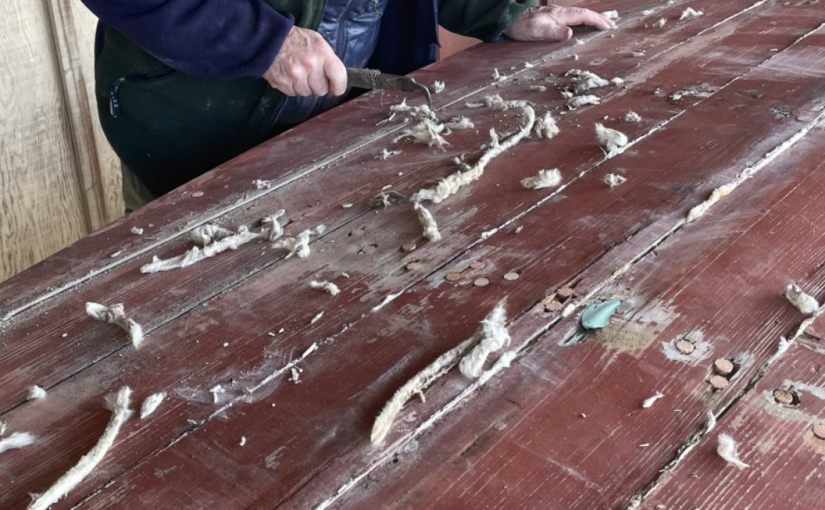
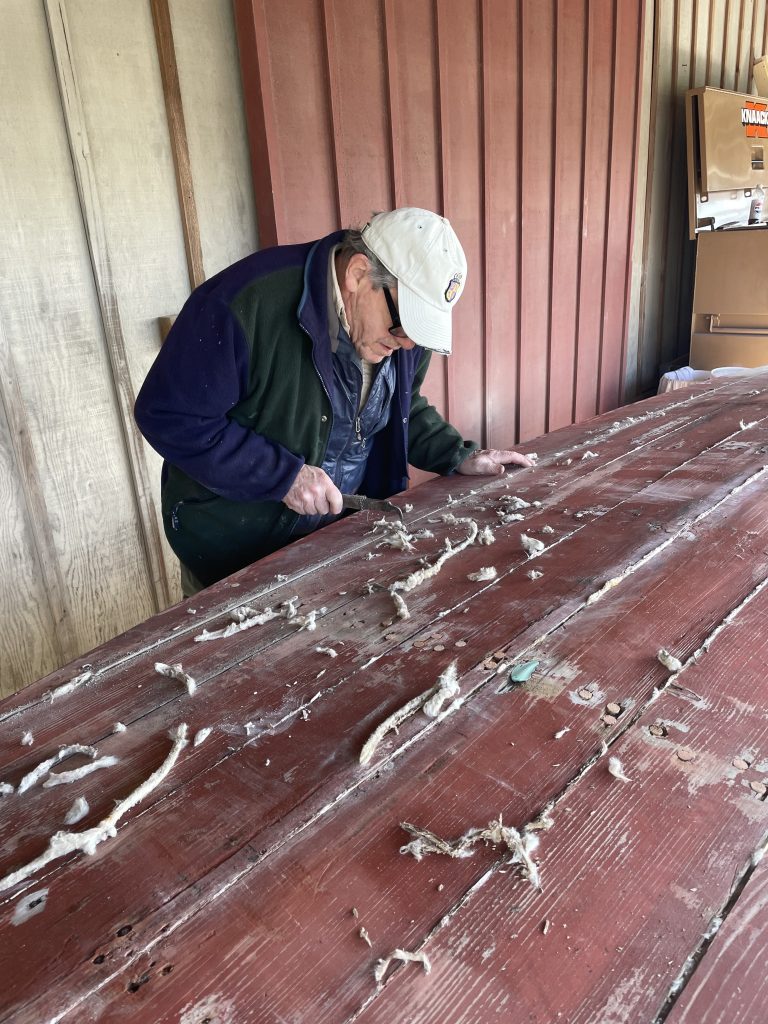
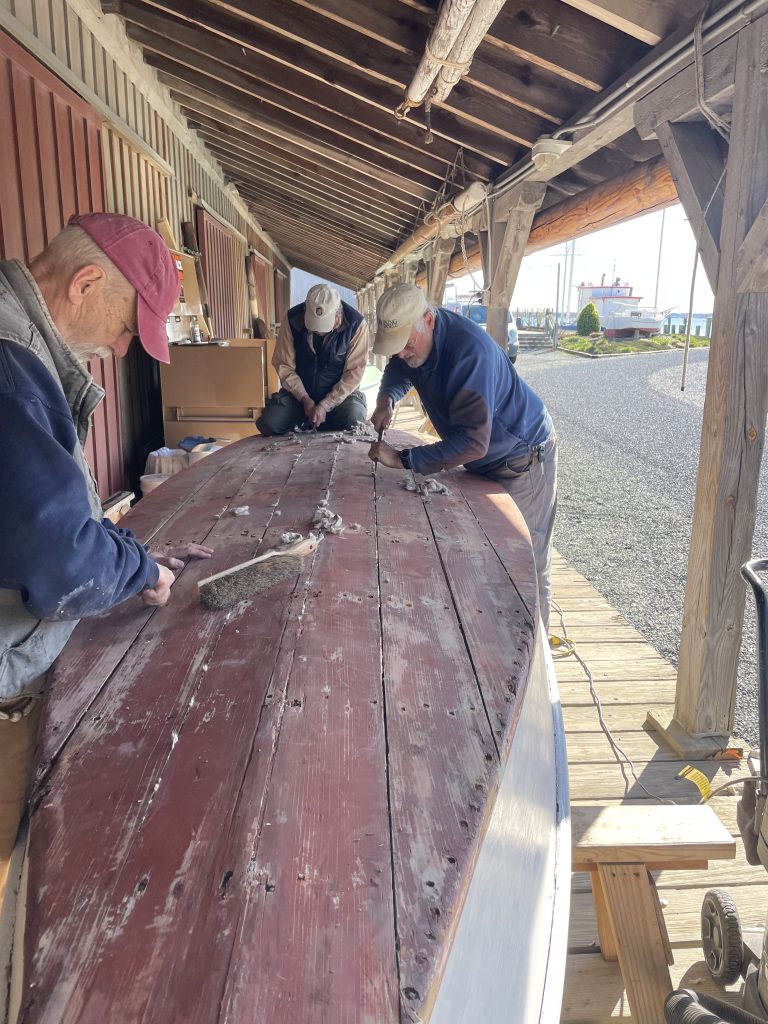
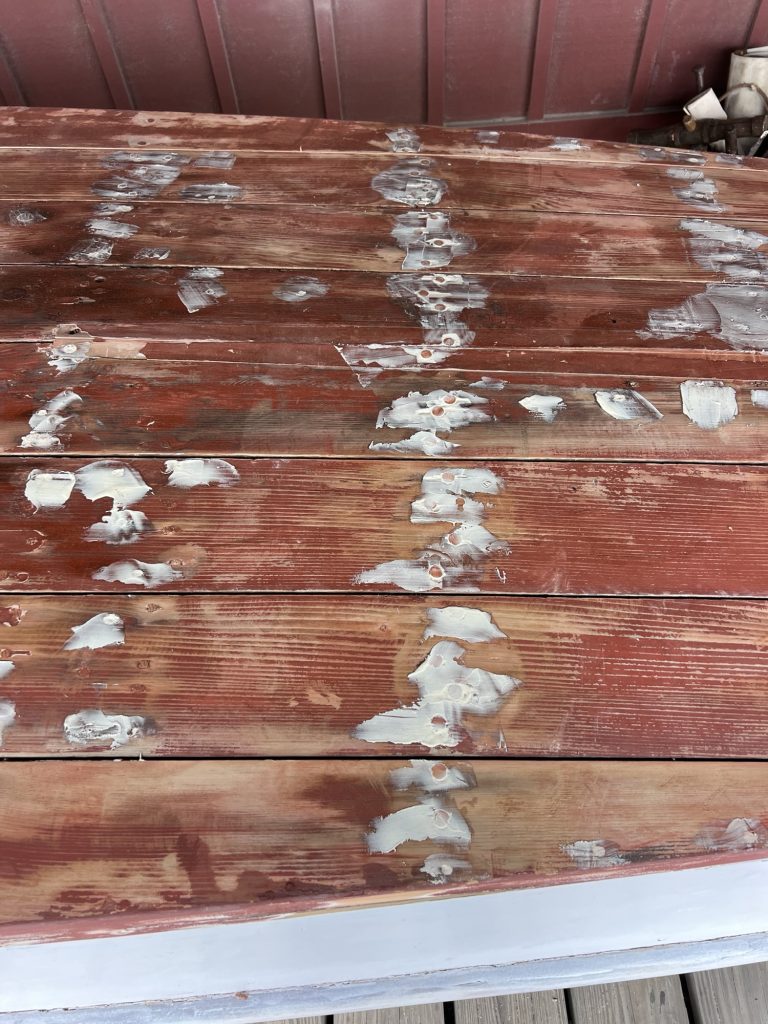
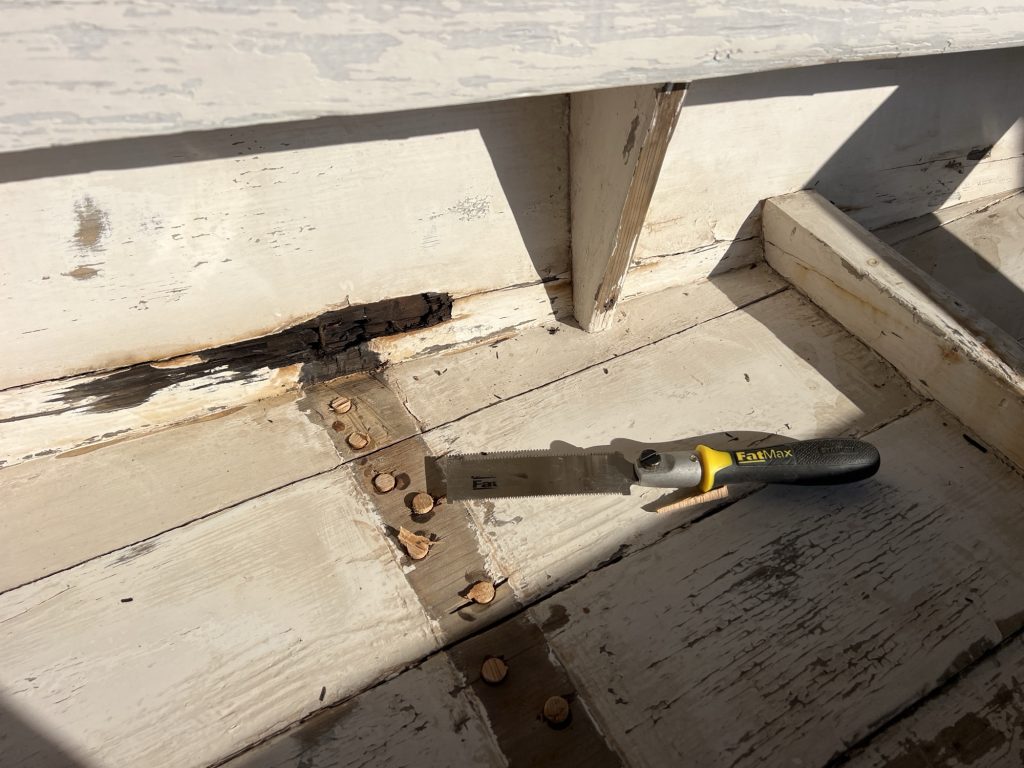
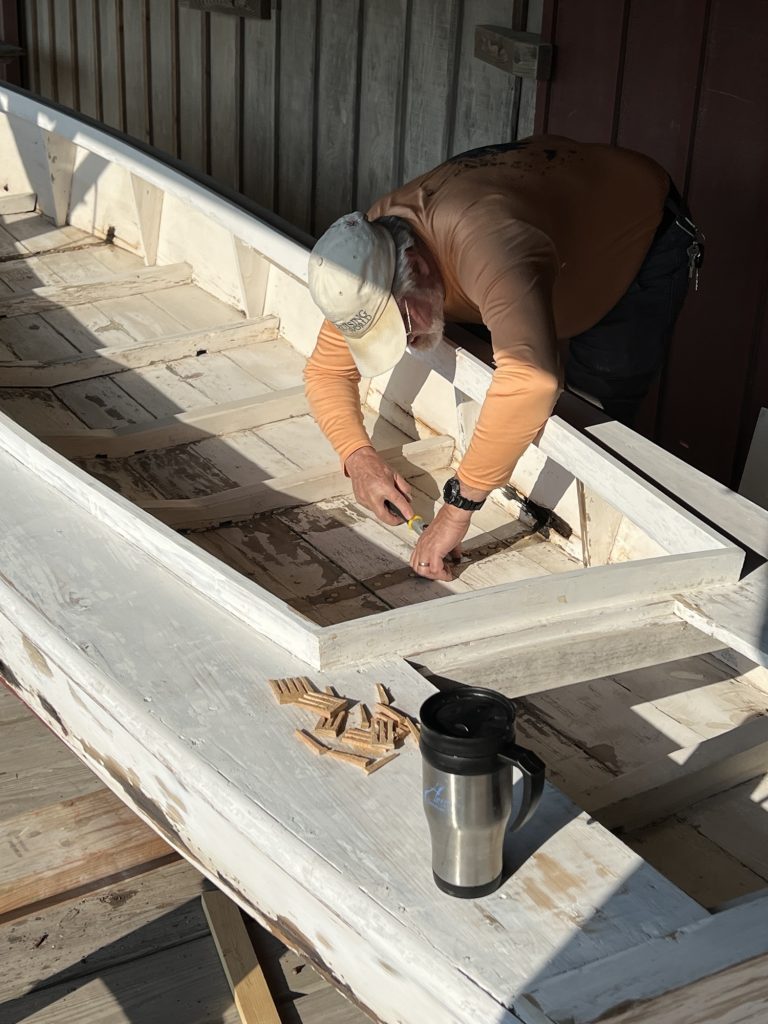
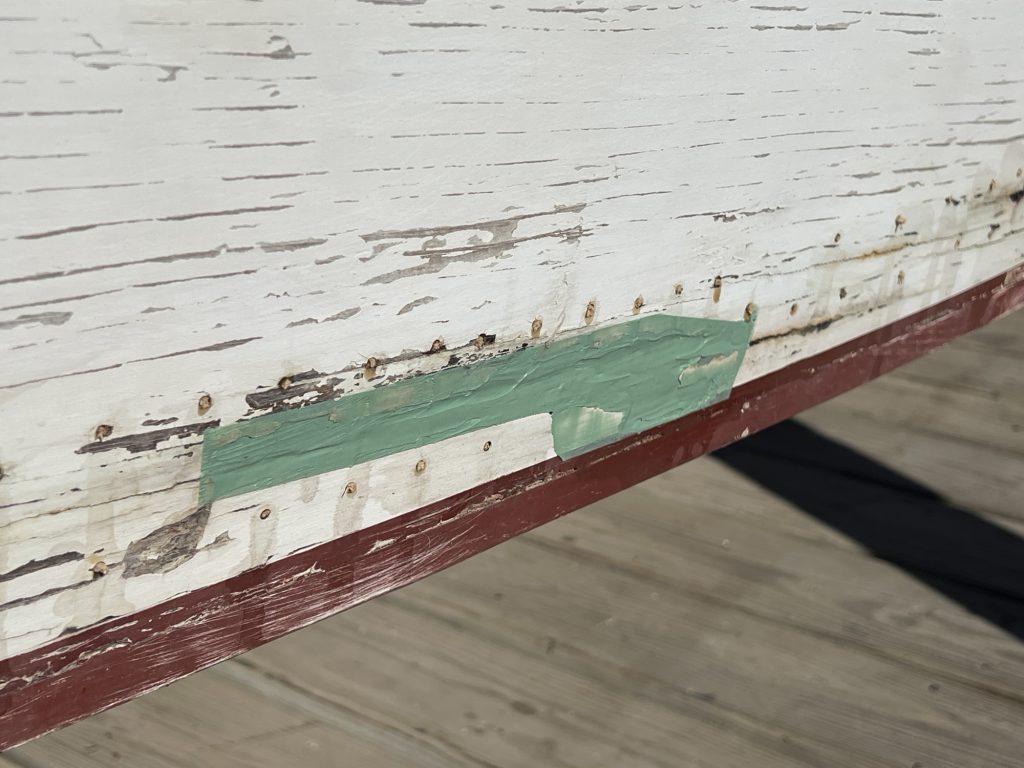
Bob and Jim did touch-up on the bungs that cover the nails which secure the floor frames to the bottom of the 1920 skiff.
Sam briefed us on upcoming projects. We discussed plans for a supply cabinet to be installed on the SBS porch. Tom ran to the Lumberyard for those materials, then Bob and Tom cut the plywood panels on the boat shop.

Willem and Jenn power washed the push boats; we start scraping and painting them next week.

Mar 18, 2025 | Primer and finish paint for the 1920 skiff. Cinnamon Girl rehab is under way.

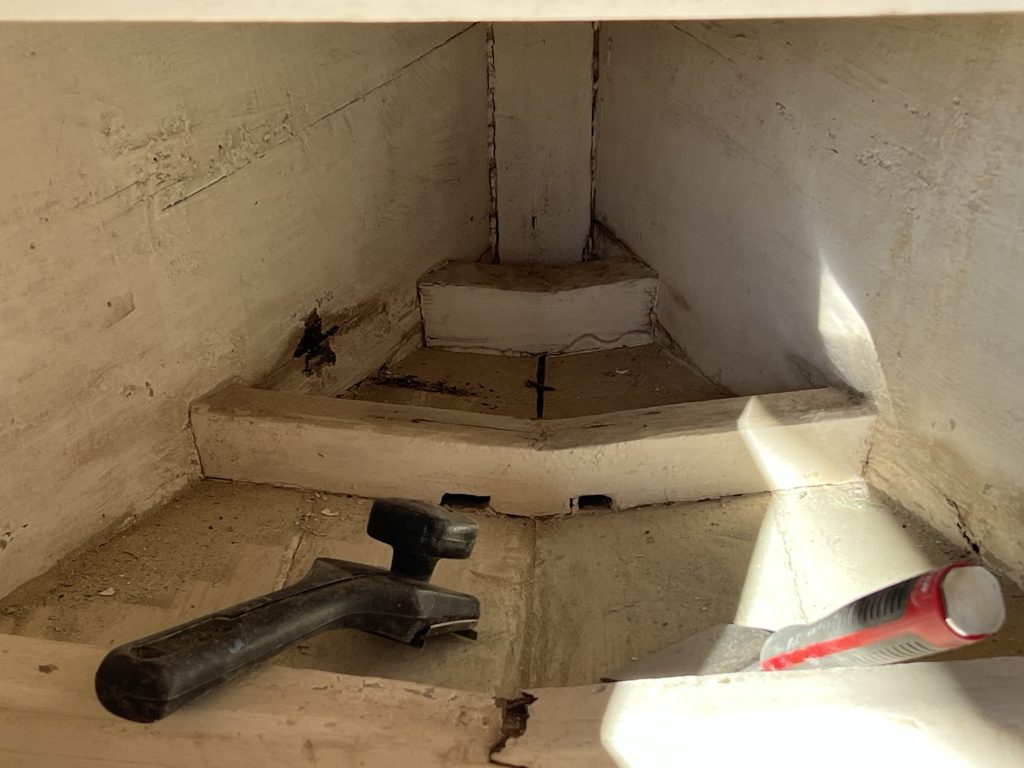
Lots of paint work today on the 1920 Smith Island skiff. Willem and Jim primed the of the interior. We usually count on Jenn to climb into the tight spaces under foredecks with heat gun, scrapers, and paint. But she’s on vacation this week. Don did the gymnastics in Jenn’s place.

After priming the interior, Jim and Willem applied the first coat of finish paint. This skiff is looking fine.

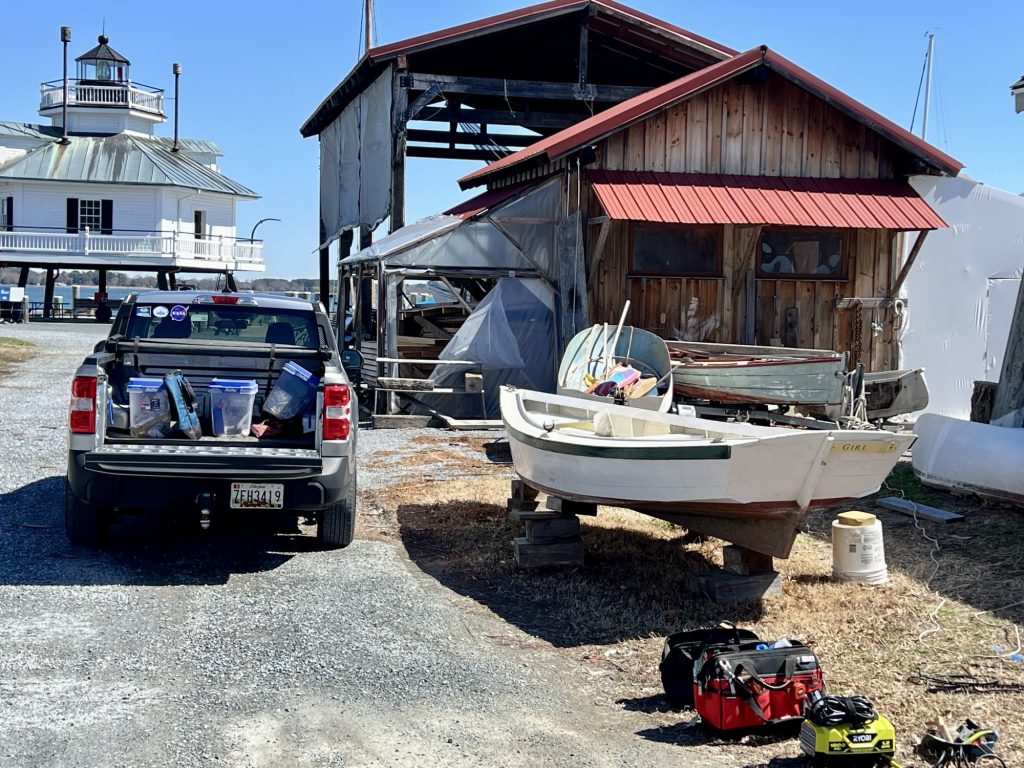
The project to rehab Cinnamon Girl is under way. Don sponged out her interior and scraped a few square inches of peeling paint – to make it official.

Mar 11, 2025 | New projects, new floor frames

We looked over two new projects that will get under way in the next few weeks.

Cinnamon Girl – a replica of the two-sail crabbing skiff that appears as Figure 4 in Chesapeake Bay Crabbing Skiffs (Chapelle). The original was built at Cambridge in 1910. Read more here.

Push boats of the skipjack Rosie Parks and the bugeye Edna Lockwood.

After Sam briefed us on these projects, he offered guidance to Willem and Mike on how to fit and install the floor frames into the 1920 Smith Island skiff.

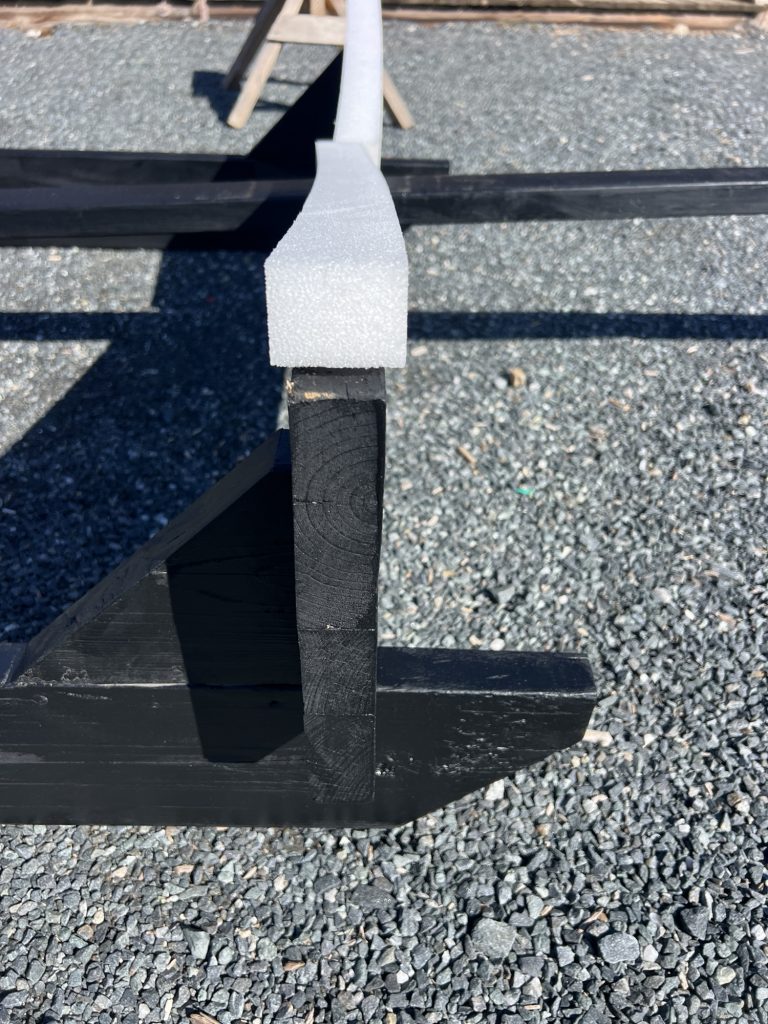
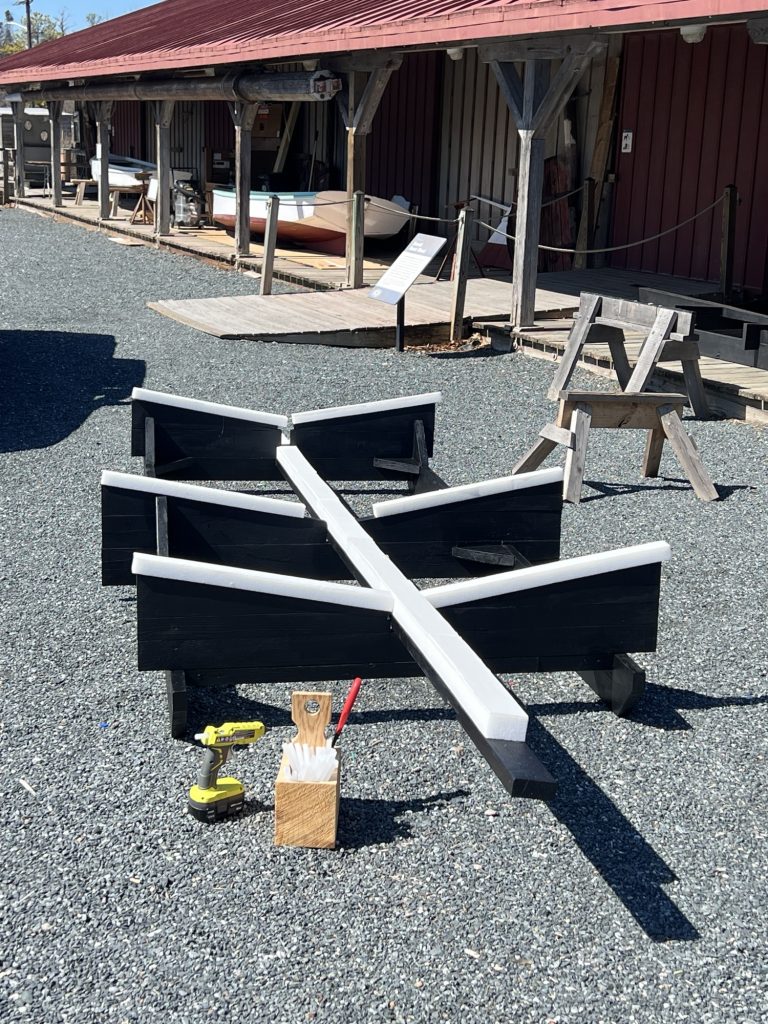
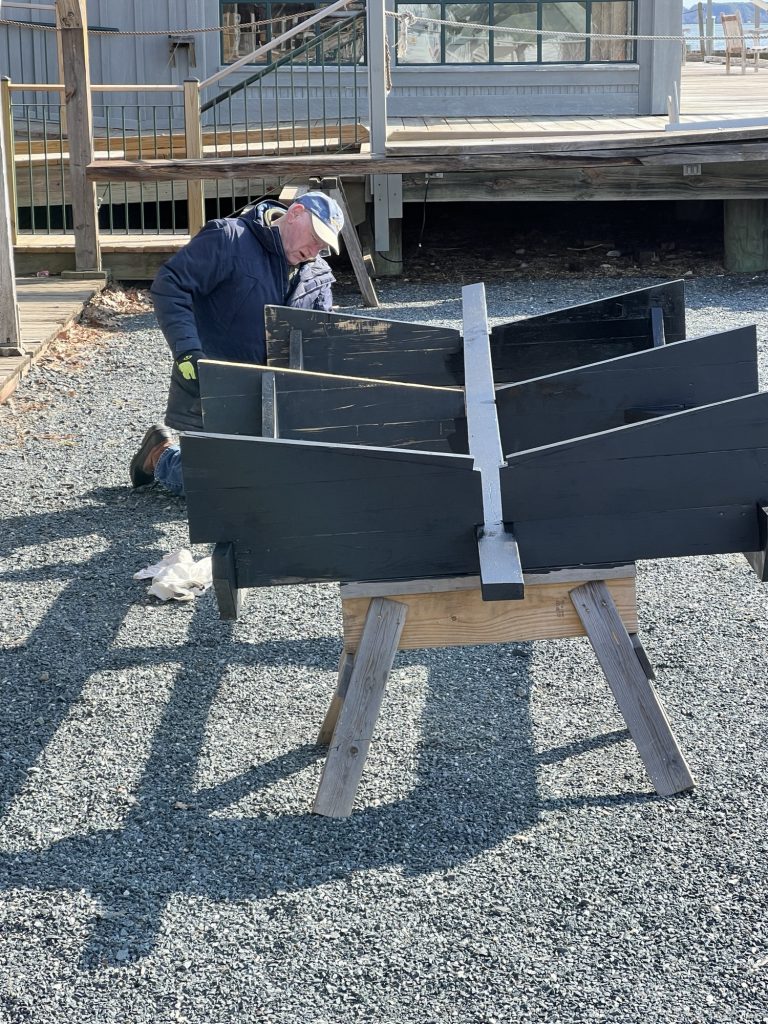
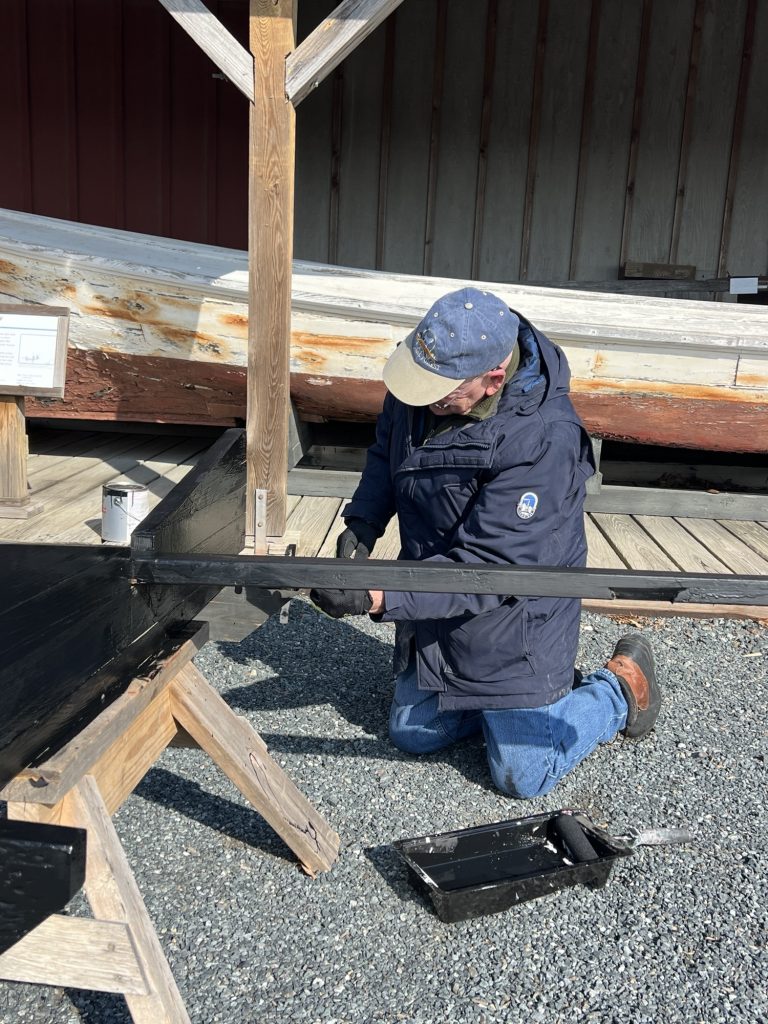
Don prepared the exhibit cradles for both Smith Island Skiffs by attaching two layers of foam (open-cell block and smooth skin) onto the cross bunks and longitudinal keel support.

Feb 25, 2025 | Priming & painting two skiffs

Warm enough to paint this morning – 48 degrees. But the temps had dipped to 28 overnight. We warmed up the topsides paint and primer in buckets of hot water.

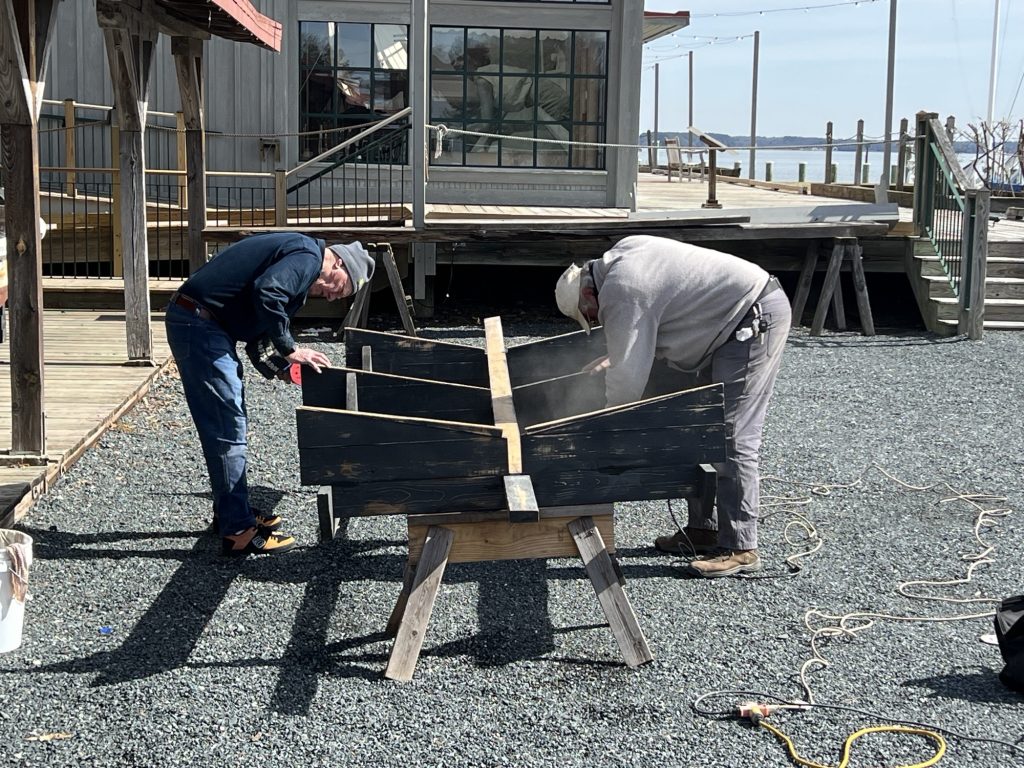
Bob and Mike sanded the filler epoxy, then taped the waterline and primed the 1920 (white) skiff. Tom and Willem taped the waterline of the 1925 (green) skiff and put on another coat of topsides paint.

While the paint dried, Tom and Willem did another coat on the 1925’s centerboard. Bob and Mike prepped a boat exhibit cradle for new paint next week.

Feb 18, 2025 | Boat exhibit cradle rehab in the shop.

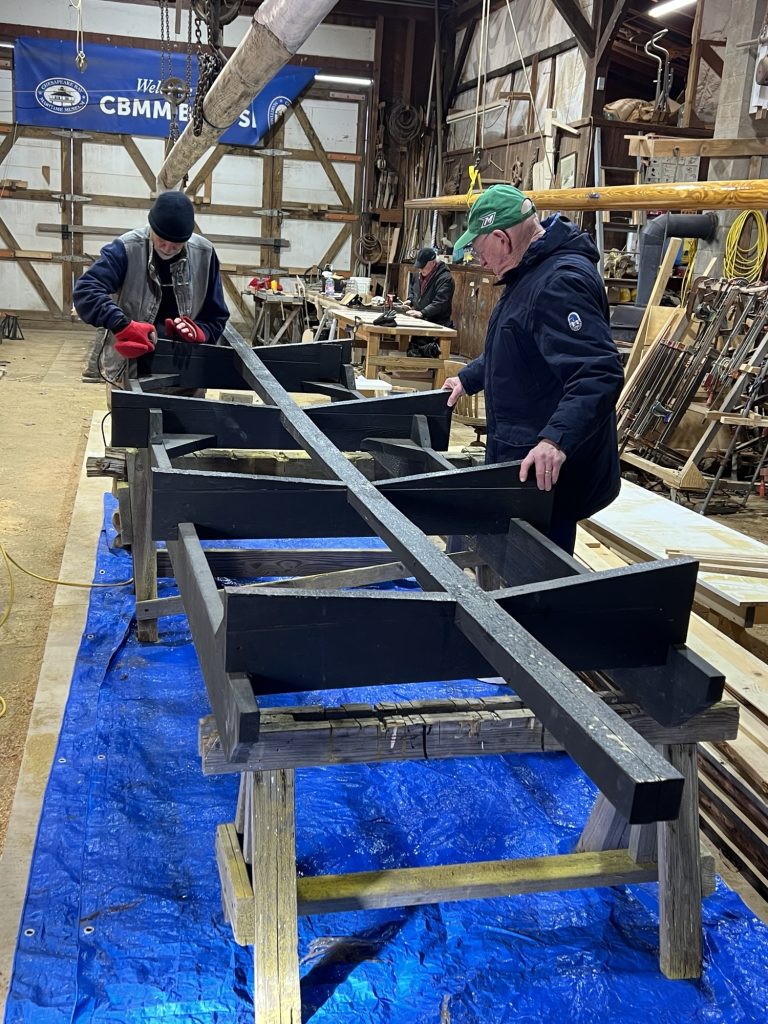
It was 28 degrees with a cold breeze. The shipyard crew made room for us to work in the boat shop. (The big wood stove is just out of view to the right.)

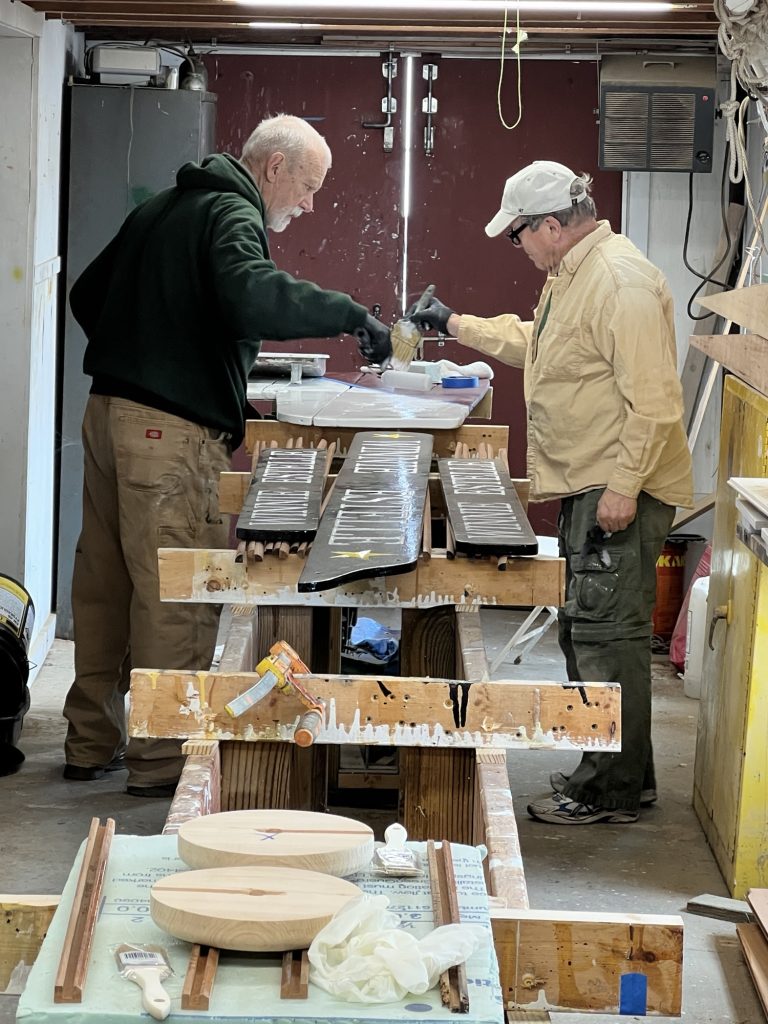
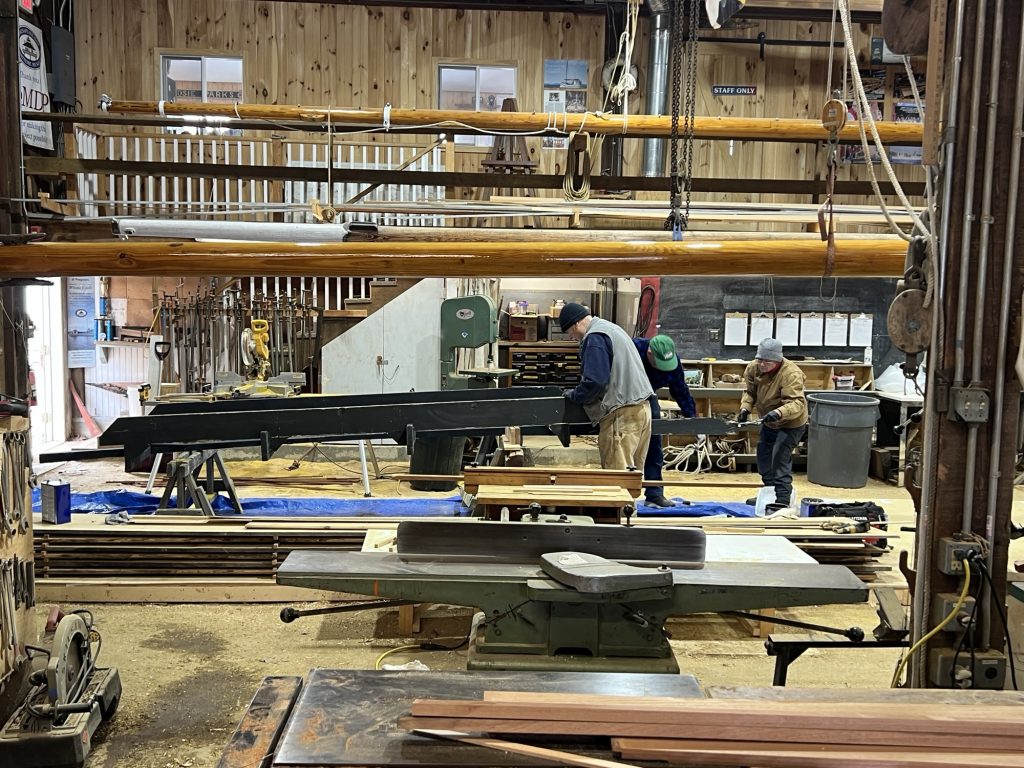
Willem, Mike, and Jenn cleaned and lightly sanded the cradle while Don did a run to Easton for flat black paint.

Jenn had a side job going in the heated paint room – new paint for the centerboard of the 1925 Smith Island skiff.

Feb 11, 2025 | Cutting floor frames

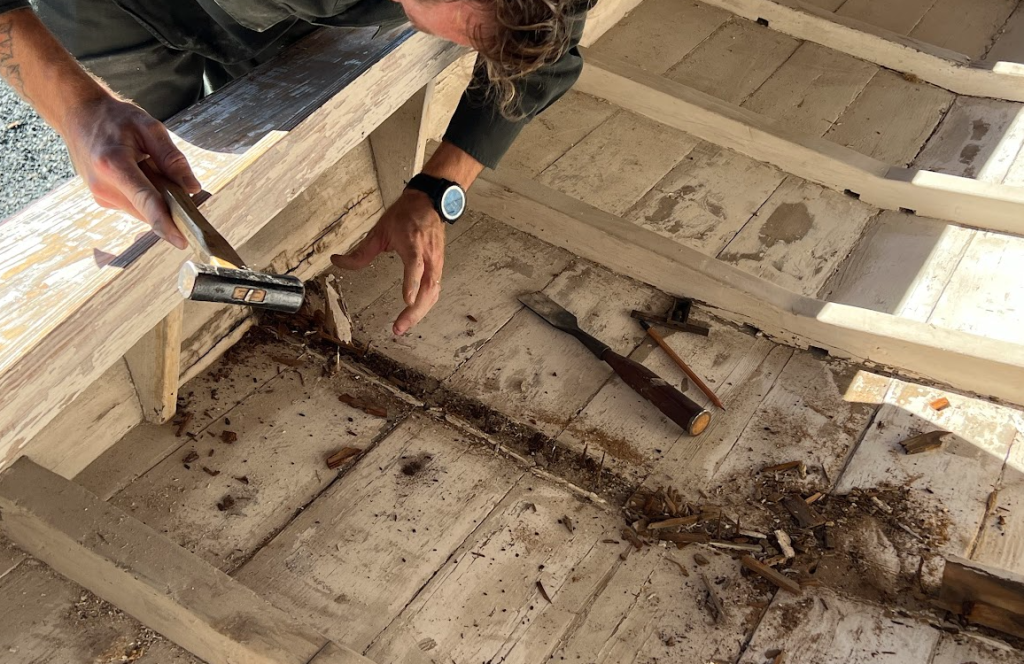
Back in November, we removed a few of the floor frames in the 1920 Smith Island skiff that were rotten. This was caused by chemical reaction between the iron nails and the wood, which caused the iron to rust and damage the surrounding wood. This condition is traditionally called “iron sickness”.

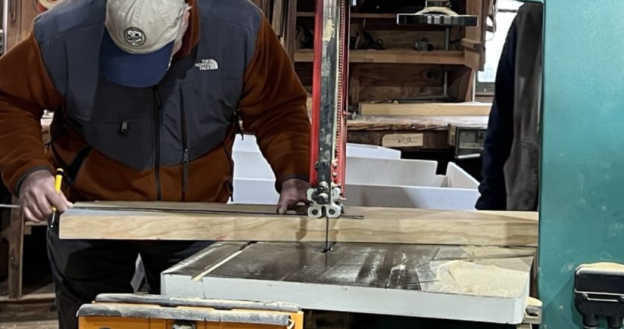
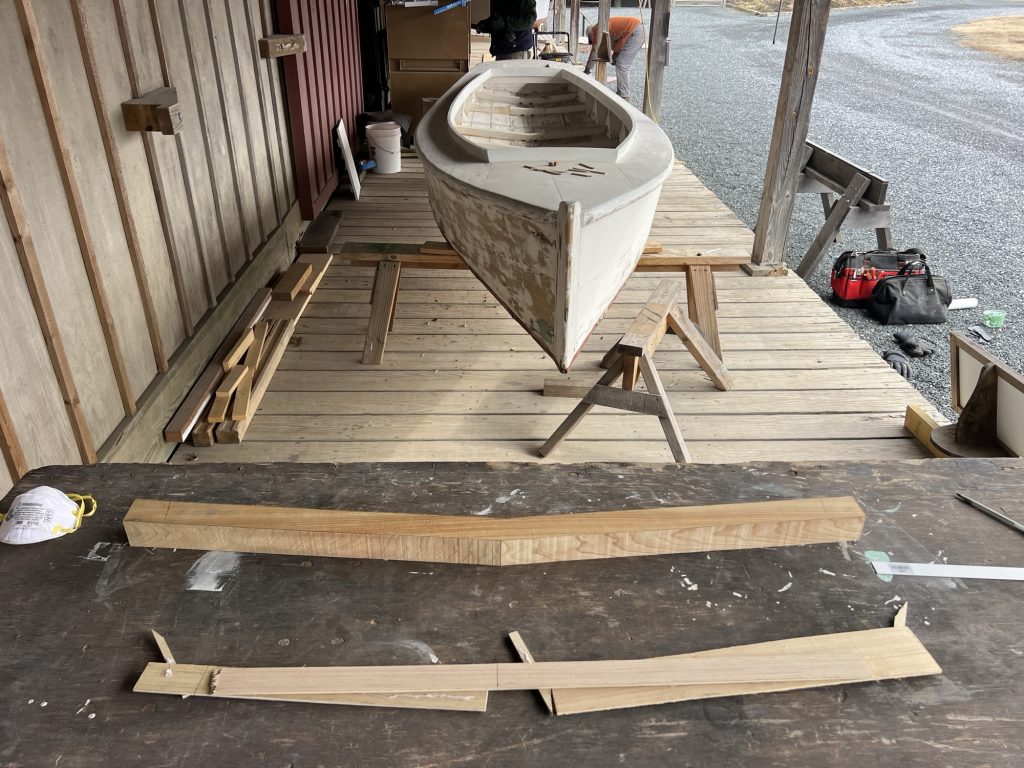
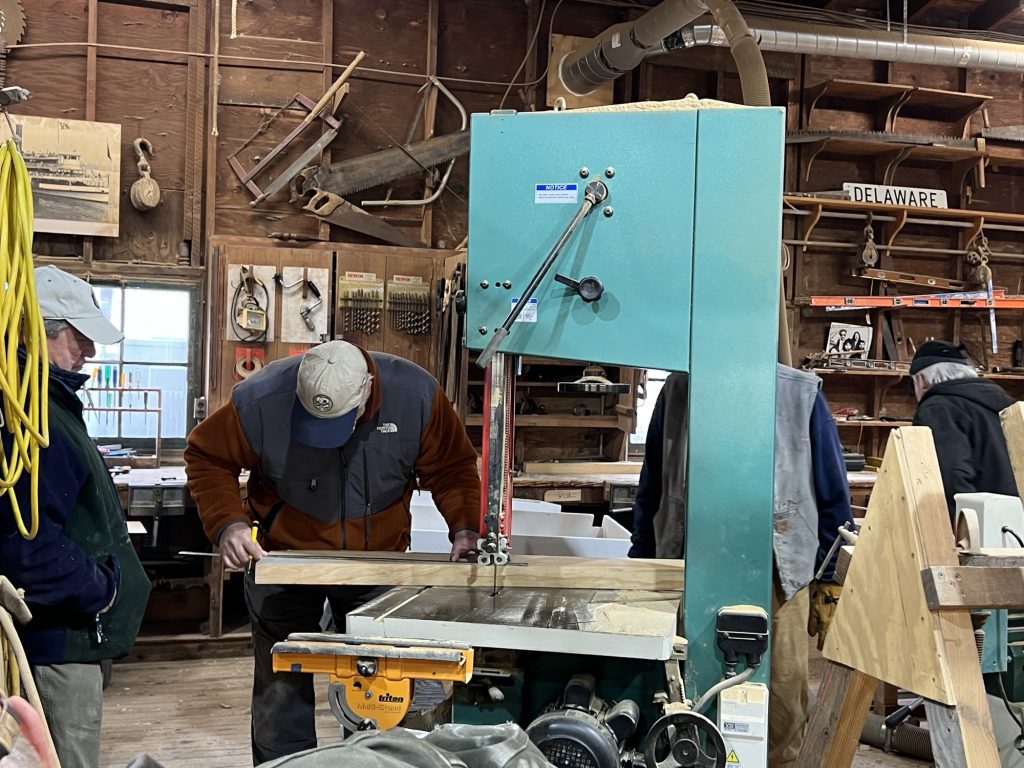
Today we worked inside the boat shop to cut out new frames from a pattern that we assembled in place inside the hull.

We also sanded and filled in low spots in the filler epoxy that we applied last week to rot along the chines.

Bob stayed late to sand the centerboard of the 1925 skiff, getting it ready for primer.

Feb 4, 2025 | Patching up

Bob flush cut the bungs on the 1920 Smith Island skiff – above and below.

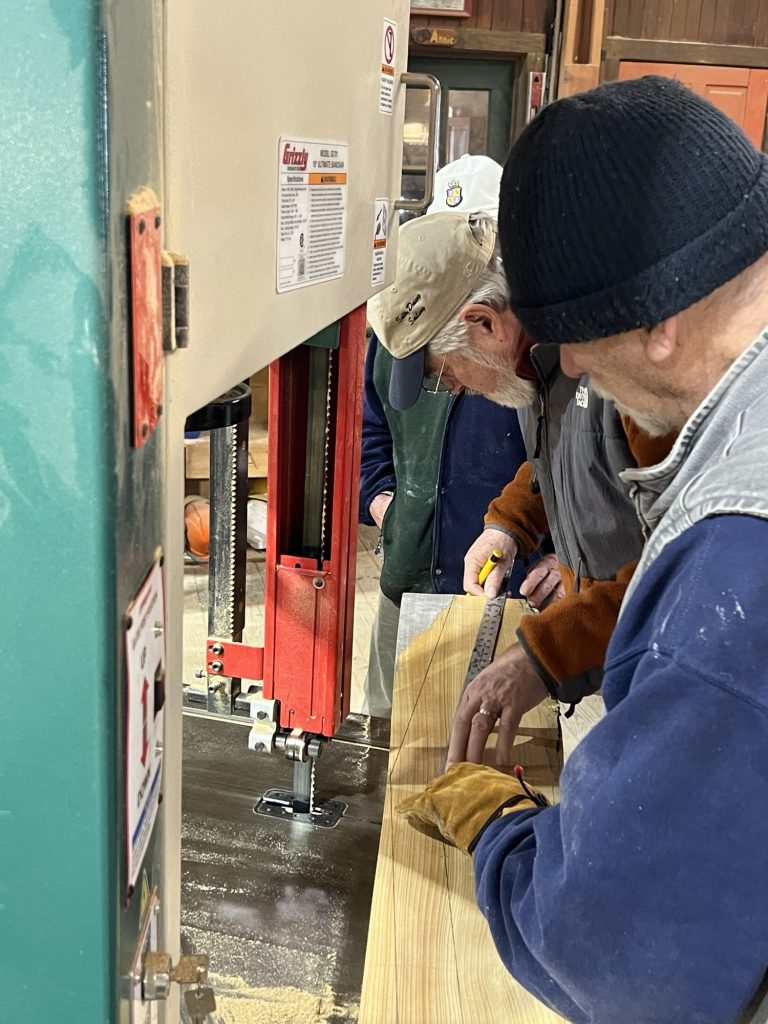
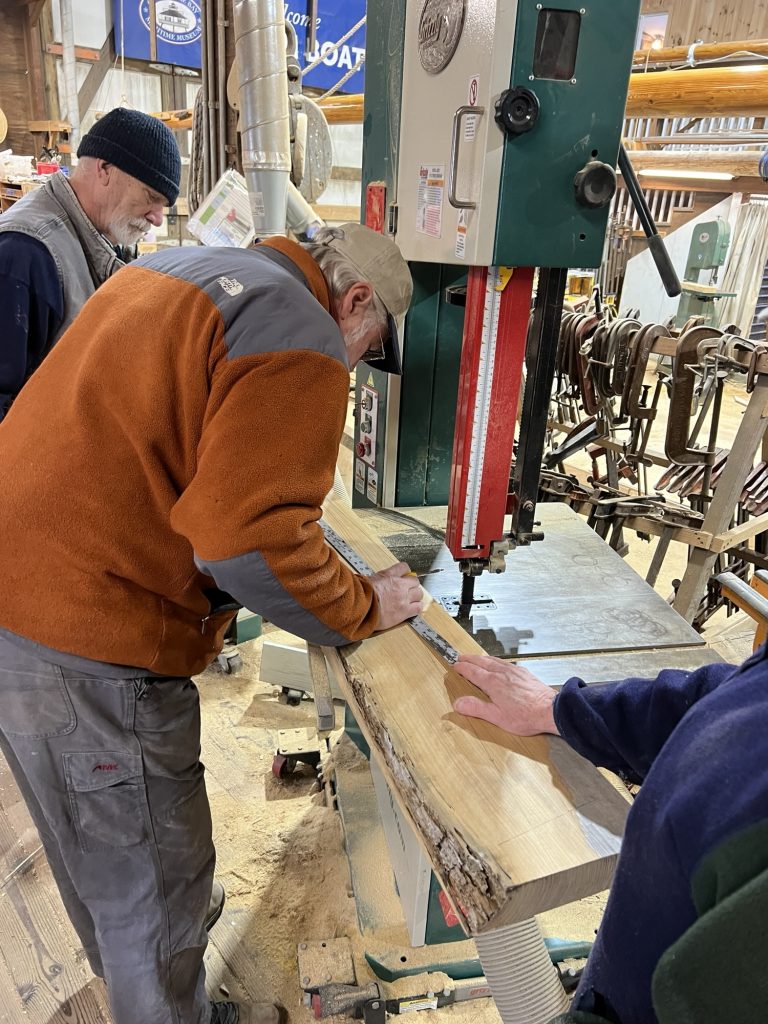
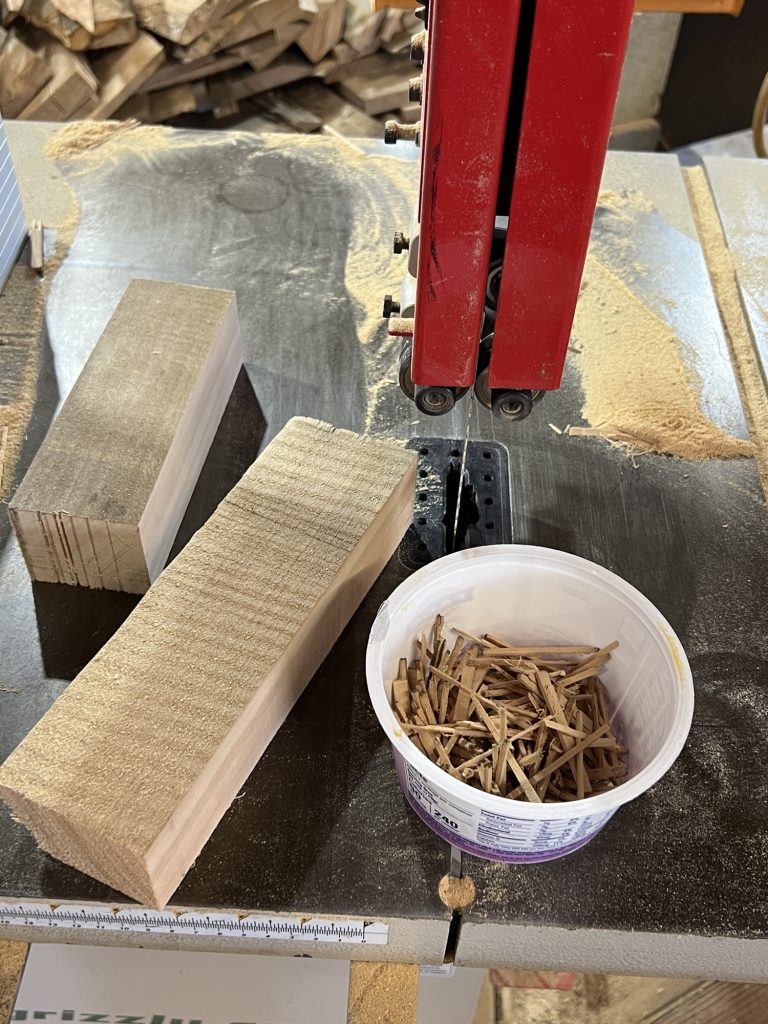
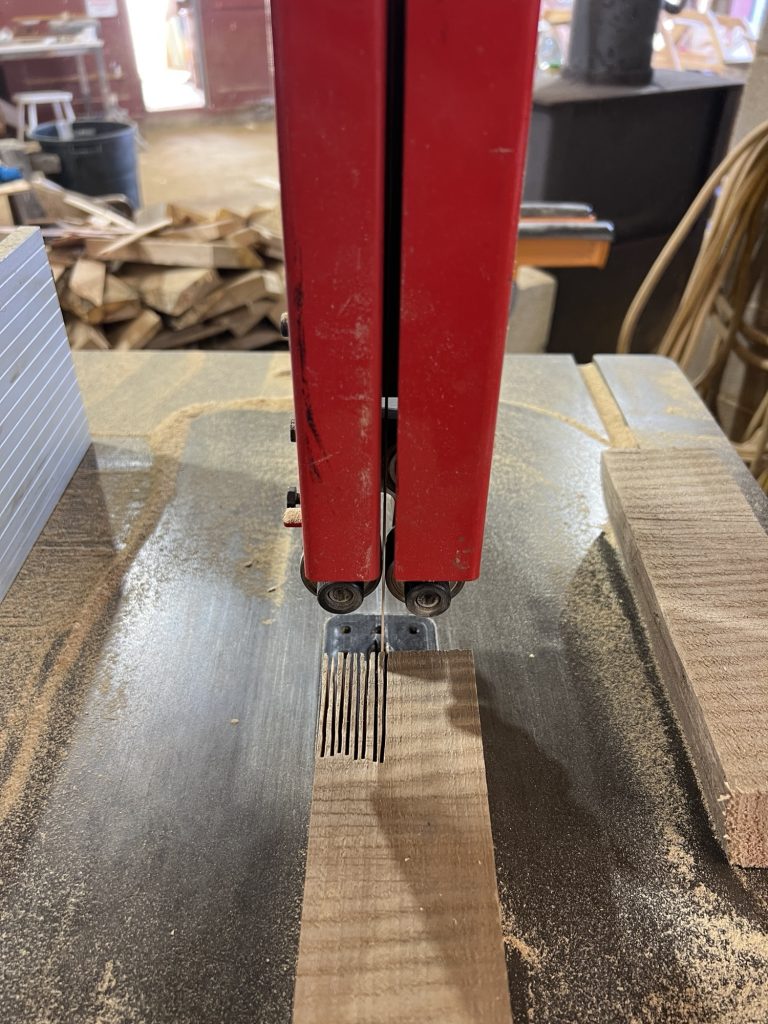
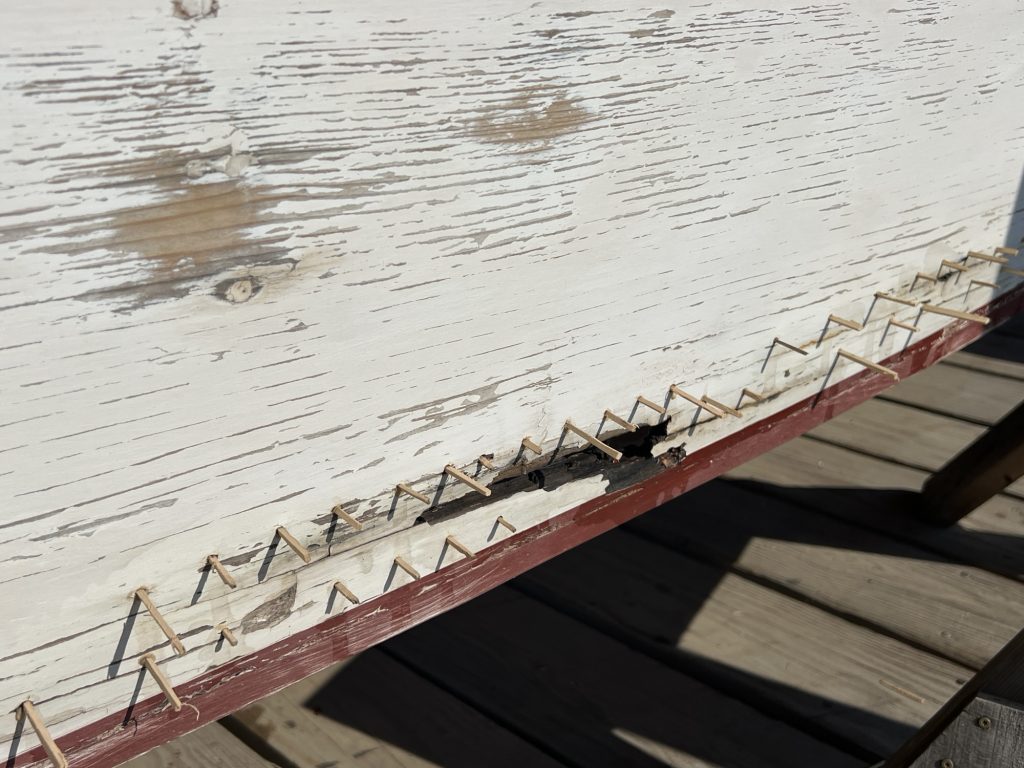
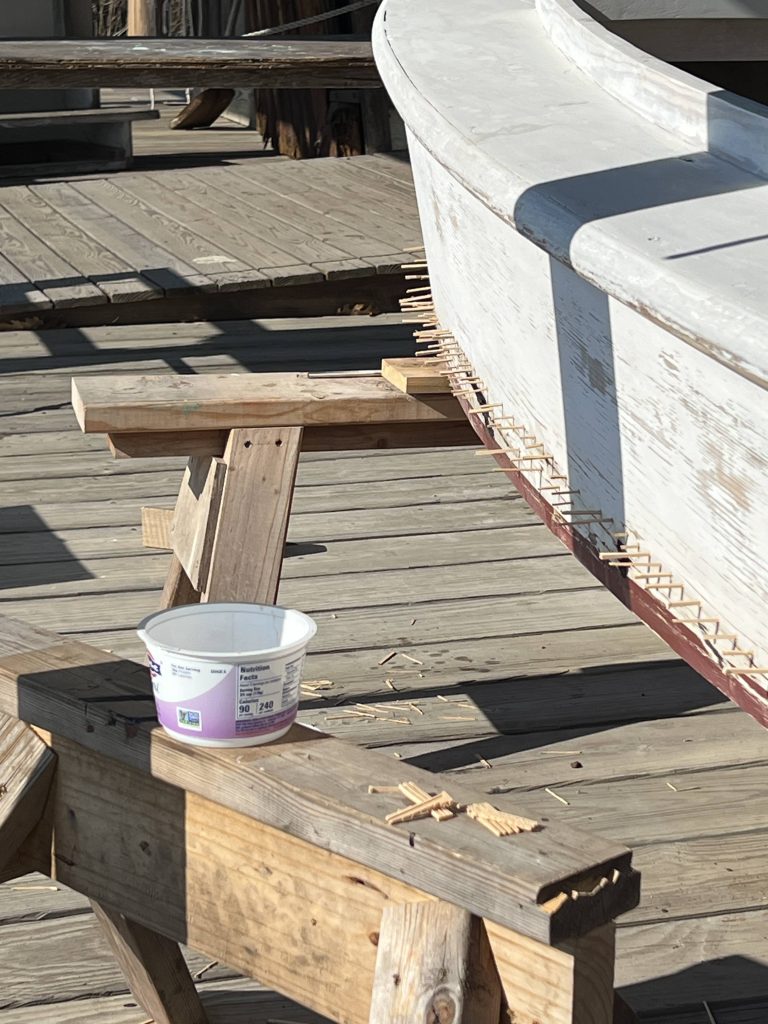
Don used the boat shop bandsaw to cut “sweetnails” to fill in the holes we drilled into the side planking last week, in order to inject penetrating epoxy.

Bob and Don masked around large areas of “iron sickness” along the chines and in the cockpit, then pressed filler epoxy into the cavities.